The most common birds people mistake for a bald eagle are the golden eagle, osprey, turkey vulture, and red-tailed hawk. Which one is tripping you up usually depends on your location and whether you're looking at an adult or a younger bird. Adult bald eagles are actually pretty unmistakable once you know exactly what to look for, but immature bald eagles are a whole different story and they fool even experienced birders regularly.
What Bird Looks Like a Bald Eagle? Key Look-Alikes

Marcus Whitley
14 May 2026
What makes a bald eagle look like a bald eagle
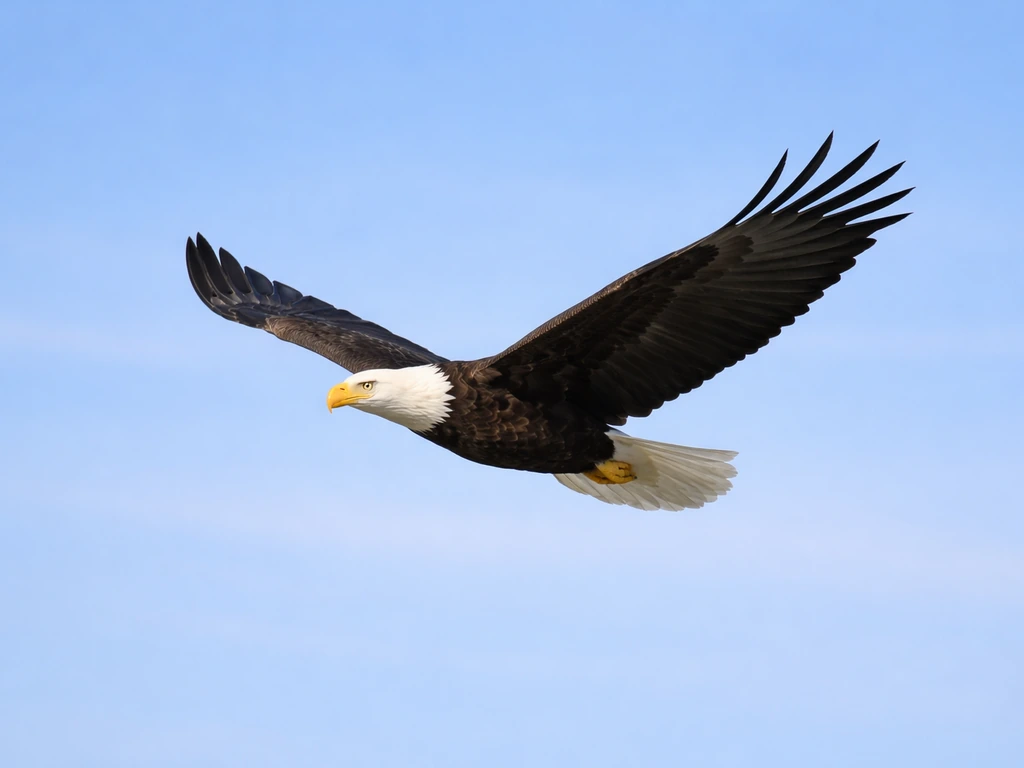
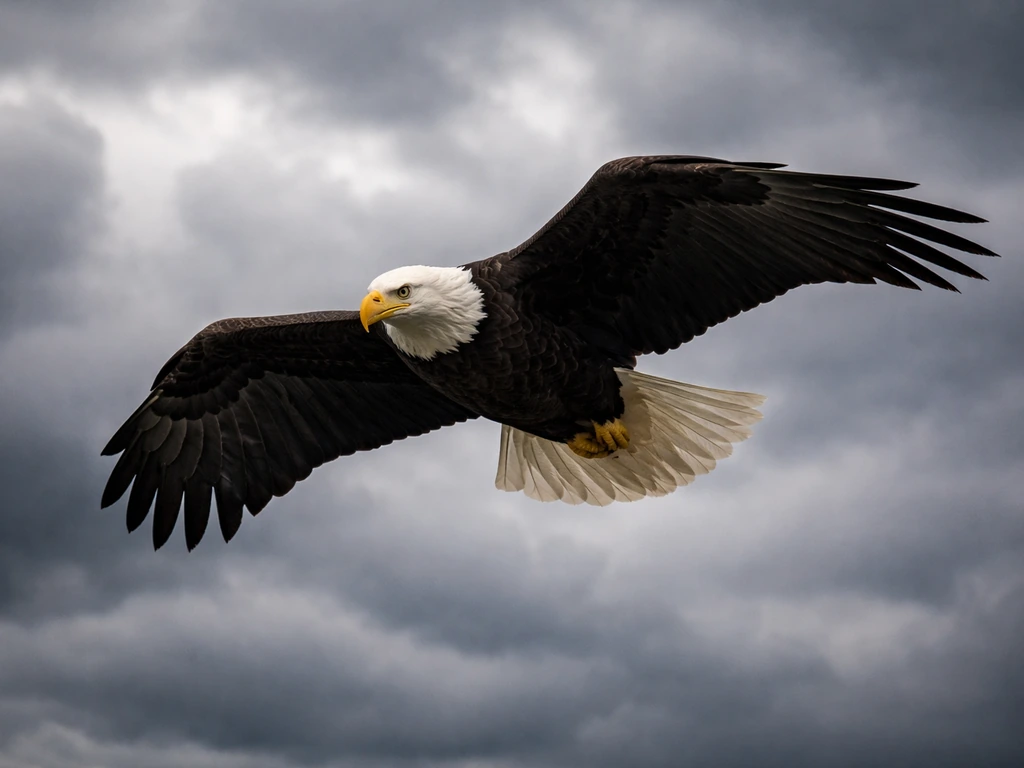
Before you can spot a look-alike, you need to lock in the real thing. A full adult bald eagle is actually pretty striking: a pure white head and white tail sitting on top of an evenly dark brown body and wings. The beak, feet, and eyes are all bright yellow. In flight, the wings are broad and held completely flat, almost like a plank, and the head and neck stick out noticeably in front, roughly half the length of the tail. The wingbeats are slow and powerful, and when gliding the bird soars in wide, steady circles.
The tricky part is that bald eagles don't get that clean white head and tail until they're around five years old. For the first four years of life, they're mottled brown with scattered white, no clearly white head, and no clearly white tail. A bird in its fourth year might look nearly adult but still have dark flecking on the head and a dark tip on the tail.
HawkWatch International notes that a “4th-year” (near-adult but still immature) bald eagle can look adult-like but show immaturity such as dark flecking on the head and a dark tail tip, plus leftover white mottling on the body and/or underwings 4th-year might look nearly adult but still have dark flecking on the head and a dark tip on the tail.
This is where most of the confusion happens, because a mottled brown juvenile bald eagle looks nothing like what most people picture when they hear the name.
The most likely bald eagle look-alikes
These are the four species that come up most often when someone thinks they've spotted a bald eagle. Each one shares at least one or two key visual traits with either an adult or immature bald eagle.
Golden eagle
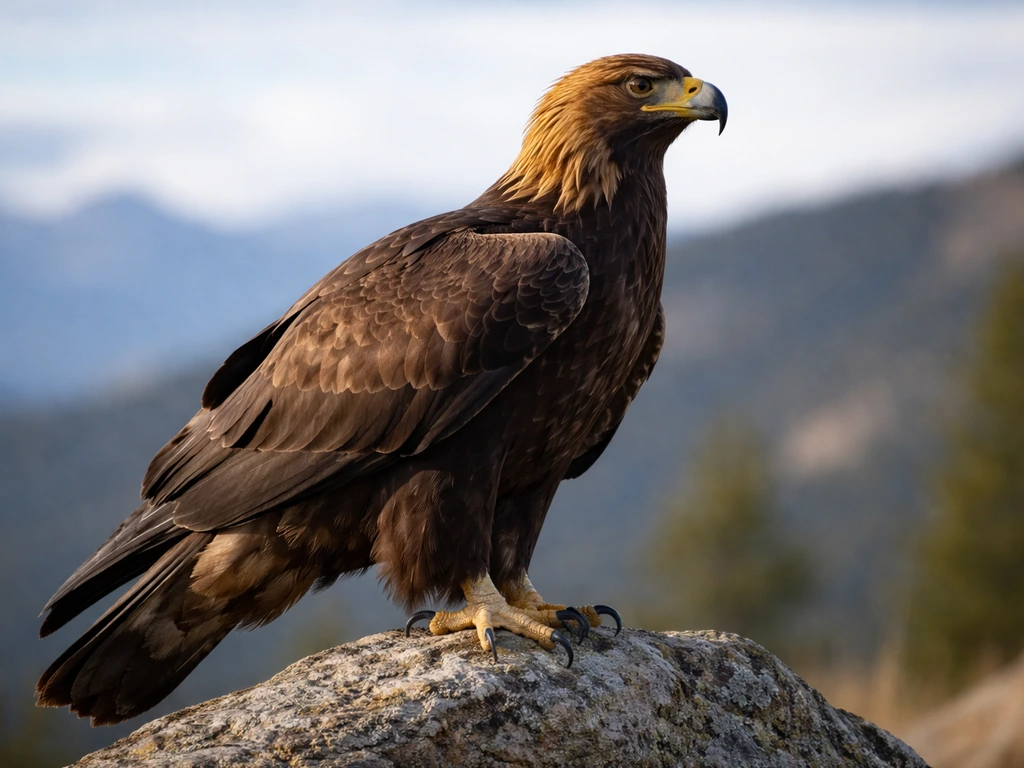
This is the number one confusion bird, especially for immature bald eagles. Adult golden eagles are all dark brown with a golden-buff wash on the back of the neck and head. Juveniles are where it gets interesting: they have white restricted to the base of the tail (with a broad black terminal band) and white patches at the base of the flight feathers on the underwing. That's the key. Immature bald eagles have white scattered more broadly across the underwing coverts, looking like white squares or blotches, while golden eagle white is more centrally placed and neatly defined. Both species soar on long, broad, flat-held wings, which is why they're so easy to mix up at distance.
Osprey
Ospreys get mistaken for bald eagles because they also have a white head and spend most of their time near water hunting fish. But once you know the differences, they're pretty easy to separate. The osprey has a thick black eye stripe that runs from the beak back across the face and down to the neck, which the bald eagle completely lacks.
Ospreys are also much smaller, with long narrow wings that bend noticeably at the wrist, giving them an M-shape when seen from below. The underside of the wings is mostly white with a dark patch at each wrist and strongly barred flight feathers. The eyes are yellow, and the body underneath is mostly white. They fly with a distinctive kinked-wing style that no eagle replicates.
Turkey vulture
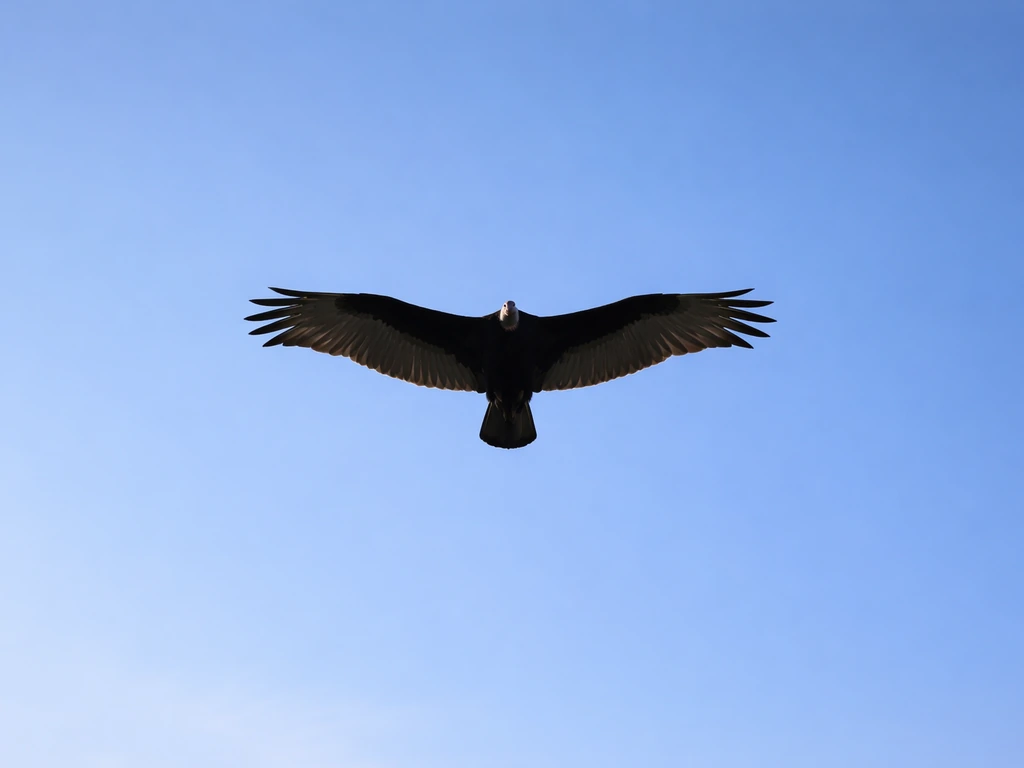
At distance and high altitude, a turkey vulture soaring overhead can look like a large dark raptor. The silhouette is where people get tripped up. But there's one instant giveaway: turkey vultures hold their wings in a clear V-shape (called a dihedral), tilting and rocking as they soar, while bald eagles hold their wings flat and steady. Up close, adults have a small featherless red head and a pale ivory bill, nothing like the bald eagle's large yellow hooked beak. Juveniles have a dark head, which can briefly cause confusion at distance, but the wobbly V-wing flight posture gives them away almost immediately.
Red-tailed hawk
Red-tailed hawks are much smaller than bald eagles, but they're often seen soaring high overhead and people sometimes make the size mistake when there's nothing nearby for scale. Adults have a rich reddish-brown tail that's visible from above, a pale underside with a streaked belly band, and a dark bar running from the shoulder toward the wrist on the underwing. They don't have white heads, but a pale-headed bird circling over open fields can briefly register as eagle-like. Immatures have a brown banded tail without the red, and the belly band and dark underwing bar are still useful markers.
Quick ID checklist to separate the look-alikes
Run through these questions in order when you see a large bird you're not sure about:
- How are the wings held? Flat and steady = eagle or osprey. V-shape and rocking = turkey vulture.
- How big is the head and neck profile? Bald eagles have a notably large projecting head in flight, roughly half the tail length.
- Is there a white head? If yes, is there also a dark eye stripe? Eye stripe = osprey, not bald eagle.
- What does the tail look like? Solid reddish-brown = red-tailed hawk. White at the base with black band = juvenile golden eagle. All white = adult bald eagle. Mottled or patchy = immature bald eagle.
- What color is the bill? Large yellow hooked bill = bald eagle. Pale/ivory small bill = turkey vulture. Dark bill = juvenile bald eagle or golden eagle.
- Where are you? Near water = bald eagle or osprey most likely. Open grasslands/mountains = golden eagle more likely. Anywhere = turkey vulture and red-tailed hawk are everywhere.
Head, bill, tail, wings, and posture side by side
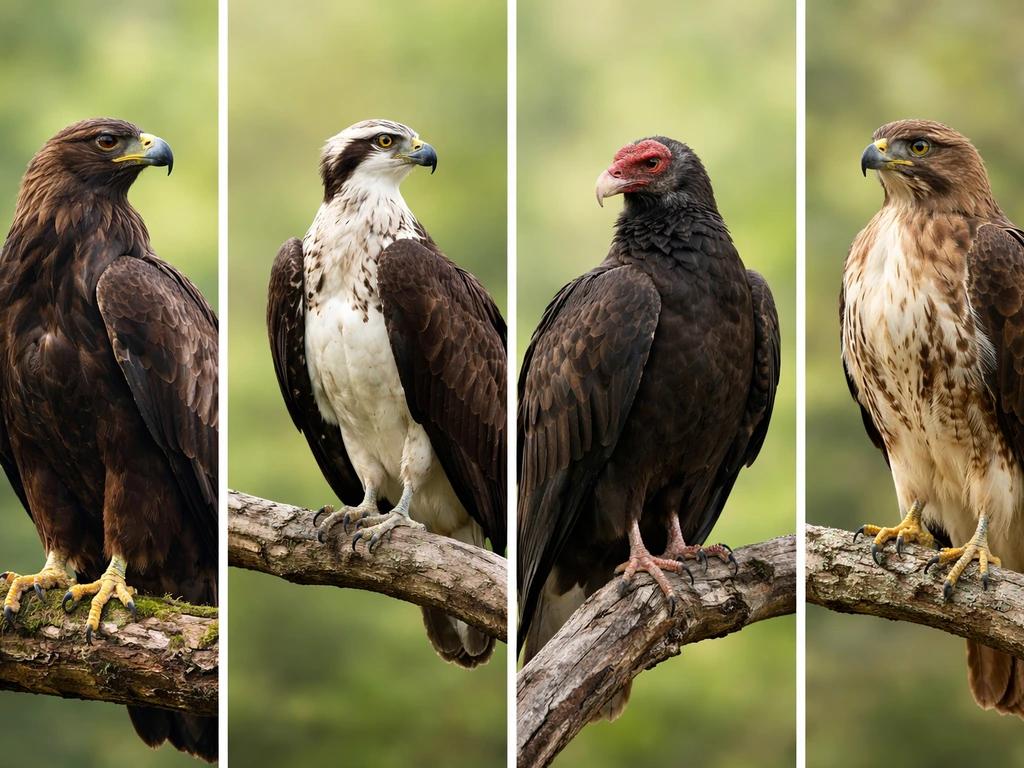
| Feature | Bald Eagle (adult) | Golden Eagle | Osprey | Turkey Vulture | Red-tailed Hawk |
|---|---|---|---|---|---|
| Head color | Pure white | Dark brown, gold nape | White with thick black eye stripe | Featherless red (adult), dark (juvenile) | Brown/pale, streaked |
| Bill | Large, yellow, hooked | Dark, hooked | Dark, hooked | Small, pale/ivory | Yellow-based, hooked |
| Tail | All white (adult), mottled (immature) | White base + black band (juvenile), dark (adult) | Barred/banded, shorter | Long, dark | Reddish-brown (adult), brown barred (immature) |
| Wing shape in flight | Broad, flat, plank-like | Broad, flat | Long, narrow, M-shaped with bent wrist | Long, V-shaped dihedral, rocking | Broad, slightly rounded |
| Underwing pattern | Dark (adult), white blotches (immature) | Limited white at flight feather base (immature) | White with dark wrist patches, barred feathers | Two-toned: dark coverts, pale flight feathers | Pale with dark wrist bar |
| Eye color | Bright yellow | Dark brown to amber | Yellow | Red (adult) | Brown to amber |
| Typical posture | Wings flat, head projecting | Wings flat, smaller head | Wings crooked/angled, hovering over water | V-tilt, wobbly soar | Kiting into wind, perches on posts |
Use location and habitat to narrow down your candidate
Where you are and what's around you does a lot of the work. Bald eagles are almost always near water: coasts, large rivers, big lakes. If you're watching a large soaring bird and there's a lake or river within half a mile, bald eagle and osprey jump straight to the top of the list. If you're in a mountain range or wide-open grassland far from water, golden eagle becomes much more likely. Turkey vultures and red-tailed hawks are generalists and show up almost everywhere, so they're always worth ruling out early.
Time of year matters too. Bald eagles congregate near open water in winter when inland lakes freeze and fish become concentrated. Ospreys are migratory and largely absent from northern states in winter. Golden eagles tend to move through in fall and winter along ridge lines. Knowing what month it is and what habitat you're in can cut your candidate list in half before you even raise your binoculars.
- Near a river or lake: check for bald eagle or osprey first
- Mountain ridges or open grasslands: golden eagle is more likely
- Farmland, roadsides, or open fields: start with red-tailed hawk
- Anywhere you see a large dark bird tilting and rocking: turkey vulture
- Along the coast during migration: bald eagle, osprey, and golden eagle are all possible
How to confirm: photos, binoculars, and final verification
When you first spot the bird, resist the urge to immediately try to name it. Give yourself a few seconds to lock in the wing posture and overall silhouette before anything else. That single step eliminates turkey vultures (V-shape tilt) and ospreys (kinked M-wings) from the eagle candidates almost instantly, even without binoculars.
If you have binoculars, focus first on the head and bill together. A fully white head with no markings and a large bright yellow bill is your strongest bald eagle confirmation. If the head is dark but you're still not sure of the species, shift to the tail: white at the base with a defined black terminal band points to juvenile golden eagle, while patchy or blotchy white scattered across the tail and underwing points to immature bald eagle.
The USGS Patuxent Bird Identification InfoCenter also notes that immature golden eagles have [yellow cere](https://www. mbr-pwrc. us. gov/id/htmid/h3490id.
html)s, while immature bald eagles have dark ceres. A dark cere (the fleshy area at the base of the bill) on an immature bird also helps: juvenile bald eagles have a dark cere, while juvenile golden eagles show a yellow cere.
Photos are your best friend for later verification. Even a slightly blurry shot on a phone gives you something to compare against reference images. When you take the photo, try to capture the bird from below if it's soaring, since underwing pattern is often the most definitive field mark for separating immature bald eagles from golden eagles. If the bird is perched, try to get both the head profile and the tail in the same frame. Once you have a photo, apps like Merlin (from Cornell Lab) can give you a quick starting point, though you should always cross-check the result against the specific field marks described above.
The most useful habit you can build is always checking wing posture first, then head pattern, then tail. In that order, those three features will resolve most bald eagle confusion in under a minute.
If you enjoy comparing large soaring birds, the broader question of what bird looks like an eagle more generally opens up a few more species worth knowing, but for bald eagle specifically, the golden eagle, osprey, turkey vulture, and red-tailed hawk cover the vast majority of field misidentifications you're likely to encounter. If you tell Merlin what you see, it can help narrow down candidates for “what bird looks like an eagle” based on wing shape and posture.
If you're trying to figure out what bird looks like a woodpecker, the process is similar: focus on the bill, head shape, and how the bird moves on the ground or climbs. If you're trying to figure out what bird looks like a peacock, focus on the tail pattern and overall color instead of eagle field marks.
If you're wondering what bird looks like a penguin, start by looking for the black and white pattern and the way it swims rather than soars what bird looks like an eagle. If you're wondering what bird looks like an eagle in general, you can use wing shape, head and beak color, and flight posture to narrow it down fast.
FAQ
If I see the bird for only a few seconds, what’s the quickest giveaway?
Yes. If you only get a brief glimpse, prioritize posture over color. Bald eagles hold wings flat during soaring, while turkey vultures tilt and rock in a clear V-shape, and ospreys show a kinked, M-like wing bend at the wrist.
Can a turkey vulture ever be mistaken for a bald eagle even when the bird is soaring high?
Not always. Turkey vultures can be large and dark, and immature raptors can look eagle-like at distance. The most reliable checks are the V-wing silhouette and, up close, the pale ivory bill on bald eagles versus the different head and bill look on vultures.
Does location matter less in winter because bald eagles might wander away from water?
During winter, yes. Bald eagles concentrate near open water when lakes and rivers are frozen inland. If you are inland with no nearby open water, the chance of a bald eagle drops and you should weigh other raptors higher first.
How can I tell if I’m looking at a nearly adult bald eagle versus an immature golden eagle?
Yes, especially if the bird is young. A fourth-year bald eagle can look nearly adult but may still have mottling on the head and a dark-tipped tail. Confirm with tail pattern (base white with a defined terminal band for juvenile golden eagle, versus patchier/blotchy scattering for immature bald eagle).
What should I do if the bird seems “about the right size” but I’m not sure there’s anything nearby to compare?
Use scale cues carefully. Red-tailed hawks are smaller, but judging size is hard without a nearby reference. If you see a reddish-brown tail from above plus a streaked belly band, lean red-tailed hawk, even if the overall silhouette resembles an eagle.
Is it safe to identify by head color if I’m unsure about the wing posture?
Avoid relying on head color alone if it’s an immature bird. Juvenile bald eagles can have a darker head, and lighting can change the apparent color. Use a combination of wing posture first, then underwing pattern (white extent and placement), then tail markers.
What if the eye stripe on an osprey is hard to see in my binoculars?
For ospreys, look for the thick black eye stripe. If you cannot clearly see the stripe due to distance, watch the wing shape: ospreys have longer, narrower wings with a visible kink at the wrist that often forms an M-shape from below.
Does it help to wait until the bird is perched instead of identifying from flight?
Yes. If the bird is perched, you can often get a more confident read by getting both head profile and tail in the same frame. Focus on whether the head looks cleanly white with a bright yellow bill (adult bald eagle) or shows mottling (younger bald eagle).
What photo angle should I use if I want the best chance to confirm an immature look-alike?
When photographing, increase the chance of diagnostic features by shooting bursts and aiming for the underwing pattern if the bird is soaring. For perched birds, try to include the tail and head together so you can compare tail barring and bill color.
What should I do if none of the look-alikes fully match what I’m seeing?
If your field marks are conflicting, don’t force a single ID. Re-check in this order: wing posture first, then head and bill together, then tail and underwing pattern. If it still doesn’t fit one species cleanly, treat it as a probable and keep evidence notes (date, habitat, distance, lighting).
Next Article
What Does a Herring Bird Look Like? Herring Gull ID Guide
Learn what a herring bird likely is: clear herring gull ID guide with key marks, plumage differences, and lookalike comp