A sparrow is a small, chunky brown bird with a stout seed-cracking beak, streaked brown and buff plumage, and a fairly short tail. If you spotted a little brown bird at your feeder, on a park bench, or hopping along a sidewalk and wondered what it was, there is a good chance you were looking at a House Sparrow, the most common sparrow most people encounter. But "sparrow" covers a big family of birds, and plenty of other small brown birds get mistaken for sparrows every day. This guide will walk you through exactly what to look for, starting with the birds you are most likely to see.
What Does a Sparrow Bird Look Like? Easy ID Guide

Marcus Whitley
9 Apr 2026
What people usually mean by "sparrow"
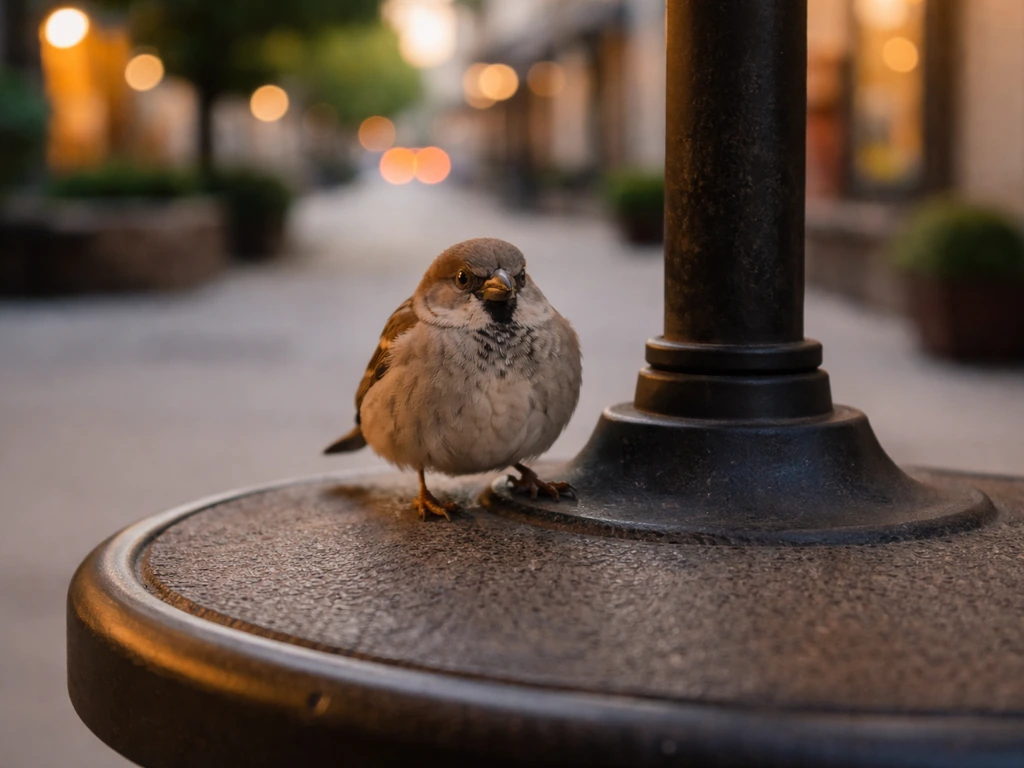
When most people say sparrow, they picture the House Sparrow. It is the chunky little bird that raids outdoor cafe tables, nests in parking lot light fixtures, and shows up at backyard feeders year-round across North America, Europe, and much of the world. Technically, the House Sparrow (Passer domesticus) belongs to the Old World sparrow family, while North America is also home to dozens of New World sparrows like Song Sparrows, White-throated Sparrows, and Chipping Sparrows. These two groups are not closely related, but they share a similar body plan: small, brownish, streaky, and short-billed. For identification purposes, thinking of them together makes sense, because the visual overlap is real.
The confusion does not stop there. Finches, buntings, wrens, and even some juvenile birds get called sparrows by casual observers. The good news is that once you know the key visual markers, you can sort them out quickly, even at a distance.
Quick visual checklist for sparrow identification
Before diving into specific species, here is a fast checklist of the features that define a typical sparrow look. Run through these the next time you spot a small brown bird and you will narrow things down fast.
- Size: roughly 5 to 7 inches long, similar to a large thumb or a small fist
- Shape: stocky and rounded, with a large round head and relatively short tail
- Bill: short, thick, and conical, built for cracking seeds (not thin and pointed like a warbler)
- Color: brown, buff, and streaked across the back and wings; paler underneath
- Head pattern: look for stripes, caps, or patches on the crown and face
- Wing bars: many sparrows show one or two pale wingbars across the folded wing
- Tail: medium length, often pumped or fanned slightly when the bird is alert
- Behavior: hops on the ground, perches on low shrubs or fences, often feeds in small flocks
House Sparrow and common regional sparrows: what they actually look like
The House Sparrow is about 5.5 inches (14 cm) long, which puts it roughly the size of a Song Sparrow or Dark-eyed Junco, but noticeably stockier. The House Sparrow is a small bird with a typical length of about 16 cm (about 6.3 in) blank" rel="noopener noreferrer">about 16 cm (about 6.3 in) long. Think of it as a small bird that looks like it skipped leg day but hit the gym for its chest and head. That large rounded head, short tail, and stout bill are the silhouette clues that will catch your eye even before you see any color detail.
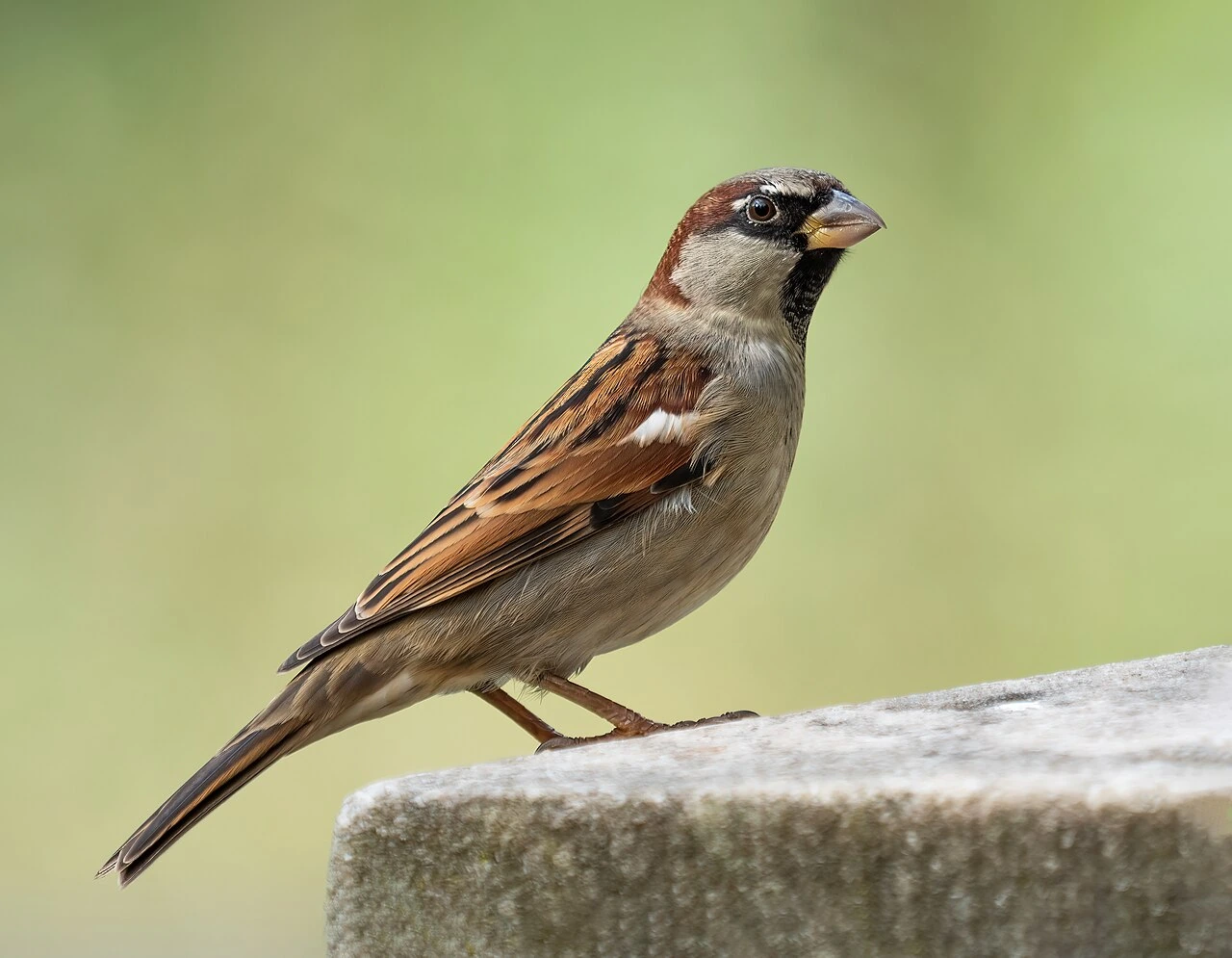
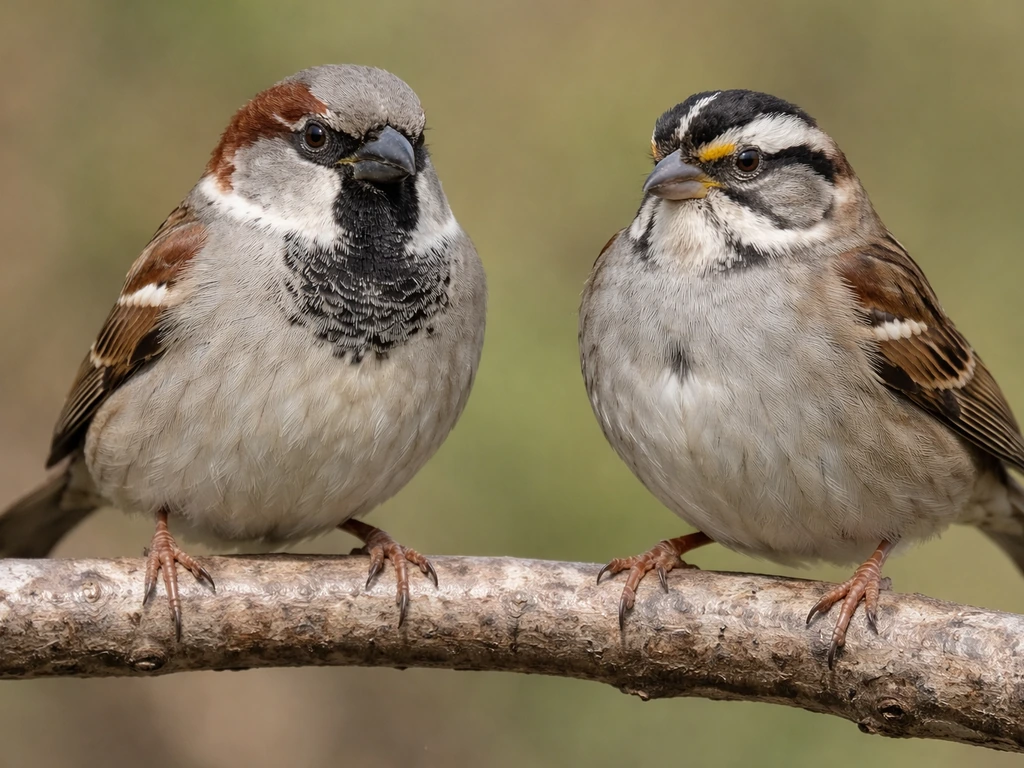
Up close, a male House Sparrow is actually quite handsome. You will see a gray crown, white cheeks, a chestnut nape (the back of the neck), and russet-streaked wings with a clear white wingbar across the folded feathers. National Geographic also describes the adult male House Sparrow as having a contrasting black throat and upper chest, along with a chestnut nape and russet tones on the wings a chestnut nape (the back of the neck), and russet-streaked wings with a clear white wingbar. The most obvious mark is the black bib: a patch of black running from the throat down onto the upper chest. The back is streaked brown and buff, and the underparts are a clean pale gray. In bright light, the wings have a warm russet tone that makes the bird look more colorful than you might expect.
Other common sparrows you might encounter include the Song Sparrow, which has heavy brown streaks on its chest that converge into a central spot, and the White-throated Sparrow, which shows a clean white throat patch and yellow spots just above the eye. The Chipping Sparrow, common in backyards across North America, has a bright rufous (rusty red) cap and a crisp white eyebrow stripe. The Dark-eyed Junco, while technically a sparrow, looks quite different: dark gray or brown above with a pale belly and white outer tail feathers that flash when it flies.
Male vs. female, and what juveniles look like
Male and female House Sparrows look noticeably different, which catches people off guard. The male has all those bold marks: black bib, gray crown, chestnut nape, white cheeks. The female is much plainer. She is buffy-brown overall, with a pale eyebrow stripe (called a supercilium), a streaked back, and no bib or bold head pattern at all. If you see a dull brownish bird near a feeder and cannot find any of the male's field marks, you are probably looking at a female. She is sometimes mistaken for a completely different species.
Young House Sparrows, called juveniles, look similar to adult females: brownish, streaky, and relatively plain. Their bills often appear slightly paler and their plumage can look a bit softer and less defined. Males start showing their black bib as they mature, but in the first few months the bib can be patchy and incomplete, which sometimes makes them look like an odd in-between bird. Seasonally, male House Sparrows tend to look their sharpest in spring, when the pale feather tips that cover the bib in fall have worn away, revealing a bolder, blacker patch.
Birds that look like sparrows: the top look-alikes
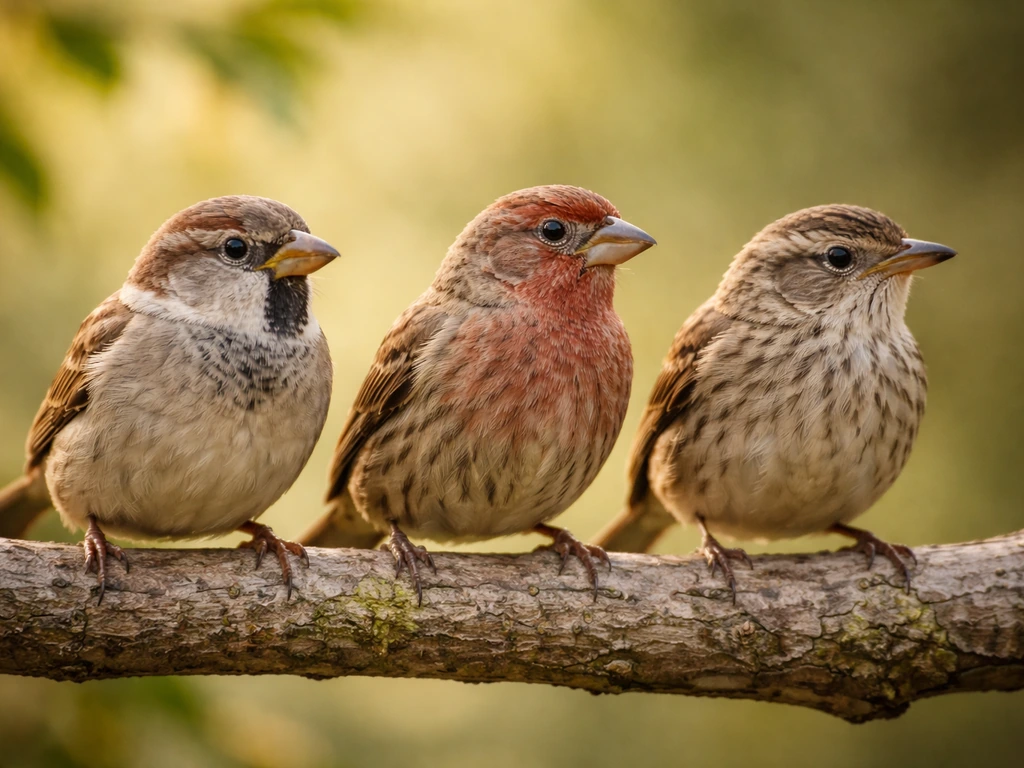
This is where a lot of the confusion happens. Several birds share the sparrow's small-and-brown body plan but belong to completely different families. Here is how to tell them apart.
| Bird | Key differences from sparrows | Quick tip |
|---|---|---|
| House Finch / Purple Finch | Males have red or rosy wash on head and breast; bill slightly more curved; finches tend to perch higher in trees | Look for the rosy or raspberry color on the male's head; female finches have more heavily streaked faces than female sparrows |
| Wren (e.g., House Wren) | Much smaller; tail often cocked upright at a sharp angle; plain brown with very fine barring; thin, slightly curved bill | If the tail is pointing skyward, it is almost certainly a wren, not a sparrow |
| Bunting (e.g., Indigo Bunting female) | Female buntings are a plain warm brown with minimal streaking and a smaller, rounder head; males are unmistakable blue | Female buntings look almost too plain, lacking the head stripes most sparrows show |
| Chats (e.g., Yellow-breasted Chat) | Larger than sparrows; yellow breast; bold white eye-ring; thick bill; loud and secretive in dense brush | The yellow underparts and white spectacle pattern set it apart immediately |
| Juvenile Robin or Thrush | Much larger body; spotted breast; longer legs; upright posture; thin bill | If the bird stands tall and runs across a lawn, it is a thrush, not a sparrow |
| Dunnock (Hedge Sparrow) | Thin, pointed warbler-like bill; unstreaked gray face and breast; shuffling, mouse-like movement | The thin bill is the giveaway; dunnocks eat insects more than seeds |
It is worth noting that identifying mystery birds often goes in unexpected directions. You might start by thinking you saw a sparrow and end up realizing it was something else entirely. If your bird had a heavier, hooked bill and was all black or very dark, you might find our guide on what bird looks like a crow useful for ruling out crow-family birds. And if the bird was perched still and upright with a big rounded head, it might be worth checking whether it could be an owl rather than a sparrow, since some small owls get reported as sparrows by surprised backyard observers. Our article on what bird looks like an owl can help you rule that out quickly.
Pigeons and doves are another common source of confusion, especially when people spot a smaller dove species. If the bird you saw was noticeably larger than the bird in your mind, walking with a bobbing head motion, or cooing, our breakdown of what bird looks like a pigeon will help you compare sizes and shapes. For birds on the larger end of the brown-bird spectrum, it is also occasionally worth checking our article on what bird looks like a vulture, particularly if the bird you spotted was soaring rather than hopping.
One of the most common real-world mix-ups is between sparrows and robins, especially when people spot a bird that has some orange or rufous coloring but seems too small to be a proper robin. If that sounds familiar, our guide on what bird looks like a robin but smaller is exactly the right next stop.
How to confirm what you saw in the field
You do not need binoculars or field experience to confirm a sparrow identification. You just need to know what to look at and what to photograph. Here is a practical approach you can use right now, even with a smartphone.
Start with size and silhouette
Before you get close enough to see color, size and shape will tell you a lot. A sparrow at a distance looks compact and rounded, with a big head relative to its body. It sits low and hops rather than walking with long strides. If the bird looks especially heavy or has a long tail, you are probably looking at something else. If it looks like a small, pudgy ball with wings, you are on the right track.
What to photograph for a solid ID
If you can get your phone out in time, aim for these angles in this order:
- Head-on or three-quarter view of the face: this captures the bill shape, any crown stripes, and cheek patches
- Side profile while the bird is perched: shows the overall body shape, tail length, and any wing bars or back streaking
- The bird in flight if possible: wing shape and any white on the tail or wings are excellent ID clues
- A size reference: a bird next to a known object (a fence slat, a leaf, another bird) helps you estimate size later
The field marks to check first
If you are looking at a live bird and want to ID it on the spot, work through these in order. Bill thickness first: is it short and thick (sparrow/finch) or thin and pointed (warbler/wren)? Head pattern second: do you see any stripes, a solid cap, or a bib? Wing bars third: are there pale lines across the folded wing? Tail fourth: is it short and rounded, or long and narrow, and does the bird pump or wag it? Behavior fifth: is it hopping on the ground in the open (sparrow behavior) or creeping along bark or dense brush (warbler or wren behavior)? Running through these five checks takes about 30 seconds and gets you most of the way to a confident ID.
Using apps and guides to confirm
Once you have a photo or a set of notes, apps like Merlin Bird ID (from Cornell Lab) let you enter size, color, and behavior to get a shortlist of candidates. You can also upload a photo and get an AI-assisted ID suggestion in seconds. If you prefer a physical guide, a regional field guide organized by habitat (backyard birds, grassland birds, woodland birds) will help you compare your notes to illustrated plates. The key is to look at the head pattern and bill shape first, since those two features alone will eliminate most wrong answers.
The more you look at sparrows, the easier it gets. Start with the House Sparrow since it is almost certainly the bird you saw, and use its shape and size as your mental baseline for every small brown bird you encounter after that. Once that template is locked in, spotting the differences that make other species stand out becomes almost automatic.
FAQ
If I see a small brown bird at a feeder, how can I tell whether it is a House Sparrow versus a different “sparrow” species?
Use the head and wing pattern. House Sparrows often look stockier with a short tail, and males show a black bib with a gray crown and white cheeks. If you see no bib-like throat patch and the bird looks plainer and more uniformly buffy-brown, it is often a female House Sparrow, but check for a distinct eyebrow stripe (supercilium) and a clear wingbar on the folded wing before assuming it is another species.
Why do some House Sparrows look “in-between” or missing the black bib?
Season and age can make the bib look patchy. In fall and early winter, pale feather tips can partially cover the bib, making it look incomplete. Juveniles also resemble adult females first, with softer, less defined markings, and the bib may not fully appear until they mature.
What does a female House Sparrow look like compared with a juvenile?
Female House Sparrows are typically buffy-brown with a pale eyebrow stripe and no obvious bib. Juveniles are very similar, often with slightly paler bills and softer, less crisp feather edges. A practical clue is that the “look” of a juvenile may change faster as it molts, while an adult female’s markings tend to stay consistently plain year to year.
How can I distinguish a sparrow from a finch or bunting when they all seem small and brown?
Focus on bill shape and stance. The guide’s core idea is bill thickness first: sparrow/finch types tend to have thicker, seed-cracking bills, while warbler and wren look-alikes usually have thinner, more pointed bills. Also note behavior, sparrows often hop on open ground, while many finch-like birds may hop but often show more obvious head or throat contrast depending on species.
Can a Dark-eyed Junco be mistaken for a sparrow, and what visual cue helps most?
Yes, it gets mistaken a lot because it is small and brownish overall. The clearest cue is the tail flash and the outer white tail feathers, which stand out when it flies. In addition, juncos often have a paler belly compared with the more uniformly streaked look you might expect from a typical sparrow body plan.
What should I do if my bird seems to have some orange or rufous, but it might not be a robin?
Do not use color alone, especially from partial lighting. First confirm the silhouette: robins are usually longer-tailed and less “pudgy” than sparrows. If it really looks compact with a large head and short tail, re-check for sparrow-style traits like a thick short bill and, for males, the black bib and wingbar.
If the bird is perched upright and looks round-headed, could it still be an owl even if I thought it was a sparrow?
Yes, small owls can be reported as sparrows because they also look compact from a distance. The difference is posture and head shape at rest, owls often hold a more vertical, statuesque stance and may show facial disk features (even subtle ones). If you can, capture a side view in bright light and compare the bill and head outline to sparrow silhouettes.
How should I photograph a sparrow for the best ID results on an app like Merlin?
Aim for sharp shots where the bill and folded wing are visible. The most useful frames show bill thickness, the presence or absence of a throat bib (especially for males), and whether there is a white wingbar. If the bird is moving, get a burst of photos when it hops and turns, so you capture at least one moment with the wing folded and the head pattern unobstructed.
What common mistake leads to misidentifying sparrows, even with a good photo?
Relying on color tones or lighting instead of pattern structure. Brown birds can look dramatically different in shade, morning sun, or wet feathers. Use consistent markers first, bill shape, head pattern (bib, throat patch, eyebrow stripe), and wingbar presence, then use size and tail length as secondary checks.
Are there times of year when sparrow identification is harder?
Yes. Molting and feather wear can reduce contrast, making wingbars and head markings look faint. Also, during the period when young birds are establishing themselves near feeders, juveniles can look closer to adult females, so you will need more attention to bill brightness, overall softness of the plumage, and whether markings look crisp or muted.