A cuckoo is a slender, long-tailed bird roughly the size of a dove, with a small rounded head, a slightly curved bill, and a streaky or plain gray-brown back. The tail is unusually long for the bird's body size, often making up more than half its total length, and most species show bold white spots or tips along the tail feathers. If you spot a medium-sized bird that looks a bit like a small hawk or a stretched-out dove, perched low with a drooping tail and a hunched posture, there's a good chance you're looking at a cuckoo.
What Does a Cuckoo Bird Look Like? Key ID Features

Marcus Whitley
4 May 2026
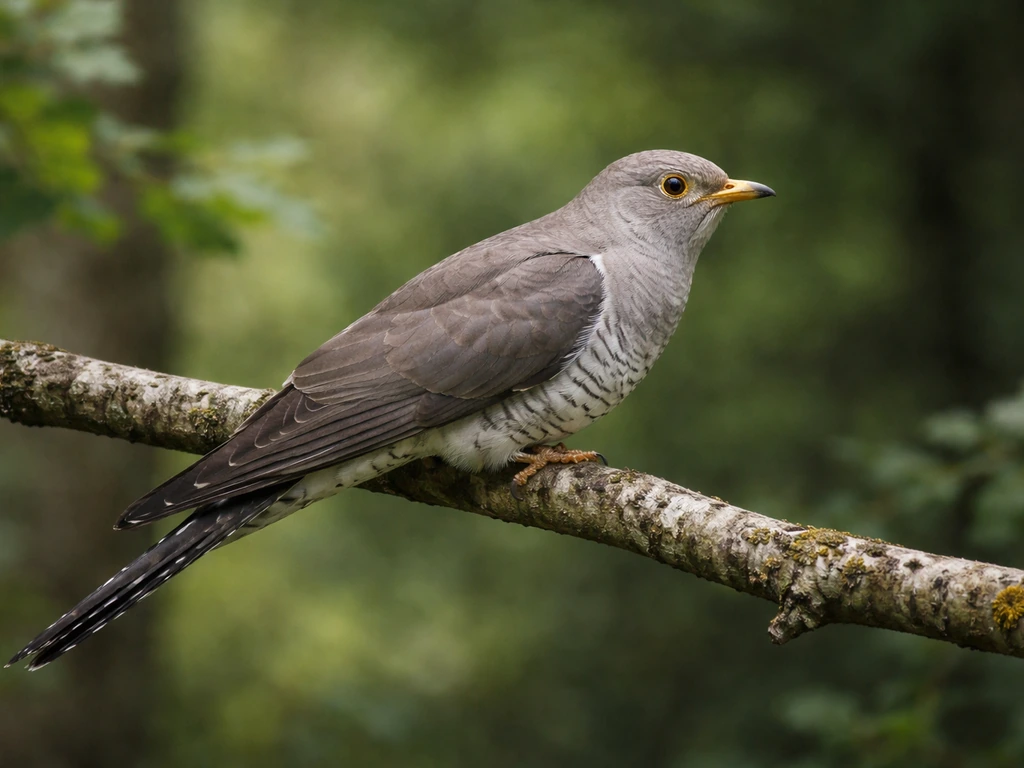
The typical cuckoo look at a glance
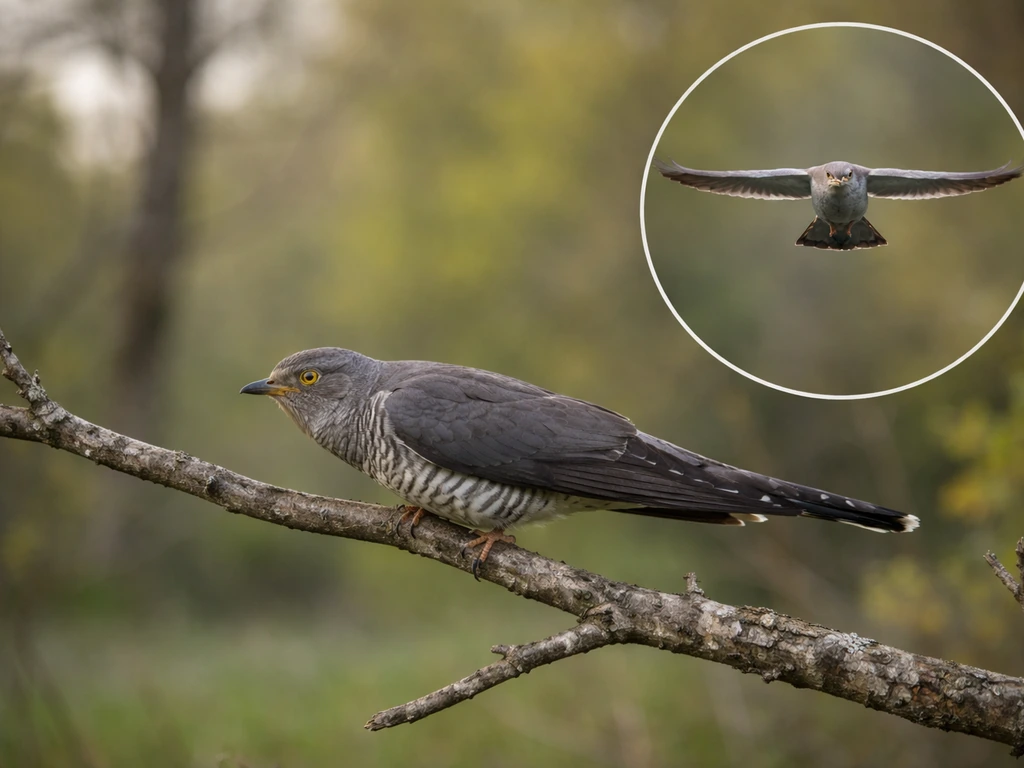
Most cuckoos share a very recognizable body plan once you know what to look for. Think slim, long, and a little bit secretive. They tend to sit in a slightly crouched, horizontal posture on a branch, not upright the way a thrush or sparrow might. The tail hangs down or fans out behind them, making the bird look almost comically elongated compared to its small head. The wings are often held loosely at the sides rather than folded tight, which adds to that relaxed, almost droopy silhouette.
In flight, cuckoos are surprisingly fast and direct. They hold their wings in a stiff, shallow arc and don't flap deeply the way most songbirds do. From a distance, a flying cuckoo can honestly look like a small falcon or Accipiter hawk, which trips up a lot of people. Once you clock the very long tail streaming behind them and the thin, pointed wingtips, you start to get an eye for it.
Key field marks to check
Size and overall shape
Most cuckoos are dove-sized, roughly 28 to 35 cm (11 to 14 inches) from bill tip to tail tip, but the tail accounts for a huge portion of that measurement. The body itself is compact. The wings can be long and narrow in migratory species or shorter and more rounded in forest-dwelling species. Either way, the overall silhouette is always elongated and low-slung.
Head and bill
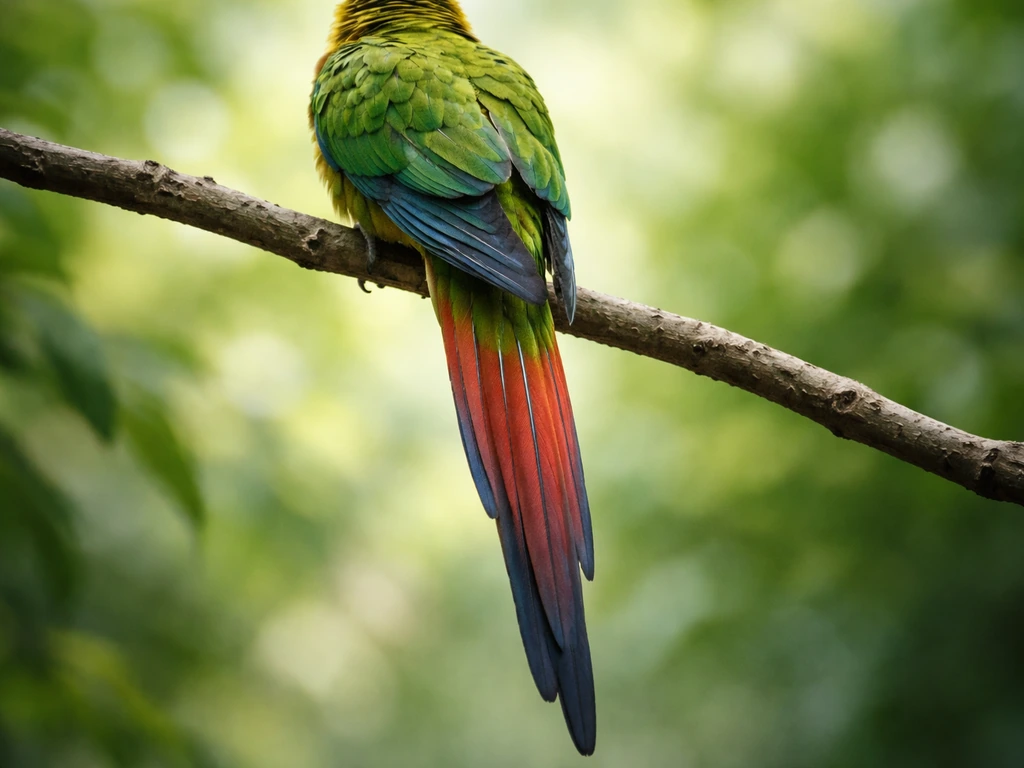
The head is small and rounded, sitting on a fairly thin neck. Conures are generally small parrots with bright, bold colors, and their look varies by species. The bill is medium length, slightly curved or decurved at the tip, and fairly sturdy. For the Black-billed Cuckoo specifically, the U.
S. Fish & Wildlife Service notes a bill with a hooked tip on the upper mandible and an eye-ring that is generally bright orange-red to red orbital ring, which can be yellow, red, or orange depending on the species.
Some species, like the Black-billed Cuckoo, have a noticeably long, all-dark bill. Many cuckoos also have a bare skin ring around the eye called an orbital ring, which can be yellow, red, or orange depending on the species. That eye ring is one of the best close-up field marks you can look for, so if you get a good view of the face, check the color around the eye.
Tail
The tail is arguably the most distinctive feature. It's long, graduated (meaning the outer feathers are shorter than the central ones, giving it a tapered look), and most species have bold white spots or white tips on the tail feathers. On the Squirrel Cuckoo, for example, the tail can reach about 28 cm (11 inches) on its own. When the bird fans the tail or flicks it while perching, you'll often catch a flash of those white spots, which is a really useful instant-ID cue.
Wings and back
The upperparts, meaning the back, wings, and crown, are usually some shade of grayish-brown or warm rufous brown. There's rarely a lot of bold wing patterning. The wings look relatively plain from above. In some species you might notice a slight rufous or chestnut wash on the flight feathers when the wing is spread, but generally the wing surface is subdued compared to the flashy tail.
Color and pattern: cuckoos aren't all the same
The word "cuckoo" covers a large family of birds spread across every continent except Antarctica, and they vary quite a bit in color. Here's a quick breakdown of the main types you're likely to encounter or look up.
| Species/Group | Upperparts | Underparts | Tail pattern | Notable mark |
|---|---|---|---|---|
| Common Cuckoo (Europe/Asia) | Blue-gray | White with fine black barring | Dark with white tips and spots | Yellow eye ring, yellow bill base |
| Black-billed Cuckoo (North America) | Plain grayish-brown | Dull white, unstreaked | Dark with small white tips | Red orbital eye ring, all-black bill |
| Yellow-billed Cuckoo (North America) | Grayish-brown | Clean white | Bold white spots on black tail | Yellow lower bill, rufous wing flash |
| Squirrel Cuckoo (Central/South America) | Chestnut/rufous-brown | Pale buff to whitish | Very long, bold white-tipped tail | Extremely long tail (up to 28 cm) |
| Channel-billed Cuckoo (Australia) | Gray-brown | Pale/streaked | Barred tail | Huge pale bill, very large overall |
If you're in North America and you see a long-tailed brown bird with a flash of rufous in the open wing during flight, you're most likely looking at a Yellow-billed Cuckoo. That rufous wing flash is one of the best instant field marks for that species. The Black-billed Cuckoo is very similar but lacks that rufous in the wing and has much smaller white tail spots. In Europe, the Common Cuckoo has that distinctive barred chest pattern that makes it look surprisingly like a small hawk from the front.
How to tell a cuckoo from similar-looking birds
This is where a lot of people get stuck, because cuckoos genuinely do look like other birds at first glance. Here are the most common mix-ups and how to sort them out.
Cuckoo vs. Accipiter hawks (like Sharp-shinned or Sparrowhawk)
In flight, a cuckoo and a small hawk can look eerily similar, especially from below or at a distance. Both are slim with longish tails. The key difference is wingbeat style: hawks use deep, powerful flaps followed by a glide, while cuckoos flap with stiff, shallow wingbeats and rarely glide. Also, look at the tail shape. A hawk's tail is square or slightly notched at the tip. A cuckoo's tail is long, tapered, and almost always shows those white spots or bars near the tip.
Cuckoo vs. Mourning Dove or Pigeon
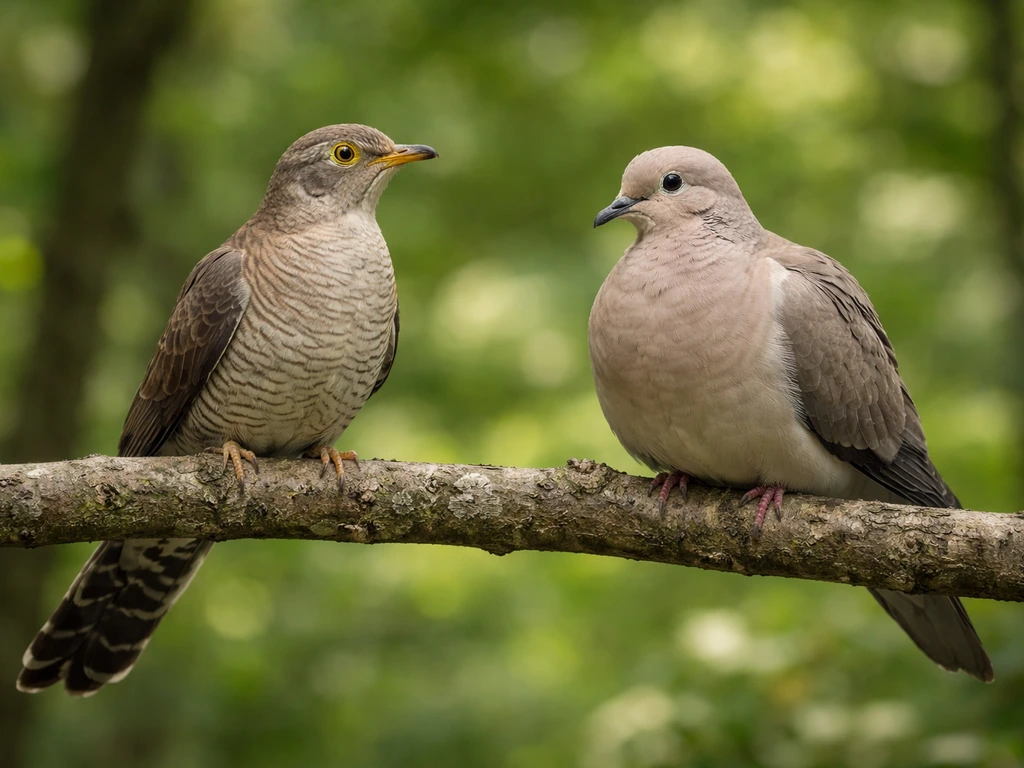
From a distance, a perched cuckoo can be confused with a dove because of the similar overall size and brownish color. But doves have plumper, rounder bodies and shorter, more even tails. A cuckoo looks distinctly slimmer, almost skinny, with that exaggerated tail. The bill shape is also different: doves have a small, soft-based bill with a slight bump at the base, while a cuckoo's bill is longer, straighter, and more pointed.
Cuckoo vs. large thrushes or Brown Thrashers
Brown thrashers and some large thrushes share the warm brown coloring and long tail, and they're a common source of confusion in North America. The main difference is the underparts: thrushes typically have spotted or streaked bellies, while most cuckoos have clean, plain white or buff underparts. Thrashers also have a noticeably curved, thrasher-style bill that's much longer and more sickle-shaped than a cuckoo's. And thrashers pump their tails up and down actively; cuckoos tend to hold theirs more still or fan them.
A quick comparison cheat sheet
| Feature | Cuckoo | Small Hawk | Dove | Thrasher |
|---|---|---|---|---|
| Body shape | Slim, elongated | Compact, powerful | Plump, rounded | Slim but shorter |
| Tail | Very long, tapered, white-spotted | Medium, square-tipped | Medium, pointed | Long, rounded, plain |
| Bill | Medium, slightly curved | Hooked | Small, soft-based | Long, strongly curved |
| Underparts | Plain white or buff | Barred | Plain or scaled | Streaked or spotted |
| Flight style | Stiff, shallow wingbeats | Deep flaps + glides | Fast, clapping takeoff | Rarely seen in flight |
What to do next: confirm your ID
If you think you've spotted a cuckoo, here's exactly what to do in the next few minutes to lock down the identification.
- Get a photo of the tail, especially the underside where the white spots or bars show up clearly. This is the single most useful angle for cuckoo ID.
- Photograph or note the bill color: all black, yellow on the lower mandible, or pale all over? This separates many closely related species instantly.
- Look for a colored eye ring. Get as close as you safely can and check the bare skin around the eye. Yellow, red, and orange eye rings all point to different species.
- If the bird flies, watch for a rufous flash in the wings. That immediately narrows you to species like the Yellow-billed Cuckoo in North America.
- Note the habitat: are you in dense riverside thickets, open woodland, or tropical forest? Many cuckoo species have very specific habitat preferences that help narrow the options.
- Check your location and the time of year. Most cuckoos are migratory, so range maps matter a lot. A cuckoo shape in December in northern North America is far more likely to be something else.
- Use your photos to cross-reference with a field guide app like Merlin Bird ID or eBird, which will show you which cuckoo species are currently expected in your area.
Once you've got the species nailed down, it's worth spending a few minutes comparing it to other visually distinctive birds to build your eye. Birds like cockatoos, macaws, and conures have very different shapes and color schemes, but studying how they differ from subtler brown-gray birds like cuckoos actually sharpens your instinct for silhouette and proportion. If you are comparing to cockatoos, what does a cockatoo bird look like will help you spot the big differences in crest, size, and coloring Birds like cockatoos, macaws, and conures. The more contrast you see, the better your field skills get.
The bottom line: trust the tail. If you see a slim, brownish bird with an absurdly long, spotted or barred tail perching in a low, hunched posture, you are almost certainly looking at a cuckoo. If you are trying to identify a cowbird, the first step is to compare its look to common cuckoo features and then check what does a cow bird look like. blank" rel="noopener noreferrer">Get the bill color and the eye ring, and you'll have everything you need to put a species name on it. If you are also curious about other birds at a glance, you can compare this with what does a canary bird look like for a totally different look and color pattern.
FAQ
What does a cuckoo bird look like if you only see it briefly in flight?
Focus on the combination of long tapered tail streaming behind and shallow, stiff wingbeats. Even when plumage details blur, cuckoos look “long and low” with thin pointed wingtips, they do not show the deep flap-and-glide pattern typical of many hawks.
How can I tell a cuckoo from a hawk when the bird is perched?
Look for tail tip markings (white spots or bars) and a more “skinny” silhouette. Hawks usually have a shorter, sturdier-looking tail and different wing posture, they tend to hold wings more decisively rather than with a loose, droopy feel.
Why does the tail look extra long on some cuckoos, and can it be misleading?
The tail is genuinely a very large portion of body length, and it can look even longer when the bird crouches low or fans/flicks the feathers. However, if the tail markings are hidden by the viewing angle, use posture (hunched, horizontal) and bill shape to avoid mis-ID.
Can a cuckoo lack obvious white spots or bars on the tail?
Some species show subtler spotting, so it may look like a mostly uniform tail from far away. If you cannot clearly see markings, rely on the overall proportion (slender body, exaggerated tail), the drooping or hanging tail posture, and the orbital eye ring when you get a close view.
What should I check on a close-up view to confirm it is a cuckoo?
Check the orbital eye ring color (often yellow, red, or orange depending on species) and the bill, which is typically medium to long and slightly curved or decurved. Those two details are especially helpful when the rest of the bird’s coloring is muted.
What does a cuckoo look like compared with a dove if both are brownish?
A cuckoo looks slimmer with a smaller rounded head and an unusually long, uneven (graduated) tail. Doves tend to look plumper with a shorter, more even tail, and their bill shape is less pointed with a small bump at the base.
Are cuckoos ever mistaken for thrashers or other large brown birds?
Yes, especially in North America. Thrashers often have a spotted or streaked belly, and their bill is more strongly curved and sickle-shaped. Cuckoos typically look cleaner on the underparts and hold their tail with less active pumping.
If I am not sure of species, what are the best “decision” traits to prioritize?
Prioritize tail features first (length plus white spots or tips), then posture (low-slung, crouched, relaxed wing hold). After that, use the bill color and the eye-ring color for species-level narrowing, particularly between similar lookalikes like yellow-billed versus black-billed forms.
What mistakes cause the most common misidentifications?
Relying only on brown-gray color without the tail proportion, assuming hawk behavior because of the size, or checking wing patterning when the wings are often subdued. Also, missing the wingbeat style can lead you to confuse a cuckoo’s shallow flaps with a raptor’s deeper flaps.
What’s the quickest way to verify an ID when I have a photo?
Zoom in on the tail tip and count whether you see white spots or bars near the end. Then compare body proportions, check whether the bird looks hunched and horizontally placed, and look for an orbital eye ring color around the face.
Next Article
What Does a Herring Bird Look Like? Herring Gull ID Guide
Learn what a herring bird likely is: clear herring gull ID guide with key marks, plumage differences, and lookalike comp