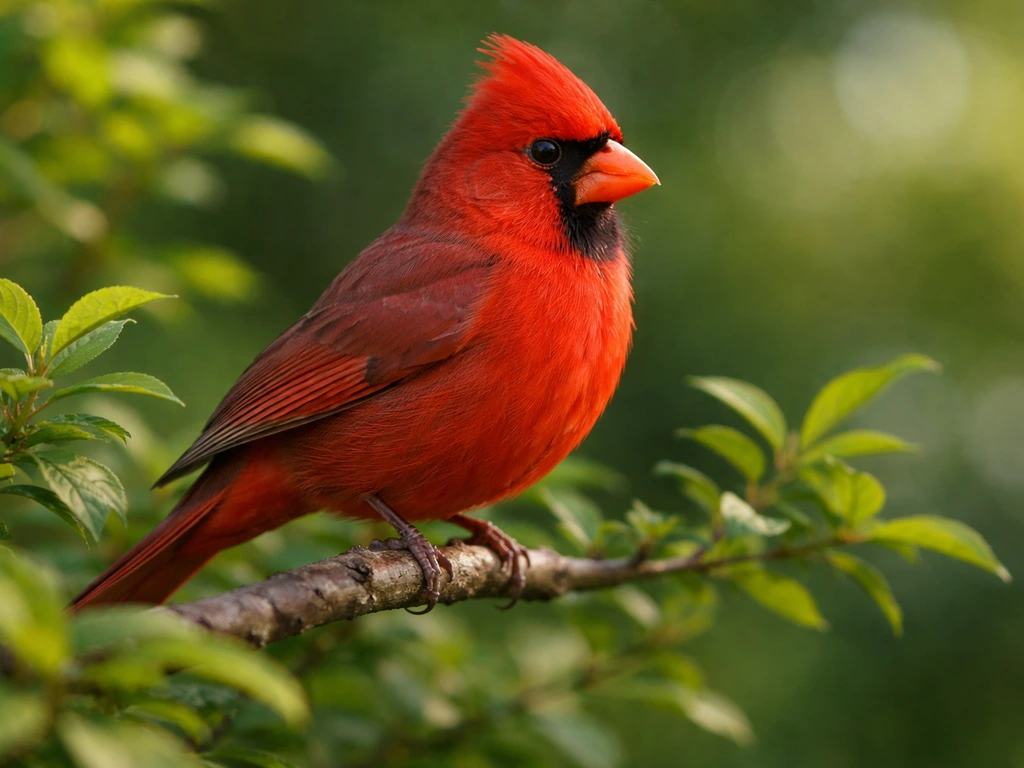
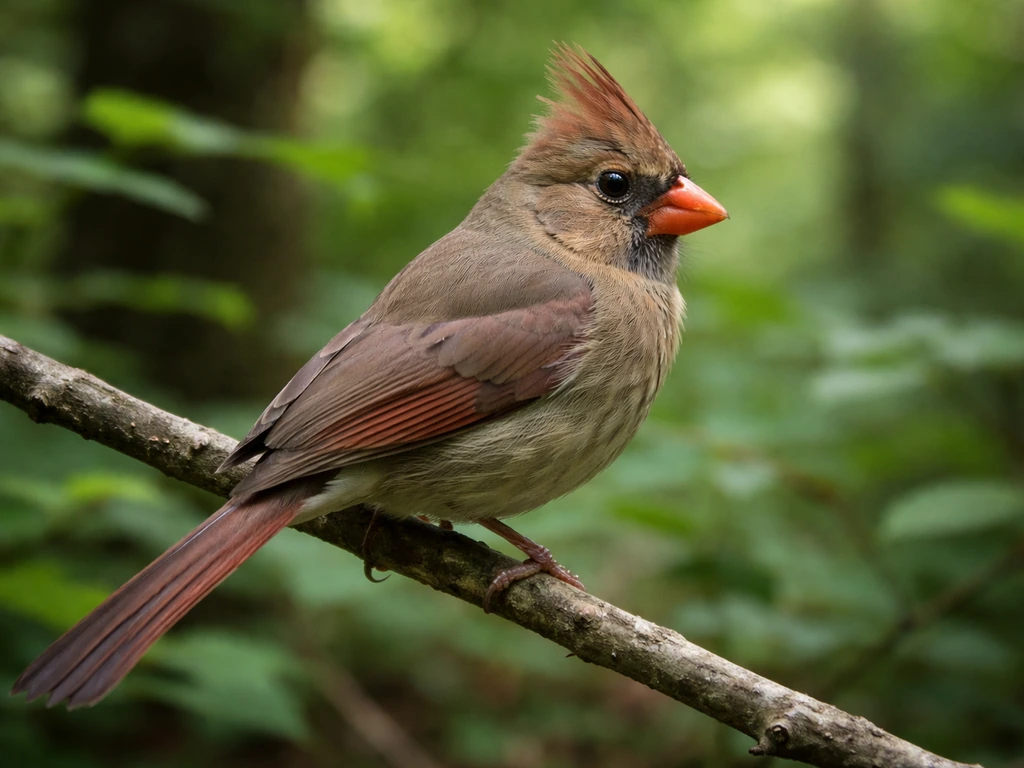
A female "red bird" is usually a pale brown or buff-toned bird with reddish tinges concentrated in specific spots like the crest, wings, or tail rather than a head-to-toe red bird. If you want the quick visual answer, see what does a red bird look like for a clear description of the most likely species and plumage pattern. The most common species people mean when they search this is the female Northern Cardinal: warm gray-brown overall, with a pointed orange-red bill, a distinct crest, and soft reddish washes on the wings, tail, and crest. She looks nothing like the blazing red male, which trips up a lot of people who expect her to be obviously red.
What Does a Female Red Bird Look Like? Field Guide

Marcus Whitley
18 Jun 2026
"Female red bird" could mean a few different things
The phrase "red bird" is a general nickname, not a single species name. Dictionary. com describes “redbird” as a general nickname for red birds, including in everyday phrases, rather than a single species [redbird as a general nickname for red birds](https://www. dictionary.
com/browse/redbird). Merriam-Webster and Wiktionary both define "redbird" broadly as any of several red or partly red birds. In everyday use, it most often points to the Northern Cardinal, but it can also refer to the Summer Tanager, Red Crossbill, Red-winged Blackbird, or various finches.
The ambiguity gets deeper when you add "female" to the search: you might be looking for a female of a species that has "red" in its name (like a female Red-winged Blackbird, which is actually mostly brown), or you might have spotted a female bird that genuinely shows some reddish tones and want to figure out what it is. Both are valid searches, and this guide covers both angles.
If you meant the redwing bird specifically, compare that muted brown look with the red and yellow wing patches that give red-winged blackbirds their name.
What to look at first: size, shape, and where the red actually is
When you spot a brownish bird with a hint of red and want to narrow it down, start with these field marks before you even worry about the exact shade of color.
- Overall size: Is it sparrow-sized (about 5-6 inches), robin-sized (around 8-9 inches), or somewhere in between? Female cardinals and house finches are noticeably different in bulk.
- Head shape and crest: A pointed crest on a brown bird is a huge clue pointing to a female cardinal. No crest? You're likely looking at a finch, tanager, or blackbird.
- Bill shape: Thick, cone-shaped orange-red bill means cardinal or finch family. A thicker, almost triangular bill is typical of cardinals specifically. A crossed bill tip means Red Crossbill.
- Where is the red concentrated? Crest and tail = likely cardinal. Shoulder patches = Red-winged Blackbird (male; females rarely show them). Chest and head wash = possibly a Purple or House Finch male in dull light. Full body red = almost certainly a male, not a female.
- Streaking on the chest: Heavy dark streaking on a buffy-white breast is a strong hint toward female Red-winged Blackbird or a female finch (Cassin's, Purple, or House).
- Tail length and shape: Cardinals have long, rounded tails. Tanagers have medium tails. Finches tend toward shorter, notched tails.
How females differ from males in these species
The gap between male and female plumage in "red birds" is dramatic, and that gap is exactly why so many people are confused. Male Northern Cardinals are brilliant red all over, which is as vivid as bird color gets in North America. Females of the same species are warm gray-brown with soft reddish accents. This pattern, where males carry the bright color and females are muted, is called sexual dimorphism, and it shows up across most of the species in this group.
| Species | Male appearance | Female appearance |
|---|---|---|
| Northern Cardinal | Brilliant all-over red with black mask around bill | Pale gray-brown with reddish crest, wings, and tail; orange-red bill; faint mask |
| Summer Tanager | Entirely rose-red, no wing pattern | Olive-yellow to mustard overall; darker wings; no red tones |
| Scarlet Tanager | Bright scarlet body with black wings and tail | Yellow-green with dark wings and tail; thin eye ring; no red |
| Red-winged Blackbird | Glossy black with bold red-and-yellow shoulder patches | Heavily streaked brown; may show faint cinnamon tones; no red epaulets |
| Red Crossbill | Brick red to orange-red overall | Dull gray-green to yellow; no bright red; crossed bill tip on both sexes |
| House Finch | Red wash on head, breast, and rump | Brown and white with blurry streaking; no red coloring at all |
| Purple Finch | Raspberry-red wash on head and breast | Brown with crisp streaking; bold white eyebrow stripe; no red |
One thing worth knowing: age plays a role too. Juvenile and first-year males in many of these species look a lot like females, showing muted tones before they develop their full adult plumage. So a young male cardinal or Red Crossbill can easily be mistaken for a female. If the bird you're watching looks "almost" red or patchy red-brown, there's a decent chance you're looking at an immature male rather than an adult female.
The most common species people are actually looking for
Female Northern Cardinal
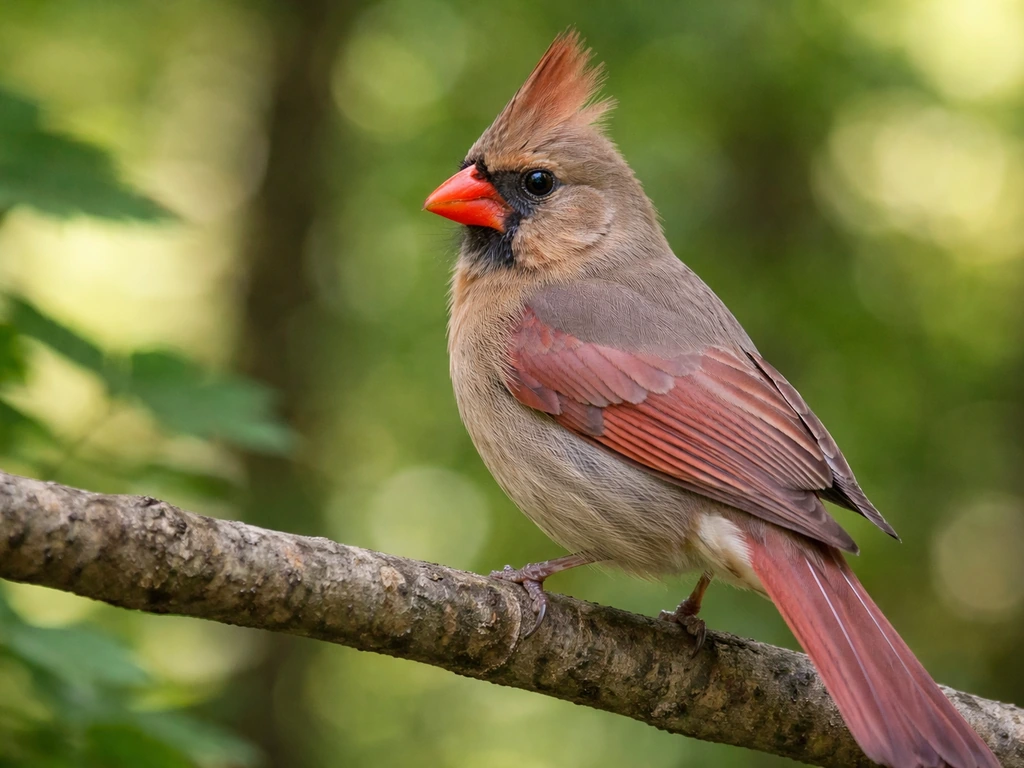
This is the species most people mean when they say "female red bird." She's about 8-9 inches long, roughly robin-sized but slimmer, with a warm gray-brown body and a distinctive pointed reddish crest that she raises when alert. Her bill is thick and cone-shaped, bright orange-red, which is one of the easiest things to lock onto. The reddish tones show up most clearly on the wings, tail, and crest tip. She doesn't have the male's black mask, just a faint grayish smudge around the bill area. You'll often see her at seed feeders or foraging near shrubby cover.
Female Red-winged Blackbird
Female Red-winged Blackbirds are one of the most commonly misidentified birds in North America. At first glance, she looks like a completely different species from the glossy black male with his famous red shoulder patches. She's heavily streaked brown and buff, about 7-8 inches long, and may show faint cinnamon tones particularly in California populations. She has no red epaulets. You'll find her skulking low in marsh vegetation, grasslands, or dense reeds, which is a key behavioral clue.
Female House Finch and Purple Finch
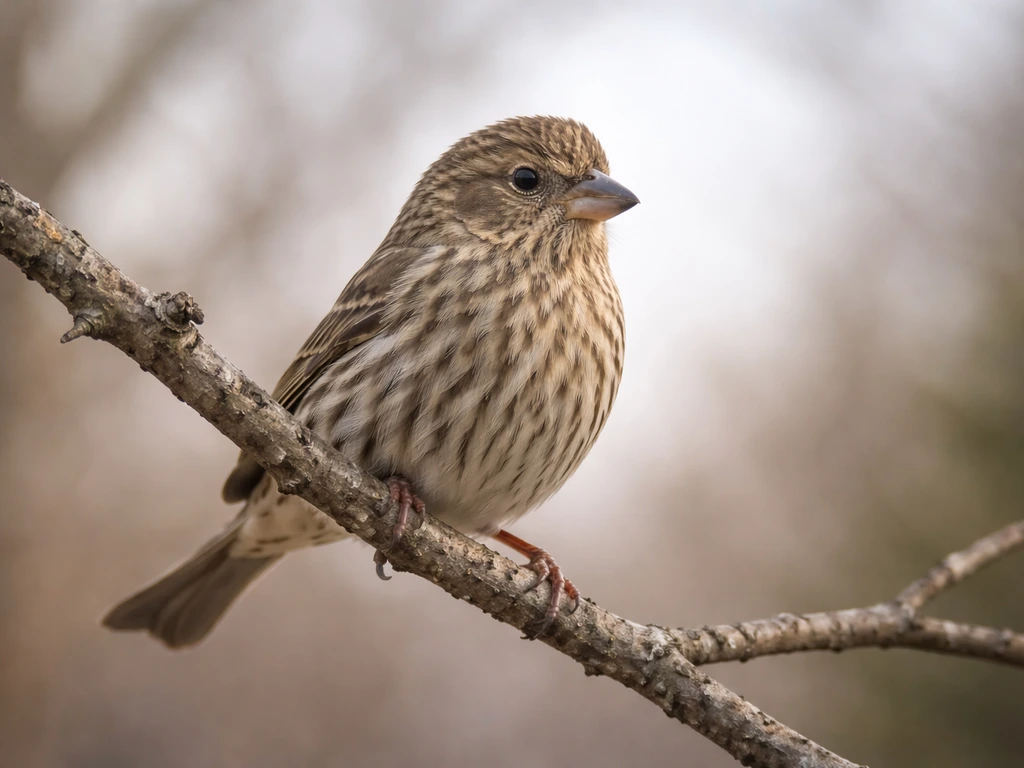
These two are smaller birds (about 5-6 inches, sparrow-sized) and both females are entirely brown and streaky with no red at all. They get lumped into "female red bird" searches because the males of these species are so well known for their red coloring. Female House Finches have blurry brown streaking on a whitish chest. Female Purple Finches have crisper, darker streaking and a bold white eyebrow stripe that's a reliable tell. Neither looks particularly red, but you might see them at your feeder alongside colorful males.
Female Red Crossbill
The Red Crossbill is a Western specialty (though it wanders), and the female is dull gray-green to yellowish with the species' trademark crossed bill tips. She's about 6 inches, chunky for a finch, and looks nothing like a "red bird." The only reliable visual clue linking her to the name is that crossed bill, which both sexes share. If you're in conifer forest and you spot a dull yellowish finch with a weird bent-looking bill, that's her.
Female Summer Tanager and Scarlet Tanager
Both tanager females are another classic surprise: the males are brilliant red, but the females are olive, yellow-green, or mustard-toned with no red whatsoever. Female Scarlet Tanagers are yellow-green with dark wings and tail and a faint eye ring. Female Summer Tanagers are more of an olive-mustard all over. They're robin-sized birds of forest and woodland edges, and you'll mostly encounter them during spring and fall migration or summer breeding in the right habitat.
Confirm the ID with location, season, and behavior
Plumage alone won't always close the case, especially with muted females. These non-visual clues are just as important.
Where you are matters a lot
Northern Cardinals are year-round residents across the eastern US, the Southeast, and into the Southwest. If you're east of the Rockies and you see a crested brown bird with a red bill at your feeder, it's almost certainly a female cardinal. Red-winged Blackbirds are found continent-wide near wetlands and open fields. Red Crossbills are mainly a Western mountain species (though they irrupt unpredictably). Summer and Scarlet Tanagers are Eastern woodland birds in summer. Cassin's Finch is a Rocky Mountain and Pacific Coast species. Knowing your state or region immediately rules out several possibilities.
Time of year
Cardinals are visible year-round, so a winter feeder bird in Ohio that looks brownish with a crest is almost certainly a female cardinal. Tanagers are only present in spring through early fall, so a mystery bird in January isn't a tanager. Red-winged Blackbirds start showing up in marshes in late winter/early spring, and that's when you might spot females moving through. Crossbills are nomadic and can appear almost any time of year depending on cone crops.
Behavior and habitat
- Female cardinals visit seed feeders regularly, forage on the ground under shrubs, and sometimes sing (yes, females do sing, so song isn't a reliable male-only clue).
- Female Red-winged Blackbirds skulk low in marsh vegetation and reeds, staying hidden more than males. If you're near a cattail marsh and see a streaky brown bird creeping through the stems, this is your first guess.
- Tanagers stay in the forest canopy and are often heard before seen. They eat insects and berries and rarely come to feeders.
- Finches (House, Purple, Cassin's) flock at feeders and move in groups. If you see multiple birds together at a thistle or sunflower feeder, you're likely in finch territory.
- Red Crossbills forage in conifer trees, hanging and clinging awkwardly to extract seeds from cones. The behavior is very distinctive.
Birds that look similar and how to tell them apart
A few birds create consistent confusion in the "female red bird" identification process.
Female cardinal vs. female towhee
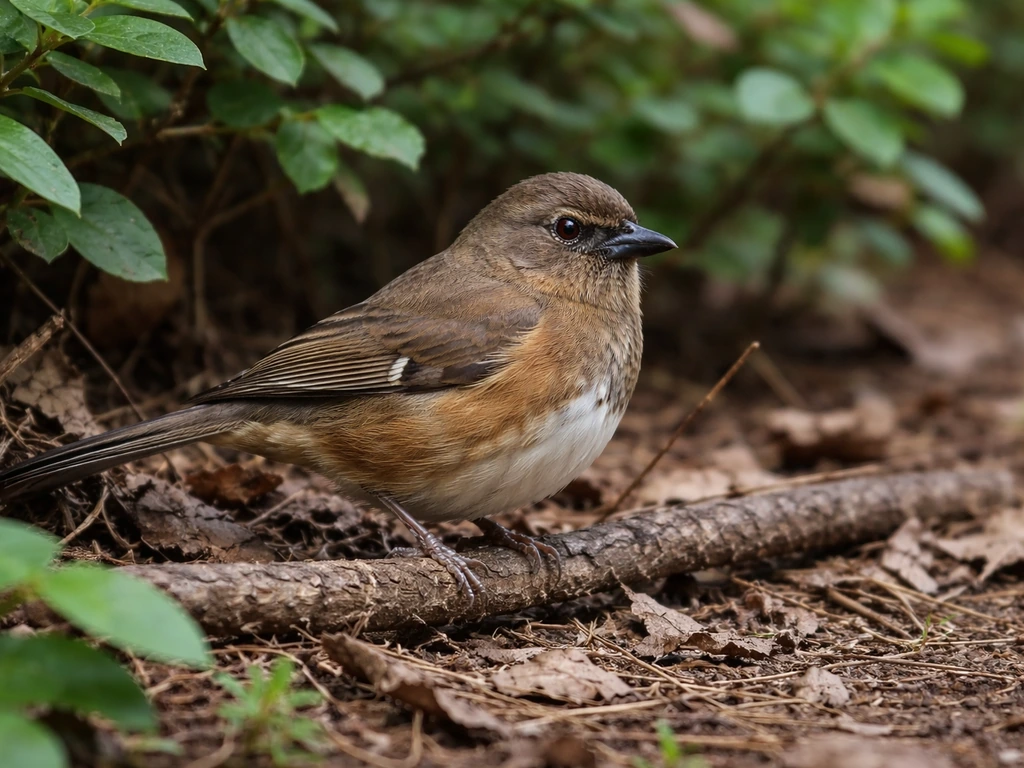
Eastern Towhees are sometimes confused with female cardinals because they're similar in size and spend time near the ground in brushy habitat. But a female Eastern Towhee is brown on top with rufous (rusty orange) sides, a white belly, and white spots in the wings and tail. She has a dark head that is cleaner-looking than the cardinal's soft gray-brown. No crest, and her bill is more sparrow-like rather than the heavy orange cone of the cardinal.
Female House Finch vs. female Purple Finch vs. female Cassin's Finch
These three are notoriously tricky to separate. The most reliable cue is the eyebrow stripe: Purple Finch females have a bold, crisp white eyebrow stripe and a cleaner face pattern. House Finch females have blurry, indistinct streaking and no strong facial markings. Cassin's Finch females (found in the West) have finer, crisper streaking than House Finches and a slightly longer bill and peaked crown. If you're in the East, House or Purple Finch are your realistic options. In the Rockies or Pacific coast, add Cassin's to the mix.
Female Red-winged Blackbird vs. other streaky brown birds
Female Red-winged Blackbirds are often mistaken for large sparrows or even female Brown-headed Cowbirds. The key differences: female Red-winged Blackbirds are longer (7-8 inches) than most sparrows, have a slightly longer, thinner bill, and often show a faint pinkish or buffy wash on the throat. Female cowbirds are plain gray-brown all over with less streaking and a shorter, stubbier bill. Context helps a lot: if you're in a marsh with cattails, the streaky brown bird is almost always a female Red-winged Blackbird.
Red-bellied Woodpecker: the localized-red confusion
Red-bellied Woodpeckers sometimes get caught up in "red bird" searches because they have a vivid red cap. On males, the red cap extends all the way from the bill to the back of the head. On females, the red is limited to just the back of the head, leaving the forehead gray. Both sexes have a black-and-white barred back and a pale buff belly with just a faint reddish blush. They're medium-sized (about 9 inches), cling to tree trunks, and the ladder-back pattern is unmistakable once you know it.
Your practical next steps in the field
- Note the size first: sparrow-sized, robin-sized, or bigger?
- Check for a crest: a pointed crest on a brown bird is nearly always a female Northern Cardinal in North America.
- Look at the bill color and shape: an orange-red cone-shaped bill confirms cardinal. A crossed bill means crossbill.
- Ask where is the red? Crest and tail accents = cardinal. Faint wash on head and breast = finch (likely male House or Purple). No red at all on a brown bird = female tanager, female blackbird, or female finch.
- Check for streaking: heavy dark streaking on the chest points to female Red-winged Blackbird or female finch. No streaking on a plain brown bird = female tanager or cowbird.
- Factor in your location and the time of year to eliminate species that don't belong in your area or season.
- Watch the behavior: feeder bird in suburban yard = cardinal or finch. Skulking in marsh reeds = Red-winged Blackbird. Forest canopy in summer = tanager. Clinging to pine cones = crossbill.
- If you're still unsure, note as many details as you can (size, bill shape, any color patches, habitat) and use a resource like Cornell's All About Birds with the location filter to compare side-by-side images.
The most important thing to take away is that "female red bird" almost never means a fully red female. Real-world female plumage in this group is brown, buff, streaked, or olive, with red showing up as an accent rather than a base color. Once you adjust your mental image to expect a muted bird with hints of red rather than a miniature version of the bright male, you'll find the ID clicks into place much faster. If you want to know what a red bird nest looks like, focus on the species first since nests vary a lot by bird what does a red bird nest look like.
If you're trying to identify the male of these species or want to compare related birds like redwings or redstarts, those are worth exploring as a next step since the male plumage patterns give useful context for understanding what the females are paired with. If you meant the redstart specifically, comparing size, tail shape, and the mix of orange and gray on the bird will help you pin down what a redstart bird looks like.
FAQ
If a bird looks almost red, could it still be a female Northern Cardinal?
Yes. In early spring and late summer, lighting and wear can make a female’s reddish accents (crest tip, wings, tail) look stronger or more patchy. If the bird still has a warm gray-brown overall body, a pointed orange-red cone bill, and no black facial mask, it fits female cardinal more than a fully red male.
What should I do if I can’t see the crest or the tail clearly?
Use the bill first. Female Northern Cardinals have a thick, cone-shaped orange-red bill, even when the crest is down. If the bill looks like a slender, finch-like shape, you may be dealing with a different “redbird” group (like finches or tanagers) where the red is mostly in the male.
How can age confusion happen with female-looking “red birds,” and how do I avoid it?
Juvenile and first-year males can look muted like females, with softer, incomplete red coloration. The practical workaround is to look for progressive patchiness, not just color shade. If you see a bird that is “almost” red in isolated areas but otherwise brownish, treat it as possibly an immature male until you can compare later sightings.
If I’m in a different state than the article assumes, how do I narrow down the species fast?
Start by eliminating by season. For example, tanagers are generally not a winter bird, and red-winged blackbirds are most expected when wetlands activity begins. Then match habitat next, feeders for cardinals, dense reeds or marsh edges for red-wings, and conifer forests for crossbills.
Can a female bird have a faint red patch and still not be one of the classic “redbird” species?
Yes. Some birds can show rusty or reddish-brown tones from feather edging, molt, or dust, which can mimic “red.” If the red appears only as mild washes and the bill or facial pattern does not match the expected species cues (like the cardinal’s crest and cone bill), consider lookalikes such as towhees or other streaky brown species.
What’s the quickest way to tell a female red-winged blackbird from a female cowbird in the field?
Focus on structure and context. Female red-wings are typically longer with a thinner, slightly longer bill, and they often have some streaking and a faint buffy or pinkish throat wash. Female cowbirds are usually plainer gray-brown with less streaking and a shorter, stubbier bill, and they’re less tied to thick marsh vegetation.
Are there lookalikes at feeders that I might mix up with female cardinals?
Yes. Towhees can be especially confusing when viewed briefly on the ground. If you see white spotting in the wings or tail, rufous (rusty) sides, and a more sparrow-like bill, that points away from cardinal. Also, cardinals have a distinctive pointed reddish crest that is easier to notice once you know to wait for it to lift.
If I suspect a tanager, how can I tell whether it’s summer or scarlet from the female look?
In the female, look for the general tone and wing pattern. Scarlet tanager females tend to read more yellow-green with darker wings and tail and often show a faint eye ring. Summer tanager females more often look more uniformly olive-mustard overall. If you cannot see the face clearly, rely on body tone and season (spring through early fall).
Do I need to worry about hybrid or rare color morphs when identifying “female red bird” sightings?
Rarely, but it helps to be cautious with extreme coloration. If a bird is truly far outside the typical muted female pattern, prioritize repeat observations and non-color cues like bill shape, streaking level, crest presence, habitat, and season. Unusual individuals are usually still consistent in structure and pattern, even if the red accent is stronger than normal.
What visual check should I do last if the bird won’t hold still?
Do a “bill and posture” check at minimum. Stand back mentally and judge bill shape (cone-like versus slender), and whether the bird has a crest that can lift. Once you confirm those two, the remaining color accent (wings, tail, crest tip) becomes far easier to interpret without relying on momentary blur in the red tones.
Next Article
What Does a Red Bird Look Like? Quick ID Guide
Identify red birds fast with a trait checklist, look-alike tips, and steps to confirm the species by photo and location.