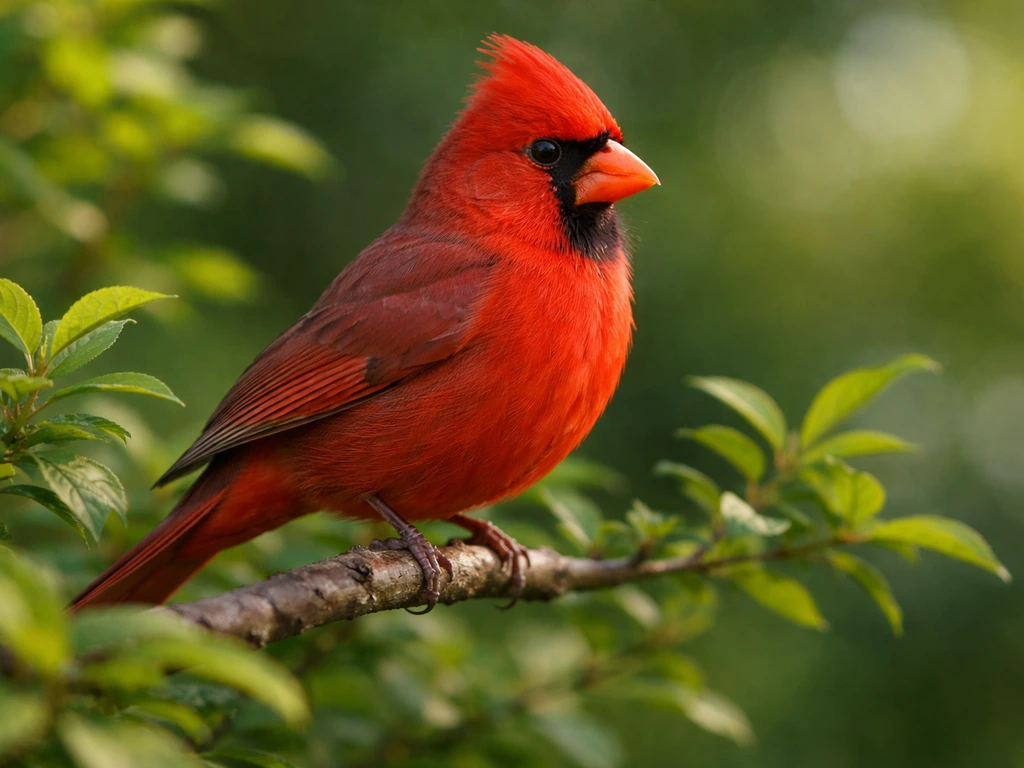
When most people in North America say 'red bird,' they're picturing the Northern Cardinal: a brilliant, all-red male with a tall crest on its head, a thick orange-red beak, and a long tail. But 'red bird' can also mean a House Finch with a rosy-red head and chest, a Purple Finch, an American Redstart flashing orange patches, or even a Red-winged Blackbird showing a bright red shoulder badge. The good news is that once you know what to look for beyond just 'it's red,' you can narrow it down fast.
What Does a Red Bird Look Like? Quick ID Guide

Marcus Whitley
29 May 2026
What 'red bird' usually means
Not all red birds are the same shade of red, and that actually helps you identify them. There are a few distinct 'flavors' of red you'll see on birds in the field, and noticing which one you have goes a long way.
- Bright, vivid red covering most of the body: This is the classic Northern Cardinal male. The red is rich and uniform, almost like a painted toy bird.
- Rosy or raspberry red on the head and chest only: This points to House Finch or Purple Finch males, where the red is concentrated up front and fades into streaky brown on the wings and belly.
- Orange-red patches on wings or tail: Small warblers like the American Redstart flash orange-red patches against a black-and-white body. The red shows up mostly in flight or when the wings open.
- Red shoulder patches (epaulets) on an otherwise black bird: That's the Red-winged Blackbird. You'll see a bold red-and-yellow stripe on the wing, not body color.
- Rusty or brick-red tones: Some birds like the House Finch in certain lights, or birds like robins with an orange-red breast, can read as 'red' but are more of an orange-rust shade.
- Lighting effects: Early morning or late afternoon light can make a brown bird look reddish. If the bird looks red in shade but brown in direct light, it's likely not truly red-plumaged.
The most useful first question to ask yourself: is the red covering most of the bird, or is it just a patch somewhere? That single observation cuts the list of candidates roughly in half.
Quick ID checklist: size, shape, beak, and habitat
Color alone isn't enough. Here's a fast checklist you can run through while you're still looking at the bird. Even answering two or three of these questions will usually get you to the right species.
| Trait | What to observe | Why it matters |
|---|---|---|
| Size | Is it sparrow-sized, robin-sized, or larger? | Cardinals are larger; finches are small and compact |
| Crest | Does it have a pointed tuft of feathers on top of its head? | A crest is a dead giveaway for the Northern Cardinal |
| Beak shape | Is the beak thick and cone-shaped, thin and pointed, or long and curved? | Thick cone beak = seed-eater (cardinal, finch); thin beak = insect-eater (warbler) |
| Tail length | Is the tail noticeably long relative to the body, or short and stubby? | Cardinals have long, tapered tails; finches have short, notched tails |
| Body posture | Does it sit upright and hunched, or lean forward? | Cardinals often hunch with tail pointing down |
| Wing bars | Are there pale stripes across the folded wing? | Some finches show faint wing bars; cardinals do not |
| Where you saw it | Backyard feeder, dense shrubs, open field, wetland edge? | Cardinals favor woodland edges; Red-winged Blackbirds prefer marshes |
| Behavior | Was it at a feeder, flying low in reeds, or flitting through trees? | Feeders suggest finches or cardinals; reed behavior points to blackbirds |
If the bird is robin-sized, has a pointed crest, a thick orange beak, and you spotted it at a backyard feeder or woodland edge, you're almost certainly looking at a Northern Cardinal. If it's smaller, has rosy-red only on the head and chest, and it's mixed into a flock at a feeder, House Finch is the much more likely call.
Common red bird look-alikes at a glance
These are the birds most often mistaken for each other when someone reports seeing 'a red bird.' Knowing the one or two things that set them apart saves a lot of confusion.
Northern Cardinal
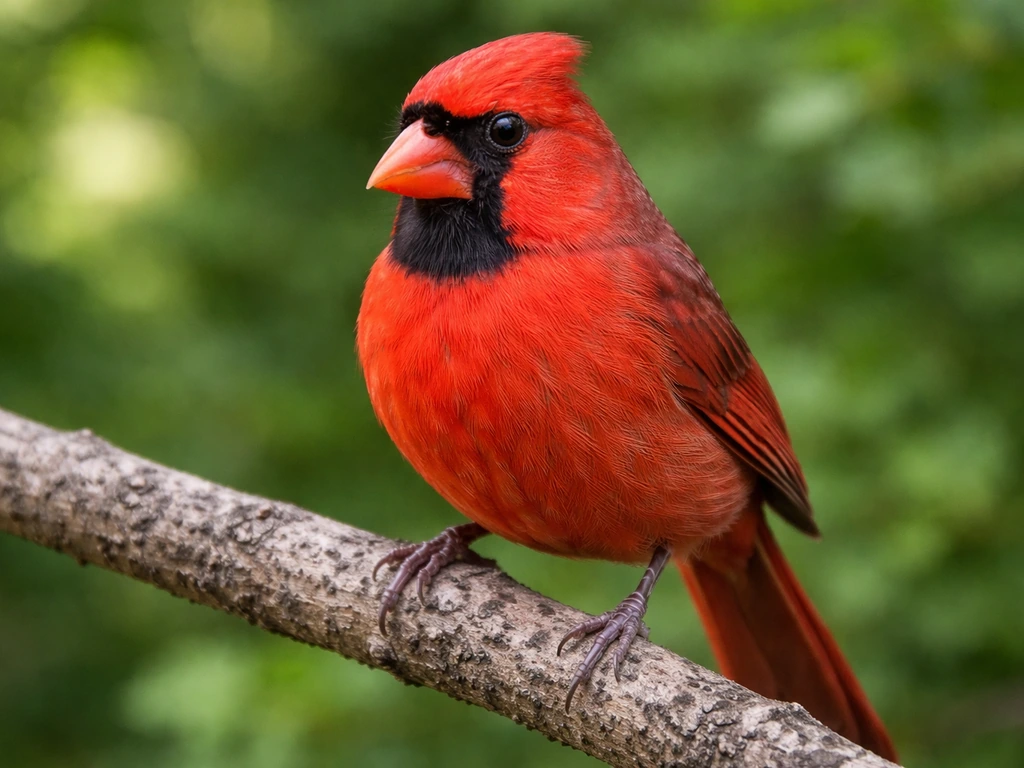
The male Northern Cardinal is entirely red except for a black mask around the face and throat. It's a large songbird, noticeably bigger than a House Finch, with a very prominent pointed crest and a thick, cone-shaped orange-red beak built for cracking seeds. It sits upright with a slightly hunched look and a long tail angled downward. If you see a bird that looks like someone dipped an entire songbird in red paint and stuck a party hat on its head, that's your cardinal.
House Finch
Male House Finches are noticeably smaller than cardinals, with no crest, a shorter rounder head, and a smaller beak. The red is concentrated on the head, chest, and rump, while the wings and belly are brown with visible streaking. You'll often see them in flocks, and they're extremely common at tube feeders. Think of them as 'red on the front half only, brown streaky everywhere else.'
Purple Finch
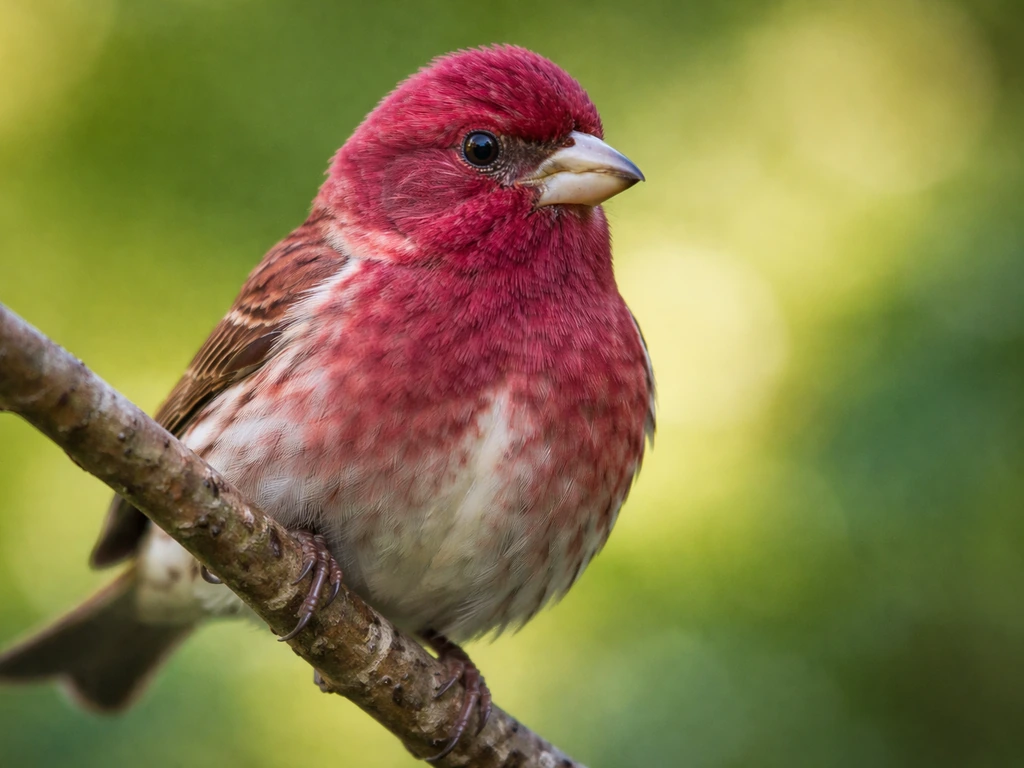
The Purple Finch looks very similar to the House Finch but the red is richer and more wine-colored, spreading more extensively over the head and back. The beak is slightly larger and more curved. Purple Finches also lack the strong streaking on the belly that House Finches show. If the red looks more like raspberry jam than tomato sauce, and the belly is cleaner, lean toward Purple Finch.
American Redstart
The male American Redstart is black with vivid orange-red patches on the sides of the chest, wings, and the base of the tail. It's a small warbler with a thin insect-eating beak, nothing like a finch or cardinal. You'll notice the orange patches most when the bird fans its tail or opens its wings, which it does frequently while hopping through branches. This is a very different look from a uniformly red bird, but the flash of orange-red in a tree can absolutely trigger a 'red bird' reaction.
Red-winged Blackbird
Male Red-winged Blackbirds are black all over except for a bold red-and-yellow shoulder patch. The red only shows clearly when the male is displaying or flying; a perched, calm male can look entirely black from certain angles. If your 'red bird' is near a marsh, cattail patch, or wet field, and the red seems to be only on the shoulder, this is your bird. Females look completely different: they're streaky brown and don't show red at all.
Distinguishing features by look: plumage patterns, wing bars, and tail
Once you've noted the basic size and shape, the next layer of detail to look at is the pattern of the plumage itself. These small visual details are often what separate species that initially seem similar.
- Is the red solid/uniform or streaked and mottled? Cardinals are solid red with no streaking. Finches tend to have brown streaks mixing into or adjacent to the red areas.
- Does the red stop sharply at a border, or fade gradually into another color? Cardinals have a clean black mask that borders the red. Finches have the red fading into brown rather than a hard edge.
- Wing bars: Look at the folded wing while the bird is perched. Cardinals have no wing bars. Some finches show faint pale wing bars. Warblers like the Redstart have bold orange wing patches rather than bars.
- Tail shape and color: Cardinals have a long, plain red tail with a rounded or slightly pointed tip. Redstarts fan their tails frequently, revealing orange patches at the base. Finches have short, notched tails (the tip has a small V-shaped notch).
- Black mask or facial markings: Only the Northern Cardinal has the bold black mask surrounding the eye and throat. No other common 'red bird' has this feature.
- Rump color: The House Finch male often shows red on the rump (just above the tail) as well as the head, which can be visible as the bird flies away from you.
Seasonal and sex/age differences that change red color
One of the biggest sources of confusion with 'red birds' is that only the adult males of most species are actually red. If you're looking at a female or a young bird, the same species can look completely different, often brown, streaky, or dull-colored with only a hint of red.
Female and juvenile cardinals
Female Northern Cardinals are pale brown with warm peachy-red tinting on the crest, wings, and tail. They still have the same thick orange beak and pointed crest as the male, so shape and beak are your best clues. Juveniles look similar to females but with a darker, more grayish-brown beak. If you see a bird with a crest and that thick beak but it's not red, don't rule out cardinal just because of the color.
Female and immature finches
Female and immature House Finches and Purple Finches are brown overall with heavily streaked underparts and no red anywhere. They look like plain, streaky sparrows. Immature male finches start showing patchy, washed-out pinkish-red as they develop through their first year, so you might see a bird that's 'sort of red' in places. This is a common point of confusion at winter feeders, where you'll often have a mix of fully red adult males and brown streaky birds that are females or young males of the same species.
Seasonal changes in red intensity
Red plumage in finches can also look less vivid in late summer and fall, after molting, before the feathers have worn to their brightest. A male House Finch in October can look noticeably duller than the same bird in April. Cardinals hold their red fairly consistently year-round, though the color can look slightly less saturated in strong direct sunlight. For warblers like the Redstart, females and immature males show yellow-orange patches where adult males show red-orange, which is another reason a 'red bird flash' might turn out to be a young Redstart.
Where to look next: confirming your ID today
You've got a mental snapshot of the bird. You can also look for a red bird nest by watching where the species you think it is builds and what nearby material it uses. Here's how to lock in the identification before the memory fades.
- Write down or voice-memo the key details immediately: rough size compared to a familiar bird, where the red was on the body, beak shape, whether it had a crest, and where you saw it. Even 30 seconds of notes beats trying to remember an hour later.
- Take a photo if the bird is still there. Aim for a clear side view of the perched bird first, then try a front-on shot to show the face and beak. A photo of the bird in flight showing the wing pattern is a bonus. Even a blurry photo is useful for confirming size, posture, and color placement.
- Use a photo comparison tool: Cornell Lab's All About Birds website lets you filter by color, size, and region to pull up photo galleries of candidates. Compare your mental image or photo to their reference shots side by side.
- Narrow by geography and timing: A Red-winged Blackbird in January in a northern state is far less likely than in April near a wetland. Range maps on All About Birds or eBird show you which species are expected in your exact location at this time of year, which often immediately rules out one or two look-alikes.
- Check recent local sightings on eBird: Search for recent bird sightings near your zip code to see what other birders are reporting. If five people near you logged House Finches yesterday and nobody logged Purple Finches, that's useful context.
- Compare to the female and juvenile versions: If the bird you saw wasn't obviously brilliant red, look at the female and immature photos for your top candidate species. A lot of 'mystery birds' turn out to be female cardinals or immature finches once you see those reference images.
If you're curious to go deeper, the appearance of female cardinals and other female red birds is its own rabbit hole worth exploring, since they're often harder to ID than the males. Similarly, birds like the Redstart and Redwing have their own distinctive looks that reward a closer look once you've nailed down your basics. The more you train your eye on the specific details (crest shape, beak thickness, where exactly the color sits on the body), the faster these identifications come. Most people get reliably quick at spotting a cardinal vs. a House Finch within just a few good looks at each.
FAQ
What should I check first when I see a red bird, so I do not misidentify it as the wrong species?
Start with where the red is located (whole body versus a patch). Then confirm size and beak shape, for example a cardinal has a thick, cone-shaped orange-red beak and a tall pointed crest, while house finches have a smaller beak and red mainly on the head and chest.
Can a female or juvenile really look like a red bird, or do they always look brown?
They can still trigger the “red bird” reaction. Some juveniles and young males show early, washed-out pinkish or patchy red while developing their adult plumage, especially at feeders where you get mixed ages in the same species.
Why does the red color look different depending on the time of year or lighting?
Feather wear and molting can dull red, so a male house finch in late summer or fall may look much less vivid than in spring. Also, strong direct sunlight can reduce perceived saturation on cardinals, making color look “less red” even when the bird is the same species.
If the bird is perched and the red is not obvious, could it still be a red-winged blackbird?
Yes. The male red-winged blackbird often looks mostly black when calm or perched. The red shoulder badge shows more clearly during display or flight, so angle and behavior matter, especially near marsh edges and cattail patches.
How can I tell a Redstart from a cardinal or finch when I only see flashes of red?
Look for the flash pattern. A red bird that is black with vivid orange-red patches, often revealed as the bird fans its tail or opens its wings, points to Redstart. Cardinals and finches usually show red more continuously on the body rather than brief wing and tail flashes.
What is the fastest way to separate a male cardinal from a house finch at a feeder?
Use beak size and posture. Cardinals are larger, upright with a slightly hunched look, and they have a thick orange-red cone beak plus a tall pointed crest. House finches are smaller, crestless, have a shorter rounder head, and their underparts show brown streaking away from the red areas.
I saw a streaky brown bird at a tube feeder, could it be a “red bird” even if there is no obvious red?
Yes, it is often a female or immature male finch. House and purple finches commonly appear brown and heavily streaked, and the red may be absent or very limited in young birds, so location at feeders plus streaking pattern can be more reliable than just color.
How do I confirm the identification if I can only take one quick look?
Pick two non-negotiables: (1) shape and beak (thick cone beak for cardinal, smaller beak for finches, thin insect-eating look for Redstart) and (2) red distribution (all-red with black mask for male cardinal, red mainly on head and chest for house finch, patchy flashes for redstart). If those do not match, reassess size first.
Do “red bird” nests or nest location help with ID?
They can help, but they are best used after you have a likely species. Once you know the candidate, note nest placement and nearby materials, then compare with what you expect for that species rather than treating nest appearance as a standalone identification tool.