Several birds genuinely look like they have hair, and the most iconic examples include the Tufted Titmouse, Hoopoe, Great Crested Grebe, Hoatzin, Palm Cockatoo, Secretarybird, Phainopepla, Horned Lark, and the Hairy Woodpecker. What you are actually seeing is never true hair, birds don't have it, but certain feather types, especially crests, loose semiplumes, and fine filoplumes, can be nearly impossible to tell apart from fur or hair at a glance. Once you know what to look for, these species become some of the most satisfying birds to identify.
Bird That Looks Like It Has Hair: ID Guide to Crests & 'Hairy' Birds

Marcus Whitley
12 Jul 2026
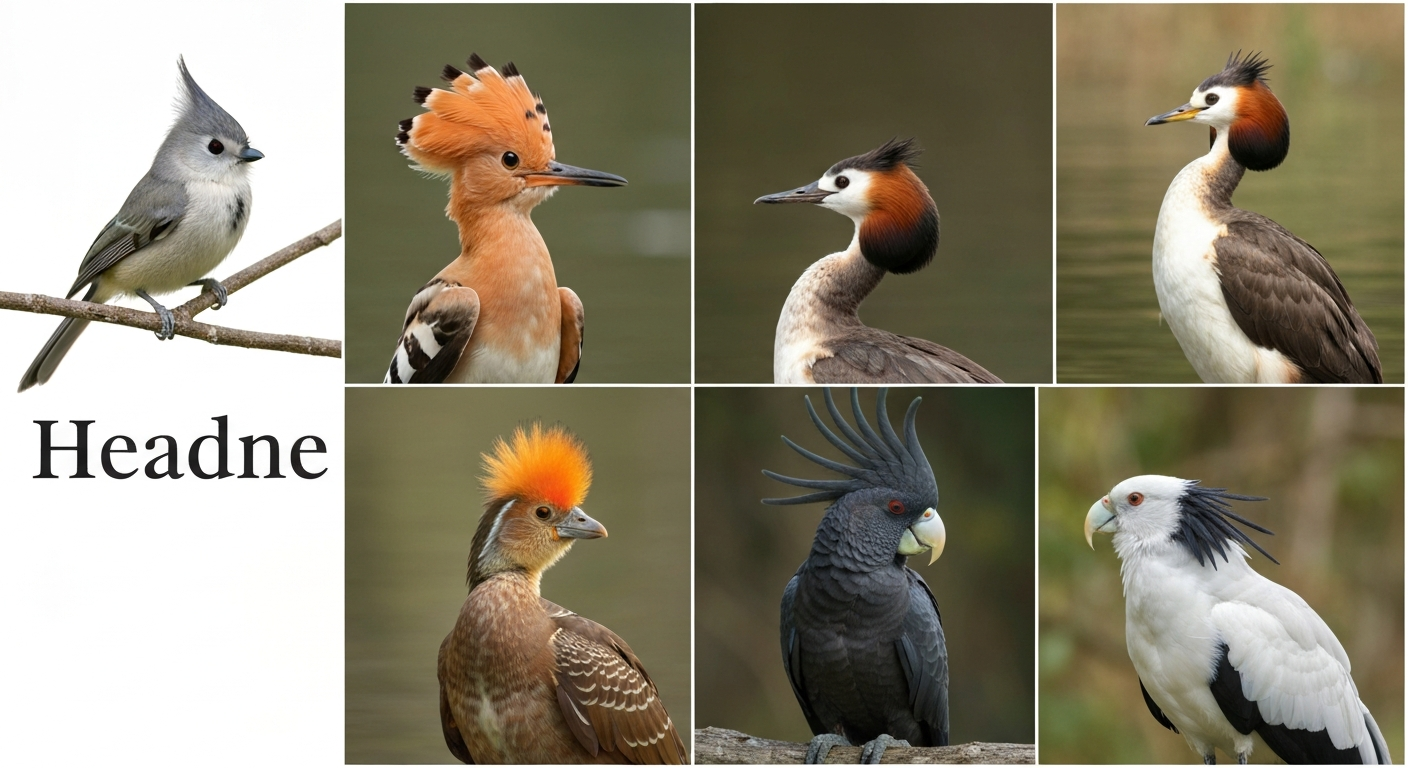
Why some birds look like they have hair
Birds and mammals both produce keratin-based body coverings, but feathers and hair are built very differently. The AMNH notes that both feathers and hair are keratinous integumentary structures but differ in morphology (feathers have vaned barbs with interlocking barbules while hair is a single filament) and in replacement strategy (feathers molt in defined cycles and regrow) blank" rel="noopener noreferrer">Fur and Feathers: Composition and Structure | American Museum of Natural History (AMNH). Feathers are composed mainly of beta‑keratin and have a hierarchical rachis–barb–barbule architecture distinct from mammalian hair (Keratin from Animal By‑Products: Structure, Characterization, Extraction and Application, A Review, Polymers / MDPI) blank" rel="noopener noreferrer">Keratin from Animal By‑Products: Structure, Characterization, Extraction and Application—A Review (Polymers / MDPI). A feather has a central shaft (the rachis) with rows of barbs branching off it, and those barbs are held together by tiny interlocking hooks called barbules. Hair is a single solid filament with no branching structure at all. That said, certain feather types are so fine, narrow, or loosely structured that they genuinely mimic the look of hair from a few feet away, or even in a close-up photo.
The effect is strongest in species with crests, shaggy nape feathers, or long ornamental plumes. When a bird raises its crest in alarm or display, those feathers fan out and catch light in a way that looks remarkably like a bad hair day. The Hoatzin's name literally comes from a Greek phrase meaning 'long hair behind,' which tells you how striking the effect can be. Understanding the mechanics behind the look is actually the first step to getting a reliable ID, because once you know why a bird looks hairy, you can narrow down which species it is.
Quick ID cheat sheet
If you have spotted a bird that looks hairy and want a fast starting point, these one-line rules will point you in the right direction before you dig into the details below.
- Spiky crest on a small grey songbird at a feeder: almost certainly a Tufted Titmouse (Eastern North America) or Crested Tit (European forests)
- Bold fan crest in black-and-white with a curved orange beak: that is a Hoopoe, seen across Europe, Africa, and Asia
- Shaggy orange-and-blue head crest on a waterbird with a white neck: look for Great Crested Grebe on large lakes and reservoirs
- Messy, straw-like brown crest on a tropical bird with a tiny wing-claw: Hoatzin, found only in Amazonian swamps
- All-black bird with a dramatic red palm-tree crest: Palm Cockatoo, northern Australia and New Guinea
- Slender black songbird with a pointed crest in dry desert scrub: Phainopepla, southwestern US and Mexico
- Woodpecker with a white back stripe and distinctly longer bill than similar species: Hairy Woodpecker — the bill length is the key over the lookalike Downy Woodpecker
- Long-legged raptor with feathery 'eyebrow' plumes striding through grassland: Secretarybird, sub-Saharan Africa
- Small songbird with tiny black 'devil horns' above the eyes: Horned Lark, open fields across North America and Eurasia
Feather types that create the 'hairy' effect
Not all feathers look the same, and the ones that produce a hair-like appearance each have a different structure and role. Knowing these four types will help you understand what you are seeing, and describe it accurately when you report a sighting.
Crests and crest feathers
Crest feathers are modified contour feathers that sit on the crown and can be raised or lowered by the bird using small muscles under the skin. When raised, they create a spiky or fan-shaped silhouette that is easy to mistake for a tuft of hair, especially in the Tufted Titmouse, Hoopoe, and Palm Cockatoo. The Hoopoe's crest is particularly theatrical, it fans open into a wide semicircle when the bird lands or gets excited, then folds back flat when relaxed. Watching for whether a crest is fully raised, half-raised, or flat is a genuinely useful ID clue because it tells you how alert or agitated the bird is.
Filoplumes
Filoplumes are the most hair-like feathers in structure. They are extremely thin, with a bare shaft and just a few small barbs at the very tip, think of a single long thread with a tiny wisp at the end. On most birds they stay hidden under the main contour feathers, but in some species or in certain lighting conditions they show through and create a fine, gossamer look around the head or neck. Their primary job is sensory: they sit right next to flight feathers and help the bird detect when those feathers shift out of position. They are not decorative, but they can look that way.
Semiplumes
Semiplumes sit between down feathers and full contour feathers in terms of structure, they have a proper shaft but the barbs don't interlock tightly the way they do on flight feathers. This gives them a soft, fluffy appearance. On species like the Great Crested Grebe, loose semiplumes on the head and neck contribute heavily to the shaggy, ruffled look that makes these birds look so dramatic during breeding season. When a grebe shakes its head or turns quickly, you can actually watch those loose feathers flutter, which is a great confirmation that you are looking at semiplume-rich plumage rather than a wet or damaged bird.
Nuptial (ornamental) plumes
Nuptial plumes are feathers that grow specifically for the breeding season and are often elongated, highly specialized, and visually striking. They can look wispy, lacy, or shaggy depending on the species. The Great Crested Grebe grows distinctive chestnut-and-black head tufts during breeding season that they use in elaborate courtship displays. After the breeding season these ornamental feathers are shed during moult and the bird looks noticeably plainer. If you see a particularly dramatic 'hairy' bird, checking the time of year is always a smart first step, late spring and early summer are when nuptial plumes are at their most impressive.
Other reasons a bird might look hairy
Not every scruffy-looking bird has naturally hair-like feathers. Sometimes a bird looks hairy or unkempt for reasons that have nothing to do with its species or even its adult plumage type. Knowing these causes helps you avoid a misidentification.
Moult
Moult is the regular process of shedding old feathers and growing new ones, and it happens on a predictable schedule, usually once or twice a year. During active moult a bird can look patchy, ragged, or downright shaggy. Growing feathers emerge from the skin inside a protective sheath that looks like a tiny waxy tube or pin. When multiple feathers are growing at once, especially on the head, a bird can look like it has short, spiky hair-stubs all over its crown. This is perfectly normal, but it can make a familiar species look almost unrecognizable. Juvenile birds in their first moult can be especially confusing because they are simultaneously losing fluffy down and growing in their first proper feathers.
Wet or ruffled plumage
When a bird gets thoroughly wet, after rain, during a bath, or from dew-heavy vegetation, the barbs and barbules of its feathers can clump together and lose the smooth, interlocked alignment that gives plumage its neat appearance. The result is a bird that looks matted, spiky, or hairy. You might notice this most obviously with a house sparrow or robin sitting still after a downpour: feathers stick together in odd clumps and the outline becomes jagged and lumpy. Once the bird preens and redistributes its preen oil (a waxy secretion from a gland above the tail), feather structure is restored and the bird goes back to looking normal within minutes to hours.
Parasites and health issues
Feather lice and mites can physically damage or break feathers, leaving a patchy, clumped, or ragged appearance. Avian pox, a viral disease, can produce crusted nodular lesions around the face and head that distort feather tracts and produce abnormal tufting or bare patches. A bird that looks scruffy or hairy but also appears lethargic, has bare or crusted skin on the face, or shows asymmetrical feather loss is likely dealing with a health issue rather than displaying a natural feature. These birds are genuinely different from a naturally crested species, the hairiness tends to be patchy and localized, often around the face or bill, rather than forming a neat crest or symmetrical plume.
A closer look at the best 'hairy' bird species
Here are the species you are most likely to encounter or search for. I have kept the ID notes practical and focused on what you can actually see in the field. For a striking human visual comparison, see the case of a man who looks like a bird.
Hairy Woodpecker
The Hairy Woodpecker is about the size of a robin, with a bold black-and-white striped head and a long white stripe running down its back. The name comes from the wispy, hair-like texture of those back feathers, which look softer and less crisply patterned than you might expect. The single most reliable ID mark is the bill: it is long and chisel-like, roughly the same length as the head from front to back. The very similar Downy Woodpecker (often found in the same habitat) has a noticeably shorter, stubbier bill that looks almost toy-like by comparison. If you're comparing woodpeckers, you may also want to see a quick guide on what bird looks like a red-headed woodpecker to help distinguish similar species. Range: found across most of North America in forests and woodlands year-round.
Downy Woodpecker
The Downy is the smaller of the two lookalikes, closer in size to a large sparrow than a robin, and its bill is clearly short and stubby. The back stripe is the same clean white as the Hairy Woodpecker's but the overall impression is of a neater, more compact bird. Because these two species are so commonly confused, the bill length comparison is one of the most frequently asked ID questions for North American beginners. If you want to dig into that comparison further, a dedicated guide to what bird looks like a Downy Woodpecker covers the differences in more detail.
Tufted Titmouse
A small, round, dove-grey songbird about the size of a large sparrow, with a neat pointed crest that gives it a permanently alert, slightly indignant expression. The crest is the size of a pencil tip when relaxed and fans up noticeably when the bird is excited. Look for the rusty-orange wash on its sides and the large, dark eyes that make it look almost cartoonishly round. Found year-round in eastern North American deciduous forests and a frequent feeder visitor. Behaviour clue: Tufted Titmice are noisy, confident birds, they will often be the first to scold you from a low branch.
Crested Tit
The European equivalent of the Tufted Titmouse in terms of visual impression, though the Crested Tit is a different family entirely. It is a small, sparrow-sized bird with a distinctly pointed black-and-white speckled crest that sticks straight up. The body is buff-brown above and pale below. You will find it almost exclusively in conifer forests, especially old Scots pine woods, across much of Europe. The crest is even more dramatically pointed than the Tufted Titmouse's, almost triangular, and the black-and-white face pattern is distinctive.
Hoopoe
Few birds are as visually dramatic as the Hoopoe. Imagine a bird the size of a starling with warm cinnamon-pink plumage, bold black-and-white barred wings, a long slightly curved bill, and a huge fan-shaped crest tipped with black. When the crest opens fully on landing, it looks like an elaborate headdress. When folded, it creates a long tapered spike running back from the forehead. Found across Europe, Africa, and Asia in open woodland, farmland, and gardens. If you spot what looks like a cinnamon bird with a mohawk in a European field in summer, this is your bird.
Great Crested Grebe
This is a large waterbird, noticeably bigger than a duck, with a long elegant white neck and a striking head in breeding plumage: a dark cap, a rust-and-black frill around the face (the 'great crest'), and two small dark tufts above the eyes. The face frill looks almost like a lion's mane seen face-on, and the tufts make the head look unmistakably furry. Found on large freshwater lakes, reservoirs, and slow rivers across Europe, Asia, Africa, and Australasia. In winter the face frill disappears and the bird looks much plainer, so if you see one without the dramatic head feathers, check the time of year.
Hoatzin
The Hoatzin is one of the most otherworldly birds on this list. About the size of a pheasant, it has a loose, scraggly orange crest that fans outward rather than pointing neatly upward, giving it a permanently wild-haired look. The face is bare blue skin, the eyes are bright red, and the overall plumage is streaky brown and buff. It lives in the flooded forests and swamps of the Amazon basin and is almost never seen away from waterside vegetation. The name itself means 'long hair behind' in Greek, which is a fair description. Its habits are unusual too, it ferments vegetation in a specialized crop, giving it a distinctive musty smell that local people call 'stinking pheasant.'
Palm Cockatoo
A large, all-black parrot with an enormous curved bill and a dramatic crest of long, separated feathers that fan out like a palm tree when raised. The bare skin on the face is bright red and changes intensity with the bird's mood. Found in the rainforests of northern Australia and New Guinea, it is hard to miss when that crest goes up, the feathers are long enough to look genuinely shaggy rather than crisply structured. Size reference: roughly the size of a large crow but heavier and stockier.
Phainopepla
A slender, long-tailed songbird similar in size to a mockingbird. The male is glossy blue-black with a pointed, slightly shaggy crest and striking white wing patches visible in flight. The female is grey-brown with the same crest shape. When the crest is raised, combined with the bird's already slim profile, it creates a silhouette that looks like a small sleek bird with a bad case of bedhead. Found in desert scrub and dry woodland in the southwestern US and Mexico, often perched prominently on the tops of desert shrubs.
Horned Lark
The Horned Lark is a small, streaky brown songbird with a pale face and two tiny black feather tufts above the eyes that give it its name. These 'horns' are very short, just a few millimetres, and easy to miss unless you get a good close look, but in good light they give the bird an almost devilish expression. Look for the black chest band and the black mask across the cheeks and forehead. It prefers open, bare ground: airfields, agricultural fields, beaches, and arctic tundra. It walks rather than hops, which is a useful behaviour clue at distance.
Secretarybird
One of the most extraordinary birds in the world. It is a large raptor that stands roughly 1.2 metres tall and walks on long legs through African grassland like a terrestrial eagle. The 'hairy' element is a set of long, loose black feathers that hang from the back of the head like quill pens tucked behind an ear, the name 'secretary bird' is thought to come from this resemblance to old-fashioned secretaries who kept quill pens behind their ears. The face is bare orange-red skin and the bird is otherwise pale grey and black. Range: sub-Saharan Africa in open savannah and grassland.
How to tell natural feather structure from moult or grooming in the field
When you encounter a bird that looks hairy or scruffy, running through a quick mental checklist helps you figure out whether what you are seeing is a natural feature of the species or a temporary condition. Here is the practical approach I use.
- Check symmetry first. Natural crests, tufts, and plumes are symmetrical — the same on both sides of the head. If the scruffiness is lopsided or concentrated in one patch, you are probably looking at moult, damage, or a health issue.
- Look at the overall body condition. A bird in moult often looks scruffy on the head or wings but has clean, intact plumage elsewhere. A bird with parasites or disease tends to look generally dull and may have bare skin, crusting, or lesions visible.
- Watch the bird move. A crest is active — it goes up and down in response to the bird's mood. A wet or damaged feather patch stays static. If the 'hair' moves expressively, it is a real crest.
- Check the bill area. Rictal bristles (fine, hair-like feathers around the base of the bill) are normal in many species and look like a small moustache or set of whiskers. They are not a health problem — they help the bird sense insects near its face during feeding.
- Note the time of year. Moult in most species happens late summer to autumn in the northern hemisphere. If you see a scruffy bird in August-September, active moult is the most likely explanation.
- Look for pin feathers (growing sheaths). If you can see tiny waxy-looking tube structures along a feather tract on the head or body, those are feathers mid-growth during moult — not hair and not a sign of illness.
- Compare to similar species you know. A Tufted Titmouse's crest is neat, symmetrical, and moves. A house sparrow in moult has a patchy, random look. Knowing the baseline appearance of common local birds makes unusual appearances stand out.
Photo-and-note checklist for reliable IDs
A smartphone photo taken quickly in the field is often blurry, backlit, or cropped too wide to be useful. Getting into the habit of capturing specific details, even imperfectly, dramatically improves your chances of making a reliable ID later. Here is what to aim for.
Photos to try to take
- Side profile of the whole bird, showing overall size, tail length, and posture
- Close-up of the head, capturing crest shape, eye colour, and face pattern
- The bill from the side — length relative to head size is a key ID mark (crucial for Hairy vs Downy Woodpecker)
- The back and wing pattern, especially any contrasting stripes or bars
- The bird in flight if possible, to show wing pattern and tail shape
- A photo showing the bird next to something familiar in size (a fence post, a leaf, another bird species you know) for scale
Notes to jot down on the spot
- Approximate size compared to a bird you know well (sparrow-sized, robin-sized, pigeon-sized, crow-sized)
- Whether the crest or tuft was raised, half-raised, or flat, and whether it changed during observation
- Habitat: what kind of trees, vegetation, or ground cover surrounded the bird
- Behaviour: was it foraging on bark, swimming, walking on the ground, perched at the top of a shrub
- Any sounds it made — a sketch of the call quality (squeaky, whistling, harsh, musical) is surprisingly helpful
- Date, time, and location (including whether it was in sun or shade, which affects colour perception)
Annotated photo guide: where to look and what to label
When you are studying a photo of a 'hairy'-looking bird, whether your own or from a field guide, labeling or mentally marking the following areas will get you to an ID faster. Think of this as a map of the features that matter most.
- Crown and crest base: note whether crest feathers originate at the forehead (like the Hoopoe) or further back on the crown (like the Tufted Titmouse)
- Crest tip shape: pointed and triangular (Crested Tit), fan-shaped and blunt-tipped (Hoopoe), separated and shaggy (Palm Cockatoo, Hoatzin)
- Nape and neck: loose or fluffy feathers here suggest semiplumes (Great Crested Grebe) or nuptial plumes; tight, smooth feathers here are normal contour feathers
- Bill length: draw a mental line from the base of the bill to the back of the skull; if the bill is half that length or more, it is long (Hairy Woodpecker); if it is clearly shorter, it is stubby (Downy Woodpecker)
- Eye ring or bare face skin: bare coloured skin around the eye or on the face is a strong ID marker (Palm Cockatoo: red; Hoatzin: blue; Great Crested Grebe: red eye)
- Wing pattern in flight or at rest: white patches, bars, or spots on the wing are often species-specific and visible even when the crest is not raised
- Tail length and shape: long and rounded (Phainopepla), short and square (Tufted Titmouse), wedge-shaped (Secretarybird in flight)
Hairy birds at a glance: species comparison
| Species | Size (approx.) | Range | Hair-like feature | Key field mark | Habitat |
|---|---|---|---|---|---|
| Hairy Woodpecker | Robin-sized (~24 cm) | North America | Soft, wispy back feathers | Long bill = head length | Forests, large trees |
| Downy Woodpecker | Large sparrow (~17 cm) | North America | Similar to Hairy but smaller | Short stubby bill | Forests, parks, feeders |
| Tufted Titmouse | Large sparrow (~16 cm) | Eastern North America | Pointed erectile crest | Large dark eyes, orange flanks | Deciduous forest, feeders |
| Crested Tit | Sparrow-sized (~11 cm) | Europe (conifer forest) | Tall speckled pointed crest | Black-and-white crest pattern | Old conifer woodland |
| Hoopoe | Starling-sized (~28 cm) | Europe, Africa, Asia | Fan crest, black-tipped | Cinnamon body, barred wings | Open woodland, farmland |
| Great Crested Grebe | Large (~50 cm) | Europe, Asia, Africa, Australasia | Chestnut-black face frill | Long white neck, red eye | Large lakes, reservoirs |
| Hoatzin | Pheasant-sized (~65 cm) | Amazon basin | Loose scraggly orange crest | Blue bare face, red eye | Flooded forest, swamps |
| Palm Cockatoo | Large parrot (~55 cm) | N. Australia, New Guinea | Long separated fan crest | All black, bare red face | Rainforest edge |
| Phainopepla | Mockingbird-sized (~20 cm) | SW USA, Mexico | Pointed shaggy crest | Glossy black, white wing patches (male) | Desert scrub, dry woodland |
| Horned Lark | Sparrow-sized (~18 cm) | North America, Eurasia | Tiny black feather 'horns' | Black chest band, black face mask | Open bare ground, fields |
| Secretarybird | Eagle-sized (~130 cm tall) | Sub-Saharan Africa | Long loose nape quills | Long legs, walks in grassland | Open savannah, grassland |
When to ask for extra help with your ID
Most of the species on this list are distinctive enough that a reasonable photo and a location note will get you to a confident ID on your own. For automated suggestions, try the what bird do I look like tool to get quick candidate species from your photo and location. But there are a few situations where it is worth posting to a birding community (like iNaturalist or a local birding group) or consulting a specialist. If the bird looks hairy or scruffy but also appears lethargic, has visible bare or crusty skin, or is staying unusually still and approachable, there may be a health issue worth reporting to a local wildlife rehabilitator. If you are genuinely unsure whether you have a Hairy or Downy Woodpecker, get a photo of the bird next to the branch it is clinging to and focus on the bill, that single comparison will settle it almost every time.
If you are building your bird identification skills more broadly, it is also worth exploring species that challenge expectations in other ways, birds that resemble completely different species at first glance, like those covered in guides to what bird looks like a pelican or what bird looks like a red-headed woodpecker, can sharpen your eye for the kind of structural details that make all the difference in the field.
FAQ
Why do some birds look like they have hair instead of smooth feathers?
What looks like 'hair' is usually modified feather structure or condition. Birds have several feather types—contour and flight feathers (vaned), down, semiplumes (fluffier insulating feathers), filoplumes (thin hair‑like sensory feathers), and bristles (stiff, whisker‑like feathers). Erect crests, loose semiplumes, visible filoplumes, and rictal bristles can create a hairy or shaggy appearance. Non‑structural causes such as active moult, wet or matted plumage, feather‑damaging parasites, or skin lesions can also make a bird appear scruffy or hair‑like.
What feather types produce a 'hairy' look and how do they differ?
- Crest/tuft feathers: modified contour/semiplume feathers that can be raised or lowered for display; visually prominent. - Semiplumes: intermediate between down and contour; soft and loose, add fluffiness. - Filoplumes: very thin, hair‑like feathers usually hidden under contour feathers; act as sensory structures and may be visible on crowns/napes. - Bristles: stiff, often vaneless feathers around the bill or eyes (rictal bristles) that look like whiskers. These are feather structures (keratin, with barbs and barbules except for bristles/filoplumes) and are not true mammal hair.
How can moult or feather condition make a bird look 'hairy'?
During active moult birds shed old feathers and grow new ones in sheaths; this produces gaps, ragged edges, and immature feathers that can look like tufted or spiky hair. Wetting, loss of preen‑oil, or contamination makes barbs clump or matt, producing a scruffy appearance until the bird preens or molts. Ectoparasites, feather‑damaging bacteria, or pox lesions can break or deform feathers and mimic a permanently 'hairy' or patchy look.
Which common species are often described as 'hairy' or shaggy — short ID notes?
- Hairy Woodpecker: medium woodpecker (21–26 cm), white back with black barring, long bill proportionally long; range: North America. Key: longer bill than Downy, plain white outer tail feathers with small black spots on some subspecies. - Downy Woodpecker: smaller (14–17 cm), shorter bill, similar black‑white pattern but smaller size and finer barring; often confused with Hairy. - Tufted Titmouse: small (13–16 cm), gray crest, white face and underparts, rust flanks; eastern US. Key: short crest, large eyes, rounded body. - Crested Tit: small European tit (11–12 cm) with spiky crest, black‑and‑white head pattern; coniferous woodlands, Europe. - Phainopepla: slender (18–21 cm), glossy black (male) with crest and long tail; southwestern US to Mexico. Key: silky crest and distinctive crest silhouette. - Hoatzin: large (65–75 cm), tropical South America, loose shaggy crest and neck feathers, long tail; unique digestive system. Key: smell of fermenting vegetation (field observers note), peculiarly structured plumage. - Palm Cockatoo: large (55–60 cm), dramatic erectile crest of stiff feathers, dark gray/black plumage; New Guinea/Australia. Key: very large, heavy bill and bare cheek patch. - Horned Lark: small (15–19 cm), short feather tufts ('horns') above the eyes, facial pattern, open ground habitats; Holarctic species with regional forms. - Great Crested Grebe: medium waterbird (46–51 cm), ornate ruff/crest in breeding plumage giving a 'hairy' head/neck silhouette; freshwater lakes, Eurasia. - Hoopoe: medium (25–29 cm) with broad erectile crest of rounded feathers with black tips; Africa, Europe, Asia. - Secretarybird: very large (112–152 cm) African raptor with prominent long crest on nape and elongated leg feathers giving a hair‑like silhouette; grasslands and savannas.
How to tell Hairy Woodpecker vs Downy Woodpecker in the field?
Primary reliable clues: size and bill length. Downy is noticeably smaller and has a proportionally short, stubby bill; Hairy is larger with a bill about as long as the head. Look at outer tail feathers: Downy often has black spots on white outer tail feathers; Hairy usually has plain white outer tail feathers. Voice and habitat help: Downy frequents smaller branches and gardens; Hairy more common in mature forests. Compare perched silhouettes or use a reference photo with size scale.
What side‑by‑side comparison tips help with other 'red‑headed' or crested lookalikes?
- Look for pattern vs color: a red head confined to crown/cheek suggests species A; an entirely red head may indicate species B. - Check bill shape and size: finches vs woodpeckers vs parrots have distinct bills. - Examine crest form: erectile individual feathers (tufted crest) vs floppy shaggy feathers. - Note posture and silhouette: long tails or elongated leg feathers change overall profile. - Use voice, habitat, and behavior (e.g., insect‑gleaning, arboreal hopping, hovering) to separate similar plumages.