
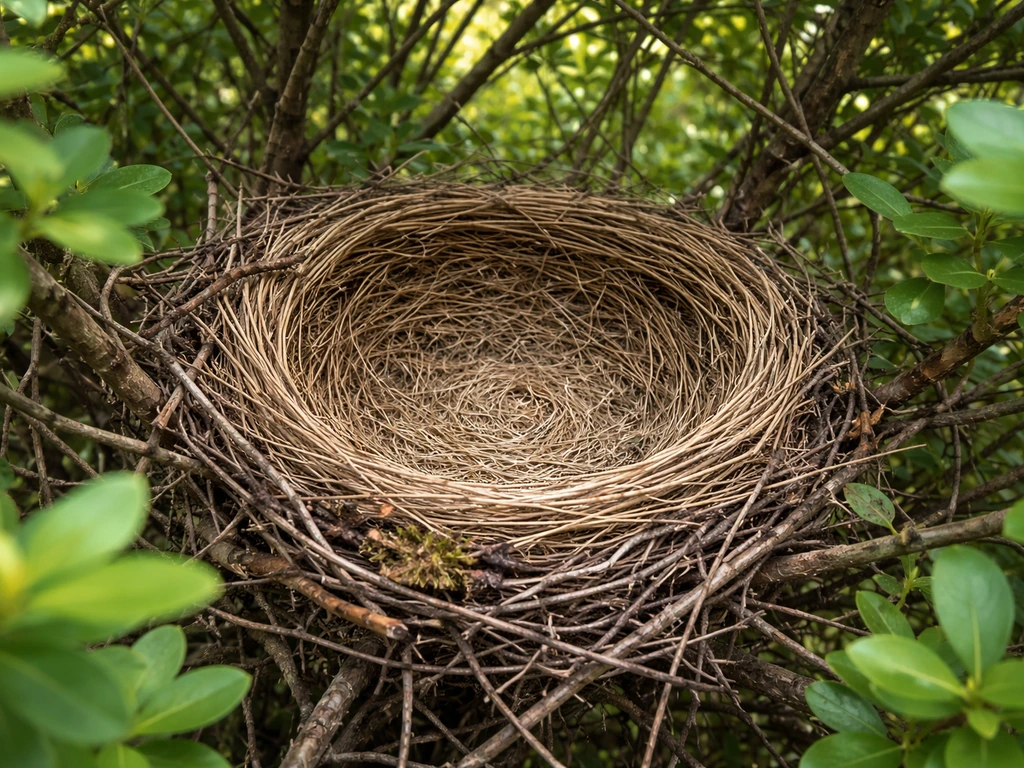
A cardinal nest is a compact, open cup about 4 inches across and roughly 2.5 to 3 inches tall, built from twigs, bark strips, leaves, and grasses, and tucked snugly into a dense shrub or vine tangle somewhere between 1 and 15 feet off the ground. If you've spotted a nest that matches that general description and there's a brilliant red male or a warm brown female cardinal lurking nearby, you're almost certainly looking at the real thing. Here's how to read every detail of it confidently.
What Does a Cardinal Bird Nest Look Like? ID Guide

Marcus Whitley
21 Apr 2026
Cardinal nest basics: location, timing, and size
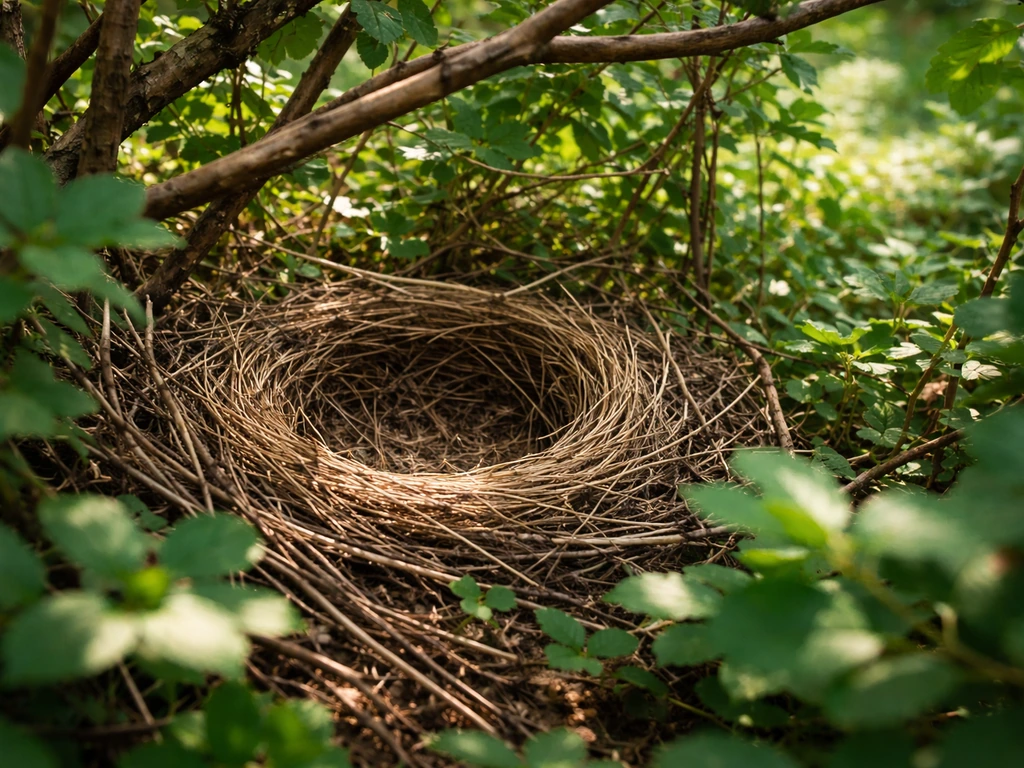
The first thing to check is where the nest is sitting. Cardinals almost always choose dense cover: think thick shrubs, vine tangles, young saplings, or the lower branches of a conifer. The nest is typically wedged into a small fork of branches so it stays stable, and it's usually positioned anywhere from 1 foot off the ground up to about 15 feet high. Most nests you'll find are on the lower end of that range, somewhere between 3 and 8 feet, which puts them right in the kind of dense shrubby thicket that cardinals love.
Timing is a useful clue too. Cardinal nesting season generally runs from late spring through summer, and females can raise two or even three broods in a single year. The female builds the nest alone over about 3 to 9 days, though the male often hangs around and brings her food while she works. Because they nest multiple times per season, you can find active cardinal nests over a longer window than many other songbirds. If you're searching after the leaves have dropped in fall or winter, old abandoned nests become much easier to spot, and at that point you can get a closer look without any disturbance risk.
As for size, a finished cardinal nest is roughly 4 inches in diameter and about 2.5 to 3 inches tall. The interior cup is around 3 inches across. That's about the size of a large orange or a softball cut in half, open at the top. It's noticeably smaller and neater than a robin's nest, and shallower than you might expect.
What goes into building it: materials and construction
Cardinal nests are built in layers, and understanding those layers helps you read what you're looking at. Cornell Lab researchers describe the construction as having blank" rel="noopener noreferrer">roughly four distinct phases. The female starts with coarse outer twigs, sometimes incorporating bits of plant debris or even small pieces of trash she finds nearby. Over that goes a mat of leaves for structure, followed by strips of grapevine bark (a signature material when it's available in the area), and finally an inner lining of fine grasses, rootlets, pine needles, and sometimes hair-like plant fibers.
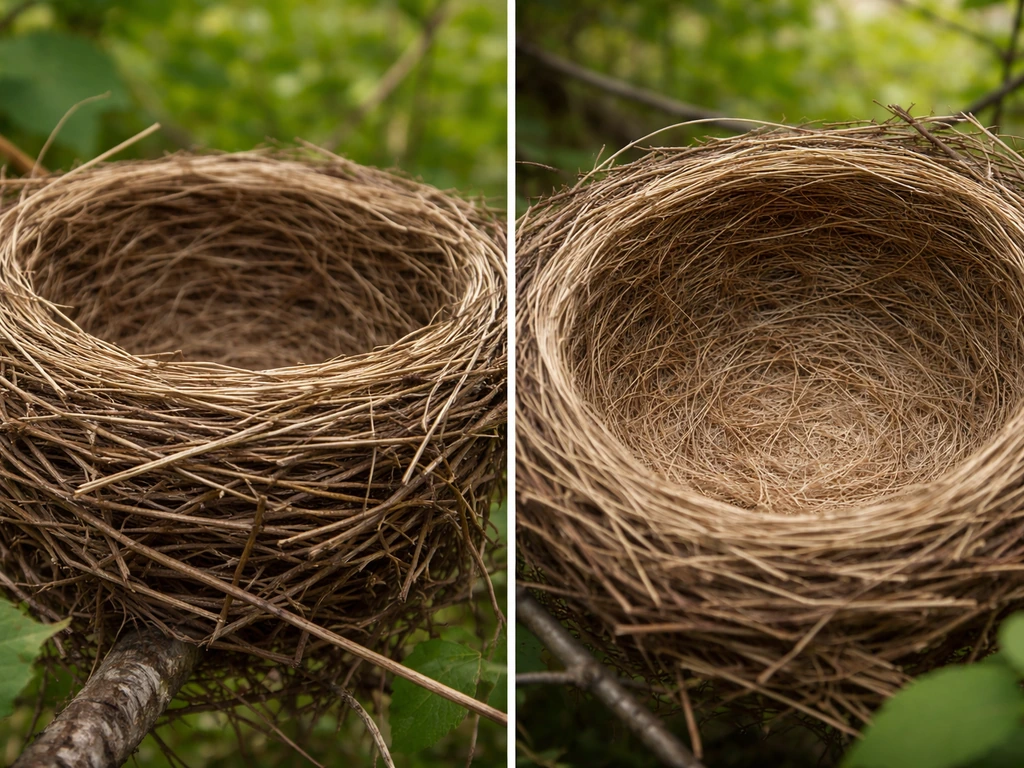
What you actually see from the outside is a nest that looks loosely woven with twigs and dried plant material, a bit rough around the edges but clearly intentional in its cup shape. The dominant colors are tans, browns, and grays from the bark strips and dried grasses. If grapevine bark is available locally, you'll often notice those pale, papery strips woven through the structure. The interior lining looks softer and finer than the outer walls, with a smooth, snug bowl at the center.
One thing worth knowing: the exact materials vary by region. A cardinal nesting in a pine-heavy area in the Southeast may have a nest loaded with pine needles. One nesting in a suburban yard in the Midwest might use more dried grass and garden-plant stems. The consistent thread is that layered structure from coarse to fine, with that soft inner cup always present.
What the nest actually looks like: outside and inside
The outside
Looking at a cardinal nest from the outside, you'll notice it's an open cup, not enclosed, not domed. The walls are made up of woven twigs and plant stems that give it a somewhat shaggy or loosely layered appearance. The color is muted: mostly tan, grayish-brown, and dull brown, blending well with the surrounding foliage. You might see a few leaf fragments or strips of pale bark woven into the outer layer. The nest is generally wider than it is tall, giving it a shallow, bowl-like profile rather than a deep bucket shape.
The inside
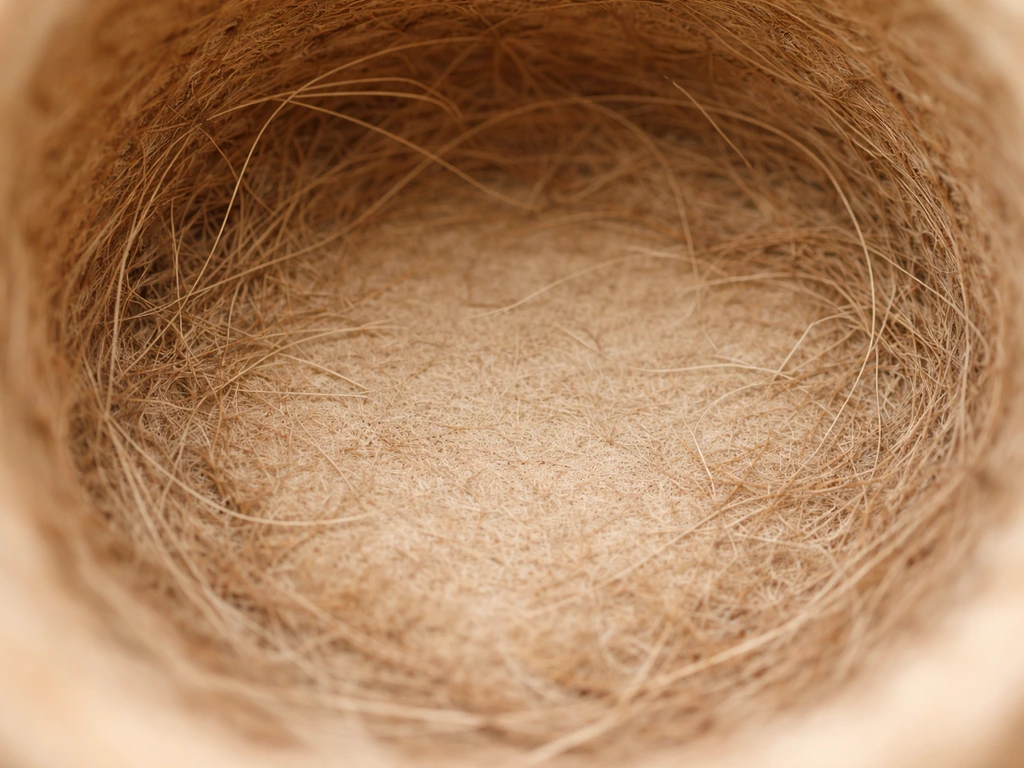
The interior is noticeably softer and smoother than the outside. You're looking for a snug, rounded bowl lined with fine grasses, rootlets, and sometimes wispy hair-like fibers. If grapevine bark is present, it often appears in the transition zone between the outer wall and the inner lining, giving the cup a slightly layered look when you peer in from above. The inner cup is typically about 3 inches across, just big enough to cradle two to five small eggs (pale gray to greenish-white with brownish spots, if they've been laid).
How to tell a cardinal nest from similar songbird nests
Lots of songbirds build open cup nests, which is where confusion happens. Sometimes a bird can look like a female cardinal from a distance but still be a different species. The good news is you can narrow things down quickly using a combination of location, size, and materials rather than needing to be a nest expert. Here's how cardinal nests stack up against the most common look-alikes.
| Bird | Nest size | Key materials | Placement | Distinguishing trait |
|---|---|---|---|---|
| Northern Cardinal | ~4 in. wide, ~2.5-3 in. tall | Twigs, bark strips, leaves, grapevine bark, fine grass lining | Dense shrubs/vines, 1-15 ft high | Layered build; grapevine bark common; wedged in low dense cover |
| American Robin | ~6 in. wide, ~3-4 in. tall | Grass, twigs, mud cup layer, fine grass lining | Tree branches, ledges, 5-25 ft high | Hard mud cup in the middle layer; larger overall; placed higher |
| Song Sparrow | ~3-4 in. wide, very shallow | Coarse grass, weed stems, fine grass lining | Low in grass clumps, shrubs, or on ground | Much shallower cup; often at or near ground level; no bark strips |
| Gray Catbird | ~4-5 in. wide | Twigs, bark, leaves, grass, rootlets | Dense shrubs/vines, 3-10 ft high | Often includes pieces of plastic or paper; exterior slightly bulkier |
| Rose-breasted Grosbeak | ~4-5 in. wide, loosely built | Twigs, grasses, rootlets | Shrubs or young trees, but often higher than cardinal nests | Very loosely woven, almost see-through walls; placed higher in trees |
The biggest practical separator is placement height combined with that layered bark-and-grass construction. Robin nests are noticeably larger and almost always contain a distinct mud layer you can see or feel in the wall. Song sparrow nests sit much closer to the ground and are shallower. Grosbeak nests are famously flimsy and loosely woven, almost see-through when held up to light. Cardinal nests have a sturdier, more intentional layered feel, with bark strips being a real giveaway when present. And if you see the bird itself, identifying the adult cardinal is a quick confirmation: the male's all-red body and heavy orange-red bill are unmistakable, and even the female's warm brown plumage with reddish tinges and that same distinctive crest and thick bill sets her apart from most other species.
Where to look and how to observe without disturbing
If you're actively searching for a cardinal nest, focus on dense, shrubby habitat: overgrown garden corners, thickets of multiflora rose, honeysuckle tangles, cedar or juniper hedges, and forest edges where shrubby undergrowth meets open lawn. Cardinals strongly prefer cover that screens them from above and on the sides, so you're often looking into the interior of a shrub rather than at a branch tip out in the open.
One of the easiest ways to locate an active nest is to watch the adults. If you see a female repeatedly flying into a dense shrub from the same angle, she's almost certainly incubating or building. The male will often perch nearby and sing, and he may be carrying food to bring to her. Watching from a comfortable distance with binoculars for 10 to 15 minutes is usually enough to get a read on what's happening.
Once you think you've found the nest, keep your visit brief. NestWatch (Cornell Lab's nest monitoring program) recommends keeping any nest check to under one minute, and you should never try to push a sitting bird off the nest to get a better look. If you want to photograph it, stay back and use a telephoto lens. A 400mm lens or longer lets you get useful photos without getting close enough to stress the birds. Audubon recommends this approach specifically for nest photography, and it genuinely makes a difference to the birds' comfort level during a sensitive time.
If you're not sure whether a nest is active, check at a time of day when the female might naturally be off foraging, and look for small clues: feathers, fresh droppings on the rim, or the faint sound of nestlings from inside the cup. After nesting season ends, old nests are much easier to examine up close since they're abandoned and visible after leaf drop. That's actually a great time to study cardinal nest construction in detail.
Quick identification checklist and your next steps
Run through this checklist against the nest you've found. If you can check off most of these, you're almost certainly looking at a cardinal nest.
- Open cup shape (not domed, not enclosed, not a cavity)
- About 4 inches wide and 2.5 to 3 inches tall
- Wedged into a fork in dense shrubs, vines, or low tree branches
- Between 1 and 15 feet off the ground, usually under 10 feet
- Outer wall of woven twigs, bark strips, and dry leaves (rough texture)
- Inner cup lined with fine grasses, rootlets, or hair-like fibers (smooth texture)
- Grapevine bark strips visible in the structure (when locally available)
- No mud layer (unlike a robin nest)
- Walls are sturdily woven, not see-through (unlike a grosbeak nest)
- Adult cardinals seen nearby: bright red male or brown-red female with crest and thick orange bill
If you've checked most of those boxes, your next step is simply to watch from a distance with binoculars and confirm the adults. The female cardinal's crest and heavy bill are distinctive even at a distance, and if you see the male, the ID is instant. If you want to log your find and contribute to real bird science, NestWatch is worth checking out: it's Cornell Lab's free nest-monitoring program where you can record what you're seeing and track the nest's progress through the season.
If something about the nest doesn't quite fit, especially if it's very high in the canopy, contains a hard mud layer, sits on the ground, or is paper-thin and see-through, it's worth comparing against other local songbirds. If you are wondering what bird looks like a yellow cardinal, use the same location and nest-shape clues to confirm the species before you commit to an ID. If you are trying to figure out what bird looks like a duck but isn't, use those same comparison skills and focus on distinguishing traits before you assume the species. And if you're still working on confidently identifying the adults themselves, brushing up on what a cardinal bird looks like (including male, female, and juvenile plumage) will make the whole process much faster. If you're trying to visualize what a cardinal bird house looks like, look for the open-cup shape made of woven twigs and layered plant material, not a domed or enclosed structure what a cardinal bird looks like. If you are trying to narrow it down to a specific bird, comparing the look to the question of what bird looks like a cardinal can help you avoid mix-ups.
FAQ
Can a cardinal nest be mistaken for a hummingbird or other small bird nest?
Yes. A cardinal nest can look like a small open cup, but hummingbird nests are typically attached more tightly to branches and often look smaller and more “glued” in structure. Cardinal nests also rely on a layered wall from coarse to fine, and they are usually tucked in dense shrub tangle rather than exposed on a thin twig.
What should I do if I find a nest that matches the shape but there are no cardinals nearby?
Don’t assume it is a cardinal. Many open-cup songbirds overlap in nest size and materials, especially in the same shrubby habitat. Confirm by watching for adult behavior at a distance (repeated flights into the same spot, food delivery, or incubation time), rather than relying only on the nest appearance.
How can I tell if a cardinal nest is active without getting close?
Use timing and behavior clues. Check when the female is likely off foraging (often mid-morning to midday), then look for fresh signs around the rim like droppings or bits of shell. You can also listen briefly for nestling sounds, which can be audible from a distance when the young are older.
What if the nest looks too high or too low compared to the typical range?
Nesting height varies. Cardinals commonly nest lower, but nests can fall outside 1 to 15 feet depending on local habitat and cover density. If the structure is clearly an open, layered cup with the right shallow bowl profile and matching placement in dense cover, it still may be a cardinal, but you should double-check against local alternatives.
Do cardinal nests ever look domed or enclosed?
Typically no. Cardinals build an open cup, not a covered dome. If you see an enclosed structure, a more roofed cup, or a craft-paper-like enclosure, treat it as a different species and compare nearby nest types common in your area.
Is it normal for the nest to look messy or loosely woven from the outside?
Yes. The outer wall can look rough, shaggy, or loosely layered because it uses coarse twigs and dried plant pieces. The key consistency is that it still forms a stable, shallow cup, with a noticeably smoother inner bowl lined with finer material.
What does it mean if I see grapevine bark in the nest but no grapevines nearby?
Materials can be local to the foraging area, not necessarily right next to the nest. Cardinals may incorporate bark strips from available vines within their territory, or from yard vegetation and edges farther away. So grapevine bark is a helpful clue, but you still need to confirm the overall construction and habitat match.
Can I touch or move a cardinal nest to get better photos?
No. Avoid handling or dislodging the nest or trying to push a sitting bird off. If you need better images, use a longer telephoto from a stable, respectful distance and keep exposure time short to reduce stress and the risk of nest abandonment.
Are abandoned cardinal nests safe to examine up close?
Usually safer, but “safe” still depends on conditions. Even after nesting ends, avoid lingering near the site and watch for any late broods or defensive behavior. If you find a nest with signs of eggs or active feeding, treat it as active until proven otherwise.
If I see a female cardinal near the nest, does that guarantee it is her nest?
Not always. A female can forage nearby, perch near cover, or investigate while another bird uses the nest. Confirm by observing repeated consistent nest visits from the same direction and timing patterns that match incubation or feeding, ideally over a short observation window.
What’s the quickest checklist to decide “likely cardinal” vs “compare other species”?
Start with dense shrub or vine-tangle placement, an open shallow cup shape (wider than tall), layered construction with a coarser outer wall and a finer inner bowl, and muted tan to brown colors. If it also aligns with typical nesting season and you can confirm adult cardinal behavior, you can be more confident. If any major feature conflicts (enclosed dome, mud-layer cup, ground nesting, or see-through flimsy weave), pause and compare to local look-alikes.