The creatures in Bird Box are never shown clearly on screen, and that's entirely intentional. What you actually see are glimpses: tall, thin, vaguely humanoid silhouettes moving at the edges of darkness, combined with heavy environmental effects like swirling wind, rustling leaves, and bending light that signal their presence without ever giving you a clean look. The overall look is meant to feel like an unexplained presence, so the monster's form reads as a tall, thin silhouette rather than a fully defined creature tall, thin silhouettes. The closest the film gets to showing a creature is in fleeting, partially obscured shots where you can make out a lean, elongated body form before the camera cuts away.
What Do the Creatures in Bird Box Look Like?
Marcus Whitley
30 May 2026
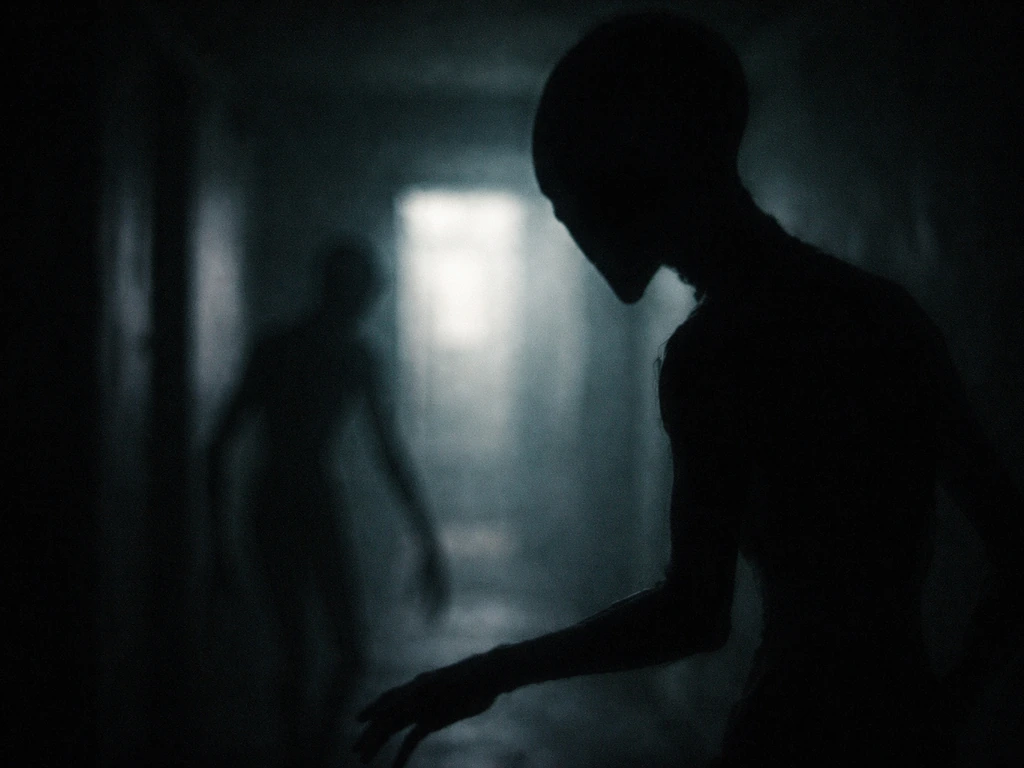
What the Bird Box creatures actually look like on screen
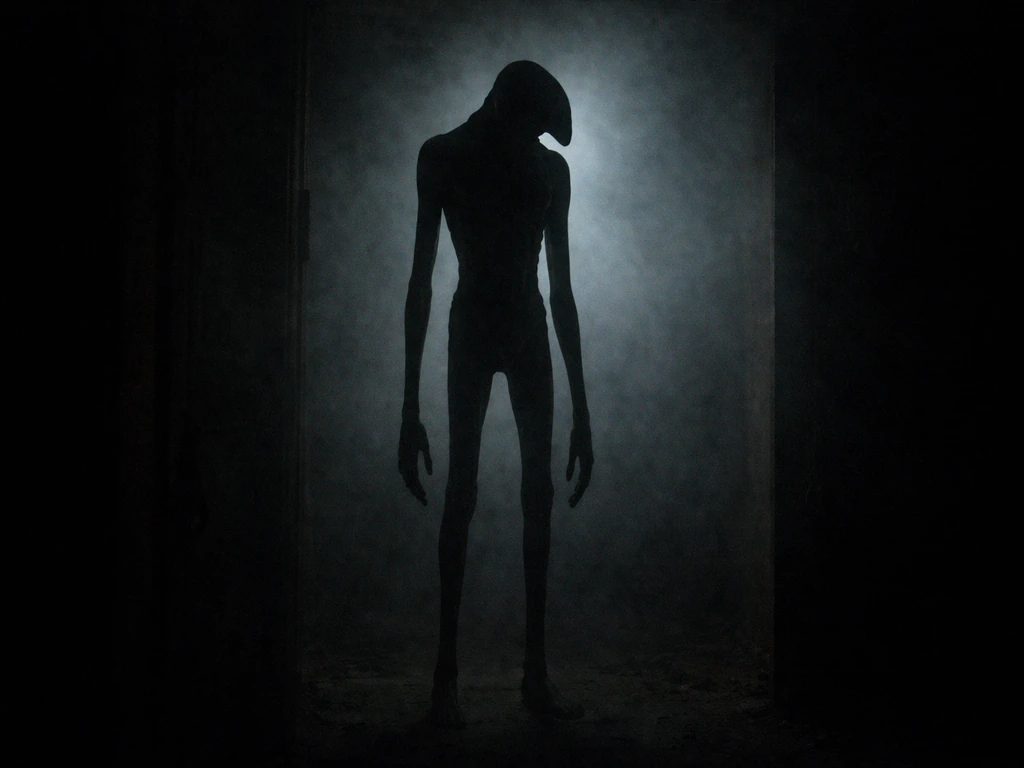
The creatures, officially referred to by the film's visual effects team at Industrial Light & Magic as 'The Presence,' were designed from the ground up to be described rather than seen. ILM's approach was to make the horror felt through environmental disturbance rather than a stable, identifiable body. That said, here's what you can actually pick out if you watch closely:
- Tall, slender silhouette: the form reads as taller than a person, with a narrow, stretched quality, similar to a very tall and thin figure rather than a bulky monster
- Elongated limbs: arms and legs appear unusually long relative to the torso, giving movement an unsettling, spindly quality
- Smooth, featureless surface: the skin or outer surface appears pale, almost gray-white, with no obvious clothing, scales, or texture you can lock onto
- Minimal facial detail: in the few frames where a face-like area is visible, it reads as flat and indistinct, no sharp beak or snout, closer to a blank, slightly pulled oval shape
- Upright posture: the creature moves bipedally, though its gait is slow and deliberate in a way that feels wrong rather than natural
Silhouette, movement, and body traits worth looking for
Think of the silhouette the way you'd try to identify an unfamiliar bird at dusk: you lose the color and fine detail, so shape and movement become everything. That bird-like idea is also useful for thinking about what the world looks like to a bird, where shape, motion, and distance matter more than detail. The creature's outline is consistently tall and narrow. You might notice the limbs seem slightly too long for the body, the way a heron's legs look disproportionate when you first see one standing in shallow water. The motion is unhurried, almost gliding, with none of the jerky or fast movement you'd expect from a typical film monster.
The body itself, when lit at all, sits in a very limited tonal range. There's no strong color contrast to anchor your eye. You're reading form from subtle shifts in shadow rather than distinct markings, which is exactly why so many people finish the film unsure what they saw. If you're trying to compare notes with someone else who watched it, focusing on that tall-thin-slow combination is the most reliable shorthand.
Creatures vs. aliens: what the film is actually presenting
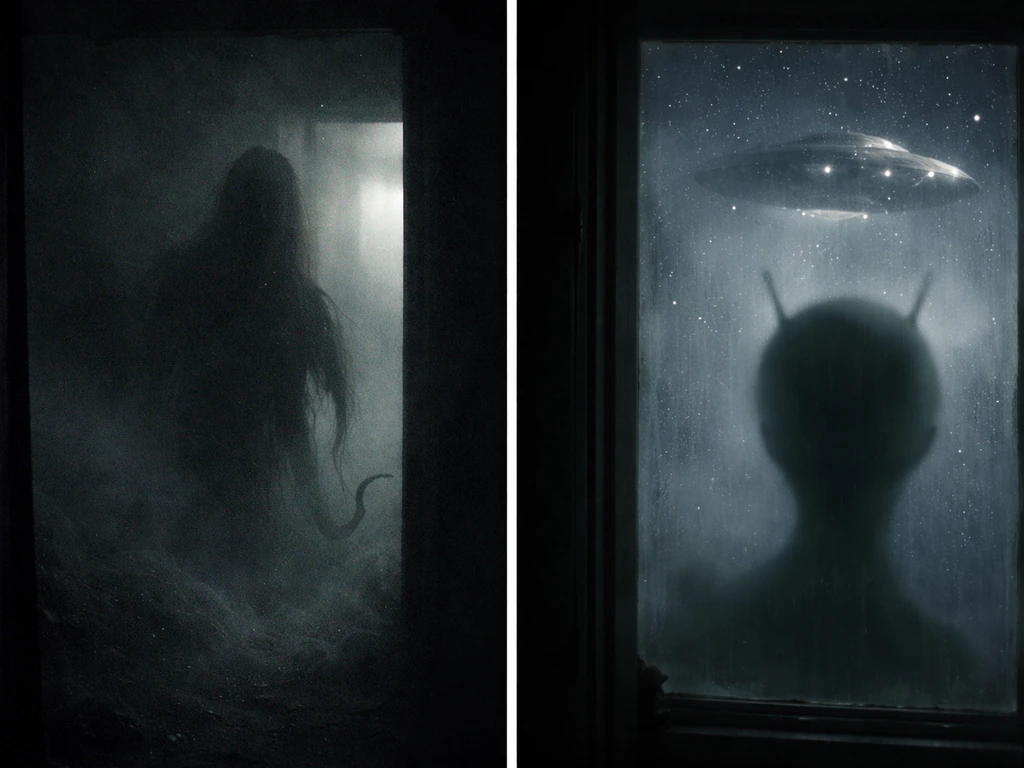
A lot of people search for 'Bird Box aliens' and that's completely understandable, but the film never frames them as aliens. The story treats them as an unexplained supernatural or interdimensional presence, not extraterrestrials with a home planet or a spacecraft. The creature design reflects that: it's not a stereotypical big-eyed gray alien, not a tentacled space creature, and not anything that maps cleanly onto familiar sci-fi imagery. The design team, led by VFX supervisor Marcus Taormina, spent a significant research and development phase working through what 'The Presence' could look like before landing on the restrained, barely-glimpsed final version. The result sits closer to a folkloric or eldritch horror aesthetic than a science fiction one.
One important nuance: different characters in the film who are forced to look at the creature react as if they each see something slightly different and personally horrifying. That's baked into the story. So there isn't one single canonical face you're supposed to recognize, which is part of why pinning down 'what it looks like' is genuinely tricky even after multiple viewings. If you're also wondering what a bird skull looks like, the key features are the beak shape, eye sockets, and the overall arrangement of the cranium what it looks like.
Why it's so hard to get a clear look (lighting, distance, and film effects)
The confusion around what the creatures look like comes from a deliberate stack of visual obstacles. First, almost every scene where a creature is near takes place in low light: pre-dawn interiors, foggy exteriors, overcast daylight filtered through dirty windows. Second, the camera almost always shows the creature at distance or partially behind foreground elements like furniture, walls, or foliage. Third, the VFX team built the creature reveal around environmental disturbance effects: leaves spinning in tight vortexes, grass bending radially, shadows shifting. Your eye gets pulled to the environment before it lands on the creature itself. That's exactly the same challenge as spotting a secretive bird flushing from dense brush: by the time your eye finds the shape, it's already moving away.
There are also practical production choices at work. ILM described their role as designing effects that imply the horror rather than show it, specifically framing the creature as something indescribable. That word, indescribable, is doing real work: the creature was designed so that no single frame gives you enough to form a complete mental image. It's a studied absence, not an oversight.
How to compare what you remember to what's actually in the film
If you watched Bird Box and want to confirm what you saw, a frame-by-frame approach is genuinely the most useful method. Here's how to do it without going through the entire film:
- Focus on the outdoor scenes where characters first encounter 'the effect,' usually marked by sudden wind and debris movement: those are the frames where the creature's silhouette, if visible at all, is most likely to appear at the background of the shot
- Look for the tall, pale vertical form in the mid-to-far background while the foreground characters are reacting: it's easy to miss because the editing directs your attention to the human performance
- Pause during any scene where leaves or grass spin in a tight circle on screen: the creature is often positioned just beyond the edge of that disturbance
- Check scenes with the character who has gone 'affected' (one of the people who looks and doesn't die but becomes dangerously obsessive): their behavior often draws the camera toward the creature's direction more directly than other scenes
- Compare the silhouette you see against the tall-narrow-slow checklist: if the shape doesn't match that profile, you may be looking at an environmental effect or a camera artifact rather than the creature itself
Creature appearance at a glance
| Feature | What you see | What it's not |
|---|---|---|
| Overall form | Tall, narrow, bipedal silhouette | Stocky, wide, or quadrupedal |
| Limb proportions | Elongated arms and legs relative to torso | Short or compact limbs |
| Surface/skin tone | Pale gray-white, minimal texture visible | Scaled, feathered, or brightly colored |
| Facial area | Flat, indistinct, oval-ish shape | Clear eyes, beak, snout, or teeth |
| Movement style | Slow, deliberate, almost gliding | Fast, jerky, or animalistic |
| On-screen clarity | Partially obscured, backlit or in shadow | Fully lit, close-up, or held on screen |
How to find exact stills and reference clips quickly
If you want the highest-quality reference frames available, the Netflix Media Center is the official starting point for press stills and promotional imagery from Bird Box. The images there are higher resolution than most screenshots circulating on social media or fan sites, which matters when you're trying to read fine visual detail. Search directly on the Netflix Media Center site for Bird Box and filter for production stills rather than poster art.
For clip-level reference, the film is available on Netflix and you can use the platform's own pause and rewind controls to step through the key scenes described above. Third-party video breakdown channels on YouTube have also done frame-by-frame analyses specifically looking for creature appearances, and searching for 'Bird Box creature scene breakdown' will surface several of those. These are genuinely useful because someone else has already done the tedious work of isolating the specific frames where the creature is most visible. If you're trying to picture what the angry bird looks like in particular, you can compare the overall shape and coloring to the official character design.
One practical tip: watch those breakdown videos at the lowest playback speed your player allows (0.25x on YouTube) and pay attention to background layers rather than the foreground action. That's where the creature's outline tends to surface most clearly, in the same way a shy bird will be visible at the edge of the frame while your eye is on something else entirely. If you've been curious about how other ambiguous on-screen creatures compare visually, or about the structural similarities between film monster design and real-world camouflage in animals, the visual language used in Bird Box has some interesting parallels to how the natural world hides things in plain sight.
FAQ
Is there a specific “true” creature design that everyone is supposed to see in Bird Box?
No. The film is built so different characters experience the presence differently, and even across viewings there is no single stable, fully revealed face or body. If you want a practical answer, focus on consistent traits (tall, narrow silhouette, slow gliding motion, limited tonal contrast) rather than trying to match one canonical “look.”
Why don’t the creatures have clear eyes, skin, or facial features on screen?
Because the visual effects design intentionally avoids clean anchor points, such as distinct eye color or crisp markings. The presence is communicated through shadow shifts and environmental movement, so your brain keeps trying to “complete” details that never become available in a single frame.
Do the creatures ever appear in daylight or well-lit scenes?
They can appear in brighter settings, but the film still uses limiting conditions like overcast diffusion, dirty windows, fog, and distance. That means you may get a slightly clearer outline, but you still generally will not get readable facial structure or skin texture.
What parts of the creature are most reliable to identify if I pause during a scene?
Try to identify the silhouette’s vertical proportions first (tall and thin), then the limb length impression (slightly elongated), and finally the movement pattern (unhurried, gliding rather than snapping or sprinting). Background disturbances often line up with the creature’s edges, so tracking the shape in the periphery is usually more successful than searching for facial details.
How should I use Netflix controls to find the best creature moments without scanning the whole movie?
Go to the scenes you remember as “most visible,” then repeatedly step frame-by-frame around the moment the environment changes first (leaves swirling, shadows shifting). Pause right after the disturbance begins, not when the camera centers on people, since the creature is often easiest to spot before the shot reveals distractions.
Are the creatures aliens, or do they fit a different genre look?
They are presented as supernatural or interdimensional rather than extraterrestrial. That choice matters visually, because it drives the design away from recognizable sci-fi staples (like classic big-eyed grays or spacecraft-related anatomy) and toward a more folkloric, eldritch silhouette.
If I watch with different settings, like brightness or color enhancement, will the creatures look clearer?
Sometimes, but it can also mislead you. Increasing contrast or sharpening may make environmental textures appear like “features” that are not actually part of the creature design. For the most consistent read, keep settings close to default and trust the silhouette and motion cues rather than invented detail.
Do official promotional stills show the creatures more clearly than the movie does?
Not fully. Press stills and production images can provide higher resolution context, but they are still limited by the same design intent, which avoids a definitive, fully exposed creature frame. Use stills mainly for confirming overall proportions, not for expecting a detailed face.
What’s a common mistake people make when trying to describe the creatures accurately?
People focus on trying to nail down facial features that never render clearly. A more accurate approach is to describe the presence using consistent attributes (tall narrow outline, slow gliding motion, minimal tonal contrast) and specify where you saw it (distance, foreground obstruction, low light) since those conditions shape what you think you noticed.
I found a creature scene breakdown video, but it doesn’t match what I saw. Should I assume the breakdown is wrong?
Not necessarily. Because characters perceive the presence differently and the creature is often partially obscured, two viewers can reasonably end up with different “interpretations” from the same general moment. Compare whether both descriptions rely on the same stable cues (silhouette height, narrow outline, motion pacing) rather than on assumed facial structure.