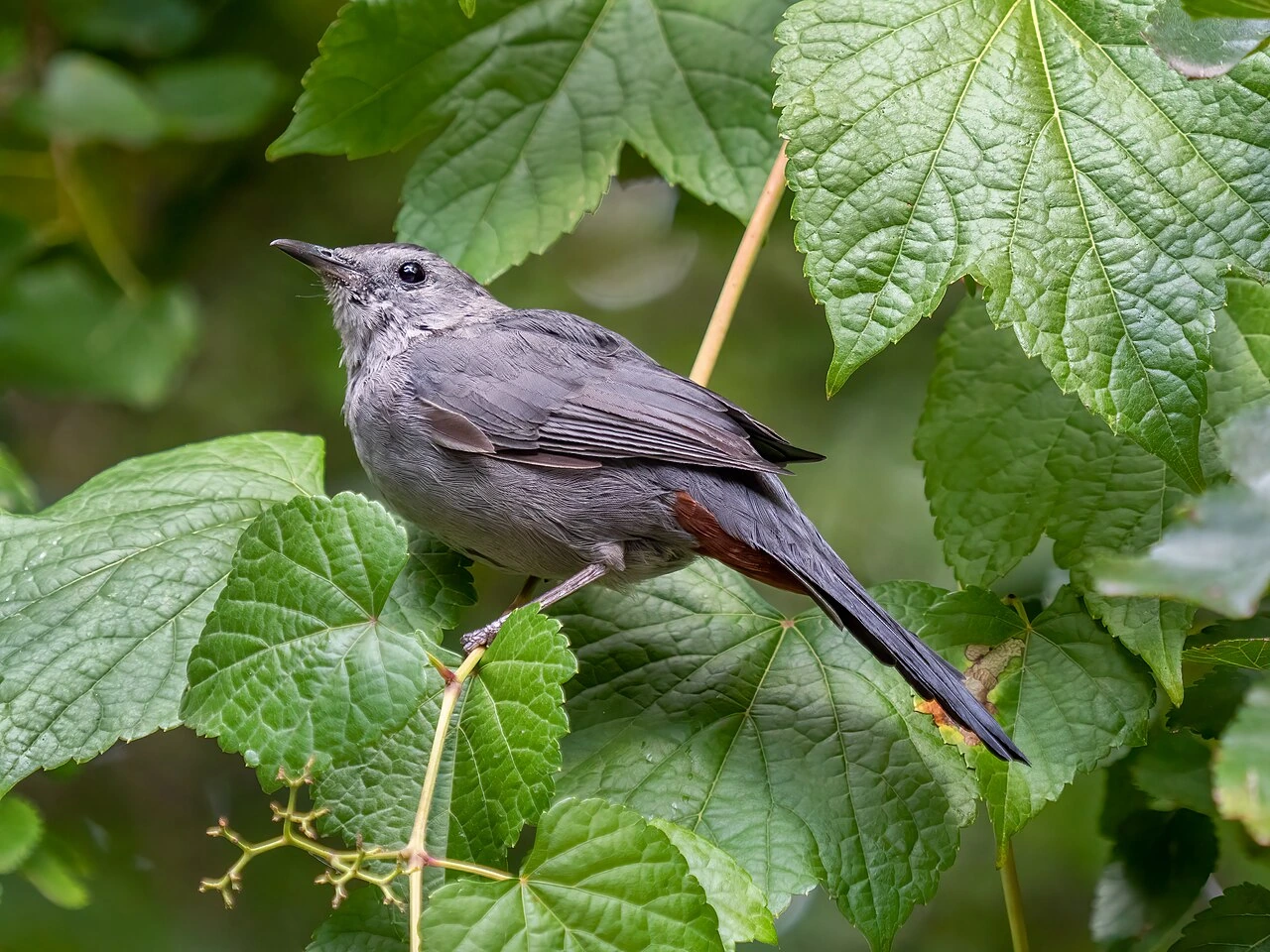
The Gray Catbird is a medium-sized songbird dressed almost entirely in smooth, slate gray, with a neat black cap on its head and a rich rufous-chestnut patch tucked under its tail. That combination, uniform gray body, dark cap, rusty undertail, is essentially the whole ID. No other North American bird pulls off that exact look, which makes the catbird one of the easier birds to nail down once you know what you're searching for.
What Does a Catbird Look Like Key Field Marks

Marcus Whitley
25 Apr 2026
Quick ID: which bird is actually called a catbird?
In North America, "catbird" almost always means the Gray Catbird (Dumetella carolinensis), a member of the mimid family that also includes mockingbirds and thrashers. The name comes from its call, which blank" rel="noopener noreferrer">sounds uncannily like a cat's mewing. You might come across references to other catbirds in Australia and Asia (genus Ailuroedus), but those are entirely different birds. If you spotted something in your backyard, garden, or brushy woodland edge in North America, you're almost certainly looking at the Gray Catbird.
Overall shape and size: how to spot it fast
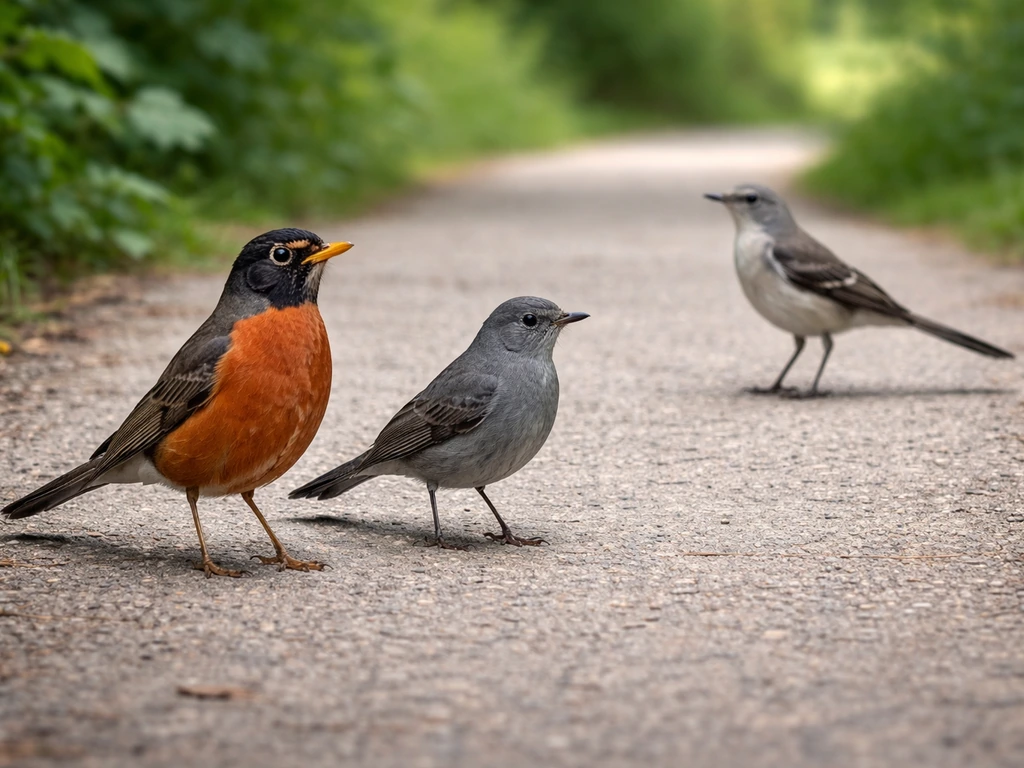
Think of a catbird as roughly robin-sized but a little slimmer and more secretive. It measures about 8. 3 to 9. 4 inches long (21 to 24 cm) and weighs between 0.
8 and 2 ounces, so it's not a tiny bird but it's not chunky either. Its wingspan runs 9 to 12 inches. In the field, the silhouette reads as a medium, long-tailed songbird with a fairly slender body, a rounded head, and a moderately long bill. If you’re asking what does a bird look like, the key is to compare size, shape, and the most distinctive color patches or markings you can spot quickly catbird.
If you're trying to understand what a bird brain look like, the bird’s overall shape and key field marks are the same kind of clues you use for this catbird ID what does a bird brain look like. A bird dog, by comparison, is a working breed with a sturdy, athletic build and distinctive hunting features, so its look will be quite different from a small songbird.
Bird vision can look very different from ours, which helps explain what field marks are most noticeable to a catbird. It often cocks its tail upward when it's alert or moving through dense shrubs, which is a great quick cue. If you're comparing it to birds nearby, it's bigger than a sparrow, a touch smaller than a robin, and noticeably slimmer than a thrasher.
Color and pattern: head, face, and body
The body is uniformly dark gray from throat to back, with no streaking, no spots, and no wingbars. That clean, unbroken gray is actually unusual and makes identification straightforward once you register it. The head carries the most obvious field mark: a clean black cap that sits like a small beret, covering the crown and stopping sharply above the eye level. There's no face mask, no eyestripe, and no white supercilium, so the face looks smooth and plain. Males and females look identical in plumage, which simplifies things considerably.
Wings, tail, and undertail: the field marks that seal the deal
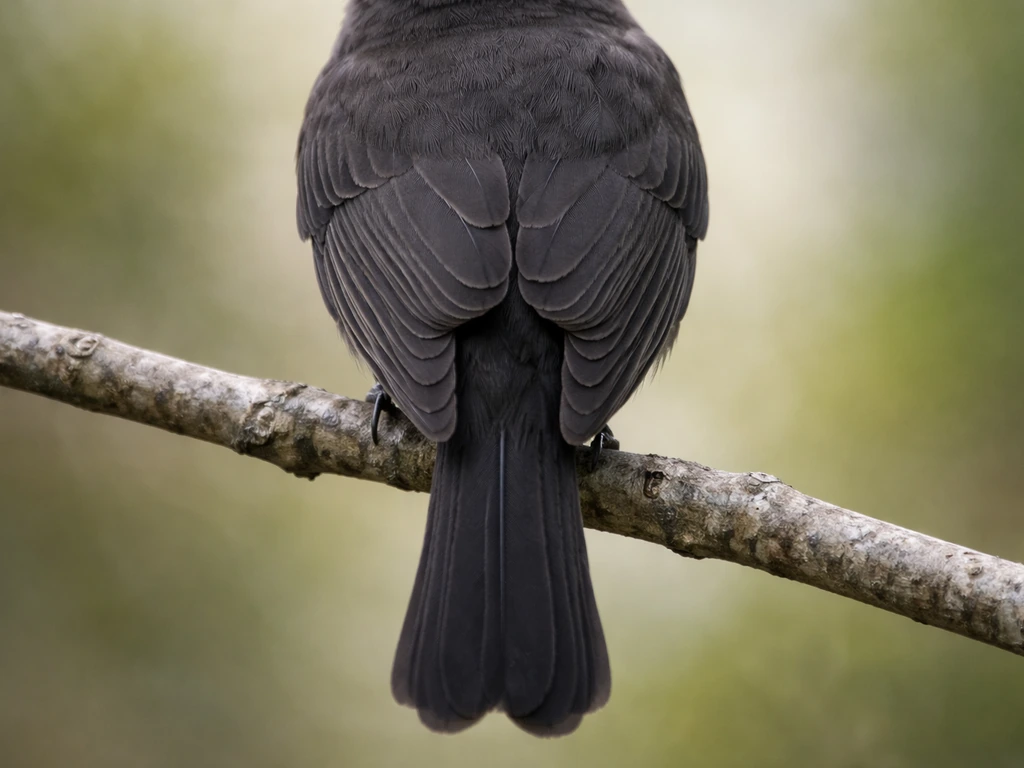
The wings are dark gray to blackish, with no white patches and no wingbars. The tail is blackish and slightly long relative to the body, which adds to that slim, elegant silhouette. But the real clincher is underneath the tail: the undertail coverts (the feathers at the very base of the underside of the tail) are a rich rufous-chestnut, almost brick-red color. A catbird chest typically shows a uniform gray body with a rich rufous-chestnut patch under the tail. That patch stands out immediately against the gray belly whenever the bird moves or lifts its tail. It's the one field mark that removes all doubt. If you can see the rufous undertail, you have your catbird.
One thing worth knowing for juveniles: young catbirds hatched that same season have looser, fluffier undertail feathers, and the rufous color is much reduced or mostly gray with only a hint of rust. The body gray can also look a little softer and less polished. If you're watching in late summer or early fall and the undertail seems disappointingly plain, you might be looking at a young bird from that year's brood. The black cap is still present but can look slightly duller too.
Bill, eye, and silhouette details up close
The bill is dark, slender, and straight, typical of a mimic thrush built for probing and picking. It's not as curved as a thrasher's bill and not as stout as a mockingbird's. The eye is dark in adults, giving the face a plain, unmarked look. In younger birds (hatched that year), the iris tends toward a grayish or reddish-brown tone, which can be a secondary aging clue if you get a close look. There's no eyering, no colored eye-ring, and no pale supercilium to complicate things. The overall silhouette in flight is lean and direct, with the long tail trailing behind. It doesn't flash any white in the wings or tail like a mockingbird does.
Common look-alikes and how to tell them apart
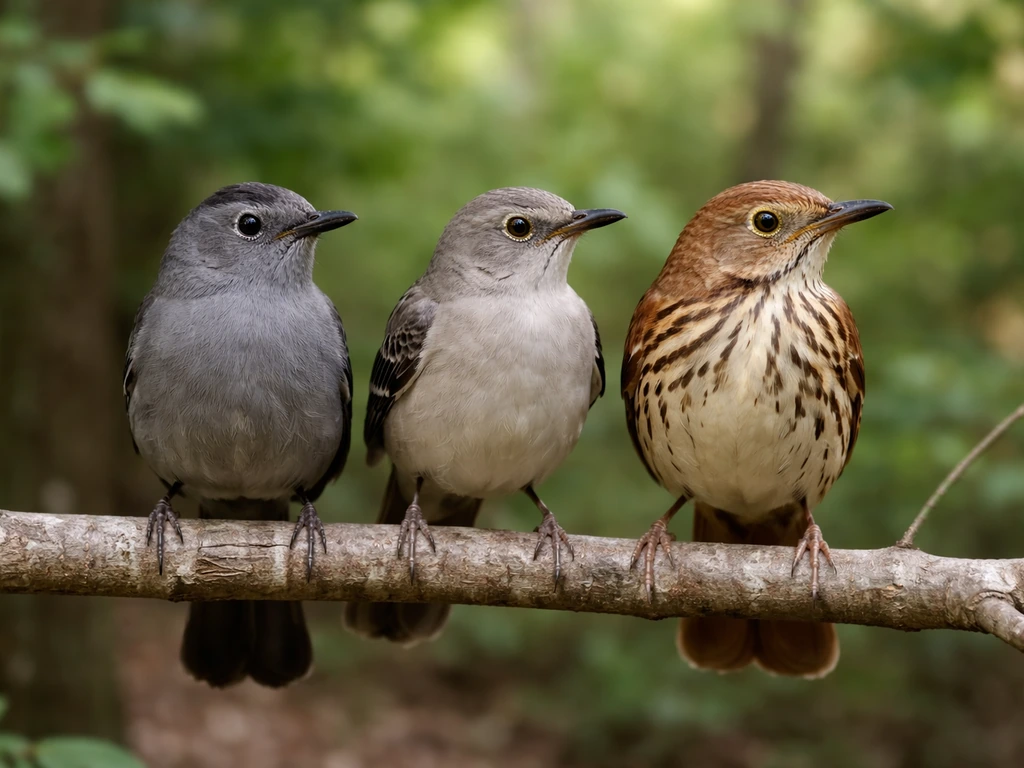
Three birds get confused with the catbird most often: the Northern Mockingbird, the Brown Thrasher, and occasionally dark juveniles of other species. Here's how to separate them quickly.
| Bird | Body color | Key marks | Tail/wing pattern | Bill shape |
|---|---|---|---|---|
| Gray Catbird | Uniform slate gray | Black cap, rufous undertail coverts | Blackish tail, no white patches | Slender, straight, dark |
| Northern Mockingbird | Gray and white | White wing patches, white outer tail feathers | Flashes white in wings and tail conspicuously | Medium, slightly curved |
| Brown Thrasher | Rufous-brown above, streaked below | Bold breast streaking, two white wingbars | Long rufous-brown tail | Long, strongly downcurved |
The Northern Mockingbird is the most common source of confusion because it's also gray and similarly sized. But the mockingbird has obvious blank" rel="noopener noreferrer">white patches in its wings and white outer tail feathers that flash whenever it flies or fans its tail. It also frequently raises and flicks its wings in a distinctive display you rarely see in catbirds. If you see white in the wings or tail, it's not a catbird.
The Brown Thrasher is rufous-brown on the back (not gray), has heavy dark streaking across a pale chest, sports two white wingbars, and carries a noticeably long, downcurved bill. It's a bigger, bolder-looking bird overall. The catbird's clean gray, unstreaked underparts are the instant separator from the thrasher.
How to confirm the ID in the field
When you first spot a gray bird in dense shrubs or brushy cover, run through a quick mental checklist before deciding. Start with size: is it roughly robin-sized or a little smaller, without being sparrow-tiny? Then look at the head for the black cap. Then check the undertail, especially if the bird is moving, hopping branches, or cocking its tail. That rufous-chestnut flash under the tail is definitive and visible even in moderate light.
- Get size context first: compare the bird to anything else in the same view, like a nearby sparrow or starling.
- Check the head for a clean black cap with no other face markings.
- Look for uniform gray on the entire body with no streaks, wingbars, or white patches.
- Watch the undertail area for the rufous-chestnut patch, especially when the bird moves or hops.
- Note the tail color (blackish, not white-edged) and the slim, straight dark bill.
- Listen: the classic mewing cat-like call is unmistakable if the bird is vocalizing.
If you're using a photo to confirm, crop in tightly on the undertail and the cap. Those two features together close the case for almost every sighting. Catbirds tend to stay low in dense vegetation, so catching a clear view sometimes takes patience. They'll pop into the open briefly, often at the edge of a thicket or hedgerow, and that's your window to lock down the field marks. Once you've spotted that rufous patch even once, you'll recognize a catbird instantly every time after.
FAQ
If I can only see the bird briefly, what does a catbird look like in the moment? (Quick ID cues)
A catbird’s defining look is the slate-gray body with a sharply defined black cap, plus the rich rufous-chestnut undertail patch (undertail coverts). In real life, you may not notice anything else if you miss the tail, because the rest of the plumage is very uniform and unpatterned.
Do juvenile catbirds look different from adults? What should I expect?
Yes. Juvenile Gray Catbirds can have a duller or softer-looking undertail, and the rufous can be reduced so it looks more gray with only a hint of rust. The black cap is usually still there, but it may look slightly less crisp than on adults.
What does a catbird look like when it flies, and how can I tell it apart from similar gray birds?
In flight, the catbird usually looks like a slim, long-tailed gray songbird with a plain face, and it does not typically flash white wing or tail patches. Its lack of wingbars and lack of obvious contrasting patches make it look more uniformly dark than a mockingbird when it moves.
When checking photos, where exactly should I focus to confirm a catbird?
Look for the underside of the tail and the base of the tail, not just the rump. The rufous undertail coverts can show best when the bird hops, pivots, or cocks its tail upward, so wait for a movement rather than only a still pose.
What if I can see the black cap but not the undertail patch, can I still identify it?
If you see a gray bird with a black cap but the undertail is fully hidden, the ID stays uncertain. Try to get another view during tail-cocking or when the bird shifts on a branch, because the undertail patch is the single field mark that “removes all doubt.”
Why do gray birds sometimes turn out to be thrashers, and what pattern signs should I look for instead of color alone?
The Brown Thrasher is usually the easiest “miss” among the common look-alikes because it can be gray-ish at a glance but it has different structure and patterning: it shows heavier streaking on the chest and back is more rufous-brown than slate gray, plus it tends to show white wingbar-like markings.
How would you describe a catbird’s face in plain terms (for distance or binocular use)?
If the black cap is present, no face mask, eye stripe, or prominent brow line is typical, so the face can look smooth and plain. The combination of unmarked face and overall clean gray body is a strong clue, even before you confirm the undertail.
I’m seeing the bird in heavy shade or dense brush, how should that affect my identification approach?
Catbirds prefer dense shrubs and brush, so they can look darker and less contrasty in shade. If lighting is poor, rely on the undertail when the bird moves, and use size plus silhouette (robin-sized but slimmer, long-tailed) as a backup rather than expecting crisp details everywhere.
Next Articles
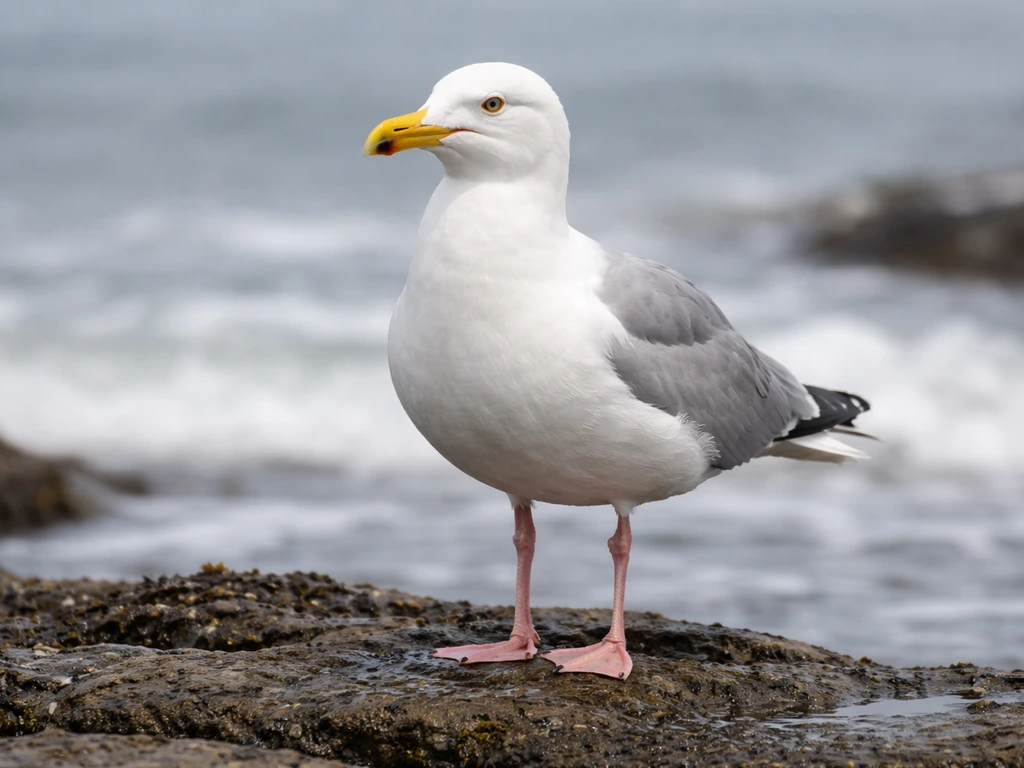
What Does a Herring Bird Look Like? Herring Gull ID Guide
Learn what a herring bird likely is: clear herring gull ID guide with key marks, plumage differences, and lookalike comp
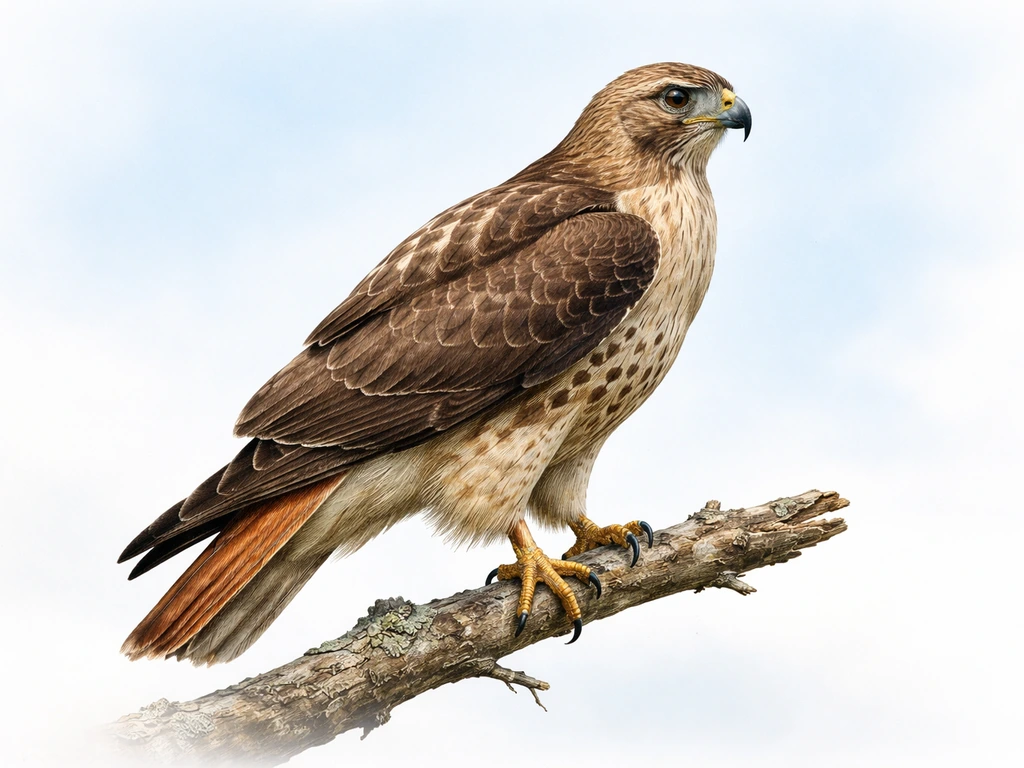
What Does a Hawk Bird Look Like? Key Field Marks to Spot
Learn key field marks for spotting hawks, compare to eagles falcons buzzards, and confirm with photos and angles.
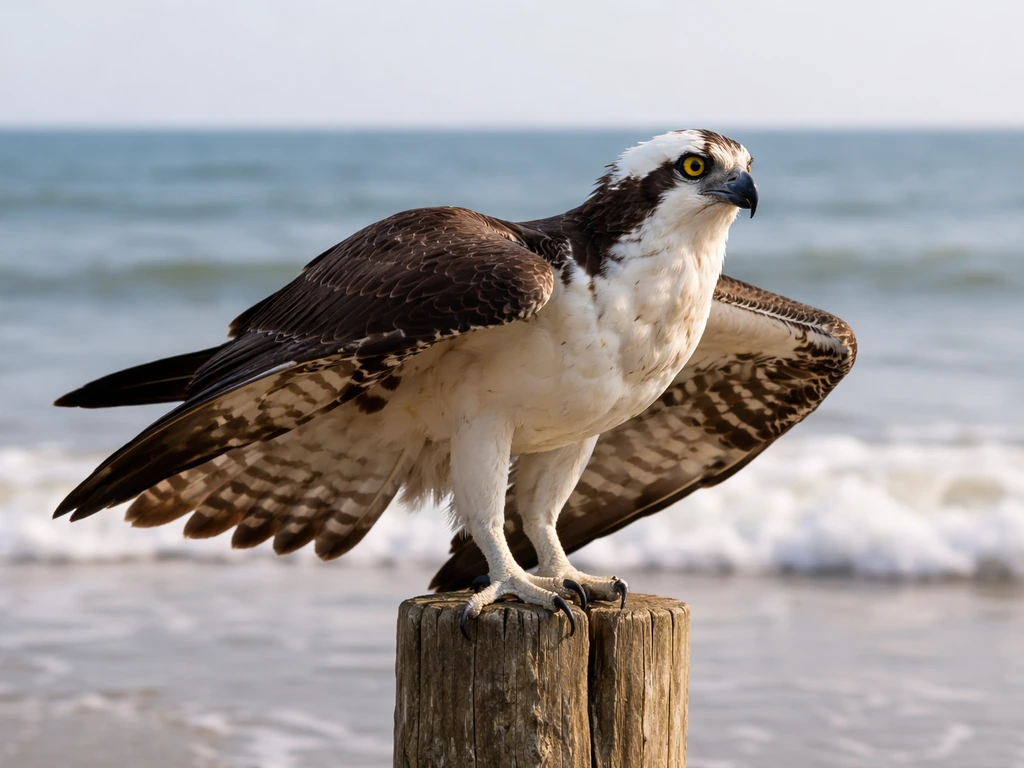
What Does a Seahawk Bird Look Like? Osprey ID Guide
See hawk meaning Osprey ID: size, flight posture, plumage patterns, bill/eye marks, and lookalike confusion cues.