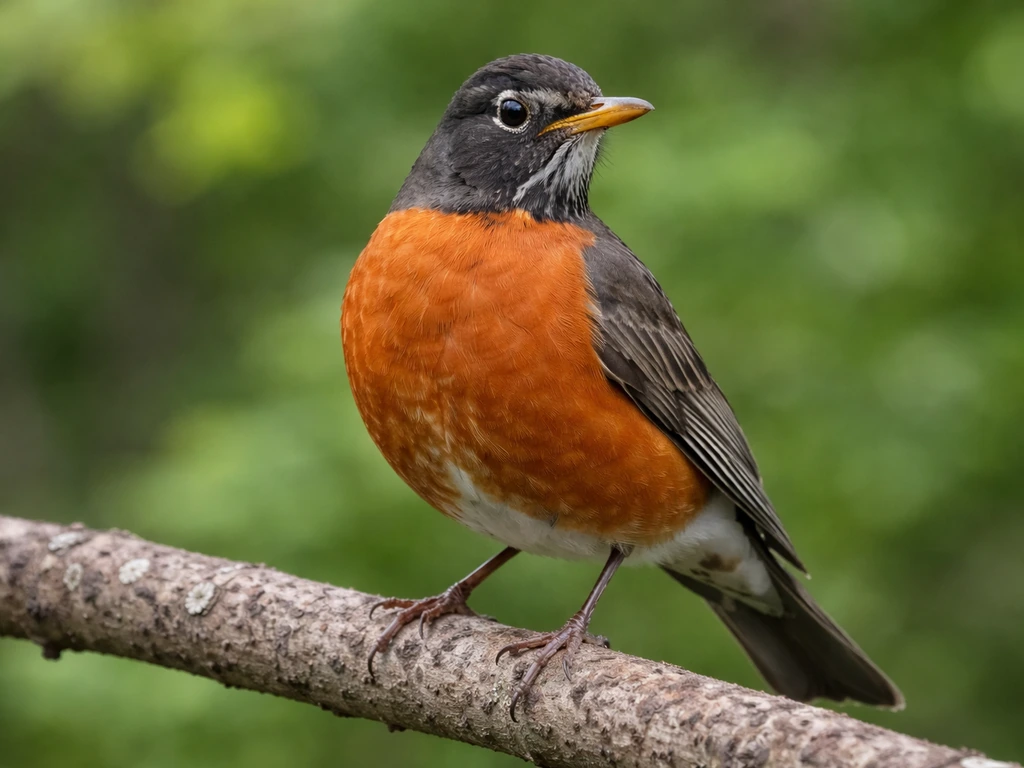
The American Robin is one of the easiest birds to recognize once you know what to look for. It's a sturdy, pot-bellied songbird with a warm orange-red breast, a dark head, and gray-brown back and wings. If you've spotted something on your lawn tilting its head sideways before yanking a worm out of the ground, there's a very good chance that's your robin.
What Does a Robin Bird Look Like? Male vs Female Guide

Marcus Whitley
10 Apr 2026
Size, shape, and silhouette
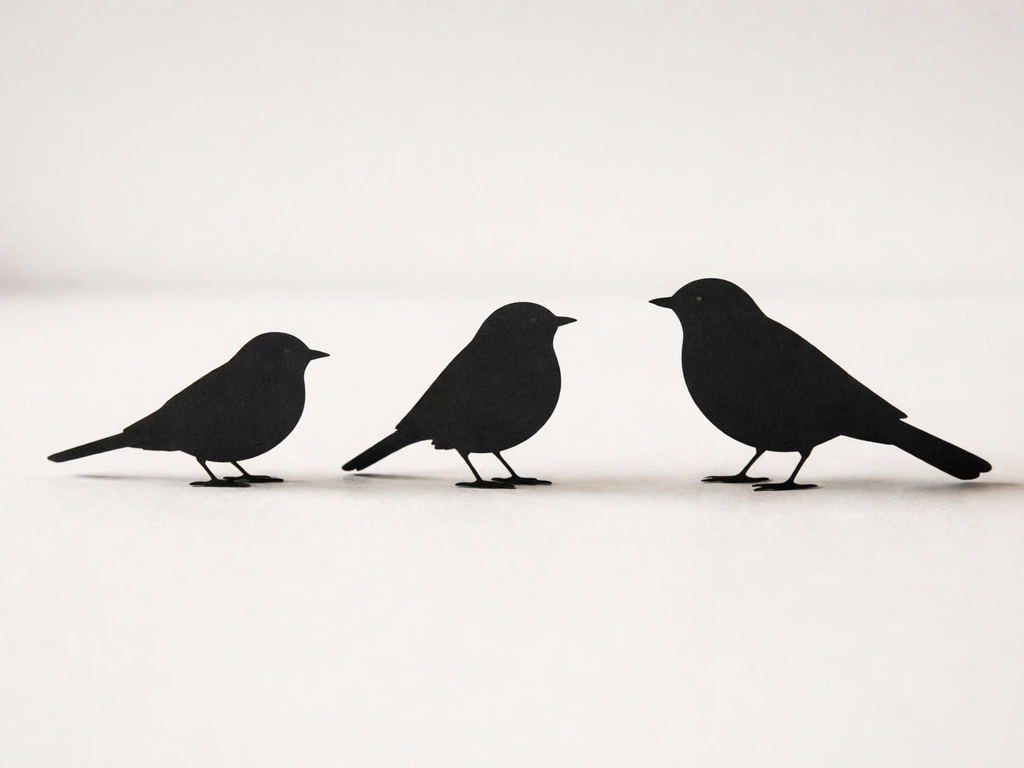
Robins are medium-sized songbirds, measuring 8 to 11 inches long with a wingspan of 12 to 16 inches and weighing around 3 ounces (roughly 77 to 85 g). That puts them comfortably larger than a sparrow or a bluebird, but noticeably smaller than a crow. The silhouette is one of the most reliable things to lock onto: robins look round-chested and pot-bellied, with a fairly upright posture when they're standing on the ground. They have a medium-length tail, a round head, and a straight, slender bill. When one hops across a lawn, the combination of that full, forward-tilted chest and confident stride is almost unmistakable.
Color pattern, part by part
The easiest way to lock in a robin ID is to check each section of the bird methodically. Here's what you're looking at from head to tail.
Head
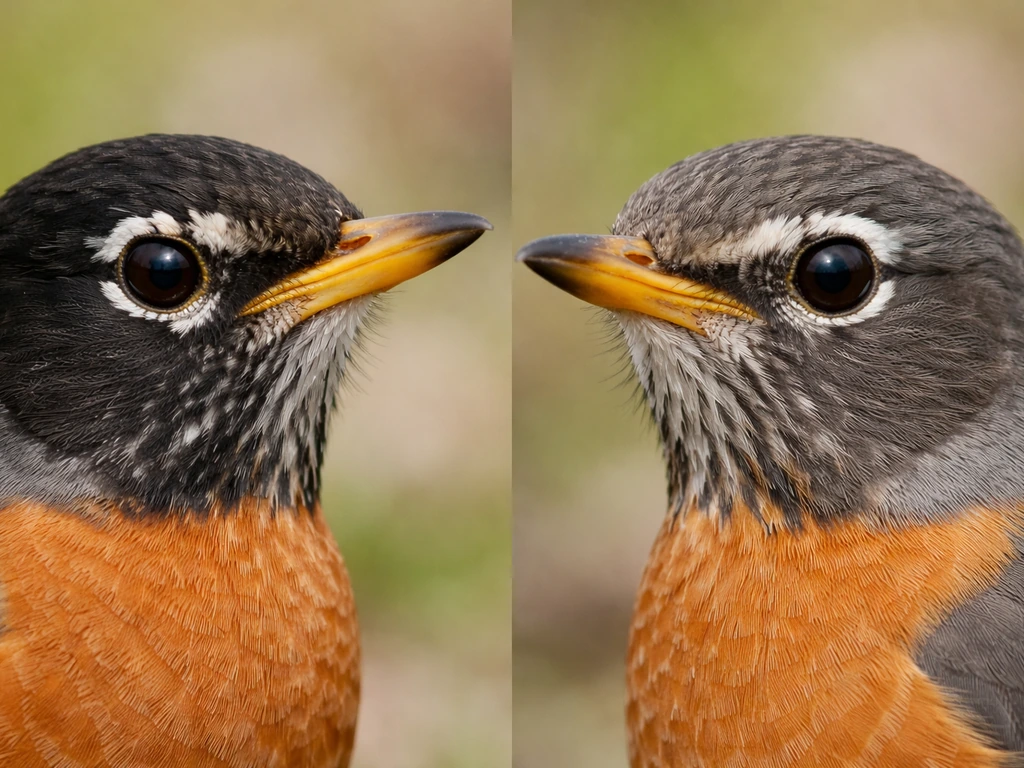
The head ranges from jet black on a breeding male to dark gray or medium gray on a female. Look for white eye arcs above and below the eye (they form broken crescents, not a complete ring), and white supercilia (eyebrow streaks) above the lores. The lores and a lateral throat stripe are blackish, which gives the face a slightly masked or hooded look on darker birds.
Bill
The bill is thin and yellow, which is one of the clearest quick-look features. In winter, the tip can be noticeably darker or black, so if you're watching in the colder months, the bill may look partly dark rather than pure yellow. Still, the overall impression is a pale, slender bill, which sets the robin apart from several thrush relatives with heavier or differently colored bills.
Breast and belly
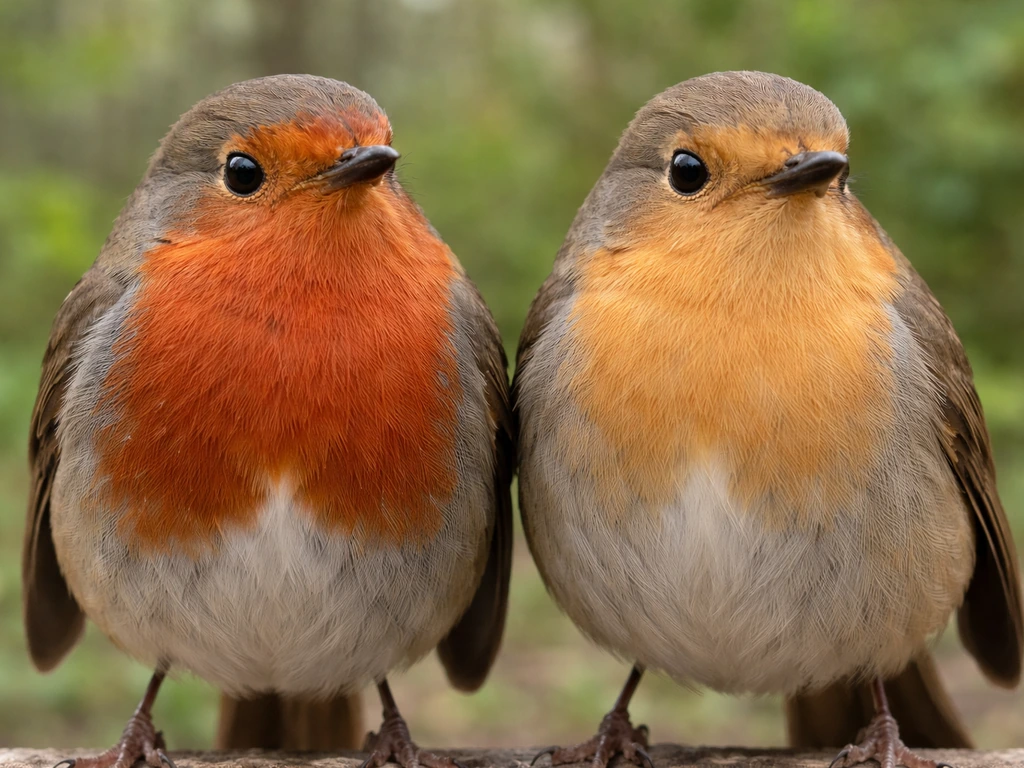
This is the feature most people remember: the warm reddish-orange breast and belly. In practice, the color can range from a rich red-maroon on a vivid male to a softer peachy orange. The color typically covers the entire breast and belly and has a reasonably clean boundary where it meets the gray-brown of the back and sides. The throat itself is white with dark streaks, which gives a slightly speckled look right at the chin that contrasts with the solid orange below.
Back, wings, and tail
The back and wings are plain gray-brown, without wingbars or bold markings. This plainness is actually an important ID point: robins have clean, unadorned wings. The tail is dark gray to black, and you'll sometimes see the outer tail feathers flash white at the corners when the bird takes flight, a subtle but useful detail to watch for.
Male vs. female: the key differences
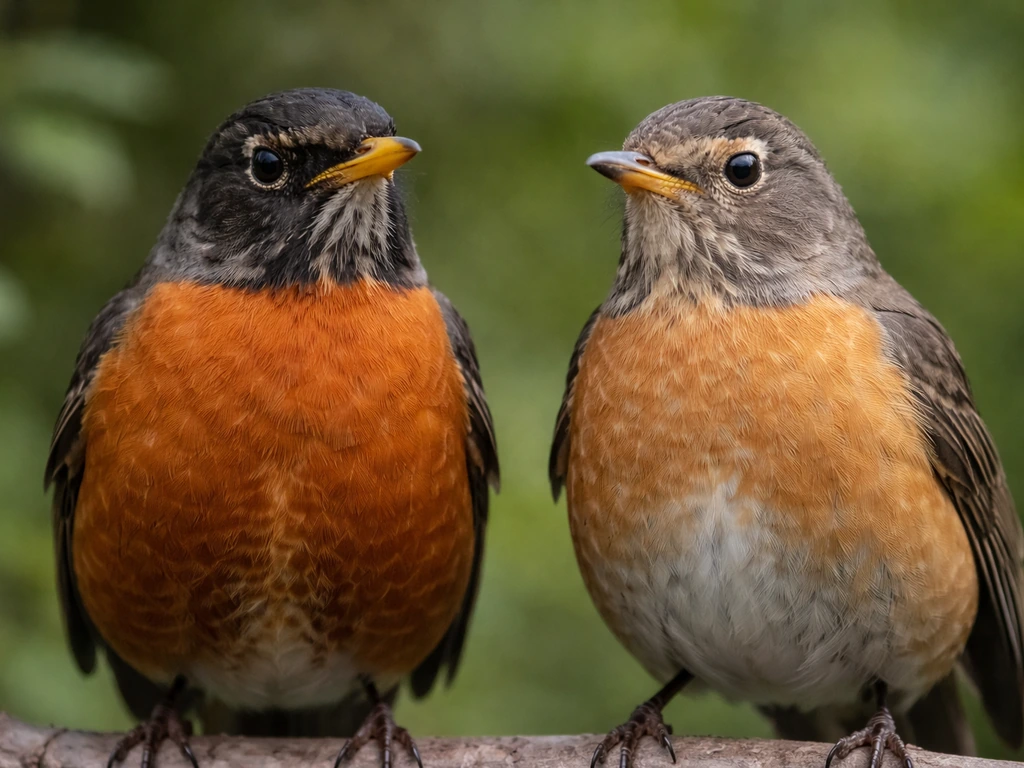
Male and female robins follow the same basic color pattern, but once you know the differences, you can usually tell them apart with a good look. The male typically has a darker, nearly black head that contrasts sharply with his gray-brown back, and his breast tends to be a deeper, richer reddish-orange. The female has a paler gray head that blends more gradually into the gray of her back, so that sharp head-to-back contrast is reduced or absent.
Her breast color is also somewhat paler, leaning toward a softer orange rather than the deeper brick-red of a male. A Library and Archives Canada thesis in Theses Canada discussing female ornamentation in American robins describes core female field marks such as [white eye crescents and black-and-white throat streaking](https://www. collectionscanada. gc.
ca/obj/thesescanada/vol2/OKQ/TC-OKQ-8603. pdf), noting that expression varies substantially within and between sexes. Neither sex is dull or hard to spot, but side by side, the male simply looks bolder.
It's worth knowing that not every bird fits the textbook version neatly. Some females can look quite dark-headed, and some males in worn or non-breeding plumage can look surprisingly muted. If you're unsure, focus on the head-to-back contrast: if the head looks clearly darker than the back, you're probably looking at a male. If the head and back blend together without much contrast, lean toward female. This is the single most reliable shortcut for separating robins that look alike in the field.
| Feature | Male Robin | Female Robin |
|---|---|---|
| Head color | Jet black to very dark gray | Medium gray, blends with back |
| Head-to-back contrast | Strong, obvious | Weak or absent |
| Breast color | Deep reddish-orange to brick red | Paler orange, sometimes peachy |
| Belly color | Rich orange-red | Lighter orange |
| Overall impression | Bold, high-contrast | Softer, more muted |
Juveniles and first-year birds
Juvenile robins look noticeably different from adults, and if you spot one in summer, you might not immediately recognize it as a robin. They're paler overall than adult males, and the breast is covered in dark spots on a lighter orange or buff background rather than that clean solid color. The back and wings also show whitish tips or shaft streaks on the wing coverts, giving the bird a scaly or speckled look compared to the clean adult plumage. This spotted-breast pattern is typical of thrushes as a family, and it's a reminder that robins are thrushes at heart.
As the bird ages into its first winter and first spring, it starts to resemble an adult, but first-year males often look closer to an adult female than to a fully dark-headed adult male. One thing birders sometimes check is the wing coverts: first-year birds may retain some of those brown, white-tipped juvenile feathers mixed in with the newer, grayer formative feathers, giving the wing a slightly two-toned look. It's a subtle detail but useful if you're trying to age the bird.
Seasonal color change is also worth knowing about. By fall, freshly molted robins can look surprisingly pale or washed out compared to what you might expect, because new feathers have pale fringes that partially obscure the bright colors underneath. By spring, those fringes wear away and the bird looks its sharpest: darker back, brighter red chest. So a dull-looking robin in October isn't necessarily sick or unusual; it's just freshly molted and hasn't worn into its spring look yet.
Don't confuse it with similar birds
A few other birds get mistaken for robins, especially in certain regions. If you're still trying to figure it out, you may also be asking what bird looks like a flamingo when you see an unusual color shape. The Varied Thrush is the most common mix-up in the Pacific Northwest. It has a similar orange-and-gray color scheme, but it shows bold orange wingbars and a dark breast band that robins completely lack. Robins have plain, unbarred wings and a clean orange breast without any dark bar across it. If you see wingbars or a breast band, it's not a robin.
Other thrushes like Hermit Thrush or Swainson's Thrush are smaller and have spotted or streaked breasts without that solid orange color. The Eastern Towhee has a similar dark-head-and-orange-sides contrast at a glance, but it's smaller and the coloring is distributed very differently. If you're ever unsure about a spotted or streaky-breasted bird, it helps to think about which bird looks like a mockingbird versus which bird looks like a thrush, since mockingbirds and thrushes occupy overlapping mental categories for many people.
One helpful way to stay calibrated on bird size is to compare robins against other familiar species. Robins are notably chunkier than a bird that looks like a hummingbird, which is tiny and needle-billed, and much smaller than a bird that looks like a seagull. Robins sit in a mid-size range that makes them useful as a mental benchmark. And while we're at it, if you're ever watching wading birds near water and thinking about long-legged species, robins are nothing like a bird that looks like a flamingo in shape or habitat, which is a reminder of just how distinctive that pot-bellied, orange-breasted, lawn-hopping silhouette really is.
Quick field checklist: confirming your robin
When you're looking at a bird and wondering if it's a robin, run through these points mentally. A confident ID checks most or all of these boxes:
- Pot-bellied, upright songbird, noticeably larger than a sparrow but smaller than a crow
- Warm orange to reddish-orange breast and belly, solid without spots or streaks (in adults)
- Dark head, ranging from jet black (male) to medium gray (female)
- Thin, yellow bill (may have a dark tip in winter)
- Broken white eye ring: white arcs above and below the eye, not a complete circle
- Plain gray-brown back and wings with no wingbars
- Dark tail, sometimes with white corners visible in flight
- White throat with dark streaks at the chin, just above the solid orange breast
If your bird has spotted breast feathers, it's likely a juvenile robin or a different thrush species. If it has wingbars or a breast band, it's not a robin. If the overall colors and structure match but the bird looks pale or washed out, consider that it might be a female, a first-year male, or an individual in fresh fall plumage. With these checkpoints in hand, you should be able to confirm a robin confidently within a few seconds of getting a decent look.
FAQ
What does a robin bird look like from a distance, before you can see details?
From far away, look for a round, pot-bellied body with a warm orange-red breast, a darker head, and gray-brown wings that look plain rather than striped. The overall silhouette is often the fastest clue, even if the head color detail is hard to see.
Are robins always orange on the breast, or can the color be different?
The breast is typically orange-red to maroon-red, but it can look softer and more peachy in females, some first-year birds, or robins in freshly molted fall plumage. If the chest still looks like a clean solid patch without a wingbar or breast band, it can still be a robin.
How can I tell a male vs female robin quickly without comparing too many features?
Use the head-to-back contrast. A male usually shows a darker, nearly black head that clearly stands out from the gray-brown back, while a female’s head blends more gradually into the back.
Do juvenile robins look like the same bird adults have, or are they totally different?
Juveniles often look less like the classic “solid orange” adult. They’re paler overall and usually show darker spots on a lighter orange or buff breast, plus a more speckled or scaly look on the wings from pale tips or shaft streaks.
Can seasonal changes make a robin look washed out or dull?
Yes. Fresh fall molt can leave pale fringes on new feathers, which can make the bird look paler than you expect. In spring, those fringes wear away, and the back and red chest typically look sharper.
What are the most common non-robin traits that confuse birders?
Wingbars on the wings and a dark breast band are the big warning signs, since robins have plain, unbarred wings. Also be cautious with spotted or streaked breasts, which often point to a juvenile robin or a different thrush rather than the adult look.
If I see a robin-like bird but the bill color looks dark, is it still likely a robin?
It can be. Robins usually have a thin yellow bill, but in winter the bill tip can darken. If the rest of the body matches, especially the unbarred wings and solid-looking orange chest, it’s still often a robin.
What if the bird has dark head color but the breast looks pale, am I looking at the wrong sex or age?
That can happen. Some females can look quite dark-headed, and first-year males can be more muted. In these cases, rely on whether the head blends smoothly into the back (more female-like) or has strong contrast (more male-like), and check for juvenile traits like spotted breast.
Are there any quick “yes or no” checks I can do when I only have a few seconds?
Yes. Check for unbarred, plain gray-brown wings (no wingbars), confirm the breast is solid orange without a dark band, and look at the overall shape, round chest, and hopping posture. If you see wingbars or a breast band, rule it out as a robin.
Could a robin be mistaken for another bird that also has orange-and-gray coloring?
Definitely. In the Pacific Northwest, Varied Thrush is a common mix-up, and it often shows bold orange wingbars and a dark breast band that robins lack. In other places, smaller thrushes with spotted or streaked breasts can also mislead you because they may show orange tones but not the robin’s typical solid chest pattern.
Next Article
What Does a Herring Bird Look Like? Herring Gull ID Guide
Learn what a herring bird likely is: clear herring gull ID guide with key marks, plumage differences, and lookalike comp