If you're seeing a bird with a rusty-orange breast and dark back, there's a good chance it's an American Robin, but several other species share that same warm-toned chest and upright posture that makes them easy to mix up. The Varied Thrush is the most common confusion species, followed by the spotted thrushes (Hermit, Swainson's, and Gray-cheeked), and depending on where you are in the world, even the European Robin can come up as a comparison. The good news is that once you know which specific marks to look for, most of these birds are pretty easy to tell apart. If you're wondering about birds with a similar rosy, flamingo-like look, you can also check which species match that color and shape what bird looks like a flamingo.
What Bird Looks Like a Robin: Easy Identification Guide

Marcus Whitley
20 May 2026
First, which robin are we talking about?
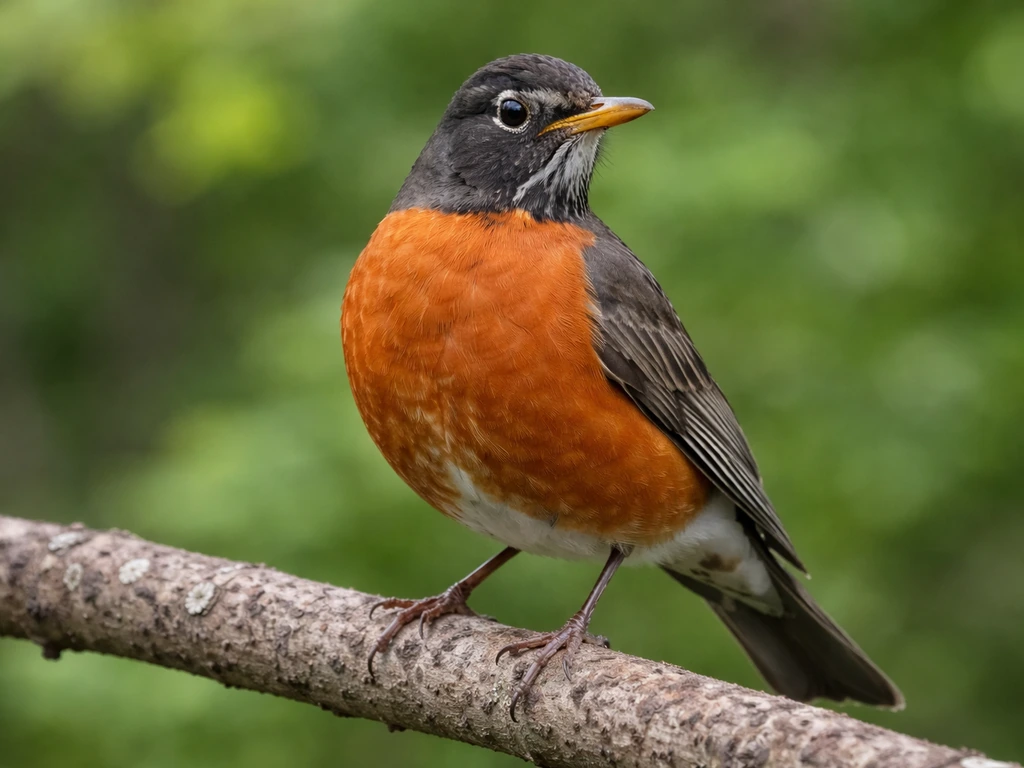
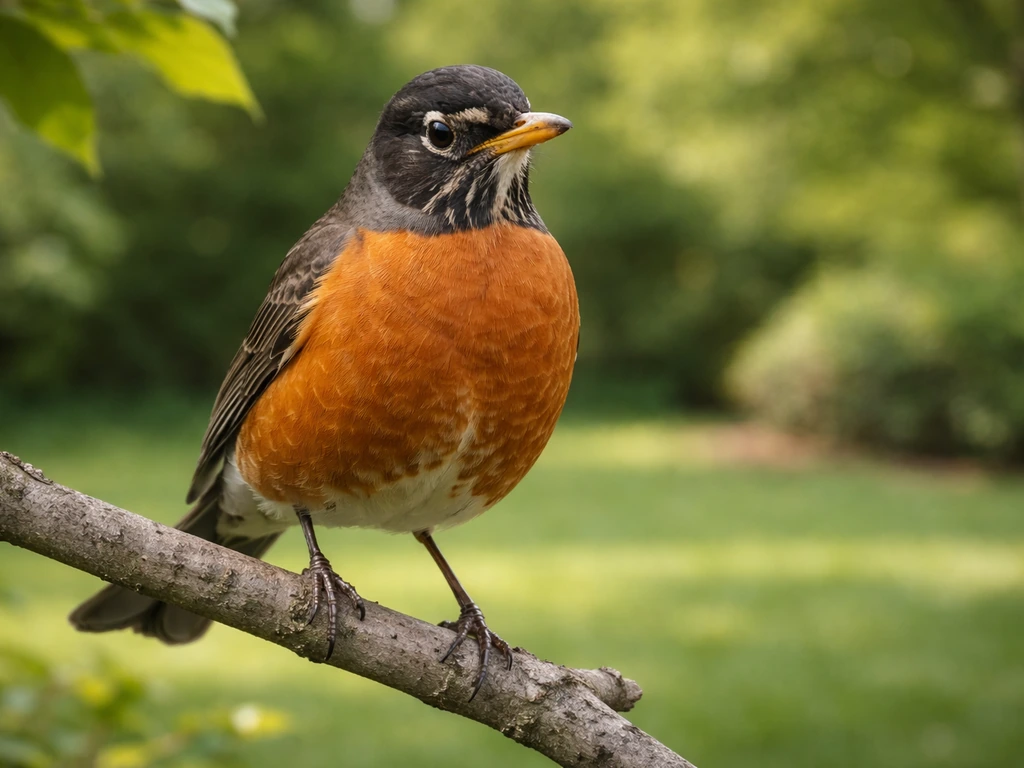
Most people searching this question in North America are thinking of the American Robin, and that's the bird this guide centers on. It's a fairly large songbird with a round body, long legs, and a moderately long tail. The adult male has a dark, almost blackish head, a bright brick-red to rusty-orange belly, a gray back, and a yellow bill with a small black tip. There's a white arc above and below each eye, and the throat is white with black streaks. The belly and undertail coverts are white. That combination of dark head plus rusty chest is the classic "robin look" most people have in their heads.
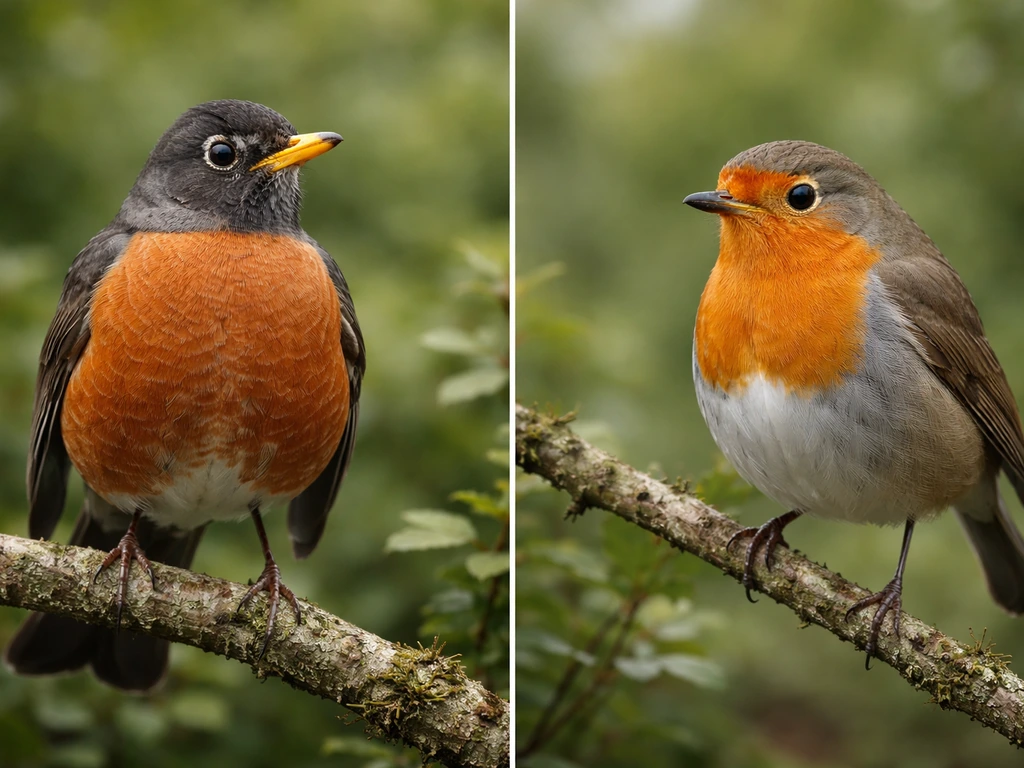
If you're in the UK or Europe, your frame of reference might be the European Robin instead. That bird is much smaller, rounder, and has an orange face and breast that bleeds all the way up through the forehead and cheeks. The back is olive-brown and the underside below the orange is whitish. It's a completely different species and family from the American Robin (not closely related at all), but both birds got the "robin" name because of their similar warm-chested look. Worth knowing which one you're comparing against before diving into lookalikes.
The most likely robin lookalikes at a glance
Here are the birds most commonly mistaken for a robin, depending on your region. If your bird matches one of these, keep reading for the specific marks that separate each one.
- Varied Thrush: the #1 lookalike in western North America, same size and orange chest but with a bold dark breastband and orange wing bars
- Hermit Thrush: smaller, spotted breast, reddish tail that it pumps up and down
- Swainson's Thrush: similar size to Hermit Thrush, spotted breast, buffy eye ring, no red tail
- Gray-cheeked Thrush: grayish face, faint pale eye ring, spotted breast, brownish-gray back
- Spotted Towhee (male): black hood, rufous sides, white belly, spotted white wing markings
- Eastern Towhee (male): very similar to Spotted Towhee, rusty flanks, black upper half
- European Robin: tiny round bird with an orange face and breast, olive-brown back (more relevant if you're in Europe or comparing bird names)
If you're looking for something bigger than a robin, the American Robin itself is already medium-large for a songbird. But birds that give a "large robin" impression include the Varied Thrush (same size, heavier look due to the breastband) and even some thrashers or large spotted thrushes seen at a distance. The upright posture and foraging behavior are what usually make a bird "read" as robin-like, even when it isn't.
Matching by what you actually see: color, pattern, size, and shape
The fastest way to narrow things down is to run through a few specific visual checkpoints on your bird. Here's how the main lookalikes compare across the traits that matter most.
| Bird | Breast color/pattern | Head | Wing markings | Tail | Size vs. Robin |
|---|---|---|---|---|---|
| American Robin | Brick-red to rusty, solid | Dark/blackish, white eye arcs | None | Gray-brown, white corners | Baseline |
| Varied Thrush | Orange with bold dark breastband | Slate-gray, orange eyebrow stripe | Two orange wing bars | Dark, no white corners | Same |
| Hermit Thrush | White with dark spots | Brown, bold white eye ring | None | Reddish-rufous, pumped up/down | Smaller |
| Swainson's Thrush | White with dark spots | Brown, buffy/buff-yellow eye ring | None | Olive-brown, no pumping | Smaller |
| Gray-cheeked Thrush | White with dark spots | Grayish, faint pale eye ring | None | Brownish-gray | Smaller |
| Spotted Towhee (male) | Rufous flanks, white belly | Black hood, red eye | White spots on wings | Long, white-tipped | Slightly smaller |
| Eastern Towhee (male) | Rufous flanks, white belly | Black hood, red eye | Less spotting than Spotted | Long, white-tipped | Slightly smaller |
The breast is your first clue
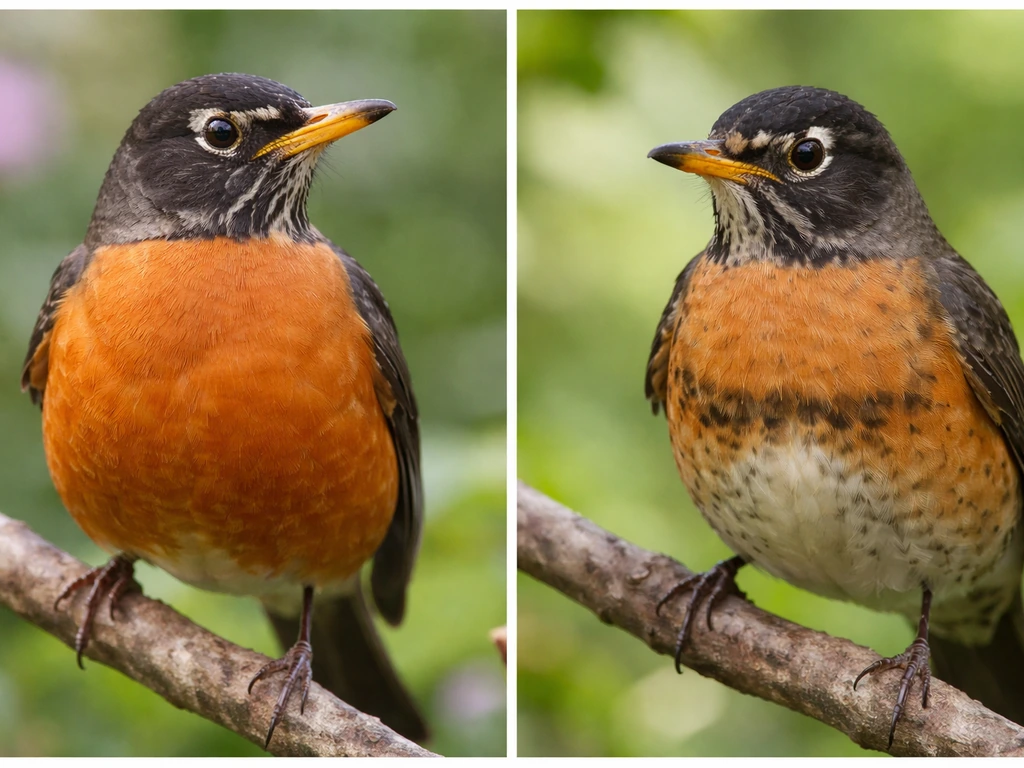
A solid, warm-orange or brick-red chest with no spots and no dark band screams American Robin. The moment you see a dark band cutting across an otherwise orange breast, you're looking at a Varied Thrush. If you are trying to figure out what bird looks like a mockingbird, compare the size, head markings, and overall pattern to avoid common lookalikes. Spotted breast with a pale background? You're in Catharus thrush territory (Hermit, Swainson's, Gray-cheeked). Rufous coloring confined to the sides with a clean white belly in the middle? Think towhee.
Head and face markings narrow it further
Look at the eye area. American Robins have white arcs above and below the eye on an otherwise dark head. Varied Thrushes have a distinct orange eyebrow stripe on a slate-gray head. Hermit Thrushes have a clean, bold white eye ring. Swainson's have a buffy or buff-yellow eye ring that's slightly less crisp. Gray-cheeked Thrushes have a grayish face and a very faint, hard-to-see pale eye ring. If the face is plain brown with no obvious eye ring or stripe, and the breast is spotted, Gray-cheeked is a strong candidate.
Wing bars and tail shape seal the deal
American Robins have no wing bars. If you see wing bars, especially bold orange ones, you're looking at a Varied Thrush. The tail is another useful checkpoint: if the bird is frequently pumping or raising its tail and it looks noticeably reddish or rufous, that's the signature move of a Hermit Thrush. Robins don't pump their tails, and their tail is a plain gray-brown with white outer corners visible in flight.
Use habitat, season, and behavior to confirm what you're seeing
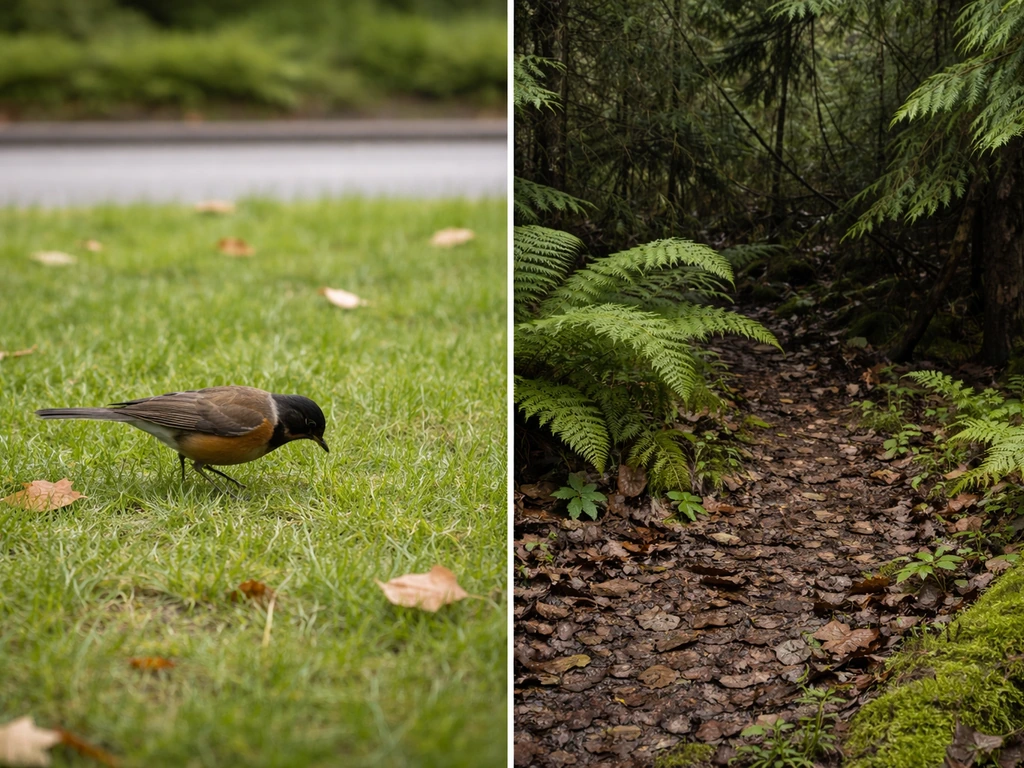
Color and pattern get you most of the way there, but the context around the bird often closes the gap. American Robins are famous for foraging on open lawns, running a short distance, pausing, then diving down to yank an earthworm from the soil. American Robins hop in grass while searching for earthworms, then tug long earthworms out of the soil before eating blank" rel="noopener noreferrer">tug an earthworm from the soil before eating. That run-pause-pounce behavior on short grass in a suburban yard or park is strongly associated with American Robin. If you are wondering about a similar-feeling bird in the yard, check which bird looks like a hummingbird for the most common mix-ups. If the bird is doing exactly that in your backyard, it's almost certainly a robin.
Varied Thrushes, by contrast, prefer dense, wet forests, especially conifer forests in the Pacific Northwest and Alaska. Seeing one at your suburban lawn feeder is possible in winter when they wander, but it's not the usual setting. The spotted Catharus thrushes (Hermit, Swainson's, Gray-cheeked) are mostly forest-floor foragers and tend to be shy, skulking through leaf litter under tree cover rather than running across open grass.
Season matters a lot too. American Robins are present year-round across much of the US (including winter, despite the myth that they always head south). Hermit Thrushes are the only spotted thrush that regularly winters in the southern US. Swainson's and Gray-cheeked are mostly seen during spring and fall migration. Varied Thrushes are a winter visitor to the Pacific Coast and irrupt eastward some years. Knowing what month you spotted the bird and where you live can immediately rule out several species.
When it's not a robin: tricky lighting, juveniles, and regional surprises
Lighting can completely change how a bird's breast color reads. A Hermit Thrush backlit in golden late-afternoon sun can look surprisingly warm and robin-like until you see the spots. Early morning or overcast light can make a robin's brick-red chest look duller and more brown, which can push you toward a wrong ID. If you're unsure, try to see the bird in open, even light and look for the specific pattern markers rather than just the overall color impression.
Juvenile American Robins are a classic source of confusion. They have heavily spotted dark underparts and whitish wing covert spots, so they look almost nothing like adult robins. You might see them in summer and wonder what spotted bird just landed on your lawn. Same species, just younger. The spotted look fades as they mature through late summer and fall.
If you're outside North America, the "looks like a robin" comparison shifts entirely. In Europe, the robin everyone pictures is the European Robin: a small, round, orange-faced bird that's closer in size to a sparrow than to the American Robin. If a friend from the UK says a bird looks like a robin and you're picturing the American version, you're comparing very different things. The European Robin's orange covers its entire face and chest including the forehead and cheeks, which the American Robin doesn't do.
How to pin down the exact species using photos and field marks
If you managed to get a photo, here's how to work through it systematically. Start with these checkpoints in order, and most birds will become clear before you get to the end of the list.
- Check the breast: solid orange-red with no band or spots (robin), orange with a dark band (Varied Thrush), or spotted on a pale background (Catharus thrush)
- Look at the face and eye: white arcs on a dark head (robin), orange eyebrow on gray head (Varied Thrush), bold white eye ring (Hermit Thrush), buffy eye ring (Swainson's), faint or absent eye ring on grayish face (Gray-cheeked)
- Scan the wings for bars: no wing bars (robin, Hermit, Swainson's, Gray-cheeked) versus bold orange bars (Varied Thrush)
- Watch or note the tail: reddish and pumped up and down (Hermit Thrush), plain gray-brown with white corners in flight (robin)
- Consider the overall size and shape: robin is notably upright and long-legged; Catharus thrushes are rounder, smaller, and more hunched
- Factor in where you are and what month it is: Pacific Northwest in winter points toward Varied Thrush; migration months in the eastern US open the Catharus options; suburban lawn year-round strongly favors robin
- Look at what the bird is doing: running on open grass and pulling worms is a robin's signature; quiet foraging in leaf litter under trees points to the spotted thrushes
If your photo is blurry or backlit, focus on shape and behavior rather than color. The upright posture, long legs, and run-pause foraging pattern are often enough to confirm American Robin even in a bad photo. If you suspect a totally different coastal look instead, check our guide on what bird looks like a seagull. For the spotted thrushes, the eye ring detail is small but critical, so a decent close-up of the face is worth a lot. If you're still stuck after working through the list, compare your image side by side with reference photos of each candidate species showing the same angle. Front-on photos reveal the breast pattern best; side-profile shots show the tail and eye ring most clearly.
Once you've narrowed it down to two or three candidates, it helps to look at what a robin actually looks like in all its ages and lighting conditions before ruling it in or out. Females are paler than males, with a more washed-out orange chest and a brownish (not blackish) head, which makes them look less like the classic robin picture. Knowing the full range of how a robin can appear makes it easier to confidently say "yes, that's one" or "no, something else is going on here." From there, the spotted thrushes, towhees, and Varied Thrush each have their own visual profiles worth exploring in detail if your bird keeps pointing away from robin.
FAQ
How can I tell an American Robin from a Varied Thrush if my bird is far away or the chest markings are unclear?
Use the eye area and wing details first. American Robins show a white arc above and below the eye on a dark head, while Varied Thrushes have an orange eyebrow stripe on a slate-gray head and often appear heavier with a darker cross-chest band. Also check for wing bars, American Robins lack them, Varied Thrushes can show them.
What if the bird has an orange chest but also seems to have dark spots, could it still be a robin?
It likely is not an adult American Robin. American Robin adults usually have a fairly solid rusty-orange belly with no dark breastband. Dark bands across the chest point toward Varied Thrush, and spotted underparts suggest juveniles American Robins or a Catharus thrush, depending on whether you see a robin-like upright, run-pause foraging style.
Can juvenile American Robins really fool me that much, and what should I look for to confirm it is the same species?
Yes, juveniles can look dramatically different because of heavy spotting on the underparts and paler wing covert spotting. Confirmation comes from behavior and overall structure, they still tend to forage with the short run, pause, and pounce pattern, and the head and eye area should still read robin-like as the bird matures into late summer and fall.
If I see it at a feeder, does that change the odds between American Robin and forest thrush lookalikes?
It can. American Robins regularly use open yards and suburban feeding areas, while Varied Thrushes and most spotted Catharus thrushes prefer dense forest cover and leaf litter. A bird that appears repeatedly on an open lawn, especially in winter, still has the highest odds of being a robin, but one-time sightings at a feeder can be misleading.
My bird seems to have a white belly but also some rufous on the sides, is that a robin or something like a towhee?
Towhees are a common “robin-adjacent” confusion when rufous coloring is concentrated on the sides with a clean white center belly. American Robins typically show a much more continuous rusty-orange across the breast and undertail area, not just side patches, and their eye markings should match the robin pattern.
How much do lighting and camera settings affect the “rusty-orange breast” clue?
A lot. Golden late-afternoon sun can make a brown or rufous breast look warmer, while overcast or early morning light can dull a robin’s brick-red into a more brownish tone. If color seems off, switch to pattern markers that lighting won’t change as much, white eye arcs versus an eye stripe, wing bars versus no wing bars, and the presence or absence of breast spotting.
If the bird pumps its tail upward often, does that rule out American Robin?
It strongly suggests yes. American Robins typically do not pump their tails. Regular tail pumping with a noticeably reddish or rufous look points toward a Hermit Thrush, especially if the overall pattern is spotted on the underparts.
What’s the fastest order of operations for identifying a robin-looking bird from a photo?
Start with shape and behavior clues (upright posture and run-pause foraging), then check the face for white eye arcs versus an eye stripe or ring. Next confirm the breast pattern (solid rusty versus a dark band versus spotting). Finally look for wing bars and tail behavior cues, then compare side-by-side with reference images from the same angle if you still have two candidates.
How do I avoid mixing up European Robin and American Robin if someone says “robin” in the UK?
First anchor on size and face coverage. European Robins are much smaller and have orange that extends up through the forehead and across the cheeks, giving an orange-faced look. American Robins are larger and have a dark head with distinctive white arcs around the eye, plus a rusty-orange belly rather than an all-the-way-up orange face.
Next Article
What Does a Robin Bird Look Like? Male vs Female Guide
Learn how robins look: male vs female color patterns, size, body markings, juveniles, and quick look-alike checks.