A booby is a large, torpedo-shaped seabird built for speed and diving, typically 25 to 35 inches long, with a heavy pointed bill, long narrow wings, and a stiff pointed tail. A blue bird house usually has a blue exterior, often with a bird-entry hole near the front and a small roof overhang to help keep rain out. Most species are dark on top and bright white below, with bold facial markings and strikingly colored feet or bill that make them surprisingly easy to pick out once you know what to look for. The overall silhouette is what grabs you first: sleek, angular, and purposeful-looking, like a bird that was designed in a wind tunnel.
What Does a Booby Bird Look Like? Key Field Marks

Marcus Whitley
25 Jun 2026
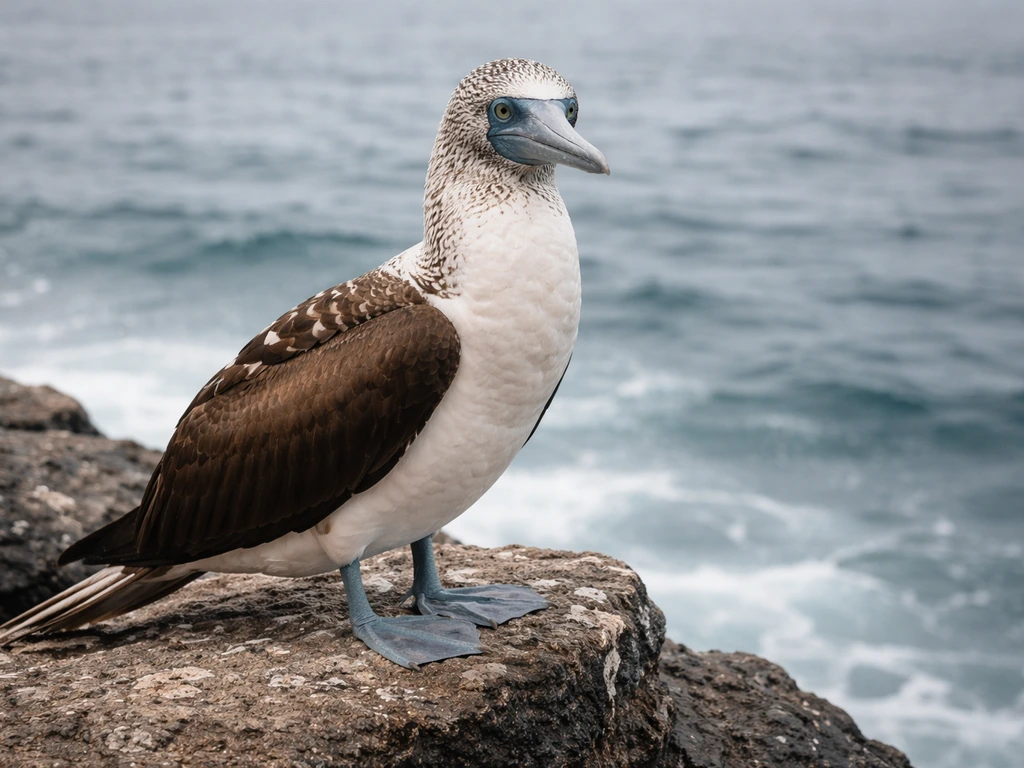
Booby bird overall look: size, shape, and general coloring
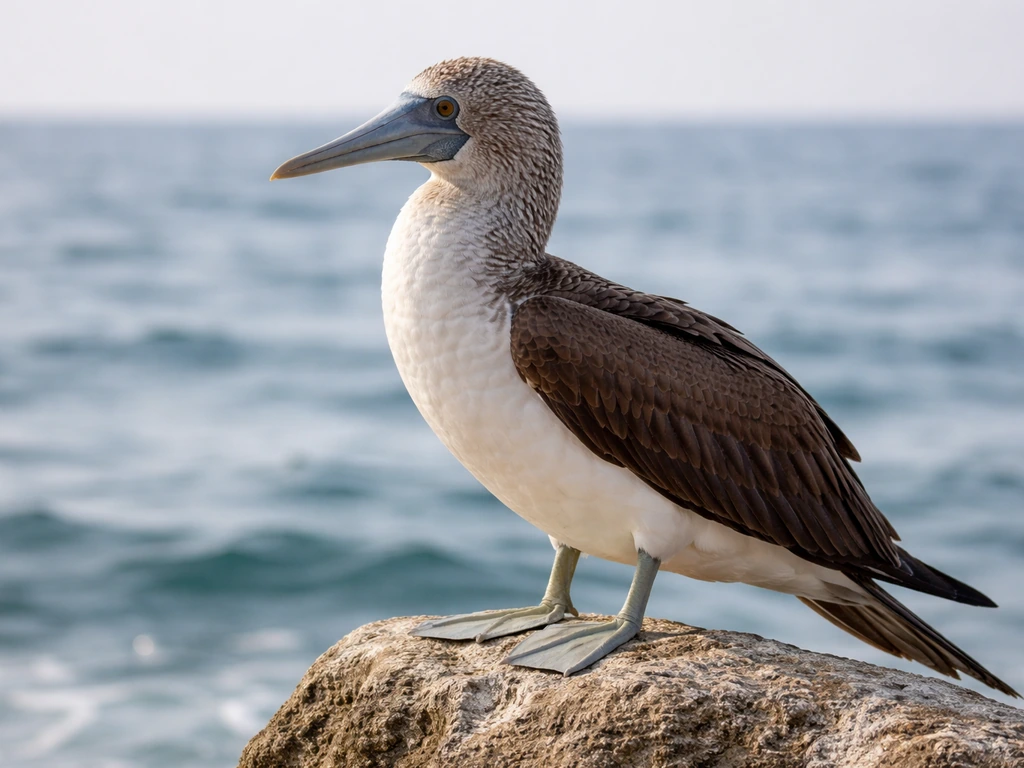
Boobies sit in the same size range as a large gull or a Great Blue Heron in terms of length, somewhere between 25 and 35 inches depending on the species. They are stocky but streamlined, with a thicker chest than a tern and a noticeably longer, stiffer tail than a gull. The body has that classic plunge-diver build: broad at the chest, tapering sharply toward the tail, with wings that look almost too long for the body when the bird is perched.
Color varies a lot by species, but most boobies follow a pattern of dark upperparts and white underparts, which is called countershading and helps them hunt effectively from the air. The contrast between the dark back and bright white belly is one of the first things you'll notice as a bird passes overhead. Some species flip this pattern or add brown tones throughout, so don't get locked into a single color expectation. What stays consistent across all boobies is that solid, sturdy build and the pointed bill-wing-tail combination.
The legs are short and set far back on the body, which makes boobies look a little awkward on land but perfect in the air and water. The feet are large and fully webbed between all four toes, which is unusual and worth noting if you get a close look. That four-toed webbing is a family trait, and in some species like the Blue-footed and Red-footed Booby, the foot color is so vivid it becomes the single most identifying feature.
Head and face clues: bill shape and pattern, eye cues
The bill on a booby is hard to miss. It is long, heavy, and tapers to a point, slightly decurved near the tip, and built for spearing fish. Think of it as a thick, robust dagger rather than the delicate pointed bill of a tern. On most adult boobies, the bill is pale, ranging from pale yellowish-green to blue-gray or even bright turquoise depending on species. It is almost always a lighter color than the surrounding face, which helps it pop visually.
The face is where species-level ID gets really interesting. Several boobies have a dark mask, a patch of bare dark skin at the base of the bill and around the eyes, that gives them a sharp, almost menacing expression. The Masked Booby and Nazca Booby wear this most dramatically.
Masked Boobies are pelagic birds that come ashore to breed and show a white head, body, and wing coverts with a dark mask and white underparts, including a U-shaped line between the throat and breast [U-shaped line between throat and breast](https://www. mbr-pwrc. usgs. gov/id/framlst/Idtips/h1140id.
html). Other species, like the Blue-footed Booby, have a finely streaked brown and white head on adults that looks somewhat disheveled up close, while young birds of most species have a dingier, darker head overall. When you are looking at the face, focus on whether there is a clean dark mask, streaking, or a uniformly dark or white head, since that narrows things down quickly.
Wings and tail field marks: what to notice in flight vs perched
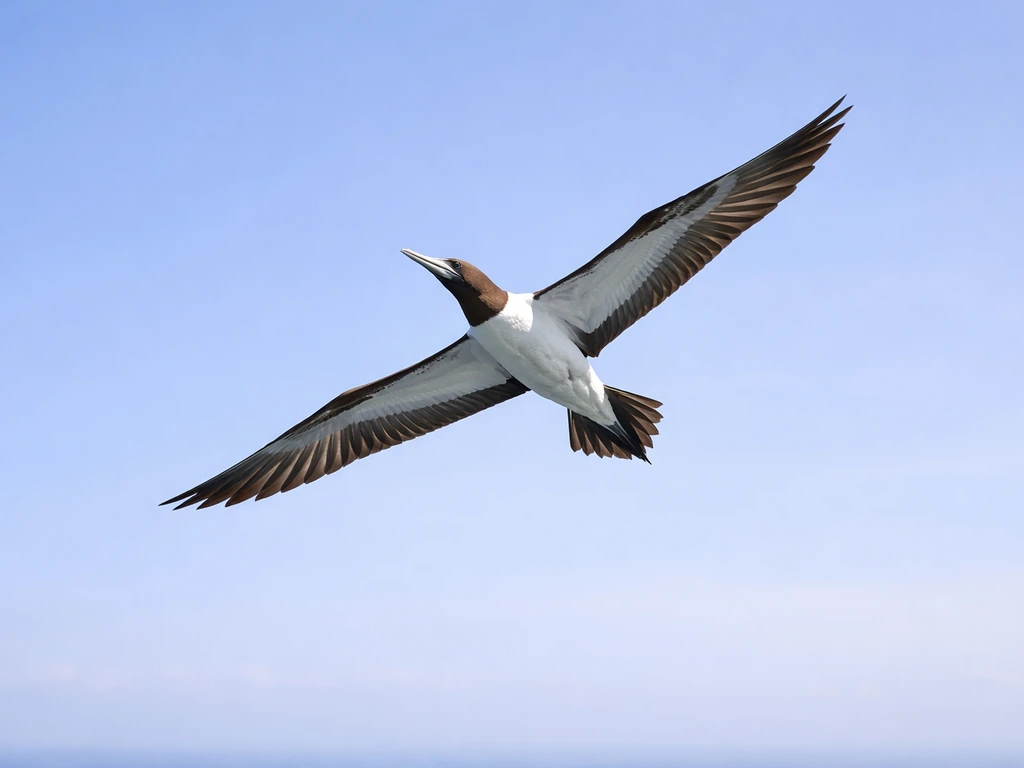
In flight, boobies are unmistakable once you have seen one. Audubon’s field-mark approach emphasizes studying overall size and shape (proportions), bill structure, plumage markings on the head and body, and the bird’s actions, then in flight checking wing shape and wingbeat cadence along with what plumage shows from a distance field marks as overall size and shape, bill structure, plumage, and actions.
The wings are long and slender, and most species fly with a rhythm of several powerful wingbeats followed by a long glide, which gives them a bouncy, confident quality. They look purposeful and direct, not fluttery or erratic. When they spot prey, the whole body folds up into a near-vertical dive, wings pinned back, that is one of the most dramatic things you can watch a bird do over the ocean.
When you study the wings in flight, look at the underwing. On species like the Masked Booby, the underwing is mostly white with black primary and secondary feathers trimming the edges, creating a bold black-and-white pattern from below. The Brown Booby has dark underwings that contrast sharply with its white belly. The Red-footed Booby shows wings trimmed in black with a white body. The tail is pointed in all species and relatively long compared to gulls or terns, and in some species like the Nazca Booby you may notice the tail is mostly dark with occasional white central feathers.
When perched, the long tail projects noticeably beyond the wingtips, and the bird tends to sit upright with that heavy bill angled slightly downward. The posture looks alert and forward-leaning, quite different from the more relaxed hunched posture of a cormorant.
Common booby types and how their appearances differ
There are several booby species you might realistically encounter, and they look different enough that it is worth knowing the key splits. A maleo bird has a very distinctive look, with a stout body, strong legs, and a notable casque on the top of its bill key splits. Here is a rundown of the ones you are most likely to come across.
| Species | Head/Face | Body | Key Field Mark |
|---|---|---|---|
| Blue-footed Booby | Finely streaked brown and white (adult); dingier brown (young) | White underparts, brown-streaked upperparts | Bright turquoise-blue feet, almost impossible to miss |
| Brown Booby | All-dark chocolate brown head blending into dark back | Sharply contrasting bright white belly vs all-dark back and wings | Clean dark-to-white line across the chest |
| Masked Booby | White head with a bold dark mask at base of bill | White body with black primaries, secondaries, and tail | Clearest black mask + white body combination in the family |
| Nazca Booby | White head with dark mask (similar to Masked) | White body, entirely dark secondaries, dark tail often with white central feathers | Darker secondaries than Masked; separated from Masked Booby as its own species in 2002 |
| Red-footed Booby | Pale blue to bluish-green bill; face can be pinkish or blue | Variable: white morph (white with black wing trim) or brown morph (mostly brown) | Bright red webbed feet; plumage highly variable so feet are the anchor |
The Red-footed Booby deserves special mention because it is the most variable of the group. Some individuals are almost entirely brown, others are white with black-edged wings, and some fall somewhere in between. If you see a booby-shaped bird and can't work out the plumage, look at the feet first. Those red feet will tell you immediately. The same principle applies to the Blue-footed Booby: the feet are so vivid a blue that you can confirm the ID from a surprising distance. For all other species, focus on the head mask and underwing pattern.
How to tell a booby from look-alikes
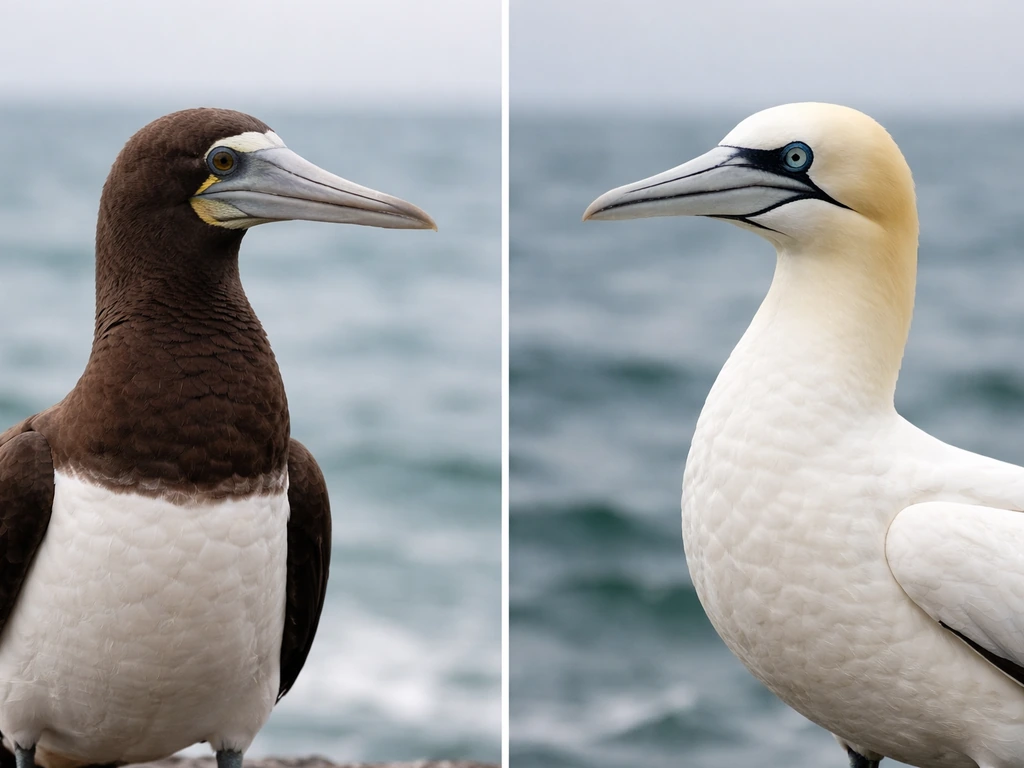
Boobies share the ocean with several other large seabirds that can cause confusion, especially at a distance or in poor light. Here is how to sort them out quickly.
Boobies vs Northern Gannets
Gannets are the closest relatives to boobies and share the same plunge-diving behavior, so this is the most common mix-up for Atlantic birders. Adult Northern Gannets are white with yellow-washed heads and black wingtips, with no dark mask. The Masked Booby, by contrast, has a clean dark mask and black secondary feathers in addition to black primaries, so the trailing edge of the wing is fully dark rather than just the tips. If you see a white plunge-diver and the wing shows black only at the very tip, lean toward Gannet. If the entire trailing edge of the wing is dark, it is likely a booby.
Boobies vs Cormorants
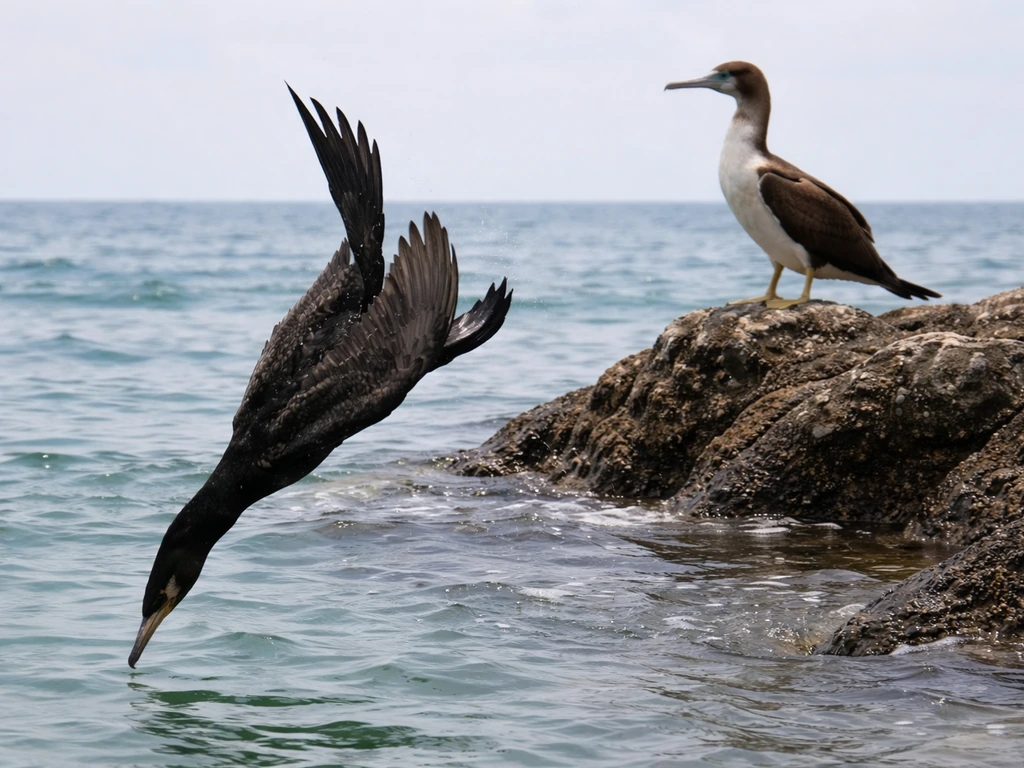
Cormorants are dark, heavy diving birds that you might see pursuing fish in coastal waters, but they look and behave quite differently from boobies once you know what to watch for. Cormorants tend to swim low in the water and dive from the surface, rather than plunge from height. When perched, they frequently spread their wings out to dry, a signature pose boobies do not share. Cormorants also have a hooked bill rather than the booby's straight dagger bill, and they often show bare colored skin around the eyes. The body shape is more barrel-like, with a shorter, thicker neck.
Boobies vs Terns
Terns are much smaller than boobies and have a deeply forked tail, which is the giveaway. A blank" rel="noopener noreferrer">Common Tern or Royal Tern diving for fish has a buoyant, lightweight quality in flight compared to the powerful, arrow-straight dive of a booby. Terns also have slender, pointed bills that are considerably lighter and shorter than a booby's heavy dagger. If the bird looks dainty and the tail is forked, it is a tern. If the bird is large, heavy, and the dive is near-vertical and forceful, you are looking at a booby.
Boobies vs Gulls
Gulls have broader, more rounded wings and a blunter bill compared to boobies. Most gulls also have a squarish or gently rounded tail rather than a pointed one. In flight, gulls are buoyant and often soar with flat wings held slightly bowed, while boobies hold their wings more angled and fly with that distinctive wingbeat-glide rhythm. Gulls rarely plunge-dive like boobies do, instead snatching prey from near the surface or stealing it from other birds.
Quick ID checklist and where to look
Run through this checklist when you think you are looking at a booby. You do not need to check every box, but hitting three or four of these is usually enough to confirm. If you are specifically trying to answer what does a miner bird look like, use the same approach but compare the bird’s size, build, and face pattern against local species.
- Size: Is the bird large, roughly gull-to-heron sized (25 to 35 inches)? Boobies are substantial birds, not small or medium.
- Bill: Is the bill long, heavy, and pointed like a dagger? Not hooked like a cormorant or delicate like a tern?
- Tail: Does the tail look pointed and relatively long, rather than forked or blunt?
- Wings: Are the wings long and narrow, and does the bird fly with a flap-flap-glide rhythm?
- Feet: If you can see the feet, are they unusually large and fully webbed? Are they a vivid color like turquoise-blue or bright red?
- Face: Is there a dark mask around the base of the bill, or a streaked brown-and-white head pattern?
- Diving behavior: Did the bird fold its wings and drop nearly vertically into the water from height? That plunge-dive is almost exclusively a booby or gannet behavior.
- Location: Are you on a tropical or subtropical coast, near an island, or over open ocean? Boobies are seabirds and almost never appear inland.
Where and when to look
Boobies are tropical and subtropical seabirds. Your best chance of seeing one is on or near a rocky island or coastal cliff where they nest in colonies, or offshore during a pelagic boat trip. In the United States, blank" rel="noopener noreferrer">Brown Boobies and Red-footed Boobies are regularly seen in Hawaii, and Blue-footed Boobies occasionally wander to the California coast and Gulf of California. Masked and Nazca Boobies appear around the Galapagos and Pacific island chains. If you are on a boat and a large, pointed, plunge-diving bird shows up, a booby is always worth considering. If you are wondering what a gooney bird looks like, compare the overall plunge-diver silhouette, the pointed bill, and the countershaded body pattern described for boobies.
A note on age and color variation
Young boobies look noticeably different from adults and can trip up even careful observers. Juvenile birds of most species are drabber overall, with brown replacing what would be white in adults, and duller or brownish feet rather than the vivid colors of mature birds. A young Blue-footed Booby, for example, can have brown feet and heavy dark streaking on the head and chest that makes it look like a different bird entirely.
As birds mature through their first and second years, the white on the underparts and underwings increases and the foot color brightens. If you are unsure, lean heavily on body shape and bill structure rather than plumage color, since those proportions stay consistent at any age. You may be wondering what a myna bird looks like; next, we cover the key visual traits to help you identify it at a glance what does a myna bird look like.
FAQ
If I see a bird that looks “booby-shaped,” what are the first two traits to check when the lighting is bad (fog, glare, or distance)?
Start with structure, torpedo body plus long stiff pointed tail, then confirm the bill profile, heavy pointed and slightly decurved rather than slender. Color can wash out in bad light, but the angular silhouette and dagger-like bill are harder to lose.
Do boobies ever look mostly white, mostly brown, or otherwise “not countershaded”?
Yes. Some individuals, especially in Red-footed Booby, can be very brown or very white with intermediate forms. When plumage is confusing, rely on the family traits first, short legs set far back and the heavy pointed bill, then use feet color if available.
How can I tell the difference between a booby and a gannet if I only get a brief look?
Use the wing trailing edge pattern in that quick scan. If the dark is only at the very tips, it leans gannet. If the trailing edge looks broadly dark along the primaries and secondaries, it leans booby.
What should I look for on the ground, where boobies can seem awkward?
Focus on posture, upright and forward-leaning with the long tail projecting past the wingtips, and the legs set far back. Also check the stance around the bill, the head looks bold and direct, cormorants are more likely to look barrel-bodied and may spread wings to dry.
Can young (juvenile) boobies be mistaken for other species, and how do I avoid the mistake?
Yes, juveniles often have brown, darker-looking “white” areas and less vivid feet. To avoid overrelying on color, confirm the consistent proportions, plunge-diver build, heavy dagger bill, and the overall torpedo silhouette with the long stiff tail.
When perched, what is the best single behavioral or body-position cue for identifying a booby?
Look for the tail projection. Perched boobies usually hold the long tail noticeably beyond the wingtips and keep an alert, slightly forward-angled stance, rather than the more relaxed hunched look and wing-spreading pose typical of cormorants.
How do I tell boobies from cormorants if both are diving or fishing nearby?
Watch the diving style and the surface response. Boobies plunge from height with a near-vertical, wings-pinned dive, cormorants more often dive from the surface and then frequently spread wings on rocks or structures afterward.
If I cannot see the bill color or face mask, what “backup” ID features still work?
Wings and feet. The underwing pattern can be distinctive when you get a clear underside view, and foot color can be decisive for Blue-footed and Red-footed Boobies. If neither is visible, default to the silhouette and tail length plus the heavy pointed bill shape.
Are there booby-like birds that confuse people because they also have plunge-diving habits?
Gannets are the most common confusion because they also plunge. The quickest separator is the underwing and trailing-edge darkness, gannets tend to have a more limited dark pattern, while boobies often show broader dark edging when viewed from below.
What if the bird is flying away from me, and I cannot see the underwing underside?
Use the flight rhythm and dive mechanics. Booby flight often alternates several strong wingbeats with a long glide, and the most diagnostic moment is the near-vertical dive with wings pinned back. Tail shape and the torpedo silhouette also help even from behind.
Next Articles
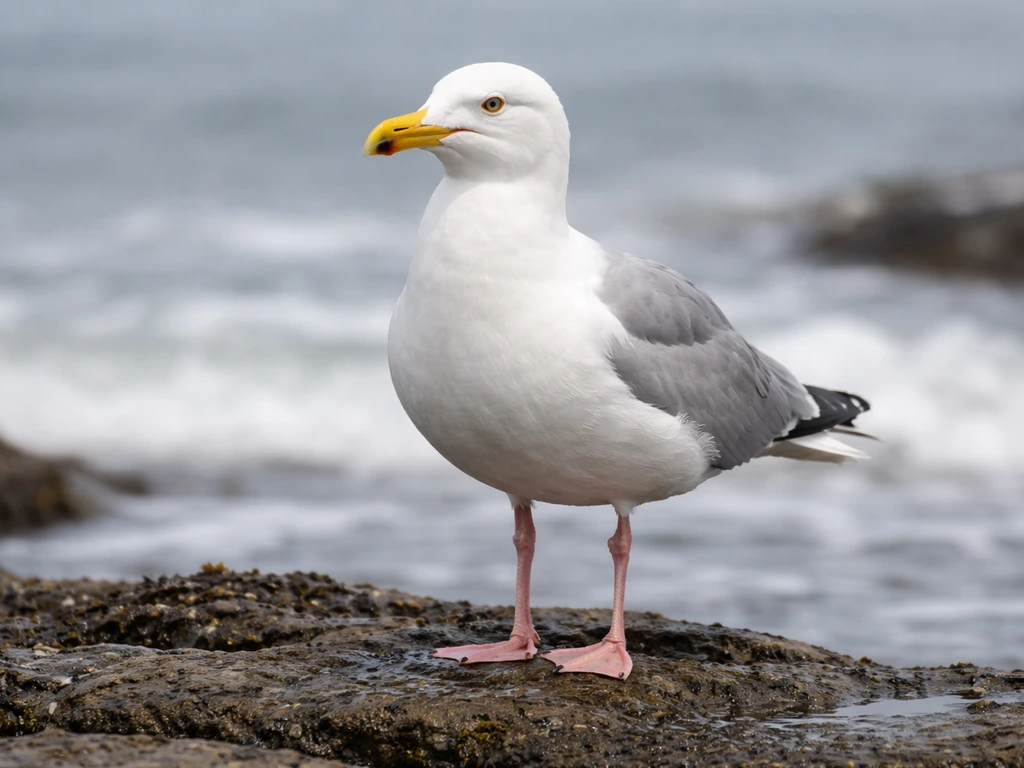
What Does a Herring Bird Look Like? Herring Gull ID Guide
Learn what a herring bird likely is: clear herring gull ID guide with key marks, plumage differences, and lookalike comp
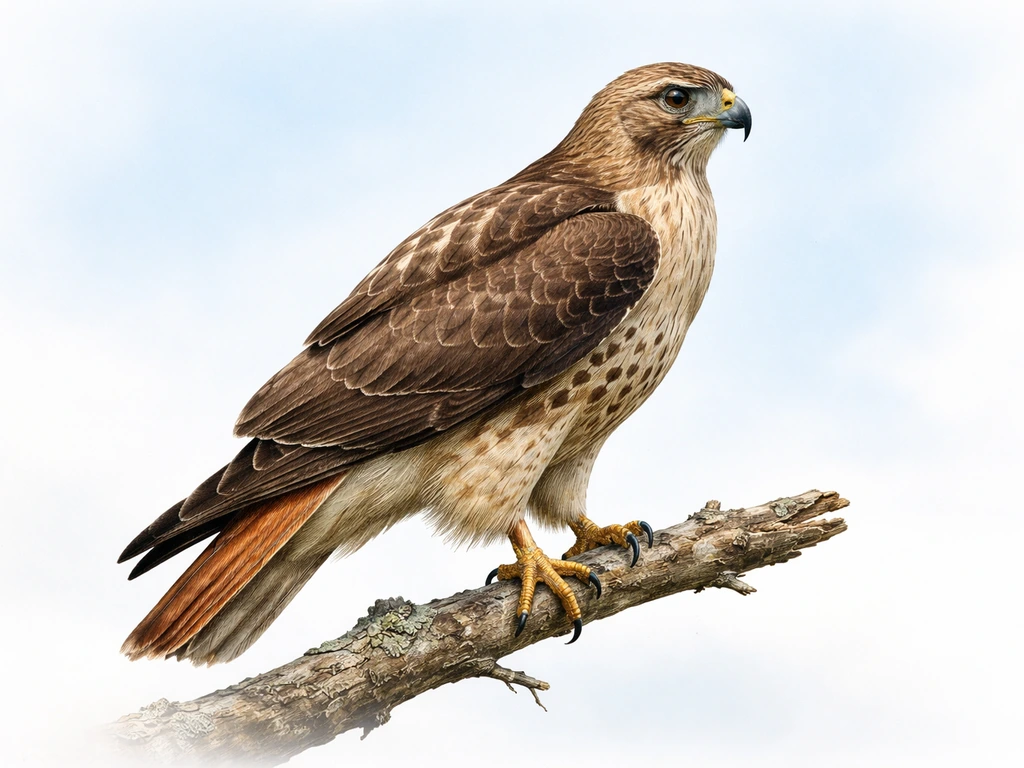
What Does a Hawk Bird Look Like? Key Field Marks to Spot
Learn key field marks for spotting hawks, compare to eagles falcons buzzards, and confirm with photos and angles.
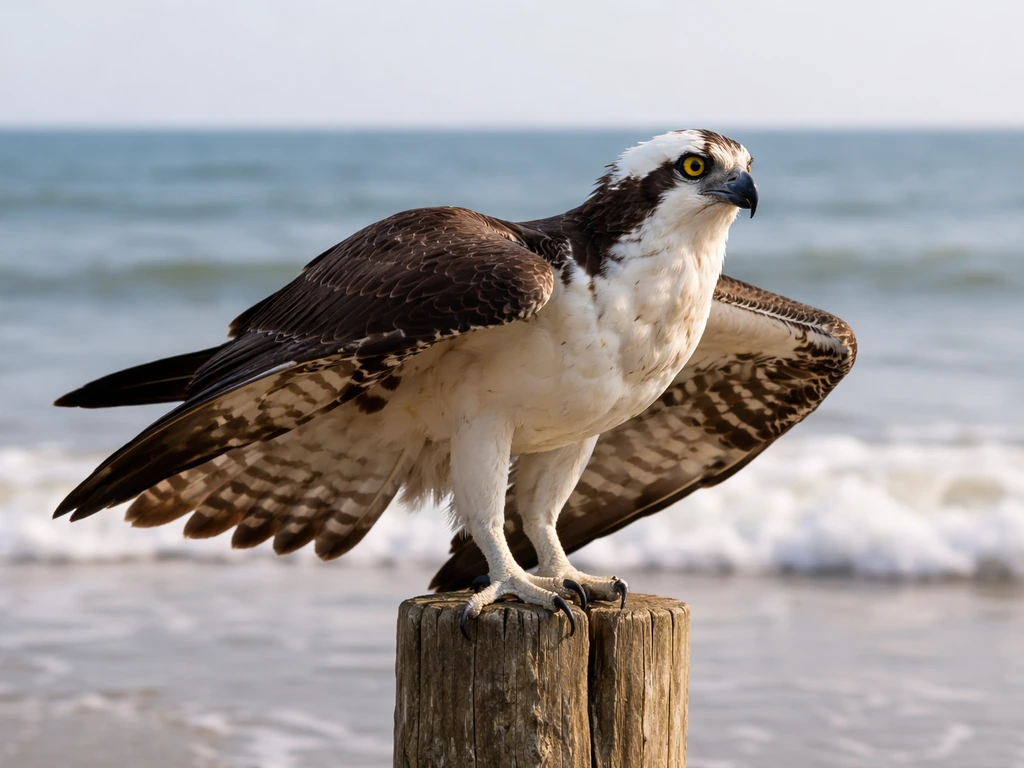
What Does a Seahawk Bird Look Like? Osprey ID Guide
See hawk meaning Osprey ID: size, flight posture, plumage patterns, bill/eye marks, and lookalike confusion cues.