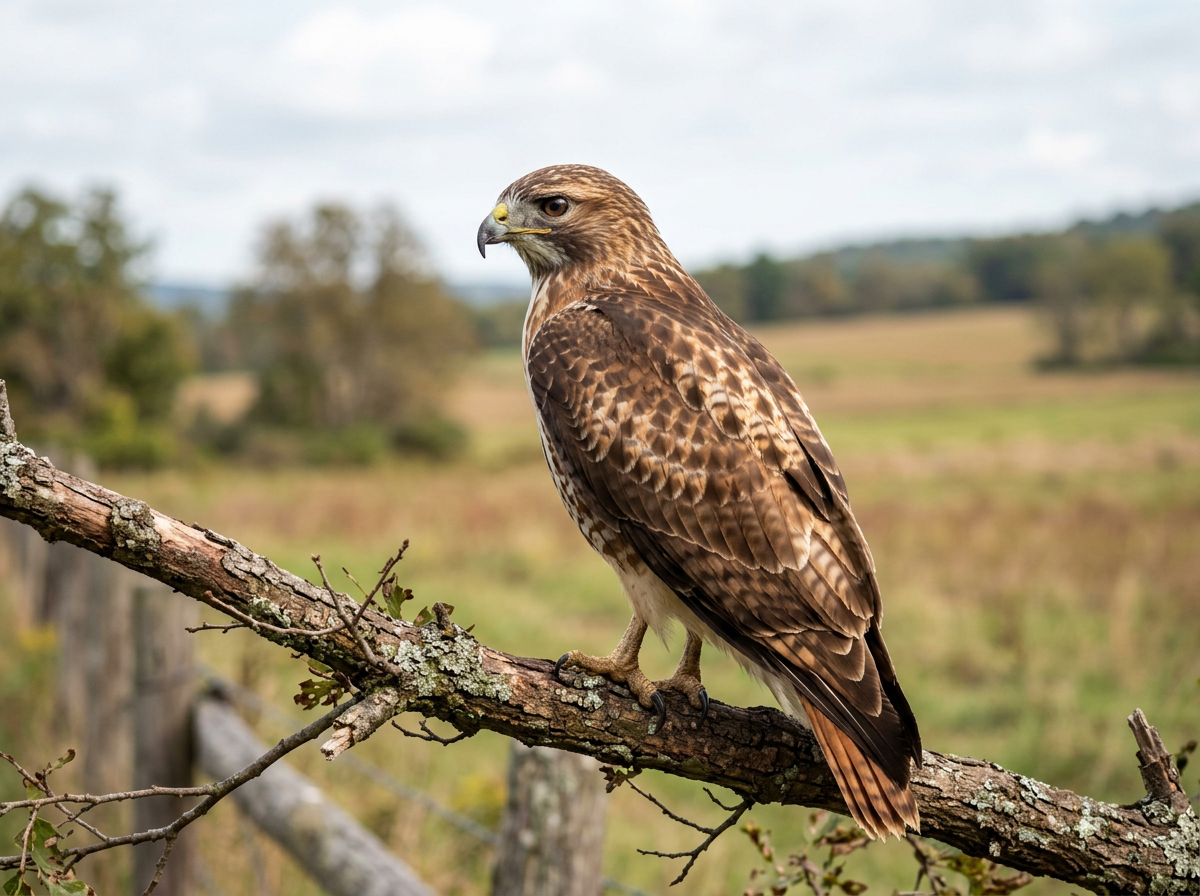
If you saw a bird and thought 'that thing looks like a dragon,' you're not imagining things. Several real bird species genuinely earn that description, whether it's a wild spiked crest, scaly-looking feather patterns, an elongated reptilian silhouette, or a combination of all three. The good news is that narrowing it down to the actual species you saw is very doable once you know what specific traits to look for. This guide walks you through the most common 'dragon-looking' birds, how to separate them, and how to confirm the one you spotted.
What Bird Looks Like a Dragon? Identify Dragon-Like Species

Marcus Whitley
22 Mar 2026

What people actually mean by 'dragon-like'
When someone says a bird looks like a dragon, they're usually reacting to one or more of these physical traits, sometimes in combination. Knowing which trait triggered your reaction is the fastest way to start narrowing your list.
- A prominent crest or head plume that spikes upward, almost like a crown or horn
- Scaly-looking feather patterning, where darker edges on individual feathers create a reptile-skin impression
- A long tail, long neck, or overall elongated silhouette that feels prehistoric or serpentine
- Bright, intense colors (especially iridescent greens, deep reds, or metallic blues) that seem too vivid for a 'normal' bird
- A sharp, hooked, or unusually long bill that reads as a beak/snout
- Large wings held in a spread or drooped posture, especially in dark-colored waterbirds
Most people who search this question are reacting to one dominant feature (usually the crest or the scaling) and one supporting detail. Try to lock down which combo you saw before moving to the candidate list below, because that pairing is your fastest clue.
The top dragon-looking birds, and exactly what to look for
These are the species that come up most often when people describe a bird as dragon-like. Each one earns the label differently, so I've broken down the exact visual cues for each one.
Scaled Quail (the 'cotton-top')
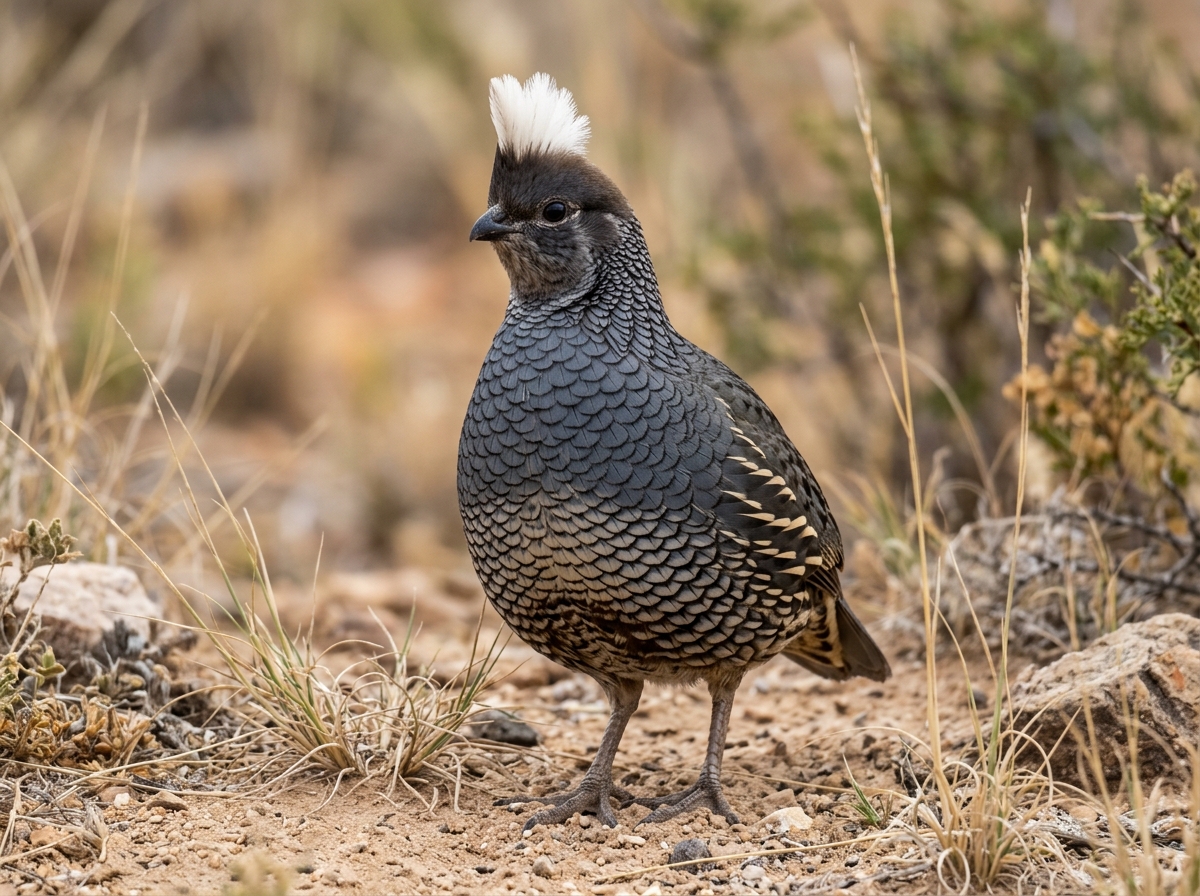
This is the go-to bird if your dragon impression was about scaly patterning plus a weird crest. Scaled Quail have dark edges on their gray and buff body feathers that create an almost perfect scaled look, like a small reptile covered in overlapping plates. The scaling is most obvious on the neck and chest. On top of the head sits a short, bushy white crest that's earned the bird its nickname 'cotton-top.' The overall body is plump and compact (think of a slightly larger Northern Bobwhite), with short legs, a short rounded tail, and a small head. These are ground birds, so you'll most likely spot one running through arid grassland or scrub rather than perching in a tree. Males have a blue-gray tint to their scaling; females look similar but slightly less vivid.
Common Merganser and Red-breasted Merganser
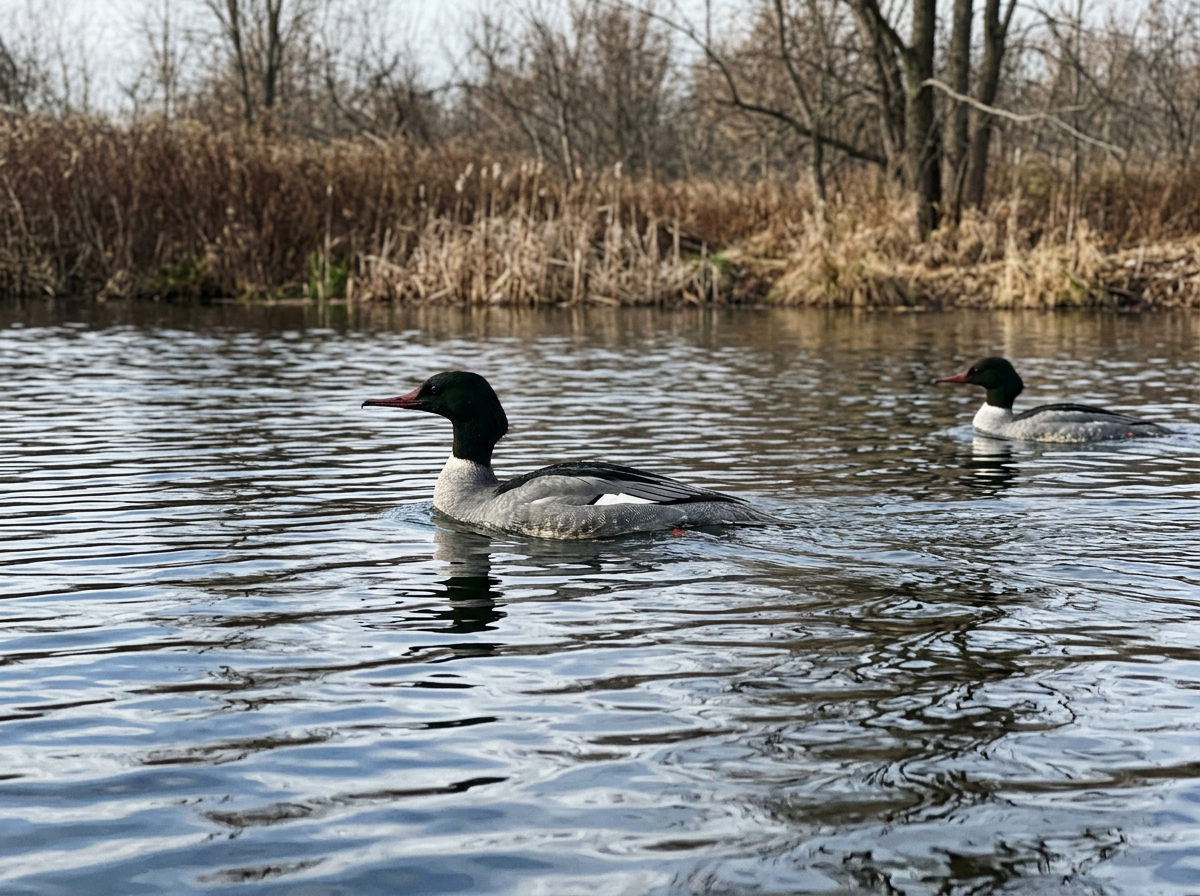
Mergansers are the dragon-looking waterbirds. They have a long, narrow body that sits low on the water, a long neck, and a sharply pointed bill with serrated edges (designed for gripping slippery fish, which gives it an almost fang-like profile). The Red-breasted Merganser is the shaggier one: males have a wild, spiky double crest that sprays out from the back of the head like a punk haircut, paired with a rusty-streaked chest and a bright red bill that curves slightly upward at the tip. Common Mergansers are cleaner-looking: males have a dark green head (iridescent in good light), a white body, and a heavy, straight red-orange bill with no shaggy crest. Females of both species are gray-bodied with reddish-brown heads, but the Red-breasted female keeps that wild crested look. If your bird was a waterbird with a snaking neck, a spiky head, and a pointed bill, a merganser is almost certainly what you saw.
Scaly-sided Merganser
This is a rarer find, mainly seen in East Asia, but worth knowing because it combines two dragon traits at once. Adult males have wispy elongated crests trailing from the back of the head, plus actual scaled dark patterning running down the flanks and rump, a near-perfect match to 'scales and a crest.' If you're in East Asia (especially near rivers in winter) and saw something that checked both boxes hard, this is worth adding to your shortlist.
Great Egret and similar herons
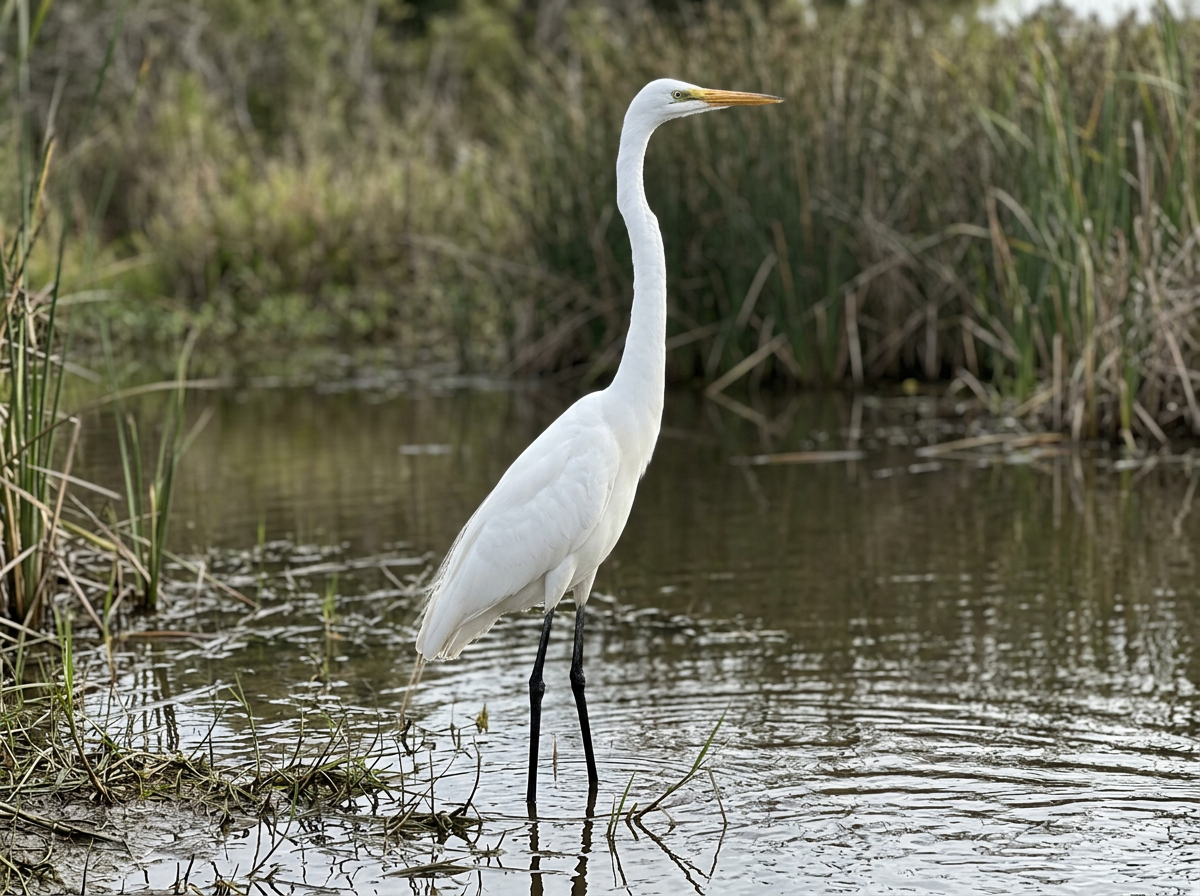
The prehistoric silhouette crowd often lands on Great Egrets and large herons. These birds are tall (a Great Egret stands around 3 feet), all-white with black legs and a long, heavy yellow bill, and they hold an S-curved neck that compresses when they fly or stand still. In flight, the slow wingbeats and hunched neck can look almost pterosaur-like (something our article on what bird looks like a pterodactyl covers in detail). They don't have crests in most plumages, and there's no scaling, but the sheer size, long neck, and dagger bill are enough to trigger the dragon reaction for some people, especially juveniles seeing their first heron.
Tufted Titmouse
This one surprises people, but the Tufted Titmouse is a small sparrow-sized bird with a sharp pointed crest and a stout, pointed bill that together create a tiny but legitimately dragon-y silhouette, especially in photos where size context is lost. The body is gray above and pale below, with a wash of rusty-orange on the flanks, and the crest is a clean gray spike. If your 'dragon bird' was small (similar to a sparrow or a bit larger), gray, and had a prominent head spike, this is your most likely answer.
Black-necked Stilt
If the dragon impression came from a long-necked, long-legged, needle-billed bird wading in shallow water, a Black-necked Stilt is a strong candidate. These birds are black above and white below, with absurdly long pink-red legs and a thin, straight, needle-like bill. The combination of long bill, long neck, and long legs gives them a stretched, almost skeletal reptilian look. They don't have crests or scaling, but the silhouette alone is striking enough to read as 'not like a normal bird.'
Your quick identification checklist
Run through these five points mentally (or check your photos) and you'll be able to match your bird to the right candidate very quickly.
- Size: Was it sparrow-sized, quail-sized, duck-sized, or heron-sized? This alone eliminates most options.
- Bill shape: Was the bill long and needle-thin, heavy and hooked, serrated and pointed, or short and stout?
- Tail: Short and rounded, long and streaming, or barely noticeable?
- Pattern: Was there actual scaly patterning on the feathers, solid dark/light blocks, or iridescent solid color?
- Crest: Did it have a head crest, and if so, was it short and bushy, long and spiky, or wild and shaggy?
If you can answer at least three of those five, you should be able to match your bird to one of the candidates above or rule it down to two. Behavior helps too: was it running on the ground, swimming low on water, standing very still in shallow water, or perching in a tree?
Lookalikes and how to tell them apart fast
A few birds often get mixed up in the 'dragon-like' category. Here's how to separate the most common pairs quickly.
| Bird | Shares this 'dragon' trait | Key difference to look for |
|---|---|---|
| Red-breasted Merganser | Wild shaggy crest, long neck, pointed bill | Spiky double crest, rusty chest streaking, slightly upward-curving bill |
| Common Merganser | Long neck, pointed bill, large size on water | No crest, cleaner plumage, heavier straight bill, bright white body on males |
| Scaly-sided Merganser | Crest plus actual scaled flanks | Rarer, restricted to East Asia, scaling most visible on sides/rump |
| Scaled Quail | Scaly feather patterning, crest | Small, ground-dwelling, short white cotton-top crest, arid habitats only |
| Tufted Titmouse | Pointed crest, dragon-y silhouette in photos | Very small (sparrow-sized), gray, no scaling, stout bill |
| Great Egret / Herons | Prehistoric silhouette, long neck, dagger bill | No crest, no scaling, white or gray solid plumage, very tall, wetland bird |
| Black-necked Stilt | Long needle bill, long neck, long legs | No crest, no scaling, bold black-and-white, wading shorebird only |
The fastest confusion pair is Common versus Red-breasted Merganser. The crest is your quickest separator: if it has a shaggy, spiky, almost messy crest, it's a Red-breasted. If the head looks smooth and cleanly dark green, it's a Common. Bill shape helps too: the Red-breasted bill has a subtle upward curve and looks slightly slimmer, while the Common's is heavier and straighter.
Scaled Quail also gets confused with Gambel's Quail, which has a dramatic drooping topknot plume rather than the short bushy white crest. If the crest was a single long curved feather flopping forward, think Gambel's. If it was a small white fluffy puff, think Scaled.
Use location, habitat, and season to cut the list
Where you were when you saw the bird is one of the most powerful identification tools you have, and it's often the one people forget to use. Here's how to apply it practically.
Geography and range
Scaled Quail are strictly a bird of arid grasslands and scrubland in the southwestern United States and into Mexico. If you're in Texas, New Mexico, Arizona, Colorado, or Kansas, they're a real possibility. Outside that range, you can cross them off immediately. Tufted Titmice are birds of the eastern United States, very common in deciduous woodlands from Texas to New England. Mergansers are widespread across North America, Europe, and Asia but are almost always associated with open water, rivers, lakes, or coastal areas. Great Egrets and Black-necked Stilts are both widespread but tied tightly to wetland and water-edge habitats.
Habitat
Think about where exactly you were standing. Open, dry, brushy ground with little water? That points strongly toward Scaled Quail. Near a river, lake, or reservoir? Mergansers jump to the top of the list. In a woodland or backyard with trees? Tufted Titmouse is a very strong candidate. Shallow coastal marsh or estuary? Black-necked Stilt or Great Egret.
Season
Mergansers show up in large numbers in winter across much of the US, particularly on inland lakes and rivers. Scaled Quail are resident year-round in their range. Tufted Titmice are permanent residents in the eastern US and don't migrate. Black-necked Stilts are more common in spring and summer at their nesting sites, though some winter in warm coastal areas. If you saw the bird in winter near water, mergansers are especially likely.
How to confirm: what to photograph and how to compare
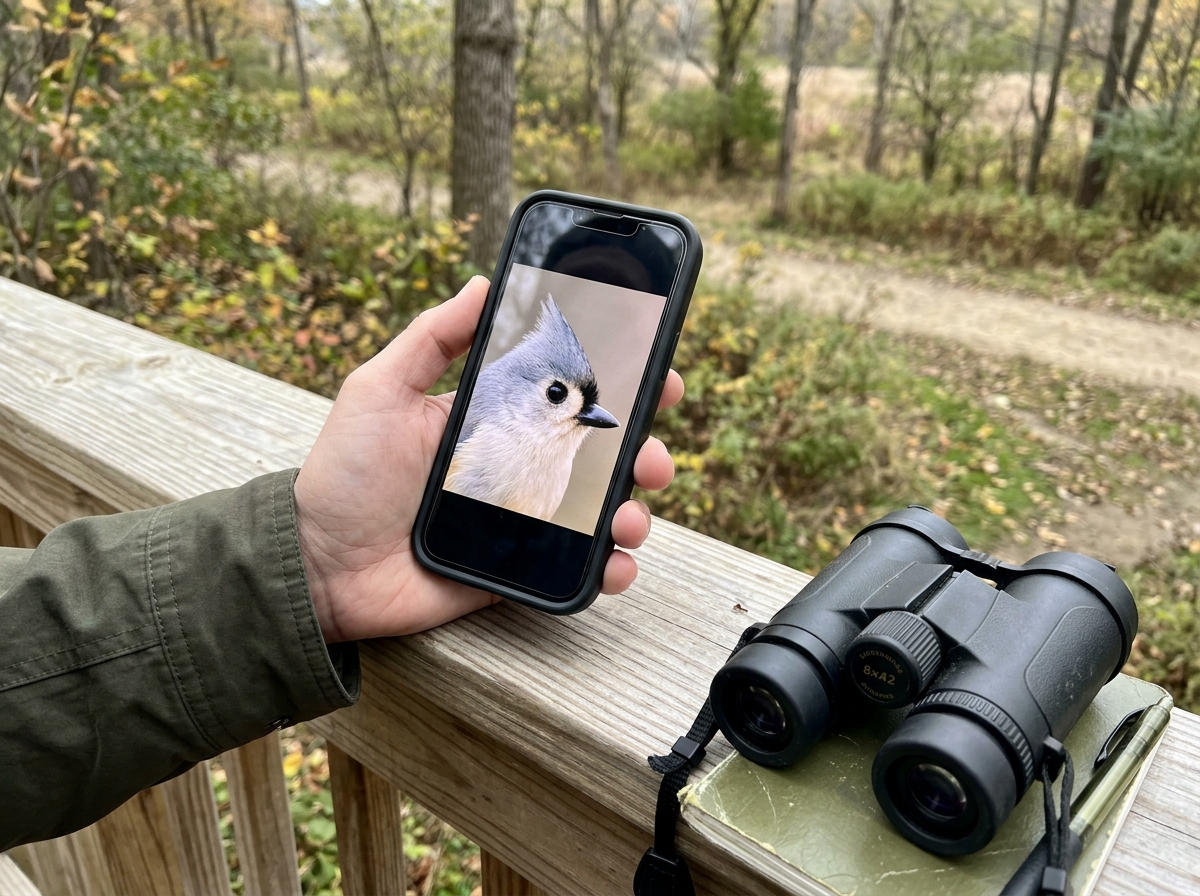
If you already have a photo, you're in great shape. Even a blurry photo holds enough information to confirm your ID if you know what to look at. If you're watching the bird right now, here's what to prioritize capturing.
The five best shots to get
- Head and crest from the side: captures crest shape, bill shape, and any facial markings or color patches in one frame
- Full body from the side: shows overall proportions, tail length, leg length, and body patterning
- Back or top-down angle: reveals wing and back patterning, especially useful for scaly feather details
- In-flight shot if possible: silhouette, wing shape, and neck posture are often more diagnostic than perched photos
- Something in frame for scale: a hand, a known bird nearby, or a common object helps estimate size
How to use your photos for comparison
Once you have a photo, zoom in on the head first. Ask yourself: is there a crest, and what does it look like? Then move to the bill: is it thin and needle-like, heavy and straight, or slightly hooked? Then look at the body feathers: do you see dark edging that creates a scaled look, or is the color more uniform? Finally, check the tail and legs, which are often overlooked but are very useful for ruling out species. A visual reference site like this one lets you compare your photo directly against species images to match those exact field marks, which is much more reliable than trying to match a memory to a description.
Note any behavior you remember too: was the bird running on the ground (quail), swimming and diving (merganser), standing very still like a statue (heron), or moving actively through tree branches (titmouse)? Behavior is harder to capture in a photo but it's one of the fastest ways to confirm or eliminate a candidate. Combined with your location, habitat, and at least two or three field marks from your photo, you should be able to land on a confident ID.
If you're still stuck after comparing your photo to the candidates above, it helps to think about whether your bird's impression was more dinosaur-like (if so, our guide on what bird looks like a dinosaur covers additional candidates) or more specifically raptor-shaped, like if you were trying to figure out what does a raptor bird look like. The core dragon-bird list here covers the most common matches, and working through the checklist systematically almost always gets you to the right answer. The core dragon-bird list here covers the most common matches, and working through the checklist systematically almost always gets you to the right answer.
FAQ
Can I identify the bird from a silhouette or distant view?
Yes. If you only saw a silhouette, rely on proportions: Scaled Quail reads as a compact ground bird with a short tail and a small head plus a fluffy crest, while mergansers look long-bodied and low on the water with a distinctly pointed, fang-like bill. Herons and egrets are tall, S-curved, and have a long heavy bill, even when plumage details are hard to see.
How do I tell Great Egret versus Black-necked Stilt when I only notice the neck and legs?
Check leg and posture. Great Egret and herons have long black legs and hold an S-curve neck, looking tall and statue-like, but Black-necked Stilt is “thin and stretched,” with extremely long pink-red legs and a straight, needle-like bill while it stands in shallow water. If the neck shape is clearly S-curved, think egret or heron first.
What’s the quickest way to separate Scaled Quail from Gambel’s Quail?
For Scaled Quail, the scaled effect comes from feather edges, so you should see repeating dark borders on gray and buff body feathers, strongest on neck and chest. Gambel’s Quail usually has a more dramatic plume that droops from a topknot rather than overlapping “scale plates.” If the pattern is the main feature, lean Scaled Quail.
If both look like mergansers, what field mark should I check first?
Common mergansers and Red-breasted mergansers are separated most reliably by the head: Red-breasted has a rough, spiky double crest and a more obviously “rusty” chest look, while Common looks smoother on the head with an iridescent dark green crown. Bill shape helps too, the Red-breasted often appears slightly more curved and slimmer.
Will male versus female Scaled Quail look different enough to confuse identification?
Gender can change how vivid the “scaled” look appears on Scaled Quail. Males tend to show more blue-gray tones in the scaled areas, while females look a bit less vivid, but the crest type (short, bushy, cotton-top) and the overall compact ground-bird shape should still match.
What should I do if I saw the bird in winter, especially near water?
Yes, but the location filter still works. In winter, mergansers are common near large inland lakes and rivers, so a dragon-like “snaking neck plus pointed bill” bird in cold-season water is a strong merganser clue. Scaled Quail are year-round but only within arid grassland and scrub ranges, so if the habitat does not fit, prioritize merganser candidates.
My photo is blurry. What details are most reliable to check first?
If your photo is blurry, prioritize the head before anything else, because crest presence and bill shape are high-value traits. Then compare body patterning (dark feather edging for a scaled look versus more uniform coloration). Finally, use legs and tail only for ruling out, since they can smear in motion blur.
How much weight should I give behavior if the bird’s markings aren’t clear?
Behavior is a tie-breaker. Quail-like dragon birds should move on the ground and look compact, mergansers often swim and dive or bob low while feeding, herons tend to stand still in shallow water, and tufted titmice move actively through branches. If it was perched or hopping in trees, that shifts you away from mergansers and toward titmouse.
How do I use habitat to confirm the right candidate quickly?
Look at habitat and starting distance. Birds that were far out on open water or repeatedly diving fit mergansers better, while birds in brushy, dry ground with little water fit Scaled Quail. If you were in a backyard or woodland edge with trees, titmouse becomes more plausible than the wetland species.
If I only saw it briefly in flight, how can I avoid the most common misidentification?
Consider the wings and body shape in flight. Great Egrets and large herons often show slow wingbeats with a hunched posture and compressed neck, while mergansers still read as long, narrow, and low-sitting with a pointed bill profile. If the bird’s movement feels heavy and slow with an S-neck stance, heron or egret is more likely.
Next Article
What Does a Raptor Bird Look Like? Field ID Guide
See how raptor birds look with field ID traits for hawks, eagles, falcons, and owls plus photo tips to confirm.