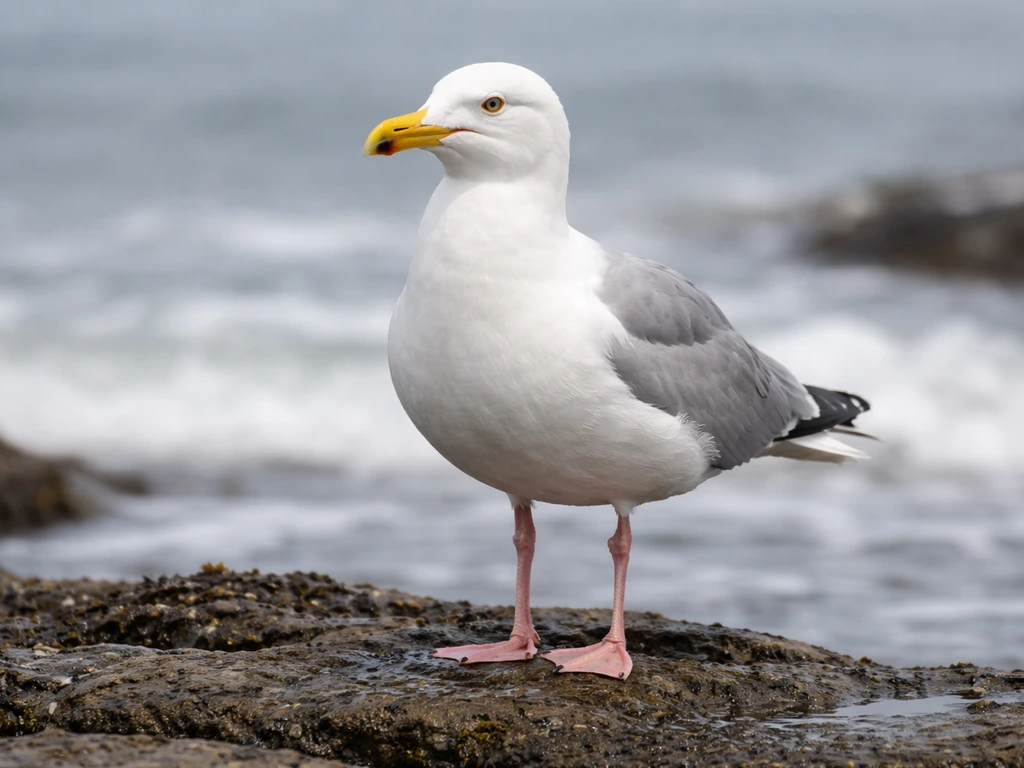
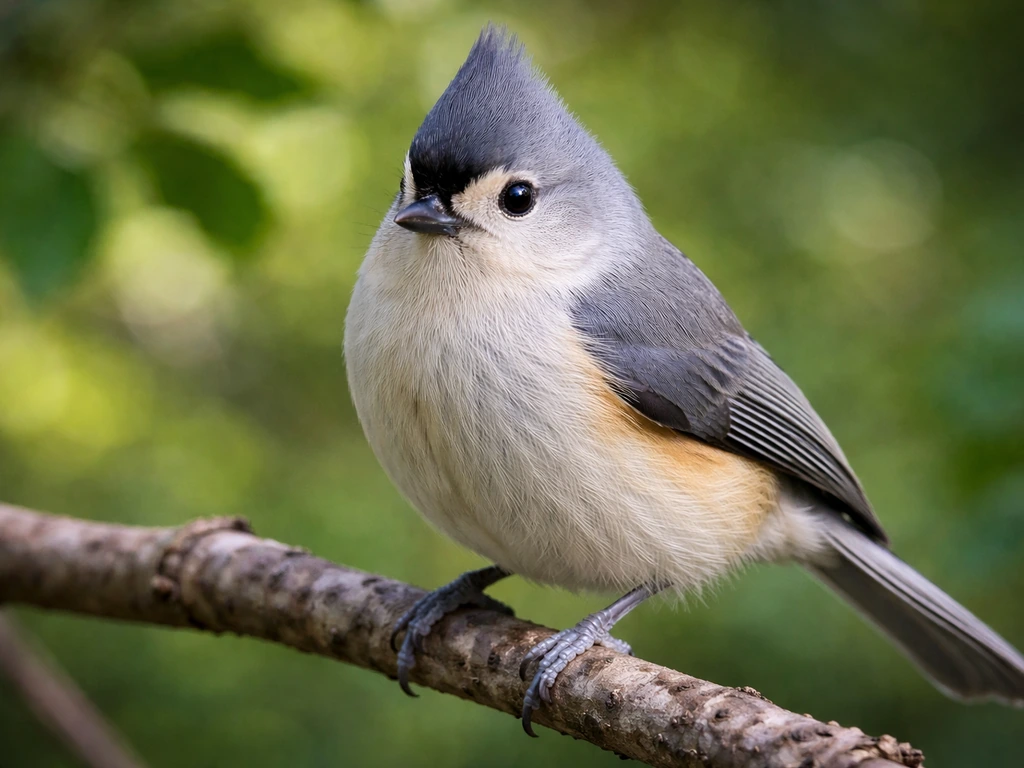
A titmouse is a small, compact gray bird with a pointed crest on top of its head, a clean white belly, and a little wash of rusty-orange on its sides. The tufted titmouse, the most common species in North America, blank" rel="noopener noreferrer">also has a sharp black patch right above its bill that gives it a slightly snub-nosed, wide-eyed look. If you spot a small gray bird at your feeder with a perky crest and big dark eyes, there's a very good chance you're looking at one. If you want help with that first visual check, this guide answers what a tui bird looks like. You can also get a clearer visual sense by looking at what a bird looks like without feathers what does a bird look like without feathers.
What Does a Titmouse Bird Look Like Field Guide

Marcus Whitley
28 Apr 2026
Quick ID: what a titmouse is and where you'll find them
Titmice belong to the family Paridae, the same family as chickadees. They're small, active songbirds found across much of North America, and the tufted titmouse (Baeolophus bicolor) is by far the most widespread species on the continent. Its range covers most of the eastern half of the contiguous United States, stretching into southern Canada in areas where bird feeders have helped it expand northward over recent decades.
You're most likely to encounter a tufted titmouse in deciduous woodland, parks, gardens, and suburban backyards. They love edges where trees meet open space, and they're confident, noisy little birds that show up at feeders regularly. If you live east of the Great Plains, there's a reasonable chance one has already visited your yard without you realizing it.
Key visual traits to look for on any titmouse
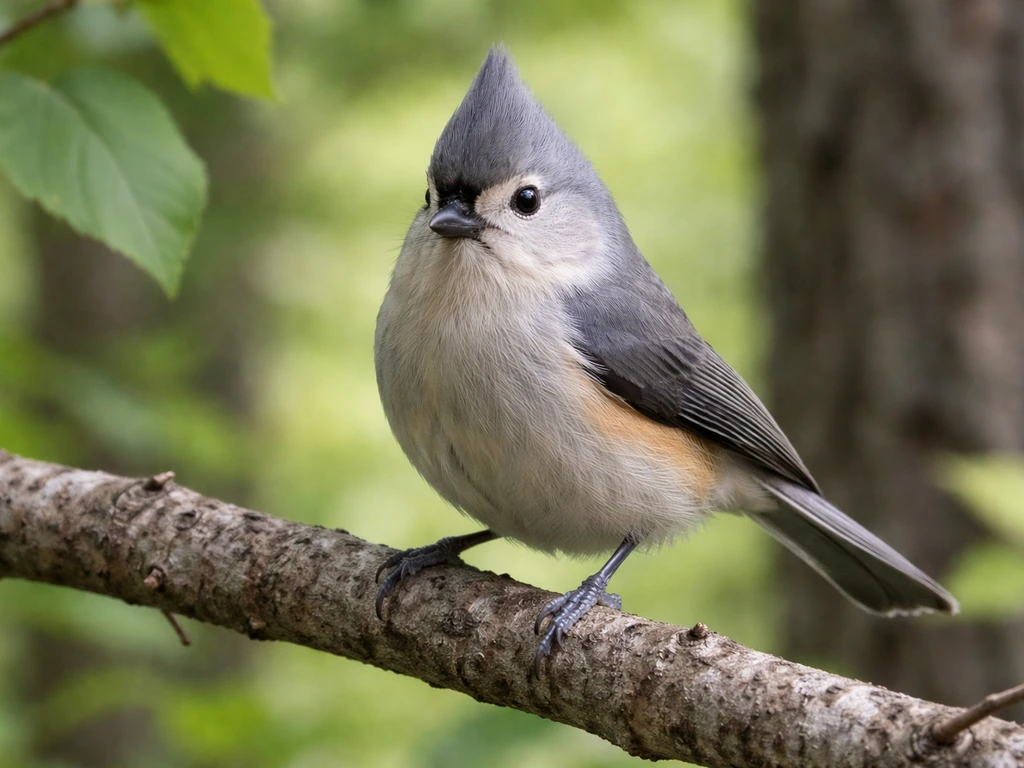
Before diving into the tufted titmouse specifically, here are the traits that define titmice as a group and help you recognize one at a glance:
- A pointed, upright crest on the top of the head (this is the first thing you'll notice)
- Small, rounded body shape with a thick neck that makes the head look large
- Predominantly gray or gray-brown upperparts
- Pale or whitish underparts, sometimes with color on the flanks
- Large, dark, expressive eyes set in a plain face
- Short, sturdy bill suited for cracking seeds
- Active, acrobatic behavior at feeders and in trees
Color pattern details: head, face, wings, back, belly, and tail
Breaking the tufted titmouse down part by part makes identification much faster in the field. Here's exactly what you're looking at from head to tail.
Head and face
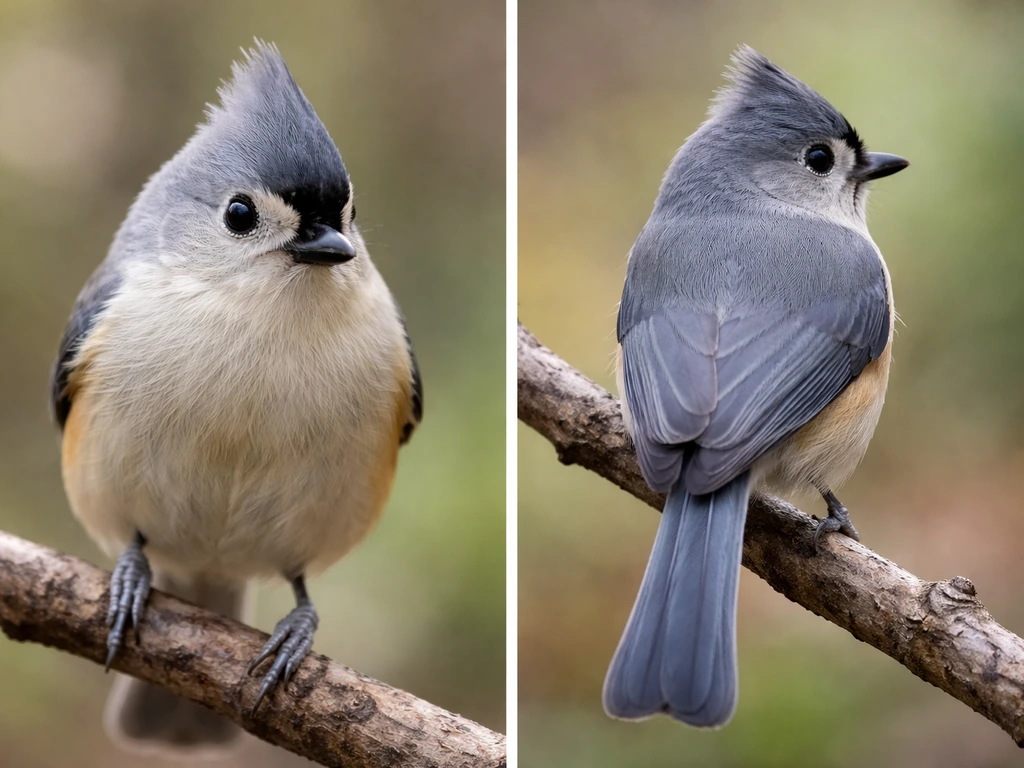
The crest is gray, matching the rest of the upperparts. What really sets the tufted titmouse apart is the bold black forehead patch sitting just above the bill. Cornell describes it as making the bird look almost snub-nosed, which is a great way to remember it. The rest of the face is pale, almost whitish, with no strong streaking or patterning. The eyes are large and very dark, and they stand out clearly against that plain pale face. The overall impression is a wide-eyed, alert little face.
Back and wings
The back, wings, and tail are all a clean blue-gray, with no strong wingbars or streaking. There's nothing flashy going on here. The wings fold neatly against the body, and in flight the bird looks uniformly gray on top.
Belly, breast, and flanks
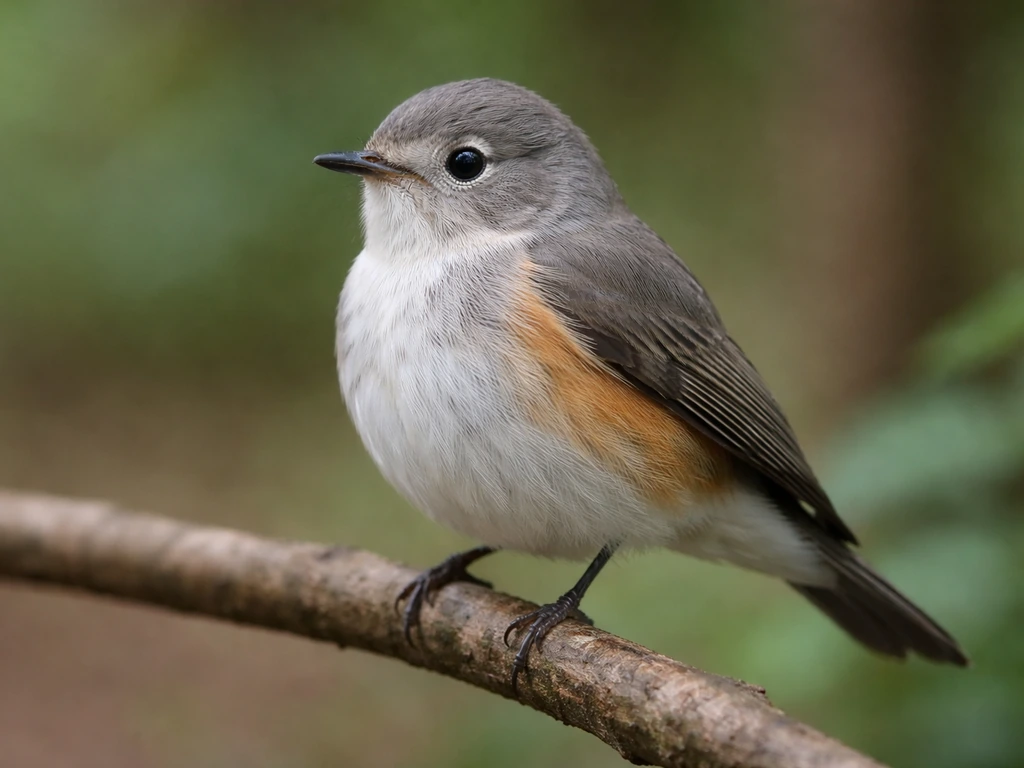
The breast and belly are whitish, which contrasts nicely with the gray back when you see the bird side-on. The key color accent you want to look for is the rusty-orange wash on the flanks, meaning the sides of the body just below the wings. It's not a blazing orange, more of a soft rust, but it's consistent and reliable. This is one of the most useful field marks because it shows up even in low light.
Tail
The tail is medium length and gray, matching the back and wings. There's nothing distinctive about the tail on its own, but the titmouse often holds it slightly cocked upward when perched, giving the bird a perky, alert posture that's worth recognizing as a shape cue.
Size, shape, and behavior cues that support the visual ID
The tufted titmouse measures about 5.5 to 6.3 inches long, with a wingspan of roughly 8 to 10 inches and a weight of around 0.6 to 0.9 ounces. Think of it as slightly larger than a Black-capped chickadee but noticeably smaller than a robin. At a feeder, though, it tends to look bigger than you'd expect from those numbers. That's because it has a proportionally large head, a thick neck, and a full, round body. If you see a small gray bird at your feeder and think "that looks bigger than a chickadee," it might well be a titmouse.
Behavior is a surprisingly useful ID tool. Tufted titmice are bold and vocal, often the first bird to come back to a feeder after a disturbance. They grab a seed and fly off to crack it on a nearby branch rather than feeding in place. You'll hear them before you see them: a loud, clear "peter-peter-peter" whistle is the classic call, and once you know it, you'll start noticing titmice all over the place in wooded areas. Britannica also highlights this cheery "peter-peter-peter" whistled call of the tufted titmouse in deciduous woodlands, orchards, and suburbs a loud, clear "peter-peter-peter" whistle.
Tufted titmouse look-alike guide
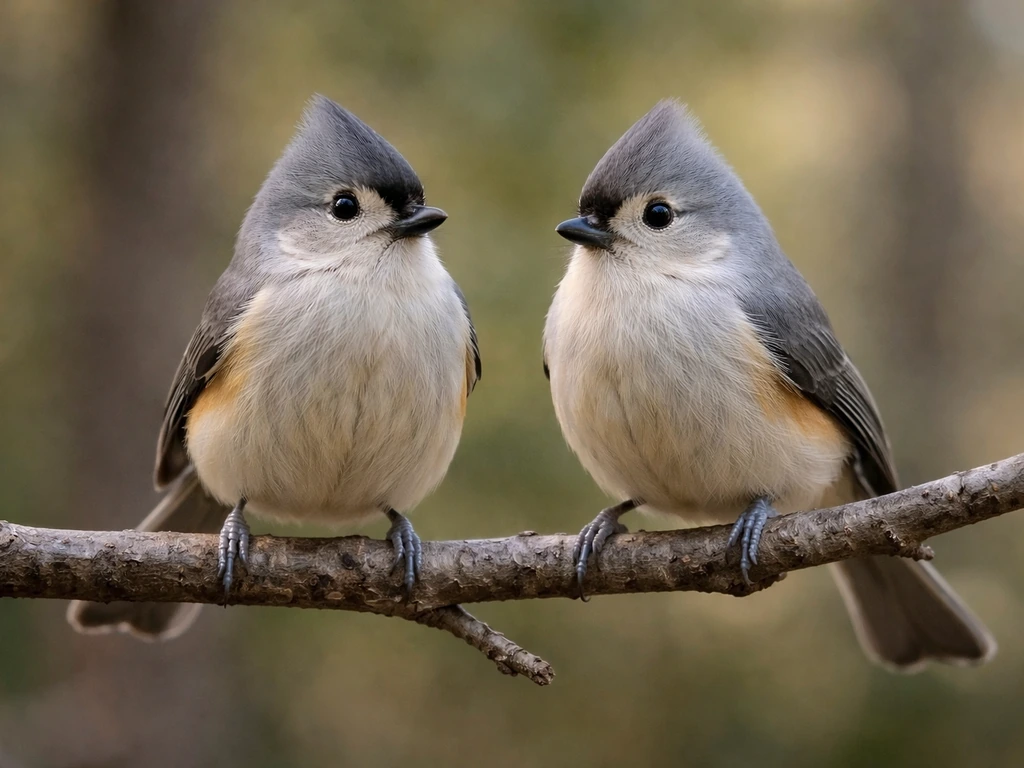
A few small gray birds get confused with the tufted titmouse, especially for newer birders. For example, if you’re asking what does a towhee bird look like, you’ll want to focus on its overall shape, coloring, and any bold patterning. Here's how to tell them apart:
| Bird | Crest? | Head pattern | Flanks | Key difference |
|---|---|---|---|---|
| Tufted Titmouse | Yes, gray | Black forehead patch, plain pale face | Rusty-orange | Black forehead + rusty flanks + crest |
| Black-capped Chickadee | No | Bold black cap and bib, bright white cheek | Buffy-white | No crest, strong black-and-white head pattern |
| Carolina Chickadee | No | Similar to Black-capped: black cap and bib | Buffy-white | No crest, smaller, patterned head |
| Oak/Juniper Titmouse (Plain Titmouse) | Yes, gray | Plain gray-brown face, no black forehead | Plain, no rust | No black forehead, no rusty flanks |
| White-breasted Nuthatch | No | Black cap, clean white face | Chestnut | Creeps headfirst down trees, no crest, flat head |
The Black-capped chickadee is the most common confusion species. The easiest way to separate them: if the bird has a crest, it's not a chickadee. If it has a bold black-and-white head with no crest, it's not a titmouse. The titmouse's black mark is limited to a small forehead patch, while the chickadee wears a full black cap and bib. The USGS also points out that the closely related Oak or Juniper titmouse (sometimes called the plain titmouse) looks very similar to the tufted titmouse but lacks both the rusty flanks and the black forehead, so those two field marks together are what locks in the tufted titmouse ID.
It's also worth knowing that if you're trying to identify a bird that looks like a tufted titmouse but seems to be missing the crest entirely, that's worth a closer look. If you’re wondering what bird looks like a tufted titmouse without the tuft, the plain titmouse (Oak or Juniper titmouse) is a common look-alike to check. Some birds can appear crestless depending on posture or age.
How to use photos and field marks to confirm
If you've got a photo or you're watching a bird live and want to lock in the ID, run through this checklist in order:
- Check for a crest first: a visible pointed crest immediately rules out chickadees and nuthatches
- Look at the forehead: is there a distinct black patch just above the bill? This is the tufted titmouse's signature mark
- Check the face: it should be plain and pale, with no strong cap, stripe, or bib pattern
- Look at the flanks (the sides below the wings): you should see a warm rusty-orange wash, not plain white or buffy
- Assess the size: does it look noticeably bigger than a chickadee, with a large-looking head and thick neck?
- Listen if you can: the loud "peter-peter-peter" whistle is distinctive and carries a long way
For photo confirmation, the best angles are a side view (which shows the crest profile, the black forehead patch, and the flank color all at once) and a front-on view (which shows the pale face and how the black forehead stands out above the bill). Lighting matters: the rusty flank color can look washed out in flat, overcast light or deep shade, so if you're unsure, look for the crest and forehead patch first since those hold up better in any lighting.
One thing that stays consistent regardless of age, sex, or season is the overall color scheme: gray above, white below, rusty sides, black forehead. Males and females look alike, so you don't need to adjust your mental image for sex. Juveniles are similar to adults but may show slightly duller coloring, and the black forehead patch can be less bold early in life. If you're looking at a bird that has most of the right marks but seems a little softer in color, a juvenile tufted titmouse is a reasonable conclusion.
Once you've seen a tufted titmouse a few times, the combination of the perky crest, that distinctive snub-nosed black forehead, and the rusty sides becomes unmistakable. If you are trying to match an image, start by comparing the bird's size, head shape, and those key color marks compare the bird's size, head shape, and those key color marks. It's one of those birds that clicks into place quickly, and after that you'll spot them almost everywhere in the eastern US.
FAQ
If I see a gray bird far away, how can I tell it is a titmouse rather than something else?
At a distance, the easiest way to confirm is the combination of gray back, pale face, black forehead patch above the bill, and rusty flanks. The rust can look faint in flat overcast light, so if the sides are subtle, prioritize the crest shape and the forehead patch position.
What if the bird looks like a tufted titmouse but its crest seems missing?
Yes, they can look “crestless” in a moment. A bird may flatten its crest while feeding, during awkward angles, or when the head is angled downward. Before concluding it is not a tufted titmouse, look for the black forehead patch and rusty sides, then try to get a side or front view.
How does a juvenile tufted titmouse look compared with an adult?
Juveniles are usually the same overall pattern, but the rusty flank color and the black forehead patch can appear less bold or slightly dull. If the bird still shows the gray over white under look plus rusty sides, and the forehead mark is present though softer, “juvenile tufted titmouse” is often the best fit.
Do male and female titmice look different?
Males and females look alike in the field, so you do not need to adjust the description for sex. If one bird seems darker or more washed out, that is usually lighting and angle, not sex-related coloration.
What is the quickest way to tell a titmouse from a black-capped chickadee?
If you already know chickadees, the clearest separation is that titmice have a crest, chickadees have a bold black cap and bib with no crest. Also, titmouse black is limited to a smaller forehead patch, while chickadee black covers more of the head and throat area.
How can I tell a tufted titmouse from an Oak or Juniper (plain) titmouse?
The similar “plain” titmouse (often discussed as Oak or Juniper titmouse) can resemble tufted titmouse, but it typically lacks the rusty flanks and the black forehead patch. So, if the rusty side wash is missing and the forehead mark is absent, treat it as a strong sign you are not looking at a tufted titmouse.
What behavior should I watch for to confirm a titmouse at my feeder?
At feeders, titmice often hop and move quickly, then crack seeds on nearby branches instead of staying put. If your bird grabs a seed and leaves, that behavior can still match titmice and can help separate it from species that tend to feed more steadily at the platform.
What photo angle gives the best evidence for identifying a titmouse?
Photo tips that improve ID are getting a side view for crest profile plus flank color, and a front-on view for the pale face and black forehead patch. Also, shoot multiple frames as the head angle changes, because the crest and forehead patch visibility can shift with posture.
What common identification mistake do beginners make when trying to spot titmice?
Not all small gray birds with a crest are titmice, so be careful with “single-feature” IDs. A reliable quick check is gray on top plus white below, rusty flanks, and the black forehead patch above the bill. If one of those is missing, slow down and re-check shape and markings.
Why might a titmouse’s colors look different in different seasons or weather?
Yes, season and wear can affect brightness. If the rust looks washed out, use the persistent features first (crest presence, black forehead patch, and the overall gray-over-white pattern). That approach avoids false negatives when lighting and feather condition change.
Next Article
What Does a Herring Bird Look Like? Herring Gull ID Guide
Learn what a herring bird likely is: clear herring gull ID guide with key marks, plumage differences, and lookalike comp