A goldfinch is a small, bright bird that's hard to miss once you know what you're looking for. The American Goldfinch in breeding season is basically a flying lemon: brilliant yellow body, jet-black cap, and striking black wings with two white wing bars. The European Goldfinch takes a different approach entirely, with a bold red-white-black face, earthy brown back, and a vivid yellow flash across jet-black wings. Both species are compact little finches with short, notched tails and small conical bills, but their color patterns are totally different depending on which species, which season, and whether you're looking at a male or female.
What Does a Goldfinch Bird Look Like Field Marks

Marcus Whitley
5 May 2026
Size, shape, and overall silhouette cues
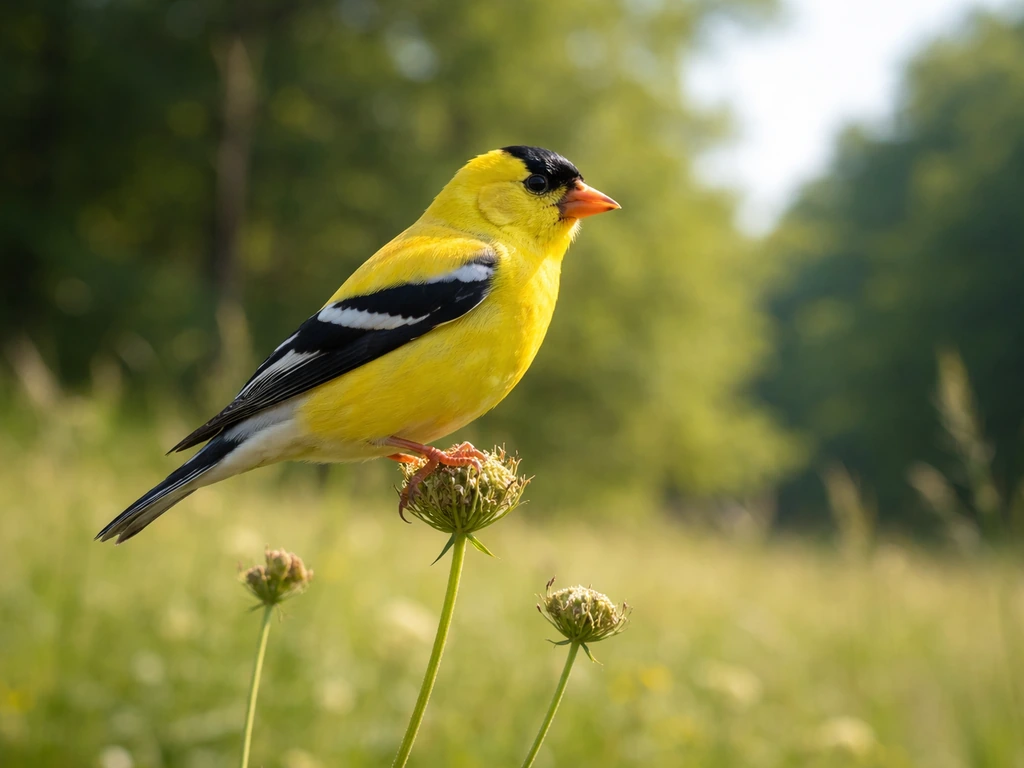
The first thing to nail down is size and shape, because that rules out a lot of birds before you even think about color. The American Goldfinch measures 4 to 5 inches long with a wingspan of around 8 to 9 inches, which puts it firmly in the 'small finch' bracket, noticeably smaller than a robin. It has a slender build, a short conical bill, and a fairly long, distinctly notched tail. Britannica also notes that goldfinch species generally have short, notched tails and much yellow in their plumage short, notched tails and much yellow in plumage. That notched tail is one of the most reliable silhouette cues you can use, especially in flight when colors are hard to read.
The European Goldfinch is similarly compact but has a slightly longer, more pointed bill compared to its American cousin. Its tail is also strongly notched and black, which you'll often see as the bird dips and bounces through the air in its characteristic undulating flight. Both goldfinches share that buoyant, slightly bouncy flight style, which is itself a helpful clue when you're watching birds on the move.
Color pattern details (head, wings, tail, chest)
American Goldfinch
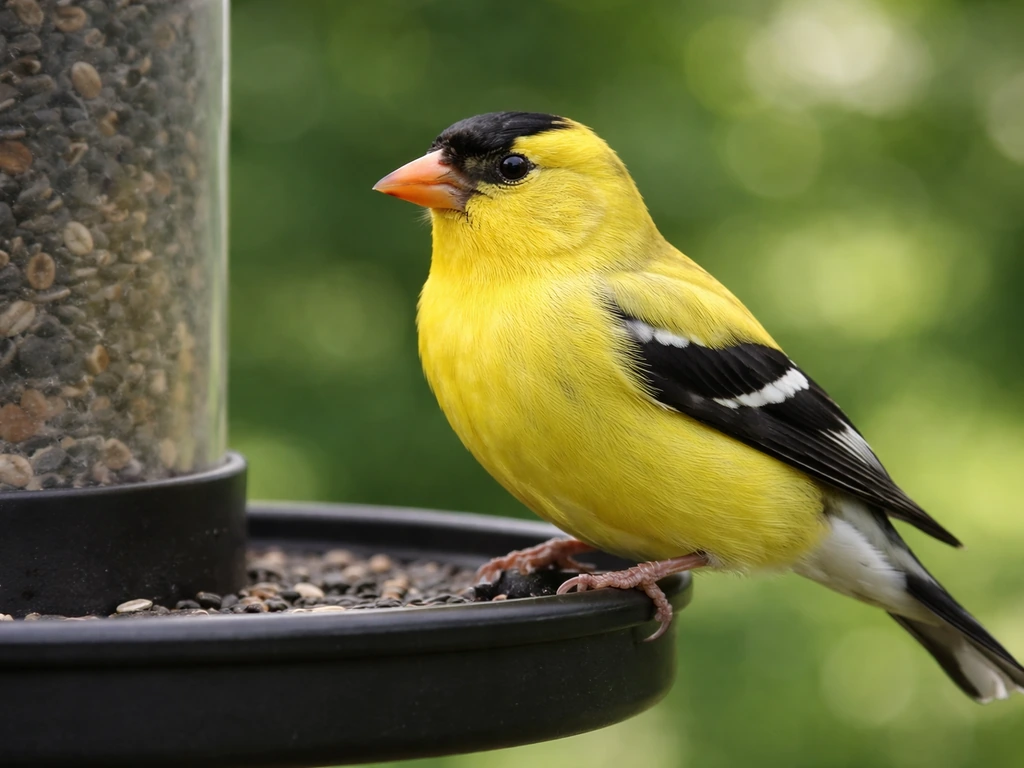
In breeding plumage, the male American Goldfinch is genuinely one of the most vivid birds you'll see at a feeder. The body is bright lemon-yellow, the cap is jet black, and the wings and tail are black with two narrow white wing bars and yellow patches on the lesser coverts. The underside is clean and unstreaked yellow, and the undertail coverts are white. Females share the same general pattern but run much more olive-yellow rather than bright yellow, and they lack the black cap entirely.
In winter, both sexes look dramatically different. Males become a warm cinnamon-brown or grayish overall, keeping their black wings but swapping the white wing bars for broader, buffy ones. The bright yellow is mostly gone. If you're seeing a small brown finch with black wings and two buffy wing bars at a feeder in January, that's very likely a nonbreeding male American Goldfinch. If what you’re trying to figure out is specifically what a yellow finch bird looks like, compare the head and wing pattern first and then check whether the underside stays unstreaked what a yellow finch bird look like. Females in winter look similar, just a touch duller. White undertail coverts are present year-round and are a useful confirming mark.
European Goldfinch
The European Goldfinch is visually one of the most striking small birds you'll encounter. Adults of both sexes have a brilliant red face, framed by white cheeks and a black cap and nape, creating that bold red-white-black head pattern. If you want to know what a northern flicker bird looks like, focus on its bold speckling and the distinctive patterning on its head and wings what does a northern flicker bird look like. The back and flanks are a warm tan or earthy brown, the underparts are mostly white with a light brown wash across the breast, and the wings are jet black with a bold, broad yellow patch that blazes even in low light. The tail is strongly notched and black with white spots at the tips.
Juvenile European Goldfinches look quite different: the dramatic head pattern is absent, replaced by a plain brownish-gray head and finely streaked brownish upperparts. However, the wing pattern is already in place, so the black wings with yellow patch still give you a strong ID clue even on young birds.
Key field marks to confirm (beak, wing bars, stripes)
When you're trying to lock in an ID, these are the marks to run through in order. Start with the bill: both goldfinches have a small, conical bill that's typical of seed-eating finches. The European Goldfinch's bill is noticeably longer and more pointed. Then check the wings: look for the two wing bars on an American Goldfinch (white in breeding season, buffy in winter) or the bold solid yellow wing patch on a European Goldfinch. Next, look at the underparts: an American Goldfinch should be clean and unstreaked, which is critical for separating it from lookalikes. Finally, check the tail: a short, distinctly notched tail is a consistent structural feature across both species and all seasons.
- Bill: small and conical on American Goldfinch; slightly longer and more pointed on European Goldfinch
- Wing bars: two white (breeding) or buffy (winter) bars on American Goldfinch; bold yellow wing patch on European Goldfinch
- Underparts: clean and unstreaked on American Goldfinch in all plumages
- Tail: short and notched on both species; black with white spots on European Goldfinch
- Head: black cap on breeding male American Goldfinch; red-white-black face pattern on adult European Goldfinch
- Undertail coverts: white year-round on American Goldfinch
Seasonal and sex differences in goldfinches
The American Goldfinch changes so dramatically between seasons that people sometimes think they're looking at two different species. Breeding males (roughly April through August) are the classic bright yellow bird with the black cap. By late fall and winter, that same male is a subdued cinnamon-brown with black wings. Females are consistently more muted than males year-round: olive-yellow in summer, dull brownish in winter. You might also catch a molting bird in spring or fall that looks patchy, with islands of yellow breaking through brown, which can be confusing until you know what's happening.
The European Goldfinch is much more consistent across seasons, but the sexes are genuinely difficult to separate at a distance. Both male and female adults show the red-white-black head and yellow wing patch. One subtle clue: the amount of red on the face extends slightly past the eye in males. Bill color can also shift slightly with the breeding season, becoming paler during breeding. For most casual sightings, though, you can confidently say 'European Goldfinch' without worrying too much about which sex you're seeing.
Quick ID: goldfinch vs lookalikes
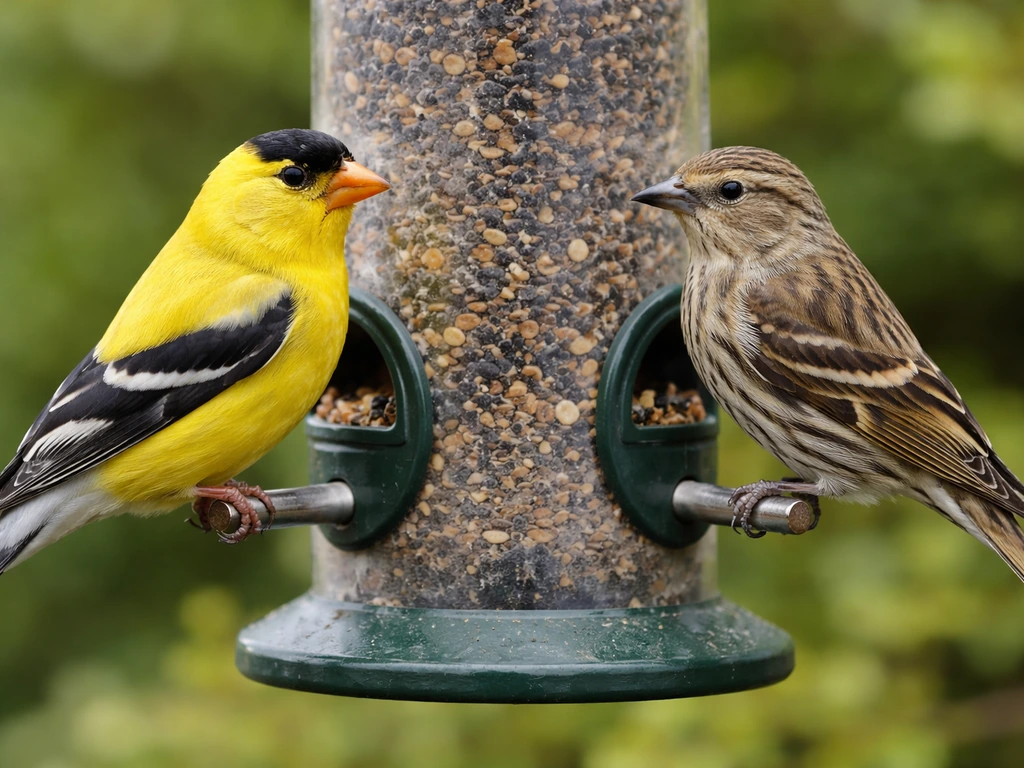
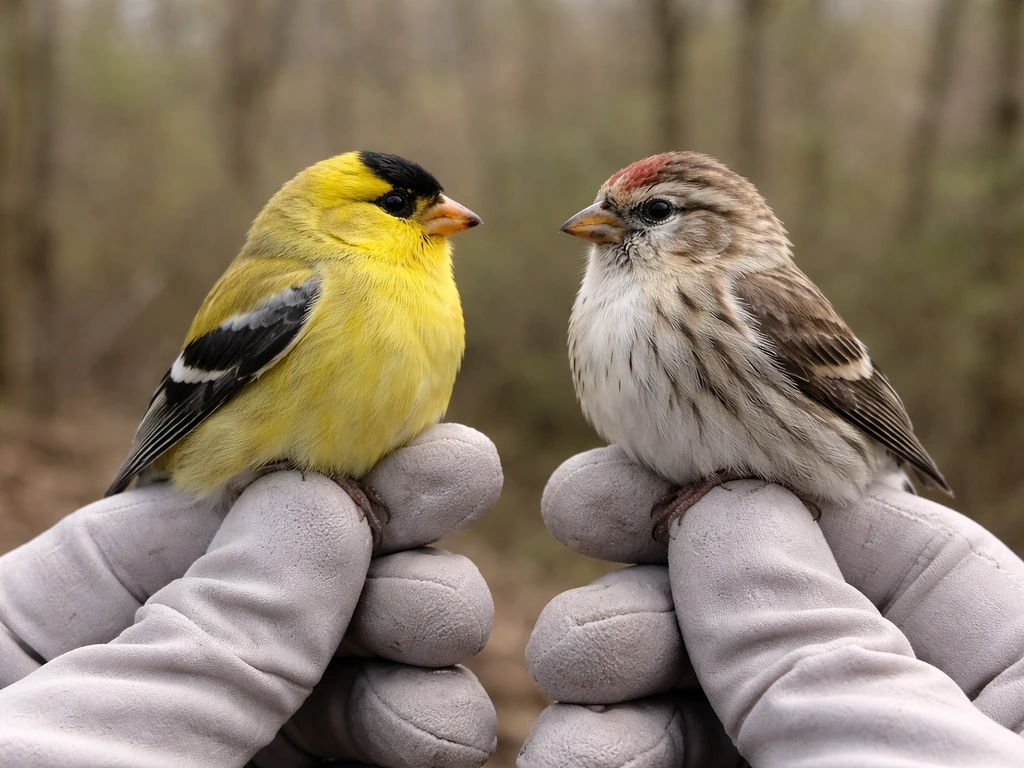
The bird most commonly confused with an American Goldfinch is the Pine Siskin. It's similar in size, shape, and behavior, often turning up at the same feeders. The single biggest difference: the Pine Siskin is brown and heavily streaked on the breast and flanks, while the American Goldfinch is always clean and unstreaked underneath. Pine Siskins do have yellow in their wings and tail, but it appears as yellow edging and patches rather than as solid wing bars, and it's most obvious in flight. National Geographic notes that identifying a Pine Siskin involves looking for an entirely brown, heavily streaked look, prominent yellow in the wing, and a short, deeply notched tail yellow in their wings and tail. If you see streaking on the chest, it's not a goldfinch.
| Feature | American Goldfinch | Pine Siskin | European Goldfinch |
|---|---|---|---|
| Size | 4–5 in, wingspan 8–9 in | Similar small finch size | Similar small finch size |
| Head | Black cap (breeding male); plain in other plumages | Streaked brownish head | Red, white, and black face (adult) |
| Body color | Bright yellow (breeding male) or brown (winter); unstreaked | Brown with heavy streaking throughout | Tan/brown back, white underparts |
| Wing pattern | Two white or buffy wing bars | Yellow edging/patches, most visible in flight | Bold yellow patch on black wings |
| Tail | Short, notched | Short, notched with yellow edging | Strongly notched, black with white spots |
| Chest | Clean and unstreaked | Heavily streaked | White with light brown wash |
If you're in North America and you spot a bird with a yellow body but it seems noticeably larger than what you'd expect, consider that it might not be a goldfinch at all. The Yellow Warbler, for example, can look superficially similar but has a rounder head, thinner bill, and streaked rusty chest on males. The American Goldfinch's conical bill and notched tail are your clearest structural separators. It's also worth knowing that the general 'finch' family includes related species like siskins and redpolls, which share some silhouette features but differ considerably in color and streaking. If you're exploring similar species, yellow finches as a broader group share some visual traits worth comparing.
How to narrow it down with comparison photos and descriptions
The most practical approach for confirming a goldfinch ID in the field is to work through a short mental checklist rather than trying to hold the entire bird in your head at once. Start with size and shape (small, compact, notched tail, conical bill), then move to the most obvious color feature (solid yellow body, or red-white-black face, or streaked brown), then check the wings (wing bars versus yellow wing patch versus streaked edging), and finally look at the chest (unstreaked is a near-guarantee for goldfinch over siskin).
- Check size and shape first: small, compact finch with a notched tail and conical bill
- Look at the overall body color: bright yellow, olive-yellow, dull brown, or red-white-black face
- Examine the wings: two wing bars (white or buffy) versus a solid yellow wing patch versus streaked yellow edging
- Check the chest and flanks: clean and unstreaked confirms goldfinch, heavy streaking points to Pine Siskin
- Look at the head: black cap, red-white-black face, or plain brownish head depending on species and age
- Consider the season: a drab brown bird in winter with black wings and buffy wing bars can still be a goldfinch
When a live sighting leaves you unsure, comparing your description against visual reference images is the fastest way to confirm. If you meant a different bird than the goldfinches in this guide, you can also look up what a flicker bird looks like so you can compare key field marks what does a flicker bird look like. Look for side-by-side plumage comparisons that show breeding male, nonbreeding male, female, and juvenile side by side, because goldfinches vary so much across those states. Visual reference sites that organize birds by plumage state rather than just a single 'hero' photo make this a lot easier. Comparing what you saw against a juvenile European Goldfinch or a winter American Goldfinch image, for example, can quickly resolve what seemed like a confusing sighting. Related birds like the Goldcrest and Firecrest also have yellow coloring and tiny size, but their head patterns are completely different and worth a quick look if you're in Europe and saw something very small with a yellow stripe on the crown. A helpful quick visual check for these birds is to compare their head pattern, because the firecrest bird look is very distinctive Goldcrest and Firecrest. If you're wondering what a goldcrest bird looks like, focus on its very bright golden-yellow crown stripe and small size.
FAQ
What does an American goldfinch look like outside of breeding season?
Yes. In winter, American Goldfinches often look brown or gray with black wings and two buffy wing bars, so they can seem like a generic “small finch.” If you confirm the unstreaked underside and the distinctly notched tail silhouette, you can still call it a goldfinch even when the yellow is mostly gone.
Why does my goldfinch look different in my backyard photos?
A feeder photo can mislead if lighting is dim or the bird is fluffed up. Use the wing pattern and tail shape first: American Goldfinch shows either solid white wing bars in breeding or broader buffy bars in winter, and both species show a short, clearly notched tail.
What should I look for on cloudy days when the yellow color is hard to see?
Cloudy or backlit conditions can wash out yellow, but black wings with a strong wing-bar or wing-patch pattern usually still show up. Try to check the wings in flight, because the wing bars (American) or solid yellow patch (European) stand out more than face color in poor light.
How can I tell an American goldfinch from a pine siskin at the same feeder?
Look for the underside first to separate American Goldfinch from Pine Siskin. Goldfinch underparts are clean and unstreaked, while Pine Siskin shows breast and flank streaking, even if it has some yellow in the wings.
What does a juvenile European goldfinch look like compared with adults?
Juvenile European Goldfinches often lack the bold red-white-black face pattern, so relying on head color can fail. Instead, focus on the already-present wing layout, especially the black wings with a yellow patch, plus the strongly notched black tail with white-tipped patterning.
What if I see a small bird that looks yellow but has streaks on its chest?
If the bird looks “yellowish but streaky on the chest,” assume it is not an American Goldfinch. The combination of a small conical bill, notched tail, and unstreaked underparts is a stronger match than general yellow color alone.
Can I tell male vs female European goldfinch from a distance?
European Goldfinches are generally easier to confirm by head pattern and wing patch when the bird is adult, but at distance the sexes are hard to separate. A minor clue is that male face red can extend slightly farther past the eye, yet for most casual sightings, species ID matters more than sex.
How do I identify a goldfinch during a spring or fall molt?
During molting, plumage can look patchy and “unfinished,” with islands of yellow replacing brown. If you see mixed colors plus the goldfinch structural marks (small conical bill, compact finch shape, notched tail), treat it as a seasonal/ molt effect rather than a different species.
What other birds might be confused with goldfinches, and how do I avoid misidentifying them?
Yes, other birds can fit parts of the look, like Yellow Warbler or other small yellow songbirds, but they usually miss the finch structure. Confirm the short notched tail and conical bill, then verify the wing pattern specific to American wing bars or European solid wing patch.
What is the fastest checklist order to confirm a goldfinch ID?
For a quick decision in the field, run this order: notched tail silhouette, conical bill size, then the wings (two wing bars vs solid yellow wing patch), and only then the face and body color. This prevents overreacting to seasonal yellow loss.