A finch is a small, seed-eating songbird with a compact, rounded body, a distinctively short conical beak, and a notched tail. If you're looking at a bird right now and wondering whether it's a finch, that triangular seed-cracker beak is the single biggest clue. Most finches are sparrow-sized or smaller, they tend to show up at feeders in groups, and they have a slightly chunky, big-headed look compared to slender birds like warblers or wrens.
What Does Finch Bird Look Like? Key Traits to Identify

Marcus Whitley
12 Apr 2026
"Finch" is a group, not a single bird
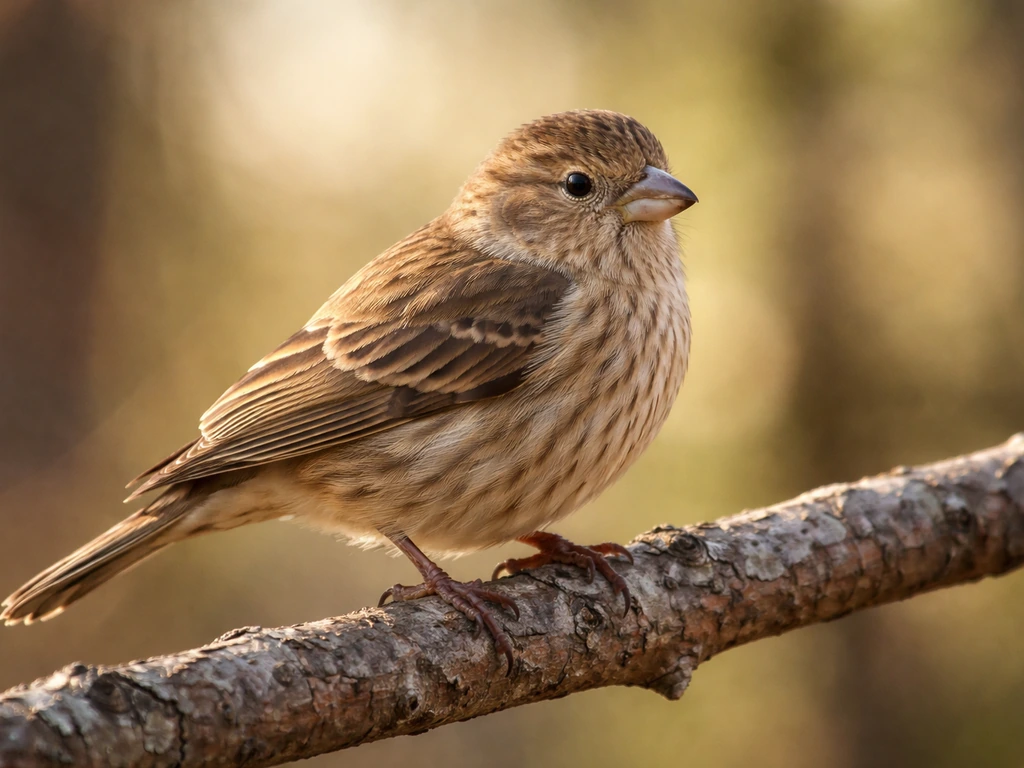
When most people ask what a finch looks like, they're actually asking about a broad group of birds, not one specific species. The family Fringillidae (sometimes called "true finches") includes dozens of species, but the everyday word "finch" gets applied even more loosely to birds outside that family, including species from families like Emberizidae and Estrildidae. Even some cage birds sold as "finches" (like zebra finches and waxbills) aren't true finches at all. So when you see a bird labeled a finch, you're looking at a general body type and lifestyle: small, seed-eating songbirds that share a certain look rather than one guaranteed species.
In North America, the finches you're most likely to encounter at a backyard feeder or in a weedy field include the House Finch, Purple Finch, Cassin's Finch, American Goldfinch, and Pine Siskin. In Europe, you might see Chaffinches, Greenfinches, or Linnets. All of them share the core finch blueprint, even though their colors can vary dramatically.
What a finch's body actually looks like up close
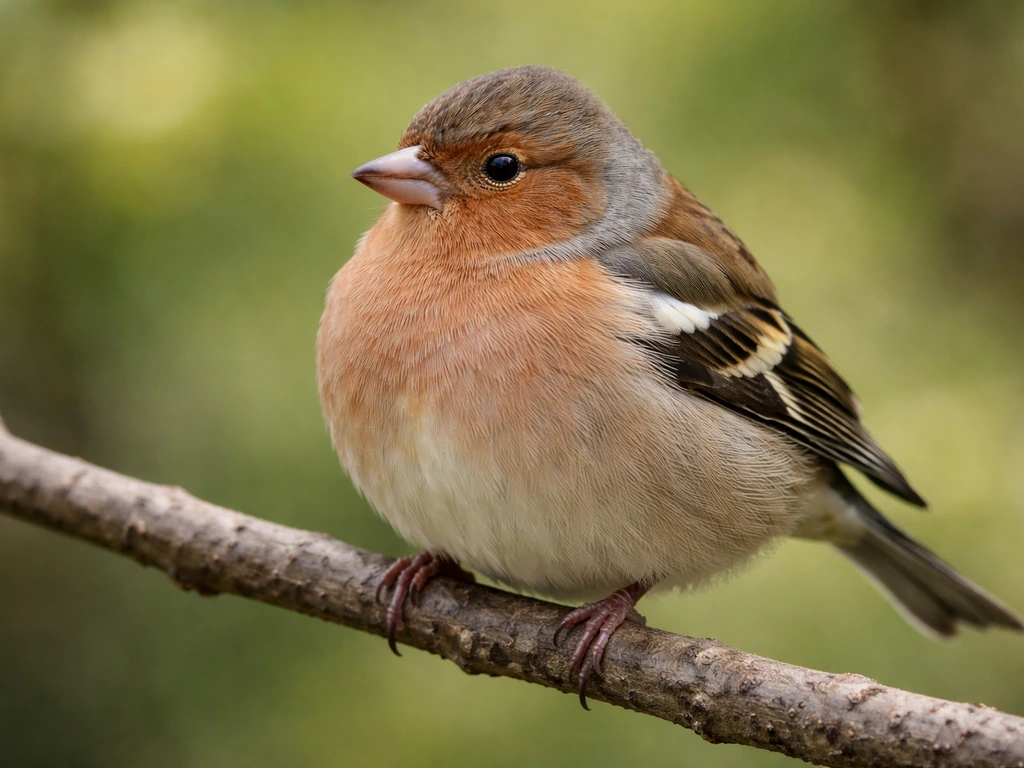
Think of a finch as a compact little package. The body is rounded and stocky rather than slim and elongated. The head looks proportionally large for the body size, which gives finches a slightly top-heavy appearance when they're perched. The neck is short, the wings are fairly short and pointed, and the tail is typically notched or forked at the tip rather than square or rounded.
In terms of size, the House Finch is a great benchmark: it runs about 5.1 to 5.5 inches long (13 to 14 cm) and weighs only 0.6 to 0.9 ounces (16 to 27 grams). That's roughly the size of a large sparrow, maybe a bit more compact. The American Goldfinch is on the smaller end of that range. Cassin's Finch sits toward the larger, chunkier end. You're never looking at a big bird here.
The finch beak: your best identification tool
The beak is the one feature that ties all finches together and separates them from most look-alikes. It's short, thick, and conical, shaped like a small triangle or a stubby cone. This is a seed-cracking beak, built for splitting open hulls and husks, and it looks noticeably different from the thin, pointed beak of a warbler or the long, curved beak of a thrasher.
Even within the finch group, beak shape varies in subtle but useful ways. The House Finch has a distinctly small bill with a curved top edge (the culmen), giving it a slightly droopy, rounded profile. The Purple Finch has a somewhat heavier, more powerful-looking beak. Cassin's Finch goes further with a noticeably longer, heavy, conical bill with a nearly straight culmen, making it look more angular and robust. The American Goldfinch sits at the dainty end: a short, conical bill that looks almost petite. If the beak looks triangular and thick at the base, you're almost certainly looking at a finch.
Color and pattern: how different finches look
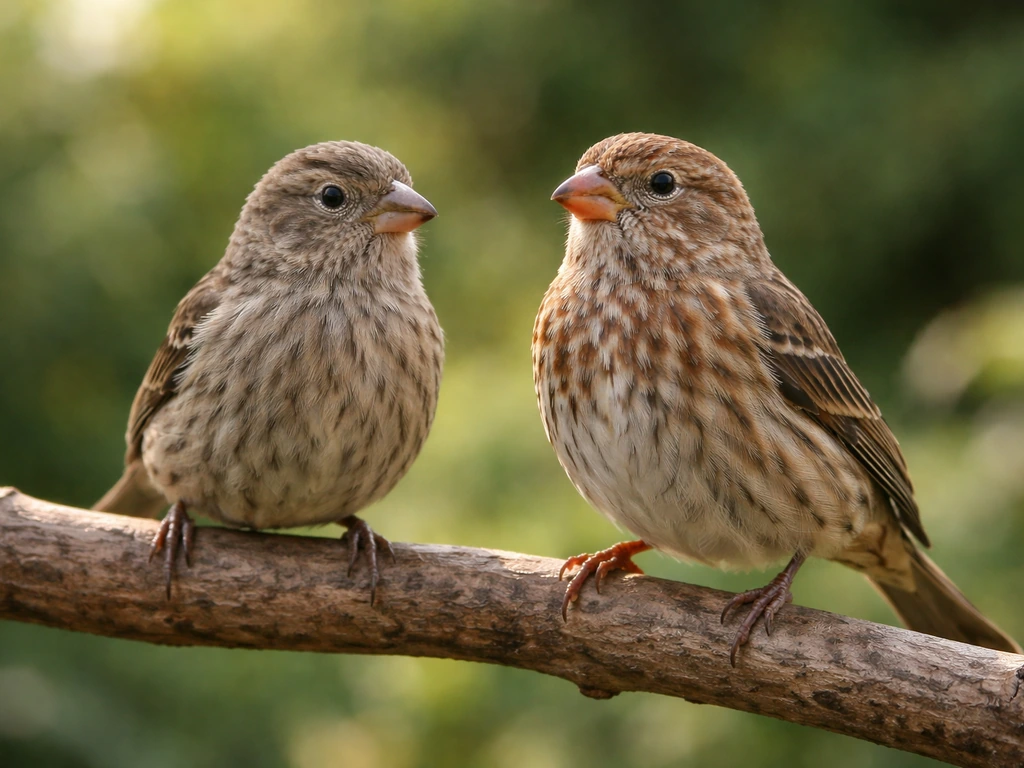
This is where finches stop looking alike, and it can trip people up. The color range across common finch species is surprisingly wide, so instead of expecting one look, it helps to know the main patterns.
| Species | Male color cues | Female/nonbreeding cues | Key pattern detail |
|---|---|---|---|
| House Finch | Red or orange-red on head, chest, and rump | Streaky brown overall, no distinct face pattern | Brown streaking on belly and flanks is a reliable mark |
| Purple Finch | Rich reddish-purple washed over head, back, and chest | Strongly patterned face with bold white eyebrow stripe | No brown streaking on belly unlike House Finch |
| Cassin's Finch | Rose-pink crown, pinkish breast, white belly | Crisp brown-and-white streaking, bold face pattern | Whiter underparts than House or Purple Finch |
| American Goldfinch | Bright canary yellow with black wings and forehead (breeding) | Drab unstreaked brown, blackish wings, two pale wingbars (nonbreeding) | Wingbars are a consistent feature year-round |
| Pine Siskin | Brown with heavy streaking throughout | Similar to male but often duller | Yellow patches in wings and tail are the key mark |
The biggest color pitfall is the nonbreeding or female plumage on birds like the American Goldfinch. In winter, a male goldfinch looks nothing like the brilliant yellow bird on summer feeders. It's an unstreaked drab brown bird with blackish wings and two pale wingbars, and people often walk right past it. what a yellow finch bird looks like across seasons is worth exploring if the goldfinch's seasonal color change has you confused, because the transformation is dramatic.
For the red finches (House, Purple, Cassin's), the key thing to remember is that only adult males show the vivid coloring. Females of all three species are streaky brown birds that look broadly similar to each other, and the differences come down to facial pattern, bill shape, and tail notch depth rather than color.
How finches look when they're flying
One of the most consistent things about finches in flight is their undulating, bouncy flight path. They flap a few times, fold the wings briefly, drop slightly, then flap again, creating a wave-like pattern across the sky. Purple Finches are a textbook example of this undulating flight style. It's a useful cue because birds like starlings or doves fly in straighter, steadier lines.
The tail silhouette in flight is also worth watching. Most finches show a notched or forked tail tip, which you can sometimes catch as they land or change direction. The House Finch's notch is relatively shallow, so it can look almost square in flight, while the Purple Finch shows a more clearly forked tail. The American Goldfinch has a short, notched tail that reinforces its compact silhouette. The Pine Siskin flashes yellow patches in the wings and tail when it flies, which makes it one of the easier finches to catch in motion.
Overall wing shape is short and pointed, giving finches a quick, fluttery look rather than the long gliding arcs of larger birds. In poor light, that bouncy flight combined with a small, compact silhouette and short wings is often enough to say "probably a finch" before you even see the beak.
Common look-alikes and how to tell them apart
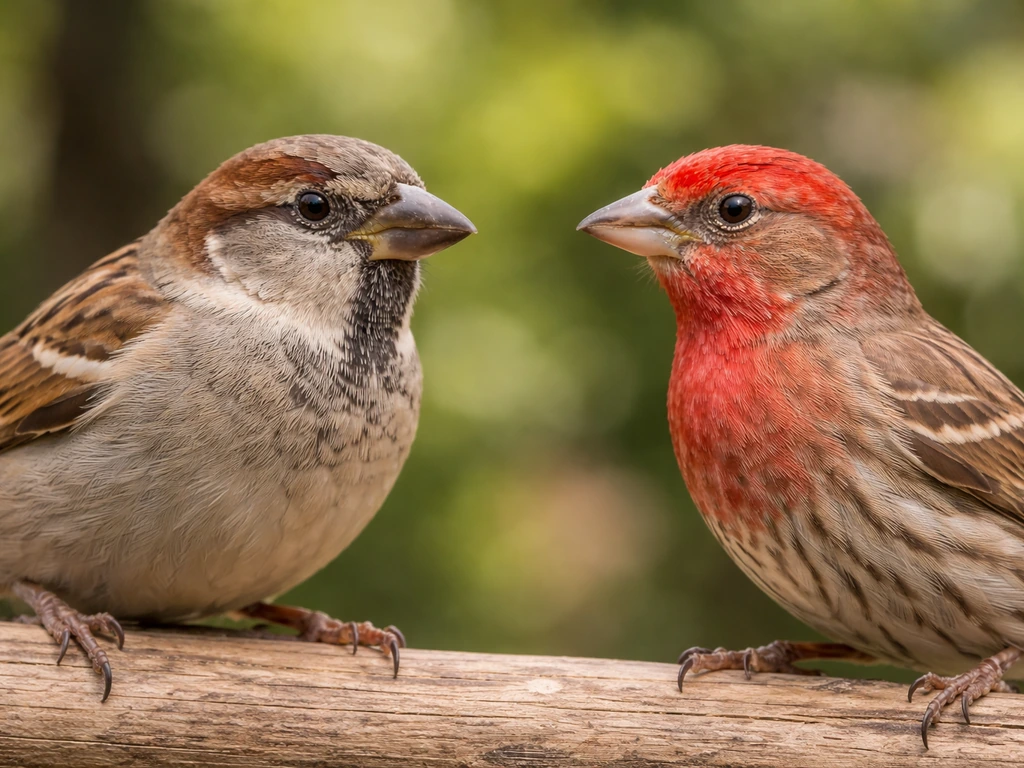
Sparrows are the number one finch look-alike. Both groups are small, brown, and streaky, and they often share the same feeders. The main tell is the beak: sparrow bills are also conical, but they tend to be slightly flatter and less prominent. Sparrows also tend to have more complex facial patterning with stripes and patches, while female finches have a plainer face. Behavior helps too: sparrows often scratch on the ground while finches prefer to perch and work seeds directly.
Pine Siskins are often confused with sparrows because of their heavy streaking, but look for those yellow wing and tail flashes, which no common sparrow shows. Ornitho Mnemolia’s House Sparrow guide highlights the classic field marks used in practice, including the gray cap and cheeks plus a black bib bold black bib and gray cap. House Sparrows in particular get mixed up with House Finches constantly, but the House Sparrow male has a bold black bib and gray cap, not red.
Some small woodpeckers get mistaken for finches at distance, but once you see the long chisel bill and the way they grip vertical bark, the difference is obvious. If you're near woodland edges, it's also worth knowing what a flicker bird looks like, since these medium-sized woodpeckers can draw attention with their patterned wings and undulating flight, and newer birders occasionally mistake them for large finch-type birds.
In Europe or on a world trip, you might encounter birds that look superficially finch-like but aren't: the Goldcrest is a tiny, rounded bird with a colorful crown stripe that new birders sometimes group with finches, but it's far smaller and has a thin insect-eating beak rather than a seed-cracker. Similarly, the Firecrest shares that tiny size and vibrant crown but belongs to a completely different family. Both are worth knowing so you don't tick them as finches.
The three red North American finches (House, Purple, and Cassin's) are probably the trickiest group to separate from each other. Here's the short version: House Finch has brown streaking on the belly and a small, curved bill. Purple Finch lacks that belly streaking, has a deeper reddish-purple wash, and a slightly forked tail. Cassin's Finch has a longer, straighter bill, whiter underparts, and a more sharply notched tail. Females of all three are brown and streaky, so lean on bill shape and face pattern to tell them apart.
What about the goldfinch?
The American Goldfinch is distinct enough in breeding plumage that it rarely gets confused, but winter birds are another story. blank" rel="noopener noreferrer">A nonbreeding male goldfinch is drab, unstreaked brown with blackish wings and two pale wingbars. That wingbar pattern on otherwise plain brown wings is a strong clue. For a detailed look at this species across all its plumage stages, what a goldfinch looks like breaks it down season by season.
How to identify a finch you're looking at right now
Use this sequence when you've got a bird in front of you and you're not sure what you're seeing:
- Check the beak first. Is it short, thick, and triangular (conical)? If yes, you're almost certainly in finch territory. If the beak is thin and pointed, it's probably a warbler, vireo, or similar insect-eater.
- Assess the body size and shape. Is the bird roughly sparrow-sized with a rounded, chunky body and large-looking head? Finches fit this mold. Slender or thrush-sized birds are likely something else.
- Look at the tail tip. Does it show a notch or fork? A notched tail combined with a conical beak is very strong evidence for a finch.
- Check for color cues. Any red or orange on the head or chest points toward House, Purple, or Cassin's Finch. Bright yellow on the body or yellow wing flashes suggests goldfinch or Pine Siskin. Plain brown with heavy streaking could be Pine Siskin, female House Finch, or female Purple/Cassin's.
- Watch how it feeds. Finches perch and use their beak to crack seeds directly. If the bird is actively working at a seed or hanging from a feeder while cracking husks, that's classic finch behavior.
- Observe the flight if the bird moves. Bouncy, undulating flight in a wave pattern? That's a strong finch indicator. Watch for any yellow flashes in wings or tail, which would point to Pine Siskin.
- Narrow down the species. Once you've confirmed it's a finch, look at belly pattern (streaked or not), bill curve (droopy vs. straight), and tail notch depth to separate the similar-looking red-headed finches or the brown-streaked ones.
One common mistake people make is trying to ID finches by color alone in bad lighting. A House Finch in shade can look washed out and brownish with just a hint of color, and a Purple Finch's rich plum tones can look dark and muddy. When the light is tricky, go back to structure: beak shape, body proportions, and tail notch will hold up better than color impressions.
Another mistake is assuming a streaky brown bird at the feeder is "just a sparrow." If it has a notched tail and a thicker-looking conical beak, take a second look, it could be a female finch or a Pine Siskin. And if you're in woodland habitat and see a medium-large patterned bird with an undulating flight, it's worth knowing what a Northern Flicker looks like, since this woodpecker sometimes creates confusion for people unfamiliar with it.
The bottom line: thick conical beak plus compact rounded body plus notched tail equals finch. Everything after that is about which finch. Once you've locked in that core template, separating the species becomes a much more manageable puzzle.
FAQ
If I only see a finch briefly, what single feature should I check first to confirm it’s a finch?
Prioritize the beak shape. A finch typically has a short, thick, conical seed-cracking bill, and that “triangular at the base” look holds up even when lighting is poor or the bird is moving quickly.
Can a finch look long and slim, or is the compact body always obvious?
At rest, the compact, rounded body is usually clear, but posture can change the impression. If the bird is leaning forward or ruffling feathers, it may look slimmer; in those cases, use the beak and tail notch as steadier cues.
What if the tail tip is hidden, can I still ID a finch?
Yes. If you cannot see the tail notch, lean on the beak plus overall proportions (short neck, short pointed wings, chunky head). If you can catch undulating, bouncy flight, that helps too.
How do I tell a female finch from a “just a sparrow” bird when both are brown and streaky?
Check for a more prominent, thicker conical bill and a plainer facial look on the finch. Sparrows often show more complex face patterning (stripes and patches), and their bills tend to look flatter than a finch’s.
Are all birds sold as “finches” at pet stores true finches?
No. Some popular cage birds labeled finches, such as zebra finches and waxbills, are not true finches. If you need accurate identification, treat “finch” in that context as a common name, not a taxonomic guarantee.
Why does my “finch” look like a totally different species at different times of year?
Seasonal plumage changes can be dramatic, especially for American Goldfinch males. Winter birds often appear drab and unstreaked brown with noticeable pale wingbars, so the summer yellow look may not be present.
How can I separate House, Purple, and Cassin’s finches when both color and lighting are unreliable?
Use bill length and shape and the tail notch. House Finch usually has a shorter bill with a more curved profile, Purple Finch tends to have a heavier look and less belly streaking, and Cassin’s often shows a longer, straighter bill with a more sharply notched tail.
What’s the best way to spot a Pine Siskin in flight?
Watch for flashing yellow patches in the wings and tail. This motion cue is often easier than relying on static color, since siskins can look heavily streaked like sparrows until the highlights appear.
Do finches fly straight like doves or starlings?
Usually not. Many finches show an undulating, wave-like flight path, with flaps followed by brief wing folds and slight drops. If the bird’s path is steady and straight, consider other look-alikes.
If it’s not a finch, what are the most common mix-ups I should rule out?
Sparrows are the most frequent confusion, especially with streaky female finches or siskins. Also consider woodpeckers if you notice a longer chisel-like bill or bark-gripping behavior.
I’m in Europe and I see a “finch-like” bird, how can I avoid mislabeling it?
Don’t rely on color alone or assume the finch name fits the same group. Very small species with crown stripes, like goldcrest and firecrest, can look finch-like at a glance, but their size and thinner insect-eating bill style generally give them away.
What should I do if the light is bad, like shade under trees or early morning?
Use structure cues instead of color. Return to the thick conical beak, compact body proportions, and tail shape. If possible, watch the bird for a moment longer to catch tail silhouette or a bouncy flight pattern.
Next Articles
What Does a Herring Bird Look Like? Herring Gull ID Guide
Learn what a herring bird likely is: clear herring gull ID guide with key marks, plumage differences, and lookalike comp
What Does a Hawk Bird Look Like? Key Field Marks to Spot
Learn key field marks for spotting hawks, compare to eagles falcons buzzards, and confirm with photos and angles.
What Does a Seahawk Bird Look Like? Osprey ID Guide
See hawk meaning Osprey ID: size, flight posture, plumage patterns, bill/eye marks, and lookalike confusion cues.