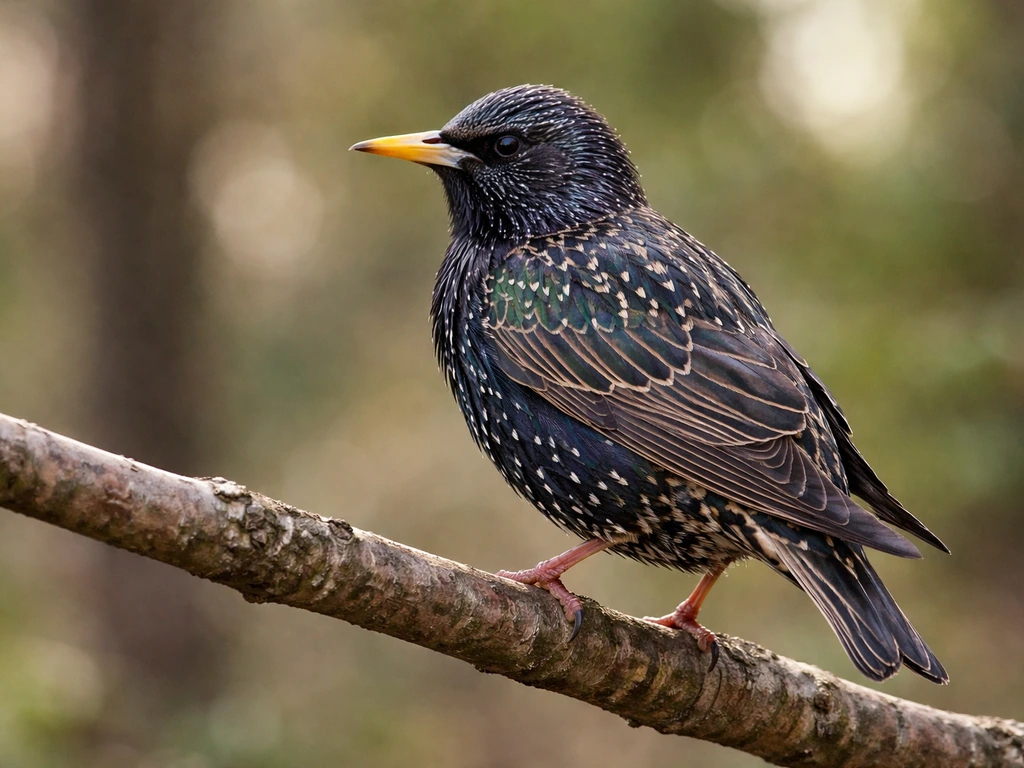
A starling is a stocky, blackbird-sized bird with glossy dark plumage that shimmers green and purple in good light, a short tail, and a long pointed bill. Nightingales are very different from starlings, so if you're wondering what a nightingale bird looks like, it helps to compare their overall size, plumage, and bill shape what does a nightingale bird look like. In winter it's covered in pale white spots that give it a starry, speckled look. In summer those spots wear off and it looks almost entirely black and iridescent. Once you know the combination of chunky body, short tail, and that long slender bill, you won't mistake it for much else.
What Does a Starling Bird Look Like? Key ID Features

Marcus Whitley
6 May 2026
Quick ID: size, shape, and silhouette
The European starling (the species most people in North America, Europe, and Australia are likely looking at) measures about 20 to 22 cm long, which puts it roughly in the same ballpark as an American robin but a little more compact. Its wingspan runs around 31 to 41 cm. The overall impression is chunky and solid, not sleek. Think of a football with wings rather than a streamlined thrush.
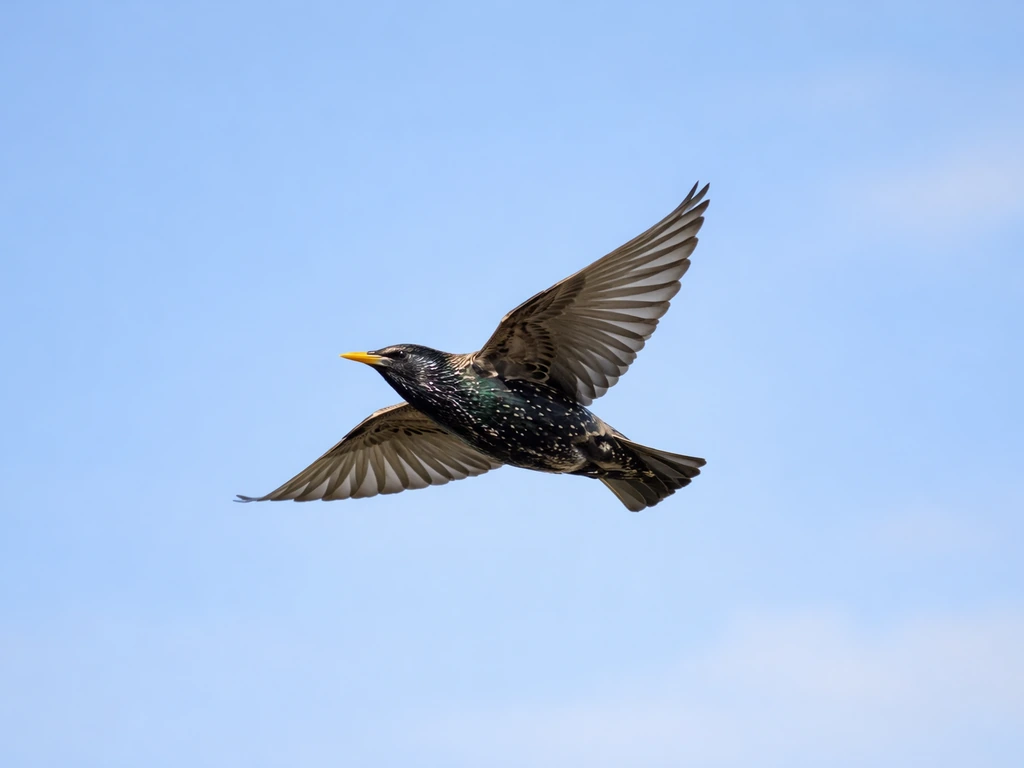
In flight, the silhouette is the real giveaway. The wings are triangular and pointed, almost like a small paper plane, and the tail is noticeably short and square-tipped. If you spot a flock of fast-flying dark birds that look like little arrowheads banking and wheeling together, there's a very good chance you're watching starlings. If you need to know what a snipe bird looks like, focus on its long bill and overall streaky, camouflaged body shape what does a snipe bird look like. That pointed-wing, short-tail combo is one of the quickest ways to lock them down from a distance.
Plumage colors and key patterns
The typical adult look
Up close in good sunlight, a starling's plumage is genuinely beautiful. The base color is black, but it's a metallic, iridescent black that shifts between green and purple depending on the angle of the light. You might look at one bird and see both colors at once as it moves. This glossy sheen is the feature that separates starlings from plain black birds like crows or blackbirds at a glance.
Winter speckles vs. summer gloss
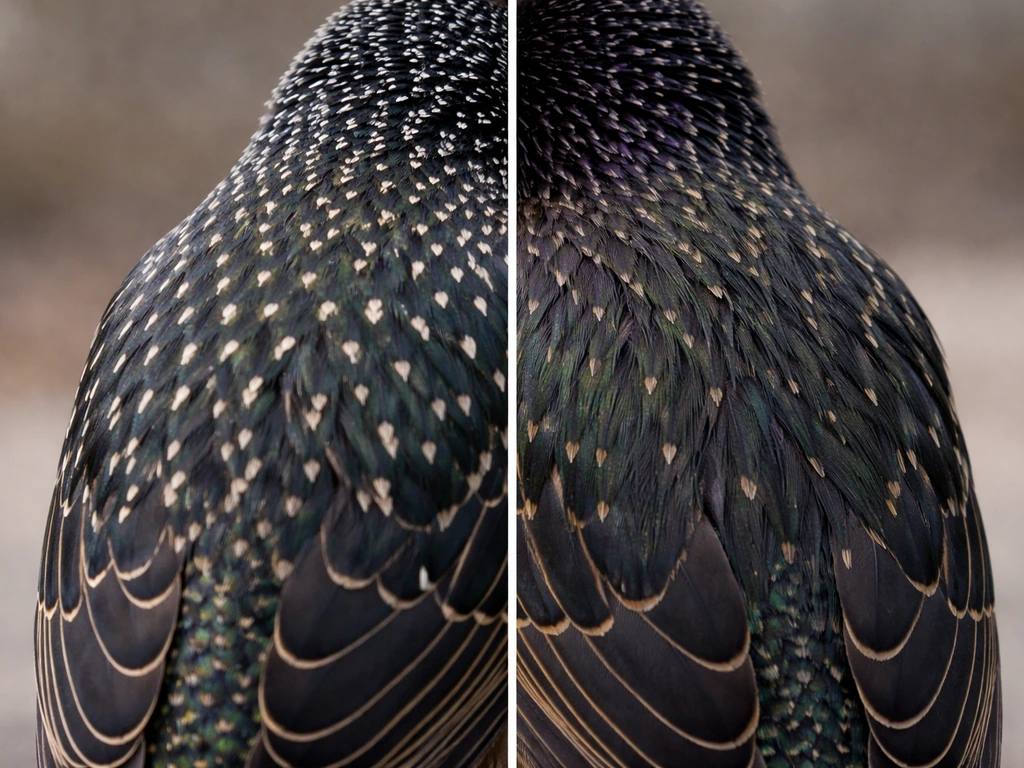
The single biggest source of confusion is that starlings look quite different depending on the time of year. In autumn and winter, fresh plumage is densely covered in small pale white spots and tips, especially on the chest and belly. This speckled, starry look is where the name 'starling' is thought to come from. As winter moves into spring and breeding season approaches, those pale tips wear away through everyday abrasion. By summer, most of the spots are gone and the bird looks far more uniformly glossy and dark. So if you're seeing a heavily spotted dark bird in December, that's normal. The same bird in June will look almost completely black.
Variations across starling species
There are over 100 starling species worldwide, and while the European starling is the most widespread and the one most readers will encounter, others can look strikingly different. Common mynas (sometimes called myna birds, which are part of the starling family) have brown and black plumage with bold white wing patches and bright yellow eye patches. If you're in Asia, Africa, or parts of the Pacific and you see a starling-shaped bird that doesn't match the glossy black description, it's worth checking which regional species you might be dealing with. If you want to compare, the stork and stork-like birds have very different proportions and markings than a typical starling starling-shaped bird.
Head, bill, legs, and tail: the details that clinch the ID
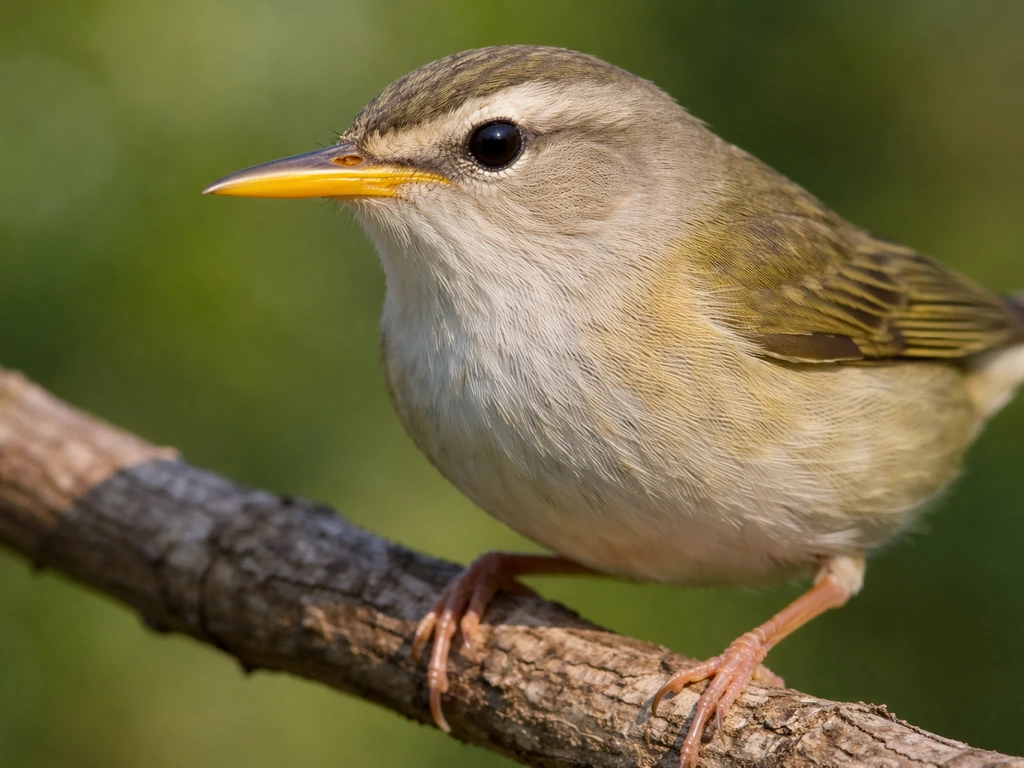
Beyond the overall shape and color, there are a few specific features worth zooming in on, especially if you've got a photo.
- Bill: Long, slender, and pointed. In breeding season (spring and summer) it turns bright yellow. In winter it's darker, often gray-black. That yellow bill on a dark bird is one of the easiest field marks to spot.
- Head: Rounded and fairly small relative to the body. No crest, no bold eye stripe. The iridescent sheen is most visible on the head and throat in good light.
- Legs and feet: Pinkish-red to reddish-brown. Noticeably pale against the dark body when you see the bird walking on the ground, which starlings do a lot.
- Tail: Short and square. When the bird is perched it looks almost stubby. This is one of the clearest ways to separate starlings from longer-tailed blackbirds and grackles.
- Eyes: Dark brown with a pale eye ring in some lighting. Not a dramatic feature, but worth noting if you're very close.
Birds that look like starlings (and how to tell them apart)
Starlings get mixed up with several other dark birds, especially in North America. Here's a quick comparison of the most common lookalikes.
| Bird | Key difference from starling | Quick check |
|---|---|---|
| Common grackle | Much longer tail, larger body, flat head profile | Tail length: grackles have a long keel-shaped tail, starlings have a stubby square one |
| Red-winged blackbird (male) | Red and yellow shoulder patches, longer tail | Look for the shoulder patch; starlings never have it |
| Brown-headed cowbird (male) | Brown head, glossy black body, shorter bill, chunkier | Head color: cowbirds have a distinct brown hood |
| Common myna | Brown body, white wing patches, yellow eye skin | Wing patches and yellow facial skin are unmistakable |
| Brewer's blackbird | Slender build, longer tail, pale yellow eye | Eye color: pale yellow in Brewer's, dark in starlings |
The single fastest check when you think you've spotted a starling: blank" rel="noopener noreferrer">look at the tail (short and square) and the bill (long and pointed). If both match, you're almost certainly looking at a starling. If the tail is long or the bill is thick and seed-cracker shaped, keep looking.
How starlings change with age and season
Juvenile starlings
Young starlings look so different from adults that a lot of people don't realize they're looking at the same bird. Nestling starlings, in particular, are usually more plain and less glossy than adults, so their shape and coloration matter more than shine Young starlings look so different from adults. Juveniles are a fairly uniform mouse-brown or grayish-brown all over, with a pale throat. There's no iridescent gloss, no obvious spotting, just a plain, dusky brown bird with the same stocky shape and pointed bill as the adult. A sleeping bird can look flatter and darker, so the same tail and bill cues may be harder to see what does a sleeping bird look like. As they go through their first molt in late summer and autumn, you'll sometimes see birds in a patchy mix of brown and glossy black, which looks genuinely odd but is completely normal.
Adults through the year
To recap the seasonal cycle clearly: autumn brings fresh plumage with lots of pale spotting and a dark bill. Through winter the spots persist. By late winter and early spring the spots wear off, the bill turns yellow, and the bird looks its glossiest and darkest. Summer birds are at peak iridescence with minimal spotting. If you're trying to match what you saw to a description, the time of year matters a lot.
Where to find them and what they look like in the field
Starlings are highly adaptable and you're as likely to see one in a city park as in a rural field. They spend a huge amount of time walking on the ground, probing for insects and grubs with that long bill, so look for them on lawns, playing fields, roadsides, and farmland. On the ground they have a brisk, purposeful walk rather than a hop, which is one of the behavioral cues that separates them from true thrushes.
In urban and suburban areas, you'll often spot them on rooftops, gutters, and ledges. In late autumn and winter, they gather into massive flocks called murmurations, sometimes involving tens of thousands of birds that move in sweeping, shape-shifting clouds across the sky. Watching the silhouette of one of those murmurations, those pointed triangular wings and compact shapes are obvious even from a distance.
In woodland edges and hedgerows, starlings visit berry-bearing shrubs and can look darker and harder to see in shade, so you'll often hear the chattering, clicking, and whistling calls before you spot them. They're excellent vocal mimics and their calls can sound like almost anything, which is a fun additional ID clue.
How to confirm your ID using photos and field marks
If you managed to take a photo, here's exactly what to zoom in on to confirm you've got a starling.
- Check the tail length first. A short, square tail that looks stubby relative to the body is the fastest confirmation. If the tail is long, it's probably not a starling.
- Look at the bill. It should be long, slender, and pointed. In spring and summer, check whether it's yellow. A thick, seed-cracking bill rules out starlings immediately.
- Look for iridescence on the head, back, and breast. Even in a low-quality photo, the green or purple gloss is usually visible if the light was decent.
- In autumn and winter, check for white spotting on the chest and belly. Dense pale speckles on a dark bird strongly suggest a starling.
- Check the leg color. Pinkish-red legs on a dark bird are a useful supporting detail.
- If the bird looks plain brown with no gloss, consider whether it might be a juvenile starling. The stocky body, short tail, and pointed bill will still be there.
- Compare the overall size to any nearby birds in the photo. A starling should be noticeably smaller than a crow or jackdaw, and roughly similar in size to a blackbird but with a shorter tail and longer bill.
If you're still not sure after checking those features, sites like Cornell Lab's All About Birds or Merlin Bird ID app let you filter by color, size, and location to cross-reference your sighting. Many Merlin Bird ID discussions note that starlings can have a yellow bill during breeding season, which can lead to confusion between starlings and similar birds Merlin Bird ID app. Uploading your photo to a platform like iNaturalist can also get you a quick community confirmation. The key marks to mention or highlight in any photo are the tail shape, bill shape, and any spotting or iridescence you can see. Those three together will almost always settle the question.
FAQ
What does a starling bird look like in bad lighting or at dusk, when the iridescence is hard to see?
In low light, the green and purple sheen may disappear, so rely more on structure than color. Focus on the short, square-tipped tail and the long, slender pointed bill, and look for the chunky “football with wings” silhouette rather than the metallic effect.
How can I tell a starling from a crow or blackbird if the bird looks uniformly black in my photo?
Uniform black color alone is not enough. Compare the tail and bill proportions, starlings have a noticeably short tail and a more pointed, slender bill, while crows and many blackbirds tend to look longer-tailed with heavier bills. If possible, check the wings in flight, starlings often show triangular, pointed wings with a paper-plane feel.
What does a starling look like right after it lands, when the bird might be puffed up or partially tucked?
A perched or puffed bird can look flatter and darker, which can hide spotting and some shine. Use the tail and bill as primary cues, the tail usually still looks short, and the bill usually still looks long and pointed relative to the head. If you only get a blurry side view, wait for a clearer angle because those cues are more reliable than sheen.
Are there any seasonal “false negatives” where a starling does not look speckled even though it is the same bird?
Yes. As breeding season approaches, the pale tips wear away and many spots fade, so a starling in late winter or spring can look far more uniformly glossy than you might expect from winter birds. Check the time of year, then confirm with tail shape and bill shape if spotting is minimal.
Do young starlings look different enough that they could be misidentified as a different bird entirely?
They can, juveniles are often mouse-brown or gray-brown and lack the obvious iridescent gloss and heavy spotting seen in adults. However, they usually keep the same core proportions, stocky body, short square tail, and pointed bill. If those match, it’s more likely a young starling than a random small brown bird.
What should I look for when the starling is standing on the ground or walking, not perched?
Starlings spend a lot of time walking with a brisk, purposeful stride, then probing with the bill for insects and grubs. True thrushes often show more hopping and different body rhythm. If you’re watching behavior, “walking and probing” plus the short square tail and pointed bill is a strong combination.
How do I confirm a starling in a murmurations flock, when individual birds are hard to separate?
Use the group silhouette. Starlings in flight often look like compact, dark “arrowhead” shapes with triangular pointed wings and a short square-tipped tail. Even without seeing individual gloss or spots, the wing and tail geometry tends to stand out from other flocking black birds.
What does a starling look like when it’s molting, and could that be mistaken for a different species?
Molting can create patchy mixes of brown and glossy black, so the bird may look odd or “half-and-half” compared with either fully winter-spotted or fully summer-glossy birds. Confirmation should still come from the consistent structural markers, especially the tail shape and pointed bill.
If I have a photo, what are the top three details to zoom in on to avoid ID mistakes?
Zoom in on (1) the tail outline, short and square-tipped, (2) the bill shape, long and pointed, and (3) any visible texture on the plumage, either pale winter spotting or metallic iridescence. If only one of these is clear, the ID is weaker, so try to capture another angle before deciding.
Could a starling-shaped bird in my area be something else entirely, even if it looks like glossy black?
Yes. The article mentions regional differences and starling family relatives, some can show bold white patches or different head and eye color, which can break the “glossy black” expectation. If your bird has standout contrasting patches or very different proportions, compare local species rather than assuming it must be the European starling.