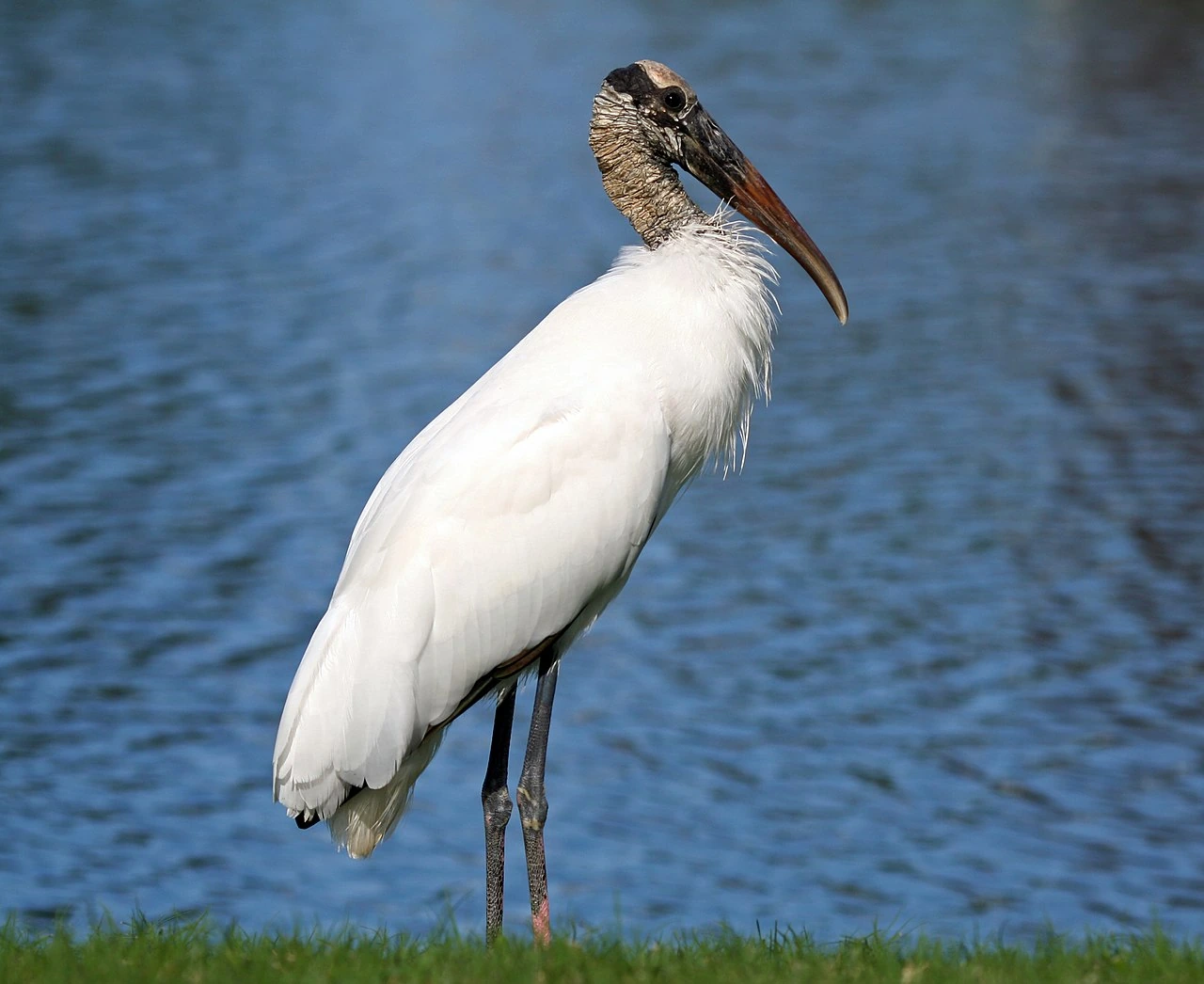
A stork is a tall, heavy-bodied wading bird with long legs, a long thick bill, and a mostly white body with striking black flight feathers. The thing that really sets storks apart at a glance is the combination of a bald, scaly head and neck (dark gray in adults), a football-shaped body, and the habit of soaring with the neck stretched fully forward and legs trailing straight behind. If you spot a large white bird standing over three feet tall in a marsh or gliding overhead with its neck out like a flying cross, you're almost certainly looking at a stork. If you want to compare, this is the kind of look you can expect when asking what a starling bird looks like large white bird standing.
What Does a Stork Bird Look Like? Identification Guide

Marcus Whitley
29 Apr 2026
Quick visual checklist to spot a stork-like bird
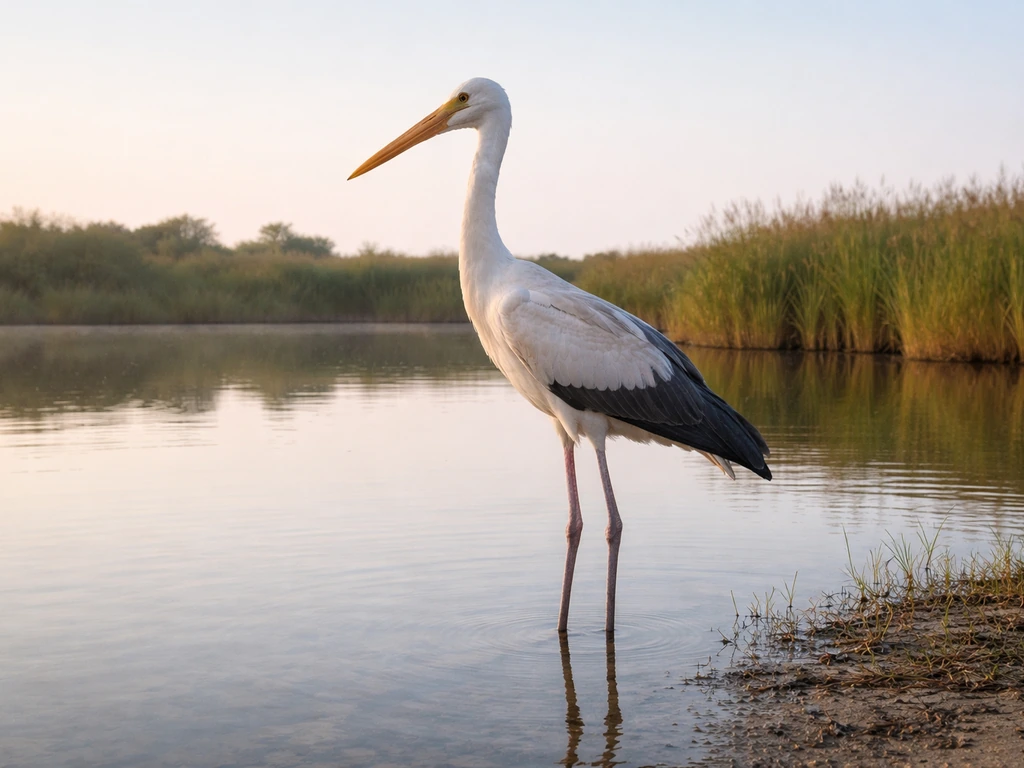
Before diving into the details, here's a fast checklist you can run through in the field. If you want a quick visual comparison, you can also look up what a snipe bird looks like to spot the differences in size, shape, and markings stork-like bird. If most of these match what you're seeing, you're almost certainly looking at a stork or something very close to one.
- Very tall, stands over 3 feet (roughly waist height on an adult person)
- Long, bare legs, often pinkish-gray or red depending on species
- Thick, heavy bill, longer than the head, straight or slightly curved
- Mostly white or boldly patterned body with large black wing areas
- Bald or sparsely feathered head and upper neck (looks scaly or leathery)
- In flight: neck stretched fully forward, legs trailing straight behind
- Soars in wide circles high up, using thermals like a large raptor would
- Often found near wetlands, shallow marshes, flooded fields, or rivers
Key stork traits: size, body shape, bill, and neck
Size alone is your first signal. The Wood Stork, the most commonly seen stork in North America, stands more than 3 feet tall (about 0.9 meters) and has a wingspan that stretches roughly 5 feet (1.5 meters) across. It weighs in at 4 to 6 pounds, which is noticeably heavier and stockier than a Great Blue Heron despite a similar height. That stockiness is key: the body looks almost football-shaped when the bird is perched, sitting compact and round on those long stilt legs.
The bill is one of the most distinctive things about a stork. It's long, thick, and heavy, noticeably chunkier at the base than a heron's more slender dagger bill. On a Wood Stork, the bill is dark, slightly decurved toward the tip, and looks almost out of proportion with the rest of the bird. The Black Stork, found across Europe and Asia, has a long, straight, pointed red bill instead, so the exact shape varies by species, but all storks share that sense of weight and length in the bill.
The neck is long but not elegantly thin like a heron's. When a stork is standing, it holds the neck in a fairly straight, upright posture rather than the kinked S-curve you see on herons and egrets. The head itself is often striking because of how bare it looks: the skin is exposed, dark gray, and has a rough, scaly texture, almost like a vulture's head perched on a white-bodied bird.
Plumage details: color patterns and wing look
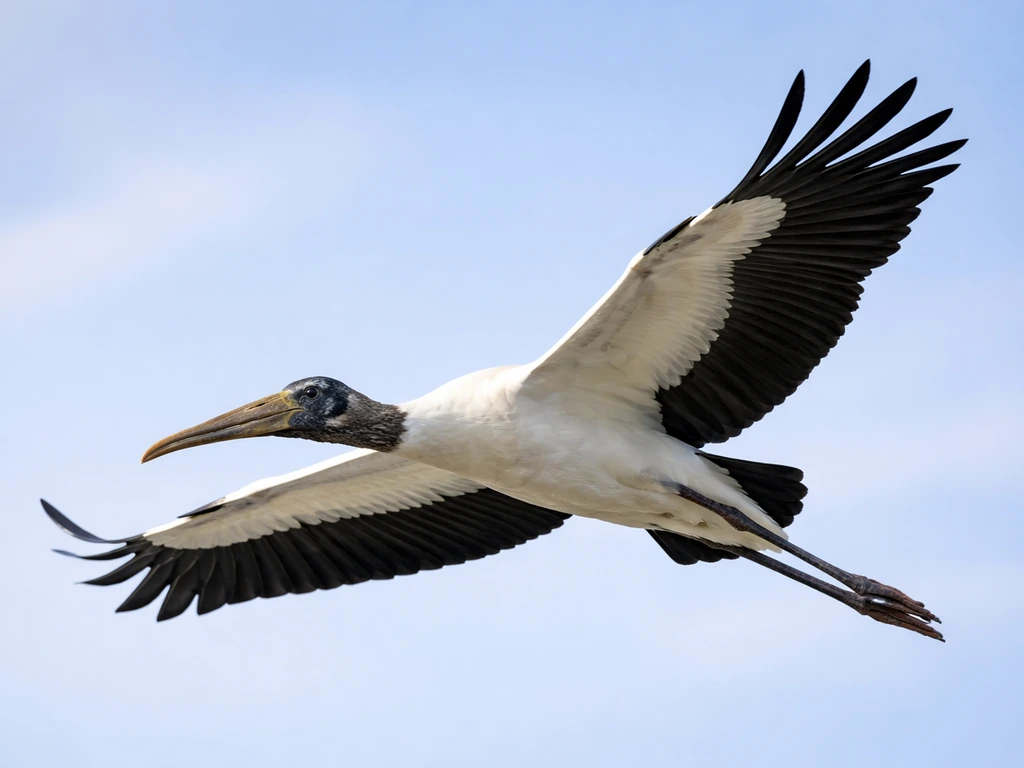
The Wood Stork's body color is mostly white, but don't let that fool you into thinking it looks plain. The contrast is dramatic: bright white body, then bold black flight feathers and a black tail. Wikipedia describes white stork plumage as mainly white, with black flight feathers and black wing-coverts blank" rel="noopener noreferrer">white body, then bold black flight feathers and a black tail. When the wings are folded, you see white with dark edges. When the bird opens up in flight, the underwings show a wide band of black along the trailing edge and wingtips, making the silhouette look almost like a flying panda pattern. That black-and-white contrast is one of the easiest marks to lock onto, even at a distance.
Not all storks are white. The Black Stork is almost entirely glossy black with a white belly, and the Black-necked Stork has a glossy bluish-black head, neck, and secondary flight feathers paired with bright white body patches and vivid red legs. The Painted Stork, found in South and Southeast Asia, adds orange-pink and dark banding across the wings. So while 'large white bird with black wing tips' covers many stork sightings in North America and Europe, keep in mind the stork family is more colorful when you travel further afield.
Juveniles look similar to adults overall, but there are a few differences worth knowing if you're trying to confirm an ID. Nestling birds often look noticeably different from adults, with smaller bodies, fuzzier feathers, and proportions that can be hard to compare at first what a nestling bird looks like. Young Wood Storks have a paler, yellowish bill that darkens to the adult's heavy dark color over time. They also have grayish feathers on the neck that gradually give way to the bare, scaly adult skin as the bird matures. So if you spot a mostly white large bird with a pale bill and some scruffy neck feathers, you're probably looking at a younger bird.
Legs and flight silhouette: the best cues when the bird is moving
Standing or walking, the legs are long and grayish, with the Wood Stork showing orange feet that stand out from the gray leg. The bird wades slowly and deliberately through shallow water, often with a slight forward lean as it hunts by feel. Watch for that heavy-billed, hunched-forward walking posture: it looks purposeful, almost mechanical, compared to the more upright glide of a heron.
Flight is where storks really separate themselves from every similar bird. A stork flies with the neck fully extended forward and the legs trailing straight behind, forming a long, flat cross shape in the air. They also soar beautifully on thermals in wide circles, very much like large raptors, riding the warm air columns high into the sky. This thermal-soaring habit is unusual among wading birds and is a great clue if you're watching a large white bird circling overhead and wondering what it is.
How storks differ from herons, egrets, cranes, and ibises

This is probably the most useful section if you're standing in a marsh trying to figure out what you're looking at. Several large wading birds share the stork's basic silhouette, and getting them sorted out comes down to a few reliable tricks.
Storks vs herons and egrets
The single best trick: watch the neck in flight. In this guide, you can use posture and silhouette to spot a stork-like bird, including when it is perched or in flight watch the neck in flight. Herons and egrets always pull the neck back into a tight S-curve when they fly, making the head look tucked close to the body. Storks fly with the neck stretched fully forward. That one difference is almost foolproof. On the ground, herons tend to look slimmer and more elegant, with a fine, dagger-shaped bill rather than the stork's heavy, blunt one. The stork's bald head is also a quick giveaway since herons and egrets have fully feathered heads, often with crests or plumes.
Storks vs cranes
Cranes are similarly tall and fly with the neck extended, which trips people up. But cranes have fully feathered heads (often with a bright red or colored crown patch), much more slender bills, and a distinctive bustle of drooping tail feathers that sticks out behind when they're standing. Storks have a bare, leathery head and a much heavier bill. In flight, cranes tend to have a slower, more measured wingbeat compared to the stork's powerful, more direct stroke.
Storks vs ibises
Ibises are much smaller and have a completely different bill: long, thin, and sharply curved downward, like a sickle. Some stork species, like the Painted Stork, have a bill tip that curves slightly downward and can look ibis-like, but the body of a stork is far larger and heavier. Ibises also tend to fly in lines or V-formations, flapping in coordinated bursts, while storks soar more freely.
| Feature | Stork | Heron/Egret | Crane | Ibis |
|---|---|---|---|---|
| Neck in flight | Fully extended forward | Pulled back in S-curve | Extended forward | Extended forward |
| Bill shape | Long, thick, heavy | Long, thin, dagger-like | Short, pointed | Long, thin, deeply curved down |
| Head | Bald, scaly, bare skin | Fully feathered, often crested | Fully feathered, often colorful crown | Fully feathered |
| Body build | Heavy, football-shaped | Slim, upright | Tall, slim with bustle tail | Small to medium, compact |
| Soars on thermals? | Yes, frequently | Rarely | Sometimes | No |
| Typical size | Over 3 ft tall, 5 ft wingspan | 2 to 4.5 ft tall | 3 to 5 ft tall | 1.5 to 2.5 ft tall |
How to use photos (and when location and time help) to confirm ID
If you managed to take a photo, start with the silhouette rather than color. Zoom in on the bill shape (thick or thin?), the head (bald or feathered?), and, if the bird is in flight, whether the neck is extended or pulled back. These structural features will narrow things down faster than color alone, especially in poor light.
Location and season genuinely matter here. In the southeastern United States, especially Florida, Georgia, and South Carolina, the Wood Stork is the stork you're most likely to encounter, and sightings peak in summer when the birds concentrate around drying wetlands to feed. In Europe, the White Stork is the classic species, arriving in spring to nest on rooftops and chimney stacks. Britannica also describes the White Stork as about 100 cm tall, white with black flight feathers, with a dark red bill and reddish legs arriving in spring to nest on rooftops and chimney stacks. If you're seeing a large, white, bald-headed wader in a Florida marsh in July, it's almost certainly a Wood Stork and not something exotic.
For a cleaner ID from a photo, try to get shots from multiple angles if you can: one of the bird standing (to show the bill and head), one in flight from below (to show that black-and-white wing pattern), and one from the side while flying (to check neck posture). Even a blurry flight shot showing the neck extended versus tucked is enough to separate a stork from a heron or egret almost every time.
A good habit is to compare your photo against a known reference image of the local species rather than a generic 'stork.' If you're in North America, search specifically for Wood Stork in flight or Wood Stork standing to match your sighting. The black-and-white wing contrast, the bald gray head, and that heavy downturned bill are the three things to match. If all three line up, you've got your bird. And if the bill looks slender and the neck is folded back in your photo, flip back to herons: a bird like the Great Blue Heron or Great Egret is far more common in most regions and is the source of a huge number of stork misidentifications.
FAQ
What does a stork look like when it’s perched, not flying?
Look for the compact, football-shaped body on long stilt legs, plus a bald, scaly head and neck. Also check the bill, it should look heavy and thick compared with the thinner, dagger-like bills of herons and egrets.
If I only see part of the bird (for example, wings overhead), how can I tell it’s a stork?
Focus on the silhouette pattern: storks tend to show strong black-and-white contrast on the underwings and wingtips. If you can catch neck posture too, storks keep the neck extended forward, while herons and egrets pull it back into an S-curve.
Do storks always look mostly white and black?
No, that’s common for some species like the Wood Stork, but other storks are darker. Black Storks are glossy black with a white belly, Black-necked Storks show a dark head and neck with bright red legs, and Painted Storks can have orange-pink and banding on the wings.
Are juvenile storks easy to identify, or do they look different from adults?
Juveniles can be trickier. Young Wood Storks often have a paler, yellowish bill that darkens with age, and the neck may show more grayish, feathered look before the bare, scaly skin becomes clear.
How do I avoid confusing a stork with a crane when they both fly with the neck extended?
Use head and bill traits. Cranes have fully feathered heads with a colored crown patch, and they have a more slender bill. Also watch the tail, cranes often show a drooping tail bustle, while storks tend to look more streamlined with a heavier bill.
Can a stork be mistaken for an ibis?
Yes, but usually in specific situations where the bill tip looks slightly downward. Ibis bills are much more slender and distinctly sickle-shaped, and ibises often fly in lines or V formations with coordinated flapping rather than broad thermal soaring.
What’s the most reliable detail to check if my photo is blurry?
Even if you cannot see feather patterns, you can usually confirm from structure. Zoom in on whether the head looks bare versus feathered, and whether the neck is extended forward (stork) or tucked back into an S-curve (heron/egret).
What posture should I look for while the bird is walking or hunting?
Watch for a deliberate, hunched-forward walk with heavy-billed probing. Storks often lean slightly forward as they hunt by feel in shallow water, while herons typically look more upright and glide more easily through the space.
Do storks soar like raptors, and how is that useful for identification?
Yes. Storks are known for thermal soaring in wide circles, which is unusual for wading birds. If you see a large white wader circling and riding thermals with the neck forward and legs trailing, that behavior supports a stork ID.
What should I do if I’m unsure whether I saw a stork or a heron at a marsh?
Re-check the three quickest identifiers: neck posture in flight (extended forward for storks), head texture (bald, scaly for storks), and bill thickness (storks look heavy and blunt, herons look slender and dagger-like). If possible, compare your photo to a local species like Wood Stork for North America or White Stork for Europe.