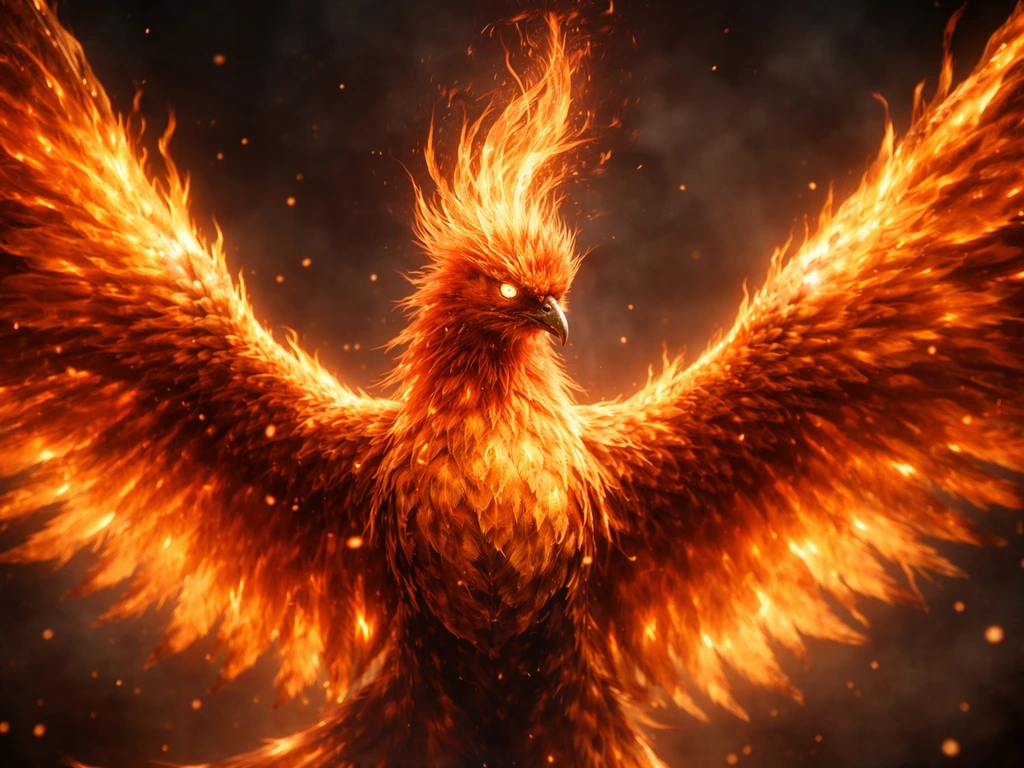
The core myth, as recorded by sources from Pliny to Tacitus and retold ever since, is that the phoenix is an immortal bird said to live for around 500 years before setting itself on fire and rising reborn from the ashes. That death-and-rebirth cycle is inseparable from its look: everything about the traditional phoenix appearance is built around fire, the sun, and radiant color. It's not a subtle bird.
Typical phoenix appearance in stories and art

If you lined up phoenix depictions across two thousand years of art and literature, you'd notice a handful of features that show up again and again. Ancient writers like Pliny described the phoenix as roughly eagle-sized, which gives you a sense of scale: big, commanding, and clearly not a small songbird. The overall impression is of a large, regal bird that looks like it was designed to impress.
In terms of color, the classic description from Pliny-derived sources gives you a very specific palette: a gold or golden neck, a deep purple body, a blue tail with rose-colored feathers woven through it, and a prominent feathered crest on the head. Lactantius, a Roman writer whose poem on the phoenix became one of the most influential visual templates for later artists, added more detail: an extended tail marked with yellow-gold spots and mingled purple blushes, and eyes that he compared to two jacinths (a reddish-orange gemstone) with what he described as a bright flame shining from them. That eye description is the origin of the classic "fiery-eyed" phoenix you see in modern art.
Medieval tradition, drawing on the ancient accounts, often added a halo or sun-disk association, sometimes depicting the phoenix with rays of light emanating from its body. The Rochester Bestiary from around 1230 describes the bird's coloring in terms of "Phoenician purple," linking its appearance directly to royalty and the sun. Tacitus, writing in his Annals, emphasized that the phoenix is distinguished from all other birds specifically by the variegation of its plumage and the distinctiveness of its beak and head, which suggests the ancient world considered the color variety to be its most striking feature.
In summary, the traditional mythological phoenix looks like a large bird, roughly eagle-sized, dressed in a combination of gold, purple, and rose-red with a feathered crest, a long colorful tail, and bright gemstone-like eyes. Modern depictions (think fantasy art, movies, and game design) tend to simplify this to a large bird made of fire and red-orange feathers with a dramatic tail and crest, which is close enough to the ancient description to be recognizable.
How to describe a phoenix visually: a quick reference checklist
If you need a fast visual reference, here are the core features that define a "standard" phoenix appearance across the most widely agreed-upon ancient and artistic traditions:
- Size: roughly eagle-sized, large and commanding in posture
- Body color: deep purple or vivid red, depending on the source and artistic tradition
- Neck/head: gold or golden-yellow coloring around the neck
- Tail: long and extended, with yellow-gold spots, rose-red feathers, and hints of blue or purple in classical descriptions
- Crest: a prominent feathered crest rising from the center of the head (described as "a row of feathers spreading out from the middle of the head" in Pliny's account)
- Eyes: jewel-like, often described as reddish-orange or amber, with a glowing or flaming quality
- Overall impression: radiantly colorful, sun-associated, regal, and unmistakably large
Keep in mind that different sources disagree on some details: some describe the tail as blue with rose feathers, others lean into full red-orange fire imagery. What almost never changes across traditions is the feathered crest, the dramatic tail, the fiery or jewel-like eyes, and the combination of warm gold with deeper purples and reds.
If you meant a real bird: traits that look "phoenix-like"
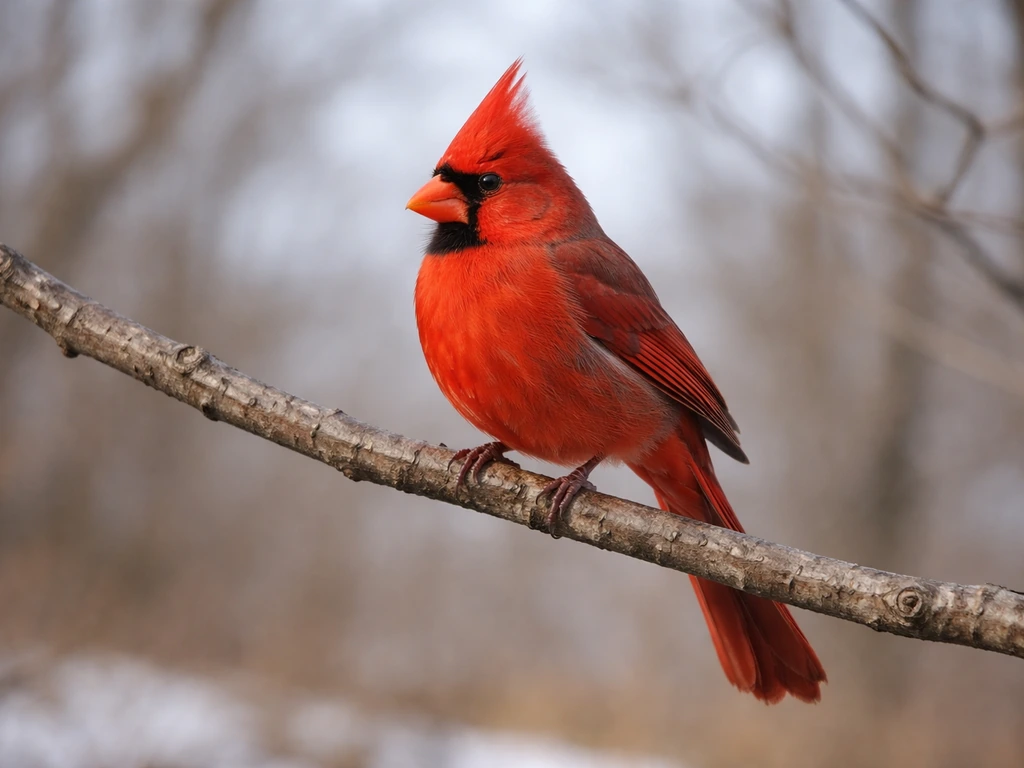
If you're here because you actually spotted a real bird and it reminded you of a phoenix, you're not alone. There are several real species whose fiery coloring, prominent crests, or dramatic tails make people think of the mythological bird. The traits most likely to trigger a "phoenix" association in the wild are: brilliant red or orange-red plumage, a noticeable crest on the head, a long or showy tail, and a bold upright posture.
The Northern Cardinal is probably the most common culprit in North America. The adult male is brilliant red all over with a prominent crest and a short, thick orange-red bill, plus a black mask around the face. In certain lighting, especially at dawn or dusk, a cardinal perched upright with its crest raised can look almost impossibly vivid and fire-like. If you're trying to understand what a small crested bird looks like and compare it to what you saw, that visual context can help you work out whether you're dealing with a cardinal or something else.
The Scarlet Tanager is another strong candidate for North American observers. Breeding males are a brilliant red all over with jet-black wings and tail, making them one of the most striking birds on the continent. The contrast between that intense red body and the black wings is very dramatic, and people sometimes describe them as looking almost unreal or otherworldly when they catch them in good light.
For anyone outside North America, or for people who saw something larger and more exotic-looking, the Golden Pheasant is a standout. Males have a golden crest and rump, a bright red body, and a very long barred tail with black spots on cinnamon. The combination of gold, red, and that dramatic tail makes them look genuinely phoenix-like. If you find yourself comparing dramatic long-tailed birds and wondering about what a pheasant looks like, the golden pheasant's color blocking in particular will make the mythological connection obvious.
The Eurasian Hoopoe is worth mentioning too, especially for observers in Europe, Africa, or Asia. It has a warm cinnamon body, a tall, dramatic erectile crest that fans open like a crown, and bold black-and-white wing patterns. The crest in particular looks almost crown-like, which maps very closely to some phoenix artwork. It's not red, but the overall visual impact of a hoopoe with its crest raised is genuinely arresting.
Possible lookalikes: how to narrow candidates by color, markings, and posture
Narrowing down a "phoenix-like" bird sighting is mostly about breaking the image into its component parts rather than trying to match the whole thing at once. Start with the three most useful anchors: overall color, crest or head shape, and tail length/pattern.
| Bird | Body Color | Crest? | Tail | Key Distinction |
|---|
| Northern Cardinal (male) | Brilliant all-red | Yes, prominent | Medium, red | Black face mask; thick orange-red bill; common backyard bird in eastern North America |
| Scarlet Tanager (breeding male) | Brilliant red | No | Short, black | Black wings and tail contrast sharply with red body; no crest |
| Golden Pheasant (male) | Red body, gold crest and rump | Yes, golden | Very long, barred/spotted | Largest and most dramatic; tail is a standout feature; often in parks or aviaries |
| Eurasian Hoopoe | Cinnamon/warm orange | Yes, tall erectile crest | Short, black with white band | Distinctive long curved bill; not red but crest is very phoenix-like |
| Peacock (displaying) | Blue-green body | Yes, feathered crown | Extremely long, eye-spotted | Not red, but the dramatic tail display is the closest real bird analogy to phoenix tail art |
If the bird you saw had a crest but wasn't red, the hoopoe or a crested species like a partridge-type bird might be worth investigating. If it was small and brownish with a subtle crest and upright posture, you might actually be looking at something like a pee wee or flycatcher-type bird rather than anything in the "fiery" category.
Posture can throw you off more than you'd expect. A bird that looks large and regal while sitting upright on a perch can seem almost half that size when it crouches or fluffs up. Audubon's identification guidance specifically flags this: posture changes like stretching or compact roosting can dramatically alter how a bird looks at a glance. So if your "phoenix" looked enormous on a branch, don't assume it was a large bird until you have another size reference in the frame.
How to avoid common mix-ups and confirm with photo and field marks
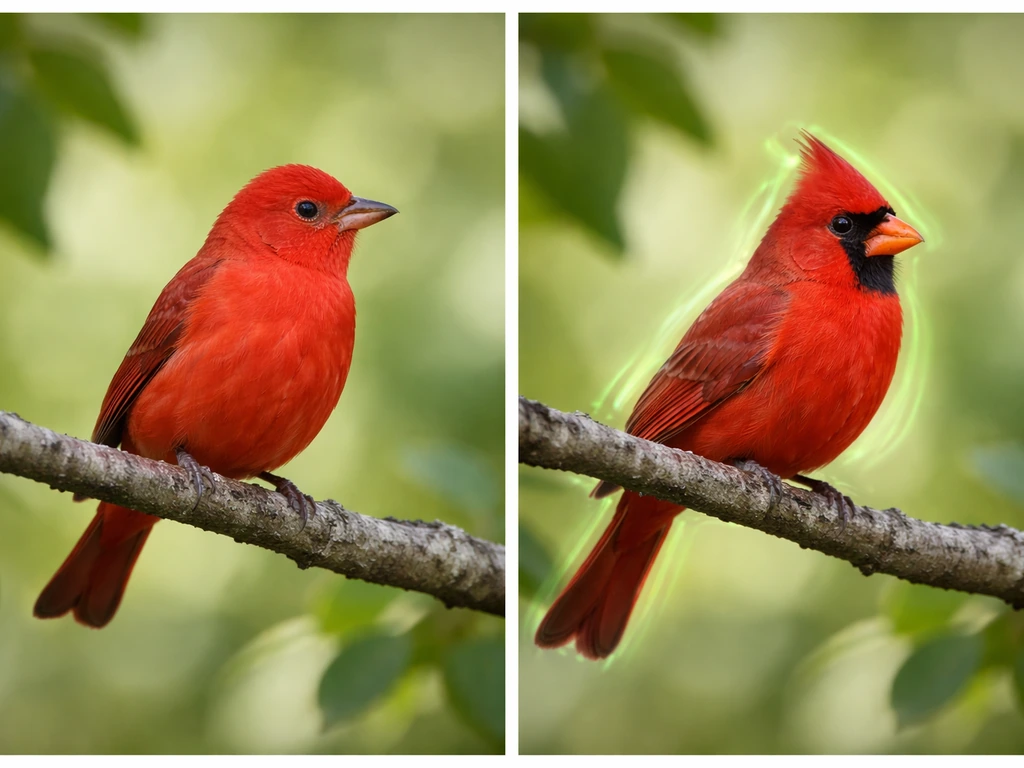
The most common mix-ups happen when people key in on one feature (usually color) and miss the others. A red bird is not automatically cardinal-like if it has no crest. A crested bird is not automatically hoopoe-like if it's tiny. And molt can genuinely change how a bird's color reads in photos: a male Scarlet Tanager in late summer is actively molting out of its breeding red and can look patchy orange or greenish-yellow, which confuses a lot of people.
To confirm what you're looking at, work through these field marks in order: overall size compared to something you know ("smaller than a pigeon, bigger than a sparrow" is a useful mental scale), then head and bill shape, then body color in good light, then tail length and any obvious patterns. If you have a photo, check the bill carefully: a thick conical bill points toward finch or cardinal family, a long curved bill toward hoopoe, and a shorter thinner bill toward tanager or similar songbird.
If you're comparing crested birds and feeling uncertain, it helps to look at related species in the same size range. For instance, comparing a quail's distinctive head plume to the tall erectile crest of a hoopoe makes it obvious they're very different structures, even if both qualify as "crested" in casual description.
Tools like Merlin Photo ID (from Cornell Lab) are genuinely useful here. You upload your photo, add the location and date, and the app suggests species matches. It uses both image recognition and your location's range data, so it's more reliable than a pure visual match. That said, treat any app suggestion as a starting point, not a final answer. Use the suggested species' field marks to go back and check your photo or memory against what the real bird actually looks like.
Next steps: what to compare online and what details to note
If you're picturing the mythological phoenix and want to get a clearer mental image, searching for "phoenix mythology illustration" or "phoenix ancient art" will pull up everything from medieval manuscript illustrations to modern fantasy artwork. Pay attention to which depictions match the classical description (crest, gold neck, purple body, long tail) versus the more modern simplified version (all-over fire and orange-red feathers). Both are valid but come from different traditions.
If you're trying to identify a real bird you saw, here are the details worth writing down right now while they're fresh:
- Where you were (country, region, habitat type: backyard, forest, park, wetland)
- Approximate size compared to a bird you know (sparrow, robin, pigeon, crow)
- Primary body color and any secondary colors you noticed (wings, tail, chest, head)
- Whether it had a visible crest or unusual head shape
- Tail length: short and square, medium, or long and dramatic
- Bill shape: thick and cone-like, long and thin, curved, or short and stubby
- Any behaviors you noticed: was it on the ground, in a bush, calling loudly, displaying its tail?
With those notes in hand, run a search on All About Birds (allaboutbirds.org) or eBird and filter by your location. You can also upload any photo to Merlin and let the location-aware photo ID tool do the initial sorting for you. Merlin Photo ID uses photo identification models that run on mobile devices, built from image resources in the Macaulay Library Merlin and let the location-aware photo ID tool do the initial sorting for you.. Remember that even a blurry or partially obscured photo can be useful for confirming identification, especially when combined with your written notes about location and behavior.
And if the bird you spotted turns out to be something more modest than a mythological fire creature, don't be disappointed. Some real birds are just as visually striking in person. You might find yourself going down an enjoyable rabbit hole comparing similarly dramatic species, like checking out what a phoebe looks like and realizing that smaller, subtler birds have their own brand of visual drama once you start paying attention to the details.