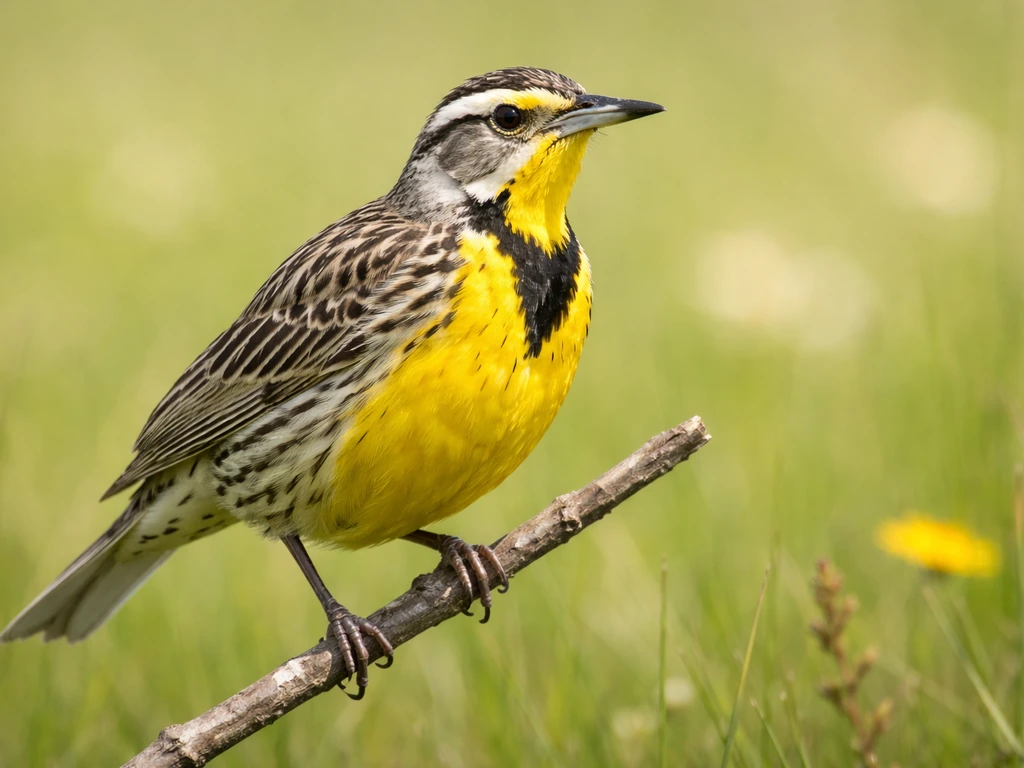
A meadowlark is a chunky, robin-sized grassland bird that you'll immediately notice for its brilliant yellow chest crossed by a bold black "V" shape, a streaked brown back, and white outer tail feathers that flash when it flies. It sits upright on fence posts and tall grass stems, which makes spotting those colors easy even from a distance. There are two species you're likely to encounter in North America, the Eastern Meadowlark and the Western Meadowlark, and while they look nearly identical at a glance, a handful of subtle face and back details will tell them apart once you know what to check.
What Does a Meadowlark Bird Look Like? Eastern vs Western IDs

Marcus Whitley
17 May 2026
Quick ID summary: meadowlark shape and colors
Meadowlarks measure roughly 9 to 11 inches (23 to 28 cm) long, which puts them in the same ballpark as a robin but with a stockier, more compact body. Think short tail, relatively large head, and a long, pointed bill. They're not slim birds. When you see one perched, it looks almost barrel-chested because of that bright yellow front, and the posture is upright and alert rather than hunched.
- Overall size: stocky songbird, about 9 to 11 inches long
- Top side: streaked medium to warm brown with pale feather edges, creating a scaled or mottled look
- Underside: vivid yellow on the chest and belly, interrupted by a bold black "V" or chest band
- Tail: short, with white outer feathers that flash conspicuously on takeoff
- Bill: long, pointed, and slightly downcurved, pale or pinkish in tone
- Posture: upright when perched, often on an exposed perch like a fence post or wire
The combination of yellow breast plus black "V" plus streaked brown back is the definitive meadowlark look. If you see all three of those at once, you almost certainly have a meadowlark. The challenge is telling Eastern from Western, and that's where the face becomes important.
Eastern vs Western meadowlark appearance: what to look for
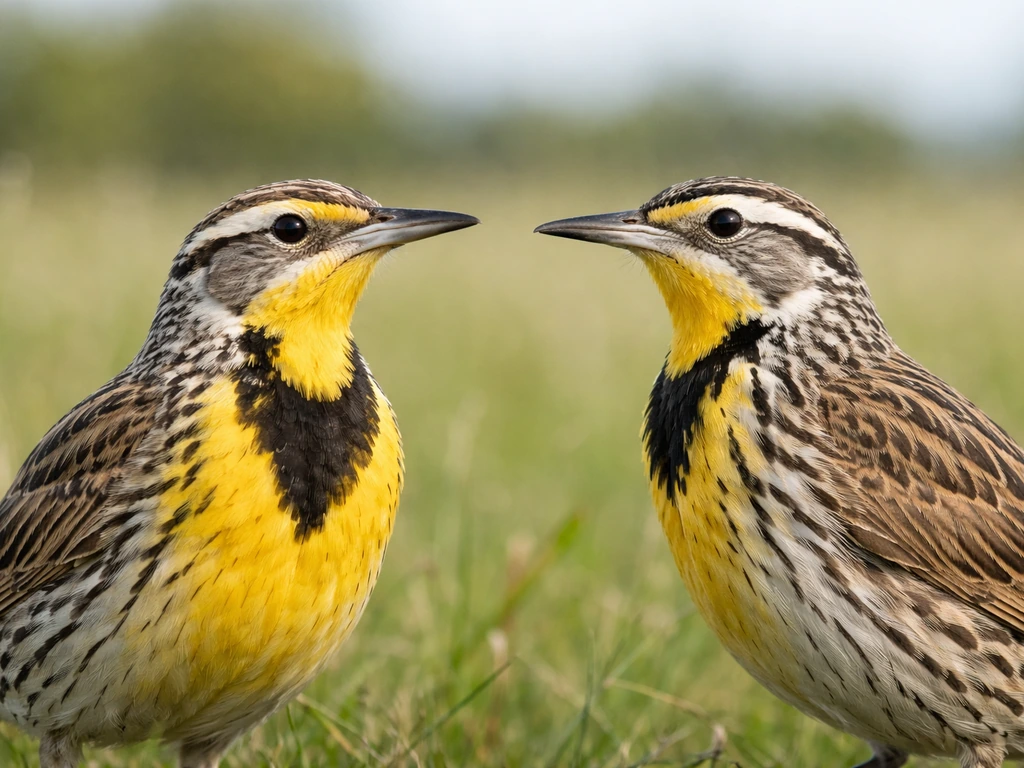
Both species share the same core look so well that even experienced birders sometimes struggle in overlap zones. The best field approach is to look at the face first (specifically, how far the yellow extends toward the cheek), then check the overall tone of the back, and finally note your location and habitat. Song is also a reliable separator, but that's outside the scope of visual ID.
| Feature | Eastern Meadowlark | Western Meadowlark |
|---|---|---|
| Yellow on face/malar | Yellow does NOT extend into the mustache/malar stripe; white malar stripe borders the yellow throat | Yellow DOES extend into the malar (mustache) area, so more yellow on the face overall |
| Back/upperpart contrast | Darker, with stronger contrast and more distinct dark feather centers | Paler overall, with lighter feather edges and less prominent dark centers |
| Black chest "V" | Bold, solid black "V" in breeding adults | Bold, solid black "V" in breeding adults (same basic mark) |
| Tail | White outer tail feathers, flash on flush | White outer tail feathers (more white in tail); inner tail feathers brown with narrow bars, no dark center |
| Typical range | Eastern half of North America, grasslands, hayfields, moist meadows | Central and western North America, drier open grasslands, roadsides, croplands |
| Habitat preference where ranges overlap | Tends toward moister, denser grassland microhabitats | Tends toward drier, shorter, more open vegetation |
If you're standing in the central United States where both species occur, habitat is genuinely useful. A damp, dense hayfield leans Eastern. A dry, short-grass roadside leans Western. That's not a guarantee, but it narrows things fast before you even lift your binoculars.
Key field marks: head, bill, eye line, and face pattern
The meadowlark head has a lot going on, and each element is worth learning separately. Start at the crown. You'll see a dark brown cap split right down the middle by a pale whitish stripe running from the bill back over the head, called the median crown stripe. That stripe is one of the first things that jumps out when the bird is facing you.
Running behind each eye is a dark postocular stripe, basically a dark line that extends from behind the eye back toward the nape. Below that, the area between the eye and the bill (called the supralores) is yellowish, giving the face a warm, open look. The cheek area is pale, almost whitish, which creates contrast against both the dark postocular stripe above and the throat below.
Here's the critical check: look at the mustache stripe, the line running along the side of the throat where the cheek meets the throat. On an Eastern Meadowlark, that line is white. The yellow of the throat stops right there, and a white stripe separates cheek from the bright yellow below. On a Western Meadowlark, that mustache area picks up yellow, so the yellow looks like it bleeds a bit higher onto the face. It's subtle but real, and in good light it's one of the most reliable visual separators between the two species.
The bill itself is long, pointed, and slightly downcurved at the tip, designed for probing into the ground and vegetation. It's typically pale gray or pinkish in adults. On juveniles, the bill tends to look pinker and softer.
Body pattern details: chest, belly, streaking, and that black V
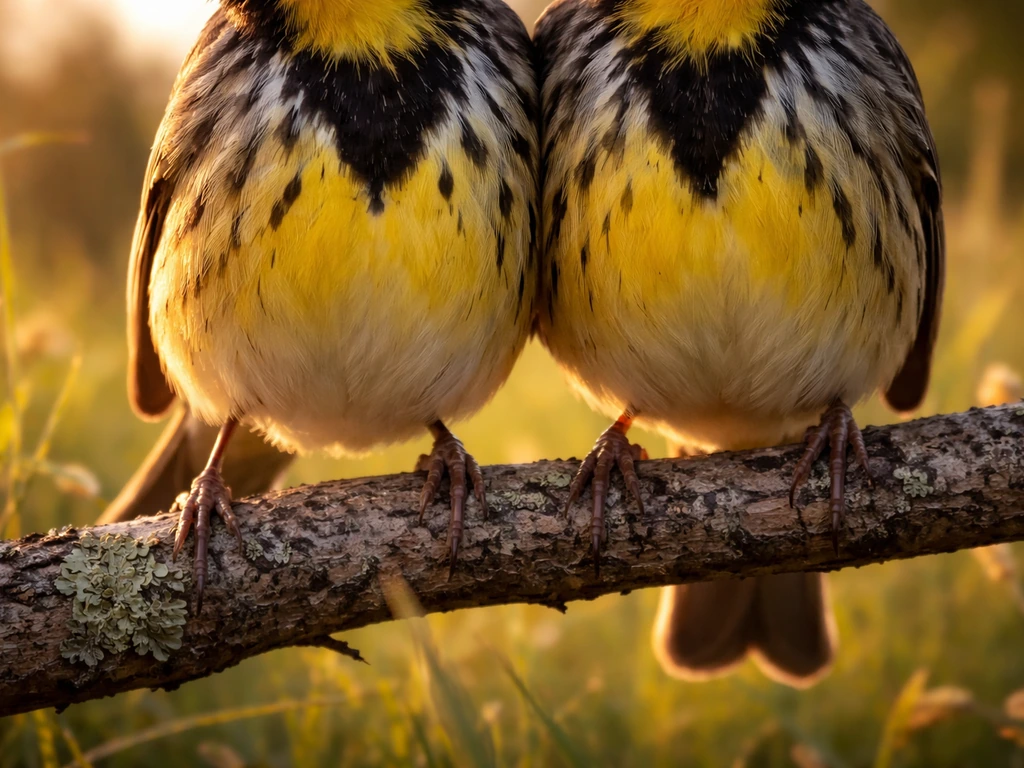
The yellow underside is the meadowlark's signature. In breeding adults of both species, the yellow is vivid and clean, stretching from the throat all the way down the belly. Cutting straight across the upper chest is the famous black "V," sometimes called the breast band or necklace. It's not a subtle mark. On a perched adult in good light, it jumps out like a graphic design element, a sharp, solid black shape against the yellow.
The flanks (the sides of the belly) shift to a buffy or pale tone with dark streaking, which transitions naturally into the streaked brown back. The streaking on the flanks is generally sparse compared to the heavy streaking on the back and wings, so the overall impression of the underside is mostly clean yellow with the bold V and modest flank streaking.
In winter, both species look duller. The yellow becomes a bit washed out, the black V can appear less crisp because pale feather tips partially obscure it, and the overall bird looks buffier and more heavily streaked. Juveniles are paler still, with a V that is streaked rather than solid black, so it looks more like a series of streaks than a clean band. If you're looking at a bird in late summer or fall and the V doesn't quite look right, that's probably why.
Wings and tail cues that confirm meadowlark
The tail is one of your best quick-confirmation tools, especially when the bird flushes and flies away from you. The umbrella bird is famous for its dramatic, wide, fan-like display that changes how it looks at different angles white outer tail feathers. Both Eastern and Western meadowlarks show bright white outer tail feathers that flash visibly in flight. It's a distinctive, almost startling flash of white on a bird that otherwise looks mostly brown from behind. If a grassland bird flushes from a fence post and you see that white tail flash, meadowlark should jump right to the top of your list.
Looking more closely at the tail structure, the Western Meadowlark has more white in its outer tail feathers and its inner tail feathers are brown with narrow bars but no dark center. Western Meadowlark upperparts are typically medium to light brown with pale feather edges, and they lack the dark centers seen on Eastern Meadowlark upperparts. Eastern Meadowlark has similar white outer feathers, though slightly less extensive. In practice, this tail difference is easier to appreciate from a side view or from photos than from a quick field glimpse, so treat the white flash as a confirmation flag and then look at the face if you want to go species-specific.
When a meadowlark flies, the wingbeat pattern is distinctive too. The flight is low and direct, with bursts of stiff, rapid wingbeats followed by short glides. Some people describe it as similar to a quail's flight style. It's not the smooth, effortless glide of a larger bird. It's purposeful and a bit mechanical, which helps rule out look-alikes that fly differently.
How to tell meadowlarks from similar birds
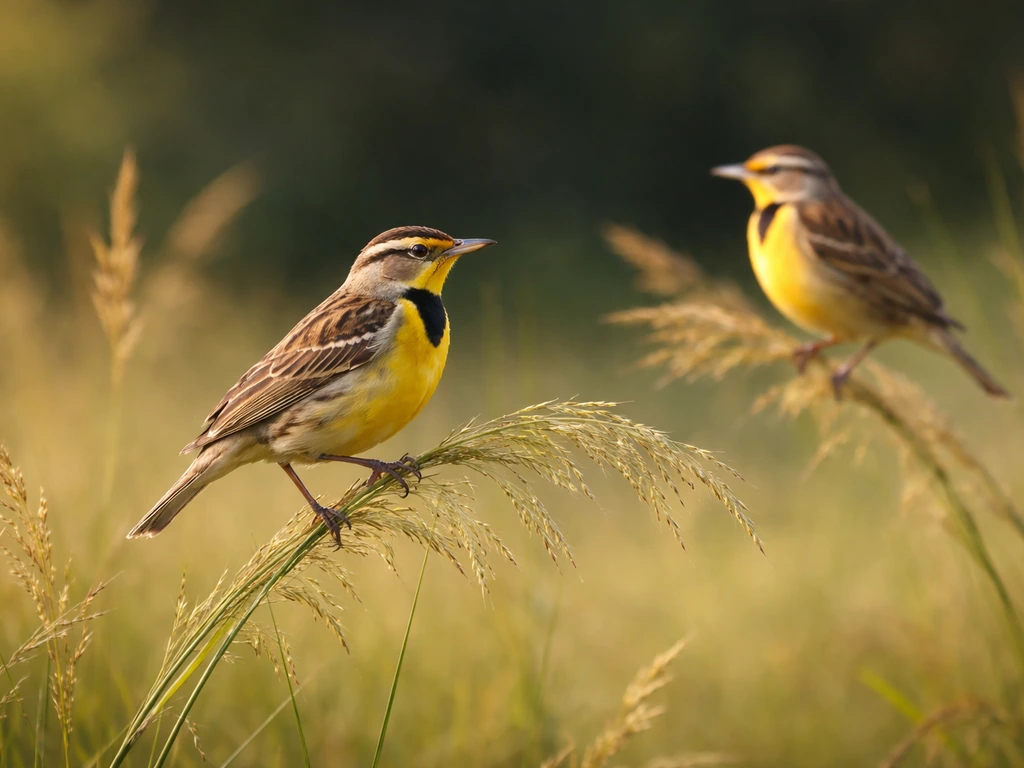
The yellow-and-brown combination can cause confusion with a few other birds, especially in brief or poor-light views. Fieldfare birds are a different species, but you can still use similar visual cues like overall size, body shape, and plumage pattern when comparing look-alikes fieldfare bird appearance. Here are the most common mix-ups and how to sort them out.
| Similar Bird | How It Looks Like a Meadowlark | How to Tell Them Apart |
|---|---|---|
| Dickcissel | Yellow breast, streaked brown back, somewhat similar size | Dickcissel is smaller and slimmer, has a chestnut wing patch, and a much less bold or absent chest band (not a clean V shape) |
| Horned Lark | Streaked brown back, pale underparts with some yellow or buff tones, grassland habitat | Horned Lark is smaller, has black face mask markings instead of a yellow face, and no bold yellow breast or black V |
| American Kestrel (female) | Rufous-brown and perches on wires/posts in open country | Kestrel is a falcon with a hooked bill, completely different face pattern with two mustache stripes, and no yellow underside |
| Yellow-headed Blackbird | Bright yellow on a dark bird, grassland bird, similar size range | Yellow is only on the head and upper chest, not on the belly; body is black, not streaked brown; completely different silhouette |
| Bobolink (female/non-breeding) | Streaked brown overall, grassland bird, similar habitat | Bobolink lacks yellow entirely, has a buffy crown stripe but no yellow underside, and a different bill shape |
The honest truth is that no other common North American grassland bird combines yellow underparts, a solid black chest V, streaked brown upperparts, AND white outer tail feathers. If you are also curious about an Australian storm bird, the best approach is to compare its overall shape and plumage pattern against photos and field marks for that species AND white outer tail feathers. If all four of those are present, you have a meadowlark. The challenge is usually confirming all four features when the bird is moving or partially obscured. That's where the next steps come in.
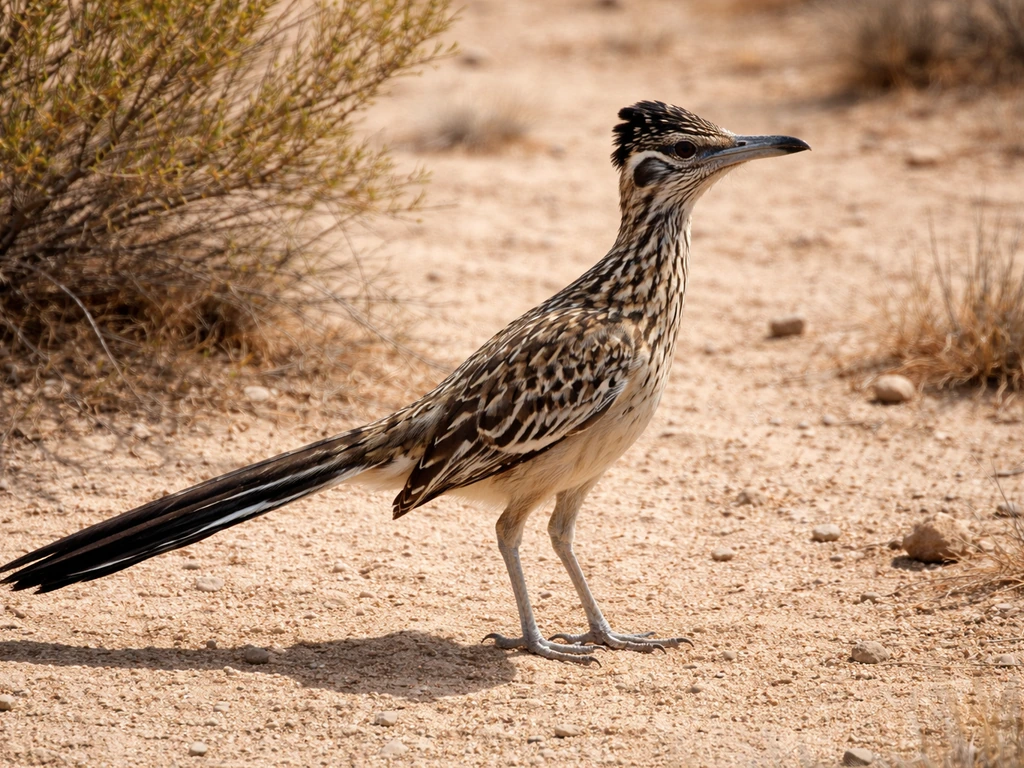
It's worth noting that other bird families can require the same kind of systematic field-mark checking. If you've spent time looking at grassland or open-country birds like the roadrunner, you'll already know the habit of going through each feature methodically rather than relying on a single color impression. If you are trying to tell a roadrunner apart from similar grassland birds, the easiest starting point is the overall shape and look.
Practical next steps: what to check in the field and when to verify
When you spot a potential meadowlark, run through this quick mental checklist in roughly this order, because some features are easier to spot than others depending on the bird's position and behavior. All About Birds also recommends using a “four keys” approach, focusing on Size & Shape, Color Pattern, Behavior, and Habitat to guide which field marks to look for.
- Check the breast first. If you see a yellow chest with a bold black V, you're almost certainly looking at a meadowlark. This is your anchor mark.
- Look at the face while the bird is perched. Is the mustache stripe white (Eastern) or does the yellow extend into it (Western)? Get a clear side or front view if possible.
- Note the back. Does it look darker and more contrasting (Eastern) or paler and more washed-out brown (Western)?
- Wait for the bird to flush or fly. Watch for the white outer tail feathers. That white flash in flight is a great confirmation.
- Use your location. If you're east of the Mississippi, Eastern is overwhelmingly more likely. If you're in the Great Plains or West, check for Western. In overlap zones, use habitat: wetter and denser leans Eastern, drier and shorter leans Western.
- Check the season. In breeding season (spring and summer), adults will be at their most vivid and the V will be sharpest. In fall and winter, or if you're looking at a juvenile, colors will be duller and the V may look streaky rather than solid.
- If the bird doesn't match cleanly, take a photo if you can. Even a phone photo can capture enough detail for later verification using a regional field guide or a photo-ID resource.
The malar stripe check (white vs yellow) is the single most useful face detail for separating the two species, but it requires a reasonably clear, close look at the side of the throat. If the bird is far away or backlit, don't stress trying to force that call. Instead, lean on your location and the overall back tone to make a best-guess, and note it as probable Eastern or probable Western rather than a certain ID.
If you want to go further, comparing your observation to photos taken in similar light and season is the most reliable verification step. The way the black V looks in flat midday light versus warm morning light can make the same bird look quite different. Overcast light is actually ideal for checking colors because it eliminates harsh shadows on the streaked back and lets you see the true tone of the malar area. If you find bird ID rewarding, meadowlarks are a great species to practice systematic field-mark checking, and the skills you build here transfer directly to identifying other open-country birds with similar patterned plumage.
FAQ
What does a meadowlark bird look like in winter versus summer?
Yes, but the look is often less “graphic” than in summer. In late fall and winter, the yellow on the chest can look washed out, the black V may appear softer at the edges (pale tips blur the shape), and the whole bird can look more buffy with heavier streaking. This is why a doubtful “V” in off-season is often normal, not evidence you saw a different species.
How can I tell what I’m seeing is a juvenile meadowlark and not an adult?
Juveniles usually look paler overall, and the black V is often streaked or broken rather than a clean, solid band. The bill can look pinker, and the yellow tone may be duller or more grayish. If you are expecting a crisp, solid V, recheck age, because juvenile plumage is the most common reason people think they are seeing the “wrong” meadowlark.
What should I do if I can’t see the mustache stripe clearly?
If the mustache stripe (the line where cheek meets the throat) is not visible, you generally cannot confidently separate Eastern from Western. In that case, rely on a combination of cues the article describes, especially habitat at your location (wet dense hayfield tends Eastern, dry short-grass roadside tends Western) and the overall back tone. Then mark it as probable, not certain, until you get a clearer face angle.
Can poor light or the wrong viewing angle make Eastern and Western meadowlarks hard to tell apart?
Yes, backlighting and strong contrast can fool the malar and mustache area because the pale cheek and yellow throat blend differently. If the bird is facing away or the throat side is shadowed, stop trying to force the face check and shift to easier field marks, like the white outer tail flash when it flushes, then your best guess based on back tone and location.
How reliable is the white tail flash, and can it replace the face check?
The white outer tail feathers are the fast confirmation feature when the bird takes off, because you can see a bright flash even if the body is briefly obscured. However, the article notes that judging how much white is on the outer and inner tail is easier from a side view or a photo. So treat the tail flash as “meadowlark likely,” then confirm with face details if you need Eastern versus Western.
What are the most common mistakes people make when trying to identify a meadowlark?
Don’t assume a “black V” means meadowlark if it is partially obscured. In poor angles, the V can look broken by feather overlap or by the bird’s posture, especially in juveniles or in winter. Use the full combination: yellow underside, black V or V-like marking, streaked brown upperparts, and the white outer tail feathers in flight.
What’s the best step-by-step approach when you only get a quick glimpse?
Take the check in the order that fits what you can actually see. If the bird is distant, start with the easiest confirmation marks (yellow-and-brown overall pattern plus tail flash if possible), then use habitat and location for species-level odds. Save the mustache (malar stripe check) for when you get a closer, side-on view, because it is the single most useful face detail for the split.
If I’m in the overlap zone, how should I decide when habitat is conflicting?
Yes. In the overlap region, habitat can meaningfully narrow the odds, but it is not a guarantee. If you are unsure, call it “probable” and document the cues you actually observed (face stripe visibility, back tone, and habitat conditions). Later verification with photos taken in similar light and season is more reliable than changing your ID based on one ambiguous detail.
Next Article
What Does a Roadrunner Bird Look Like? Key ID Cues
See what a roadrunner looks like and how to spot it fast versus similar birds using clear field marks.