A cardinal is absolutely a bird, and if you're in North America, the one you're thinking of is almost certainly the Northern Cardinal: a robin-sized songbird with a tall pointed crest on its head, a thick cone-shaped orange-red bill, and (in the male) unmistakably brilliant all-red plumage with a black mask around the face. Females are a warm grayish-tan with flushes of red on the wings, tail, and crest. That crest is the single most useful thing to look for, since no other common red bird in North America has one.
What Does a Cardinal Bird Look Like? Key Features Guide

Marcus Whitley
24 Apr 2026
What a cardinal actually is (yes, it's a bird)
Cardinals belong to the family Cardinalidae, a group of New World birds that includes cardinals, grosbeaks, and buntings found across North and South America. When most people in the U.S. or Canada say "cardinal," they mean the Northern Cardinal (Cardinalis cardinalis), which is the species covered here. But the broader Cardinalidae family is actually quite large, and some striking birds like the Painted Bunting technically belong to it too, even though they look nothing like the classic red cardinal most people picture.
Which cardinal are you actually looking at?
If you're in the eastern U. S. , the Midwest, the Southeast, or anywhere up into southern Canada, you're looking at a Northern Cardinal. Its range also extends south through Mexico and into Central America as far as Guatemala and Belize.
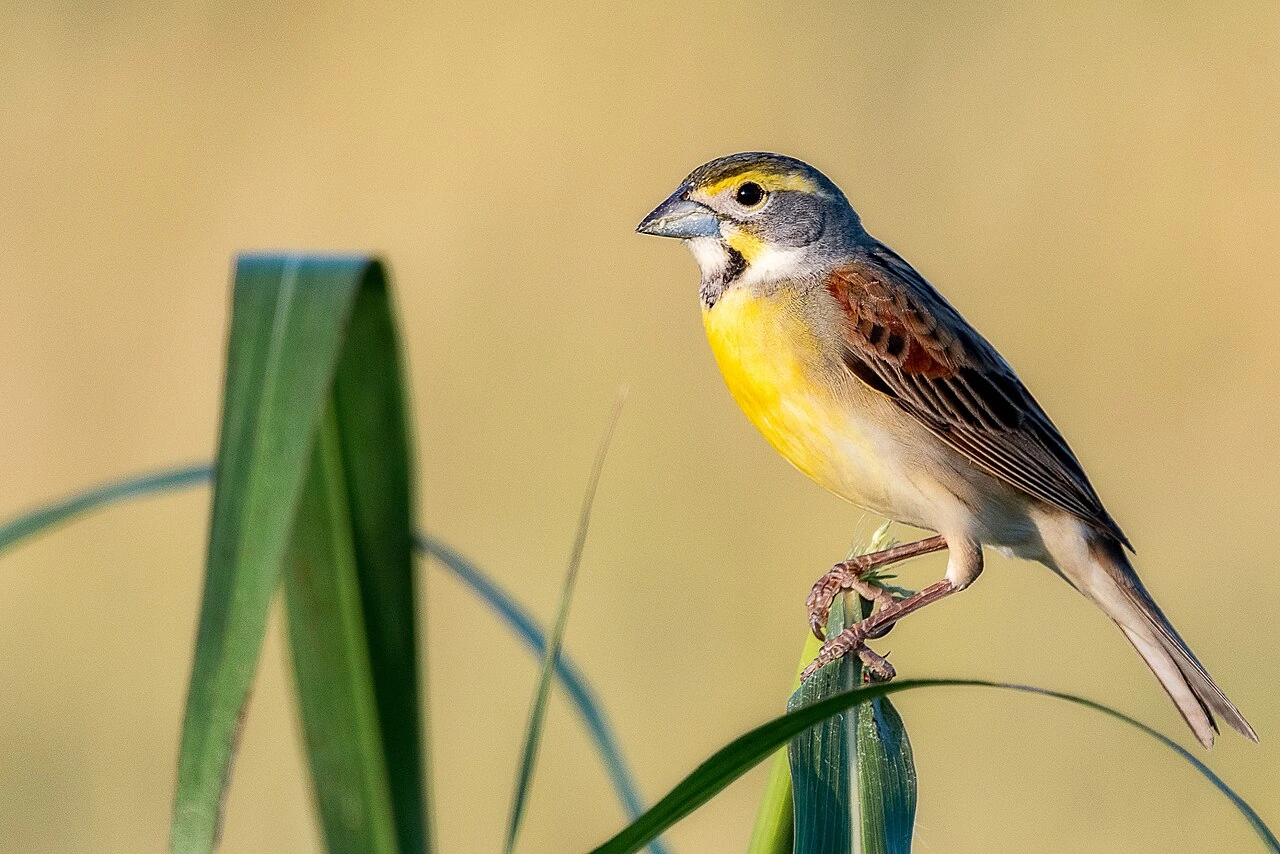
If you're in the desert Southwest, particularly Texas, Arizona, or New Mexico, you might also encounter the Pyrrhuloxia, which is essentially a "desert cardinal" in the same genus. In Hawaii or parts of South America, you could run into the Red-crested Cardinal or Yellow-billed Cardinal, which look similar in shape but have noticeably different color patterns.
If you are specifically wondering what bird looks like a yellow cardinal, the Yellow-billed Cardinal is one of the best matches to consider. Knowing your rough location narrows things down fast.
Male, female, and juvenile: what each one looks like
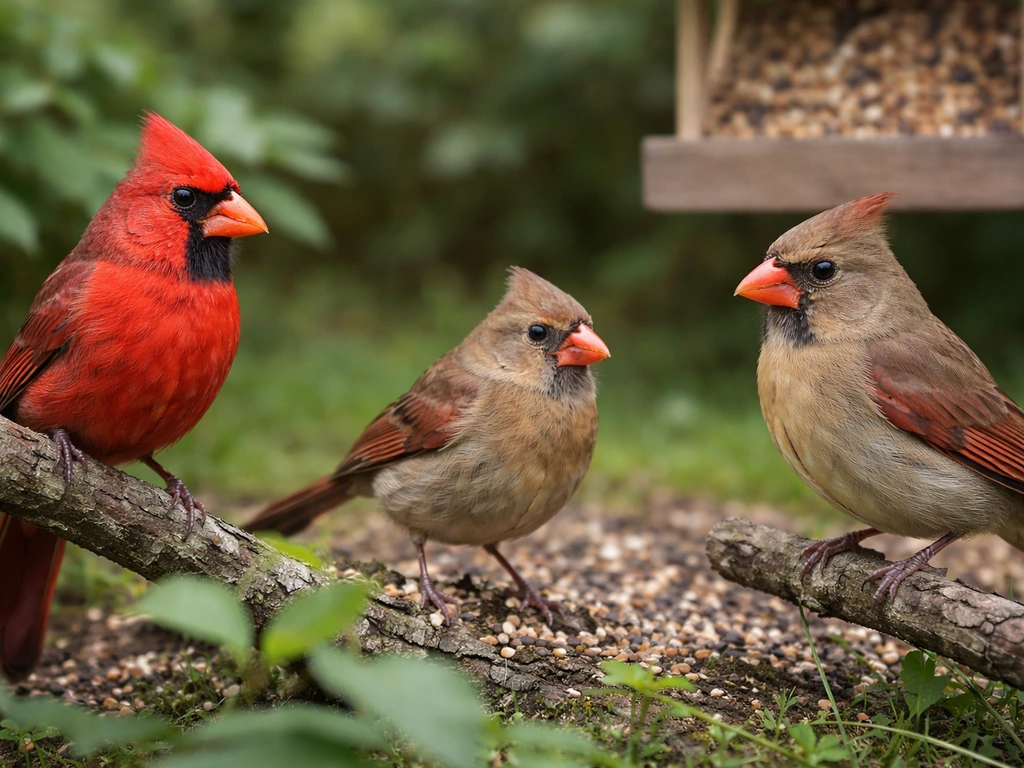
The male Northern Cardinal is one of the most visually striking birds at any feeder. He's entirely red, from his beak to his tail tip, with a jet-black mask that wraps around his face and throat and frames that thick orange-red bill. There's no streaking, no spots, just clean, saturated red. You'd think it's hard to miss, but in low light or dense brush, red can look much darker, almost brown, so always check for the crest and mask.
The female is a very different look, and beginners sometimes don't realize she's the same species. She's mostly grayish-tan or warm buff all over, but look closely and you'll see real flashes of red on her crest, the edges of her wings, her tail, and sometimes a blush on her breast. She also has a pale grayish mask around the face, not as bold as the male's black mask but definitely there. Her bill is the same massive pink-orange cone as the male's, which is the fastest way to confirm it's a female cardinal and not some other brown bird.
Juveniles look a lot like females, but with one key difference: their bill starts out gray to dark gray rather than orange-pink. As they mature, the bill brightens. Young males will start showing patches of red against a mottled brownish base, which can look a little blotchy and patchy before they come into full adult plumage. If you see a crest and a dark bill on an otherwise female-patterned bird, you're almost certainly looking at a juvenile.
The field marks that actually matter
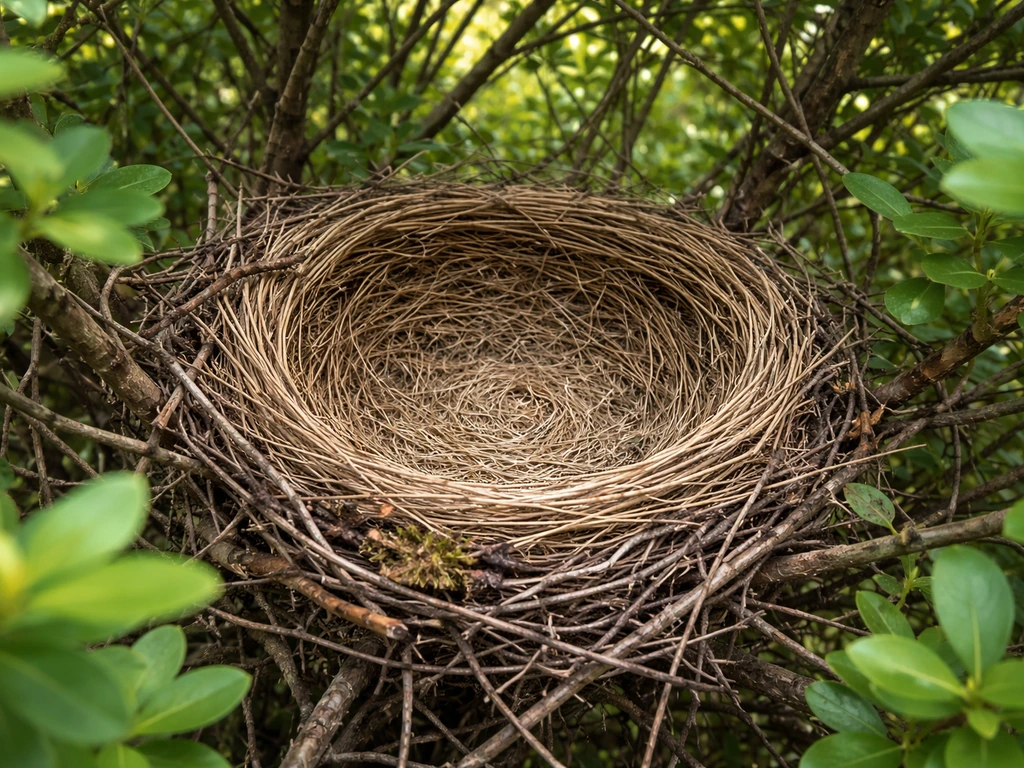
Rather than trying to take in the whole bird at once, focus on these specific features. If you’re also trying to recognize a cardinal bird house in photos, look for a small cup-style feeder or nest-house design with cardinal red accents what does a cardinal bird house look like. They're what experienced birders use to lock in an ID quickly, even at a distance or through a window. If you're trying to confirm nesting in the wild, the details of what does a cardinal bird nest look like can be a helpful adjacent check alongside the field marks.
- Crest: A pointed, raised crest sits on top of the head and is the cardinal's most distinctive silhouette feature. Even female and juvenile cardinals have it. No other common red or brown songbird in North America has this combination of crest plus the thick bill.
- Bill: Short, very thick, and cone-shaped. On adults it's a warm orange-red or coral-pink color. It looks almost too big for the bird's face, which is part of what makes cardinals so recognizable. The area immediately around the bill is black in males.
- Color (male): Completely red all over, including the back, belly, and wings. The black mask extends from the face down to the throat. No wingbars or streaks.
- Color (female): Grayish-tan overall with red highlights on the crest, wing edges, and tail. A faint grayish mask frames the face.
- Size and shape: About the size of an American Robin but with a longer tail and chunkier head. Measured length runs roughly 21 to 23.5 cm. At a feeder, they look noticeably larger and more solid than house sparrows or goldfinches.
- Tail: Long and squared-off at the tip. Even in flight, the combination of the crest profile and long tail gives the bird a distinctive silhouette.
- Wings: No bold wingbars. The wings are rounded, and in females you'll see the red color bleeding into the primary and secondary feather edges.
Birds people confuse for cardinals (and how to tell them apart)
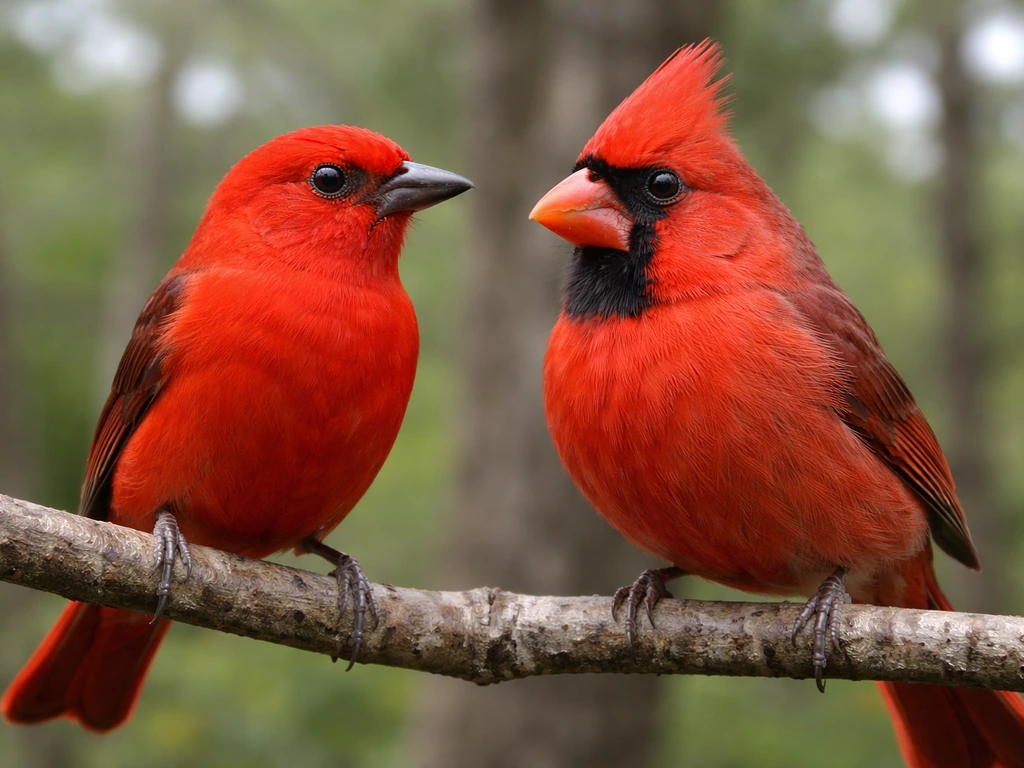
A few other red birds get confused with Northern Cardinals fairly often, especially when someone spots a flash of red and reaches for their phone. Here's how to sort them out quickly. If you are also wondering about similar look-alikes, there are different charts for birds that look like a duck but aren't what bird looks like a duck but isn't.
| Bird | How it's similar | Key difference from Northern Cardinal |
|---|---|---|
| Pyrrhuloxia (desert cardinal) | Same genus, same crest shape, similar gray-red coloring in males | Bill is yellow and curved like a parrot's beak, not straight and orange-red. Found only in desert Southwest. |
| Scarlet Tanager (male) | Brilliant red body | No crest, no black mask, has black wings (not all-red), and a much thinner pointed bill. No crest at all. |
| Summer Tanager (male) | All-red body, similar size | No crest, no black mask, thinner bill. Looks like a big red bird with no distinctive head shape. |
| Red-crested Cardinal | Red crest and head, upright crest posture | Gray body with white underparts, silver-gray bill, red does not extend beyond the head and upper breast. Found in Hawaii and South America. |
| Yellow-billed Cardinal | Red head, upright posture | Yellow bill, black throat, white underparts. Completely different face and bill pattern from Northern Cardinal. |
| Painted Bunting (male) | Family member (Cardinalidae), small and colorful | Completely different: blue head, green back, red underparts. Not easily confused once seen clearly. |
The blank" rel="noopener noreferrer">tanagers are probably the most common source of confusion for beginners. The rule that cuts through it: if you see a crest and a thick orange-pink bill together on a red bird, it's a Northern Cardinal. Tanagers have neither. For the Pyrrhuloxia, you need to be in dry desert habitat and check that curved yellow bill. If you're wondering about other birds that share a passing resemblance, the topic of birds that look like a female cardinal gets into several brown-gray species that share the general shape without the red highlights.
How to confirm what you saw today
If you got a photo, here's what to zoom in on first: the top of the head (is there a pointed crest?), the bill (is it thick and cone-shaped, and what color is it?), and the face (is there a black or grayish mask?). Those three details together will confirm a Northern Cardinal faster than trying to judge color, which can shift a lot depending on lighting. A male in full sun looks like it's on fire; the same bird in shade can look almost brownish-maroon.
If you didn't get a photo, run through this quick mental checklist based on what you remember seeing.
- Did the bird have a clearly pointed crest on top of its head? (Cardinals always do.)
- Was the bill short, very thick, and cone-shaped? (Not thin and pointed like a warbler or sparrow.)
- Was the bird roughly robin-sized or a bit smaller, with a long tail?
- If red: was the red all over, including the back, with a black mask? (Male Northern Cardinal.)
- If brownish-tan: were there red flashes on the crest, wings, or tail, and a warm orange-pink bill? (Female Northern Cardinal.)
- Was the bill color orange-pink or coral? (Not yellow, which would point to Pyrrhuloxia or Yellow-billed Cardinal.)
- Were you in the eastern U.S., Midwest, South, or southern Canada? (Core Northern Cardinal range.)
If every box checks out, you almost certainly saw a Northern Cardinal. If you're in Texas or the desert Southwest and the bill looked curved and yellowish, look into the Pyrrhuloxia. And if you're still not sure and want to dig into similar species, checking a reference for birds that look like a cardinal can help you eliminate the last few candidates with confidence.
FAQ
What does a cardinal bird look like if the lighting makes it look brown instead of red?
In shade, dense brush, or low light, male Northern Cardinals can appear maroon or even brownish-red. Don’t rely on the red color itself. Confirm using the tall pointed crest, the thick cone-shaped orange-red bill, and the distinct face mask (black on males).
How can I tell a Northern Cardinal from a Pyrrhuloxia when I’m in the desert Southwest?
If you are in dry Texas, Arizona, or New Mexico and the bird is not fully red, look at the bill and habitat. Pyrrhuloxia often shows a more curved bill and a different overall color tone, while Northern Cardinals are more uniformly red and have the black male mask pattern in the same general head shape.
Do female cardinals have a black mask like males do?
No. Females show a pale grayish mask around the face rather than a bold black mask. They also tend to have red accents only in flashes, such as the crest edge, wing edges, and tail, while the overall body stays warm tan or buff.
What should I look at to identify a cardinal bird from a distance or through a window?
Use shape-first checks: the pointed crest on top of the head, the thick cone-shaped bill, and the presence or absence of the dark face mask. These stay reliable even when color saturates differently through glass or when the lighting is uneven.
How do I recognize juvenile cardinals if the bird looks like a brown or patchy version of a female?
Juveniles usually resemble females in overall pattern, but their bill starts out gray to dark gray rather than orange-pink. As they mature the bill brightens, and young males may show early red patches that look mottled or blotchy.
If I see a red bird with a crest and a thick bill, can it still be a tanager?
Yes, but the key mismatch is usually the bill and head pattern together. Northern Cardinals have the combination of a crest and a thick cone-shaped orange-pink bill. Many tanagers either lack that cone-shaped bill thickness or lack the crest, so compare both features rather than only color.
Can different cardinals look similar enough that I need location to identify them?
Location helps a lot, but it is not the only clue. For example, in Hawaii or parts of South America you may encounter cardinals with different color patterns, so use the bill shape, crest presence, and the specific mask or face pattern, not just the fact that it is a red bird.
What’s the fastest way to confirm a cardinal from a blurry phone photo?
Zoom in on three areas in this order: the top of the head (pointed crest), the bill (thick cone-shaped and its color), and the face (black mask for males or grayish mask for females). This reduces errors caused by blur and color shifts from the camera.
How can I tell if I’m actually looking at a cardinal bird, not just a red wing flash from another species?
A passing red patch is easy to misread. Wait for a clear view of the head and bill. Cardinals show a consistently visible thick cone-shaped bill and a pointed crest, even when the rest of the body is partially obscured.
If I don’t have a photo, what memory checklist should I use?
Think in terms of field marks you can recall: did the bird have a tall pointed crest, did it have a thick cone-shaped orange-red or pink bill, and was there a prominent dark face mask (male) or a pale grayish mask (female)? If you remember the bill shape and crest, you can usually narrow it to Northern Cardinal quickly.
Next Article
What Does a Cardinal Bird Nest Look Like? ID Guide
Identify a cardinal nest by its cup shape, size, materials, texture, and location, plus look-alike tips and safe observi