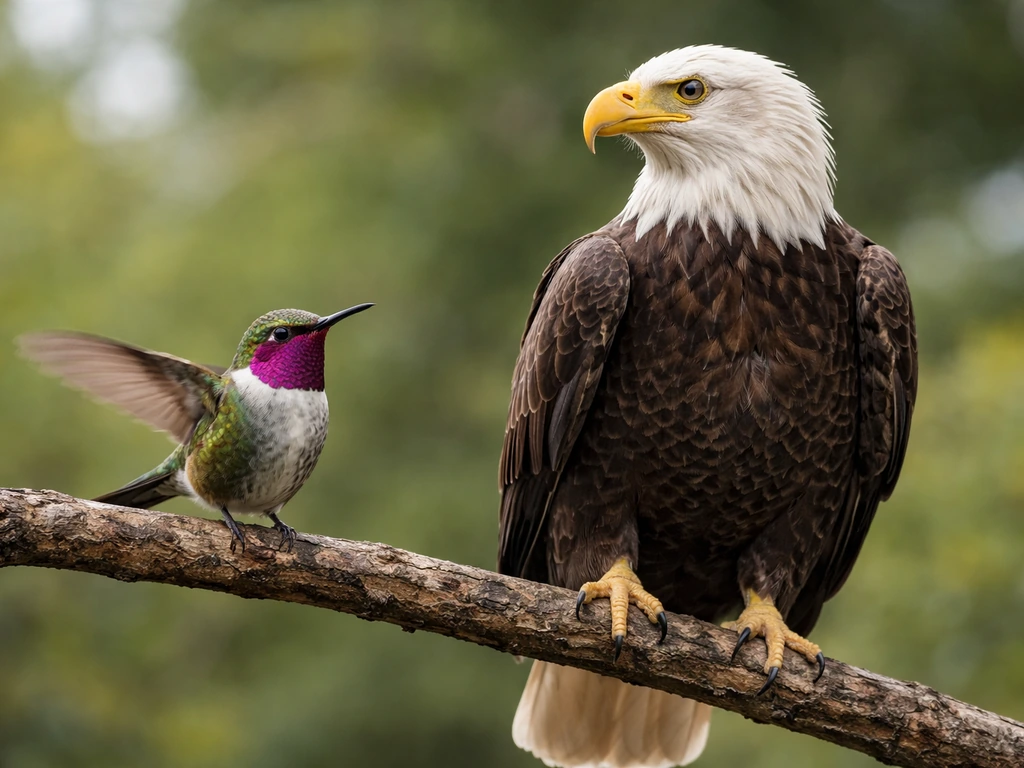
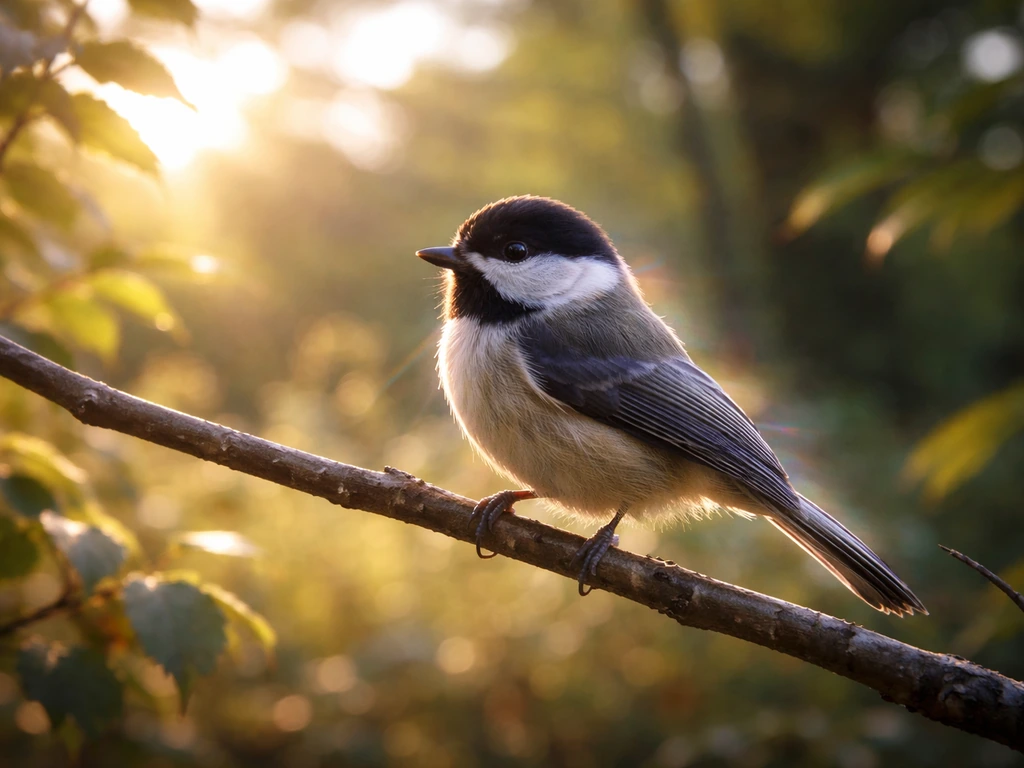
Birds see a richer, faster, and more detailed version of the world than you do. A catbird can look dramatically different depending on the light, with slate-gray body tones and a dark cap that may shift in color what a cat bird look like. They perceive at least four color channels (including ultraviolet), process motion at up to 130 frames per second, and some raptors have two separate high-resolution zones in each eye. In practical terms, a bird is not just seeing what you see with sharper eyes, it is seeing colors you literally cannot imagine, picking up on movement you would never notice, and judging distances in ways that have nothing to do with the depth-perception tricks your brain uses.
What Does Bird Vision Look Like in the Real World

Marcus Whitley
21 May 2026
How bird vision differs from human vision
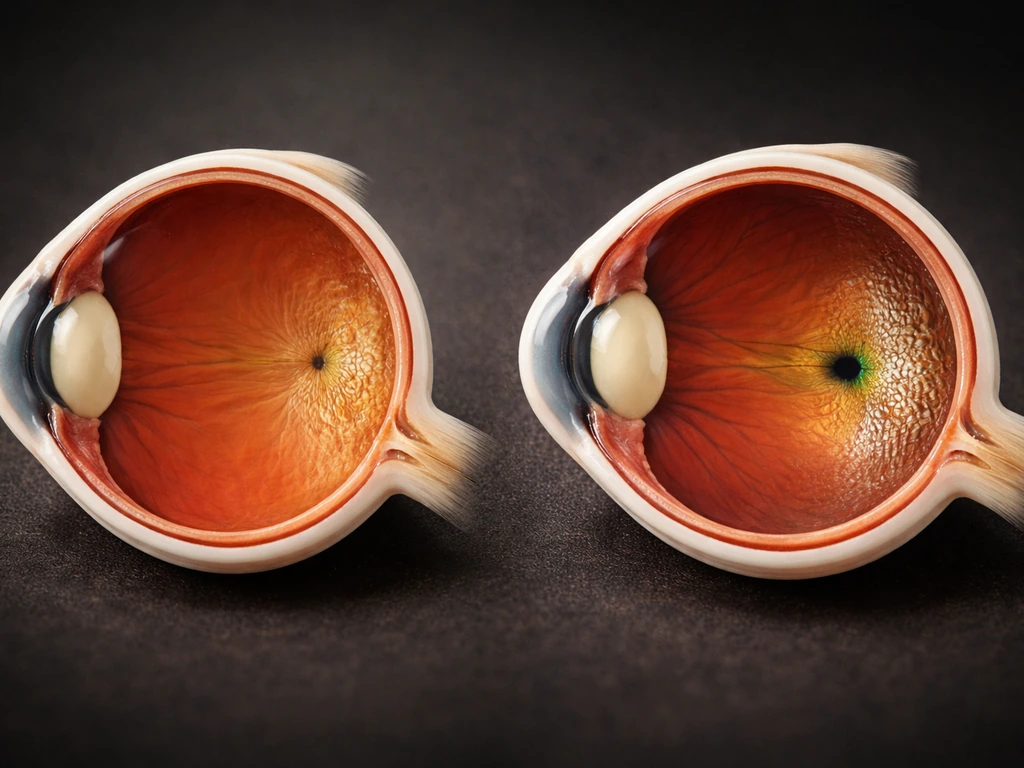
Your eyes rely on three types of cone cells to see color. Birds have four. That fourth cone type opens up the ultraviolet end of the spectrum, roughly in the 360–420 nm range, which is completely invisible to you. Beyond that extra channel, birds have a clever optical trick built into their retinas: tiny oil droplets sitting in front of each cone that filter incoming light before it even hits the visual pigment. Think of them as built-in color-correction lenses, sharpening the contrast between nearby colors so birds can tell apart shades that would look identical to a human eye. On top of that, the transparent ocular media in a bird's eye actually lets UV light pass through to the retina, whereas the pigmented lenses in primate eyes block most of it. So it is not just about having an extra cone type, the whole optical system is built to use it.
The other big structural difference is the fovea, which is the high-resolution pit in the retina where detail really snaps into focus. You have one per eye. Many raptors have two per eye, one facing forward for binocular tasks like targeting prey, and one facing to the side for scanning a wide field. Smaller songbirds often have a single central fovea, but some flycatchers have been found to have a specialized retinal region with unusual cone structures (involving clusters of tiny orange droplets and large mitochondria instead of the normal oil droplet setup) that appears to be specifically tuned for detecting small, fast-moving insects against bright sky.
Color and contrast: what birds are actually seeing
When you look at a pigeon's neck, you see iridescent purple and green. A pigeon looking at another pigeon sees all of that plus ultraviolet reflectance peaks layered on top, peaks that have been directly measured with fiber-optic spectrometry. The same goes for many songbirds. Researchers measuring the feathers of 67 tanager species found meaningful UV reflectance variation in yellow, orange, and red plumage across the whole group, variation that is invisible to human eyes but completely legible to another tanager. The bare-part colors of birds (bills, eye rings, facial skin) can also carry UV components that function as signals in avian social and mating contexts, even when they look like plain yellow or orange to you.
This has real implications for how you read plumage in the field. The field marks you use to identify a bird, the yellow wash on a warbler's breast, the orange tint on a flycatcher's bill, the subtle gloss on a duck's head, may look quite different to other birds of the same species. What you are seeing is essentially a simplified, UV-stripped version of the signal. In practice, this means field marks that look dull or similar to you might be sharply distinct to the birds themselves, while marks you think look bold might not be the key signal at all.
Contrast also matters in a way that goes beyond color. Budgerigar studies show birds can distinguish brightness differences at a contrast threshold of around 0.09, meaning they can reliably detect a patch that is only about 9% brighter or darker than its background. That is a fine sensitivity to contrast, and it helps explain why birds pick out subtle differences in bark texture, leaf shadow, and plumage patterning that you might completely overlook.
Detail, distance, and motion: what birds notice most
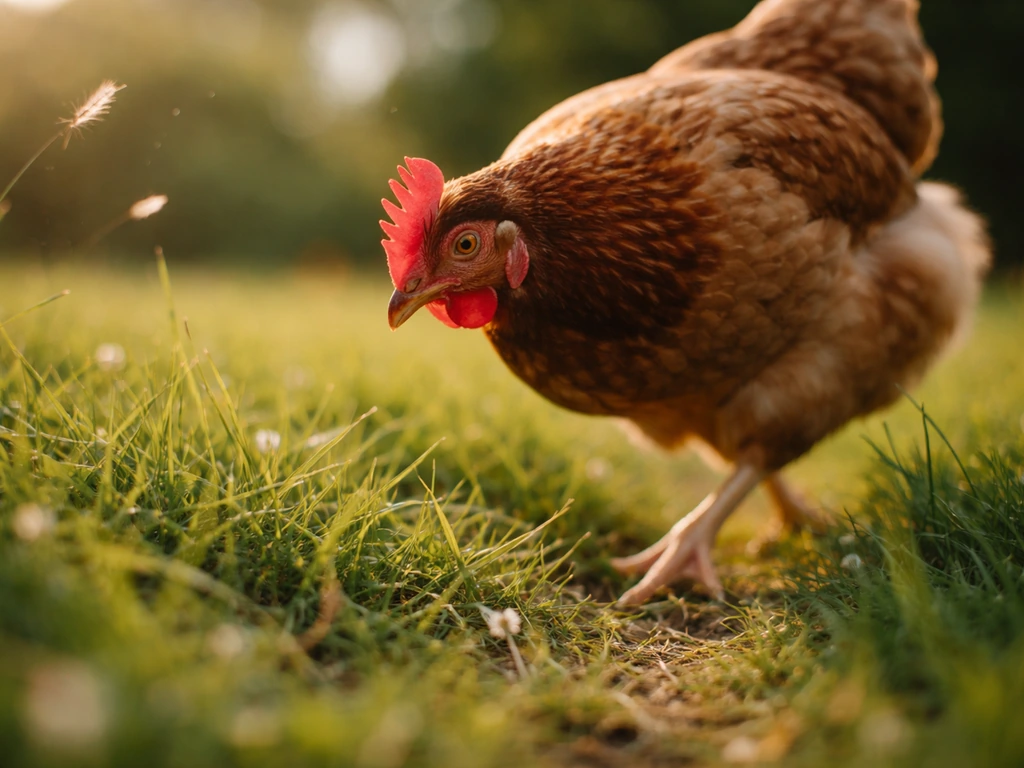
Human vision processes flicker at around 60 Hz before it blurs into smooth motion for us. Birds operate at a completely different frame rate. Chickens average around 87 Hz before flicker fuses into smooth motion, and some bird species have been recorded at up to 131 Hz. Some marine birds show mean critical flicker fusion frequencies between 120 and 130 Hz. What this means in plain terms is that a bird watching a flying insect is essentially seeing it in slow motion compared to what you would see. The insect's wing beats, trajectory changes, and position are all resolved as distinct frames rather than a blur. This is why a flycatcher can snap a tiny insect out of the air with pinpoint accuracy, it is tracking each moment of the insect's path with a visual system that refreshes far faster than yours.
Motion also actively improves how sharply birds see fine detail. Research on budgerigars found that a moving stimulus improved spatial contrast sensitivity compared with viewing the same pattern while stationary. In other words, birds do not just tolerate motion, their visual system actually performs better when things are moving. This is worth keeping in mind when you are trying to identify a bird: the moment it shifts or flies, the bird's own perception of its surroundings sharpens up considerably.
For acuity at distance, raptors with blank" rel="noopener noreferrer">two foveae have a significant advantage. Having both a central fovea and a temporal fovea means they can simultaneously hold a wide-angle scan and a high-resolution target zone in the same eye. The avian cornea contributes about two-thirds of the eye's refractive power, so the optical quality of the cornea matters enormously for how well a bird resolves distant detail. A hawk circling at height is genuinely resolving prey on the ground at a level that would require binoculars for you to match.
Depth and focus: how birds judge distance and speed
Here is where bird vision is more limited than you might expect. Most birds do not have stereoscopic depth perception the way humans do. Eyes placed on the sides of the head give birds a huge total visual field, great for predator detection, but it means the binocular overlap zone (where both eyes see the same scene and your brain can calculate depth by comparing the two images) is small, sometimes less than 10 degrees. Research has argued that stereopsis is likely not present in most bird species at all. Instead, birds probably judge distance and speed using a combination of motion parallax (the way nearby objects move faster across the visual field than distant ones as you move), optic flow (the streaming pattern of visual information that changes as you fly through space), and monocular depth cues like relative size and overlap.
The binocular zone that birds do have seems to be used less for depth estimation and more for precise visual control of the beak and feet, so a bird can accurately peck at a seed or grab a branch without misjudging where its own body parts are. When birds are flying through cluttered spaces like dense vegetation, filmed studies show they rely heavily on optic flow cues to navigate gaps and avoid collisions, slowing and adjusting as visual flow patterns signal tighter clearances. The bird is essentially reading the streaming visual field to feel out space rather than calculating a 3D map the way you might.
How this changes bird behavior and what you will notice in the field
Once you understand how birds see, a lot of their behavior starts making immediate sense. Robins and thrushes tilt their heads sideways not because they are listening harder but because they are bringing their high-acuity fovea to bear on the ground in front of them, the best part of their retina is off-axis, not straight ahead. A heron standing completely still is not just being patient; it is minimizing its own visual disturbance in the water's surface while its fast temporal resolution picks up the slightest fin movement. A sparrow that freezes in a bush and then explodes into motion is using contrast and motion sensitivity to time its exit.
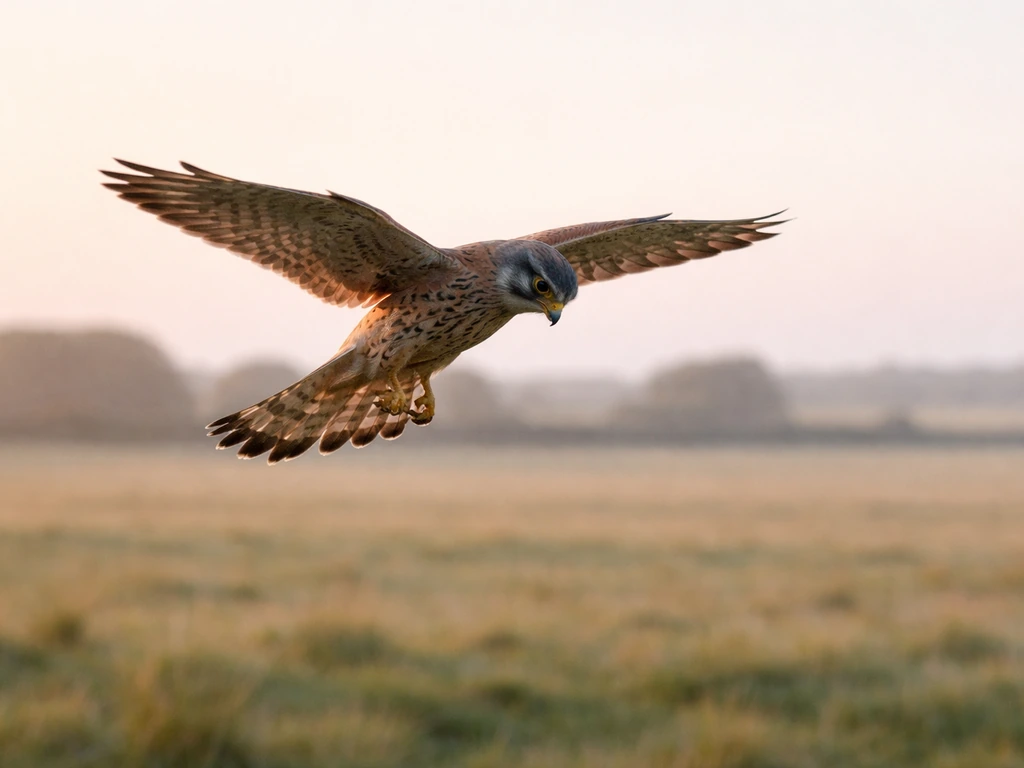
The UV dimension is visible in behavior too. Kestrels famously use UV to track vole runways, vole urine reflects UV, so the falcon is essentially following a glowing trail you cannot see. Many songbird mating displays involve plumage patches that are strikingly UV-bright, which is why two male warblers that look nearly identical to you may look dramatically different to each other. If you ever wonder why a bird seems more interested in a particular rival or display than it logically should based on what you can see, UV signals are often the answer.
The high flicker-fusion rate also explains why birds are so quick to react to your movement. Even a slow, casual arm movement on your part is a fast event by avian standards, easily registered and processed as a threat. Birds are not paranoid; they are just running on a faster visual clock than you are.
Practical birdwatching tips that account for how birds see
You can use all of this knowledge to watch birds more effectively right now. The core idea is simple: birds are better at detecting motion than you are, they see contrasts you might not notice, and they react to threats faster than feels intuitive to you. So your single most effective tool is slowing down and minimizing movement. A smooth, glacially slow approach will register as far less threatening than a quick movement made at a larger distance.
- Move in slow, continuous arcs rather than stopping and starting. Stopping abruptly and restarting actually triggers more alarm than a steady slow walk, because the motion change itself is what catches a bird's eye.
- Use lighting to your advantage. Position yourself with the sun behind you so the bird is well lit and you can see color detail and contrast clearly. Backlit birds lose most of their field-mark contrast for you, and a bird facing bright light may have a harder time resolving your silhouette.
- Stay low and use natural shapes. Birds are alert to the silhouette of a standing human. Crouching, or using a car as a hide, breaks up your outline in a way that reads as less threatening in the bird's fast-processing visual system.
- For distance observation, a spotting scope with a 90–100 mm objective performs well in lower light conditions (dawn and dusk are prime birding windows), gathering enough light to let you see color and detail when the bird's own UV and contrast signals are at their most active.
- Watch for head tilts in thrushes and robins — this is the bird bringing its best retinal area onto a target. Look in the direction the bill is pointing after a tilt and you will often see the worm or insect it just locked onto.
- When scanning for camouflaged birds, try moving your own head slightly rather than just scanning with your eyes. Your own motion parallax will make a stationary bird pop out of background foliage in the same way it works for the bird itself.
- If a bird seems to have spotted you from an implausible distance, consider whether you moved recently. Even a small movement 50 meters away will register clearly in a bird's high-refresh-rate visual field — much more clearly than the same movement would catch your attention.
The bigger picture is that bird vision is not just faster and more colorful than yours, it is optimized for a completely different set of problems: finding small moving prey, reading plumage signals invisible to mammalian eyes, navigating through complex environments at speed, and detecting threats early. A bird dog typically looks like a medium-sized, athletic hunting dog with a lean build, floppy or semi-floppy ears, and a short coat in colors like liver, black, tan, white, or brindle bird vision is not just faster and more colorful than yours. When you understand what a bird's visual system is built to do, you start reading its behavior in a new way. Every head tilt, freeze, or alarm flush makes sense as a predictable output of a remarkably well-tuned visual machine. If you are wondering what a bird brain looks like, it helps to know that birds have highly specialized visual circuitry rather than a human-like cortex what does a bird brain look like. And the more you think about what the bird is seeing, the better you get at predicting what it will do next.
FAQ
Why do birds sometimes seem to “spot” things faster than I can, even when the object is far away?
Because their visual system resolves motion and contrast at a much higher refresh rate, a slow-looking change to you can still register as many distinct frames to them. Distance also helps, since motion and optic-flow cues become easier to read when the target creates clear movement against the background.
Do birds see the world in ultraviolet the way humans see colors like red and green?
They can perceive UV as a distinct part of the visible spectrum for them, but it does not feel like “painted on” UV the way you might imagine. It shows up through how their four cone types and retinal filtering (oil droplets) transform incoming light into signals they use for plumage and social cues.
If I look at a bird’s markings and can’t tell them apart, does the bird see them as different?
Often yes. Many species use UV-reflective differences in otherwise similar-looking patches, especially in plumage and bare parts like bills, eye rings, and facial skin. Two birds that look almost identical to you can display meaningfully different UV patterns to a conspecific.
Can I test bird vision accuracy by watching how they react to motion?
You can, but do it cautiously. A quick movement from you is more likely to trigger a bird because of their fast flicker fusion and high motion sensitivity, so use a slow, steady posture change as your “control” and compare reactions at similar distances and lighting.
Do birds have depth perception like humans, with the same kind of stereoscopic 3D vision?
Most birds do not rely on full stereoscopic overlap the way humans do. Their binocular overlap zone is often small, so distance estimation usually comes more from motion parallax, optic flow, and monocular cues like relative size and occlusion rather than a single stereoscopic calculation.
Why do some birds tilt their heads while feeding or looking around?
Head-tilting often helps position the best high-acuity part of the retina on the target. Since the top resolution area may sit off-axis in many species, turning the head can effectively “aim” the fovea at seeds, insects, or prey rather than improving hearing.
How does lighting affect what I think a bird looks like?
Lighting changes how UV and visible brightness distribute across feathers and bare parts. Cloud cover, angle of the sun, and even how wet or dirty plumage is can shift contrast and UV reflectance, so a bird can look different across the same day or from different viewing angles.
Why do birds sometimes pick out insects hidden in clutter better than I can?
Their contrast sensitivity and motion processing are well-suited for small, fast targets against complex backgrounds. In many cases, the moving object stands out through optic-flow patterns and fine contrast rather than through color alone.
Does bird vision mean they see smoother video, like higher frame rate, all the time?
They process visual updates faster, but what you perceive as “smoothness” depends on how the bird and the scene interact. A moving target against a stable background often looks exceptionally clear to birds, while a static scene may still look less informative than you expect.
When a bird freezes, is it only because it’s being cautious, or does that change what it can see?
Freezing can help in two ways: it reduces what the bird’s own movement signals to potential prey or predators, and it can stabilize the visual scene for the bird while their rapid temporal resolution continues to detect subtle changes like fin movement or leaf motion.
Do all bird species see the same colors and have the same visual layout?
No. The extra UV channel is common, but the exact retinal design varies, including fovea number and specialized regions tuned to particular tasks. Raptors often differ from songbirds, and some species show specialized adaptations for detecting small prey against bright skies.
Next Article
What Does a Bird Look Like? Identify Key Features Fast
Use a quick checklist to identify bird appearance by size, colors, wings, tail, bill, and key distinguishing traits.