There's no single answer to "what does a bird look like" because there are roughly 10,000 bird species in the world, each with its own size, colors, bill shape, and markings. But that's actually good news: it means if you can describe what you saw clearly enough, you can almost always figure out exactly which bird it was. The trick is knowing which details to notice and in what order. Start with the big picture (size, shape, overall color), then zoom in on the specifics (bill, tail, wing pattern), and you'll narrow it down fast.
What Does a Bird Look Like? Identify Key Features Fast

Marcus Whitley
16 May 2026
Why "what does a bird look like" depends entirely on the species
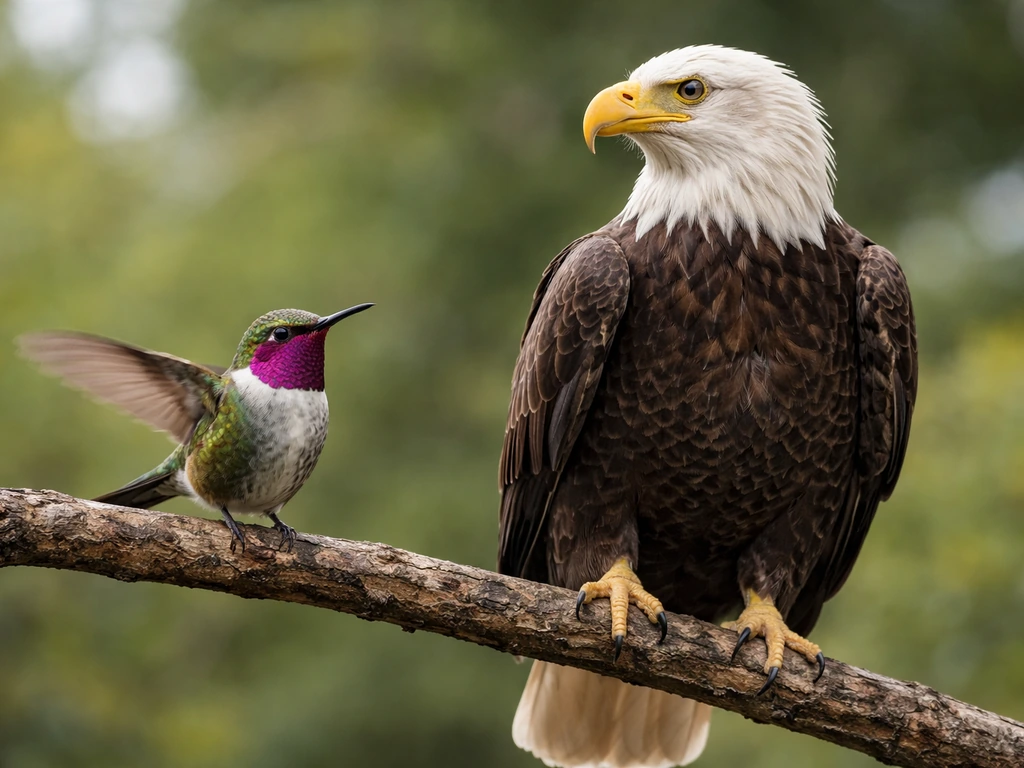
A hummingbird and an eagle are both birds, but they look about as different as two animals can. One weighs less than a nickel and hovers in place with a needle-thin bill; the other has a wingspan wider than you are tall and a hooked beak built for tearing. Describing "a bird" in general terms the way you'd describe a dog or a cat doesn't really work here. If you're also curious about the brain side of the question, you can compare what researchers mean by bird brain structure to understand what it looks like what does a bird brain look like. What you actually need is a way to move from a vague impression toward a specific species, and that's exactly what field identification is about.
When birders talk about ID, they lean on what are called field marks: the specific visual traits that separate one species from another. You don't need to be an expert to use them. You just need to know which traits to look at. blank" rel="noopener noreferrer">Cornell Lab's four-key framework sums it up well: focus on size and shape first, then color pattern, then behavior, then habitat. Cornell Lab’s “Four Keys to Bird Identification” presents this framework as Size & Shape, Color Pattern, Behavior, and Habitat blank" rel="noopener noreferrer">focus on size and shape first, then color pattern, then behavior, then habitat.. Work through those in order and you'll get to a confident ID most of the time. This guide walks you through exactly that process, plus the finer details that help when two species look nearly the same.
Fast field checklist: what to notice the moment you spot a bird
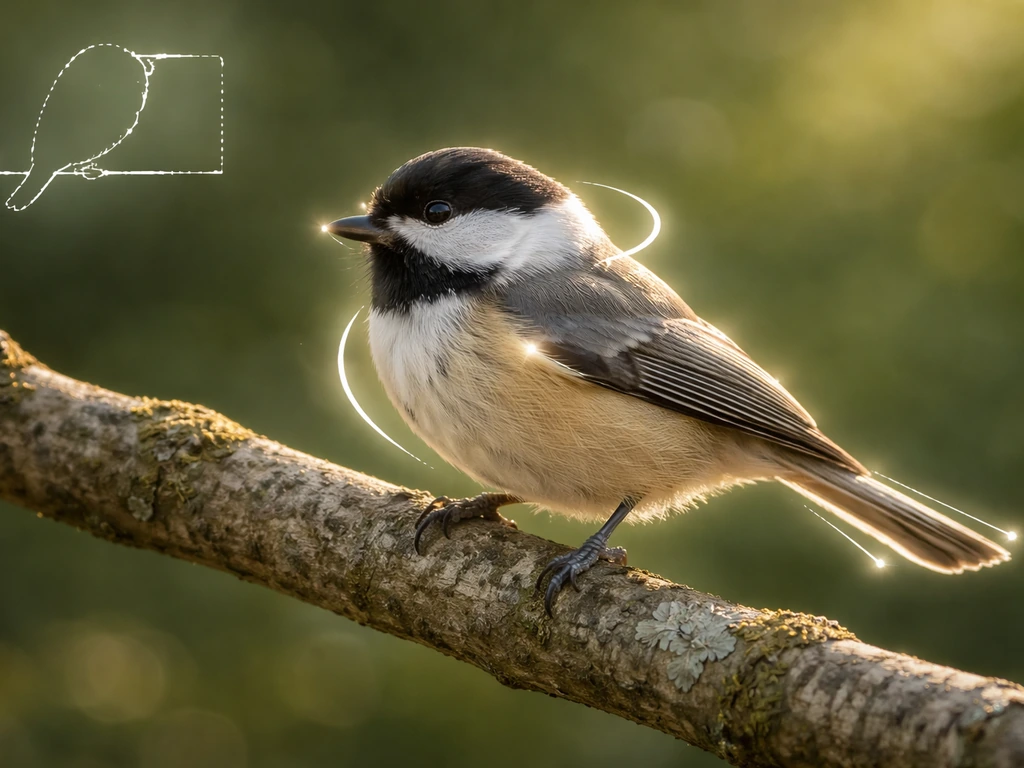
Birds don't sit still forever, so getting in the habit of scanning these points quickly makes a big difference. Run through this list the next time you spot an unfamiliar bird:
- How big is it? Compare it mentally to a sparrow (small), a robin (medium), a crow (large), or a goose (very large).
- What's its overall shape? Chunky and round, slim and upright, long-necked, or short-tailed?
- What's the dominant color? Then look for any contrasting patches, streaks, or spots.
- What shape is the bill? Short and thick, long and thin, curved, hooked?
- What shape is the tail? Forked, rounded, square-tipped, long, or very short?
- What do the wings look like in flight? Broad and rounded, long and pointed, any stripes or patches?
- What are the legs and feet doing? Wading, perching, walking on the ground?
- Where exactly is the bird and what is it doing? Treetop, ground, water's edge, feeder?
You won't always catch every detail, especially if the bird flushes quickly. But even three or four of these points together usually give you enough to work with. Write them down or say them out loud while you're watching, because the specifics fade fast once the bird is gone.
Breaking down the core visual features
Size and silhouette
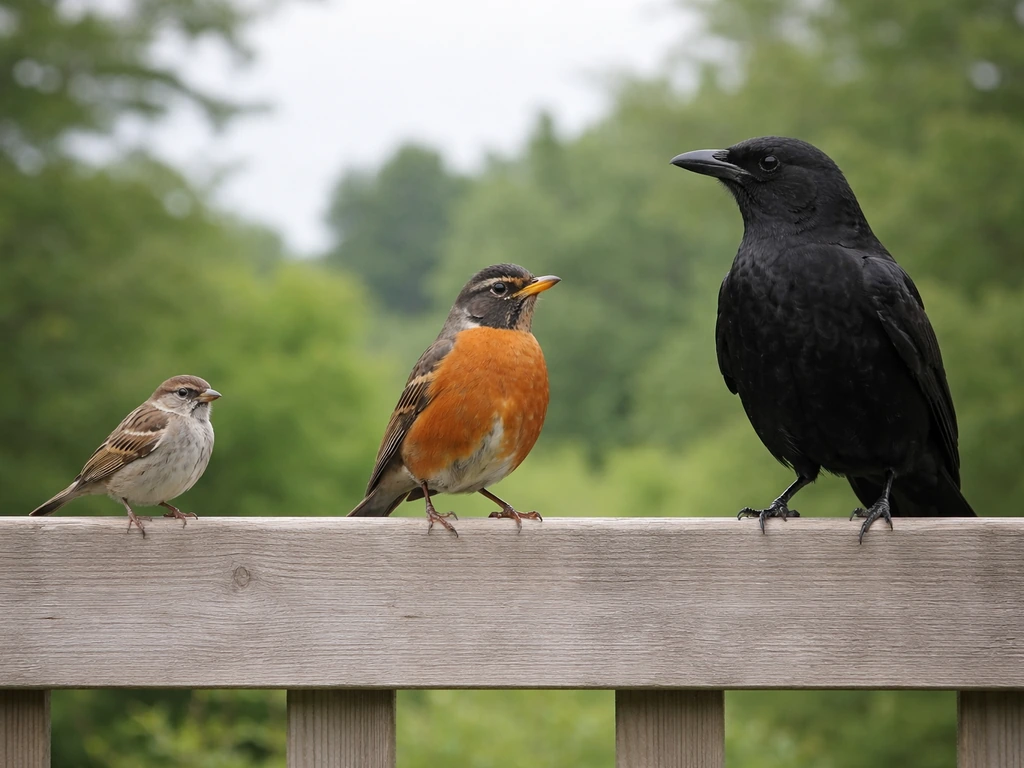
Size is your single fastest filter. Mentally slot what you're seeing into one of four rough categories: sparrow-sized (around 5 to 6 inches), robin-sized (around 9 to 10 inches), crow-sized (around 17 to 21 inches), or goose-sized (24 inches and up). Once you have that, look at the overall silhouette. A heron looks like a tall, slow-moving statue. A wren looks like a little ball with a cocked tail. A falcon looks aerodynamic and sharp-edged even when sitting still. Shape alone often tells you what family of bird you're dealing with before you even think about color.
Body posture
How a bird holds itself is surprisingly useful. Some birds stand very upright, almost military (think robins and thrushes). Others hunch forward in a more horizontal posture (like warblers or vireos). Woodpeckers cling vertically to bark. Shorebirds tend to tilt forward with their weight over their feet. Posture is often the first thing your eye picks up even before you register color, and it can instantly rule out whole groups of birds.
Colors and pattern
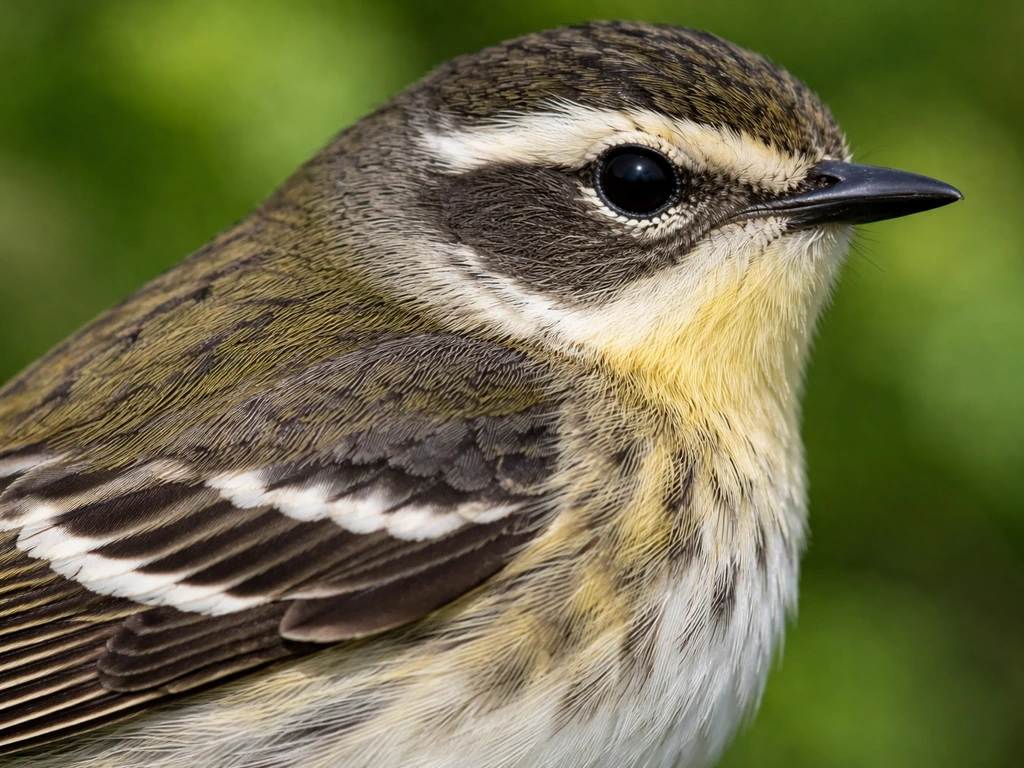
Once you've noted size and shape, colors are usually the most memorable part of the sighting. Don't just register the main color though: look for where contrasting colors appear. Is there a stripe above the eye (called a supercilium)? A stripe through the eye? A ring around the neck? A patch of color on the wing (a wing bar)? A bright or differently colored rump? Breast spots or streaks? These specific patches and patterns are often what separate similar species. A bird that's "brown with streaks" could be a dozen different things, but a bird that's "brown with a rusty-orange tail" points you straight toward a thrush or a redstart.
Bill, feet, wings, and tail: the details that clinch it
Bill shape is one of the most diagnostic features
More than almost any other single feature, bill shape tells you what a bird eats and what group it belongs to. A thick, conical bill means a seed-eater like a finch or sparrow. A thin, pointed bill belongs to an insect-hunter like a warbler. A long, curved bill is a hummingbird or a curlew. A stout hooked bill indicates a raptor or a shrike. Even within a group, bill length matters: a sharp-shinned hawk and a Cooper's hawk look nearly identical, but bill proportions and head size help separate them.
Tail shape and length
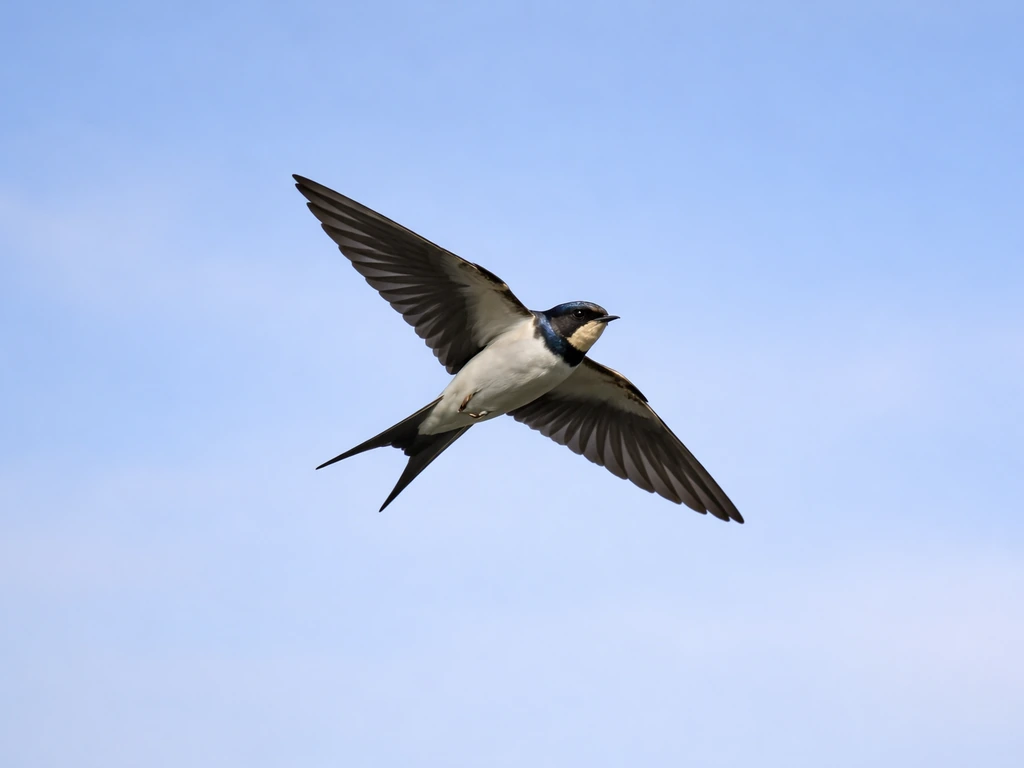
Tail shape is especially useful when the bird is in flight or flicking its tail while perched. A deeply forked tail points to swallows or kites. A rounded tail is common in jays and mockingbirds. A very long tail relative to body size suggests a magpie, roadrunner, or pheasant. Some birds like kinglets and wrens pump or cock their tails constantly, which is itself a behavior clue. You might notice that tail shape is one of the easier things to catch even in a quick glimpse.
Wing shape and patterns in flight
When a bird flies, look at the overall wing outline: long and narrow wings mean a bird built for speed or soaring over open areas (think falcons and albatrosses). Short, broad, rounded wings suggest a bird that navigates through trees (like a Cooper's hawk or a ruffed grouse). Wing pattern matters too: look for pale or white patches, bars across the wing (wing bars), or contrasting wingtip colors. A bird's wingbeat style, whether it's rapid and fluttery, slow and deep, or a mix of flapping and gliding, adds another layer even when the bird is too far away to see plumage detail.
Feet, legs, and eye color
Leg color is easy to overlook but genuinely useful. Yellow legs versus gray legs can separate two otherwise similar shorebirds. Pink legs are common in gulls; orange or red legs show up in some herons and oystercatchers. Eye color also matters more than you'd expect: a yellow iris versus a dark iris is a reliable way to tell apart species like Cooper's and sharp-shinned hawks, or two similar cormorant species. If you can see the feet clearly, note whether the toes are webbed (waterfowl, gulls), lobed (grebes, coots), or zygodactyl, two toes forward and two back (woodpeckers, parrots).
Common look-alikes and how to tell them apart
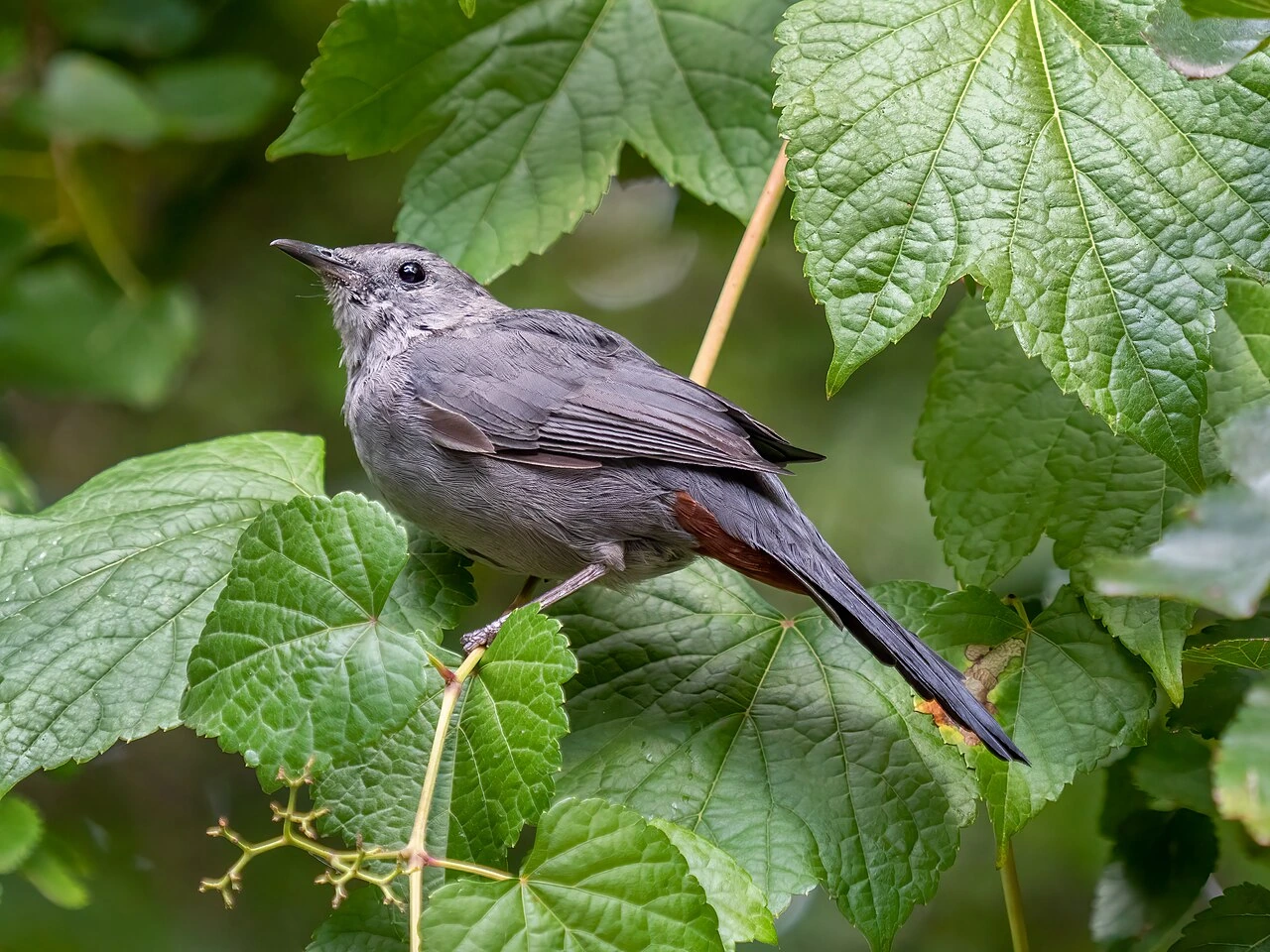
Some of the most common ID headaches come from species that share the same basic color palette or silhouette. For example, if you are wondering what a cat bird looks like, you can use the same field marks like size, overall color, bill shape, and tail details to confirm the species what does a cat bird look like. Here are a few of the most frequent look-alike pairs and the one or two features that reliably separate them:
| Look-alike pair | They share | Key difference to look for |
|---|---|---|
| Downy vs. Hairy Woodpecker | Black-and-white pattern, red patch on males | Hairy is noticeably larger with a much longer bill relative to head size |
| House Sparrow vs. House Finch (female) | Streaky brown plumage, small size | House finch female has a plain face; house sparrow female has a buff eye stripe and bicolored bill |
| Cooper's Hawk vs. Sharp-shinned Hawk | Barred chest, blue-gray back, similar size range | Cooper's has a rounded tail and larger, more projecting head; sharp-shinned has a squared tail |
| American Crow vs. Common Raven | All-black, large corvid | Raven is much larger (goose-sized), has a wedge-shaped tail, and a heavier arched bill |
| Cackling Goose vs. Canada Goose | Black head and neck, white chin patch | Cackling is noticeably smaller (closer to mallard size) with a stubbier, steeper bill |
| Gray Catbird vs. Brown Thrasher | Slender, long-tailed, skulking behavior | Catbird is plain gray with a black cap; thrasher is rusty-brown with a streaked breast and yellow eye |
The pattern with look-alikes is almost always the same: two species share the broad visual impression but differ in one or two specific features, usually bill proportion, size, or a specific color patch. When you're stuck between two candidates, focus on those diagnostic points rather than trying to weigh everything at once. And keep in mind that some bird ID puzzles are genuinely hard even for experienced birders, so don't be discouraged if you can't crack every one.
It's also worth knowing that some birds within the same family look dramatically different depending on sex, age, or season. Many male songbirds wear bright breeding plumage in spring and summer, then molt into duller "eclipse" or winter plumage. Juveniles often look completely unlike their parents. If your notes match one of those intermediate plumages, that's part of the answer too. Topics like what a bird's chest looks like, or how head and body markings vary by age and sex, are worth diving into separately once you've got the basics down.
How to confirm what you saw: photos, range, and season
Once you've run through your field checklist and have a likely candidate (or two), confirming it is usually straightforward. A photo comparison against a reliable visual reference is the fastest method: apps like Merlin Bird ID let you enter size, color, and location to get a shortlist of likely species with photos. eBird's range maps show you which species are actually expected in your area at the current time of year, which is a quick way to rule out birds that simply shouldn't be there. If you're in North America in May and you saw a small olive-green warbler, dozens of species are theoretically possible, but knowing your state and habitat cuts that list dramatically.
If you managed to take a photo, even a blurry one, it can be enormously helpful. Even a blurry shot that shows overall shape and major color areas is enough for an ID in most cases. Compare it directly to species photos from multiple angles, since birds often look very different depending on the viewing angle and lighting. Field guides organized by visual similarity (rather than taxonomic order) are also useful for beginners because you can flip through birds that look similar rather than having to know the family name first.
Location and habitat do a lot of the work for you. A large gray heron-shaped bird standing in a shallow stream in North America is almost certainly a Great Blue Heron. A small brown bird creeping headfirst down a tree trunk is almost certainly a nuthatch. If you’re wondering what does a bird dog look like, the same idea applies: focus on the most noticeable features first so you can identify the right match quickly. Context narrows the possibilities before you even start on colors. Season matters too: many species are only present during breeding season (spring and summer) or winter, so if a bird matches a species that shouldn't be in your area in mid-May, look again at your notes before committing to that ID.
The more you practice this sequence (size and shape, color pattern, bill and tail, habitat and location), the faster it gets. Most experienced birders run through it almost automatically in a few seconds. Start with common species in your area so you build a mental library of "baseline" birds, and branch out from there. Each new species you learn makes the next one easier to place.
FAQ
What if I only get a quick glimpse and cannot see the bill or tail clearly, what should I prioritize?
Start with silhouette and size category, then lock in posture (upright, humped, clinging, forward-tilted). If you can see any wing detail at all, note wing shape (broad and rounded versus long and narrow) and look for even one pattern cue like a wing bar or contrasting wingtip. Behavior can replace missing bill detail, for example tail pumping, hovering, or hopping on the ground.
How can I estimate a bird’s size accurately when I do not know what is nearby for scale?
Use reference points you already know, like a nearby tree diameter, feeder size, or how the bird compares to branches or posts. If there is no fixed reference, describe relative size to familiar birds you know in your yard (for example, “about sparrow-sized”) and record whether you saw it perched or in flight, since flight height can change your perception.
What should I do if the bird is partly obscured by leaves or distance makes colors look washed out?
Rely more on shape, posture, and high-contrast markings rather than overall color. If colors are faint, focus on pattern locations (stripe above the eye, through the eye, throat patch, wing bar, rump color) and on structural cues like tail shape and wing outline. Note lighting conditions too, for example overcast versus direct sun.
Do bird identification features change by season, and how do I avoid misidentifying a juvenile or molting bird?
Yes. Many species shift between breeding and non-breeding plumage, and juveniles often have different head or breast patterning than adults. Your notes should include the month, the presence of molting (patchy or “mixed” feather look), and whether the bird seems smaller-bodied or has a different head shape than the local adult you know.
How important is behavior compared to appearance, and what behaviors are most diagnostic?
Behavior can quickly narrow options when appearance is ambiguous. Diagnostic behaviors include hovering in place, clinging vertically to bark, feeding by probing or head-first creeping, tail pumping or cocking, and flight style like direct gliding versus fluttering. Record what the bird was doing for 10 to 20 seconds if you can, not just how it looked.
What if I suspect the bird could be a look-alike pair, which single feature should I check first?
Check the most diagnostic “one or two traits” that differ reliably between the pair. In many common conflicts, bill shape or proportions (thicker versus slimmer, hooked versus conical), eye color, or a specific wing and tail pattern is more decisive than trying to judge the whole color scheme at once.
Can I identify birds using only audio, like calls or songs, if I cannot see them well?
You can, but it is best treated as a secondary clue. Record the call type (short chip, drawn-out whistle), whether it is repeated, and the time of day. If you later get even partial visuals, pair them with the call to confirm, because some species share similar sounds across regions.
Are leg color and eye color always visible, and what if I cannot see them clearly?
They are helpful when visible, but treat them as optional confirmation, not a core requirement. If visibility is poor, prioritize features you can usually see from a distance, like wing shape and pattern, tail shape, overall silhouette, and posture. For eye color, note whether it appeared bright yellow, dark, or obscured by lighting.
How reliable are bird ID apps and photo comparisons like Merlin or range maps, and what can still go wrong?
They are strong at producing shortlists, but they can be wrong when location data is off, the bird is unusual for the season, or plumage varies by age or molting stage. Always sanity-check the result against your field marks, especially bill shape, wing outline, and posture. Range maps help you rule out impossible species, but they do not guarantee the top pick is correct.
If I took a blurry photo, what should I capture or note so it is still useful for ID?
Even blurry images can work if they preserve overall shape and major color blocks. Take note of the viewing angle, especially whether the bird is perched, flying away, or facing you, since birds look different from behind versus front. When comparing, prioritize matching wing shape and tail silhouette, then look for any visible pattern like a wing bar or throat patch.
How do I handle situations where the bird is rare or out of season, should I ignore my field marks?
Do not ignore them. Treat rarity and season as a reason to re-check details, not automatically a reason to discard your observation. Confirm whether the bird’s size category, posture, and one diagnostic feature match the candidate. If you cannot reconcile the field marks with the expected species, keep two possibilities and wait for a clearer view or additional notes.
Next Article
What Does a Catbird Look Like Key Field Marks
Clear field marks to identify a catbird: size, gray-brown plumage, face mask, wing and tail details, plus look-alikes.