If you spotted a bird that looks like a seagull but something felt slightly off, you're probably looking at a tern, a different gull species, or occasionally a large shorebird. The most common lookalikes break into two camps: small, slender birds like the Least Tern or Common Tern that share the white-and-gray palette and coastal habits of gulls, and larger, bulkier birds like the Herring Gull, Ring-billed Gull, or Great Black-backed Gull that are technically gulls themselves but get misidentified constantly. Size is your fastest first clue, so start there and everything else falls into place quickly. The UK tern guide also notes that Common Tern can be visually confused with Little Tern and Sandwich Tern, with scale that can seem comparable to Black-headed Gull blank" rel="noopener noreferrer">Size is your fastest first clue. If you’re specifically trying to answer what bird looks like a mockingbird, compare body shape, wing posture, and any distinctive markings rather than just overall color tern.
What Bird Looks Like a Seagull? Quick ID Guide

Start with size: small-seagull vs large-seagull lookalikes
Before you worry about bill color or wing patterns, just ask: is this bird smaller than what you think of as a typical seagull, or about the same size and bigger? In some places, people also wonder, what bird looks like a flamingo, but the answer depends on the exact region and markings. That one question splits your candidate list in half immediately.
Small lookalikes, roughly robin-sized to pigeon-sized, are almost always terns. The Least Tern is the tiniest of the group in North America, noticeably smaller and more delicate than any gull you'd commonly see on a beach. The Common Tern sits in the middle, with a wingspan of about 75 to 80 cm (roughly 30 inches), which makes it feel like a lean, lightweight version of a small gull. In the UK, the Little Tern fills a similar niche, and the Sandwich Tern is larger and more gull-scaled. If the bird is compact, fluttery, and pointy-looking, you're in tern territory.
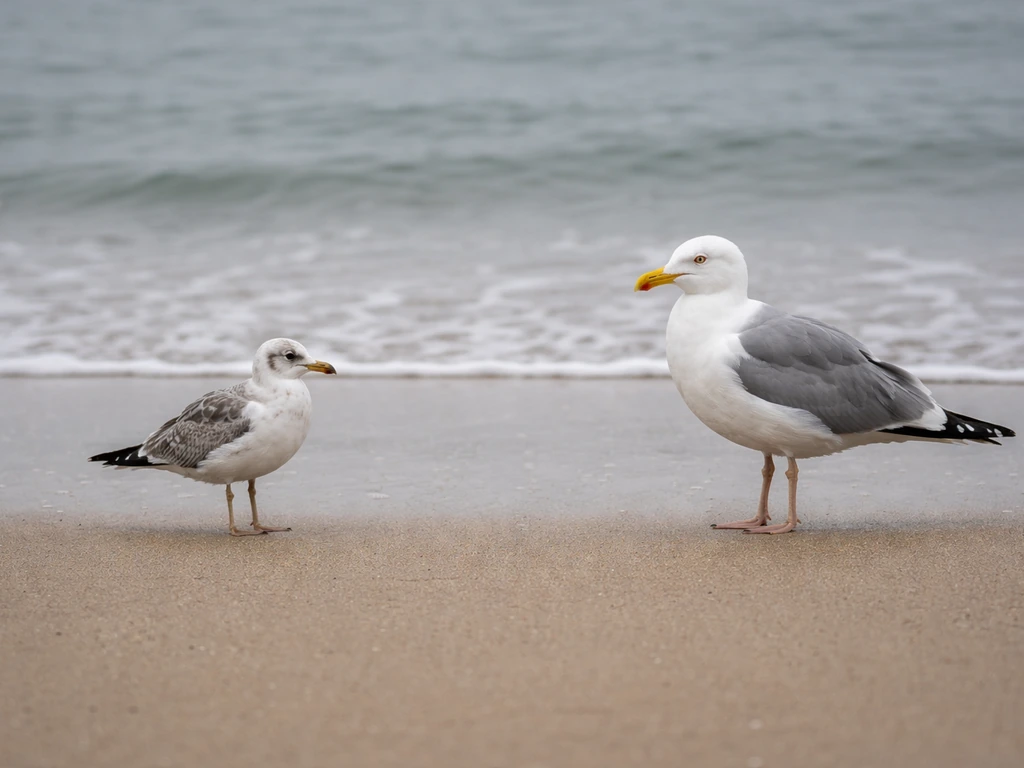
Large lookalikes are usually just different gull species. The Herring Gull is the classic mental image most people have of "a seagull," but the Ring-billed Gull is a bit smaller and much more common inland. Great Black-backed Gulls are enormous, almost hawk-like in presence. If the bird you saw was broad-shouldered, flat-winged while gliding, and seemed to waddle when walking, you were looking at a true gull.
Big silhouette check: wings, tail, and body shape
Silhouette is your best tool when the bird is far away or backlit. Gulls have broad, relatively rounded wingtips and a heavy, barrel-chested body. They glide a lot, holding their wings flat or with a gentle bow, and their tails are short and squared off. Even in flight, they look solid and deliberate.
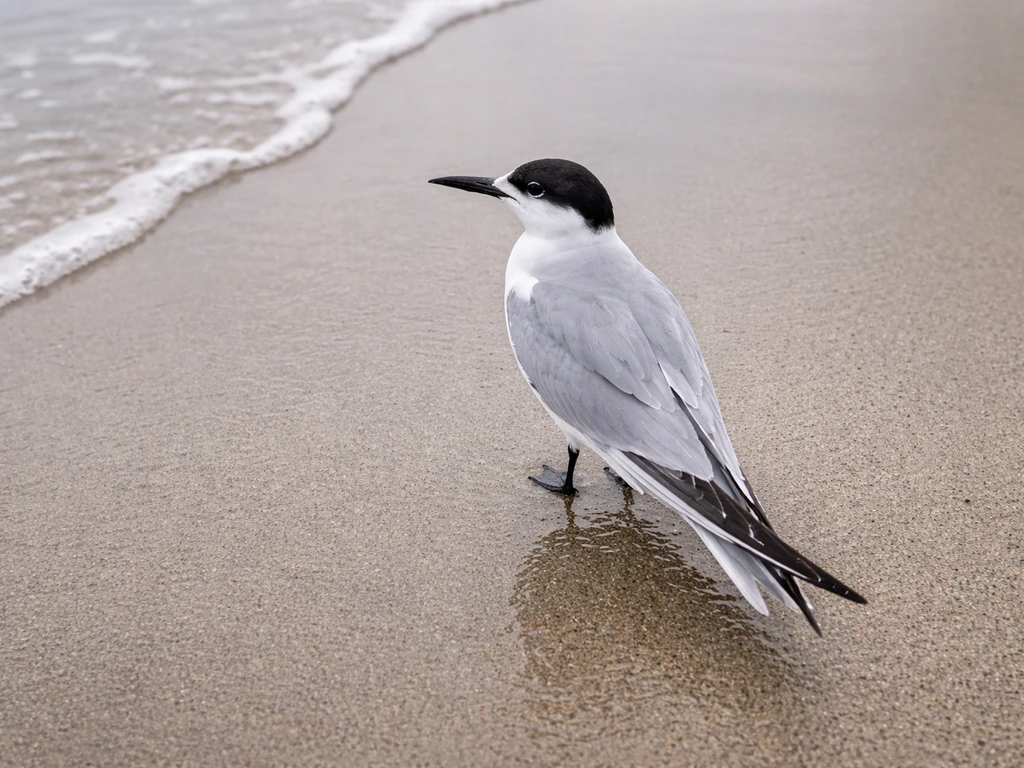
Terns look almost the opposite. Their wings are long, narrow, and swept back, giving them a rakish, almost knife-like silhouette. Their tails are often forked, sometimes dramatically so, which is the single easiest way to separate a tern from a gull at any distance. Terns also look front-heavy in flight because their bills point slightly downward, giving them a hunting posture even when they're just cruising. If the bird you saw had a noticeably forked tail or looked like it was perpetually diving even while flying level, that's a tern.
Body shape matters too. A gull lands and looks confident and upright. A tern lands and looks a little awkward, almost perched reluctantly, with its wings hanging longer than its tail. Terns also tend to have very short legs, so they sit low to the ground or on a surface, while gulls stand tall and stroll around like they own the place.
Bill and head details that separate common lookalikes
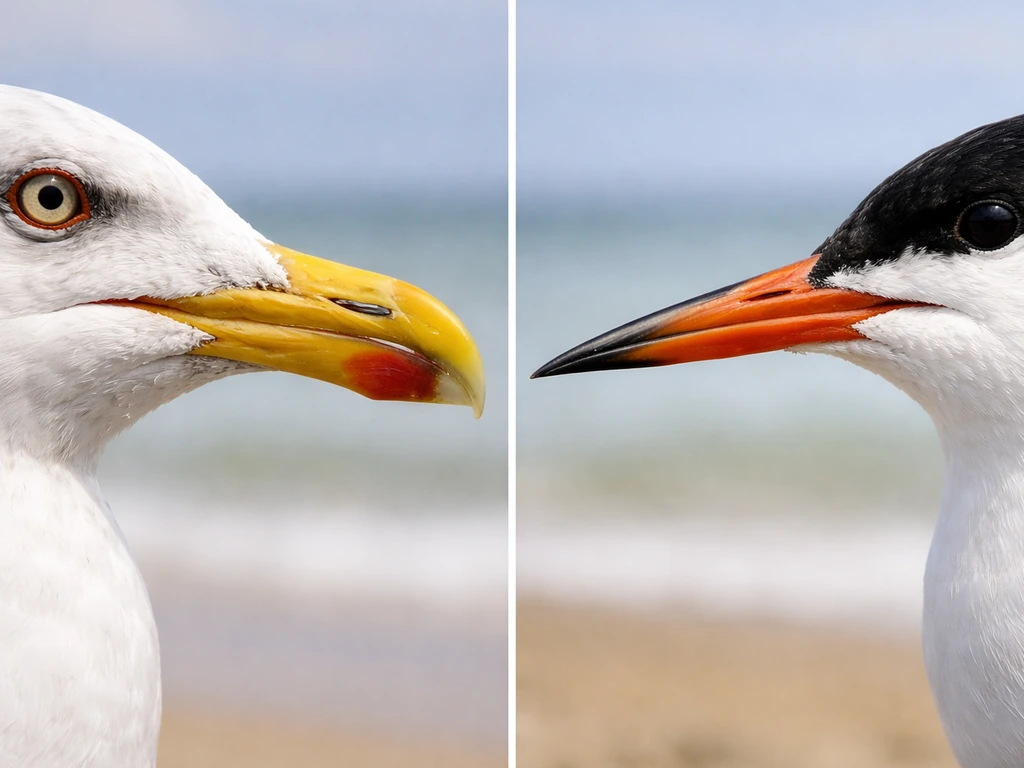
The bill is where most identifications get confirmed or corrected. Gulls have thick, hooked bills with a noticeable angle on the lower mandible, sometimes called a gonydeal angle. It looks like a slight bump or bend near the tip of the lower bill. That hook helps them tear into food. Ring-billed Gulls have a clean black ring around their bill, which is one of the most distinctive marks of any common gull. Herring Gulls have a yellow bill with a red spot on the lower mandible.
Tern bills are straight, sharp, and dagger-like with no hook. The Least Tern has a yellowish bill with a dark tip in breeding season, which looks almost delicate compared to a gull. All About Birds notes that nonbreeding or immature Common Terns can be larger and bulkier than Least Terns, and that bill color differs, with Common Tern bills appearing blackish versus the yellowish bill of Least Terns blank" rel="noopener noreferrer">bill color (blackish vs yellowish in Least). The Common Tern has a red-orange bill also with a dark tip. The Sandwich Tern in the UK sports a long black bill with a yellow tip, which is the reverse of most terns and pretty distinctive once you know to look for it.
Head shape is also telling. Gulls have rounded, smooth heads with no dramatic crest or cap. Most terns in breeding plumage have a sharp black cap that covers the top and back of the head cleanly, almost like they're wearing a helmet. The Common Tern's black cap extends right to the back of the neck in breeding season. Outside of breeding season, many terns lose part of the cap and just have a dark smudge or mask around the eye, which can make them trickier to pin down.
Plumage and pattern cues: color, markings, and season changes
Most gull-like birds share the same basic palette: white underneath, gray on the back and upper wings, and black wingtips. But the details within that palette are where you nail the ID.
Gulls often have white mirrors (small white spots) in their black wingtips, which you can see clearly when they're in flight overhead. Their underparts are clean white. Immature gulls are notoriously confusing because they go through multiple years of mottled brown, gray, and white plumage before settling into adult colors. A large, blotchy brown bird acting like a gull almost certainly is a gull, just a young one.
Terns in breeding season look crisp and clean: bright white body, pale gray wings, black cap, and a colorful bill. The Common Tern also has a distinctly grayish belly rather than pure white, which is a useful subtle clue. Outside of breeding season, terns get messier: the cap fades to a partial dark mask or just a dark patch behind the eye, the bill may dull in color, and the overall impression is less sharp. This is when terns get confused with small gulls most often. If you're looking at a bird in late summer through winter with a smudgy dark head marking, check whether the tail is forked before assuming it's a gull.
Leg color is another quick cross-check. Most common gulls have pink or flesh-toned legs. Terns tend to have very short orange or red legs in breeding season, though they're often hard to see well because the birds don't stand up high. The Little Tern in the UK has short orange legs that are a field-guide staple for separating it from small gulls.
| Bird | Size (wingspan) | Bill | Black cap in breeding? | Tail shape | Leg color |
|---|---|---|---|---|---|
| Least Tern | ~50 cm (20 in) | Yellow with dark tip | Yes, plus white forehead patch | Forked | Orange-yellow |
| Common Tern | 75–80 cm (30 in) | Red-orange with dark tip | Yes, extends to nape | Deeply forked | Red-orange |
| Ring-billed Gull | ~120 cm (47 in) | Yellow with black ring | No cap | Short, squared | Yellow-green |
| Herring Gull | ~140 cm (55 in) | Yellow with red spot | No cap | Short, squared | Pink |
| Great Black-backed Gull | ~155 cm (61 in) | Yellow with red spot | No cap | Short, squared | Pink |
| Sandwich Tern (UK) | ~95 cm (37 in) | Black with yellow tip | Yes, slight crest | Forked | Black |
Behavior and habitat clues (shoreline, inland water, perching vs flying)
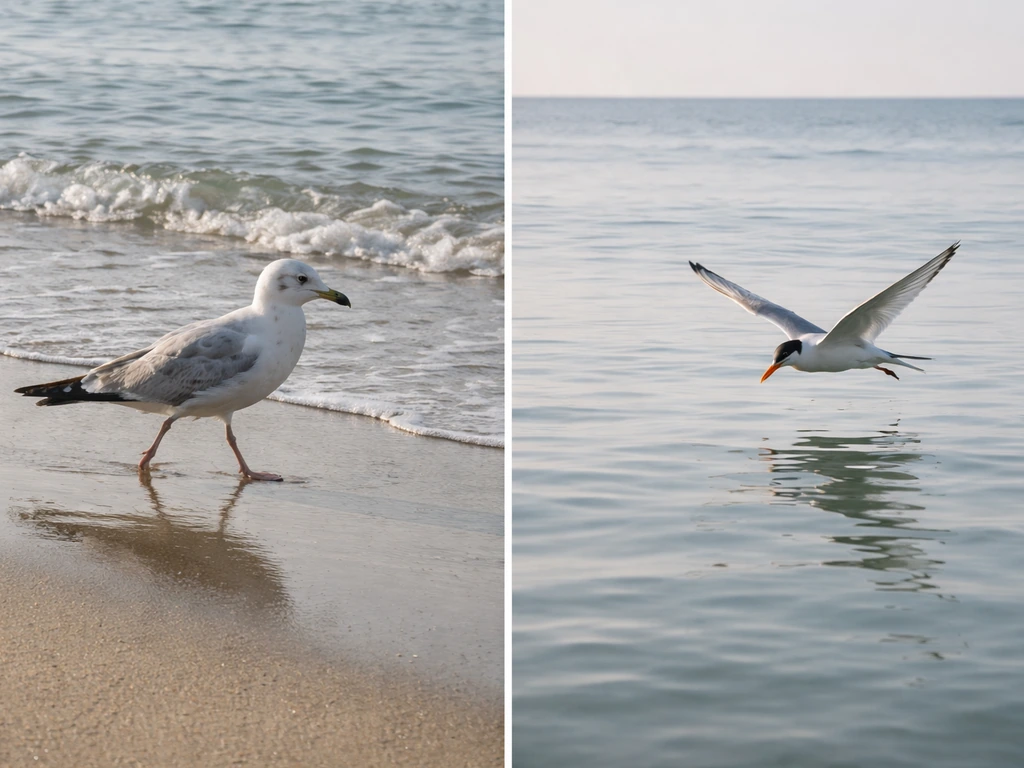
What the bird is doing and where it's doing it narrows things down fast. Gulls are generalists and scavengers. You'll see them walking parking lots, following fishing boats, picking through landfills, or loafing on flat surfaces. They're confident on the ground and spend a lot of time just standing around. If the bird you saw was strutting along a pier or begging near a food stand, it's almost certainly a gull.
Terns are focused hunters. They work a specific stretch of water, flying back and forth with their bill angled down, scanning below. The Least Tern is especially distinctive because it hovers repeatedly before plunging, almost like a tiny kestrel over water. However, the classic “looks like a hummingbird” question is usually about birds with fast, hovering flight and a slender bill what bird looks like a hummingbird. Common Terns also hover and plunge but cover more ground. Watching a bird repeatedly hovering over shallow water and diving headfirst is a strong indicator you're watching a tern, not a gull. Gulls do dip to the surface or grab food opportunistically, but they don't do that focused hovering-then-plunge routine.
Location matters too. Terns prefer cleaner, calmer waters and are more selective about where they forage: coastal beaches, estuaries, calm bays, and wetlands. They're less likely to be rummaging through garbage or following a tour boat. Gulls show up almost anywhere there's water or people, from ocean beaches to lake shores to big-box store parking lots miles from any coast. Inland, if you spot a gull-like bird, it's more likely to be a Ring-billed Gull than a tern. If you're at a freshwater wetland and the bird is hovering and plunging, tern is the better guess.
Quick photo/field checklist to confirm your best match
When you're in the field or looking at a photo you took, run through these points in order. You don't need all of them, but getting three or four confirmed is usually enough for a solid ID.
- Body size: smaller than a pigeon (likely Least Tern or Little Tern), pigeon-to-crow sized (likely Common Tern or small gull), crow-to-hawk sized (Herring Gull or larger gull)?
- Tail shape: visibly forked or pointed (tern) vs short and squared off (gull)?
- Bill shape: straight and dagger-like (tern) vs thick with a hook or bump near the tip (gull)?
- Bill color: yellow with dark tip or red-orange (breeding tern) vs yellow with a ring or spot (gull)?
- Head pattern: clean black cap covering top and back of head (breeding tern) vs plain white head or just a smudge (gull or nonbreeding tern)?
- Leg color and length: short orange or red legs sitting low (tern) vs longer pink or yellow-green legs standing tall (gull)?
- Flight behavior: hovering over water before plunging (tern) vs gliding flat and scavenging (gull)?
- Belly color: grayish tones (Common Tern) vs clean white (most gulls)?
When you're still unsure: how to narrow by location and take better evidence
If you're still stuck, location and season do a lot of the heavy lifting. In North America, if it's summer and you're on a coastal beach or estuary, Least Terns and Common Terns are actively breeding and very active. In winter, terns largely migrate away, so a gull-like bird in January along the coast is almost certainly just a gull. In the UK, late spring through summer is prime tern season at wetland reserves, so a small gull-lookalike hovering over a lake in June is probably a Common Tern or Little Tern.
For photos, try to get a shot that captures the bill profile, the tail in flight (to check for the fork), and the top of the head. A side-on photo in decent light is worth ten blurry action shots. If you can, photograph the bird landing or taking off, because that's when the tail fork and wing shape are clearest. Even a decent phone photo at moderate distance will usually show enough to confirm bill shape and head pattern.
Apps like Merlin Bird ID (free from Cornell Lab) let you upload a photo or answer a few quick questions and will give you a shortlist of likely species for your location and date. That's genuinely the fastest way to get from 'I think I know what this is' to a confirmed answer today. You can also cross-check your bird against regional checklists: eBird shows what species have been reported near you recently, so if you're seeing something that nobody else in your county has logged in years, it's probably a more common bird in unusual lighting rather than a rare species.
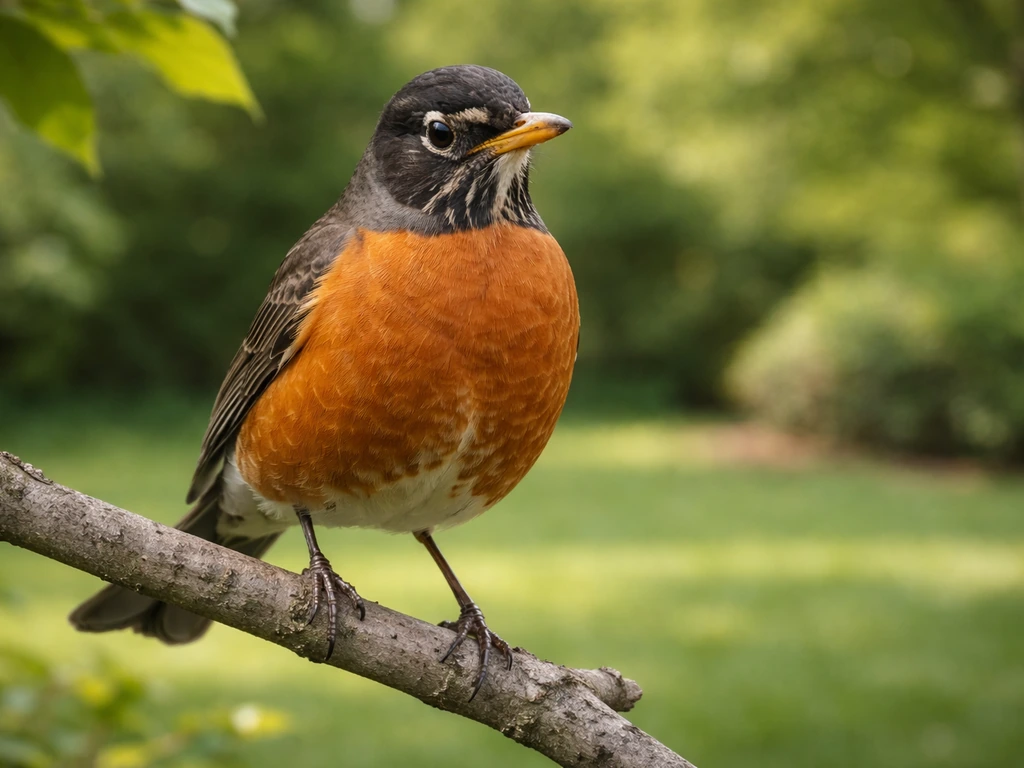
Bird identification gets easier the more you go through this process, and seagull-lookalikes are actually a great group to start with because the differences between gulls and terns are pretty consistent once you know what to check. The same approach of checking size, silhouette, bill, and behavior works across many other bird groups too: if you enjoy narrowing down tricky lookalikes, similar comparisons apply to birds that look like robins, mockingbirds, or even flamingos, where a few key visual clues do most of the identification work. A robin is a small songbird, and if you’re wondering what a robin looks like, the key features are its warm orange-red breast and overall brown-gray look what a robin bird look like.
FAQ
What should I do if the bird is far away and I cannot clearly see the bill or tail?
If you cannot tell from distance, prioritize two “hard” clues: tail shape (forked in terns, short and squared in gulls) and bill profile (straight dagger-like in terns, hooked with a visible gonydeal angle in gulls). Color alone is unreliable, especially in juveniles and winter plumage.
Can flight style alone confirm whether it is a gull or a tern?
Yes. In bad light, wind, or motion blur, gulls and terns can look interchangeable. A practical check is to watch the posture during flight and hunting, terns usually look front-heavy and hold a more pointed, hunting stance with wings swept back, gulls look more solid and deliberate with flatter, broader wings.
How do I identify a bird that is in juvenile or non-breeding plumage?
Look for molt and age cues, not just the “adult” pattern. Juvenile gulls often wear mottled brown-gray-white plumage and can look much less like classic seagulls, while terns outside breeding season may show only a partial dark mask instead of a crisp cap. When plumage is messy, switch to bill shape and tail fork first.
What behavior is most reliable to separate a tern from a gull when both are hunting?
If it is hovering repeatedly over shallow water and then diving with bill angled down, that behavior strongly favors a tern. Gulls may dip or snatch opportunistically, but the repeated hover-then-plunge routine is the key behavioral divider to look for.
Is it still a tern if I saw a seagull-lookalike far inland?
If you see a gull-like bird over inland water, assume Ring-billed Gull more often than a tern, unless you also confirm tern traits like a forked tail and straight, unhooked bill. Inland terns are possible, but they are less likely than gulls in most regions.
Does season matter if I saw the bird in fall or winter?
During breeding season, terns often show brighter, cleaner features and more obvious head pattern, but that can disappear later. If your sighting is in late fall or winter, do not rely on head cap brightness, instead verify bill hook absence or presence and confirm tail fork.
How can I confirm between common gull species using bill markings?
If the bill has a black ring, you are very likely looking at a Ring-billed Gull. If the bill is yellow with a red spot on the lower mandible, that points toward Herring Gull. These markings are among the fastest “confirmation” features when the bird is close enough.
What photo angle gives the best chance of getting the ID right?
Photograph strategy matters. Try to capture (1) a side-on or three-quarter view of the bill, (2) the tail when it is stretched or in the takeoff sequence, and (3) the top of the head. If you only get one clear image, make it the one that shows the tail in flight.
How should I use a bird-ID app to avoid common misidentifications?
Apps can help, but they will be less accurate if your photo hides the tail or bill. For better results, add your location and date, and if possible include notes like “hovering and diving” or “walking confidently near people,” then compare the app’s top guesses to the forked-tail and bill-hook clues.
What is the most common mistake people make when identifying seagull lookalikes?
Avoid jumping to “tern” based only on size. Some gulls are slimmer than you expect, and some terns look chunkier when perched. Use a 3-step confirmation: size estimate, then silhouette, then bill and tail.
What Bird Looks Like a Robin: Easy Identification Guide
Identify robin lookalikes fast with plumage, size, bill and habitat clues, including big-robin confusion cases.