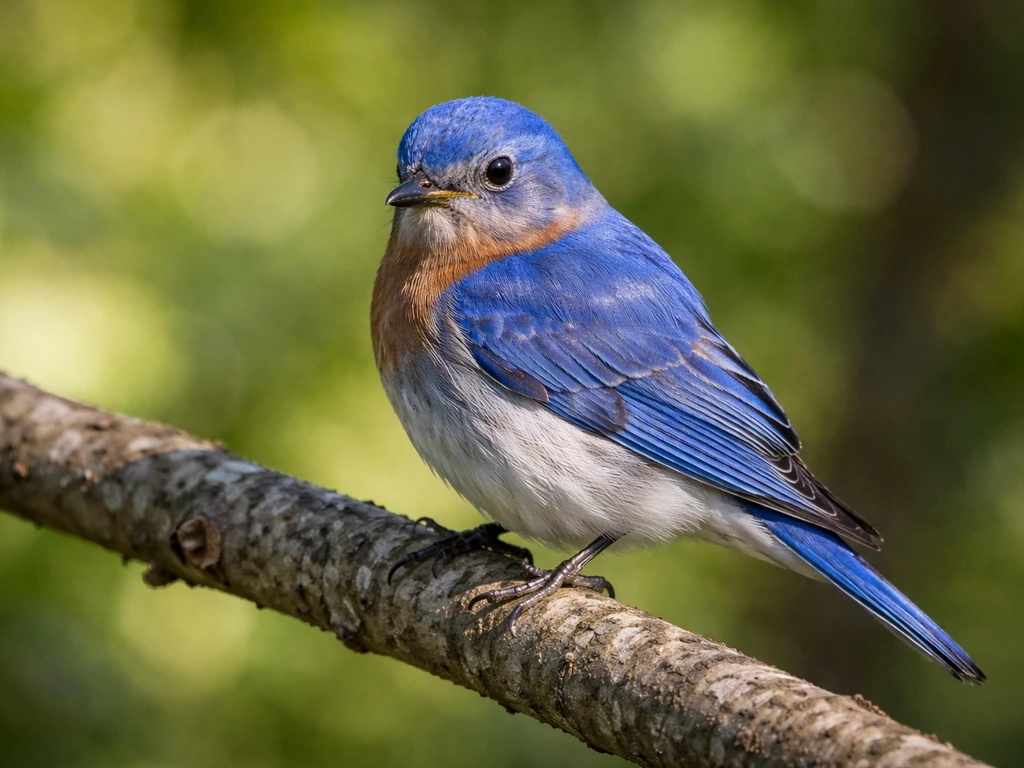
Most blue birds you spot in North America fall into a handful of species, and the easiest way to tell them apart is by where the blue sits on the body and what color accompanies it. A male Eastern Bluebird is vivid sky-blue on the back and wings with a warm orange-red chest. A male Indigo Bunting looks entirely blue from a distance, like a tiny electric-blue sparrow. A Blue Jay is larger, crested, and heavily patterned with black, white, and bars. Once you know those basic blueprints, most sightings click into place quickly.
What Does a Blue Bird Look Like? Identify Common Blue Birds

Marcus Whitley
13 May 2026
What most blue birds look like at a glance
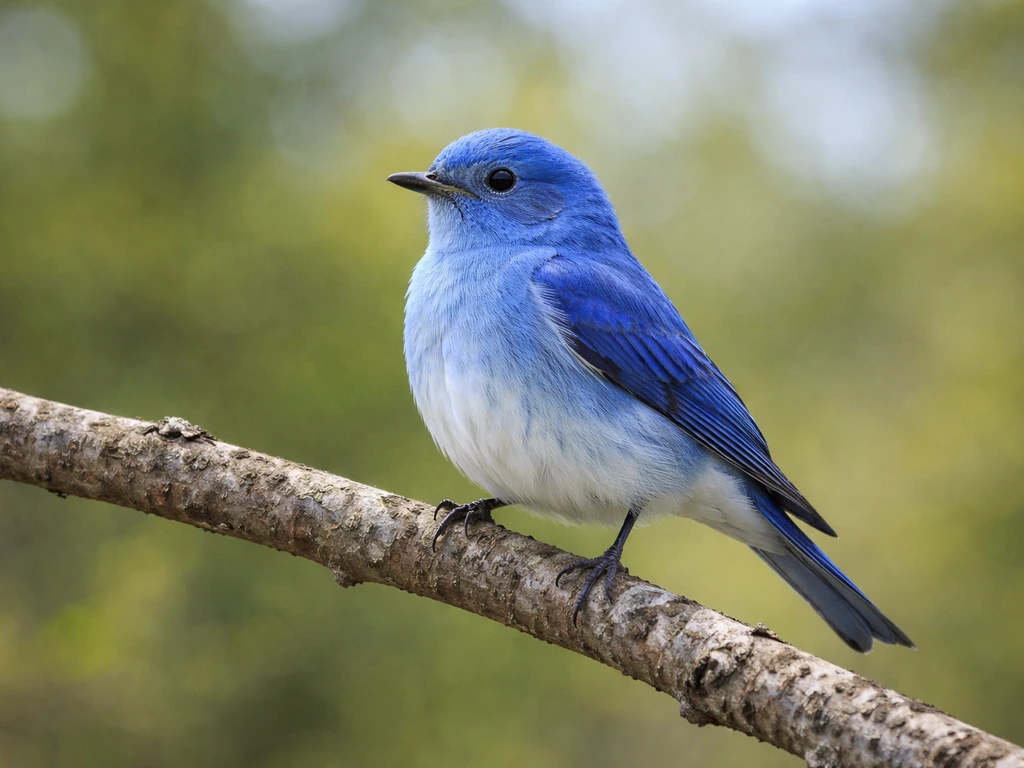
Blue birds span a wide range of shades, from sky blue and cobalt to deep indigo and purplish-blue. The blue is rarely uniform across the whole body. In most species you will see a concentration of blue on the back, wings, or head, paired with a contrasting color on the belly, chest, or throat. Males are almost always brighter and more saturated than females, who tend to be muted, grayish, or washed-out versions of the same pattern. Juveniles often look even duller, and many young bluebirds show heavy spotting on the chest that can throw you off if you are not expecting it.
The other thing worth knowing upfront is that lighting changes everything. A male Indigo Bunting can look almost black in shade, then flash brilliant turquoise in direct sun. A female Eastern Bluebird can look plain gray until she turns and you catch the blue in her wing. Always try to get the bird in open light before you decide what color you are actually seeing.
How to identify a blue bird by key visual traits
Before you jump to species, run through these field marks in order. They narrow things down faster than color alone.
Size and overall shape
Size is your first filter. Eastern Bluebirds are about 7 inches long, roughly the size of a large sparrow or small thrush. Blue Jays are nearly 12 inches, closer to a crow in build. Indigo Buntings are small and compact, similar in size to a house sparrow. If you can compare the bird to something you already know, a robin, a sparrow, a pigeon, you have already cut the candidate list significantly. Also look at the overall silhouette: is the bird stocky and round-chested, or slim and long-tailed?
Bill shape
Bill shape is one of the most reliable clues you have. Bluebirds (Eastern, Western, and Mountain) have thin, pointed bills, like most thrushes, suited for catching insects. Indigo Buntings have a blank" rel="noopener noreferrer">short conical seed-cracker bill, similar to a finch. Blue Grosbeaks have a noticeably large, thick triangular bill, much heavier than a bunting's. Blue Jays have a strong, medium-length straight bill with a slight hook. If you can clearly see the bill shape, you can often separate the families before you even think about color.
Where exactly is the blue?
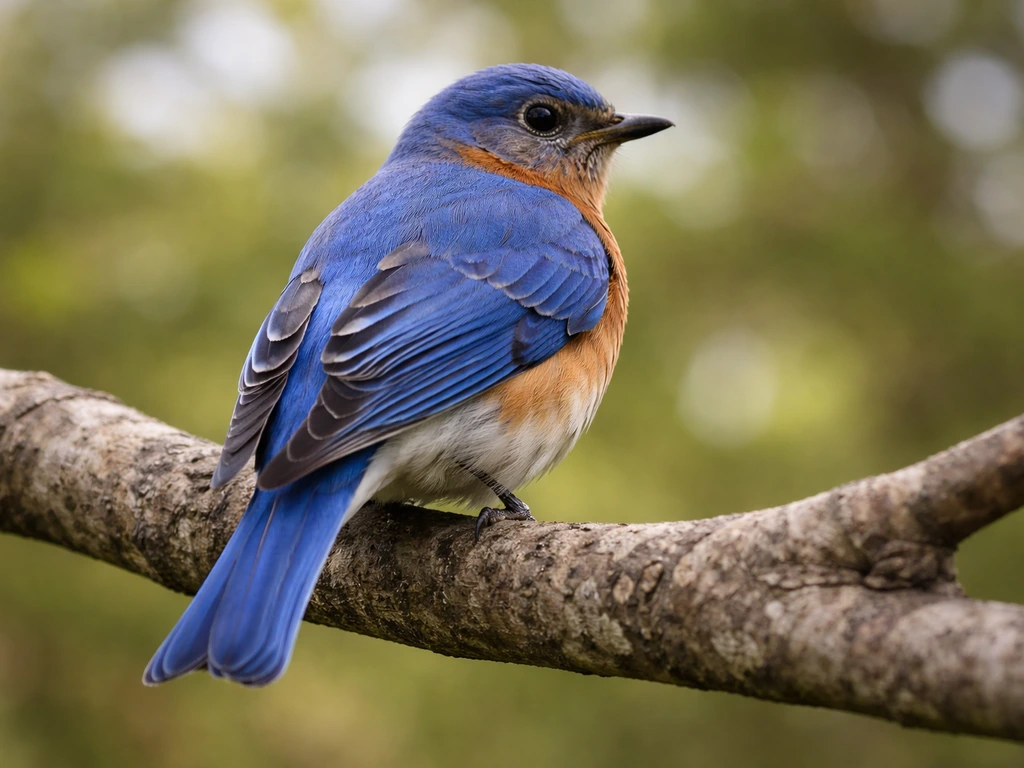
This is the key question to ask yourself in the field. Does the blue cover the entire body, just the back and wings, or only the head? In Eastern Bluebirds, the blue is concentrated on the upperparts (back, wings, head) with a bright orange-red chest and white belly underneath. In Mountain Bluebirds, the blue is more extensive, covering the throat and belly too, giving the male an almost entirely blue look. In Indigo Buntings, the blue wraps the whole bird with no contrasting chest patch. In Blue Jays, the blue is on the back, wings, and tail but is heavily striped and barred with black and white.
Wing and tail patterns
Wing bars, barring, and tail shape add more clues. Blue Jays have bold white wing bars and black barring across the wings and tail. blank" rel="noopener noreferrer">Blue Grosbeaks show two reddish-brown wing bars on otherwise dark wings. Bluebirds have plain blue wings without strong bars. Indigo Buntings often show faint streaking on the breast and subtle wing edges but no bold bars. Tail shape matters too: bluebirds have a relatively short, slightly notched tail, while Blue Jays have a long, rounded tail with white corners.
Male, female, and juvenile differences
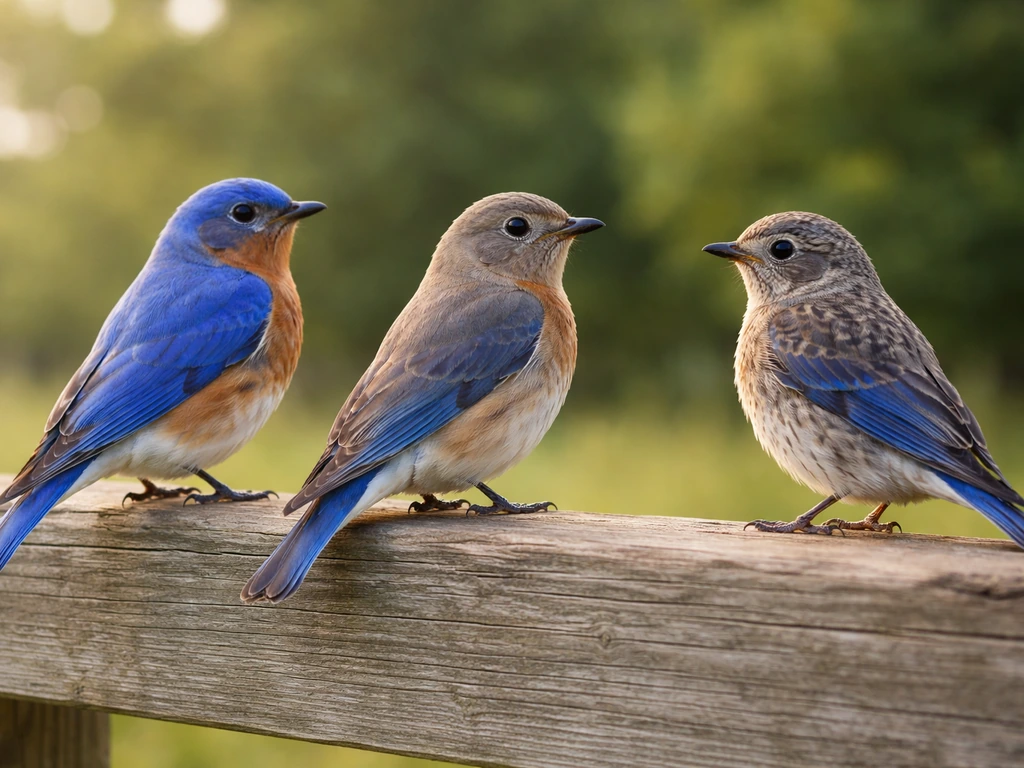
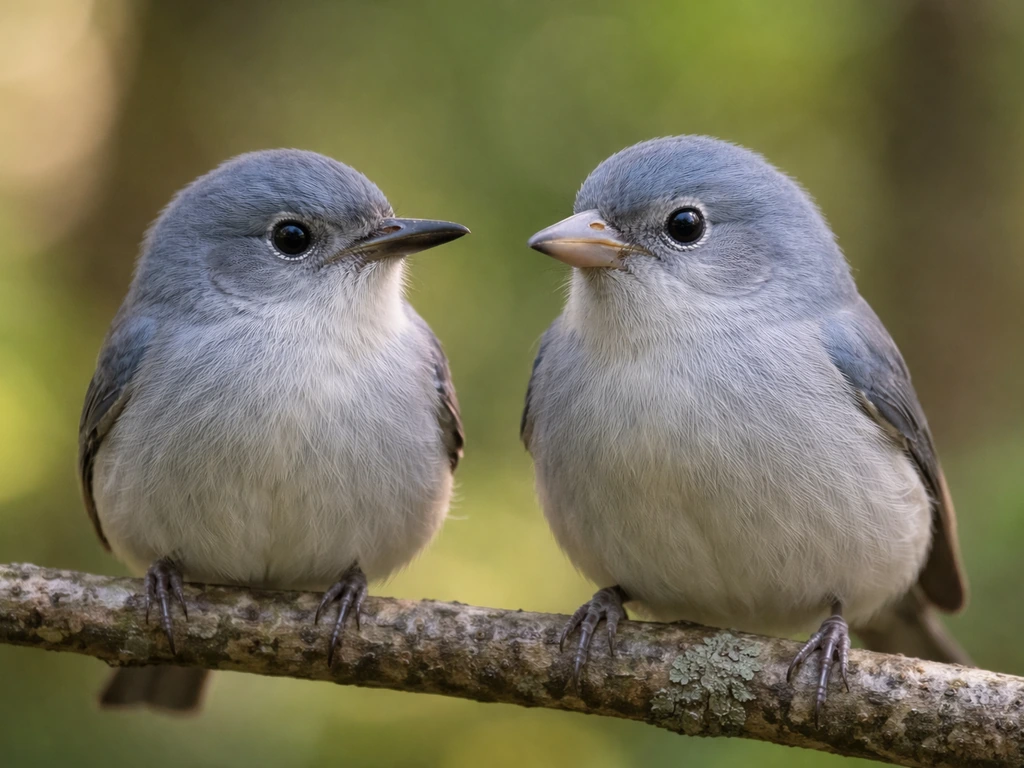
Across almost every blue bird species, females are noticeably duller. A female Eastern Bluebird has grayish-brown upperparts with just a hint of blue on the wings and tail, a pale throat with faint brownish streaks on the sides, and a washed-out orange tinge on the chest. Juveniles of all three bluebird species (Eastern, Western, Mountain) have heavily spotted breasts and mostly brown or gray bodies, with blue restricted to the wings and tail. If you see a spotted-breasted bird with blue in the wings, young bluebird is worth considering. Female Indigo Buntings are plain brown overall with very little blue, easy to miss entirely.
Common blue bird species and what they actually look like
| Species | Size | Male appearance | Female appearance | Key distinguishing mark |
|---|---|---|---|---|
| Eastern Bluebird | ~7 inches | Bright blue back and wings, orange-red throat and chest, white belly | Grayish-brown back, faint blue in wings/tail, pale orange wash on chest | Orange-red chest with white belly; thin bill |
| Western Bluebird | ~7 inches | Deep purplish-blue on back/throat/wings, reddish-brown chest and sometimes upper back, gray belly | Grayish-blue with muted rust on chest | Rust color extends to upper back in males; gray belly (no white like Eastern) |
| Mountain Bluebird | ~7 inches | Sky-blue overall, pale blue-gray on belly, no orange anywhere | Gray-brown with subtle blue wash on wings and tail | Males are the most uniformly blue of all bluebirds; no orange at all |
| Indigo Bunting | ~5 inches | Entirely brilliant blue in good light, darker blue on head | Plain brown, faint streaking on breast | Tiny conical finch bill; all-blue male with no contrasting chest patch |
| Blue Grosbeak | ~6.5 inches | Deep royal blue with two reddish-brown wing bars, dark wings and tail | Mostly brown with scattered blue feathers, two brown wing bars | Large, thick triangular bill; wing bars are distinctly reddish-brown |
| Blue Jay | ~11-12 inches | Blue back/wings/tail with black barring, white wing bars, white face, bold black necklace, prominent crest | Same as male (sexes look alike) | Prominent crest; black necklace; barred blue and white wings and tail |
Where each one lives
Eastern Bluebirds are birds of open country in the eastern and central US: farms, roadsides, orchards, pastures, forest clearings, and suburban parks with big lawns. They nest from late March through early August and move south or to lower elevations in winter. Western Bluebirds occupy open woodlands and forest edges in the western US, especially ponderosa pine areas. Mountain Bluebirds go higher up, favoring montane meadows, high-elevation open country, and the mountain districts of western North America.
Indigo Buntings prefer overgrown fields, brushy forest edges, and roadsides across the eastern US during summer. Blue Grosbeaks like dense shrubby habitats, brushy fields, and woodland edges across the southern and central US. Blue Jays are widespread in forests, suburbs, and parks across eastern North America year-round.
Blue birds that look alike and how to separate them
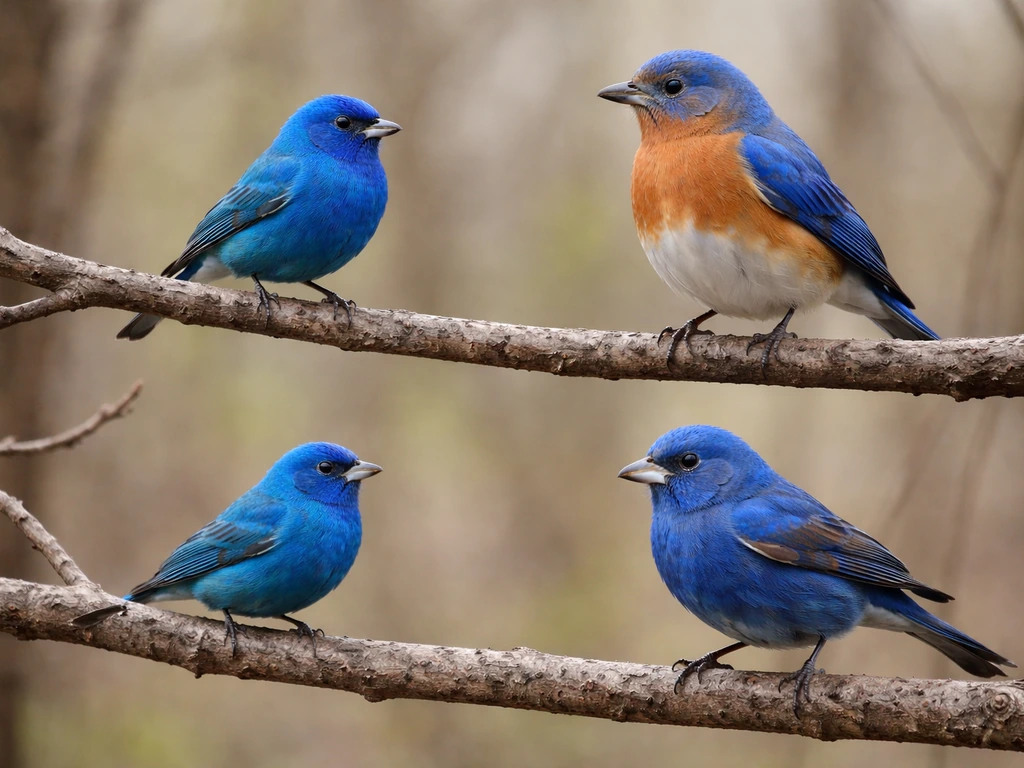
The two most common mix-ups are Indigo Bunting versus Eastern Bluebird, and Indigo Bunting versus Blue Grosbeak. An Indigo Bunting is noticeably smaller than a bluebird, has a conical seed-cracker bill instead of a thin pointed one, and shows all-blue plumage with no orange chest whatsoever. If you see a tiny entirely blue bird at a feeder or in a brushy field, it is almost certainly an Indigo Bunting, not a bluebird.
Separating Indigo Bunting from Blue Grosbeak is mostly about size and bill. Blue Grosbeaks are noticeably larger, and their bill is dramatically bigger and heavier, almost oversized for the bird. In good light, a male Blue Grosbeak's two reddish-brown wing bars are quite visible. Indigo Buntings lack those bold bars. If the bill looks too big for the head, you are probably looking at a grosbeak.
Blue Jays are rarely confused with bluebirds once you know both, but beginners sometimes lump any blue bird together. If you are specifically trying to identify a Blue Jay, use the key visual clues like its size, crest, and barred wings and tail. The Jay is nearly twice the size, has a pronounced crest, a bold black necklace across the chest, and heavily barred wings and tail. No bluebird has a crest or that kind of black-and-white patterning.
Among the three bluebird species, the cleanest separator is the chest and throat color. Eastern Bluebird: orange-red throat and chest with a white belly. Western Bluebird: orange-rust chest and sometimes upper back, gray belly (no white), with a blue throat. Mountain Bluebird: entirely blue with no orange anywhere, pale blue-gray belly. If you are in the West and you see an all-blue bird with no orange, Mountain Bluebird is the first call to make.
It is also worth knowing that other blue birds you encounter on this site, like the Blue Jay, have their own detailed visual profiles worth reading side by side. The differences between a Blue Jay and a bluebird, or between a grosbeak and a bunting, become much clearer when you compare their full appearance head to head.
Where to look and when to boost your chances
If you are after bluebirds specifically, head to open areas with scattered trees: farmland edges, old orchards, roadsides with fence posts and power lines, pastures, and mown parkland. Bluebirds perch in the open on posts, wires, and low branches, scanning the ground for insects. They are not deep-forest birds at all. Early mornings in spring and summer, from late March through August, give you the best activity, especially near nest boxes. In fall and winter, look for small flocks moving through shrubby areas eating berries, things like sumac, black cherry, and dogwood.
For Indigo Buntings, focus on brushy field edges, overgrown roadsides, and forest margins during late spring and summer across the eastern US. Males sing persistently from exposed perches at the tops of shrubs or small trees, making them easier to find by ear first and then by eye.
Blue Jays are one of the easiest blue birds to find year-round: suburban yards, parks, and forest edges across the east. They are noisy and conspicuous, almost always announcing themselves before you see them.
Keep in mind that molt can make birds look unusual. If you are trying to identify a grouse, look for stout body shape and mottled brown, gray, or buff patterns rather than the bright blue look of songbirds what does a grouse bird look like. A bluebird midway through its feather molt might look patchy or duller than usual. Do not let a slightly off-looking bird throw you: check the overall structure and field marks rather than relying purely on color intensity.
After you see one: how to confirm what you found
The most useful thing you can do in the moment is take a photo, even a blurry one with your phone. A whole-body side profile is the gold standard, but if you can only grab a quick shot, aim for the chest and head area where the key color contrasts sit. Multiple angles help: if you can get a front-on view and a side view, you will be able to check throat color, chest pattern, and wing bars together.
Once you have a photo, cross-check it with your location and habitat. Ask yourself: Am I in the eastern US in farmland or open suburbs? Eastern Bluebird is the likely candidate. Am I in the mountains of the West? Mountain Bluebird jumps to the top. Am I in a brushy overgrown field and the bird is sparrow-sized with a thick bill? Blue Grosbeak or Indigo Bunting, depending on bill size.
Use a free app like Merlin Bird ID (from the Cornell Lab) and enter your location, the date, and the size of the bird before uploading the photo. It will give you a ranked list of possibilities based on what birds are actually in your area that time of year, which cuts the guesswork dramatically. If you want to go deeper, check the species page on a reference site like All About Birds or USGS Patuxent and compare the field marks one by one against your photo.
- Take a photo as soon as you can, aiming for a clear side view of the whole body
- Note the habitat you are in: open field, forest edge, mountain meadow, suburban yard
- Check your geographic region and the current season
- Look at your photo and identify: where exactly is the blue, what color is the chest, and how big is the bill
- Enter your sighting into Merlin Bird ID with location and date for a ranked species shortlist
- Compare your field marks against a species reference page to confirm the ID
Most blue bird sightings resolve quickly once you work through those steps. The combination of location, habitat, size, bill shape, and chest color will get you to the right species in almost every case. And if the bird turns out to be something unexpected, that is half the fun of looking.
FAQ
What if I see an all-blue bird but the chest color is unclear in my view?
If the bird looks nearly all blue but you cannot see any orange or throat color, confirm the bill first. Indigo Buntings have a short, conical seed-eater bill and look tiny, while Mountain Bluebirds have a longer, thin pointed bill and an all-blue look that includes the throat and belly, not just the back.
How can I tell a true blue bird from an animal that just looks blue because of lighting?
Don’t rely on “blue intensity” alone when the bird is in shadow. Instead, look for stable features like wing bars and bill shape, then re-check color after it turns toward open light.
What should I look at if I only get a quick partial glimpse (no full view)?
If you only get a partial view, use a top-down priority: size or silhouette, bill shape, then the presence or absence of wing bars or bold barring. A bird that shows strong black-and-white wing and tail barring is very likely a Blue Jay, even if the chest details are hidden.
Can feeding or where the bird is coming from (feeder vs brush) help identification?
Feeding behavior can help. Indigo Buntings and Blue Grosbeaks often appear in brushy field edges and can come to feeders, but Blue Jays are far more likely to show up in open yards and around feeders with obvious size and crest. If the bird is small and coming from dense cover, weigh bunting and grosbeak more heavily than bluebirds.
How do I avoid misidentifying a female or juvenile because it looks dull or patchy?
Yes. Some people expect bluebirds to be bright cobalt everywhere, but females and juveniles often have muted or patchy blue. If you see brown-gray tones with blue restricted mainly to wings and tail, treat “juvenile bluebird” as a serious possibility before assuming a different species.
What if the bird looks patchy or oddly colored, could it just be molting?
If the bird appears to be mid-molt and looks uneven, ignore the “missing” blue patches and focus on structure, bill, and pattern where blue is still present (for example, whether there are wing bars or a plain vs barred wing). A stable chest or throat cue usually returns as feathers finish growing.
How can I estimate size accurately enough to separate Indigo Buntings, bluebirds, and Blue Jays?
Use size relative to familiar birds when possible. Eastern Bluebirds are about sparrow to small-thrush size, Blue Jays are nearly crow-sized with a crest, and Indigo Buntings are sparrow-sized but smaller overall and much more compact. If you can’t judge size, compare to the perch height and distance using a photo reference.
What’s the best way to photograph a blue bird so I can identify it later?
If you are photographing, get at least one angle where the bill and throat area are visible. A front-on shot is ideal for throat and chest contrast, while a side shot helps confirm tail length and whether wing bars are strong or faint. Avoid cropping out the feet and tail, since posture and tail shape often resolve confusion.
How do I confidently separate Indigo Bunting from Eastern Bluebird when the bird is moving?
When you suspect Indigo Bunting, double-check both bill and “no orange chest” rule. A true bluebird should show an orange-red or rust chest (Eastern, Western) or a blue throat and no orange anywhere (Mountain), while Indigo Buntings should remain all-blue overall and have that short conical bill.
What’s the quickest way to tell Indigo Bunting vs Blue Grosbeak in the field?
If you want a fast confirmation between the two lookalikes that beginners mix up most, use this quick decision aid: Indigo Bunting equals tiny, conical bill, no orange chest. Blue Grosbeak equals noticeably bigger body, much heavier triangular bill, and often two reddish-brown wing bars on darker wings.
Next Article
What Does a Grouse Bird Look Like? Key Visual Traits
Learn grouse appearance traits: size, mottled patterns, head and tail shape, and male vs female differences to ID in the