A blue jay is one of the easiest birds to recognize once you know what to look for. It's a medium-to-large songbird, bigger than a robin but smaller than a crow, dressed in bold blue, black, and white. Both males and females look nearly identical, so the same field marks work for identifying any blue jay you spot.
What Does a Blue Jay Bird Look Like? Male vs Female

Marcus Whitley
11 Apr 2026
Blue jay basics: size, shape, and overall color
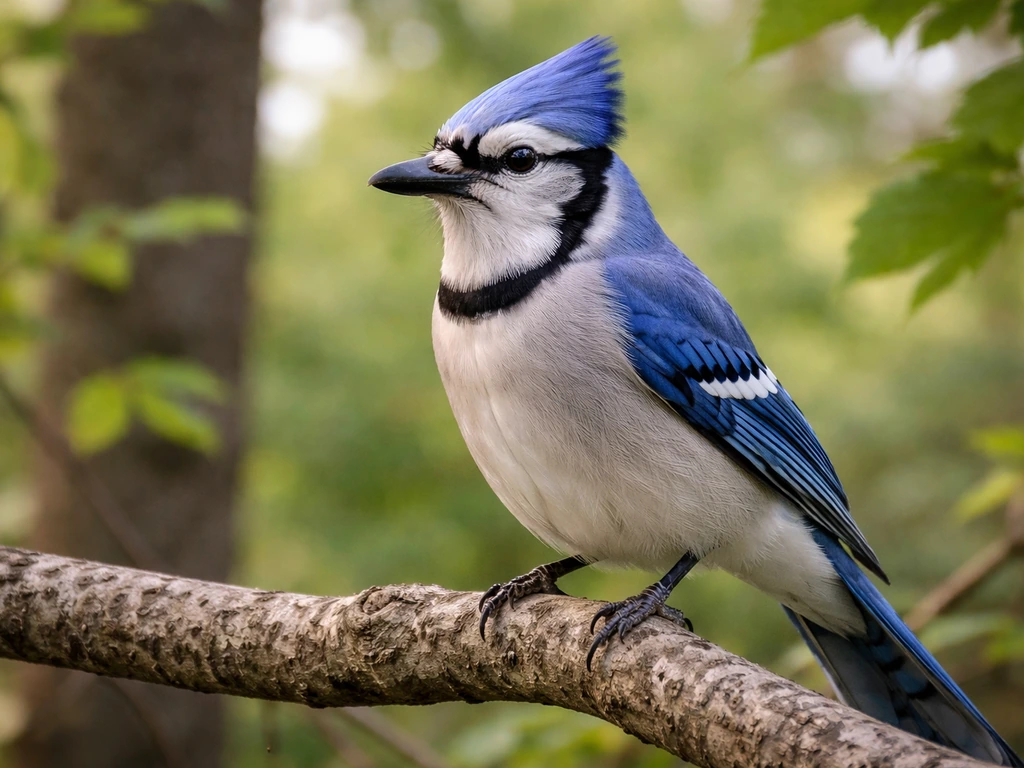
Blue jays measure roughly 9 to 12 inches long with a wingspan of 13 to 17 inches and weigh between 2.5 and 3.5 ounces. Think of a chunky, confident bird: broad body, a long rounded tail, and a distinctive crest on top of the head that gives it an almost regal silhouette. The overall color scheme is blue on top and pale whitish-gray on the bottom, with bold black-and-white accents throughout. The back reads as a slightly duller, blue-gray tone, while the wings and tail pop with a brighter, vivid blue. That contrast between the dull back and the bright wings is something you can actually use to confirm your ID once you start looking for it.
Female blue jay appearance: what's different from the male
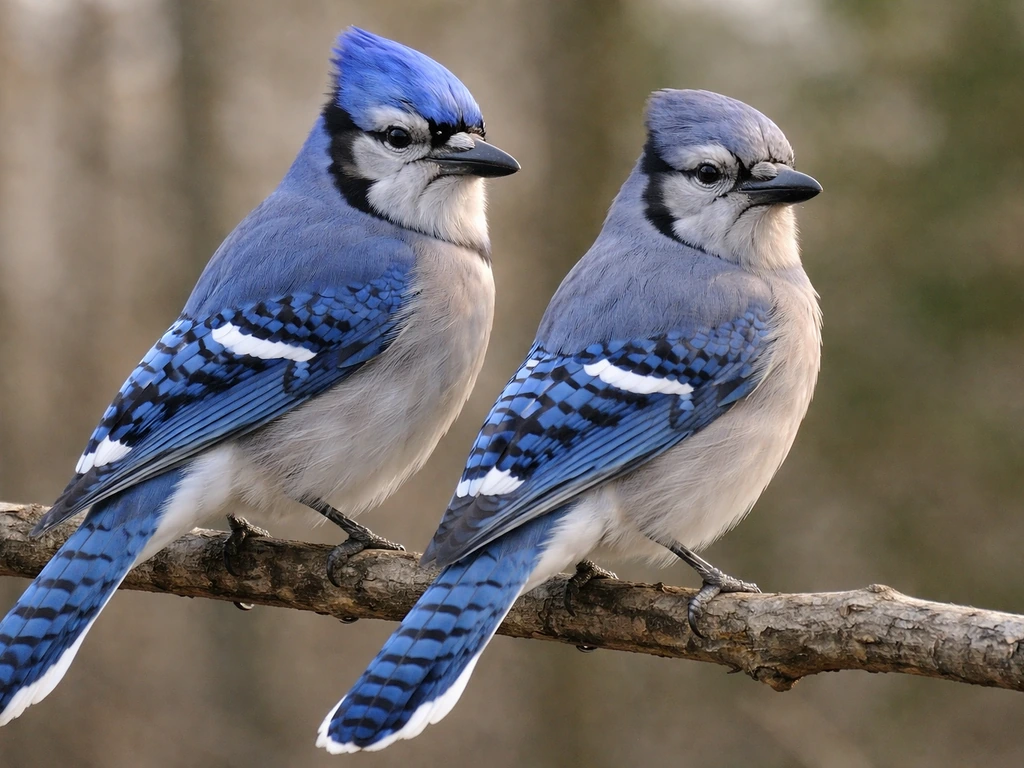
Here's the honest truth that most beginner guides gloss over: female blue jays look almost exactly like males. The authoritative field guides, including Audubon, simply state that the sexes are similar and that males are only slightly larger. There are no reliable plumage differences, no subtle coloring shifts in the crest or throat that will consistently tell you one from the other in the field.
If you're watching a pair and one looks a little bigger, that's probably the male, but even that can be hard to judge without a side-by-side comparison. So if someone told you female blue jays have a different color pattern or softer markings, that's a myth. Both sexes carry the same bold blue, black, and white design. identifying a jay bird by sex in the field really comes down to behavior clues, like nest-building posture, rather than plumage.
Head and face features: crest, mask, and throat/chest pattern
The head is where blue jays really set themselves apart. Look for these features from the top down:
- Blue crest: that pointed tuft of feathers on top of the head is the first thing you'll notice. It can be raised when the bird is alert or excited, and lowered flat when it's relaxed.
- Black eyeline: a bold black stripe runs through and behind the eye, giving the face a sharp, masked look.
- Grayish-white throat: the throat and chin are pale, almost white, and they're framed from below by the most recognizable feature on the whole bird.
- Black necklace: a thick black band curves from the back of the head, around the neck, and across the upper chest like a collar. This is one of the most reliable things to look for on any blue jay.
That white throat bordered by the black necklace is a feature Cornell Lab repeatedly highlights as a key adult field mark, and for good reason. Once you've spotted it once, you won't forget it. The bill is sturdy and black, which fits the overall bold face pattern.
Wings, back, and tail markings: the most reliable identifiers
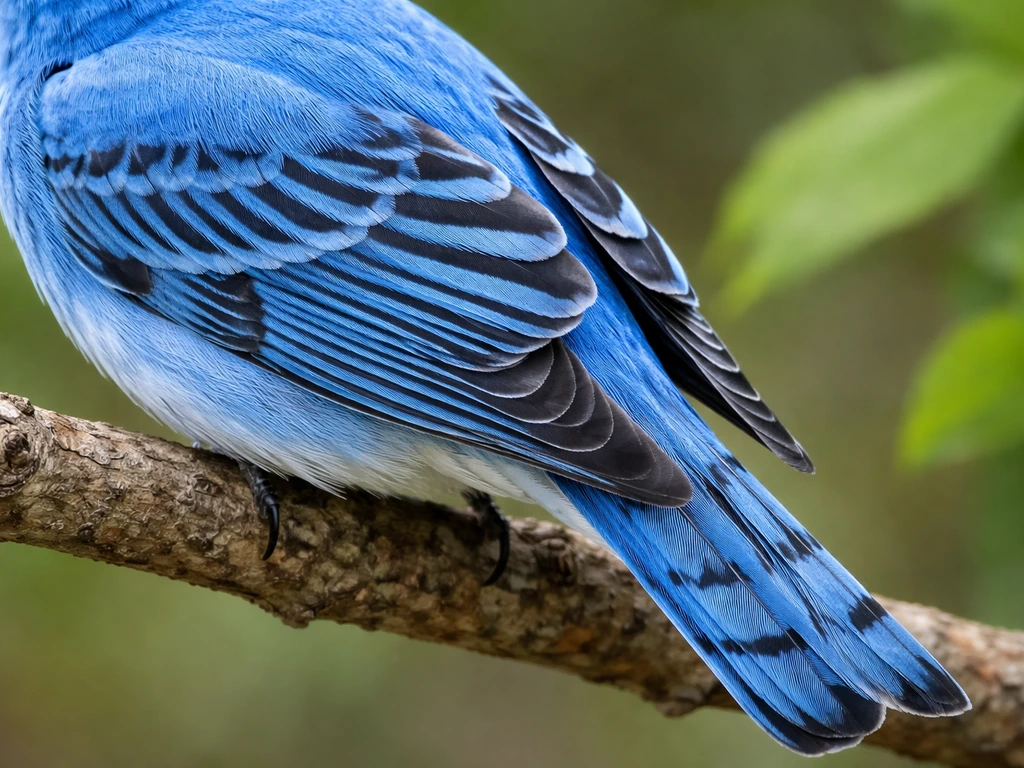
After the crest and necklace, the wings and tail are your next best tools for a confident ID. The wings are bright blue with distinct black barring running across them, and there's a bold white wingbar that stands out clearly even from a distance. This white wingbar is a major field mark. The back, by contrast, is a duller blue-gray, which creates a subtle but real contrast with the vivid wings.
The tail is long, blue, and also barred with black. The detail to look for, especially when the bird is flying away from you, is the white corners at the tips of the tail feathers. These white tail corners flash distinctively in flight and can help you confirm a blue jay even when it's moving fast. One thing to be aware of: the blue in the wings has a slightly iridescent quality, and it can look different depending on the angle and lighting. Sometimes those wing patches glitter; other times they look flat. That's normal. If you're not sure, try shifting your position to get a different viewing angle before you second-guess yourself.
How to confirm in the field: angles, lighting, and using photos
Blue jays are relatively approachable birds, which helps a lot. They tend to perch in the open, visit feeders boldly, and stay put long enough for a good look. Still, lighting can change how the blue reads, so here are a few practical tips for confirming what you're seeing:
- Check the crest first. If you see a pointed head crest on a blue-and-white bird, you're almost certainly looking at a blue jay.
- Look for the black necklace across the chest. That single mark rules out most confusion species instantly.
- Scan the wings for the white wingbar and black barring. These are visible from almost any angle.
- Watch the tail when the bird flies. White corners flashing at the tail tips are a dead giveaway.
- If the iridescent wing patches look dull or washed out, try repositioning. The structural color needs the right light to show up properly.
- Take a photo if you can, even with a phone. You can check the wing and tail details in the photo far more easily than in the moment.
Using binoculars makes a significant difference for picking out the finer details, especially the black eyeline and the precise pattern of the wing barring. If you're new to using them in the field, getting comfortable with your binocular setup before you head out is worth the effort, because fumbling with focus when a bird is perched right in front of you is genuinely frustrating.
Photos are especially useful when you're just starting out. You can zoom in, compare, and study at your own pace. If you've snapped a shot and want to cross-reference what you saw, comparing it to descriptions of other blue-colored birds can help you rule out similar species and confirm your sighting with confidence.
Common look-alikes (other jays): quick comparison tips
The birds most likely to confuse you are other jays, and a few scrub-jays in particular. Here's a fast comparison of the species Cornell Lab flags as common mix-ups:
| Species | Has a Crest? | White Wingbars? | Black Necklace? | Quick Differentiator |
|---|---|---|---|---|
| Blue Jay | Yes, blue crest | Yes, bold | Yes | The complete package: crest + necklace + white wingbars together |
| Steller's Jay | Yes, but dark/blackish | No | No | Dark underparts, not pale; found mostly in western forests |
| Florida Scrub-Jay | No | No | No | Flatter head, no white wingbars; only found in Florida scrub habitat |
| Woodhouse's Scrub-Jay | No | No | No | Crestless and plainer; western range, no bold markings |
| California Scrub-Jay | No | No | No | No crest, no overlap in range with Blue Jay |
The single fastest rule: if it has a blue crest AND a black necklace AND white wingbars, it's a blue jay. No other common jay checks all three of those boxes at once. The scrub-jays all lack the crest, which alone is enough to separate them. Steller's Jay has a crest but it's dark, and the underparts are dark rather than pale, making it look quite different overall once you know what to look for.
If you're birding in an area where you're not sure which jays are around, it helps to know the local species beforehand. For example, if you're in the western U.S. and you spot a crested jay, it's far more likely to be a Steller's Jay than a Blue Jay. Context matters. You might also notice birds that look superficially similar but belong to a completely different family. A grosbeak bird can sometimes be confused with a jay at a glance due to its chunky body and bold coloring, but grosbeaks lack the crest entirely and have very different beak shapes.
And just to round out your mental reference library: if you're in woodland or brush habitat and spot a stout, ground-hugging bird that seems jay-adjacent but acts totally differently, you might actually be looking at a grouse bird, which shares some habitat but is built and behaves in a completely distinct way.
The short version for your next outing
Blue jays are medium-large, boldly patterned birds with a blue crest, bright blue wings barred with black, a bold white wingbar, a white throat, and a thick black necklace across the chest. A Britannica description of the blue jay’s distinctive markings includes a white breast, a white or gray throat patch, black tail bars, and a black collar extending toward the throat from the rear base of the crest a thick black necklace across the chest.
The tail is long and blue with white corners that flash in flight. Males and females look essentially the same, so don't stress about sexing them in the field. Focus on those three core marks: crest, necklace, white wingbars. If you see all three on a blue-and-white bird, you've found your blue jay.
FAQ
What does a blue jay look like from far away or in poor light?
From a distance, you can usually recognize the bird by the overall shape and the pattern contrast, blue on top with a pale underside. The white wingbar can still show as a light stripe across the wing, even when the blue looks washed out or darker due to shade or low sun angle.
Do young blue jays (juveniles) look different than adults?
Juveniles can look less crisp, with the blue sometimes appearing duller and the black-and-white pattern looking softer or less sharply defined. The safest approach is to confirm the same core field marks in the article, crest presence, white throat bordered by the black necklace, and the white wingbar.
How can I tell a blue jay apart when the bird is partially hidden behind branches?
Focus on any visible uninterrupted white surfaces, especially the white wingbar and the white throat area. If you only see the back or only the wing, try to catch one clear pattern element, the contrast of black barring on bright blue and a pale wing stripe is usually the quickest confirmation.
What should I look for if the blue jay is perched sideways or facing away from me?
When the bird is not showing its full front, let the wings and tail do the work. The white corners at the tail tips can be visible as the bird shifts, and the wingbar is often clearer than the face marks when you are viewing the bird from an angle.
Can blue color variation or iridescence make me misidentify a blue jay?
Yes, the wing blue can shift with angle and sunlight, it may look glittery or flat. Use the accompanying black-and-white pattern to anchor the ID, specifically the white wingbar and the barred wings and tail, rather than relying on the shade of blue alone.
If males are only slightly larger, how can I avoid mistakes when trying to tell sex?
Do not rely on size alone unless you can compare two birds side-by-side. In most field conditions, the more consistent clues are behavior and posture, since plumage differences are not reliable for sexing.
What behavior clues are useful when I see a pair and want to know who is building or nesting?
Blue jays often show nest-building behavior, carrying and working with material or adopting a specific posture while arranging nesting items. If one bird is repeatedly bringing material or actively working near the nest site, that individual is more likely involved in the nesting effort.
What is the quickest checklist to confirm a blue jay without photos?
Look for three things together: a blue crest, a black necklace bordering a white throat, and white wingbars across bright blue wings. If any one of those is missing, reassess carefully, because other jays can look blue and crested but will break at least one of those criteria.
Are there common mix-ups besides other jays that I should watch for?
Sometimes large, chunky birds can seem jay-like at a glance, especially in wooded areas. In those cases, check the beak shape and the presence of the crest and wingbar pattern, grosbeaks and similar birds lack the same crest-and-wingbar combination.
What if I think I saw a blue jay on the ground or in brush near my yard?
Blue jays do visit feeders and perch in open areas, but if the bird is ground-hugging, stays low, and acts like a different style of feeder or walker, consider non-jay species that share habitat. Use behavior plus body form, not just blue-gray coloring.
How should I set up binoculars for the clearest identification?
Before the bird arrives, confirm your focus on a stationary object at about the same distance as where birds usually perch. If the bird is close, fine-tune the diopter setting once, then adjust only the center focus, this reduces the chance of losing sharpness when the bird moves.
Next Articles
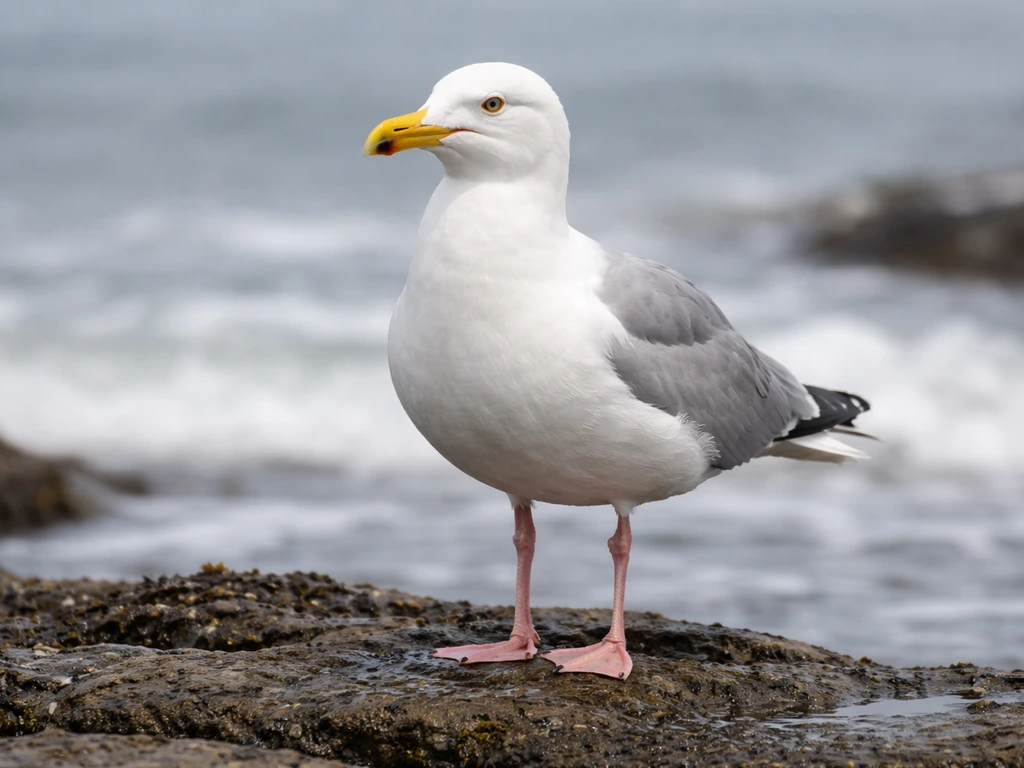
What Does a Herring Bird Look Like? Herring Gull ID Guide
Learn what a herring bird likely is: clear herring gull ID guide with key marks, plumage differences, and lookalike comp
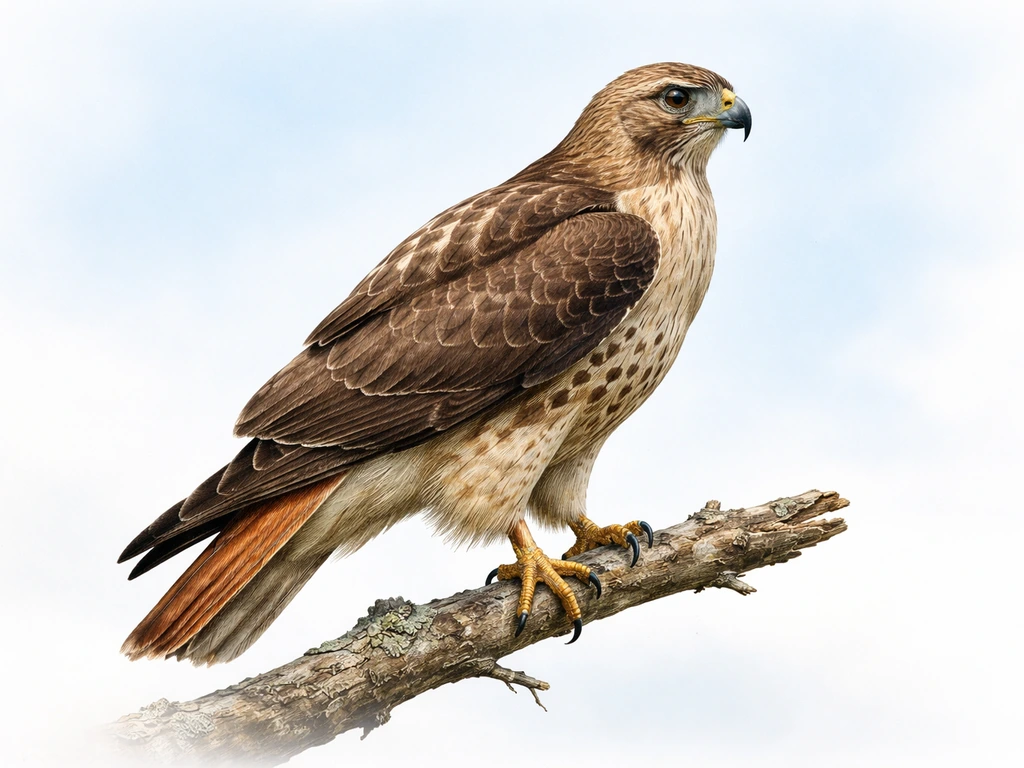
What Does a Hawk Bird Look Like? Key Field Marks to Spot
Learn key field marks for spotting hawks, compare to eagles falcons buzzards, and confirm with photos and angles.
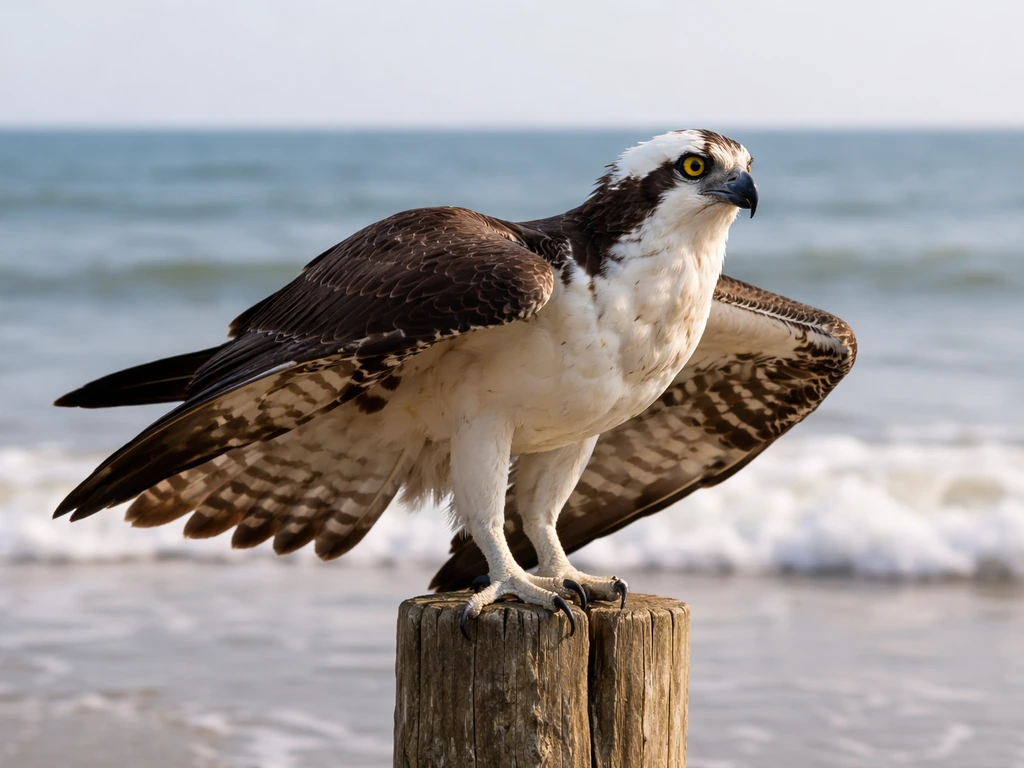
What Does a Seahawk Bird Look Like? Osprey ID Guide
See hawk meaning Osprey ID: size, flight posture, plumage patterns, bill/eye marks, and lookalike confusion cues.