Grouse are stocky, round-bodied ground birds that look a bit like a chunky chicken crossed with a quail. Most species run between 15 and 30 inches long depending on the species, with short necks, small heads, and plumage that blends almost perfectly into their surroundings through mottled browns, grays, and black barring. If you've spotted something waddling through the underbrush or freezing stone-still on a forest trail, and you're wondering whether it's a grouse, the short answer is: look for that low, heavy-bodied silhouette, earthy camouflage coloring, and a fan-shaped tail.
What Does a Grouse Bird Look Like? Key Visual Traits

Marcus Whitley
23 Apr 2026

Typical grouse silhouette and size cues
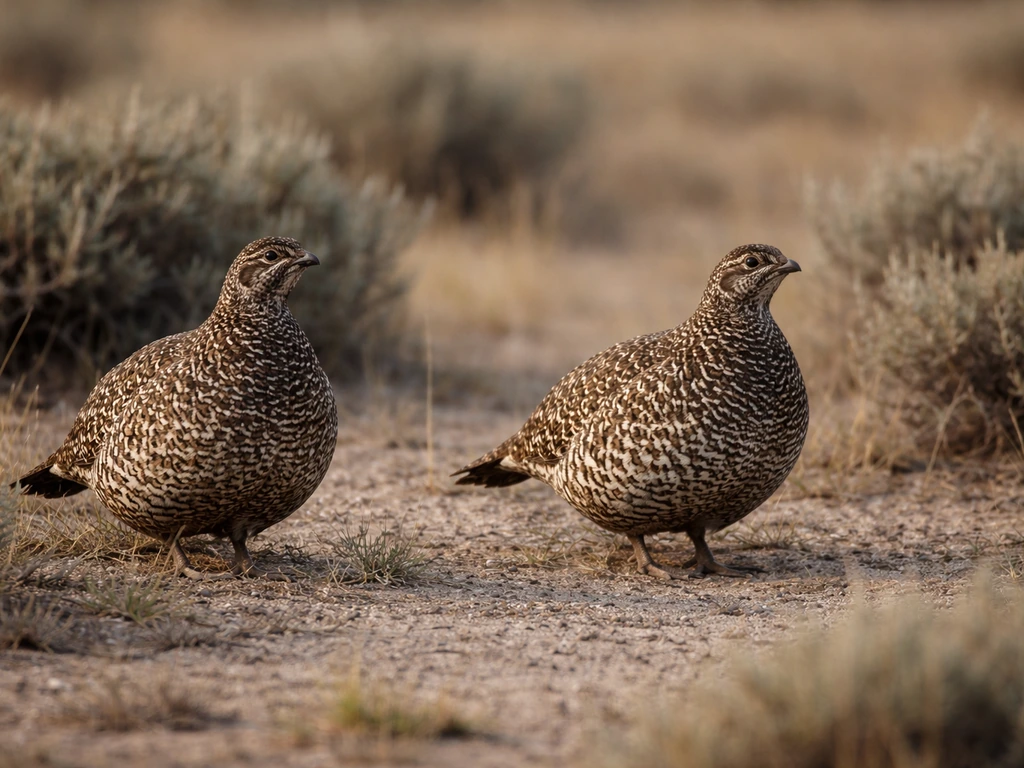
The first thing you'll notice about a grouse is how solid and grounded it looks. These aren't slender, perching birds. They're built like little tanks: barrel-chested, short-legged, and low to the ground. Their wings are noticeably rounded, and they tend to hold their body nearly horizontal when walking. Think less "elegant pheasant" and more "very serious, slightly irritated chicken."
Size varies quite a bit across species. The Greater Sage-Grouse is the giant of the group, measuring 22 to nearly 30 inches long and weighing up to 6 pounds or more. That's roughly the size of a small turkey. On the smaller end, the Spruce Grouse comes in at 16 to 19 inches and about 1.2 pounds, which puts it closer in size to a Mourning Dove, just much heavier in build. The Sharp-tailed Grouse and Ruffed Grouse sit in the middle, both in the 15 to 21 inch range. No matter the species, the silhouette stays consistent: compact, low-slung, and ground-hugging.
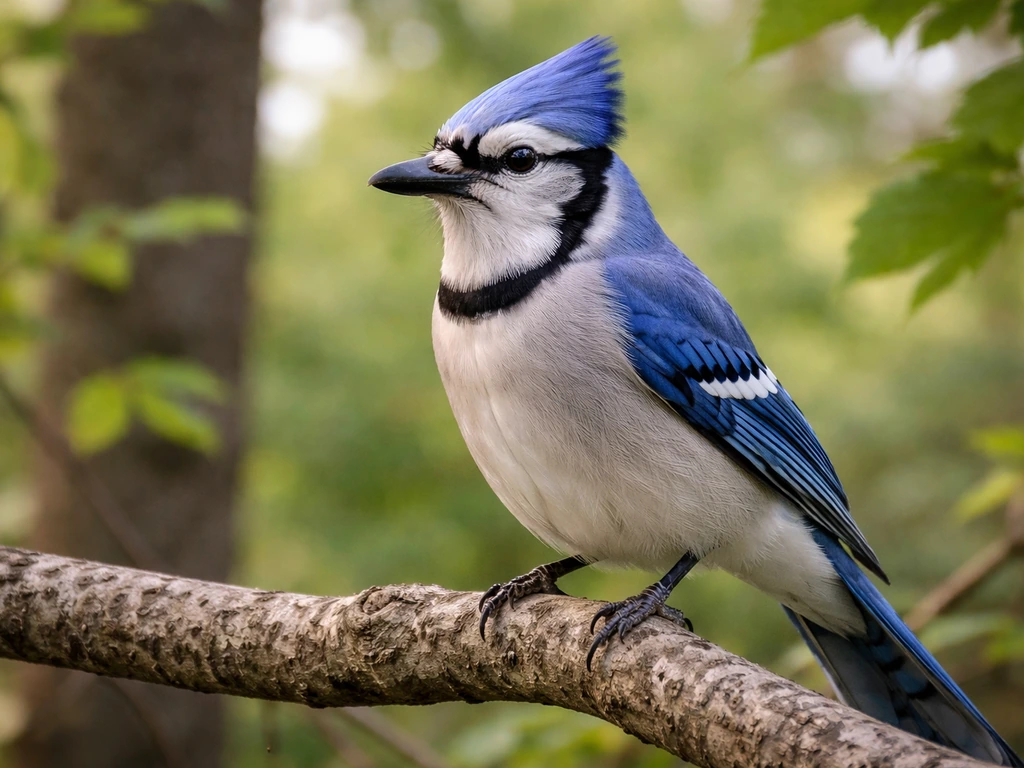
In flight, the shape shifts dramatically. Grouse burst into the air with a loud, startling wingbeat and then glide on those rounded wings. The body still looks heavy and blunt-nosed compared to something like a jay or a starling, and the tail fans out visibly during landing. A blue jay’s look is very different from a grouse, with bright blue upperparts and bold black markings on the head.
Color patterns and plumage details to look for
Grouse are masters of camouflage. Most species wear a palette of browns, grays, black, and white arranged in fine mottled or barred patterns that mirror their habitat almost exactly. You're not looking for bright color splashes the way you might with a blue jay or a bluebird. If you're wondering what a different bird’s coloration looks like in the wild, see also what does a blue bird look like for a quick comparison against blue tones bluebird. Instead, look for intricate texture: tiny flecks, scalloping, and streaks that break up the bird's outline against leaves, bark, or sagebrush.
The Ruffed Grouse is a warm brown or gray-brown overall, with fine dark barring on the sides and a pale, streaked belly. The Sharp-tailed Grouse leans paler, with heavily spotted underparts (not barred, which matters for ID) and a mix of brown and white above. A comparison of sharp-tailed grouse and prairie chickens highlights this ID difference: sharp-tailed grouse have spotted underparts, while prairie chickens show barred underparts blank" rel="noopener noreferrer">spotted underparts (not barred, which matters for ID). The Spruce Grouse male is more dramatically marked: mainly gray above and black below, with crisp white spots along the sides and white edging on the black chest feathers. The Greater Sage-Grouse is the most striking, with a gray-and-brown mottled back, a white breast (which becomes very prominent during display), a dark brown throat, and a black belly in males.
Key identifying features: head, wings, tail, legs, and beak
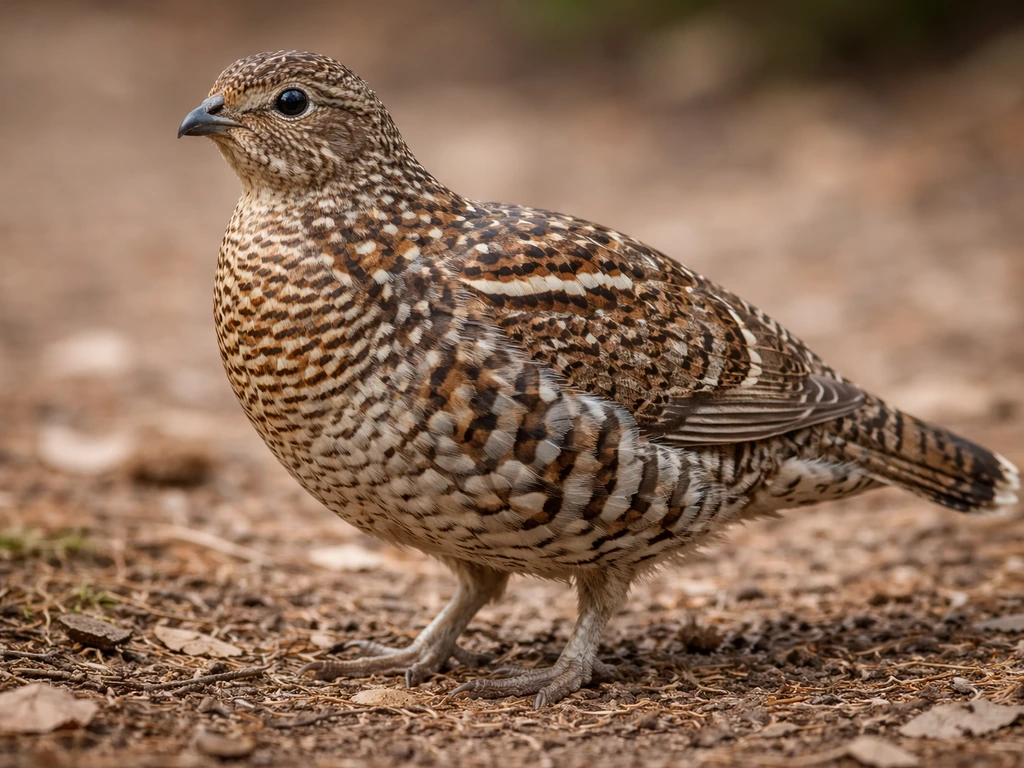
Once you've clocked the general shape and coloring, these specific features will help you lock in the ID.
Head
Grouse have small, rounded heads with short, stout beaks that are built for pecking at seeds, buds, and berries rather than cracking hard nuts or catching fish. The Ruffed Grouse sports a short, triangular crest that you might mistake for just ruffled feathers unless you're watching carefully. Both the Spruce Grouse and the Greater Sage-Grouse males have a distinctive red or yellow patch of bare skin above each eye, called a comb or eyebrow. On a male Spruce Grouse, that red comb above each eye is one of the first things to catch your attention up close. Male Sage-Grouse have yellow patches over each eye.
Wings and tail
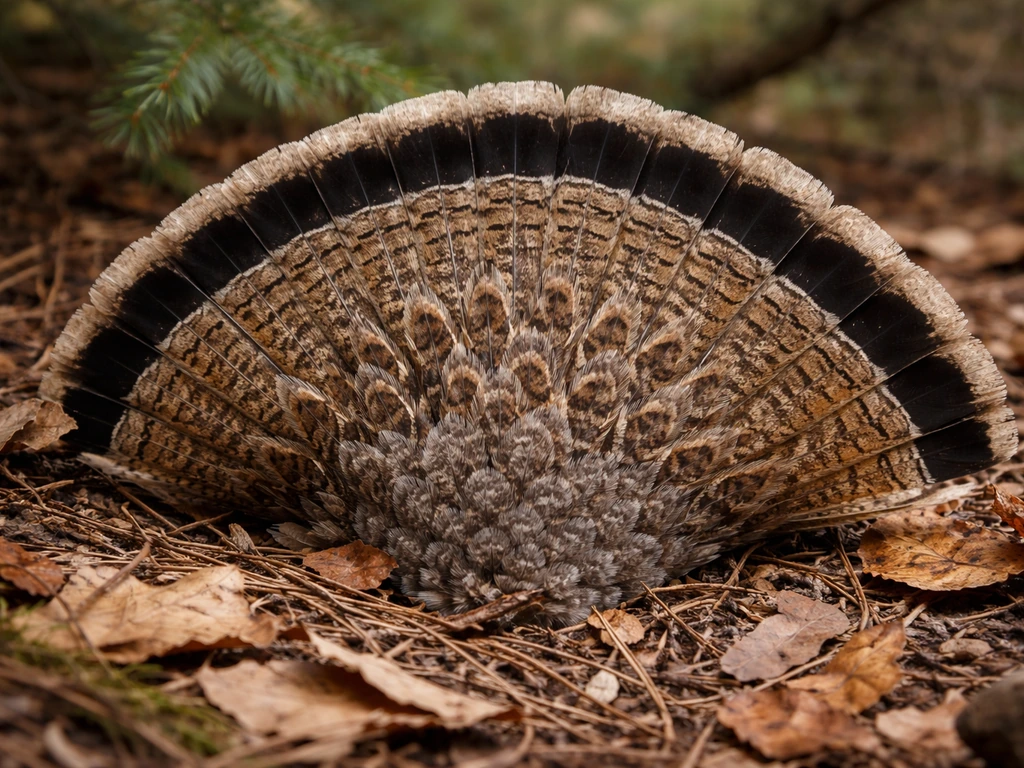
The tail is one of the most useful ID features on a grouse. The Ruffed Grouse has a long, fan-shaped tail with a wide, dark (nearly black) band near the tip. That band is very visible when the bird fans its tail during display or before flushing. The Sharp-tailed Grouse has a longer, more pointed tail with white outer feathers that flash in flight. The Spruce Grouse has a shorter tail that can fan into a neat semicircle, often with a pale brown terminal band at the tip. The Greater Sage-Grouse has a long, spiky tail with narrow, pointed feathers that look almost like a decorative fan when fanned out.
Legs and feet
Grouse have short but noticeably thick legs. Several species have feathered legs and toes, which helps insulate them in cold climates and gives the feet a slightly fuzzy look up close. The Spruce Grouse's legs are described as short but thick, which gives the bird an even more compact appearance overall.
Male vs female and seasonal appearance changes
In most grouse species, males are larger and more dramatically marked than females, though the difference is more subtle in some species than others.
| Species | Male | Female |
|---|---|---|
| Ruffed Grouse | Erectable black neck ruff visible during display; fan tail with dark band | Similar but display features less pronounced; typically smaller |
| Spruce Grouse | Gray head/neck, black chest, white spots on belly, red eyebrow comb | Brown-mottled overall, lacks black chest and red comb |
| Sharp-tailed Grouse | Irregular markings on deck feathers; slightly larger | Smaller; regular horizontal patterns on deck feathers |
| Greater Sage-Grouse | Yellow eye patches, dark brown throat, black belly, white breast | Mottled gray-brown, light brown throat, dark belly; much smaller |
Seasonal changes are worth knowing too. During breeding season, male grouse become significantly more visible because their display behaviors put those colorful features on full show. A male Ruffed Grouse drumming on a log will fan his tail wide, making the dark terminal band impossible to miss. A male Greater Sage-Grouse at a lek will inflate large air sacs in his white breast, making the chest look almost balloon-like. Outside of breeding season, males are more reserved and blend in far better. In winter, some species also shift foraging habits dramatically, spending more time in trees feeding on buds when ground food is buried under snow.
Common grouse species people confuse it with
Grouse get mixed up with several other ground-feeding birds pretty regularly. Here are the most common cases and how to tell them apart.
- Ring-necked Pheasant: Pheasants are longer and slimmer overall with a much longer, tapered tail. The male's iridescent green head and red face wattles are impossible to miss. Grouse have smaller heads relative to body size and lack that dramatic tail length.
- Wild Turkey: Turkeys are significantly larger and have bare red and blue skin on the head. If it looks like a grouse but you feel like it's too big, it's probably a turkey.
- Greater Prairie-Chicken: This is a trickier one. Sharp-tailed Grouse and prairie-chickens share similar habitat and a similar silhouette. The key difference is underparts: Sharp-tailed Grouse have spotted underparts, while Greater Prairie-Chickens show barred underparts. Prairie-chickens also have a shorter, rounder tail, while Sharp-tailed Grouse flash white outer tail feathers in flight.
- Ruffed Grouse vs Spruce Grouse: These two forest species get confused at a distance. The giveaway is the crest: Ruffed Grouse can raise short erectile crown feathers when alarmed, but Spruce Grouse lack this feature. The Spruce Grouse male's black chest is also much more dramatic than anything you'd see on a Ruffed Grouse.
- Quail: Quail are considerably smaller and have a more upright posture. Their body proportions feel different in the field: quail look almost teardrop-shaped, while grouse look like flattened ovals.
- Partridge: Gray Partridge and similar species are close in size to smaller grouse but tend to show a more distinctly orange-brown face and rufous tail. Grouse generally have more complex, finely textured camouflage plumage.
How to confirm your ID using behavior and habitat
Visual features alone will get you most of the way there, but behavior and habitat are powerful confirmation tools, especially when the light is bad or the bird won't hold still.
Grouse are overwhelmingly ground birds. They walk, scratch, and forage along the forest floor, in grasslands, or across sagebrush steppe. If you see something that looks grouse-like and it's walking deliberately through low vegetation rather than hopping between branches, that's a strong sign. Greater Sage-Grouse are almost exclusively associated with sagebrush habitat, so if you're nowhere near sagebrush, cross them off your list. Spruce Grouse, as the name suggests, are tied to coniferous forests, particularly spruce and pine. Ruffed Grouse favor deciduous and mixed forests with brushy understories. Sharp-tailed Grouse are birds of open prairies, shrublands, and forest edges.
Drumming is one of the most distinctive grouse behaviors you can encounter. A male Ruffed Grouse will stand on a favored log and beat his wings rapidly to create a deep, thumping sound that builds in speed. If you hear that low drum in the woods and then spot a stocky brown bird nearby, you've almost certainly got a Ruffed Grouse. In grassland areas, hearing or seeing a courtship display at a lek (a communal display ground) strongly suggests Sharp-tailed Grouse or prairie-chicken, and you can use the spotted vs barred underpart rule to tell them apart. In winter, if you see a chicken-like bird feeding heavily on tree buds in prairie shrubs, Sharp-tailed Grouse is a top candidate.
Photo tips and quick checklist for next steps
Grouse are surprisingly tolerant birds. They often freeze rather than flush, which means you may have more time than you expect to get a photo or a careful look. Move slowly, avoid direct eye contact, and try to get a broadside view of the bird rather than head-on, since that gives you the best look at the body shape, tail, and plumage pattern.
When photographing for ID purposes, try to capture the tail (especially its shape and any terminal banding), the head profile (to catch any crest or eyebrow features), and the underparts (spotted vs barred matters a lot). A photo of the bird in flight is valuable if you can get it, since the tail and outer feather pattern often become very clear against the sky.
Once you have photos or solid field notes, run through this checklist to confirm what you saw:
- Body size: roughly how big was it compared to a known reference (crow-sized, chicken-sized, turkey-sized)?
- Tail shape: fan-shaped and rounded, longer and pointed, or spiky? Was there a dark band near the tip?
- Underparts: spotted pattern or barred pattern?
- Head: was there a visible crest, a red eyebrow comb, or yellow eye patches?
- Chest: was there a black patch, a white breast, or fine barring?
- Habitat: conifer forest, mixed forest, open prairie, or sagebrush steppe?
- Behavior: ground walking and foraging, drumming display, or lek courtship?
- Season and sex: was it showing display features that might indicate a breeding-season male?
Cross your notes against a regional field guide or a bird ID app like Merlin, filtering by your location and the time of year. Since grouse appearance shifts between sexes and seasons, it helps to look at multiple reference images rather than just one. If you're also working on identifying similar-looking birds like jays or grosbeaks, many of the same checklist habits apply: lead with silhouette, note the tail, then work through the finer color details. If you are comparing to a grosbeak, focus on the beak shape and the overall body profile, since grouse have a more compact, ground-hugging look. If you are comparing to similar birds, use the same approach in what does a jay bird look like, starting with the overall silhouette, tail shape, and color pattern.
FAQ
Can a female grouse look different enough that it’s hard to identify?
Yes, but with an important caveat, females are less marked and can look more uniformly brown than males, so rely more on the overall “low, tank-like” ground silhouette, the tail fan shape, and the underpart pattern (spotted versus barred) than on bright facial patches.
What should I do if I only get a brief or blurry view, or it’s low light?
A grouse’s camo is best read as texture and outline-breaking pattern, if you only see a “brown bird,” wait for a side view or watch for tail fanning during flushing or display, the tail shape and any terminal band are often more reliable than body color in poor light.
How can I tell if I’m looking at a grouse when it takes off and lands?
In flight, watch the wingbeat and landing, grouse typically launch with a loud, fast wingbeat and then glide on rounded wings, and during landing the tail often fans out, that combination helps distinguish them from many songbirds that hop or perch more normally.
What’s the quickest way to separate ruffed grouse, sharp-tailed grouse, and spruce grouse?
Look at the underparts pattern and tail edges, ruffed grouse generally show a barred look on the sides, sharp-tailed grouse tend to have spotted underparts (not barred), and spruce grouse often read as darker below with a more subtly edged, semicircle-fan tail.
What behaviors would suggest it’s not a grouse even if the bird looks similar?
Grouse are usually “feet-first” birds that keep close to the ground (walking, scratching, foraging on the forest floor), if it’s regularly hopping between branches, perching for long stretches, or actively chasing prey like a raptor, you are likely looking at something else.
How far away can I reliably identify a grouse by tail shape and markings?
The tail is the key, but distance matters, when you are far away, focus on tail form first (fan width, whether the tail is long and pointed versus short and semicircular), then use the presence of a clear dark terminal band or flashes of outer white feathers once the bird is closer.
Do grouse always have feathered feet, and does that help with ID?
Yes, some grouse species have feathered legs and toes that make the feet look slightly fuzzy, a ground bird with thicker, shorter legs plus occasional “fuzzy” feet is more consistent with grouse than with slim-legged songbirds.
How do I tell a grouse from a similar bird if I can only see the head and beak?
Try comparing head profile and beak shape, grouse have a short, stout beak built for pecking at seeds and buds, if the beak looks strongly hooked, long, or seed-cracking, you may be dealing with a different group like a finch or grosbeak rather than a grouse.
What photo angles should I prioritize for reliable grouse identification?
If you’re photographing, capture three angles when possible, a broadside walking shot for silhouette, a head-on or slight profile shot for crest or eyebrow patch, and a tail-focused shot during flushing or display, also avoid cropping the tail edge because that’s where terminal banding or pointed versus fan shape shows most clearly.
Do seasonal changes affect identification enough that I should change my approach?
Yes, during breeding season males become noticeably more visible because display exaggerates facial features and tail pattern (like fanning), outside that period they blend in better, so if you’re seeing a “plain” bird in non-breeding months, adjust expectations and confirm with behavior and tail/underpart pattern.
How reliable is habitat for deciding which grouse species it could be?
Use habitat like a filter, sage-grouse point to sagebrush terrain, spruce grouse align with conifer forests, ruffed grouse with brushy deciduous or mixed woods, and sharp-tailed grouse with open prairie or shrublands, if the habitat doesn’t match, be extra cautious before concluding it’s a grouse.
What’s the best strategy if a grouse freezes and won’t flush?
If the bird freezes, use time as a tool, stay still briefly to let it resume normal posture, then look for the first moment it turns sideways because that’s when the underpart pattern (spotted vs barred) and tail outline become easiest to interpret.
Next Article
What Does a Blue Jay Bird Look Like? Male vs Female
Learn what a blue jay looks like and how to spot females: crest, face, wing bars, and tail markings.