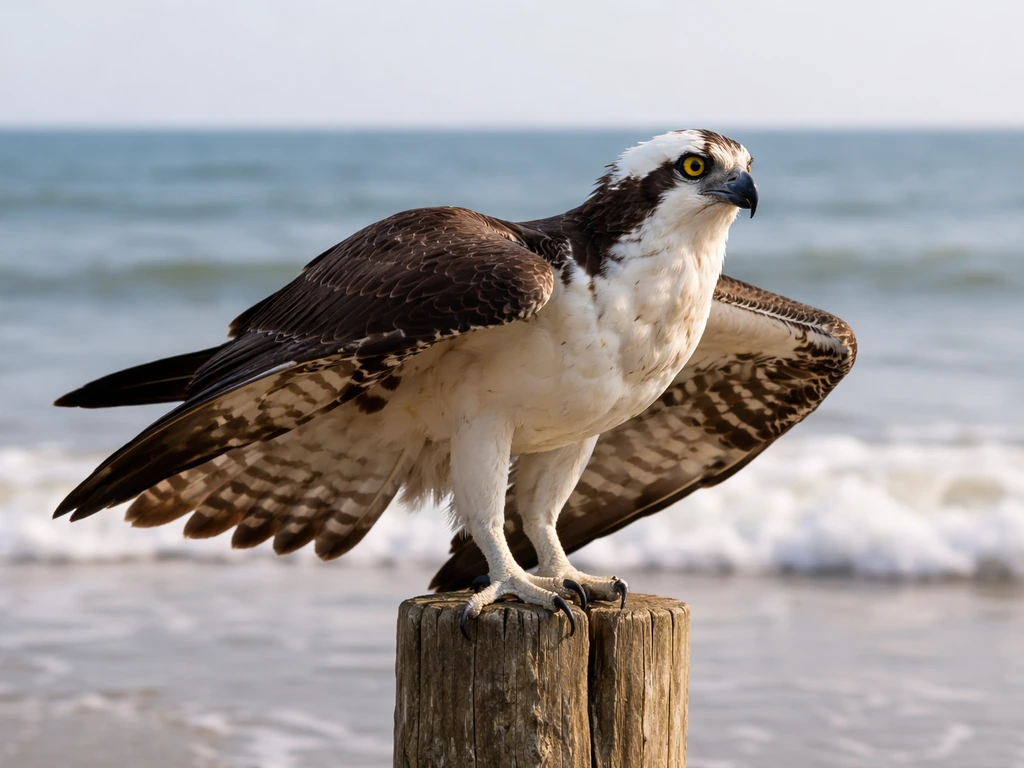
Most hawks are medium to large birds with broad, rounded wings, a relatively short and wide tail, a compact body, and a sharp hooked beak. When you spot one perched on a fence post or soaring overhead, you're typically looking at a sturdy, powerful-looking bird, not too big (like an eagle) and not too slim and pointy-winged (like a falcon). That general shape, sometimes called 'Buteo proportions,' is your starting point for hawk identification, though the word 'hawk' actually covers several different bird groups, each with their own distinct look.
What Does a Hawk Bird Look Like? Key Field Marks to Spot

Marcus Whitley
22 May 2026
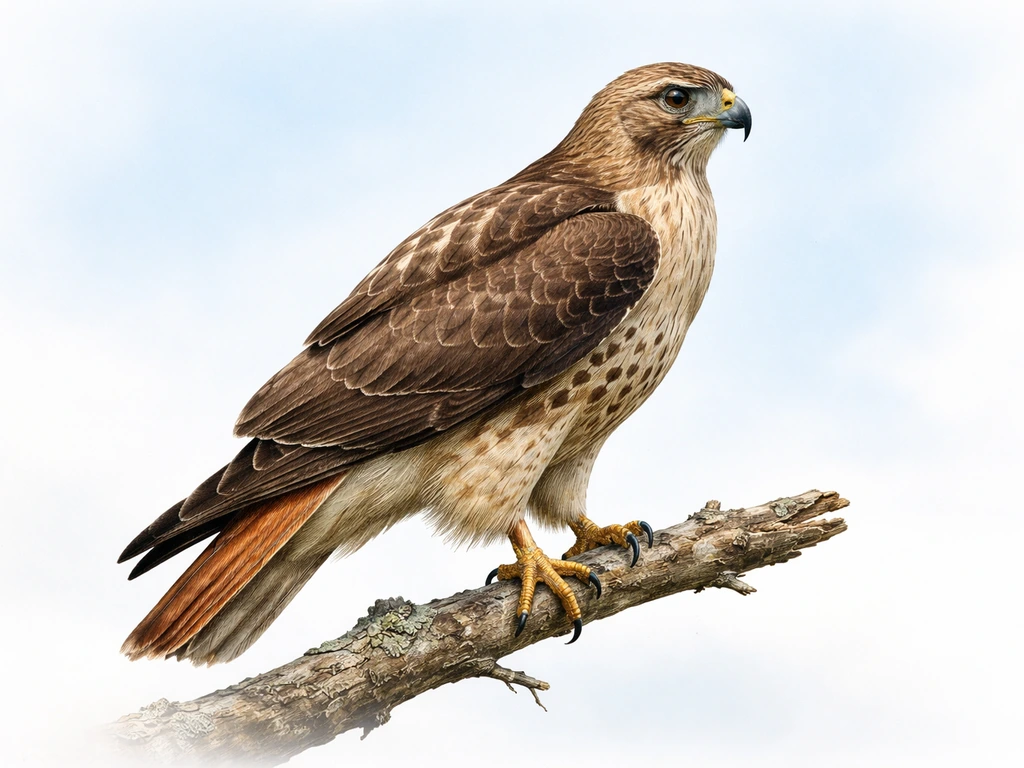
What the typical hawk body and silhouette look like
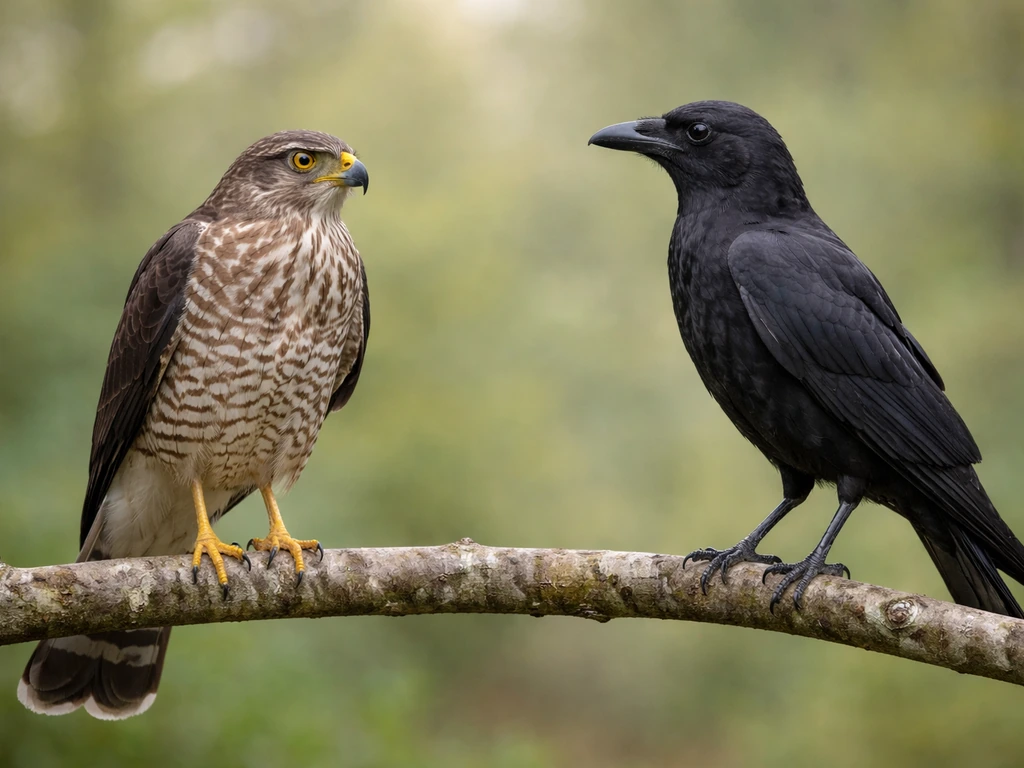
Think of a hawk as built for efficiency. The body is stocky and well-muscled, with a chest that looks full and deep compared to, say, a crow or a heron. The head is rounded and relatively small compared to the body, and the beak curves sharply downward from the tip, which is the classic raptor 'hooked' look you've probably already noticed. The legs are fairly short but the feet are large, with thick, gripping talons that are obvious when the bird is perched. Overall the impression is powerful and compact.
Size ranges quite a bit depending on species. A Sharp-shinned Hawk is only about the size of a large robin, while a Red-tailed Hawk is closer to the size of a small cat. Most hawks you're likely to encounter in North America fall somewhere between those two extremes, roughly between a large crow and a small goose in overall body bulk.
The two main groups you'll encounter are buteos and accipiters, and they have noticeably different silhouettes. Buteos (like the Red-tailed Hawk) have very broad, rounded wings and a short, wide tail, built for long lazy soaring circles. Accipiters (like Cooper's Hawk and Sharp-shinned Hawk) have shorter, rounder wings, very long tails, and slender bodies, built for quick maneuvering through trees and dense cover. Knowing which group you're looking at narrows things down fast.
Key field marks: wings, tail, head, and stance
Wings
On a buteo like a Red-tailed Hawk, the wings are very broad and almost paddle-shaped when fully spread, with a fingered wingtip where the individual primary feathers spread apart noticeably. On an accipiter, the wings are shorter relative to body length and tend to look more rounded at the tip rather than broadly fingered. A quick mental image: buteo wings look like a broad leaf, accipiter wings look more like a rounded paddle.
Tail
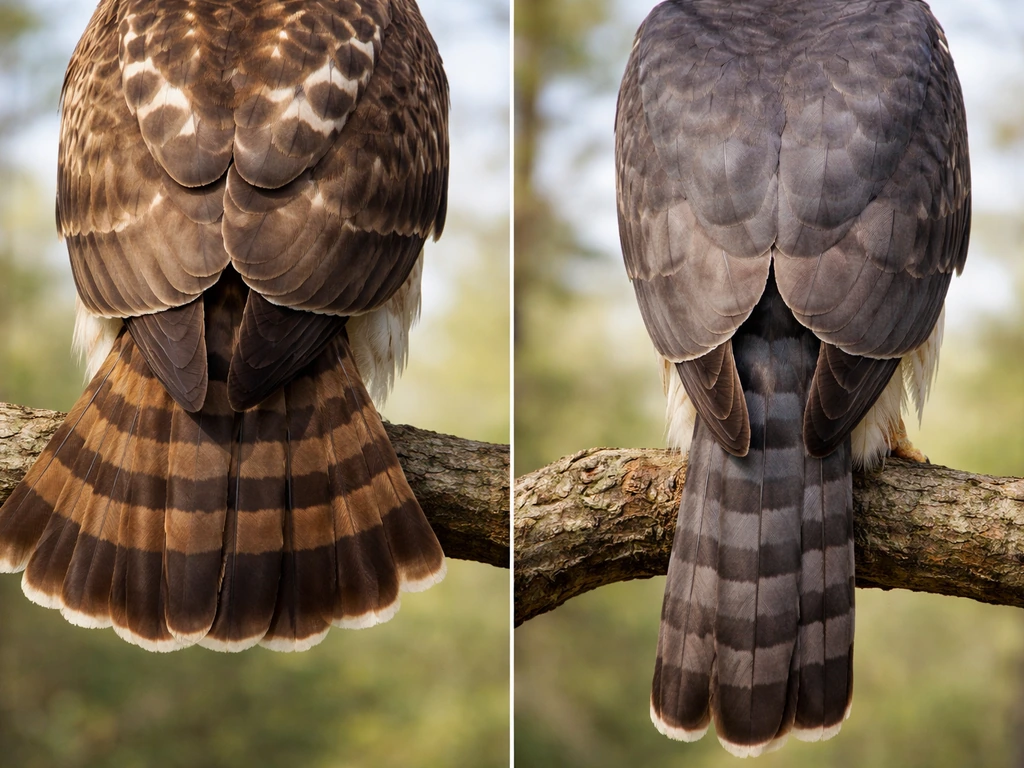
Tail shape is one of the most reliable field marks you can use. Buteos have short, fan-shaped tails that look wide when fanned open in a soar. Accipiters have long tails that can make the bird look almost twice as long from head to tail as it looks wide from wingtip to wingtip. Pay attention to the tail tip too: a Cooper's Hawk tail tip tends to be rounded, while a Sharp-shinned Hawk's tail tip is usually squarer or even slightly notched.
Head and face
Hawks generally have a rounded head with a fairly flat face compared to owls. On accipiters, head size and projection matter a lot. A Cooper's Hawk has a large angular head that juts forward noticeably in flight, sometimes projecting well beyond the leading edge of the wings when soaring. A Sharp-shinned Hawk has a smaller, smoother, more rounded head that barely pokes out at all. On most perched hawks you'll notice a bold, staring eye, typically orange or yellow on adults, and often a pale 'eyebrow' stripe above it.
Stance and posture
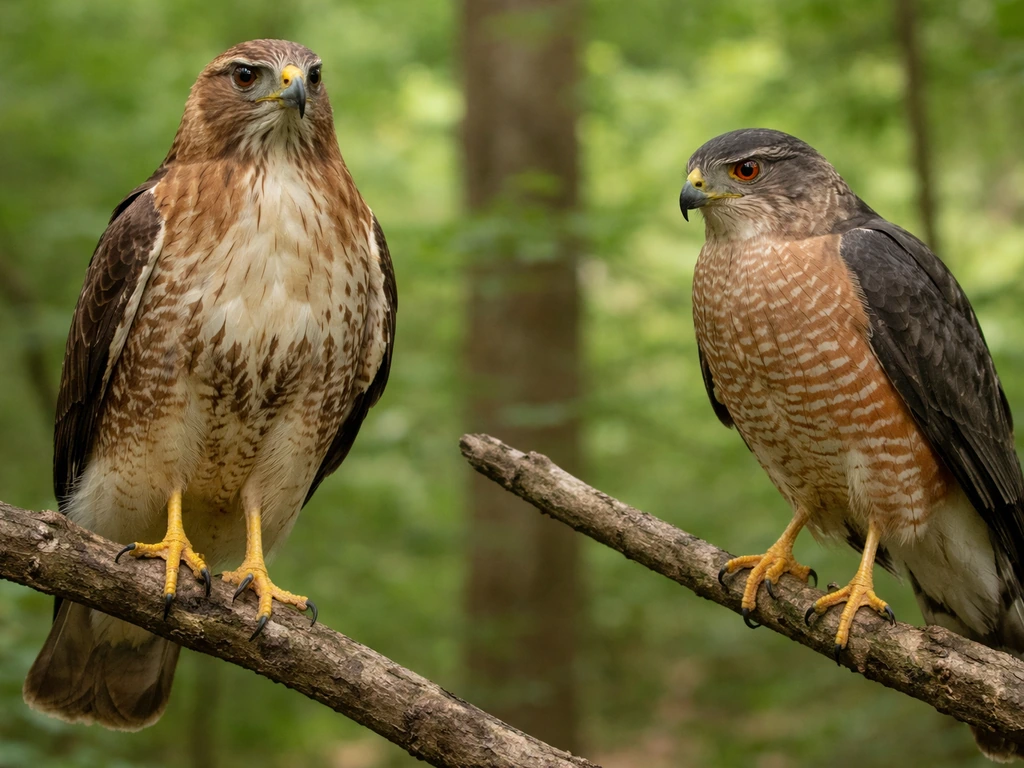
On a perch, hawks tend to sit upright and alert, with their chest forward and their head held high. Accipiters often look slightly hunched compared to buteos. You'll usually see the talons gripping a branch or post clearly, and the legs look thick and strong. If the bird is on the ground, hawks walk awkwardly, which can also be a clue they're not a falcon or other raptor.
Color and pattern: adults, juveniles, and morphs
This is where hawk identification gets tricky because the variation is huge. Let's use the Red-tailed Hawk as a reference point since it's one of the most common and recognizable hawks in North America.
blank" rel="noopener noreferrer">Adult light-morph Red-tailed Hawks (the most common version you'll see) have mostly pale underparts, a heavy dark belly band across the lower belly, dark edges and wingtips on the underwing, and that famous brick-red or rusty-red tail visible from above. From below, the tail often looks pale or whitish with a slight pinkish tint. A perched bird shows a warm brown back, a streaked chest, and a clearly banded belly.
Juvenile Red-tailed Hawks are noticeably different. They lack the red tail entirely, showing instead a brown tail with many narrow dark bands. Their wings look somewhat slimmer and more tapered than adults, so even the silhouette is less classic. They also tend to show heavy dark streaking across the chest and belly rather than the clean belly band of adults. It's easy to think you're looking at a different species entirely when you see your first juvenile Red-tail.
Color morphs add another layer. Some Red-tailed Hawks are dark morph, appearing almost entirely dark brown to chocolate-colored below with little pale contrast. Rufous morphs are warm orange-brown below. These variations are real and common, and they can throw off even experienced birders. The key is to fall back on body shape and silhouette when plumage is confusing.
Cooper's Hawks and Sharp-shinned Hawks follow a similar adult/juvenile pattern. Adults have a blue-gray back and a rusty-barred, orange-toned chest. Juveniles are brown above with vertical brown streaking on a white chest (adults have horizontal barring instead of streaking). That streaked vs. barred chest is a reliable age marker across several hawk species.
| Feature | Adult hawk (e.g. Red-tail) | Juvenile hawk (e.g. Red-tail) |
|---|---|---|
| Tail color/pattern | Brick-red above, pale below (buteos) | Brown with multiple narrow dark bands |
| Chest/belly pattern | Clean belly band, lightly streaked chest | Heavy dark streaking throughout |
| Wing shape silhouette | Very broad, rounded, fully developed | Slightly slimmer, less pronounced |
| Overall plumage contrast | Bold and well-defined | Muted, more uniformly streaked/brown |
| Accipiter chest | Horizontal rusty barring (adult) | Vertical brown streaking (juvenile) |
What to look for when a hawk is perched vs. flying
Perched hawk
When you have a perched hawk in good light, you're in luck. Look at the overall body proportions first: how long does the tail look compared to the folded wings? An accipiter's tail will extend well past the wingtips when folded, while a buteo's tail will be noticeably shorter relative to the wing length. Check the eye color (yellow to orange to deep red on adults depending on species and age), the chest pattern (streaked vs. barred), the back color, and whether there's any obvious facial pattern like a pale supercilium or a dark malar stripe. Also note how the bird holds itself: alert and upright, or hunched and compact.
Flying hawk
In flight, especially at a distance, your color and pattern clues can disappear fast. That's when silhouette and behavior take over. Watch the wing shape: broad and fingered for buteos, shorter and more rounded for accipiters. Watch the tail: wide and fan-shaped for buteos, long and narrow for accipiters. Buteos typically soar in wide, lazy circles with minimal wingbeats, using thermals to stay aloft. Accipiters tend to alternate several quick, stiff wingbeats with a glide, giving a distinctive 'flap-flap-flap-glide' rhythm. Look also at the underwing: most buteos show a pale underwing with a darker carpal patch (a dark mark at the wrist area), which is a great distance field mark.
Hawks vs. eagles, falcons, and buzzards: how to tell them apart
If you're not sure whether what you're seeing is actually a hawk, these comparisons should help. Each group has reliable visual differences you can use even at a distance.
Hawks vs. eagles
Eagles are simply much larger, like a noticeably bigger version of a buteo hawk but with longer, broader wings and a proportionally larger head and beak. A Bald Eagle's wingspan can reach about 8 feet, while even a large Red-tailed Hawk tops out around 4.5 feet. Eagles also tend to hold their wings flat and level when soaring, like a plank, rather than in the slight 'V' or dihedral angle that many hawks use. If the bird looks massive and the head looks large and prominent, lean toward eagle.
Hawks vs. falcons
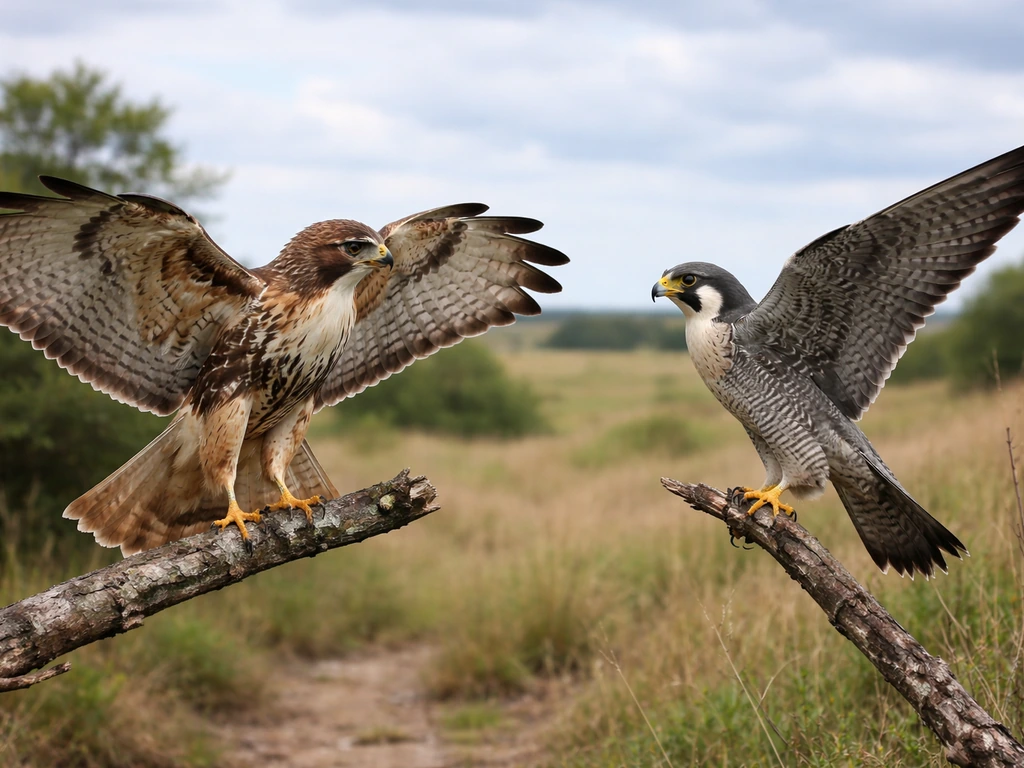
Falcons have a very different wing shape: long, pointed, and swept back, more like a jet fighter than the rounded wings of a hawk. If you think the bird might be a falcon, use the guide on what does a falcon bird look like to compare the wing shape and overall silhouette. Where a hawk's wingtip feathers splay out in 'fingers,' a falcon's wingtips come to a clean, tapered point.
Falcons also tend to use rapid, stiff wingbeats and high-speed dives rather than the lazy soaring circles that buteos favor. On a perched Peregrine Falcon, you'll notice the wingtips reach all the way to the tail tip, which they don't on most hawks. The face often shows a bold dark 'mustache' mark. If the wings look narrow and swept, go falcon.
Hawks vs. buzzards and vultures
Turkey Vultures (often called 'buzzards' in North America) are frequently mistaken for hawks, especially in soaring flight. The big giveaway is the wing angle: vultures hold their wings in a strong, exaggerated V-shape (called a dihedral) and rock from side to side in flight in a way that looks slightly unsteady, like they're wobbling. Hawks hold their wings much flatter. Vultures also have very small, red (adult) or gray (juvenile) bare heads, which you can spot at close range. Their underwing is two-toned: dark leading edge, silver-gray trailing edge and flight feathers.
| Feature | Hawk (Buteo) | Eagle | Falcon | Vulture/Buzzard |
|---|---|---|---|---|
| Wing shape | Broad, rounded, fingered tips | Very broad, long, heavily fingered | Long, narrow, pointed | Long, broad, two-toned underwing |
| Tail shape | Short, fan-shaped | Short to medium, wide | Medium, narrow | Short, fan-shaped |
| Body size | Medium to large | Very large | Small to medium | Large |
| Flight style | Soaring circles, occasional flaps | Flat soaring, slow flaps | Fast flaps, dives | Wobbly soar in strong V-dihedral |
| Head appearance | Small, rounded | Large, prominent | Small with bold face marks | Tiny, bare, unfeathered |
| Wingtip at rest | Falls short of tail tip | Falls short of tail tip | Reaches or nearly reaches tail tip | Falls short of tail tip |
Quick identification checklist and what to do next
When you're in the field and you need to make a quick call, work through these points in order. Start with the biggest, most obvious features and get more specific from there.
- Size: Is it crow-sized, roughly chicken-sized, or larger? Very large usually means eagle or vulture.
- Wing shape in flight: Broad and rounded with finger-like tips (hawk/eagle) or long, narrow, and pointed (falcon)?
- Wing posture: Flat or slightly V-shaped? A strong V-shape with rocking motion almost always means vulture.
- Tail shape: Short and fan-shaped (buteo hawk), long and narrow (accipiter hawk), or somewhere in between?
- Flight behavior: Lazy soaring circles (buteo), flap-flap-flap-glide rhythm (accipiter), or rapid stiff wingbeats with dives (falcon)?
- If perched: Does the tail extend well past the folded wingtips (accipiter) or fall close to them (buteo)? What's the chest pattern (streaked vs. barred)?
- Color and pattern: Look for a belly band, carpal patch on underwing, tail color, and face marks after you've nailed the shape.
To confirm your identification, photos are your best tool. Try to get at least one shot from directly below in flight (to capture the underwing pattern, tail shape, and belly markings) and one shot from the side if the bird is perched. The Raptor Research Foundation’s Techniques Manual chapter on “Raptor Identification, Ageing, and Sexing” emphasizes using accurate analysis of wing, tail, and body shape from photos or field views as part of the identification workflow photos are your best tool. The underwing view is especially useful because it shows the carpal patch, belly band, and tail coloring all at once. A side-on perched photo shows the tail-to-wingtip ratio, chest pattern, and eye color clearly.
If you're still not sure whether you're looking at a hawk or something else, the shape and flight behavior questions above should be your tiebreaker. If you’re trying to pin down a seahawk specifically, comparing its overall look and silhouette to a typical hawk can help you figure out what you’re seeing what does a seahawk bird look like.
Plumage varies enormously, especially between juveniles and adults and between color morphs, but a soaring bird's silhouette and wing posture are reliable across age and morph. When in doubt, step back to the broad shape category first and then narrow down from there. Hawks that appear confusingly similar to falcons are worth a closer look at wingtip shape, since that pointed vs. fingered distinction rarely fails.
And if the bird you're watching looks hawk-like but behaves like a heron, standing motionless in shallow water, it may be worth checking out what herons look like, since large wading birds can occasionally be mistaken for raptors in silhouette at a distance. Blue herons have a different silhouette than hawks, so if you want to confirm the bird, it helps to compare what does a blue heron bird look like.
A quick way to be sure is to compare that silhouette to what a herring bird looks like in flight or on a perch a herring bird look like. Herons look different in silhouette, so comparing your sighting to what a heron bird looks like can help confirm which bird group you have what a herring bird looks like in flight or on a perch. If you want a clearer match, use a guide for what a heron bird look like to compare size, neck posture, and overall body shape heron, standing motionless in shallow water.
The more hawks you watch, the faster your eye gets at reading silhouette. Start with Red-tailed Hawks since they're common, large, and show the classic buteo shape clearly. If you're wondering what a herring bird looks like, compare its overall shape and silhouette to similar species what does a herring bird look like. Once that shape is locked in your memory, everything else becomes a comparison to that baseline.
FAQ
What’s the fastest way to tell a hawk from a falcon if I only get one good look?
Use the wingtip silhouette first. Hawks typically show fingered wingtips, while falcons usually look like they end in a cleaner, tapered point (especially in flight). If the bird is moving quickly or at a distance, also notice the overall wing posture, hawks more often look broader and more “rounded” than falcons.
Can a hawk look “slim” like a falcon or still be a hawk?
Yes. Some accipiters (which are hawk relatives) have a slimmer, more streamlined body than buteos, so they can look less stocky. In that case, rely on tail length and the wingbeat rhythm in flight, accipiters tend to show a longer tail and a more stop-and-start “flap-glide” pattern.
Why do hawks sometimes appear to have different sizes, even when they’re the same species?
Distance and angle can make a hawk look larger or smaller than it really is. A good field check is tail-to-wing comparison, how far the tail extends relative to folded wings. That ratio stays more consistent than the bird’s apparent overall size.
How can I tell a juvenile hawk from an adult if the color seems totally off?
Focus on pattern layout rather than just color. Juvenile Red-tailed Hawks typically lack the adult’s classic red tail and show heavier, more streaked dark markings on the chest and belly. For several species, the chest pattern category (streaked in juveniles versus barred/horizontal in adults) is a more reliable clue than shade alone.
Do hawks always have a short, wide tail?
No, that’s mainly a buteo trait. Accipiters have long tails that can look disproportionately long, sometimes making the bird seem twice as long from head to tail as it is wide from wingtip to wingtip. If the tail dominates the silhouette, that’s a strong sign you’re not looking at a broad-tailed buteo.
What should I look for at the wingtips and tail tip when the hawk is perched?
Tail tip shape is useful when you can get a clear view. Cooper’s Hawk often shows a more rounded tail tip, while Sharp-shinned Hawk tends to look squarer or slightly notched. Wingtips also help, buteo wings tend to look broader and more “leaf-like,” while accipiter wingtips look more rounded.
What underwing features help most when I’m trying to identify a hawk in flight?
Try to catch the wrist and tail pattern together from below. Many buteos show a pale underwing with a darker carpal patch near the wrist, and the belly band and tail coloring often become clearer in that angle than from the side.
Why do red-tailed hawks sometimes not look like the “brick-red tail” I expect?
Juveniles do not show the adult brick-red tail, they typically have a brown tail with many narrow dark bands. Also, some adults are dark or rufous color morphs, which can shift the underwing and body tones enough to mislead you if you’re relying only on color.
How can I reduce mistakes when a hawk is soaring high and far away?
Treat it like a silhouette problem. Prioritize wing shape (broad and fingered for buteos versus shorter and rounder for accipiters), then tail form (fan-shaped and wide versus long and narrower). Behavior matters too, buteos often circle with fewer wingbeats, while accipiters show quicker wingbeats with glides.
Are vultures ever mistaken for hawks on purpose, and what’s the single best giveaway?
The wing angle and posture. Vultures hold wings in an exaggerated V shape and often rock side to side while flying. Hawks typically keep a flatter wing posture, even when soaring high.
What if the bird is on the ground, does that change how it looks?
Yes. Hawks usually look awkward and more “raptor-like” when walking, whereas falcons and other lookalikes can have different ground posture. Also keep an eye on the feet, hawks usually show prominent gripping talons even when perched.
Next Article
What Does a Seahawk Bird Look Like? Osprey ID Guide
See hawk meaning Osprey ID: size, flight posture, plumage patterns, bill/eye marks, and lookalike confusion cues.