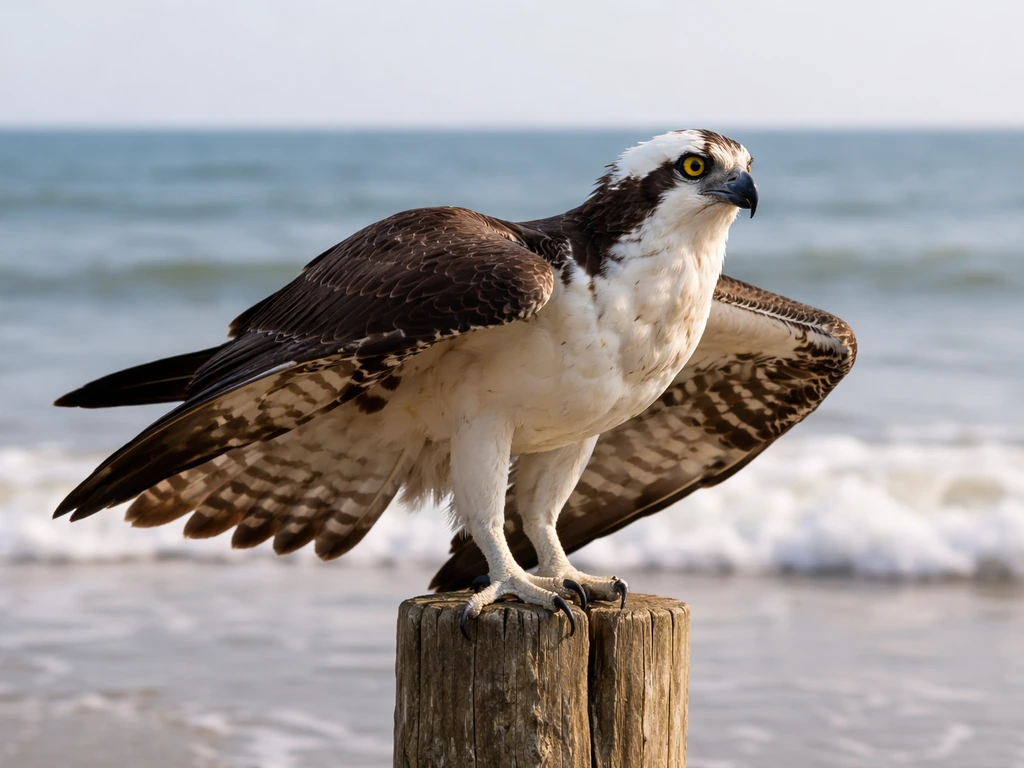
There is no official bird species called a 'seahawk,' but when birders and nature lovers use that name, they almost always mean the Osprey. It is a large, fish-eating raptor with a brilliant white belly, a white head marked by a bold brown stripe through the eye, and a dark brown back. With a wingspan stretching up to nearly six feet, it is hard to miss once you know what to look for.
What Does a Seahawk Bird Look Like? Osprey ID Guide

Marcus Whitley
2 May 2026
So which bird is actually called a 'seahawk'?
The short version: there is no bird in any field guide with the official name 'seahawk.' The term is a nickname, and it has been applied loosely to a few large coastal raptors over the years, but the Osprey is by far the most consistent match. You might occasionally hear people use 'sea hawk' to describe other coastal predators like certain gulls or even the Peregrine Falcon in flight, but if someone points to a large bird hovering over a lake or bay and calls it a seahawk, they are almost certainly looking at an Osprey. That is the bird this guide focuses on.
What an adult Osprey looks like up close
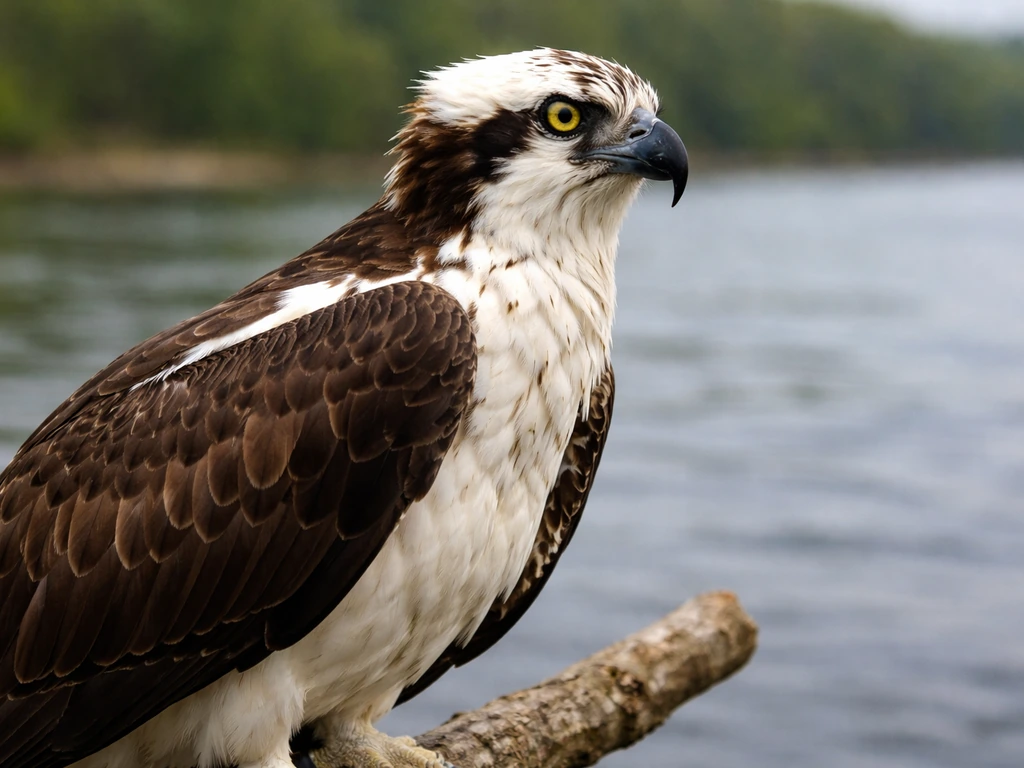
The adult Osprey is a genuinely striking bird once you get your eyes on one. Think of it as roughly the size of a large crow or small hawk in body, but with a much longer wingspan of 59 to nearly 71 inches (around 150 to 180 cm). It is not a delicate bird. It looks powerful and angular, especially in flight.
Head and face
The head is mostly white, which can initially make you think 'Bald Eagle,' but look closer. The Osprey has a wide, dark brown stripe running through the eye from the bill toward the back of the neck, almost like it is wearing a bandit mask. The U.S. National Park Service notes that an osprey’s classic identification features include a large brown stripe running through the eye, along with the bird’s overall coloration of a white head and underparts and darker upperparts. That eye-stripe is the single most reliable quick ID mark. The bill is black, strongly hooked, and the eyes in adults are bright yellow. The forehead stays clean and white, giving the bird a sharp, alert expression.
Body and wings
Flip the bird over mentally: from below, the Osprey is almost entirely white on the belly and breast, sometimes with light brown streaking on the chest, especially in females. The wings are long and narrow, and in flight you will notice the Osprey holds them with a distinctive bend at the wrist, creating a slight M or gull-like crook shape when viewed head-on. The undersides of the wings are mostly white, but you will see a conspicuous dark patch at the wrist (called the carpal patch) on each wing. That dark comma-shaped mark on otherwise white underwings is a great field mark from a distance. The upper side of the bird is dark brown, sometimes appearing almost black in flat light.
Tail and overall silhouette
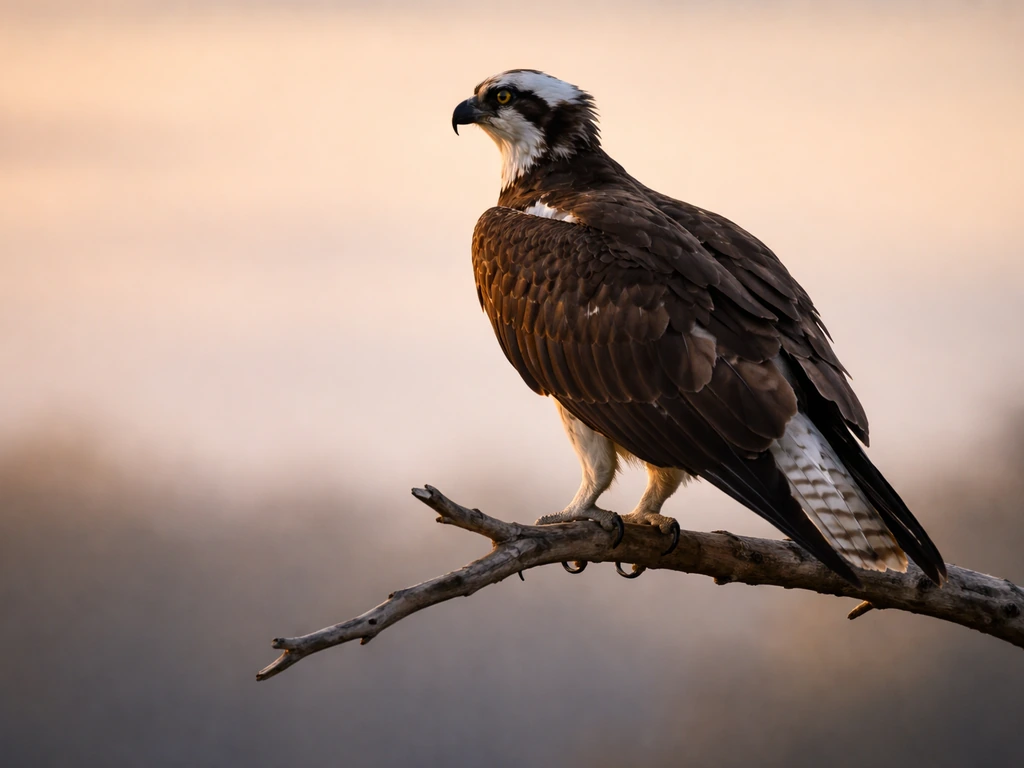
The tail is fairly narrow and pale, with faint dark banding across it. Perched, the wings are long enough that the wingtips often reach or just slightly extend past the tail tip, which gives it a slightly front-heavy, long-winged look. The head can look surprisingly small for the body size, and unlike most raptors, it lacks the heavy brow ridge that gives hawks and eagles that stern 'angry' look.
Juveniles and how they differ
Young Ospreys are close enough to adults that you might miss them on a quick glance, but there are a few clear differences worth knowing. Juveniles have orange eyes instead of the adult's yellow, and that is probably the fastest single giveaway if you get a good look at the face. Their dark upper feathers are tipped with buff or whitish edges, creating a scaled or mottled pattern on the back and wings that adults do not have. The crown tends to be more heavily streaked, and the breast band or streaking on the chest is often heavier and more distinct than on an adult. Full adult plumage typically comes in at around 18 months, so young birds in their first year will show that scaly back and orange-eyed look through at least their first fall and winter.
Seasonal variation in Ospreys is fairly minor compared to some other species. There is no dramatic summer versus winter plumage change. What you will mostly notice is wear: older feathers fade and become more worn as the season progresses, dulling the contrast slightly. If you are in North America, Ospreys are mostly absent from the northern part of their range in winter because they migrate to follow the fish.
How to spot one in the wild
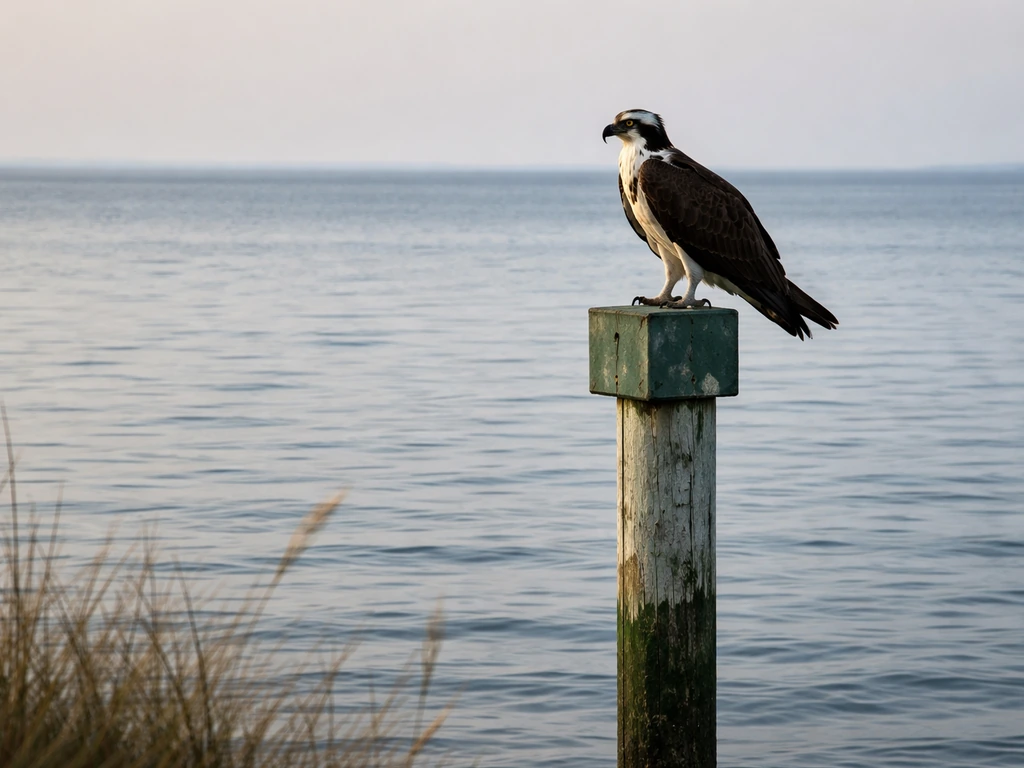
Ospreys are almost always near water. Rivers, lakes, reservoirs, estuaries, bays, and coastal areas are all fair game. If you are standing near open water and there is an Osprey around, you will likely hear it before you see it. They have a high, sharp, whistling call that carries well.
Perched birds
Look for a large bird perched on a dead snag, a channel marker, a utility pole, or a nest platform. Perched Ospreys look bulky but with a somewhat small, rounded head. You might notice the wings hang down slightly beside and below the tail when it is resting. The dark back and white underparts visible from the side, combined with that masked face, should clinch the ID.
Birds in flight
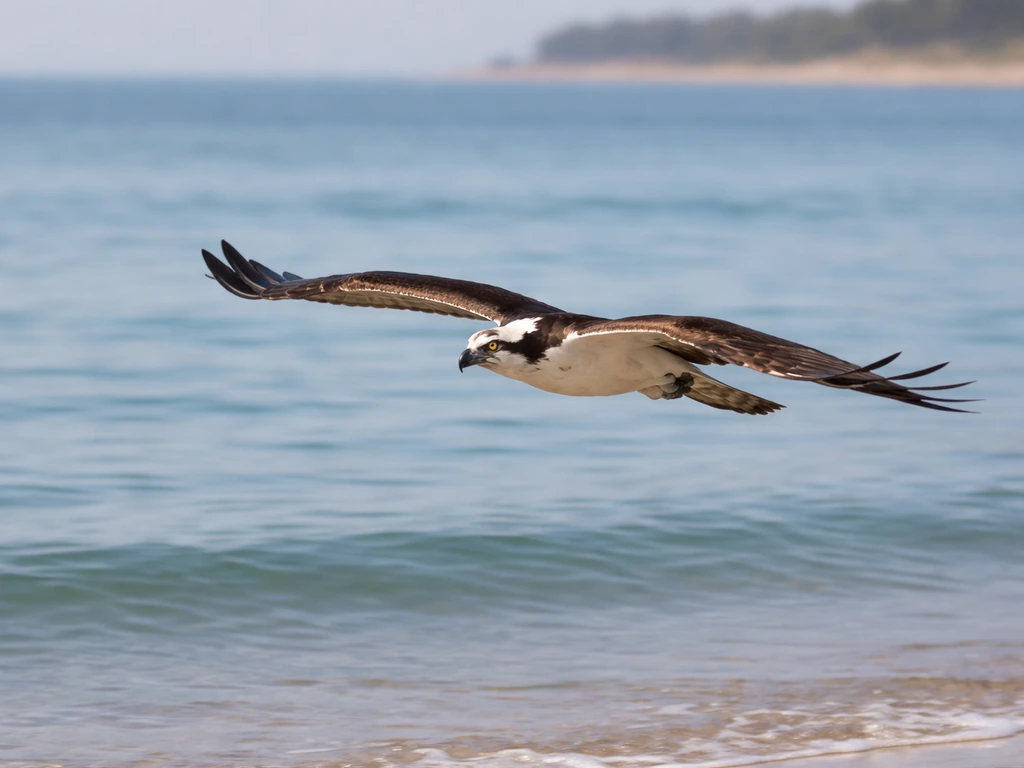
Flying Ospreys have a very distinctive profile. The wing is held with a noticeable bend at the wrist, making the outer wing angle forward slightly, which is different from most hawks and very different from eagles. The wingbeats are stiff and rowing in quality, not the smooth, flat soaring of a Red-tailed Hawk. From below, look for that white belly and the dark carpal patches. At a distance, the overall pale-below, dark-above pattern with kinked wings is usually enough.
The dive: the giveaway behavior
If you watch an Osprey hunting, the behavior is unmistakable and frankly spectacular. It will fly or soar over water, then suddenly pause and hover in place with rapidly beating wings, feet dangling, head tilted down watching the fish below. Then it drops, feet-first, in a steep plunge that can take it completely underwater. It comes up with a fish gripped in its curved talons and often repositions the fish head-forward while flying away. No other large raptor in North America routinely dives into the water feet-first like this.
Lookalikes and how to rule them out fast
A few birds regularly get confused with Ospreys, especially at a distance or in poor light. Here is a quick rundown of the most common mix-ups.
| Bird | Key similarity | How to tell it apart |
|---|---|---|
| Bald Eagle (adult) | White head can look similar at first glance | Bald Eagle has all-white head AND tail with no eye-stripe; much larger; flat wings in soaring; dark all the way under the wings |
| Bald Eagle (immature) | Brown and white mottled plumage, similar size | Immature Bald Eagles are messier brown-and-white, lack the clean white belly and dark eye-stripe; larger overall with broader wings |
| Large Gull (e.g., Herring Gull) | White and gray/brown coloring, flies over water | Gulls have flat, straight wings; different bill shape; do not plunge feet-first into water; lack the dark carpal patch |
| Peregrine Falcon | Fast, powerful flier over water; dark mask on face | Much smaller and more compact; pointed wings; dark mustache mark is narrower; rarely hovers and never plunges into water |
| Red-tailed Hawk | Large raptor soaring over open areas | Lacks white belly; has rusty-red tail; holds wings flat when soaring; not tied to water habitat |
The Bald Eagle is the most common mix-up for beginners. The key thing to lock in: Ospreys are smaller, hold their wings crooked in flight, are white underneath with dark wing patches, and carry a dark eye-stripe through a white head. Eagles soaring flat-winged with a fully white head and tail are a very different silhouette once you have seen both side by side. If you enjoy comparing similar raptors, the differences between an Osprey and a falcon are equally interesting, since falcons like the Peregrine have much more sharply pointed, swept-back wings and a very different hunting style. If you are trying to picture what a falcon bird looks like, focus on the streamlined shape, fast direct flight, and sharply pointed wings.
Your quick ID checklist in the field
When you spot a large bird near water and want to confirm it is an Osprey, run through these points in order. You usually only need two or three to be confident.
- Location: Is it near open water? Rivers, lakes, bays, and coastlines are prime Osprey habitat.
- Size and shape in flight: Large wingspan, but held with a bent wrist creating a slight M or crook shape. Not flat like an eagle.
- Underside: White belly and mostly white underwings with a dark patch at the wrist (carpal patch) on each wing.
- Head: White with a wide brown or dark stripe running through the eye toward the neck. No fully white head and tail combo.
- Behavior: Is it hovering over water before diving? Feet-first plunge into the water is a clincher.
- Eye color (if close enough): Yellow in adults, orange in juveniles.
- Back: Dark brown from above. Juveniles have pale-tipped feathers giving a scaled look.
- Photo tip: If you have a camera or phone, try to capture the face and the underwing in the same shot if possible. Those two features together confirm the ID almost instantly.
To verify your sighting, cross-check against a free resource like Cornell Lab's All About Birds, which has photos across ages and poses, or upload your photo to a community ID app like Merlin or iNaturalist. If you are building your raptor ID skills more broadly, it helps to also get familiar with what hawks and herons look like in coastal environments, since those are the other large birds you are most likely to encounter in the same spots as an Osprey. Blue herons are a good example of the kinds of herons you may see, and their bluish-gray color and long legs give them a distinctive look what hawks and herons look like. A herring bird in the water tends to have a compact look and a silvery, fish-hunting vibe, so comparing size and coloring can help you identify it what a herring bird look like. If you are wondering what a hawk bird looks like in coastal areas, use the Osprey look-for points as a starting guide hawks and herons look like. H<1> Here is what a heron bird looks like, too what hawks and herons look like.
FAQ
If someone says they saw a “seahawk” but it was inland, should I still assume Osprey?
Maybe, but don’t stop there. Ospreys can show up at reservoirs and rivers, yet “seahawk” is still a nickname, so verify with the eye stripe, hooked dark bill, and the white underbody with dark carpal patches in flight. If the bird lacks the wrist patch and the masked face, consider another raptor.
How can I tell an Osprey from a Bald Eagle when the bird is far away or partially silhouetted?
Use two distance-friendly cues: the Osprey usually shows a dark eye stripe through a mostly white head, and the wings often look “crooked” at the wrist rather than flat. Eagles also tend to look heavier in the wing and more evenly dark on the upperwing without the same crisp underwing carpal patch pattern.
What does a female Osprey look like compared with a male?
Females are not a different color, but they more often show heavier light brown streaking or a faint banding effect on the chest and upper belly. If you see extra streaks on the breast in an otherwise classic bandit-faced, white-bellied raptor, that can fit a female, but age and wear are still the bigger variables.
What’s the most reliable way to confirm an Osprey if the bird is perched and the wings are tucked?
Look at the face first (white head with a dark stripe through the eye) and then the wing structure. Even when tucked, the long wings and small, rounded head create a distinct “front-heavy, angular” stance, and the wings often hang below the tail edge when resting.
Do young Ospreys ever look confusingly different from adults?
Yes. Juveniles can appear more mottled or scaled on the back and wings due to pale or buff-edged feathers, and their eyes are orange rather than bright yellow. The best quick check is the eye color plus that scaly look, especially before the bird reaches full adult plumage (around 18 months).
Can weather or lighting make the Osprey’s dark upper parts look different?
Definitely. In flat light, the dark brown back can seem almost black, which makes contrast with the white body less obvious. In those conditions, rely more on the bandit eye stripe, the hooked bill shape, and the distinctive dark carpal patches on the underwing rather than overall “darkness.”
How should an Osprey’s flight pattern look compared with other hawks?
Ospreys typically hold their wings with a noticeable bend at the wrist and show stiff, rowing wingbeats rather than smooth gliding. If the bird repeatedly hovers low over water and then plunges feet-first, that hunting behavior is a major confirmation cue.
What should I watch for during hunting that isn’t just “it dove into water”?
Look for a hover with feet dangling and the head angled down to track fish, then a steep feet-first plunge. Afterward, Ospreys often reposition the fish head-forward while flying away, which you may see if they circle back toward a perch.
If I only get a quick glimpse, which two features should I prioritize for ID?
Prioritize the bandit eye stripe on a mostly white head, and the pale underbody with dark carpal patches visible when the bird is banking or viewed from below. If you can also note the wrist-bend wing profile, that usually seals the identification.
What common “false positives” should I consider besides eagles?
In coastal areas, people can confuse large gulls or other raptors when the bird is in poor light or seen briefly. Before committing to a match, check for raptor traits (hooked bill, wrist-bend wing shape, and the masked face), and remember that most gulls do not show the same hooked bill and raptor-style wing profile.
Should I trust a birding app photo ID for a called “seahawk”?
Apps can be helpful, but use them as a second opinion, not the final word. If your photo is blurry, confirm manually with at least one key structural mark (eye stripe, underwing carpal patch, or the wrist-bend in flight). If the app suggests a different raptor, compare the wing shape and face pattern, not just the overall size.