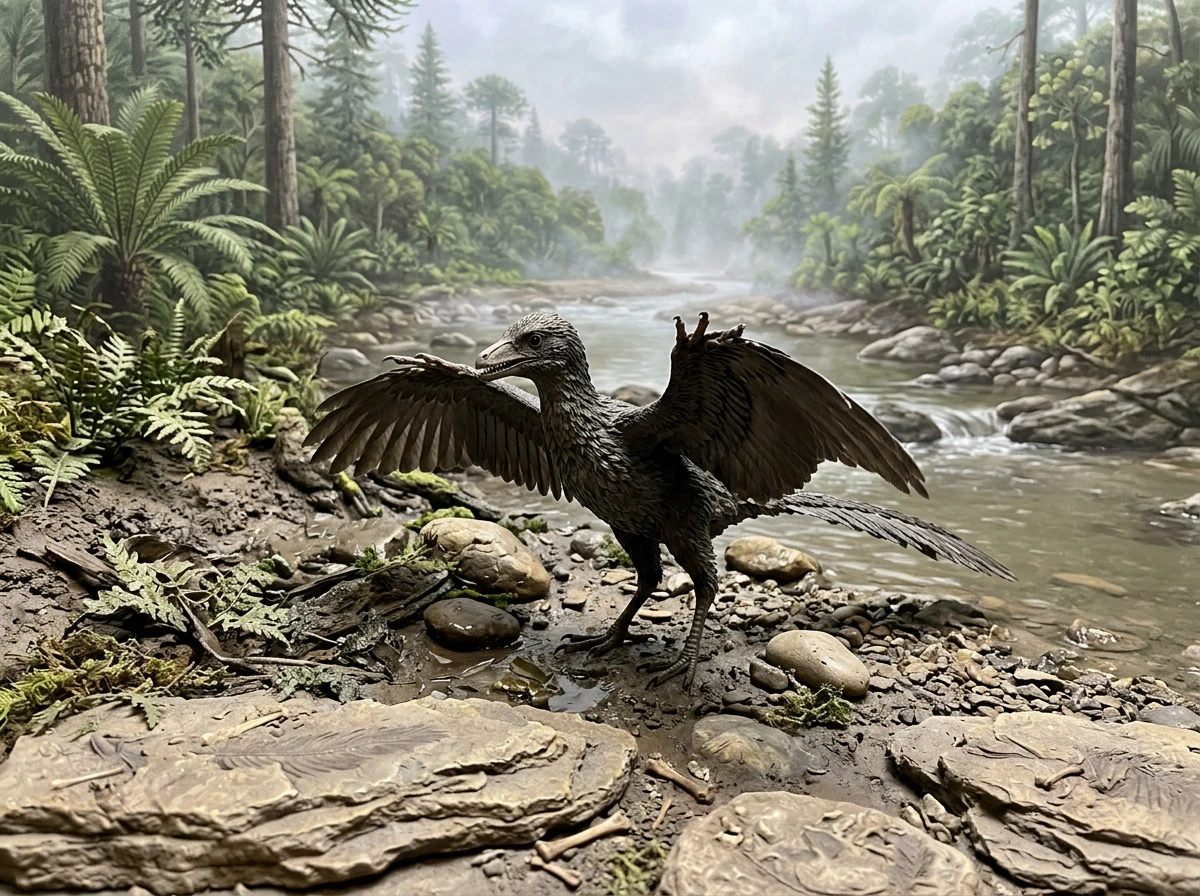
If you just saw a bird that made you do a double-take because it looked like something out of the Jurassic period, you are not imagining things. Several real birds alive today genuinely look prehistoric, and there are a handful of specific species that most people are thinking of when they search this, so you can figure out what bird looks like a dragon by location and key features. The short answer: the hoatzin, secretarybird, hoopoe, cassowary, and certain large kingfishers are the birds most commonly described as dinosaur-looking. Which one you saw depends heavily on where you are in the world, so that is your fastest clue.
What Bird Looks Like a Dinosaur How to Identify It Fast

Marcus Whitley
22 Mar 2026
Quick reality check: how birds relate to dinosaurs
Birds are not just dinosaur-like, they actually are dinosaurs in the most literal scientific sense. They evolved from a group of two-legged theropod dinosaurs, and that lineage never fully went away. So when a bird looks prehistoric to you, it is not a coincidence or a trick of the light. Features like scaly legs, prominent head crests, long curved beaks, heavy bodies, and an upright posture are genuine throwbacks to an ancient body plan. Some species kept more of those ancestral traits than others, which is exactly why certain birds stop people in their tracks.
You do not need a science background to identify these birds. What you need is a quick look at a few key physical features and a rough idea of where you are standing. That combination will get you to the right species in minutes.
The birds people most often call "dinosaur-looking"
Different birds trigger the dinosaur impression for different reasons. Some have wild crests, others have scaly armored legs, and some just have that slow, heavy, ancient-looking posture. Here are the main candidates, organized by the feature that makes them look prehistoric.
Dramatic head crests: hoopoe and hoatzin
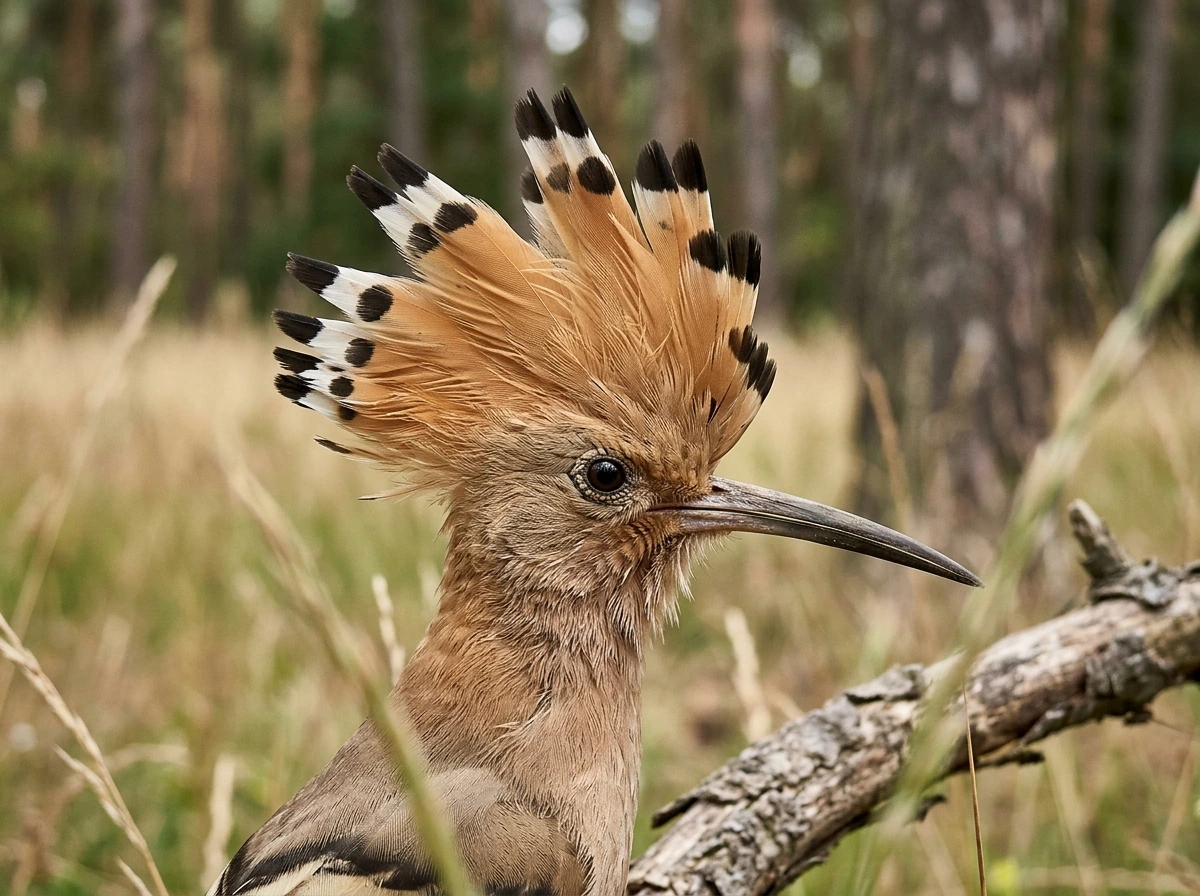
The hoopoe is the one that surprises people most. It has a long, fan-shaped crest of feathers tipped in black that it raises and lowers like a crown. Pair that with a long, thin, downcurved bill and bold black-and-white barred wings, and it looks like something a paleontologist drew on a whiteboard. The hoopoe is widespread across southern Europe, Africa, and into southeastern Asia, so if you are in any of those regions and you saw a crest-raising bird probing the ground with a curved beak, this is almost certainly your bird.
The hoatzin is a chicken-sized bird from South American swamps, and it earns its prehistoric reputation in a different way. Its face is bare and bright blue, its loose crest sits in a rough spike, and chicks are born with tiny claws on their wings, a trait that seems like it belongs in a museum. If you are in the Amazon or Orinoco basin area near water, swamps, or flooded forest edges, the hoatzin is the bird making you feel like you traveled back in time.
Long legs and commanding posture: the secretarybird
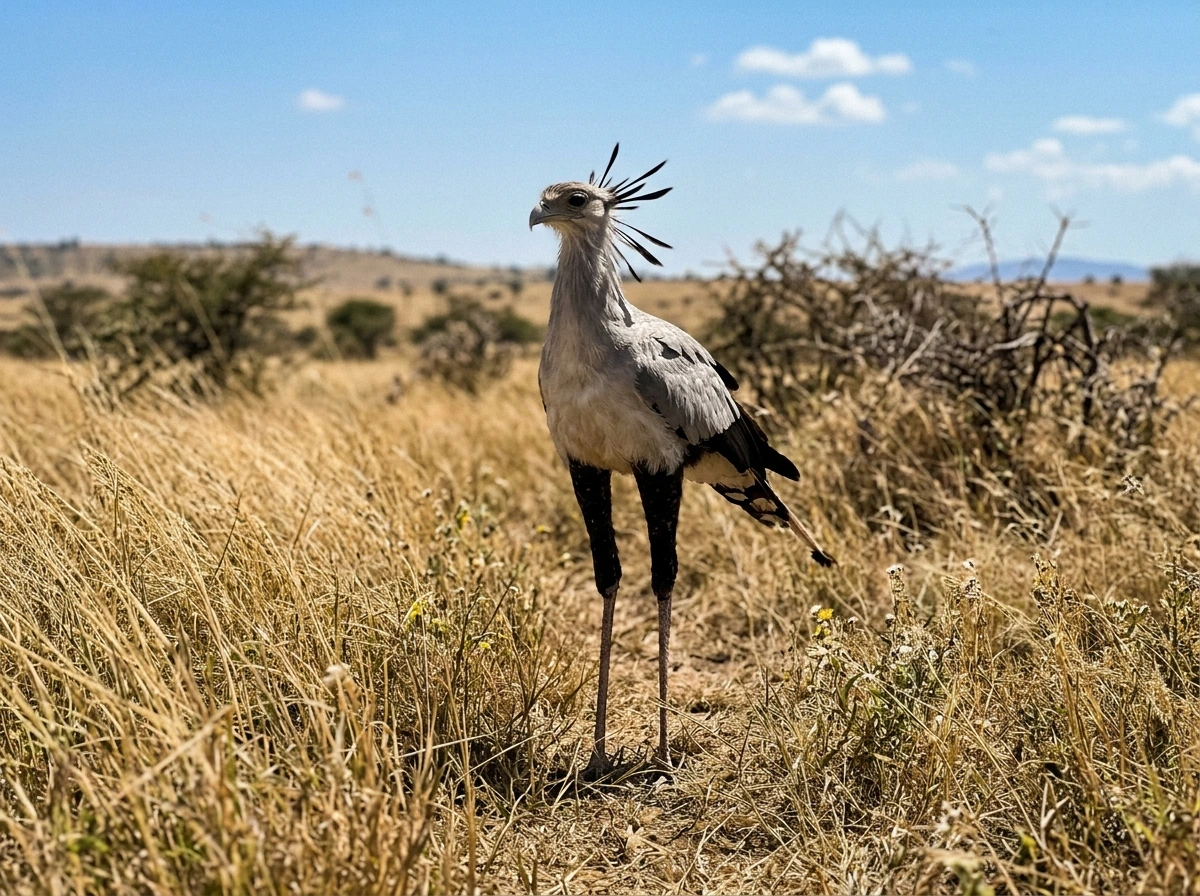
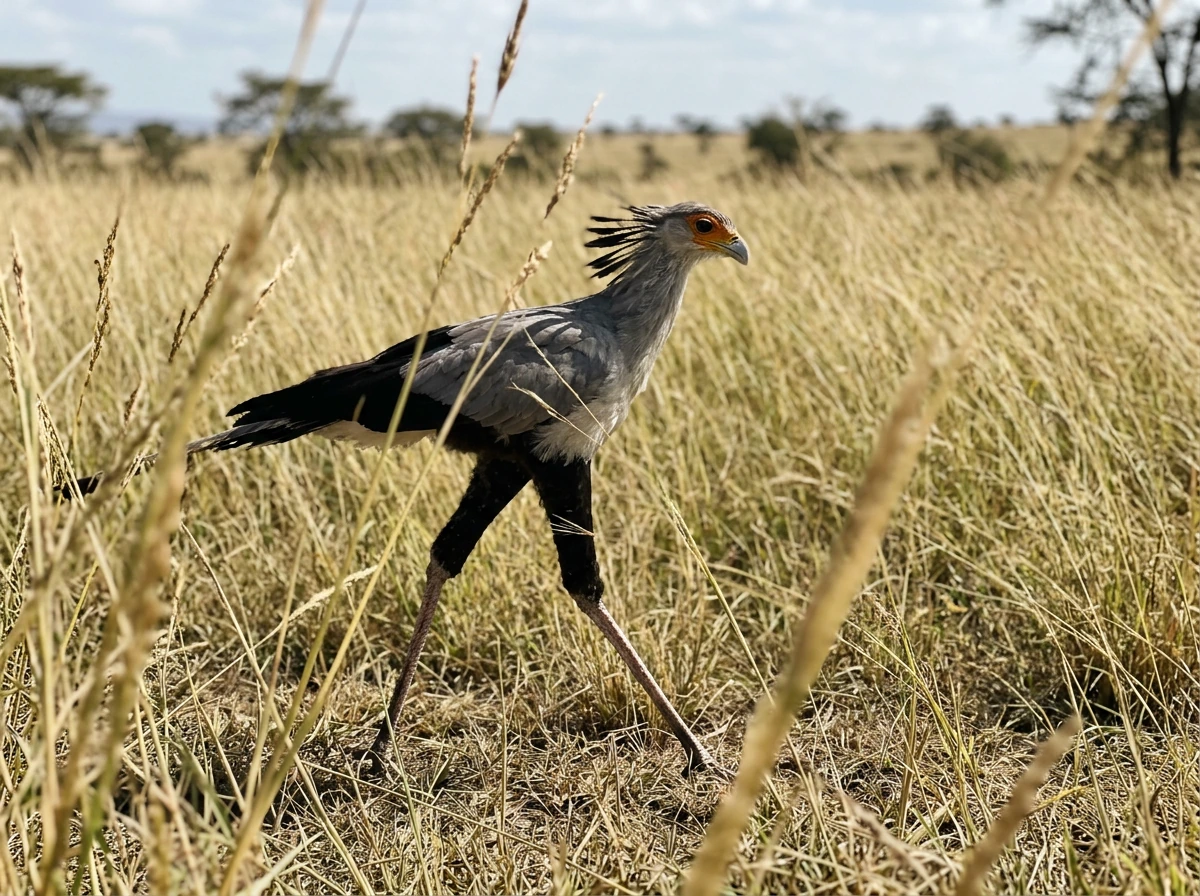
The secretarybird looks like someone crossed a raptor with a crane. It stands very tall on long legs, walks across open African grasslands with an almost regal stride, and has a dramatic spray of long black feathers on the back of its head that stick out like quills. There is nothing else quite like it. where you saw a tall bird striding through savanna or shrubland, this is your match.
Heavy body and armored look: cassowary
The cassowary is the bird that most directly looks like a small theropod dinosaur. It is a massive flightless bird with a bony helmet-like casque on top of its head, a vivid blue-and-red neck, and coarse black body feathers that look more like fur than feathers. It stands up to 6 feet tall. Cassowaries live in the rainforests of New Guinea and northeastern Australia, particularly Queensland. If you are in that region and you saw something that made your brain say "velociraptor," you likely saw a cassowary.
Big shaggy crests and thick beaks: large kingfishers
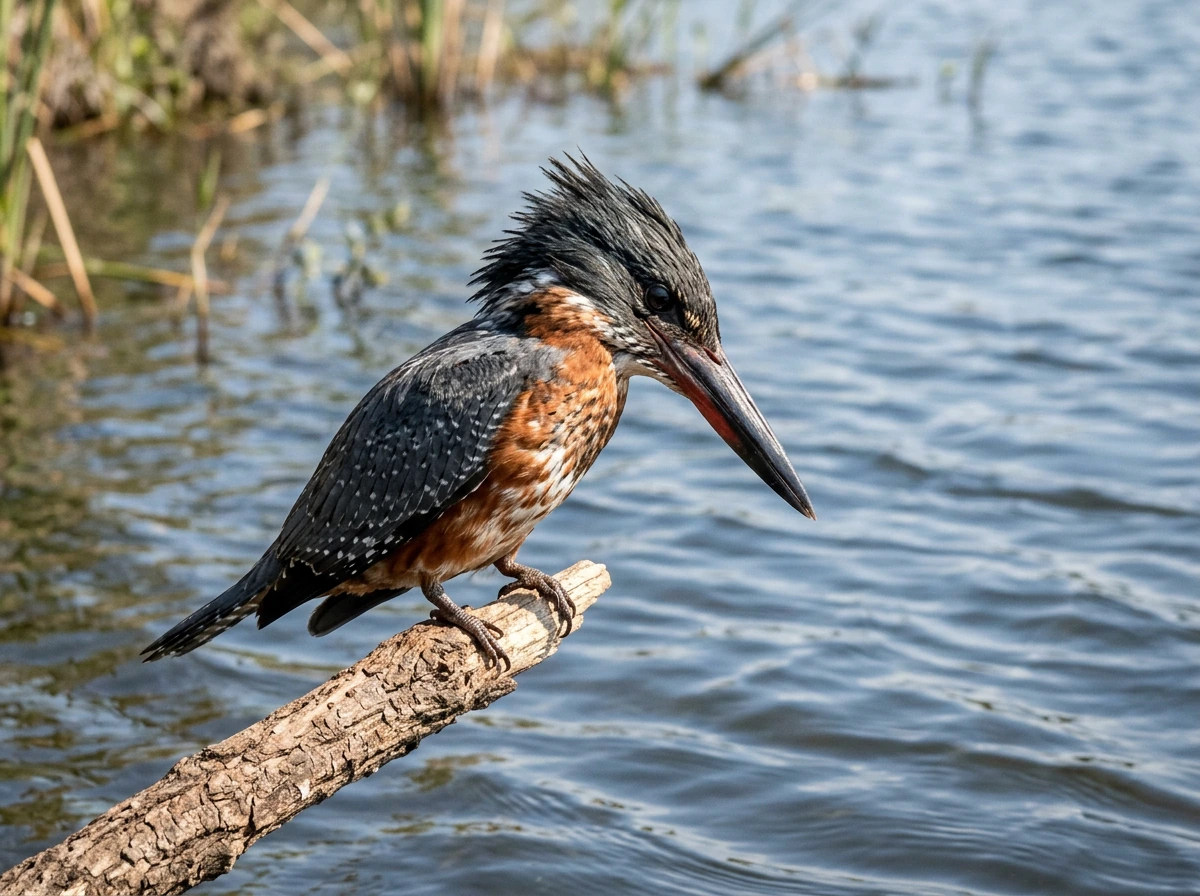
Large kingfishers often get called dinosaur-like because of their oversized, dagger-shaped bills and shaggy crests that look almost too big for their heads. The belted kingfisher covers most of North America and is the only kingfisher you will see across Canada and most of the United States. It has a stocky build, a shaggy blue-gray crest, and a thick straight bill pointed like a spike. If you are in North America near any water and saw a stocky crested bird with a huge bill, this is your bird. In South and Southeast Asia, the crested kingfisher is an even larger version, black-and-white with a heavily barred shaggy crest.
Where you are narrows it down fast
Location is honestly the most powerful filter you have. Before you even think about crest shape or beak length, ask yourself where you were standing. Use this as your first pass:
| Your location | Most likely dinosaur-looking bird | Key habitat |
|---|---|---|
| North America (Canada/USA) | Belted Kingfisher | Near rivers, lakes, coastlines |
| Sub-Saharan Africa (open land) | Secretarybird | Savanna, grassland, shrubland |
| Africa / Europe / Asia (widespread) | Hoopoe | Open woodland, gardens, farmland |
| Amazon / Orinoco basin, South America | Hoatzin | Swamps, riparian forest, mangroves |
| New Guinea / NE Australia (rainforest) | Cassowary | Dense tropical rainforest |
| South/Southeast Asia (near rivers) | Crested Kingfisher | Fast-flowing rivers and streams |
If your location matches one of those rows, you can skip most of the deeper identification work and just confirm the visual details. If your location covers more than one possibility, the next section will help you sort it out.
What to look at: a quick feature checklist
When you are trying to lock down which dinosaur-looking bird you saw, work through the bird's body from top to bottom. Once you have the basics of the body features down, you can also use the same approach to identify specific birds like a dove by appearance what does a dove bird look like. You can use the same approach to check another common question, what does a raven bird look like, by comparing its silhouette, beak shape, and feather gloss. This is a reliable method used by experienced birders and it stops you from fixating on one feature and missing a better clue.
Head and crest
Look at the top of the head first. Is there a crest? If yes, is it a fan that raises and lowers (hoopoe), a shaggy messy spray (kingfishers), a hard bony helmet (cassowary), long trailing quill-like feathers at the back (secretarybird), or a loose spiky tuft (hoatzin)? Crest shape alone often ends the search right there.
Beak shape and size
The beak is your second-best clue. A long, thin, downcurved beak used for probing the ground points straight to the hoopoe. A thick, straight, dagger-like bill aimed forward is classic kingfisher. A hooked raptor-style bill is more typical of the secretarybird, which is the closest match to what a raptor bird looks like. A cassowary has a fairly plain, modest beak that is almost understated compared to the rest of the bird.
Legs and overall height
Very long, bare legs make the secretarybird instantly stand out as it walks through grass. The cassowary also has thick, powerful legs with a sharp inner claw that looks genuinely dangerous. Kingfishers have short, almost stubby legs because they perch rather than walk. Hoopoes have typical mid-length legs. The hoatzin has strong claws for gripping branches.
Body shape and size
Think about overall size compared to something familiar. A cassowary is enormous, taller than most people's waist. A secretarybird is roughly the height of a large goose on very long legs. A hoopoe is about the size of a starling or a small thrush. A belted kingfisher is roughly robin-sized but much chunkier. The hoatzin is about chicken-sized.
Color and pattern
Hoopoe: pinkish-tan body, bold black-and-white bars on wings and tail, black-tipped crest. Secretarybird: gray body, black legs and flight feathers, long black crest. Cassowary: black body, vivid blue and red neck, gray-brown casque. Belted kingfisher: blue-gray above, white below, blue chest band (females also have a rusty band). Hoatzin: brown and streaked with a blue bare face.
Telling similar birds apart: side-by-side comparisons
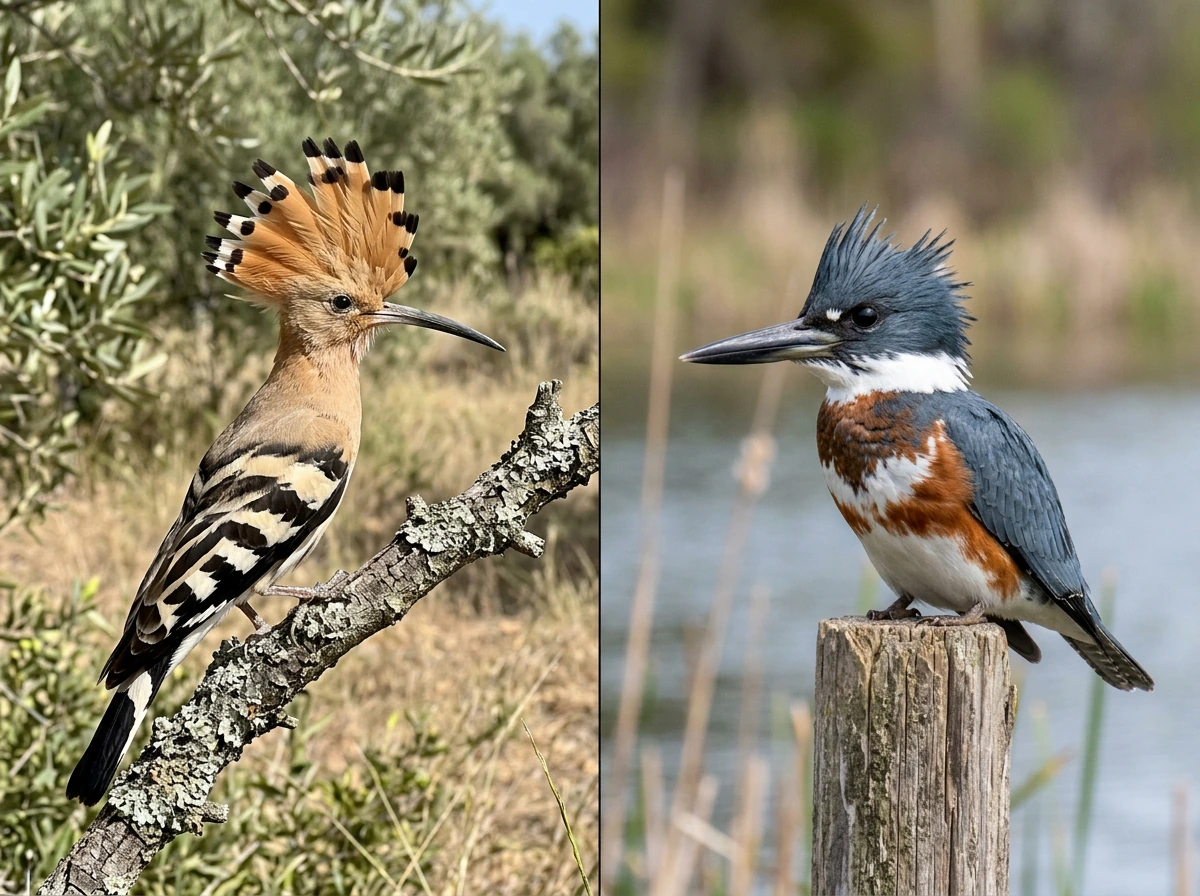
A few of these birds are easy to mix up, especially from a distance or a blurry photo. Here is where people most often get confused and how to fix it.
Hoopoe vs. belted kingfisher
Both have crests and are roughly mid-sized. The hoopoe's crest is a flat fan that opens like a headdress and its bill curves sharply downward. The kingfisher's crest is a shaggy tuft and its bill points straight forward like a spike. Also, location solves this immediately: hoopoes are Old World birds (Europe, Africa, Asia) while belted kingfishers are North American. You will never see both in the same place.
Cassowary vs. emu
Both are large Australian flightless birds, but the cassowary has a bony casque on its head, a vivid blue-and-red neck, and lives in dense rainforest. The emu is taller, has a plain blue-gray face and neck with no casque, and lives in open scrubland and grassland. If you were in thick jungle, it was a cassowary. If you were in open flat country, it was probably an emu.
Secretarybird vs. large storks or cranes
At a distance on the savanna, a secretarybird walking through tall grass can look like a large wading bird. The key difference is the head: the secretarybird has that unmistakable spray of long black feathers radiating from the back of the head, like a quill pen stuck behind an ear. Storks and cranes have plain heads. If you saw the crest, it was the secretarybird.
Hoatzin vs. other crested tropical birds
The hoatzin's bare blue face is its most distinctive feature and there is really nothing like it in South American swamps. If you see a scraggly-crested bird with a bright blue face clinging awkwardly to a branch over water in the Amazon, the identification is essentially done.
Solve it today: a step-by-step photo and identification method
If you are trying to confirm an ID right now, here is exactly what to do, whether you have a live bird in front of you or a photo you already took.
- Note your location first. Even a rough country or region narrows the list dramatically before you look at anything else.
- Photograph or recall the head clearly. Get or remember a close-up of the top of the head, the crest shape, and the face. This is your single most useful angle.
- Get a side-profile shot if possible. A full side view shows body shape, bill angle, leg length, and tail in one frame.
- Photograph the legs and feet if you can. Scale texture, leg color, and claw size are distinguishing details that often get missed.
- Note behavior. Was the bird probing the ground (hoopoe, secretarybird), perched over water watching for fish (kingfisher), clinging awkwardly to a branch (hoatzin), or walking slowly through dense forest (cassowary)?
- Open the Merlin Bird ID app (free, from Cornell Lab). Use the Photo ID feature: tap a photo and let it place a box around the bird and suggest a species. It covers over 8,000 species and uses your location and date to make more accurate guesses.
- Compare what Merlin suggests against the visual descriptions in this article. If the suggested species matches the crest shape, bill type, and habitat from your notes, you have your answer.
- If Merlin returns multiple suggestions with similar scores, use the location table above to eliminate candidates that do not fit your region.
One practical tip: posture changes how a bird looks more than most people expect. A bird hunched in a roosting pose can look much smaller and less dramatic than the same bird standing alert and upright. If your photo caught the bird mid-slouch, try searching images of the species you suspect in a relaxed posture and compare.
Common mistakes and how to avoid them
Even with a decent photo, a few habits cause people to end up with the wrong ID. Here are the ones that come up most often with dinosaur-looking birds specifically.
- Focusing only on the crest and ignoring the bill: crest shape alone can lead you to the wrong bird. Always cross-check with bill shape and angle before committing to an ID.
- Assuming a large bird is always the most dramatic species: not every tall, crested bird in Africa is a secretarybird, and not every big flightless bird in Australia is a cassowary. Check habitat and range first.
- Ignoring behavior as an ID clue: a bird that stands at the water's edge and dives headfirst is a kingfisher even before you see its crest. Behavior is free information.
- Using a photo taken from too far away: if the bird is just a dark shape in a blurry background, even the best ID app will struggle. Try to capture at least one frame where the head fills a good portion of the shot.
- Ruling out a species because the colors look slightly off: lighting conditions, age of the bird, and camera settings all shift perceived color. A hoopoe in harsh midday sun can look much paler than a field guide image.
- Conflating "dinosaur-looking" with "raptor": some readers think of raptors (hawks, eagles, falcons) as dinosaur-like, and while those birds have their own identification challenges, the species in this article are the ones with that unmistakably ancient, reptilian visual quality. If you are curious about raptor identification, that is a separate and equally detailed topic.
Where to go from here
Once you have a likely candidate, the next step is getting comfortable with what that bird looks like across different ages, sexes, and seasonal conditions. what did the first bird look like what did the first bird look like
FAQ
How can I tell if the dinosaur-looking thing I saw is definitely a bird and not something else?
If you are not sure you are looking at a “real bird” versus an animal that only resembles one, use two quick checks: does it have feathers on the wings and body (not just hair-like texture), and does it behave like a bird (perching, hopping, wing movement, or a bird-typical walking gait). Cassowaries and kingfishers can look especially “beasty,” but they still show clear feather structure when you get a side view.
I saw a crested bird, how do I quickly decide between hoopoe and a kingfisher?
Hoopoe and kingfisher are often confused because both can show head crests, but the bill direction is the fastest separator. A hoopoe’s bill curves downward for probing the ground, while kingfishers hold a thick, straight, dagger-like bill aimed forward, and they usually perch near water before striking.
What is the most reliable feature to distinguish a secretarybird from cranes or storks?
For secretaries, don’t rely on the legs alone. The hallmark is the back-of-head “quill pen” spray, and it becomes easiest to see when the bird turns its head or walks past you at an angle. Storks and cranes can share the tall silhouette, but their heads are plain and they lack that rear crest display.
If I cannot see the hoatzin’s blue face clearly, what else should I use to confirm it?
If you are trying to confirm hoatzin and you have no good view of the face, use habitat and behavior. Hoatzins are strongly tied to swamps, flooded forests, and waterways in South America, and many encounters involve clinging to branches near water rather than active open-ground foraging.
How do I narrow down which kingfisher species you mean when people say it looks like a dinosaur?
Kingfishers can look “too big for their head” due to that oversized bill and shaggy crest, but the exact species usually tracks with geography. Belting kingfisher is the North America match, while larger crested forms occur in South and Southeast Asia, so your location should come before fine crest details.
What quick checks can prevent me from mixing up a cassowary with a similarly “prehistoric” flightless bird?
Use size plus posture, not just color. A cassowary is typically towering (up to about 6 feet) with a prominent helmet-like casque and a vivid blue-and-red neck, and it stands heavy and upright. If the bird is much smaller or the neck color and casque are missing, you likely have a different candidate.
If I’m in Australia, how do I tell cassowary from emu when the bird is at a distance?
The “casque versus no casque” rule is easiest to apply when you can see the head from above or from the side. Cassowaries also have the vivid blue-and-red neck, and they tend to use dense rainforest, while emus lack the bony helmet feature and are more associated with open scrub or grassland.
What is the fastest workflow for identifying the dinosaur-looking bird from a photo?
For a likely ID from a photo, start by capturing the full body outline, then crop your view to the head first. Crest shape and bill angle are usually more diagnostic than body color, and a sideways angle often reveals whether the bill is downcurved (hoopoe) or straight and spike-like (kingfisher).
My photo looks different from what I expected because the bird was moving or hunched. How should I handle that?
If your bird is moving, assume it might be mid-behavior and change your criteria accordingly. A hunched resting posture can make a secretarybird look smaller or more like a wader, so wait for a head-turn or a more upright walk before you finalize the ID.
What is a good rule-of-thumb to avoid misidentifying these birds when two traits seem to match?
To avoid false confidence, collect one “hard” feature and one “soft” feature. Hard features are crest type (fan, shaggy tuft, bony casque, quill-like back spray, spiky tuft), and soft features are habitat (swamp edges, rainforest, savanna grasslands, open water areas). If your hard feature conflicts with the habitat, re-check the hard feature first.
Next Article
What Did the First Bird Look Like? Fossil-Based Description
Learn what the earliest known birds looked like using fossil clues, key traits, and a checklist to compare reconstructio