The Brown Thrasher is a robin-sized songbird with rich reddish-brown upperparts, a very long rufous tail, two crisp black-and-white wing bars, and a heavily streaked white-to-buff chest. Its most immediately recognizable features are that long, slightly downcurved bill, a striking pale yellow eye, and those bold dark streaks running down the belly. Once you know what to look for, it's one of the easier birds to lock onto in the field.
What Does a Brown Thrasher Bird Look Like? Key ID Marks

Marcus Whitley
23 May 2026

Quick ID snapshot: size, shape, and overall vibe
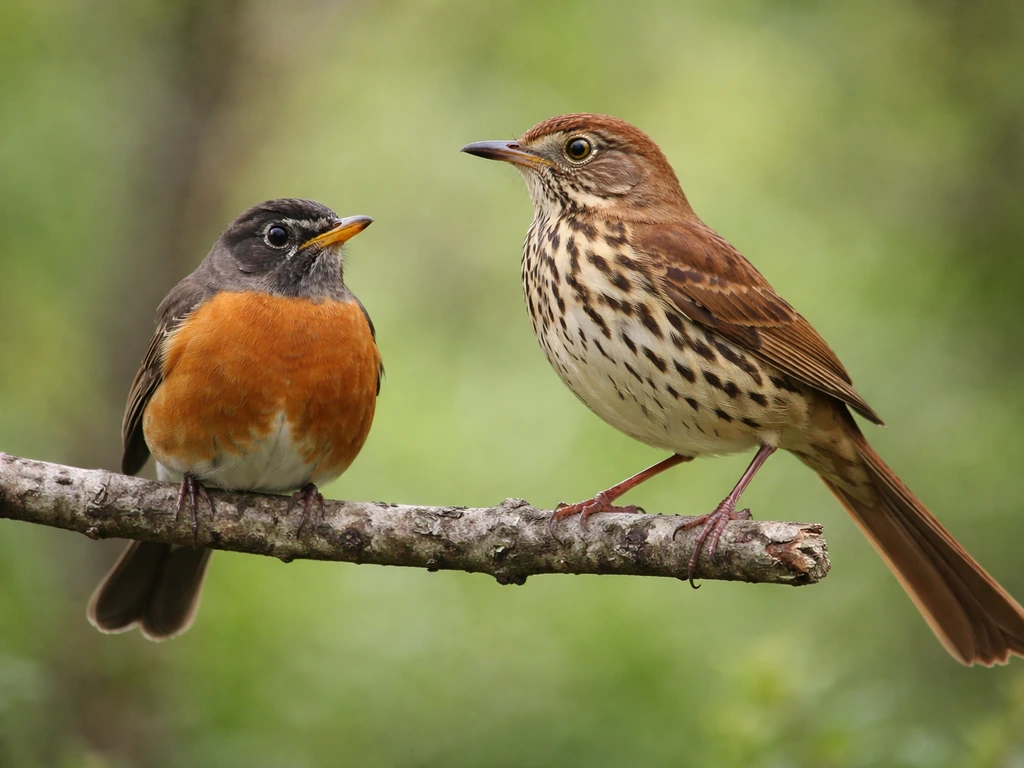
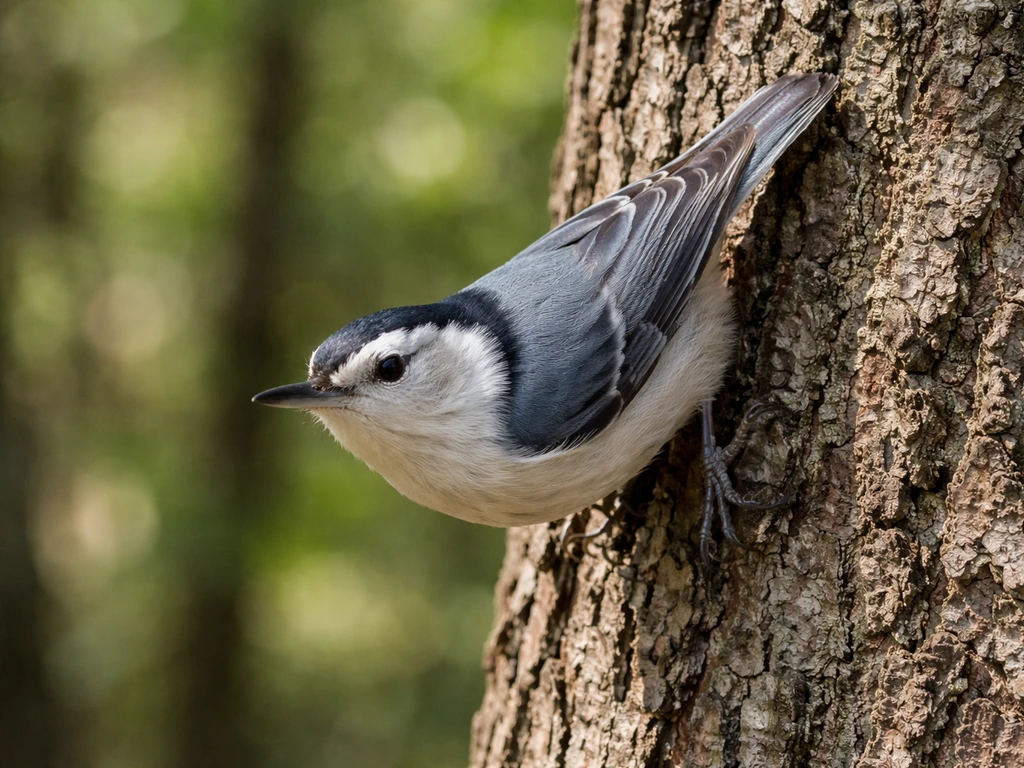
Think of a Brown Thrasher as a slightly larger, longer, and more dramatic-looking American Robin. If you want a similar kind of quick visual guide, you can also compare with what does a nuthatch bird look like to train your eye for size, shape, and overall vibe. Adults measure roughly 9 to 12 inches from bill tip to tail tip and weigh between 2. The Missouri Department of Conservation field guide lists the adult Brown Thrasher length as 11½ inches from the tip of the bill to the tip of the tail blank" rel="noopener noreferrer">Adult Brown Thrasher length: 11½ inches (tip of bill to tip of tail). 1 and 3.1 oz, so this is a substantial songbird with real presence. The proportions are what you notice first: long sturdy legs, a long sweeping tail that it often holds low or fans slightly, and a long slender bill that curves gently downward. It has a slightly hunched, alert posture when it's on the ground or perched in a shrub, often tilting its head to one side. The overall silhouette is sleek but heavy, and the tail length alone will make you stop and take a second look.
Overall color and pattern: what hits you first
The top half of the bird is a warm, foxy reddish-brown, sometimes described as rufous. That rich cinnamon tone covers the head, back, wings, and tail evenly. Flip your eyes to the underside and the contrast is striking: a whitish to pale buff background loaded with heavy dark brown streaks running down the breast, belly, and sides. This streaked-below, plain-rufous-above combo is one of the clearest pattern clues you can use. Western populations can look a bit paler and less heavily marked, but the basic scheme stays the same. The two white wing bars stand out cleanly against the dark brown wings, giving the bird a neat, defined look even at a distance.
Head details: bill, eye, and face to zoom in on
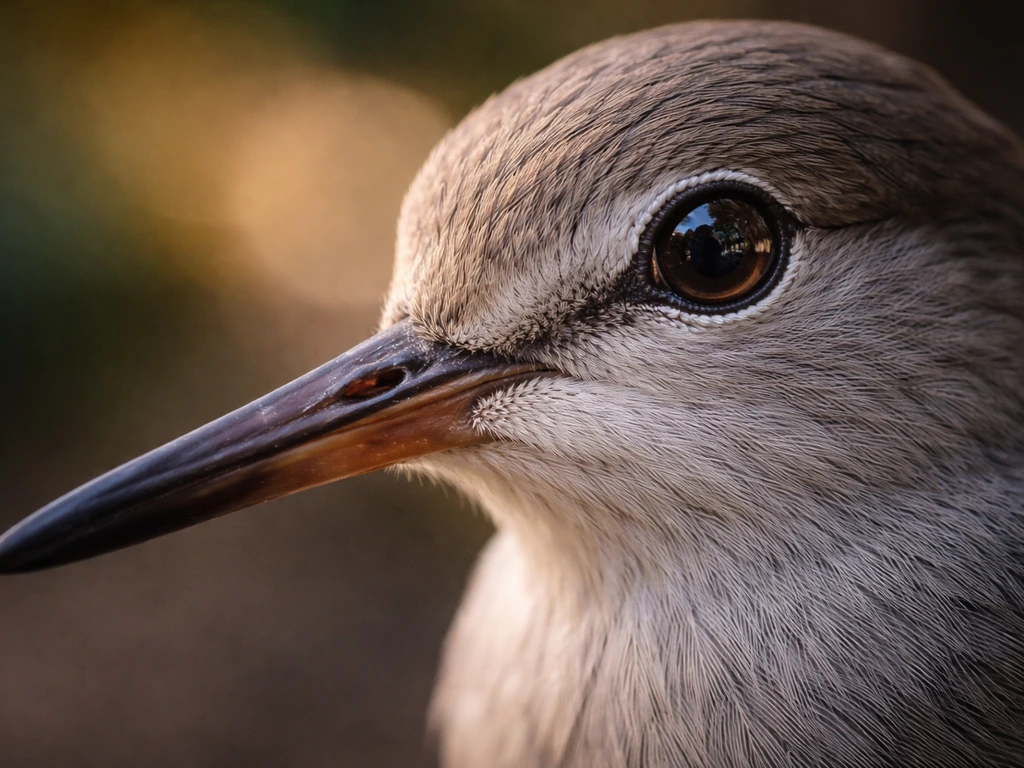
The face is mostly gray-brown, a slightly cooler and less saturated tone than the warm rufous of the back. Look for gray cheeks and a clean, uncluttered face without bold eye-rings or strong head stripes. The bill is long, slender, and noticeably curved downward, which gives the bird a slightly serious, purposeful expression. The eye is one of the best single field marks on the whole bird: adults have a bright pale yellow iris that practically glows in good light. It's unexpected and memorable. Juveniles have an olive-colored iris instead, which is a handy age cue if you're trying to figure out whether you're looking at a young bird from a summer brood.
Wings and tail: the markings up close
The wings are rufous-brown overall, and the two wing bars are created by the white-tipped wing coverts, each with a black subterminal bar behind the white tip. In practice this means you see two clean, parallel white lines crossing the wing, bracketed by darker bars, making a neat ladder pattern. This detail is visible both when the bird is perched and when it flies. The tail is long and rufous, matching the back, and it's one of the most useful distance cues because it just looks disproportionately long compared to most other brown songbirds you'll encounter. When the bird moves or takes off, that long rufous tail is almost impossible to miss.
Underparts and back: where the pattern really shows
The back is plain rufous with no real patterning, which keeps it simple. All the visual action is on the underside. The chest and belly are whitish to pale buff, and the dark brown streaking is heavy and coarse from the upper breast all the way down through the belly and along the flanks. This isn't subtle fine streaking like you'd see on a sparrow. It's bold, chunky, and unmistakable. When you see a bird foraging on the ground and flip it to show its front, you'll immediately notice how dramatically marked the underparts are against the pale background.
How it compares to look-alike birds
The Brown Thrasher gets confused most often with thrushes and other mimids. If you also want help with the broader group, see what does a thrasher bird look like for quick comparison tips across thrashers. Here's a quick visual breakdown of the key differences to rule out the most common confusion species. Here's a quick visual breakdown of the key differences to rule out the most common confusion species, and it helps to compare similar-looking woodpecker types like a sapsucker bird to understand look-alike patterns what does a sapsucker bird look like.
| Bird | Underparts | Wing Bars | Tail Length | Bill Shape | Eye |
|---|---|---|---|---|---|
| Brown Thrasher | White/buff with heavy dark streaks | Two black-and-white wing bars | Very long, rufous | Long, slender, curved down | Pale yellow (adult) |
| Wood Thrush | White with bold dark spots (not streaks) | None | Short | Shorter, straighter | Dark |
| Hermit Thrush | White with spotted breast | None | Short, rusty-brown | Short, straight | Dark with white eye ring |
| Northern Mockingbird | Plain pale gray, no streaks | White wing patches (not bars) | Long, gray-black | Shorter, slightly curved | Yellow-orange |
| Curve-billed Thrasher | Pale with circular brownish-gray spots | Faint or absent | Long | Heavy, strongly curved | Orange-red |
The Wood Thrush is probably the most common confusion bird. The quickest way to separate them: the Wood Thrush has bold dark spots on the chest, not streaks, and its tail is noticeably shorter. The Brown Thrasher's long downcurved bill and very long tail will clinch it if you're still unsure. The Hermit Thrush also has a spotted breast and no wing bars, and it tends to have a rusty-tinged tail that it bobs up and down, which is a behavioral giveaway. The Northern Mockingbird shares the mimid family and a long tail, but it's gray overall with white wing patches rather than rufous coloring and streaked underparts. If you're birding in the West and wondering about the Curve-billed Thrasher, look at the breast patterning closely: its markings are circular spots, not the heavy linear streaks the Brown Thrasher carries. Other thrashers are also worth knowing as a broader group, since several species share similar body proportions.
Field checklist and how to confirm with photos
When you're in the field and think you've spotted a Brown Thrasher, run through these features in order. Start with the easiest things to see at a distance and work toward the finer details as you get a better look. Audubon recommends an approach of noting key field marks first, then studying overall shape and wing features when the bird is in flight at distance blank" rel="noopener noreferrer">Start with the easiest things to see at a distance and work toward the finer details. A flycatcher’s look varies by species, but most have a fairly flat, wide bill and an overall compact shape what does a flycatcher bird look like.
- Overall size and tail: Is it robin-sized or larger with a noticeably long, rufous tail? That long-tail silhouette is your first signal.
- Upperpart color: Is the back, head, and tail a warm reddish-brown (rufous) tone, not gray or spotted?
- Underpart streaking: Can you see heavy dark streaks on a pale chest and belly? This is one of the strongest single field marks.
- Wing bars: Look for two distinct black-and-white wing bars across the folded wing.
- Bill shape: Is the bill long, slender, and curved downward? This is easy to see in profile.
- Eye color: If you get close enough, check for a pale yellow iris. In juveniles, the eye will be olive-colored instead.
- Face tone: The cheeks and face should look gray-brown, noticeably cooler than the warm rufous back.
For photos, the three best angles to capture are a clear side-profile shot of the head (to show the bill curve and eye color), a view of the folded wing from the side (to document the wing bars), and a front or three-quarter view from below (to show the streaking on the chest). If you can get all three, you'll have a solid photo ID that holds up to any scrutiny. When reviewing photos on screen, zoom in on the eye first to check iris color, then check the wing bar structure, then count the streaks on the chest. These three details together are essentially a lock on the species. Keep in mind that juveniles in summer will look slightly softer in plumage texture and will have that olive eye rather than yellow, so don't be thrown off if the eye color doesn't match what you expect.
FAQ
What does a brown thrasher bird look like in flight, not just when perched?
In flight, prioritize the overall silhouette and wing bars. The Brown Thrasher shows two bold, clean white bars across the wing, and the rufous tail tends to look disproportionately long compared with similarly sized thrushes or mimids.
How can I tell a brown thrasher from a spotted thrush if the bird is far away?
A key detail is the breast pattern type. Brown Thrasher underparts have heavy, coarse streaks, not spots or blotches, and the tail is long and downcurved-bill birds often feel more “swept” than squat.
Do brown thrashers look different when they are young (juveniles)?
Juveniles usually look a bit softer or less crisp in contrast, and their iris is typically olive instead of pale yellow. Even so, the long downcurved bill, two wing bars, and streaked underparts should still be present.
Why does a brown thrasher look lighter in some regions, and what should I trust instead?
Yes, Western birds can appear paler and less heavily marked from a distance, so rely more on structural clues than intensity of color. The long tail, the downcurved bill, two wing bars, and streaking pattern (streaks, not spots) are the more reliable constants.
What should I do if my picture is too blurry to see everything clearly?
If your photo is blurry, you can still use a short checklist. Zoom on the eye for iris color first, then locate the two wing bars, and finally look for whether the underparts show streaks that run vertically rather than dots.
What is the most common identification mistake people make with brown thrashers?
A common mistake is over-focusing on the rufous back and missing the underside pattern. For solid identification, confirm the combination of plain rufous upperparts plus strongly streaked white-to-buff underparts.
What quick trait checklist can I use to avoid confusing it with other mimids or thrushes?
Start your comparison with mimids and thrushes by using three “must-check” traits: long downcurved bill, very long tail, and the streaked breast plus two wing bars. If any one of those is missing, be cautious about calling it a Brown Thrasher.
What camera angles work best to show the bill curve and wing bars for identification?
To photograph the bill curve without distortion, use a side-profile angle and keep the camera roughly parallel to the bird’s body axis. For the wing bars, capture when the wing is folded or slightly fanned, and shoot from an angle where the bars are not blocked by the tail or body.
Next Article
What Does a Nuthatch Bird Look Like? Key Features to Identify
Identify a nuthatch by blue gray back, bold head stripes, stout bill, long pointed tail, and trunk foraging cues plus lo