When someone searches 'man who looks like a bird,' they usually mean one of three things: they saw a person in a striking bird costume or cosplay, they're thinking of a mythological or cultural 'birdman' figure, or they're using shorthand to describe an actual bird species that reminded them of a human face or posture. This guide untangles all three, then gives you a practical toolkit for identifying real birds in the field, whether you stumbled onto the search while bird watching or you're just genuinely curious about what bird you resemble most.
Man Who Looks Like a Bird: Visual ID Guide for Birders Today

Marcus Whitley
12 Aug 2026
What people actually mean when they search this phrase
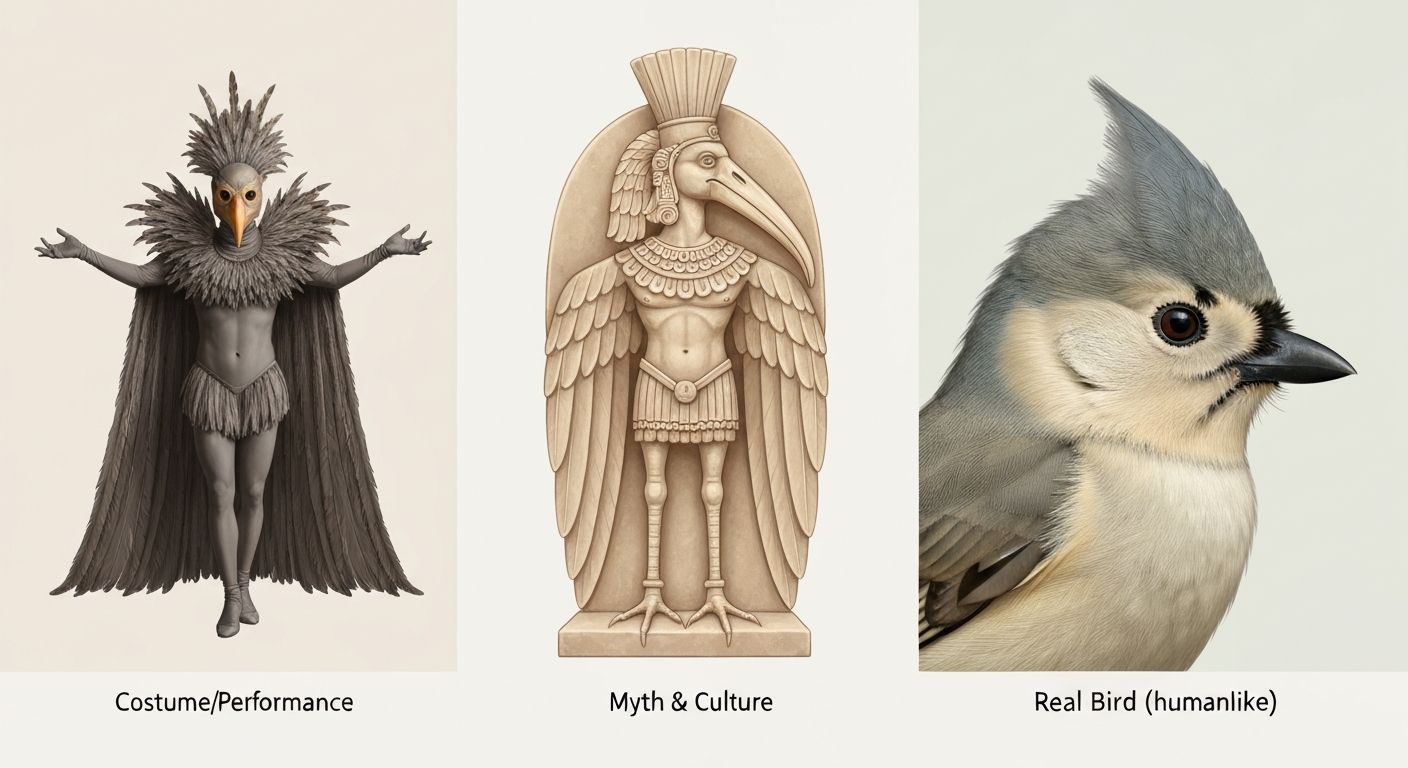
The query is genuinely ambiguous, and that's what makes it interesting. Intent signals from birding and identification communities suggest it splits roughly into three camps. First, there's the costume or performance angle: people searching after seeing a street performer, a carnival act, or a festival outfit featuring elaborate feathers, a sculpted beak mask, and plumage-like cape. Second, there's the cultural and mythological angle: figures like the Egyptian god Thoth (ibis-headed), the Aztec deity Quetzalcoatl, or the 'birdman' of Easter Island (Tangata Manu) all describe humanoid beings with bird features. Third, and most relevant to a bird ID site, there's the casual observer who saw a bird with an almost human-like silhouette or unusually expressive face and searched in a roundabout way.
That third group is the most common visitor to bird ID forums. Posts on communities like r/whatsthisbird frequently feature photos with descriptions along the lines of 'this bird was staring right at me and looked almost human.' Birds that trigger this reaction tend to have forward-facing eyes, strong crests that resemble hair, upright postures, or comically large bills. If that sounds familiar, keep reading, because the rest of this guide will walk you through exactly how to identify what you actually saw.
Quick visual ID checklist: top field marks to note
Before you reach for an app or field guide, spend thirty seconds logging these six things. They're the fastest route to a confident identification, and they're based on the step-by-step framework taught by Cornell Lab's Building Skills materials and the Peterson Field Guide tradition of arrowed field marks.
- Overall size and silhouette: Is it roughly sparrow-sized, robin-sized, crow-sized, or larger like a heron or pelican? Silhouette alone eliminates dozens of species immediately.
- Bill shape and length: Is the bill short and stubby, long and straight, hooked, or dramatically curved? Compare bill length to the length of the head — this single measurement separates many lookalike pairs.
- Head pattern and crest: Look for a cap, hood, crest, tuft, or any patch of color on the crown. A crest that fans out like hair is one of the most memorable and useful field marks.
- Wing and tail pattern: Check for white patches, bars, spots, or bold contrasting panels when the bird moves or spreads its wings.
- Posture, behavior, and habitat: Does it sit upright like a woodpecker on bark, slouch low like a heron at water's edge, or glide with wings flat like a pelican? Where it sits and what it does narrows things down fast.
- Vocalizations if available: A call or song heard alongside a visual is often the quickest confirmation tool, even if you can only describe it as 'loud and harsh' or 'soft and whistled.'
A short step-by-step ID method you can use in the field
This method takes about two minutes and works whether you have binoculars, a phone camera, or just your eyes. It follows the four keys framework from Cornell Lab's All About Birds teaching materials, adapted here into a practical sequence.
- Pause and look at the whole bird before it moves. Note the overall shape: is the body round and compact, long and tapered, or stocky with a big head? This first impression is often the most reliable.
- Focus on the bill next. Hold your thumb up if it helps to estimate scale. A Downy Woodpecker's bill is about one-third the length of its head; a Hairy Woodpecker's bill is roughly equal to its head length. That one comparison alone tells you which species you're looking at.
- Scan the head and neck. Is there a crest? Is the head entirely one color, or does it have a cap, a mask, or a patch? A fully red head with no other colors is a standout mark for the Red-headed Woodpecker, for example.
- Check the wings and tail. Look for contrasting patches, spots, or bars. If the bird fans its tail or stretches a wing, grab that moment, it's the clearest view you'll get of these marks.
- Note the habitat and behavior. A bird that's clinging vertically to a tree trunk is almost certainly a woodpecker or nuthatch. A large bird soaring low over coastal water with a pouched bill is a pelican. Context is a field mark too.
- If you have a photo or sketch, compare it against a field guide illustration or a reliable species page as soon as you can, while the memory is fresh.
Pelican-like, large-billed birds: common lookalikes and visual cues
Large-billed waterbirds are among the most frequently searched for, partly because their proportions feel almost cartoonish and partly because they're genuinely easy to confuse from a distance. If the 'man who looks like a bird' image in your head features an enormous bill, a hefty body, and some kind of throat pouch, you're in pelican territory, but there are several similar-looking species worth knowing.
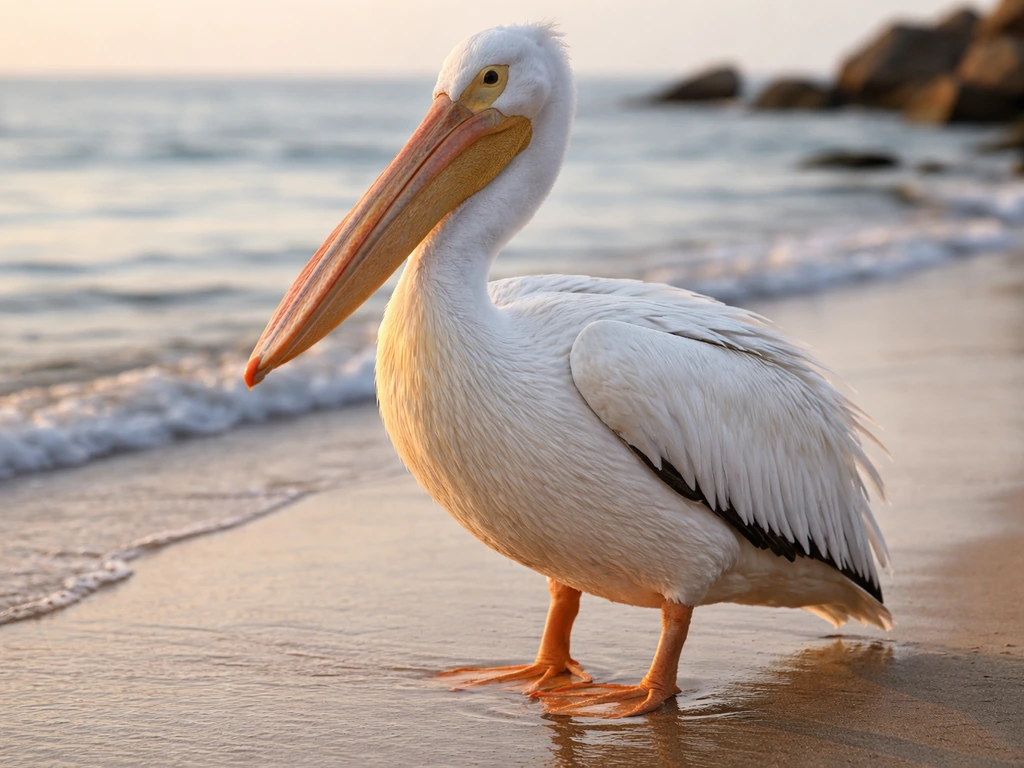
The American White Pelican is one of North America's largest birds. You'll notice the huge white body first, then the long, straight orange bill with its stretchy pouch underneath. It feeds cooperatively in groups by herding fish in shallow water, which looks nothing like what the Brown Pelican does. The Brown Pelican is a coastal bird with a dark brown body, a long bill that curves slightly downward at the tip, and a dramatic habit of diving headfirst from height to catch fish. If you're inland and the bird is white, it's almost certainly the American White Pelican. If you're at the coast and it plunges from the air, it's the Brown.
Two other species get confused with pelicans regularly. The Northern Gannet has a similar large-body, plunge-diving behavior, but it's sleeker, with a pointed tail, creamy-yellow head, and long narrow wings tipped in black. The Double-crested Cormorant is stockier and darker, with a hooked bill (no pouch visible from a distance) and a habit of perching with wings spread to dry. If the bird looks like a pelican but seems to have no pouch and holds its wings out like laundry drying on a line, you're looking at a cormorant.
For a deeper look at pelican-like birds, the American White Pelican and Brown Pelican are well covered on related pages in this guide, that section on what bird looks like a pelican goes into even more detail on separating these species.
Birds that look like they have hair: crests, tufts, and shaggy plumage
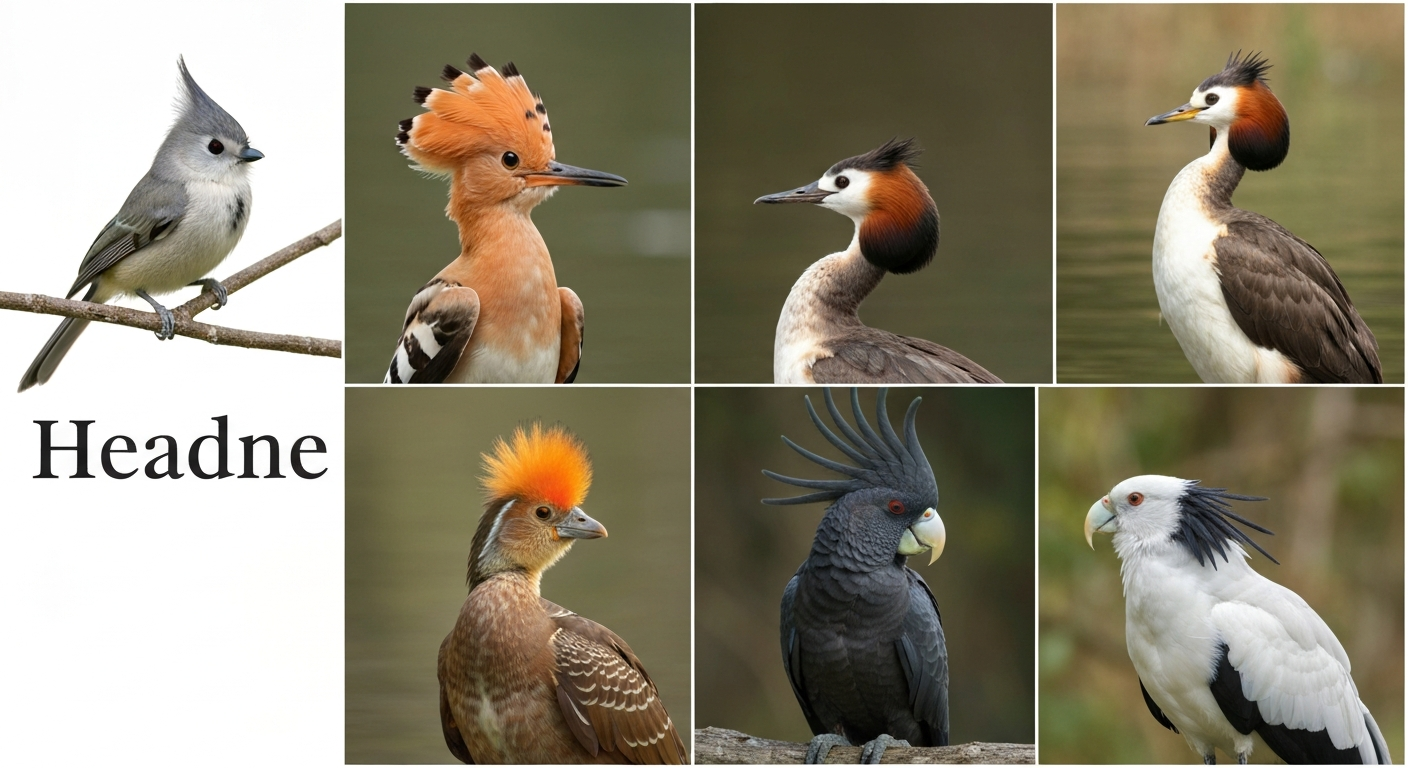
Some birds genuinely look like they're having a bad hair day, and that visual is often what triggers the 'looks like a person' response in observers. A raised crest, a wild tuft, or a fan of loose feathers on the head can make a bird look remarkably expressive, even human. These are some of the most striking and photogenic birds you'll encounter, and they're not hard to identify once you know what to look for. For a clear example of a small crested North American species, see Tufted Titmouse, All About Birds (Cornell Lab) blank" rel="noopener noreferrer">Tufted Titmouse — All About Birds (Cornell Lab).
- Northern Cardinal (male): The male's pointed red crest is one of the most recognizable in North America. It fans up sharply when the bird is alert or agitated, giving it an almost punk-rock silhouette. The all-red body with a black mask makes it unmistakable.
- Tufted Titmouse: A small gray bird with a perky pointed crest, rust-colored flanks, and large dark eyes. It's often described as looking like a tiny, well-groomed cardinal in grayscale. Common at backyard feeders across eastern North America.
- Hoopoe (Upupa epops): Found across Europe, Asia, and Africa, the Hoopoe has a spectacular fan crest of orange-buff feathers tipped in black that it raises like a headdress. The striped black-and-white wings and long curved bill make it one of the most visually dramatic birds in the world.
- Sulphur-crested Cockatoo: Native to Australia and parts of Southeast Asia, this large white parrot has a vivid yellow crest it fans upward when excited. It's the bird most often described as looking like it has wild hair.
- Crested Tit (Eurasia): A small woodland bird with a bold black-and-white speckled crest that stands permanently upright. Found across European conifer forests.
If the bird you're trying to identify had plumage that looked more like loose, shaggy feathers than a neat crest, think of a bird that looks slightly unkempt or has feathers hanging down like frizzy hair, you might be looking at a crested duck, a Green Heron (which can raise its crown feathers dramatically), or even a juvenile bird with downy plumage still coming in. Related pages on this site covering birds that look like they have hair go into these species in much more detail.
Woodpeckers and common lookalikes: Downy, Red-headed, and similar species
Woodpeckers are one of the most frequently confused bird groups for casual observers, partly because several species look quite similar and partly because you often only get a brief side view as the bird clings to bark. The three species most worth knowing in detail are the Downy Woodpecker, the Hairy Woodpecker, and the Red-headed Woodpecker.
The Downy Woodpecker is the smallest woodpecker in North America and the one you're most likely to spot at a backyard feeder. See the Downy Woodpecker, All About Birds (Cornell Lab) species account for photograph-friendly diagnostic notes (bill length, outer-tail-feather pattern) and range maps to aid comparisons blank" rel="noopener noreferrer">Downy Woodpecker — All About Birds (Cornell Lab). Look for a black-and-white pattern on the back, a white central stripe down the back, and, in males, a small red patch on the back of the head. The key feature: the bill is noticeably short, roughly one-third the length of the head. It looks almost stubby. The Hairy Woodpecker is nearly identical at a glance, same color pattern, same general shape, but it's larger (about the size of a robin rather than a sparrow) and the bill is much longer, roughly equal to the length of the head. A second useful mark: look at the outer tail feathers. Downy Woodpeckers often have black spots or bars on those outer white feathers; Hairy Woodpeckers have plain white outer tail feathers with no spotting.
The Red-headed Woodpecker is one of the most visually distinctive birds in North America and genuinely hard to confuse with anything else once you see an adult. The entire head, including the face, throat, and nape, is a solid, saturated red. The body is split into clean panels: black back and wings, white belly, and bright white wing patches visible in flight. There are no streaks, no spots, no gradations, just bold blocks of color. The species most often confused with it is the Red-bellied Woodpecker, which has a red cap and nape but a pale face and barred black-and-white back. If you can see any black-and-white barring on the back, it's not a Red-headed.
If you're trying to distinguish the Downy from other small woodpeckers, or want a deeper comparison of the Red-headed against similar species, the related pages on what bird looks like a Downy Woodpecker and what bird looks like a Red-headed Woodpecker cover those comparisons in full.
Species comparison gallery: examples to place side by side
The most useful photo comparisons for these species follow a consistent format: a head close-up showing the bill, eye, and any crest; a full-body side profile showing the overall silhouette and stance; and a bill close-up from the front or three-quarter angle showing the curve or length of the bill. This cropping approach is the same one used by major bird ID platforms, and it's the format that makes diagnostic differences most immediately visible to a new observer.
- Downy Woodpecker: head close-up showing the short stubby bill against the head; side profile showing the small compact body clinging to a narrow branch; outer tail feather detail showing black spotting.
- Hairy Woodpecker: same three crops as the Downy for direct comparison; the bill-to-head ratio difference is most striking in the head close-up crop.
- Red-headed Woodpecker: full-body front view showing the solid red head and clean black/white body panels; in-flight view showing the white wing patches; comparison crop next to a Red-bellied Woodpecker showing the barred back difference.
- American White Pelican vs Brown Pelican: full-body side profiles side by side, showing the white vs dark-brown body color; bill close-up showing the straight orange bill (White) versus the longer downward-curved bill (Brown).
- Tufted Titmouse vs Northern Cardinal: head close-up of each showing the crest raised; the Cardinal's solid red with black mask versus the Titmouse's gray with rust flanks is immediately clear.
- Hoopoe: full-body profile with crest fully raised; bill close-up showing the long, gently curved bill — a combination that makes it look unlike almost any other bird in its range.
When sourcing images for these comparisons, always verify the license before use. Images from the Macaulay Library and iNaturalist vary by contributor: many default to CC-BY-NC or all-rights-reserved rather than open reuse licenses. Wikimedia Commons is generally the most reliable source for CC0 or CC-BY licensed bird photos. Every image should carry alt text that names the species, the key distinguishing mark being shown, and the viewpoint, for example: 'Downy Woodpecker, side view, short bill approximately one-third head length, outer tail feathers showing black spotting.'
Comparison table: how to tell key lookalikes apart at a glance
This table covers the three main lookalike groups discussed in this guide. Scan the 'fastest field mark' column first, that's the single thing to look for when you have only a few seconds. Then check size and bill if you need confirmation.
| Species | Size (approx.) | Bill | Key head/body mark | Fastest field mark | Common confusion |
|---|---|---|---|---|---|
| American White Pelican | Very large (wingspan ~9 ft) | Long, straight, orange with pouch | All-white body, orange-yellow bare skin around eye | Huge white body + straight orange bill in inland flocks | Brown Pelican |
| Brown Pelican | Large (wingspan ~6.5 ft) | Long, slightly downward-curved, grayish | Dark brown body, yellow-white head (breeding) | Coastal; dives headfirst from height | American White Pelican, Northern Gannet |
| Northern Gannet | Large (wingspan ~6 ft) | Long, straight, blue-gray, pointed | Creamy-yellow head, black wingtips, pointed tail | Sleek white body + black wingtips + plunge-dives offshore | Brown Pelican |
| Double-crested Cormorant | Medium-large | Hooked tip, no visible pouch | All dark body, orange throat pouch | Perches with wings spread open to dry | Brown Pelican (in flight) |
| Tufted Titmouse | Small (sparrow-sized) | Short, stubby, dark | Gray above, rust flanks, pointed gray crest | Pointed crest + large dark eye on a tiny gray bird | Chickadees |
| Northern Cardinal (male) | Medium (robin-sized) | Short, thick, orange-red (conical) | All-red body, black mask, pointed red crest | All-red bird with raised pointed crest | Pyrrhuloxia (in SW USA) |
| Hoopoe | Medium (starling-sized) | Long, gently curved, dark | Orange-buff body, black-and-white striped wings, fan crest tipped black | Fan crest raised like a headdress + striped wings | Unlikely — nearly unmistakable |
| Downy Woodpecker | Small (sparrow-sized) | Short, stubby — ~1/3 head length | Black and white, red nape patch (male) | Bill is noticeably short; outer tail feathers often spotted | Hairy Woodpecker |
| Hairy Woodpecker | Medium (robin-sized) | Long — roughly equal to head length | Black and white, red nape patch (male) | Bill equals head length; outer tail feathers plain white | Downy Woodpecker |
| Red-headed Woodpecker | Medium (robin-sized) | Medium length, straight, black | Entire head solid red; clean black back; white belly + wing patches | Solid all-red head with no streaking or barring | Red-bellied Woodpecker |
| Red-bellied Woodpecker | Medium (robin-sized) | Medium length, straight, dark | Red cap and nape only; pale face; barred black-and-white back | Barred back + red only on cap and nape, not full face | Red-headed Woodpecker |
To read this table quickly: start with the 'Fastest field mark' column and see if one row matches what you observed. If two rows seem possible, move to the 'Bill' and 'Key head/body mark' columns to narrow it down. The 'Common confusion' column tells you which other species in this table is most often swapped with each one, so you can do a direct side-by-side check between those two rows.
If your search was really about a person or a myth
If you arrived here because you genuinely saw a person who resembles a bird, maybe someone with sharp features, a prominent nose, a swept-back hairline, or a posture that reminded you of a heron or a hawk, the cultural and artistic tradition of bird-human comparisons is a long one. Egyptian mythology gave us Thoth (ibis-headed god of wisdom) and Horus (falcon-headed). The Aztec tradition features Quetzalcoatl with quetzal plumage. The 'birdman' or Tangata Manu of Easter Island was a ceremonial figure associated with the sooty tern. In modern culture, elaborate feather costumes appear in carnival traditions from Rio de Janeiro to Venice, and in stage and screen costumes designed to evoke specific species. If you're trying to identify what bird a specific person or character is meant to resemble, the visual field marks in this guide still apply: look at the bill shape, the crest, the color pattern, and the overall silhouette. For a quick match between a person or costume and likely species, try the what bird do I look like tool for guided comparisons and visual examples. Those are the same features a costume designer would have used as reference.
FAQ
What primary data sources should I use to determine search intent for the query “man who looks like a bird” (costume vs myth vs species)?
Use Google Search Console (site-specific impressions/clicks) and Google Trends (normalized public interest, related queries, geography) to quantify intent signals. Supplement with community forums (r/whatsthisbird, r/birding, relevant Stack Exchange threads) to surface real user questions and common confusions between people-in-costume, myth/‘birdman’ topics, and shorthand species queries.
Which authoritative field-ID references are required to build accurate, image-friendly species comparisons and checklist content?
Cite Cornell Lab’s All About Birds and Bird Academy (species accounts and the “4 Keys” ID pedagogy), Audubon species pages and ID notes, classic field guides (Sibley Guide, Peterson Field Guides, National Geographic) for silhouette/arrowed field marks, and eBird/Status & Trends maps for range/seasonality context.
Which concrete species should be included for the pelican-like comparison table and why?
Include American White Pelican (Pelecanus erythrorhynchos) and Brown Pelican (Pelecanus occidentalis) as primary pelicans; add Northern Gannet (Morus bassanus) and Double-crested Cormorant (Phalacrocorax/Nannopterum auritus) plus large gulls/boobies as lookalikes. These highlight key contrasts in size, bill shape/curvature, plumage color, coastal vs inland habits, and diving/feeding behaviors cited in Cornell/Audubon accounts.
Which crested/tufted species should I show when readers mean “hair‑like” or plumed birds?
Use Tufted Titmouse and Northern (Northern) Cardinal for familiar North American crests, Hoopoe (Upupa epops) and cockatoos (e.g., Sulphur‑crested Cockatoo) for dramatic crests/plumes, and Crested Tit for Eurasian examples. Cite All About Birds, National Geographic, and regional guides for clear diagnostic photos of crests/tufts.
Which woodpecker species and comparisons are required (Downy vs common confusions; Red‑headed comparisons)?
Include Downy Woodpecker (Dryobates pubescens) and Hairy Woodpecker (Leuconotopicus villosus) with the classic bill-length-to-head-length diagnostic and outer-tail-feather spotting; include Red‑headed Woodpecker (Melanerpes erythrocephalus) and note potential confusions (Red‑bellied Woodpecker) with comparative head-color and wing/underbody patterning. Source Cornell All About Birds and Audubon for each species account.
What concise step‑by‑step visual ID checklist should appear in the article?
Provide a 5–6 step checklist based on Cornell’s “4 Keys” and Peterson pedagogy: 1) Size & silhouette (overall shape), 2) Bill shape/length (compare to head), 3) Head pattern & crest (color patches, full red head vs crest), 4) Wing/underwing and tail pattern (spots, patches, plain vs barred), 5) Posture/behavior & habitat (perching, diving, feeding style), 6) Vocalization if available. Use this ordering for quick field decisions and photo comparisons.
Next Articles
Bird That Looks Like It Has Hair: ID Guide to Crests & 'Hairy' Birds
Discover why some birds look 'hairy' and how to ID crests, filoplumes, shaggy species like Hairy Woodpecker.
What Bird Looks Like a Pelican? How to Tell Them Apart
Learn pelican look-alikes and spot the real bird fast using pouch, bill, neck, feet, and flight clues plus a quick check
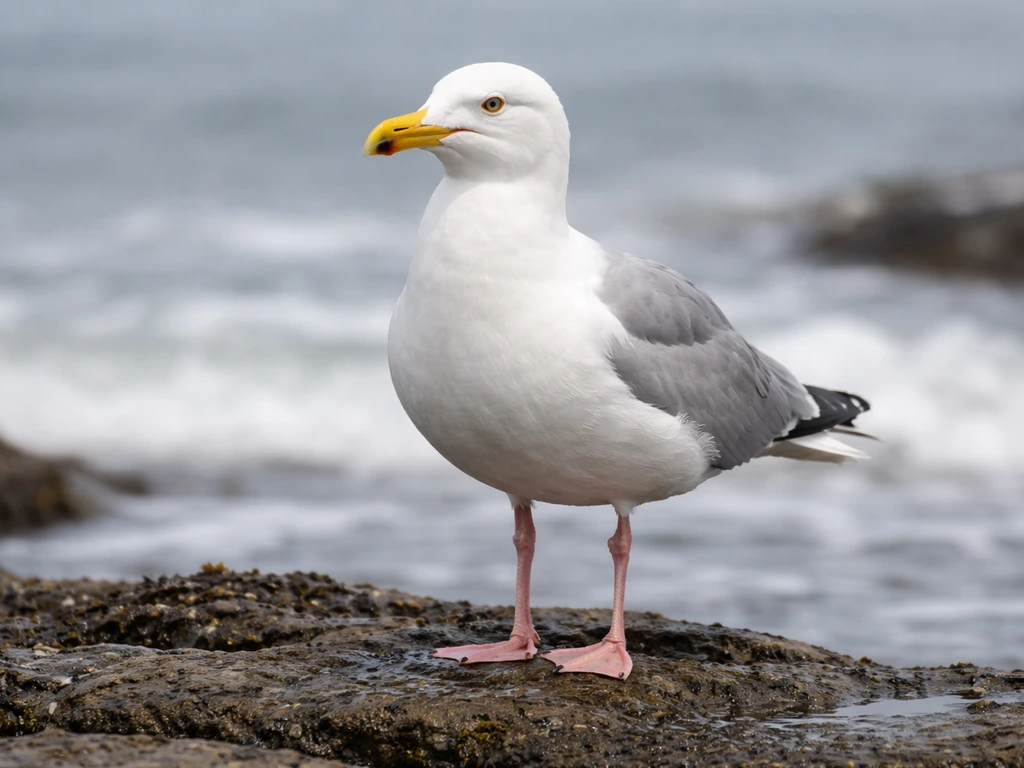
What Does a Herring Bird Look Like? Herring Gull ID Guide
Learn what a herring bird likely is: clear herring gull ID guide with key marks, plumage differences, and lookalike comp