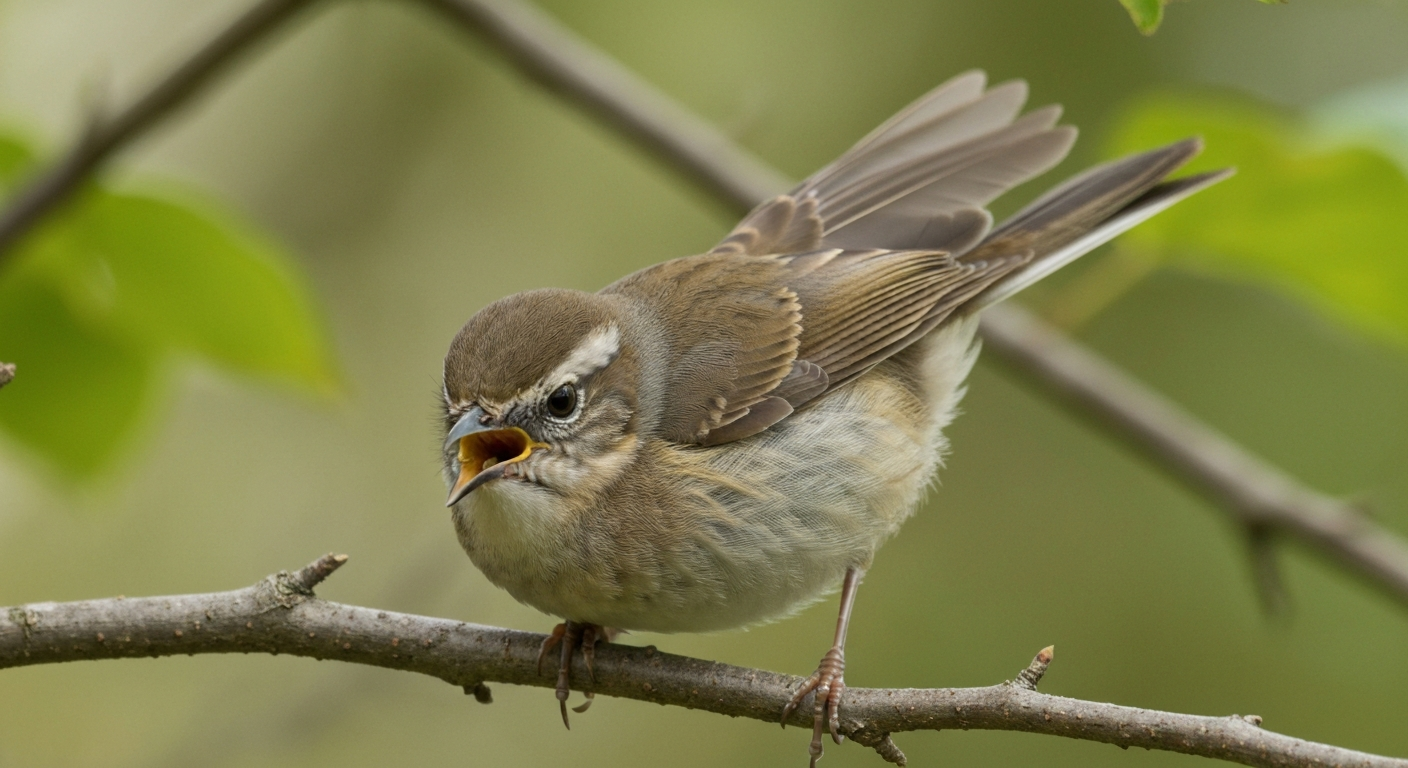
An angry bird pulls itself up tall, leans forward, puffs out its chest and neck feathers, and stares you (or a rival) down with a fixed, intense gaze. Depending on the species, you might also see a crest shoot straight up, a bill snap open, wings half-spread, or a tail fanning out like a warning flag. These signals are not random, birds use them in a deliberate sequence, ratcheting up the intensity until the threat either backs off or the bird commits to a physical strike.
What Does an Angry Bird Look Like: Visual ID Guide

Marcus Whitley
27 Jul 2026
Before diving in, a quick note on the name itself: if you searched 'angry bird' expecting the round red character from the Rovio mobile game, you're in the right neighborhood, that game's design actually borrows heavily from real aggressive-bird body language. And if you came across references to the creatures in 'Bird Box,' those are a very different kind of frightening entirely, covered on a separate page on this site. If you're curious about the terrifying entities in Bird Box, see the separate page titled what do the bird box monsters look like for descriptions of those creatures. See the site’s page on what do the creatures in Bird Box look like for a visual description and comparison to real-world threat displays. What follows is all about the real thing: live birds showing genuine aggression, and how to read every signal they give.
Quick visual checklist: what an angry bird looks like in a single frame
When you want a fast read on whether a bird is truly agitated (not just sick, cold, or courting), run through this checklist. Each item is something you can spot in a still photo or a quick glance through binoculars. Researchers who study bird aggression typically score 4 or more of these cues together as a strong indicator of genuine aggressive intent rather than coincidence.
- Forward lean and approach: the bird's body tilts toward the target, weight shifted onto the front of the feet, sometimes rocking or lunging
- Crest fully raised (crested species only): the crest feathers stand vertical or past vertical — this is one of the clearest single-image cues available
- Neck and chest feathers puffed and raised: the bird looks noticeably 'bigger' than its relaxed self, sometimes doubling apparent body thickness
- Wings half-spread or primed: wings lifted slightly away from the body or held out and drooped, ready to spread fully
- Bill open or in a 'bill-up' position: the bill gapes wide in a threat or points upward in a submissive-challenge posture — either way, a mouth wide open means tension
- Fixed stare and eye-pinning: many birds show rapid pupil constriction (called eye-pinning) during high arousal; you'll see a noticeably smaller, sharper pupil and an unwavering direct gaze
- Tail fanning, flicking, or pumping: rapid tail movement or a fanned-out tail held horizontally signals agitation in dozens of species
- Simultaneous short, harsh, repetitive calls: the visual display is almost always paired with sound — clipped, sharp, rapid-fire chips or hisses rather than a melodic song
For photography, a three-quarter body shot captures posture, crest angle, and wing position all in one frame. If you have time for a second shot, a tight head crop showing pupil constriction and the bill position adds powerful supporting evidence. Always note in your caption: species, date, location, and any context (near a nest, at a feeder, with a rival nearby).
Behavioral and vocal clues that go with the look
Visual signals rarely travel alone. Studies on bird threat behavior show that aggression unfolds in a repertoire of 4 to 6 distinct displays per species, and they tend to escalate in a predictable order. Knowing the sequence helps you judge not just whether a bird is annoyed, but how close it is to a physical strike.
- Directed approach: the bird moves purposefully toward the threat, closing distance steadily rather than hopping around randomly
- Charging and lunging: short, rapid forward rushes, sometimes stopping just short of contact — each lunge is a test of whether the intruder will hold ground or retreat
- Hissing: common in geese, some raptors, and even passerines at very close range; a low, sustained hiss often accompanies bill-gaping
- Alarm and aggression calls: these are spectrally different from song — short, repeated, high-amplitude notes (think rapid 'chipping' in sparrows or loud 'kak-kak-kak' in crows) rather than the longer, varied phrases of courtship song
- Wing-rattling or clapping: some species produce an audible snap or rattle by beating or spreading their wings sharply — pigeons and nighthawks are known for this
- Mobbing: smaller birds often team up against a larger threat, swooping in tight passes while calling — the combination of visual targeting and noise is unmistakable
The key takeaway for observers is this: when you hear harsh, rapid, repetitive calls AND see a forward-lean, raised feathers, and a fixed gaze all at once, the bird is not warming up to be friendly. Threat displays in birds, Hurd & Enquist (Can. J. Zool., 2001) found that vocal–visual combinations (harsh, repetitive calls plus forward approach and raised feathers) reliably predict escalation to attack blank" rel="noopener noreferrer">Threat displays in birds — Hurd & Enquist (Can. J. Zool., 2001). blank" rel="noopener noreferrer">Nuthatches vary alarm calls based on perceived threat context (peer‑reviewed study citing use of recorded calls and spectrograms). It is giving you a serious warning. Sound libraries like the Cornell Macaulay Library or Xeno-canto have excellent comparison recordings so you can learn what alarm calls sound like versus a normal contact song for your local species.
What anger looks like in common songbirds
Sparrows, finches, and robins might look too small to be intimidating, but watch a feeder closely and you'll see plenty of aggression. In House Sparrows and most finches, the main visual tells are a forward lunge with wings held just slightly out, rapid tail flicks, and often a brief bill-gape directed at a rival. The body puffs noticeably around the throat and chest. A sparrow that suddenly looks 'fatter' than normal and is actively chasing another bird off a perch is doing exactly what a larger bird would do, it's just scaled down.
American Robins are particularly expressive. During territorial disputes in spring, a male robin will stand upright, puff his red-orange chest dramatically, and point his bill downward and forward in what looks almost like a proud pose. He'll follow this with short wing-drops and loud, sharp 'tut-tut' calls. That red breast isn't just for looks, it's a signal, and other robins read it immediately. If you see two robins facing each other in that posture, neither moving, they're engaged in a staring contest that could tip into a chase at any moment.
Crested species: the crest is your fastest signal
For any crested bird, the crest position is the single most reliable and easy-to-read indicator of mood. A fully raised crest means high arousal, which could be aggression or excitement. A completely flattened crest means calm or guarded submission. Everything in between is a gradient you can learn to read quickly.
Northern Cardinals are a perfect example. A male cardinal defending his territory looks almost comically dramatic: bright red plumage, crest fully erect and pointing straight up or even slightly forward, body leaned toward the rival, tail pumping up and down. The contrast between his brilliant red and that raised black-bordered crest makes the display easy to photograph and hard to misread. Female cardinals do the same, just in brown-red tones, and they're just as fierce about territory.
Tufted Titmice and Blue Jays work the same way. A titmouse with its crest flattened is relaxed; a titmouse with that little tuft standing straight up is agitated and should be watched. Blue Jays are especially vocal alongside the crest signal, combining a fully raised crest with loud 'jay-jay' or rattling calls. Cockatoos (in captivity or where introduced) take it even further: a fully fanned crest combined with a swaying body, puffed cheeks, and low hissing is a serious warning not to reach toward them.
Waterfowl and geese: when a bird becomes a real hazard
Canada Geese have a well-earned reputation for aggression, and their displays are among the most legible in the bird world. When a Canada Goose feels threatened near its nest or goslings, you'll see a clear progression: neck stretches up and forward (the head and neck form a long, arrow-like shape pointed at you), followed by low, repeated hissing, then wings lifting away from the body into a half-spread that makes the bird look suddenly enormous. If you don't back away, the next step is a forward charge with the neck held low and the bill open, sometimes accompanied by a loud honking or hissing rush.
Mallard drakes show a subtler but still readable version of this. Head-pumping (rapid vertical bobbing) combined with a lowered, forward-thrust neck and ruffled back feathers is a threat directed at rival males. Swans, particularly Mute Swans, add a striking element: they arch their wings into a dramatic raised 'bustle' over their back (called a 'busking' posture) while holding the neck curved forward, it's one of the most visually impressive threat displays you'll see on water.
Raptors: big, bold, and unmistakable
Hawks, eagles, and owls escalate their visual signals further still, and for good reason, they have the tools to back them up. The most recognizable raptor threat display is mantling: the bird drops and spreads its wings outward and downward over prey or a nest, back hunched, tail fanned, and head often turning to face you with a fixed stare. It looks like the bird is trying to make itself as wide as possible, and that's exactly what it's doing. Mantling both shields whatever the bird is guarding and signals high willingness to defend it.
An owl or hawk standing fully upright with feathers sleeked tight, wings slightly spread and lowered, and talons visible and gripping the perch is in a defensive-aggressive posture, the equivalent of a person squaring their shoulders and raising their fists. Great Horned Owls combine this with ear-tufts raised straight up (similar logic to a crest) and a series of loud bill-clacks. Red-tailed Hawks produce a piercing, descending scream that most people recognize from movies (it's used as the generic 'eagle sound' in film even when the bird on screen isn't a Red-tail). That call, paired with a tight circling flight or a stoop toward your head, is as clear a warning as birds give.
For photographers, capturing a raptor's full-spread threat posture is best done from slightly above or to the side, which shows the full wing span and the shape of the raised, erect head. Always maintain safe distance, nesting raptors are legally protected and genuinely dangerous at close range.
Anger vs. fear vs. courtship: telling them apart
This is where most observers get tripped up. Some cues, puffed feathers, eye-pinning, even excited calls, can appear in more than one emotional state. The trick is to look at the whole picture: posture direction, duration, respiration rate, and what the bird does next.
| Cue | Anger / Aggression | Fear / Submission | Courtship |
|---|---|---|---|
| Body posture | Upright, leaning forward, weight toward threat | Crouched, body lowered, weight back or frozen | Relaxed or exaggerated ritualized pose, often side-on |
| Feather state | Raised/puffed on neck and chest, rest of body can be tight | Sleeked flat and tight all over | May puff selectively (puffed chest in some species) but body is loose and rhythmic |
| Crest (if present) | Fully raised or forward-tilted | Flattened or partially raised (mixed signals) | Raised but paired with relaxed body and rhythmic movement |
| Eye / pupil | Fixed stare, possible pupil constriction (eye-pinning) | Averted gaze, eye may be half-closed or darting | Pupil constriction can occur during high-arousal courtship too — context is key |
| Bill | Open/gaping, bill-up display, or snapping | Closed, or open only for alarm call before fleeing | May be used in feeding displays, regurgitation, or bill-touching with mate |
| Wings | Half-spread, primed, or mantling over defended resource | Pressed tight to body or flapping for escape | Ritualized flutter, drooping, or quivering — slow and deliberate |
| Movement | Direct, purposeful approach or charge | Freeze, crouch, or immediate escape flight | Slow, circular, repetitive — dancing, bowing, or strutting |
| Calls | Short, harsh, repetitive, high-amplitude chips or hisses | Short alarm call then silence, or rapid distress call | Melodic, varied, often long song phrases; contact calls are soft |
| Duration and breathing | Intense but variable; normal respiration | Brief before escape; fast breathing if cornered | Sustained and rhythmic; normal relaxed breathing |
| Illness (for comparison) | N/A | Prolonged puffing, drooped wings, slow or labored breathing, closed or half-closed eyes, inactivity | N/A |
The illness row is worth pausing on. A sick bird often looks superficially similar to a cold or frightened bird: puffed up, eyes partly closed, sitting still on a low branch. The key difference is duration and respiration. A healthy bird in a fear response snaps back to alertness quickly. A bird in a threat display is active, mobile, and oriented toward something. A sick bird is passive, slow, and breathing visibly. If you see a bird that looks puffed and lethargic but shows no response to your approach, it almost certainly needs help rather than space.
Staying safe and respecting the birds you're watching
Reading aggression signals well is genuinely useful for your own safety. Most birds that attack humans are defending a nest, offspring, or food, and they almost always give ample warning before making contact. If you pay attention to the signals above, you'll rarely be surprised.
- When you spot any of the visual cues in the checklist above, stop moving toward the bird and back away slowly — sudden movements reinforce the threat rather than defusing it
- For nesting waterfowl (especially Canada Geese), maintain at least 15 to 20 feet of distance, and give yourself a clear exit route before approaching any area where goslings or eggs might be present
- Nesting raptors are protected under the Migratory Bird Treaty Act in the US and equivalent laws elsewhere — do not approach an active nest, and if a hawk or owl begins stooping at your head, walk calmly away rather than swatting or running
- For songbirds, the main practical concern is not physical injury but disturbing the nest — if a small bird is alarm-calling and lunging at you near a hedge or low tree, step back and scan carefully; there's almost certainly a nest nearby
- Photographers: use a long lens (400mm or more for most passerines) so you can capture expressions and postures without being close enough to trigger a response; your best images will come when the bird is displaying to a rival, not to you
- If you are watching a bird you think might be injured or ill rather than aggressive, contact a local wildlife rehabilitator rather than attempting to handle it yourself — cornered sick birds can bite or scratch, and many species are protected from handling without permits
A few things worth knowing about bird perception
One reason bird aggression displays are so visually intense is that birds see the world very differently from us. Most birds have a much wider visual field than humans and can see ultraviolet light, meaning some plumage patterns that look plain to us are actually brilliant signals in UV. When a bird is performing a threat display, it's broadcasting on channels we can only partly receive. Understanding how birds perceive their environment adds a fascinating extra layer to watching these displays unfold. If you're curious about how the world looks through a bird's eyes, it's a topic worth exploring on its own. If you're curious, read more about what the world looks like to a bird what does the world look like to a bird.
Similarly, if you've found yourself interested in the physical structure behind those intense stares and bill-snaps, the anatomy of a bird's skull, with its lightweight, hollow bones and enormous eye sockets relative to skull size, tells you a lot about why birds express so much of their emotion through head and eye signals. For a detailed look at the structure, see what does a bird skull look like. The skull is built around vision and the bill, which are exactly the features that dominate aggression displays.
Putting it all together
An angry bird is a forward-leaning, puffed-up, fixed-staring bird that is moving toward something rather than away from it. The crest (if there is one) is up. The bill may be open. The calls, if present, are short and sharp rather than musical. Once you've seen it a few times, the posture becomes immediately readable across dozens of species, from a sparrow at your feeder all the way up to a Red-tailed Hawk circling over its nest. The fundamentals are the same: make yourself look bigger, face the threat directly, and give a clear signal of willingness to escalate. Nature turns out to be remarkably legible, once you know what to look for.
FAQ
What is a short, search-friendly title and meta description for this article?
Title: How to Tell When a Bird Is Angry: Clear Visual Cues for Birdwatchers Meta description: Spot angry birds fast — image-ready signs (posture, crest, bill, eyes, calls), species examples, safety tips, and how to tell anger from fear, courtship, or illness.
What’s the single-sentence visual checklist I can use in the field or for photos?
Look for a forward-leaning posture, raised crest (if present), puffed neck/chest feathers, half-spread wings or tail fanning, open or pointed/up bill, constricted pupils/fixed stare, rapid lunges or directed approach—each is a clear image-ready cue.
Can you give a concise, scored checklist I can use on one photo?
Yes. Score 1 point for each visible sign: forward lean/approach; crest fully raised (species with crests); feathers raised on neck/chest; wings half-spread; open/gaping or bill-up; visible pupil constriction or fixed stare; simultaneous harsh repetitive call. A total ≥4 strongly suggests aggressive intent.
What species-specific visual examples should I be ready to photograph?
Songbirds (sparrows, finches): raised crest/tuft, puffed chest, stiff forward posture, short aggressive chips. Crested species (Blue Jay, Northern Cardinal, Tufted Titmouse): fully raised crest is high arousal/aggression—capture three-quarter profile. Waterfowl (Canada Goose, Mallard): neck-extended, head high, hissing, wing half‑spread, head‑pumping. Raptors: mantling (drooped, spread wings over prey), upright erect stance, wing spread and intense stare.
What behavioral and vocal clues reliably go with aggression?
Look for harsh, short, repetitive notes or low hisses, rapid forward lunges or directed charges, persistent approach rather than retreat, and sequences of threat displays (crest raise, bill gape, wing spread). Visual+vocal combos increase likelihood of escalation.
How can I tell anger apart from fear, courtship, or illness in pictures?
Anger: forward lean, raised feathers, open bill, harsh calls, approach. Fear/submission: sleeked feathers, crouched body, averted gaze, freezing or quick escape. Courtship: rhythmic, repeated gestures, relaxed body, often paired or near mate, sometimes pupil changes. Illness: prolonged fluffing, slow labored breathing, drooped wings, half-closed eyes, inactivity. Use posture + respiration + duration to decide.
Next Article
What Does the World Look Like to a Bird: Vision Explained
Explore how birds perceive color, motion, depth & UV; species differences, ID tips, skull diagrams, and photo advice.