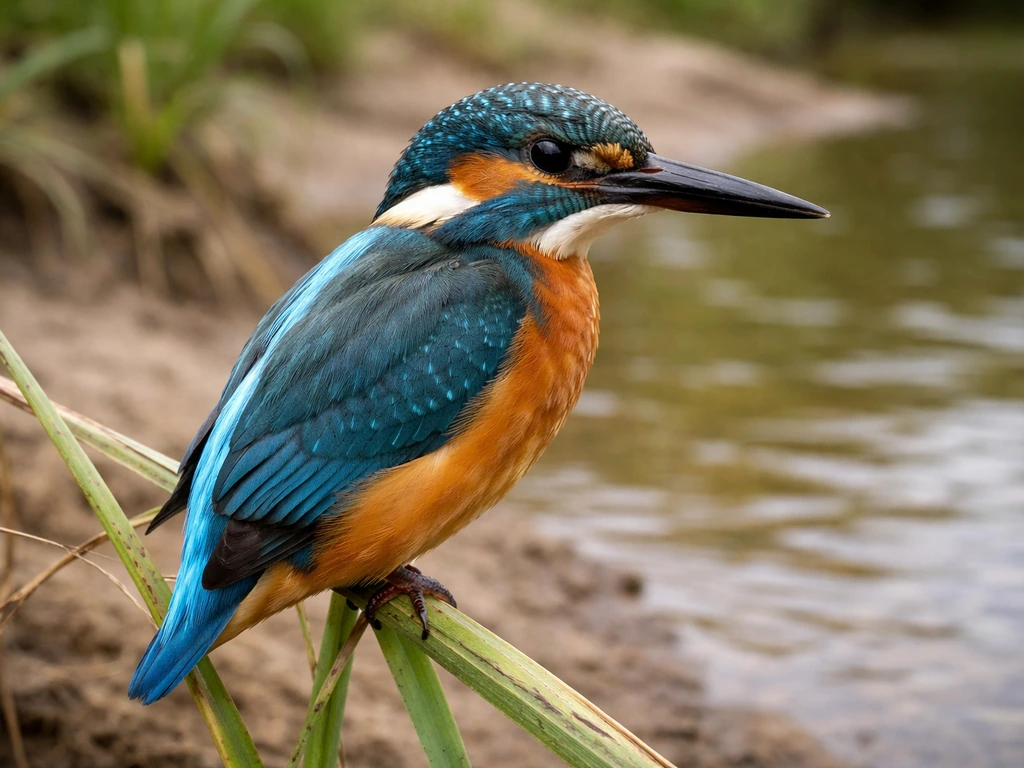
A kingfisher is a compact, big-headed bird with a long, heavy, pointed bill that looks almost too large for its body. If you are wondering what does a king bird look like, the easiest starting point is the classic kingfisher silhouette: a large head, a long thick bill, and a compact body. Most species are brightly colored, but the real giveaway is that unusual silhouette: short tail, tiny feet, barrel-shaped body, and a head and bill that together make up a surprising portion of the whole bird. Once you know that shape, you'll spot a kingfisher from a distance even before you can make out the colors.
What Does a Kingfisher Bird Look Like? Key Field Marks

Marcus Whitley
1 May 2026
Kingfisher at a glance
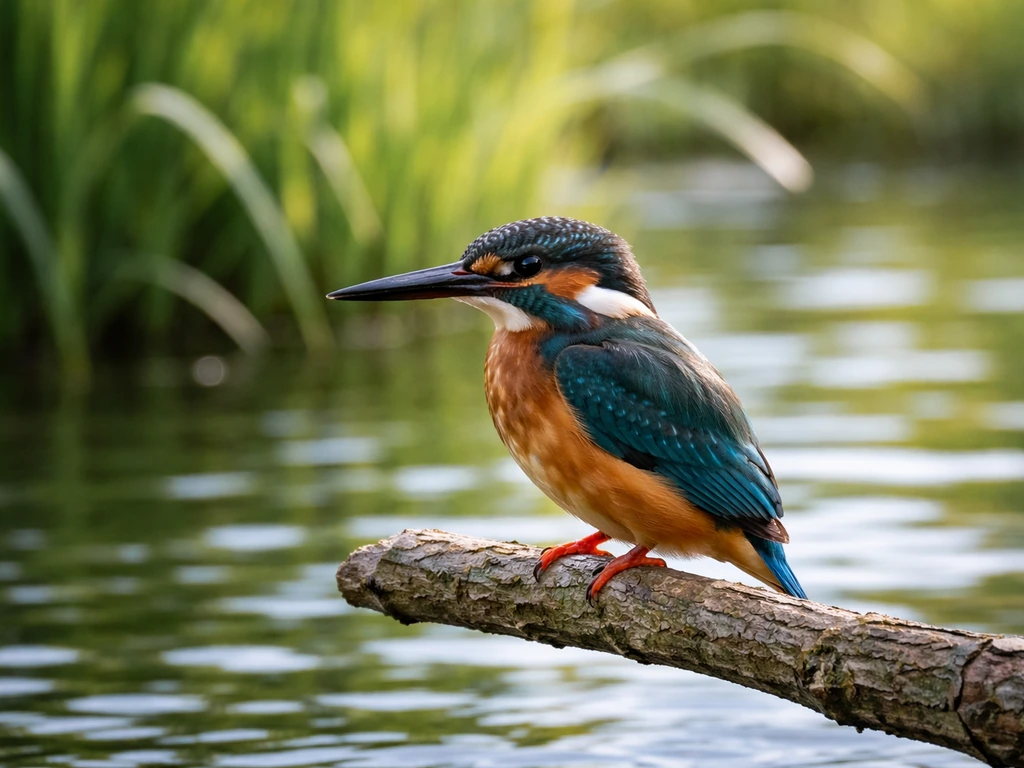
Kingfishers range in size from about 10 cm (4 inches) to 42 cm (16.5 inches) depending on species, but they all share the same basic look. Think of a bird that seems all head and bill, perched very upright on a branch or wire above water. The body is short and stocky, the tail is short to medium in length, and the legs are so small you might not notice them at all. That overall 'jizz' (the birder term for a bird's general impression) is distinctive enough that shape alone will often confirm you're looking at a kingfisher before anything else clicks into place.
Key field marks: bill, head, and overall shape
Start with the bill. A kingfisher's bill is long, thick, straight, and pointed, almost like a thick spike. It's not curved like a bee-eater's bill, and it's not thin and delicate like a heron's. It's built for punching through water and grabbing fish, and it looks the part. On the Belted Kingfisher, the most common kingfisher across North America, that bill is described as straight, thick, and pointed, and it pairs with a large, shaggy crest on top of the head that gives the bird a slightly 'punk rock' profile.
The head is disproportionately large compared to the body, which is what makes kingfishers so easy to recognize once you've seen one. The Common Kingfisher of Europe and Asia has the same short-tailed, dumpy-bodied, large-headed shape. Even the Green Kingfisher, which is quite small, looks oddly proportioned: a bit like a sparrow that borrowed the bill of a much larger bird. Whenever you're unsure if you're looking at a kingfisher, check for that oversize head and spike-like bill combination first.
Color patterns: the common look and face or wing markings
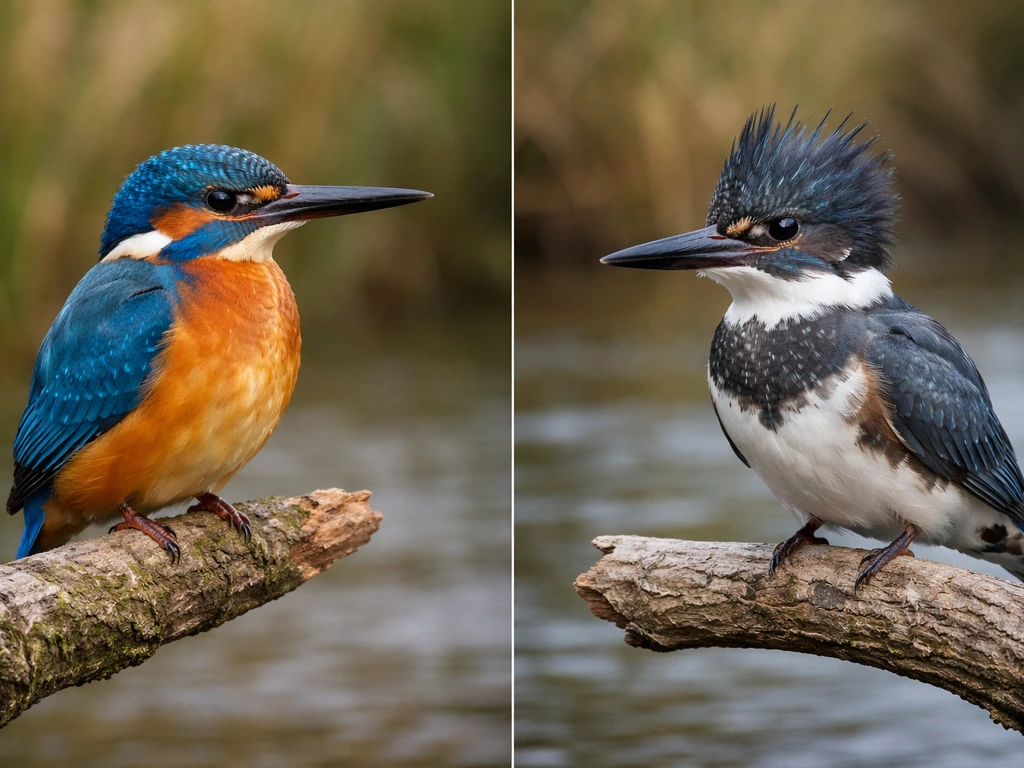
Kingfishers are famous for vivid color, but they vary quite a bit. The Common Kingfisher is the classic example: sparrow-sized with electric blue upperparts and rich orange underparts, plus a long bill. You might not see the blue until the light catches it just right, so don't be fooled by a bird that looks dull at first glance from above.
The Belted Kingfisher, which is what most people in the US and Canada will encounter, looks very different. It's blue-gray above with fine white spotting on the wings and tail, a white throat, and a slate-blue chest band. Males have that single blue-gray band across the chest. Females add a second band with rusty coloring on the belly, which is a useful and reliable way to tell the sexes apart. The shaggy crest and big white throat patch are the most obvious features at a distance.
The Pied Kingfisher (common across Africa and Asia) looks completely different from either of those: it's medium-sized and strongly patterned in black and white, with a black mask, white face, white eyebrow stripe, and black breast bands. It also has a crest. If you're traveling and see a black-and-white kingfisher-shaped bird hovering over water, that's almost certainly a Pied Kingfisher.
How kingfishers differ by species and region
There are over 100 kingfisher species worldwide, so the color and markings vary enormously. The best starting point is knowing where you are. Geography narrows it down fast.
| Species | Region | Size | Standout look |
|---|---|---|---|
| Common Kingfisher | Europe, Asia, Africa | Sparrow-sized (~16 cm) | Blue back, orange underparts, long bill |
| Belted Kingfisher | North America | Medium (~28–35 cm) | Blue-gray with crest, white throat, chest band(s) |
| Green Kingfisher | Southwest US, Central/South America | Small (~19–21 cm) | Dark green above, white on outer tail, less obvious crest |
| Pied Kingfisher | Africa, South/Southeast Asia | Medium (~25 cm) | Black-and-white only, strong mask, crested |
| Amazon Kingfisher | Central/South America | Large (~28–30 cm) | Shaggy crest, rufous breast, dark green sides, white chin |
If you're in the US or Canada, the Belted Kingfisher is by far the most likely bird you're seeing. It's the only kingfisher found across all of Canada and most of the United States. In southern Texas or along the US-Mexico border you might also spot the Green Kingfisher, which is noticeably smaller and lacks the bold crest. In Europe, the Common Kingfisher is the default. In tropical or sub-Saharan Africa, there's a much wider range of species, so habitat and size become even more important clues.
Perched vs in-flight: what to notice in photos
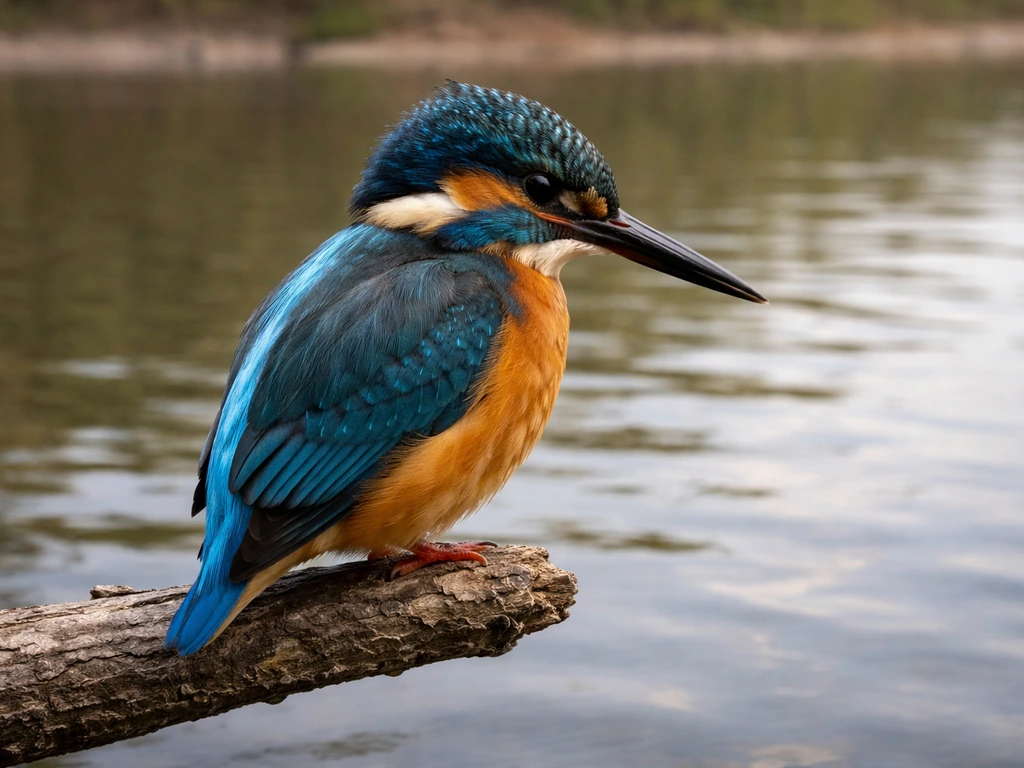
What to look for when the bird is perched
A perched kingfisher usually sits very upright on a branch, wire, or post near water. From the side, look for: the oversized head and crest (if present), the long thick bill pointed forward or slightly downward, the compact barrel body, the very short tail, and tiny legs. On a Belted Kingfisher, you'll clearly see the white throat, the blue-gray chest band, and the shaggy crest. The bill is straight, not curved. On the Green Kingfisher, look for white on the outer tail feathers, which is a specific and checkable mark when the bird turns or fans its tail. All About Birds (Cornell Lab of Ornithology) notes that this is “extensive blank" rel="noopener noreferrer">white on the outer tail feathers (all ages and sexes)” for identifying a Green Kingfisher.
What to look for when the bird is in flight
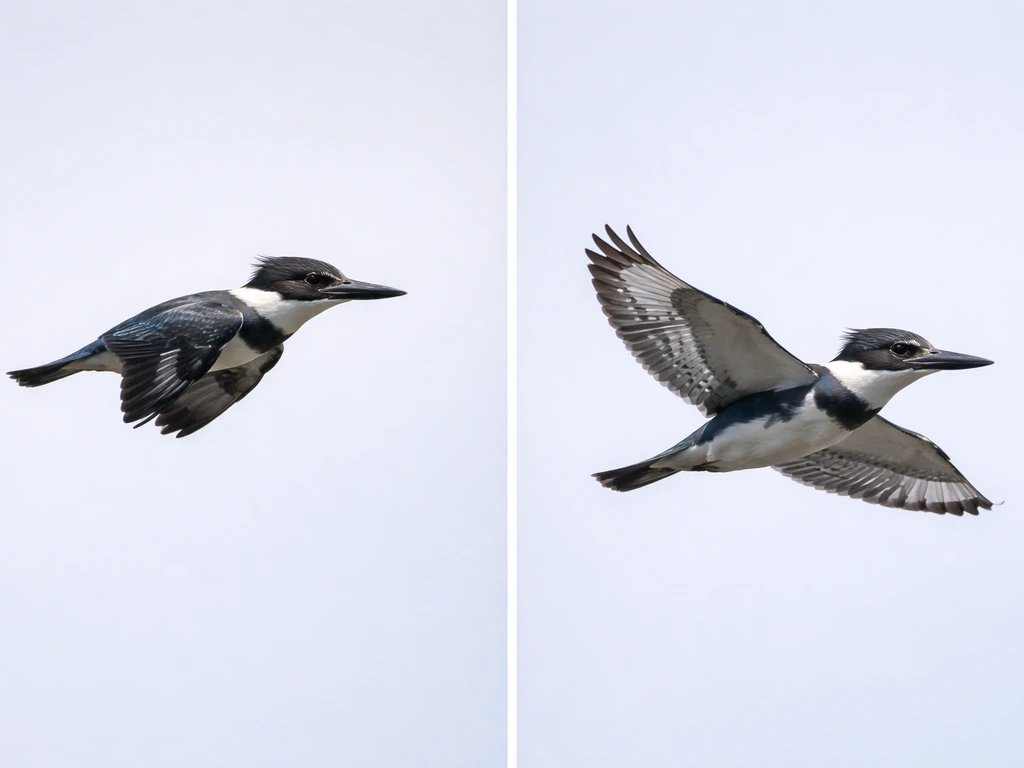
In flight, the silhouette stays distinctive: big head up front, short tail behind, and a body that looks front-heavy. On the Belted Kingfisher, watch for a large white patch in the outer wings, which is one of the best flight field marks. The tail is medium length and square-tipped, which you can sometimes catch in a good photo. Behavior is a huge in-flight clue too: if you see a bird hovering in place above water with its bill pointed downward, then plunging straight in, that's almost certainly a kingfisher. Belted Kingfishers do this regularly, and so do Pied Kingfishers. No other common waterside bird hovers quite like that.
Common look-alikes and how to tell them apart
A few birds can create confusion, especially in photos taken at awkward angles or in poor light.
- Bee-eaters: colorful and slim with long bills, but the bill curves downward to a sharp point, which is the opposite of a kingfisher's straight, spike-like bill. Bee-eaters also tend to be slimmer overall with longer tails and longer, more tapered wings.
- Herons and egrets: share the water-edge habitat and can have a long pointed bill, but they're tall, long-necked, long-legged birds, nothing like the short, stocky, big-headed kingfisher silhouette.
- Wagtails and pipits: sometimes found near water with patterned plumage, but they're slender and small-billed, and they walk along the ground rather than perching above water and diving.
- Cormorants and divers: large waterbirds that also dive for fish, but they're much larger, swim on the surface, and lack the kingfisher's proportions entirely.
The safest approach is to start with structure rather than color. If the bird has a massive straight bill, an oversize head, a compact body, and is perched near water looking downward, you're very likely looking at a kingfisher regardless of what colors you can or can't make out.
Next steps for identifying your kingfisher
If you've seen or photographed a kingfisher and want to pin down the exact species, here's how to work through it quickly:
- Start with location. Where in the world are you? This alone eliminates most species. North America points you toward Belted Kingfisher first, Europe toward Common Kingfisher, Africa or Asia toward Pied or one of many other regional species.
- Check the size. Is it sparrow-sized, robin-sized, or larger like a small crow? Small size with a big bill in the Americas points to Green Kingfisher. A large crested bird in North America is almost always Belted.
- Look at the crest. Does the bird have a shaggy or prominent crest? Belted and Amazon Kingfishers have obvious crests. Green Kingfisher has a less obvious one. Common Kingfisher has a small crest you might miss.
- Look at the color pattern. Blue-gray with a chest band means Belted. Bright blue back with orange belly means Common. Black and white means Pied. Dark green with a rufous breast patch means Green or Amazon.
- Check the bill. Is it straight and thick, or slightly curved? Straight and spike-like confirms kingfisher. If the bill curves, consider other species like bee-eaters.
- Look for specific field marks in photos: white outer tail feathers (Green Kingfisher), white wing patch in flight (Belted), rusty belly band on female (Belted female), white chin and throat (Amazon).
- Note the behavior and habitat. Hovering over water before a vertical dive is a strong kingfisher cue. Perching alone above clear water near a river, lake, or coastal edge is the classic setup.
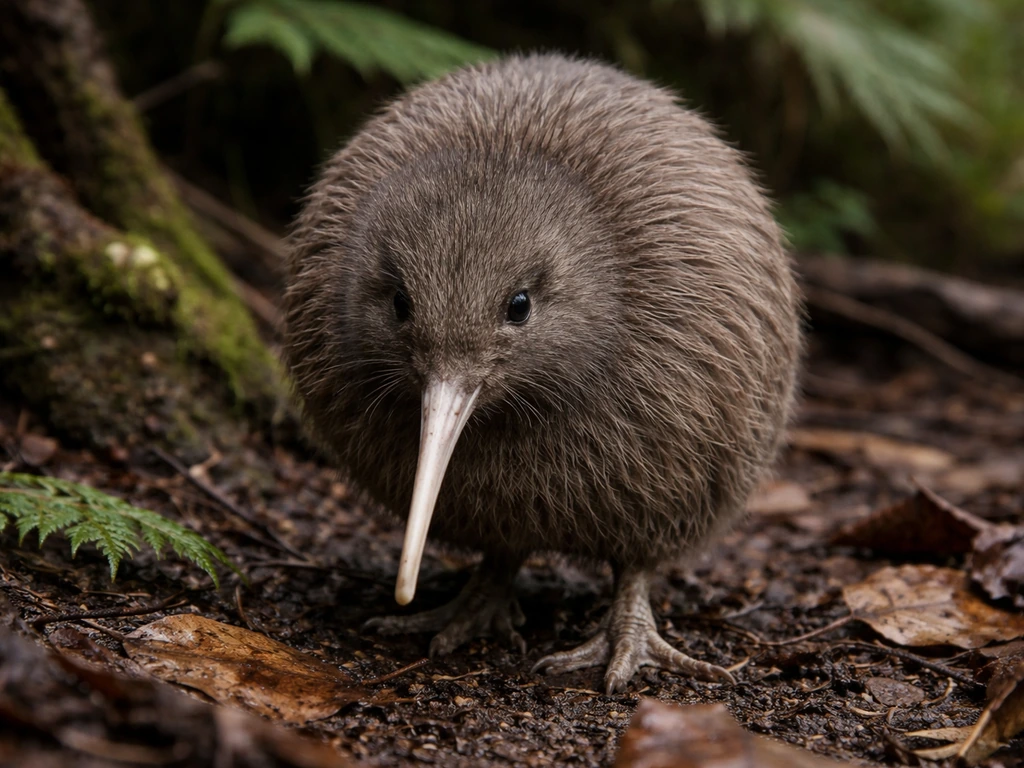
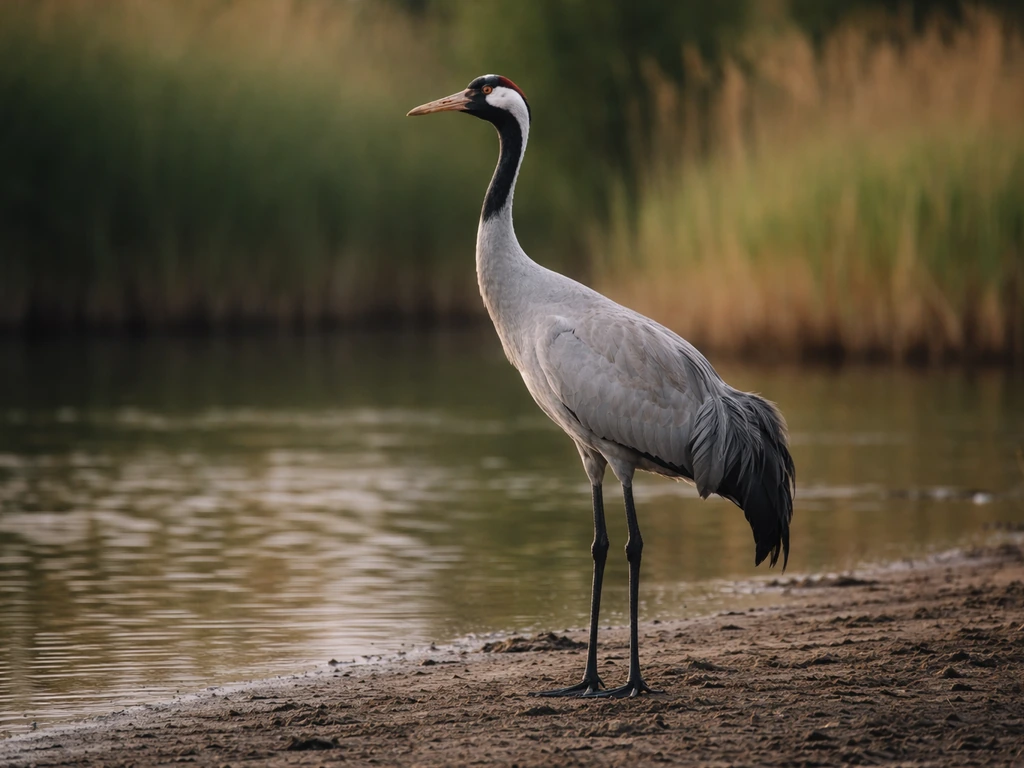
If you're just getting started with waterbird identification, kingfishers are actually one of the easier groups to recognize at the family level because that shape is so unique. If you want to compare with another bird species, you can also review what does a koel bird look like before you head back out to the field. A kiwi bird, for example, has a very different look from kingfishers, so comparing shape can help you identify which species you’re seeing what does a kiwi bird look like. Once you lock in the 'big head, heavy straight bill, compact body near water' image, you'll spot them quickly even from a moving car. If you're also curious about prehistoric wildlife, you can compare this kind of silhouette thinking with what an elephant bird looks like what does an elephant bird look like. The harder part is often the species level, especially if you're traveling somewhere new, and that's where geography and those specific field marks make all the difference. Other striking birds with distinctive silhouettes, like cranes or kite birds, follow a similar logic: shape and structure first, color and markings second. Kite birds can look very different depending on the species, but they are generally identified by their long, pointed wings and overall shape. If you want a quick comparison, cranes look much larger and more long-legged, with a different silhouette than a kingfisher.
FAQ
Do juvenile kingfishers look different from adults?
Yes, juvenile kingfishers can look duller and slightly less “shaggy” on the head, and the blue or orange tones may be muted, but the silhouette usually holds up. Focus first on the oversized head, long straight thick bill, and very short tail near water, then use local species range to narrow it down.
What are the most common mistakes when trying to identify a kingfisher by sight?
Common mistakes are trying to identify by blue color alone, or confusing the bill with a curved one. Kingfishers have a long, thick bill that is straight and pointed, plus a front-heavy, compact body with tiny legs. If the bill looks distinctly curved, you are likely looking at a different bird group.
What if the bird looks dull or the colors are hard to see, can it still be a kingfisher?
Wind and lighting can temporarily “erase” the bright colors, especially the blue upperparts, so an initially dull-looking bird can still be a kingfisher. Use the structure check instead: big head and crest (if present), spike-like straight bill, short to medium short tail, and upright posture above water.
How can I identify a kingfisher when it is far away or the photo is blurry?
Yes. At greater distances, crest shape, white throat patches, and wing patterns may blur, but the overall jizz tends to remain distinctive. In that situation, prioritize the combination of a heavy straight bill, compact barrel body, tiny feet, and a very short tail. If you can see hovering or plunging, that’s an extra confirmation.
What field marks matter most for kingfisher identification in flight?
In flight, watch for the very short tail plus the big head and front-heavy feel. For Belted Kingfisher specifically, a large white patch on the outer wing is a strong clue when it’s visible. If you cannot see wing patches, the plunge behavior and hovering over water become more important.
Can non-kingfisher birds look similar, especially if they are not right over water?
A good edge case is a bird that looks “all bill” but is not near water. Kingfishers typically perch upright very near water and hunt by hovering then plunging. If the bird is perched on a distant treetop far from water, recheck the habitat and compare bill shape and tail length.
How do I tell Belted Kingfisher from Pied Kingfisher when I only catch a quick view?
Yes. Belted and Pied kingfishers both hover and plunge, but Pieds are usually black-and-white patterned with a mask and facial striping. If you see hovering over water and can make out a black mask or heavy black breast banding, that points to Pied Kingfisher even if you miss fine crest details.
What is the fastest way to go from “kingfisher” to the exact species?
The quickest “species level” approach is: confirm the family first by the silhouette, then use geography, then use the most visible pattern. In the US and Canada, Belted Kingfisher is the default, so look for the white throat, chest band (single in males, double with rusty in females), and shaggy crest before considering less common options.
How can I avoid confusing kingfishers with wading birds or other waterside species?
If the tail looks long and draggy, or the bird shows long legs and a horizontal, wader-like posture, it is less likely to be a kingfisher. Kingfishers tend to have tiny legs that are hard to see, a short tail, and an upright perch posture with the bill angled forward or slightly downward.
What should I look for on the Green Kingfisher if it is hard to compare size and color?
If you can, take note of whether the outer tail shows noticeable white flashes when the bird turns or fans it. For the Green Kingfisher in particular, that outer tail white is a specific, checkable mark and can help when overall size and crest differences are subtle.