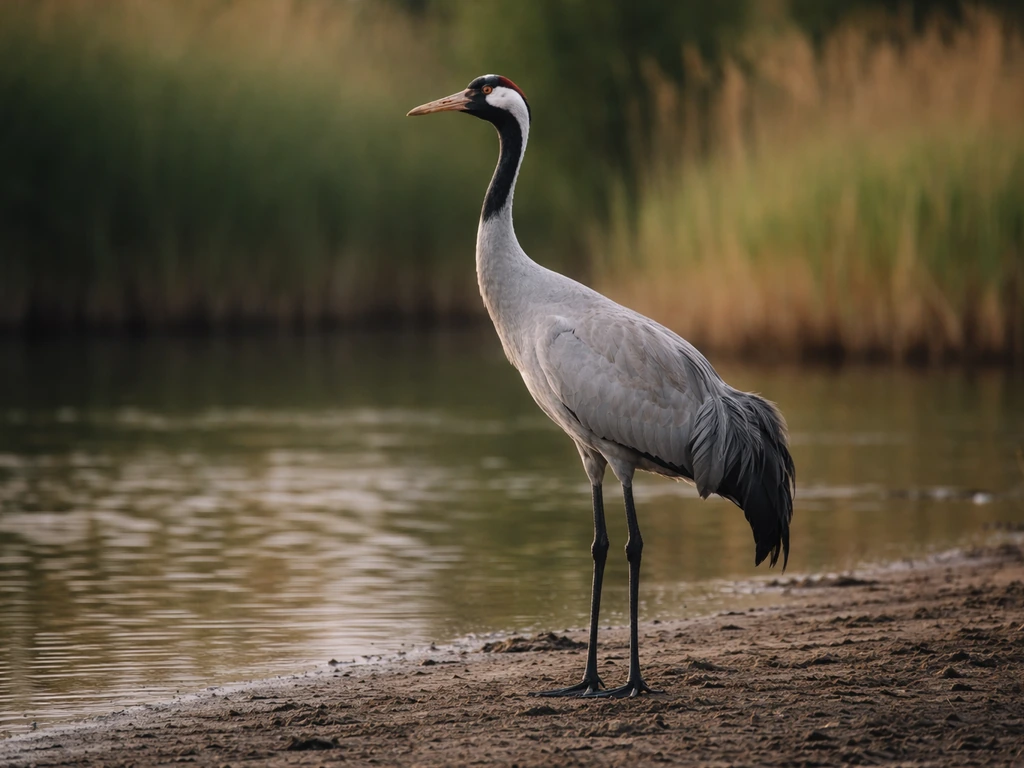
A crane is one of the most striking birds you can encounter, and once you know what to look for, you'll never mistake one again. Cranes are tall, long-legged wading birds with an upright, almost regal posture. They stand anywhere from 3 to 5 feet tall depending on the species, with a long straight neck, a fairly short and straight bill, and a bushy 'tail' that's actually drooping secondary feathers rather than true tail feathers. That last detail, the fluffy feather bustle at the back, is one of the quickest visual shortcuts to confirming you're looking at a crane and not a heron or stork.
What Does a Crane Look Like Bird Style Guide for ID

Marcus Whitley
17 Apr 2026
The crane silhouette: what to look for first
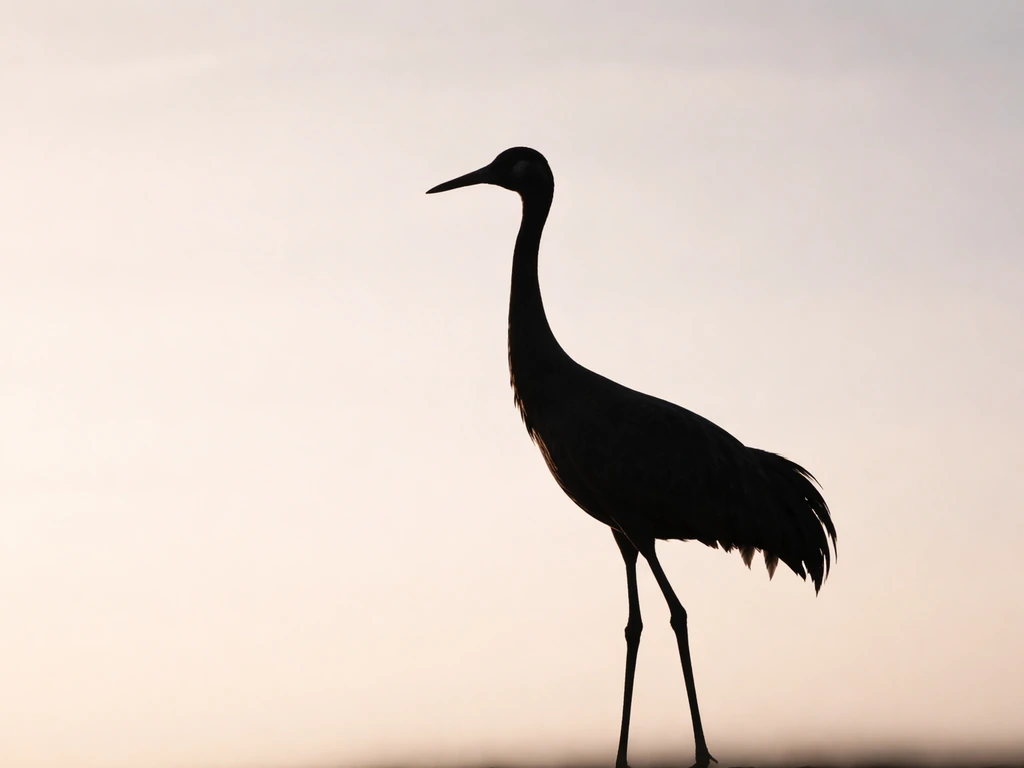
Before you even get into colors or markings, the overall shape of a crane tells you almost everything. Picture a bird that looks like it was assembled for maximum elegance: long legs, long neck, small head relative to the body, and that distinctive drooping feather 'bustle' at the rear. When standing still, a crane holds its neck in a gentle S-curve but often stretches it nearly straight when alert or walking. The body is roughly oval and sits horizontally, balanced on long, stilt-like legs. You might notice the body seems almost too big for the head, which is small and topped with a patch of bare red or colorful skin in most adult species.
The bustle is the single most useful silhouette clue. It droops over the tail like a gathered skirt and gives cranes a slightly back-heavy look at rest. No heron has this. No stork has this. If you see that drooping feather cluster combined with long legs and an upright stance, you're almost certainly looking at a crane.
Body features up close: neck, legs, head, and bill
The neck
Cranes have long, thick-based necks that they carry mostly upright or gently curved. Unlike herons, which pull their necks into a tight S-shape against the body when flying or resting, cranes keep their necks extended and relatively straight most of the time. The neck feathering is smooth and dense, giving it a solid, well-defined look rather than a spiky or scraggly appearance.
The legs
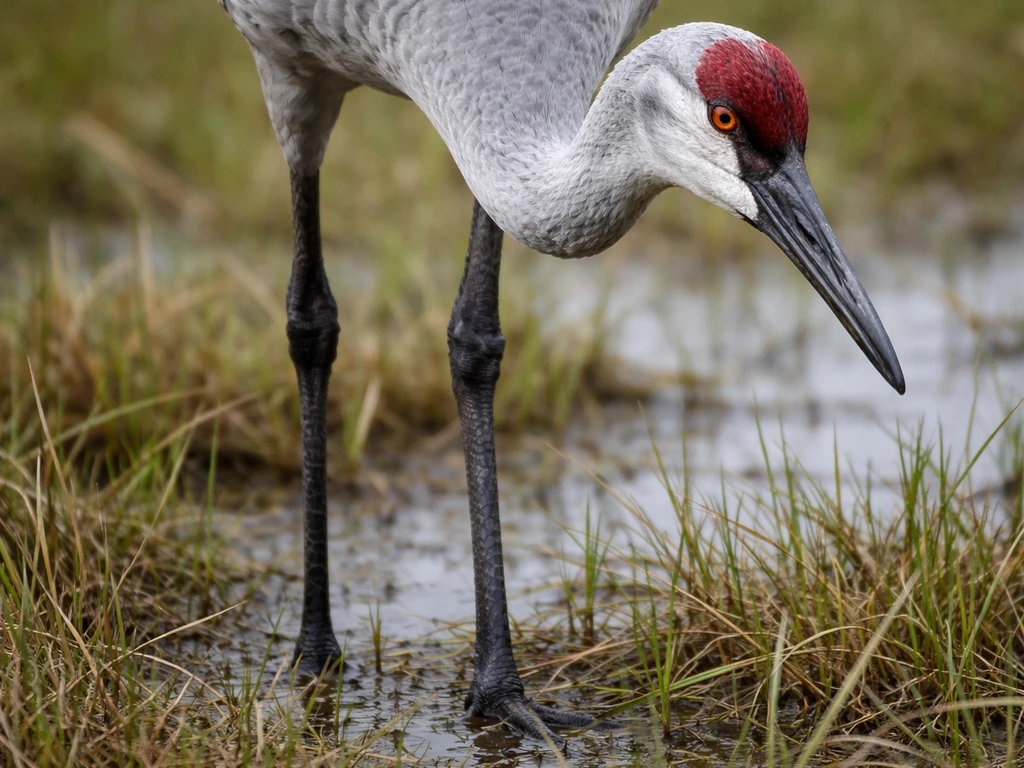
Crane legs are long, sturdy, and tend to be dark, usually black or dark gray. The sandhill crane, which is the crane most people in North America encounter, has black legs paired with a reddish-brown or gray body. The whooping crane also has black legs, which contrast sharply with its bright white plumage.
Nebraska Game & Parks also notes that whooping cranes show bare red and black skin that can appear dark depending on the lighting bare red and black skin can appear all dark depending on lighting. The grey crowned crane follows the same pattern with black legs and feet. Long legs are not unique to cranes, but combined with the overall silhouette and bustle, they lock in the ID.
The head and bill
The head is small relative to the body and almost always features something visually distinctive. Most cranes have a patch of bare red skin on the crown (sometimes called a 'red cap'), which looks almost like a painted-on mark. The bill is straight, sturdy, and roughly the same length as the head or slightly longer. It's not as long and dagger-like as a heron's bill, and not as thick or rounded as a stork's.
Think of it as a medium-length, no-nonsense pointed tool. On sandhill cranes, the bill is stout and black. All About Birds also describes sandhill cranes as having a long neck and long legs, with adults showing a bright red crown and a large dark bill [On sandhill cranes, the bill is stout and black. ](https://www.
allaboutbirds. org/guide/sandhill_crane/id). On grey crowned cranes, it's short and grey. On whooping cranes, it's longer and black.
Color patterns and plumage: what shade of crane are you seeing?
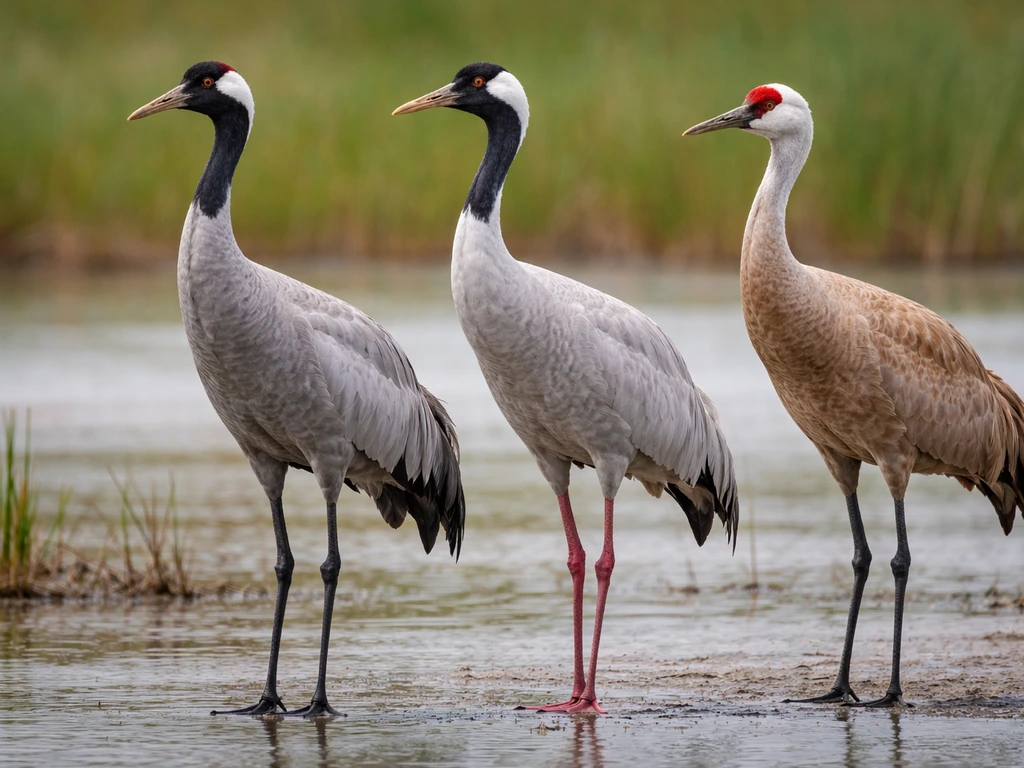
Crane coloring varies quite a bit by species, age, and even season, so knowing a few common patterns helps a lot. Here's a quick breakdown of the species you're most likely to encounter:
| Species | Body Color | Crown/Head | Bill Color | Leg Color |
|---|---|---|---|---|
| Sandhill Crane | Reddish-brown to gray (often mud-stained) | Bare red patch on crown | Black, stout | Black |
| Whooping Crane | Bright white (black wingtips) | Red crown and red mustache stripe | Black | Black |
| Grey Crowned Crane | Grey body, white and gold-brown wings | Stiff golden feather crown, white cheek patches, red gular sac | Short, grey | Black |
A few things worth noting about plumage variation. Sandhill cranes often look rustier or browner than you'd expect because they preen with mud, which stains their feathers reddish-brown. A cleaner bird will look more classic gray. Juveniles across species are generally duller and browner, without the bold crown markings of adults. For example, juvenile grey crowned cranes are mostly grayish with a brown nape and a buffy, spiky golden-buff crown rather than the full stiff golden fan of an adult. Whooping cranes are monomorphic, meaning males and females look essentially the same, though adults stand about 5 feet tall (1.5 m) and juveniles show rusty-orange wash on their white plumage.
Cranes in flight vs cranes standing still
Flight is actually one of the best times to confirm a crane ID, because their flight posture is completely different from herons. Cranes fly with both the neck and legs fully extended, creating a long, straight, almost cross-shaped silhouette. The wings are broad and long, with a slow, powerful wingbeat. You'll often see the black wingtips clearly on whooping cranes in flight, contrasting with their white body. Sandhill cranes fly the same way: neck out front, legs trailing behind, broad wings beating steadily.
At rest or walking, cranes move deliberately and with a kind of measured confidence. They take long strides and hold the body level and horizontal. When a crane is relaxed, you'll often see it with its neck slightly curved and that bustle of feathers puffed out behind it. When alert, it stretches the neck straight up. You might also notice them dipping the head occasionally as they walk and feed, but they don't crouch low or hunch the way herons do.
Cranes vs herons, storks, and other tall waders
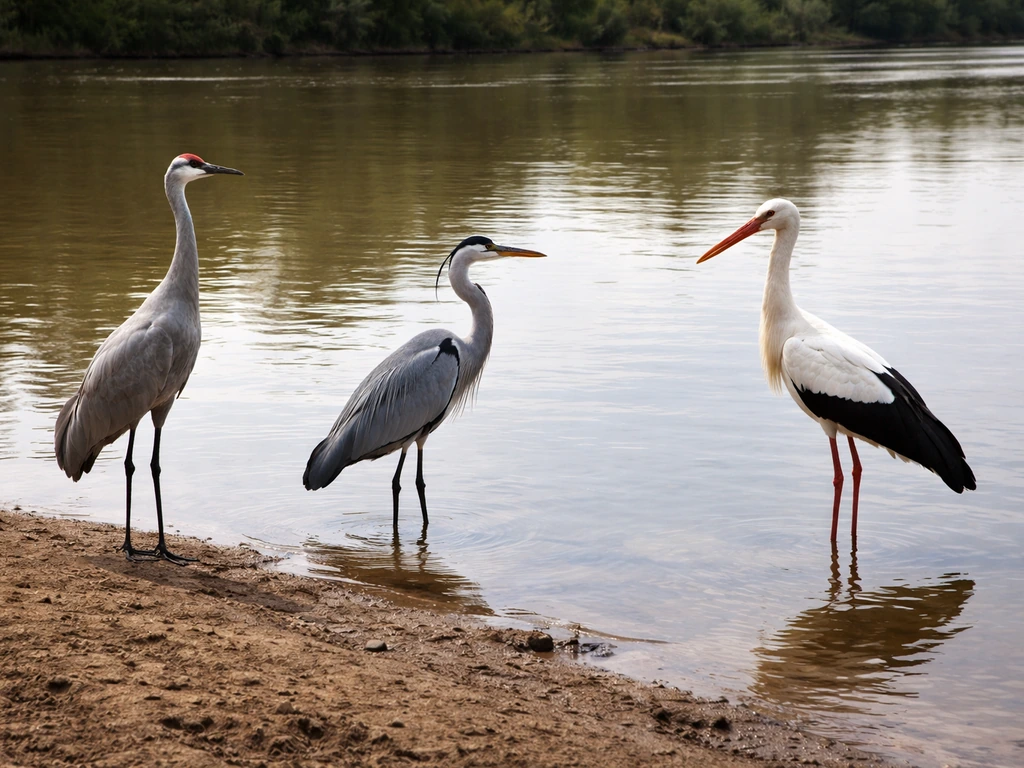
This is where most people get confused, and it's an easy mistake to make. All three groups are tall, long-legged, and often found near water. But once you know the differences, you'll separate them quickly. The most reliable test is the neck in flight: herons fold their necks into a tight S-shape tucked against the body when airborne. Cranes extend the neck fully. In a Reddit bird-identification thread, commenters also point to wing and eye or marking cues and contrast whooping versus sandhill cranes when deciding between a crane and a heron-like bird Cranes extend the neck fully.. That single observation solves about 80% of confusion cases.
Storks also fly with necks extended, so that trick doesn't separate storks from cranes. The key difference there is the bill: storks have large, thick, often colorful bills (think the red-orange bill of a white stork) that are much heavier and more prominent than a crane's bill. Storks also lack the feather bustle entirely, and their heads don't have the distinctive bare-skin crown patches that most cranes show. If you've ever looked up what an elephant bird looks like, you'll appreciate how dramatically different massive prehistoric birds were from the elegant proportions of a crane, which puts into perspective just how distinct crane body ratios really are.
Other common mix-ups worth knowing: the great blue heron is often mistaken for a sandhill crane at a distance, especially in North America. The heron is large and gray, but look for the folded neck in flight, the much longer and more dagger-shaped bill, and the absence of any feather bustle. Ibises are smaller and have strongly curved bills. Egrets are white and heron-like, not crane-like. If you're ever uncertain about a similarly unusual-looking bird and find yourself Googling comparisons, checking out what a kite bird looks like can give you a good sense of how different a soaring raptor silhouette is, which helps train your eye to read bird shapes more critically.
| Feature | Crane | Heron | Stork |
|---|---|---|---|
| Neck in flight | Fully extended | Folded in S-shape | Fully extended |
| Bill shape | Medium, straight, pointed | Long, dagger-like | Large, thick, often colorful |
| Feather bustle | Yes, drooping at rear | No | No |
| Crown marking | Often bare red skin or decorative crown | Sometimes a plume or crest | Rarely, if ever |
| Leg color | Usually black or dark gray | Varies (often yellow or dark) | Varies (often red or pink) |
| Body posture | Upright, horizontal body | Hunched or S-curved neck | Upright, long neck |
It's also worth mentioning that cranes are very different from smaller, colorful wading or perching birds. If you've been reading about what a kingfisher bird looks like, you'll notice how compact and short-legged kingfishers are by comparison. Cranes are at the opposite end of the size and build spectrum, which makes their silhouette genuinely unmistakable once you've committed it to memory.
Your field checklist for confirming a crane
Whether you're in the field, looking at a photo, or watching a video, run through this checklist mentally. If you tick most of these boxes, you're looking at a crane:
- Tall bird (3 to 5 feet) with very long legs, usually black or dark gray in color
- Small head relative to the body, often with a bare red or colorful crown patch
- Straight, medium-length bill roughly the same length as the head
- Long neck held mostly upright or gently curved, not sharply kinked
- Drooping feather bustle at the rear of the body (the 'skirt' effect)
- In flight: neck and legs both fully extended, broad slow-beating wings
- Body plumage is gray, white, or brown depending on species; bold red or gold head markings in adults
What to do when you're only getting a partial view
Sometimes you only catch a glimpse, a bird walking behind reeds or flying overhead for a few seconds. In those cases, prioritize the neck posture in flight first. If the neck is out, you're looking at a crane or a stork. Then check the bill at any angle you can get: crane bills are moderate and neat, stork bills are large and obvious. If the bird is on the ground and you can't see the neck clearly, look for that feather bustle at the back. If it's there, you've got your crane. For juveniles or birds with unusual plumage, focus on structure over color since the bustle, bill shape, and long dark legs hold true across ages and sexes.
Next steps to sharpen your crane ID
Once you've got the basics locked in, it's worth comparing cranes to other distinctive birds you might encounter in similar environments. For example, what a kiwi bird looks like is a fascinating contrast because kiwis are also large, ground-dwelling birds but with almost no visible wings, a very long curved bill, and a completely different body plan. Running those mental comparisons helps you understand why each crane feature matters.
Similarly, reading about what a kingbird looks like can help you calibrate the size and proportion differences between a stocky medium-sized passerine and the towering, elegant crane. And if you ever spot a dark, slender bird with a long tail calling loudly from a treetop, checking out what a koel bird looks like will quickly confirm it's not a crane species at all, reinforcing just how distinct crane anatomy really is.
The most practical next step today: find a few clear photos of sandhill cranes and whooping cranes side by side and compare their bill length, body size, and feather bustle. Then look up a great blue heron in flight and a crane in flight next to each other. That single visual comparison of the neck posture difference will permanently solve the crane-versus-heron confusion for you. After that, every crane you spot in the field will feel like running into an old friend you'd recognize anywhere.
FAQ
If I only get a quick glimpse, how can I tell what a crane looks like the bird is, versus a heron?
In flight, cranes usually look like they have a “neck plus legs” straight line, with legs trailing behind and the neck held extended. If you see a long S-shaped neck tucked against the body, you are more likely looking at a heron, not a crane.
What visual cue helps if I’m trying to identify a crane at rest on land?
Cranes often look “back-heavy” because of the drooping secondary-feather bustle. When the bustle is fully puffed, the bird can seem to have a bulkier rear than the front, while a heron’s rear silhouette stays much sleeker.
Are juvenile cranes harder to identify, and what should I focus on instead of color?
Juvenile cranes can look duller and may have less crisp-looking head markings, so color can be misleading. Use structure first, especially long dark legs, the drooping feather bustle, and the straight-to-gently-curved posture of the neck.
Why do some cranes look much browner than others, and does that mean they’re a different bird?
Yes, because lighting and feather condition change appearance. Mud staining, preening wear, and seasonal molt can make a crane look browner or rustier than expected, so confirm using bill shape and the bustle rather than relying on “classic” gray coloration.
How can I distinguish sandhill cranes from whooping cranes when they look similar in silhouette?
Sandhill cranes and whooping cranes are both long-necked and long-legged, so they can be confusing. A practical shortcut is the bill length and overall contrast: whooping cranes tend to show sharper contrast from their white plumage, and their bill can look longer and darker in proportion.
What if I can’t see the neck or head clearly, but I suspect a crane?
If you see only a ground-level bird behind reeds, focus on the rear silhouette. The drooping bustle is often detectable even when the head is hidden, and it is absent in storks, which also tend to show a heavier-looking bill and fuller head markings.
Why doesn’t the “neck extended” flight trick always work for crane vs stork identification?
Storks can be crane-like in flight because their neck is extended, so the neck alone is not enough. Storks have a noticeably heavier, prominent bill and lack the drooping feather bustle, so check the bill thickness and rear silhouette when possible.
What’s the most common crane identification mistake in North America, and how do I correct it?
A common field mistake is confusing a crane with a heron at a distance. If the bird’s bill looks very long and dagger-shaped, and the neck folds tightly in flight, that points to a heron, even if the legs and overall height look similar from far away.
How should I approach identifying a crane from a blurry photo?
For photos or videos, look for at least one of these anchors: the drooping feather bustle, the moderate straight bill (not dagger-long), and long dark legs. Crop or zoom to the rear and bill area, then compare posture rather than overall color tone.
What should I do if a crane is perched and I can’t see its bustle or neck posture?
If a bird is perched in a way that hides the bustle and neck, ID becomes less reliable. Your best next step is to wait for a moment of flight or to get a clear view of the rear feather cluster and neck posture, because those are the highest-confidence cues.
How can I avoid mistaking small shoreline birds for cranes based on habitat alone?
Yes. Cranes are tall and elegant, but smaller waders or perching birds can share the “near water” habitat. If the bird looks compact, short-legged, or lacks the long-necked silhouette with the drooping rear cluster, it’s probably not a crane.
Next Article
What Does a Herring Bird Look Like? Herring Gull ID Guide
Learn what a herring bird likely is: clear herring gull ID guide with key marks, plumage differences, and lookalike comp