An ibis is a large wading bird with one instantly recognizable feature: a long, strongly downward-curved bill that looks almost like a sickle. Pair that drooping bill with long legs, a stocky body, and a habit of probing through shallow water or wet grass, and you have a bird that's hard to mistake for anything else once you know what to look for. The exact colors vary quite a bit between species, from dazzling white to deep chestnut with a metallic sheen, but the silhouette stays the same across the whole group.
What Does an Ibis Bird Look Like: Visual ID Guide

Marcus Whitley
18 Jul 2026
Quick Visual Summary
Look for a long-legged wading bird about the size of a large crow to a small heron, with a dramatically long, downcurved bill, a rounded head with often bare facial skin around the base of the bill, and a slow, deliberate walk as it probes the ground or water.
At-a-Glance Identification Checklist
- Long, strongly downcurved (decurved) bill, noticeably longer than the head
- Medium to large body size, roughly 45–80 cm (18–31 in) long depending on species
- Long legs held straight, giving a tall, upright stance
- Bare, often colorful skin around the base of the bill and face (color varies by species and season)
- Plumage is either all-white, dark chestnut-brown, or white with a contrasting dark head, depending on species
- Wings broad and rounded; in flight, the neck is stretched out fully (not tucked like a heron)
- Often seen in flocks, probing mud, shallow water, or short grass with a rhythmic forward walk
- Flight style includes flapping and gliding in lines or loose V-formations
Size and Overall Body Shape
Most ibises fall into a size range roughly equivalent to a large duck or a small heron. The American White Ibis, one of the most commonly spotted species in North America, measures about 53–71 cm (21–28 in) from bill tip to tail, with a wingspan of 90–105 cm (35–41 in) and a typical weight of around 750–1,200 g. The Glossy Ibis is a touch smaller, generally 45–65 cm long with a wingspan of roughly 80–95 cm. At the larger end, the Crested Ibis of East Asia stands about 70–80 cm tall with a wingspan of 130–160 cm, making it one of the most imposing members of the family.
The body is compact and rounded rather than angular, with a shortish neck that thickens toward the chest. The overall silhouette on the ground has a gentle forward lean, especially when the bird is actively feeding, since the weight of that long bill tends to pull the head downward. In flight, ibises stretch their necks out completely straight, which is a useful distinction from herons and egrets, which fold their necks back into an S-shape while airborne.
The Bill: Shape, Length, and Curvature
The bill is the single most diagnostic feature of any ibis, and it's worth studying closely. It curves smoothly downward along its entire length, forming a gentle arc rather than a sharp bend, and it is noticeably long relative to the head, often measuring roughly the same length as the bird's head and neck combined. In the American White Ibis, the culmen (the ridge along the top of the bill) runs around 11–16 cm. In the Glossy Ibis and Crested Ibis, bill lengths of 15–18 cm are typical. These numbers overlap quite a bit between species, so you'll want to look at the bill color and the overall curvature angle rather than trying to estimate exact length in the field.
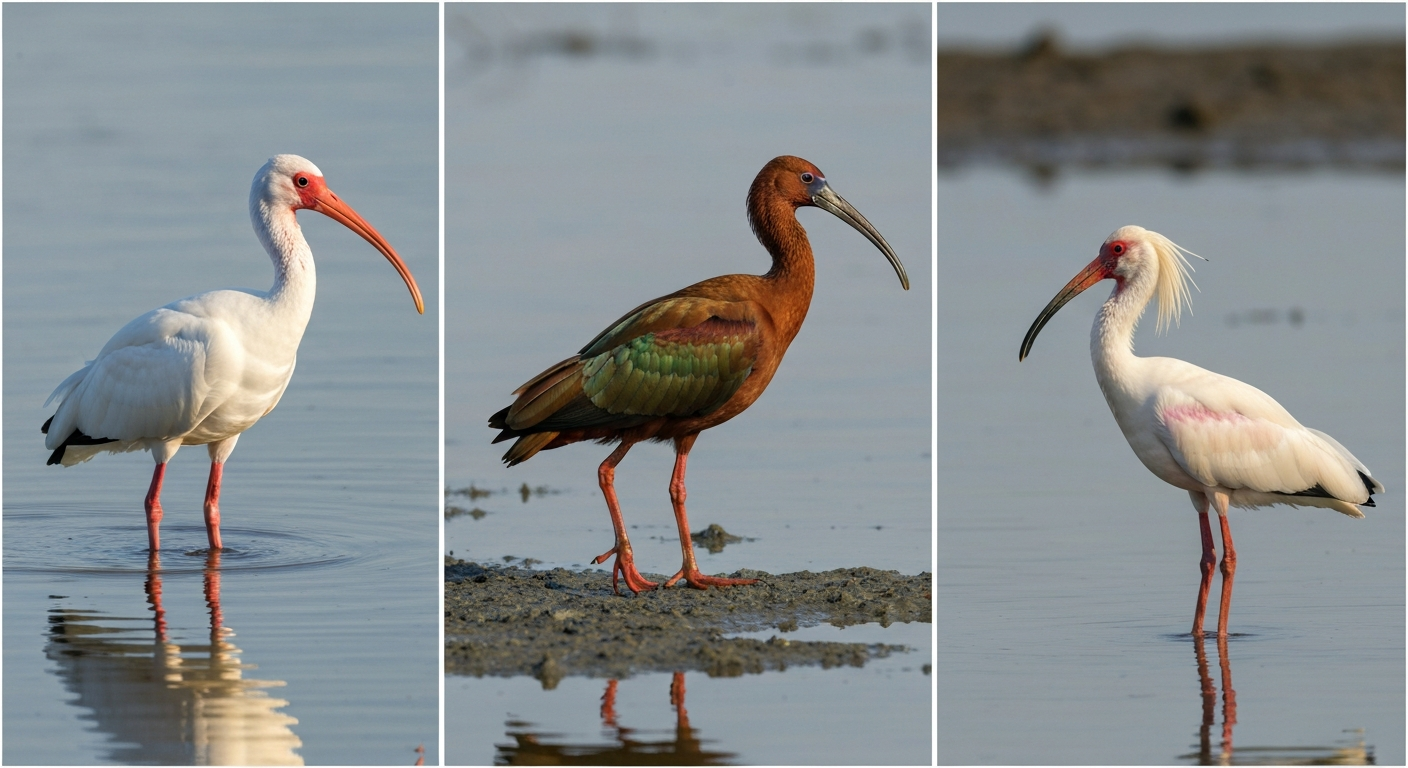
The bill is laterally compressed and fairly slender, tapering to a blunt tip rather than a sharp point. Ibises use this bill to probe into soft mud and shallow water by feel, not by sight, using sensitive pits near the tip. You might notice a bird walking steadily forward while repeatedly plunging its bill into the ground with a rhythmic, mechanical action. The bill color is a great ID tool: the American White Ibis has a reddish to orange-pink bill (brightest in breeding season), while the Glossy Ibis sports a dark grayish-brown bill, and the Crested Ibis has a dark bill with a reddish tip.
Head, Face, Eyes, and Bare Facial Skin
The head of an ibis is rounded and relatively small compared to the body, which makes the bill look even more prominent. Most species have a patch of bare (featherless) skin around the base of the bill and extending to the eye, and this bare skin is one of the best species-separation tools you have. In the American White Ibis, this bare skin flushes bright red or pink during the breeding season, matching the bill color and making the face look almost clown-like. Outside breeding season it fades to a duller pinkish tone.
The Glossy Ibis has dark bare skin on the face, and you'll notice a thin pale line bordering that dark skin just above and below the eye. This pale border is subtle and easy to miss in poor light, but in good light it's a key mark. The White-faced Ibis, a close relative found across the Americas, takes this further with a conspicuous white ring of feathering around the face in breeding adults, which is the easiest way to tell the two species apart when they occur together. The Crested Ibis is unique in having bare red facial skin that gives its face a striking pinkish-red flush. The straw-necked and black-headed ibises of Asia and Australia both show naked dark slate or black head skin in adults, giving them a bare-headed, almost vulture-like look from a distance.
Eye color is also worth noting if you get a close enough look. The White-faced Ibis has a distinctly red iris in adults, which contrasts with the Glossy Ibis's typically dark eye. This is a subtle but reliable marker when conditions allow.
Plumage: Colors, Patterns, and Sheen
Ibis plumage divides broadly into two groups: the white ibises and the dark ibises. Knowing which group you're looking at narrows things down immediately.
White Plumage Species
The American White Ibis is, as the name suggests, almost entirely white in adult plumage. The only dark marks are the black tips on the outer flight feathers (primaries), which are visible as small black spots at the wingtips when the bird is standing and as a clean black trailing edge when in flight. Juveniles and immature birds are a warm brown on the back, wings, and neck, with white underparts, and they gradually transition to full white over roughly two years. If you see a mixed-looking ibis, half-brown and half-white, you're likely watching a bird in its first or second year.
The Black-headed Ibis of South and Southeast Asia is another predominantly white species, but adults have a striking contrast: the body and wings are white while the bare head and upper neck are black or very dark grey, giving it an immediately recognizable hooded look. In breeding colonies you may also notice red patches on the hindneck, adding a splash of color. The Straw-necked Ibis of Australia follows a similar pattern, with white body plumage, but its most distinctive feature is the cluster of stiff, straw-like yellowish plumes projecting from the foreneck, visible at close range as coarse bristly feathers unlike anything else on an ibis.
Dark Plumage Species
The Glossy Ibis looks uniformly very dark at any distance, and in poor light or overcast conditions it can appear almost black. Get it in good sunlight, though, and the plumage transforms: the body feathers show a rich chestnut to dark reddish-brown, and the wings catch green, purple, and bronze iridescence that genuinely glitters. Representative museum/photo archive for field photos and close-up head/bill examples: Macaulay Library hosts extensive image and sound media for Glossy Ibis (Glossy Ibis (example asset), Macaulay Library (Cornell Lab / ML asset page)) Glossy Ibis (example asset) — Macaulay Library (Cornell Lab / ML asset page). This metallic sheen is the bird's most spectacular feature and the reason for its name. In non-breeding plumage the gloss dulls and the chestnut fades to a more muted brown with faint white streaking on the head and neck. The White-faced Ibis shares this glossy dark appearance but runs warmer and bronzier overall.
The Crested Ibis
The Crested Ibis is in a category of its own. The body is white with a faint pinkish or salmon wash, the wing and tail feathers have an unusual pale reddish tinge, and the crest, a drooping fan of white plumes on the back of the head, is clearly visible even from a distance. Add the bare red facial skin and the dark bill with a reddish tip, and this is one of the most visually distinctive birds in the world. It is also critically rare, confined to a small range in China and Japan as part of ongoing conservation programs.
Legs, Feet, Posture, and Gait Cues
Ibis legs are long and slender, positioned well back on the body, and they hold the bird in a tall, upright stance when resting. When feeding, the posture shifts forward noticeably, with the head and bill lowered almost to ground or water level. The feet have long toes, modestly webbed at the base in some species, suited to walking on soft mud or wading in shallow water. Leg color is another excellent field mark: the American White Ibis has pink to reddish legs (bright red in breeding adults), the White-faced Ibis also shows reddish or pinkish legs, and the Glossy Ibis has red-brown legs. The Straw-necked Ibis and Black-headed Ibis typically have dark to blackish legs, which contrasts cleanly with their white body plumage.
In terms of movement, ibises are steady, methodical walkers. They move forward in an almost metronomic rhythm, bill plunging repeatedly into the substrate, rather than the quick dashing and freezing you see in some smaller waders. In shallow water they wade at a deliberate pace, the bill sweeping side to side or probing straight down. Flocks often feed together spread across a field or mudflat, maintaining loose spacing. When disturbed, they take flight quickly with strong wingbeats, and they commonly form lines or loose V-formations when traveling, somewhat like geese, though smaller and with the characteristic alternating flap-and-glide pattern.
Species Profiles at a Glance
Here's a side-by-side comparison of the most commonly encountered ibis species, covering the visual features most useful for field identification.
| Species | Size (length) | Plumage | Bill Color | Bare Facial Skin | Leg Color | Distinctive Mark |
|---|---|---|---|---|---|---|
| American White Ibis | 53–71 cm | All white; black wingtips | Red/orange-pink | Bright red/pink | Pink to red | Entirely white with vivid red bill and face |
| Glossy Ibis | 45–65 cm | Dark chestnut with green/purple/bronze gloss | Dark gray-brown | Dark with thin pale border | Red-brown | Metallic iridescent sheen in sunlight |
| White-faced Ibis | 46–66 cm | Dark chestnut with bronze gloss | Dark pinkish-gray | White feathered ring (breeding) | Reddish/pink | White face ring + red iris in breeding adults |
| Black-headed Ibis | 65–76 cm | White body, black bare head/neck | Black, decurved | Black bare skin on head | Dark/gray | Stark white-and-black contrast; bare dark head |
| Straw-necked Ibis | 55–75 cm | White body, dark glossy upperparts | Dark | Bare dark slate head | Dark/blackish | Straw-like yellowish neck plumes |
| Crested Ibis | 70–80 cm | White with pinkish wash; red-tinged wings | Dark with red tip | Bare red facial skin | Pinkish-red | Drooping white head crest; rare and striking |
Juvenile vs. Adult and Seasonal Changes
Young ibises often look quite different from adults, so it's worth knowing what to expect. In the American White Ibis, juveniles are brown on the back, wings, and neck with white underparts and a duller, more orange-pink bill. They gradually acquire full white adult plumage over about two years, so you'll sometimes see birds that are patchily brown and white, which can be genuinely confusing if you're not expecting it. In the Glossy Ibis, juveniles are duller and less glossy than adults, with more streaking on the head and neck. Seasonal changes are also visible in most species: bare facial skin and bill color intensify during the breeding season (typically spring and early summer) and fade afterward, so the same bird can look quite different between February and August.
Ibises vs. Similar-Looking Wading Birds
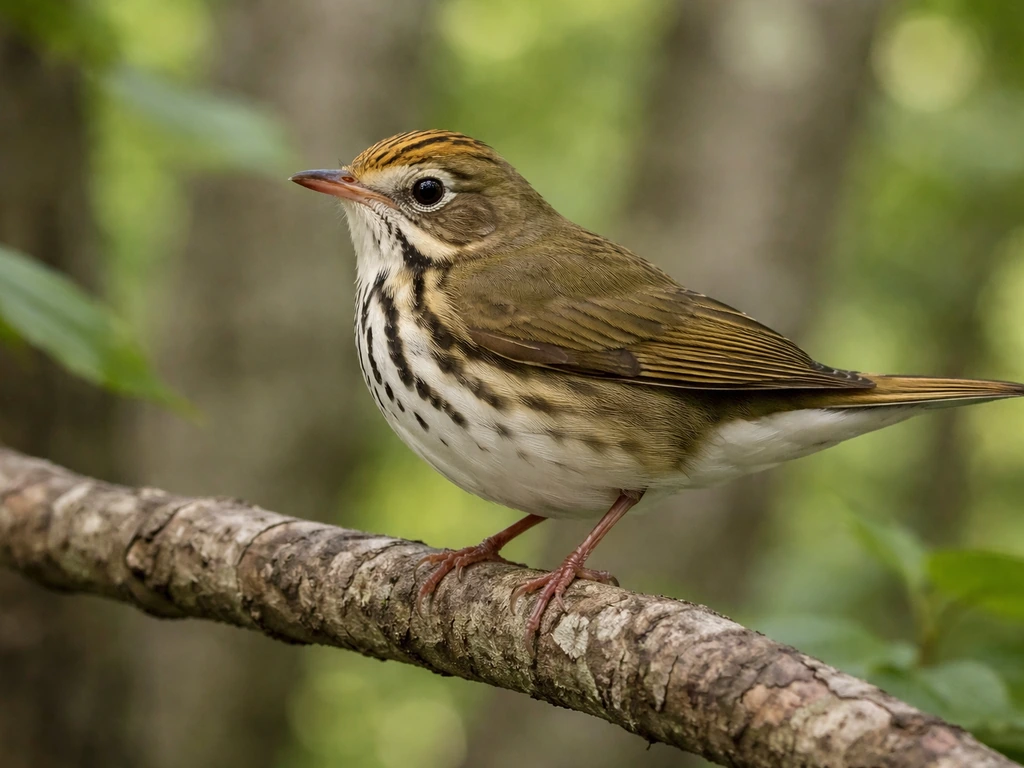
The most common mix-up is between ibises and herons or egrets. For comparison, see what does an osprey bird look like to learn how ospreys differ in shape, flight, and hunting behavior. The bill shape solves it immediately: herons and egrets have straight, dagger-like bills, while ibises always have that distinctive downward curve. In flight, herons fold their necks back into an S, whereas ibises fly with the neck extended straight forward. Spoonbills are another relative worth knowing about, and at first glance the silhouettes can look similar. But a spoonbill's bill flares out into a wide, flat paddle shape at the tip rather than curving downward. Curlews, which are much smaller shorebirds, also have a strongly downcurved bill and can briefly cause confusion, but they're roughly half the size of most ibises and have a completely different, streaked brown shorebird plumage. Storks are large waders like ibises but are considerably bigger, have straight or slightly upturned bills, and lack the bare facial skin coloring typical of ibises. If you're also wondering what is an ostrich like bird, see the related guide on what is an ostrich like bird for a quick comparison. For a comparison with another bird that has a strong hooked bill and bold plumage, see what does a butcher bird look like. If you’re also wondering what does an oven bird look like, see the ovenbird identification guide for description and photos. For comparison, see what does an albatross bird look like to contrast large oceanic seabirds such as albatrosses with wading birds like ibises. For a quick comparison of a very different songbird’s appearance, see what does a Baltimore oriole bird look like.
| Bird | Bill Shape | Neck in Flight | Size vs. Ibis | Key Difference from Ibis |
|---|---|---|---|---|
| Heron/Egret | Long and straight, dagger-like | Folded into S-curve | Similar or larger | Straight bill; neck tucked in flight |
| Spoonbill | Long with flared paddle tip | Extended straight | Similar | Spatula-shaped bill tip, not curved downward |
| Curlew | Long and strongly downcurved | Extended straight | Much smaller | Shorebird size; streaked brown plumage; no bare facial skin |
| Stork | Straight or slightly upturned | Extended straight | Larger | Much bigger body; straight bill; different posture |
| Ibis | Long, smoothly decurved | Extended straight | Reference | Decurved bill + bare facial skin + leg color |
Habitat and Behavior Cues That Help with ID
Knowing where you are and what the bird is doing gives you a big head start. Ibises favor shallow wetlands, flooded fields, mudflats, coastal marshes, and the edges of rivers and lakes. The American White Ibis is a familiar sight in the coastal southeastern United States, often turning up in parks, golf courses near water, and suburban wetlands in Florida and along the Gulf Coast. If you're also curious about colorful backyard visitors, see what does an oriole bird look like for a quick comparison. Glossy Ibises are widespread across shallow salt marshes, wet agricultural fields, and freshwater margins in Europe, Africa, Asia, and increasingly along the eastern seaboard of North America. The Straw-necked Ibis is a staple of Australian agricultural paddocks and freshwater wetlands. According to Straw-necked Ibis, BirdLife Data Zone (species factsheet), the species is assessed as Least Concern by the IUCN, is widespread and locally common in Australia, and often nests colonially with other Threskiornis ibises such as the Australian white ibis blank" rel="noopener noreferrer">Straw-necked Ibis — BirdLife Data Zone (species factsheet). If you spot a large group of wading birds probing the ground in wet pasture or a shallow marsh, there's a very good chance ibises are in the mix.
Tips for Photographing Ibises for Identification
To capture the features that matter most for ID, try to get shots from these angles and in these conditions:
- Side profile while standing: shows the full bill length and curvature, leg color, and overall plumage
- Close-up of the head and face: reveals bare skin color, eye color, and bill base details
- Bird in flight from below or the side: shows wingtip pattern (black tips on white ibis species) and neck posture
- Full-body shot in direct sunlight: essential for dark ibises like the Glossy Ibis, where the iridescent gloss only shows in good light
- Juvenile alongside adult (if possible): helps document age-related plumage differences in mixed flocks
For photo captions and alt text, describe the key visible features directly: for example, 'Adult American White Ibis showing red decurved bill, pink bare facial skin, and black wingtips while wading in shallow marsh' tells a reader exactly what to look at. This approach also makes your photos useful as reference images when you're reviewing an uncertain sighting later.
Putting It All Together in the Field
Once you've seen the silhouette, the identification process for ibises is really about working through three quick checks: bill color, facial skin color, and overall plumage tone. A white bird with a red curved bill and pink legs is almost certainly an American White Ibis. A dark, glossy bird with a thin pale face border is a Glossy Ibis. A white bird with a stark black bare head is a Black-headed Ibis. Leg color backs all of this up, and in breeding season the colors on bills and faces become vivid enough to confirm identification even from a reasonable distance. The extended-neck flight silhouette and the rhythmic probing walk are the final pieces that confirm you're looking at an ibis rather than any of the similar wading birds you might encounter in the same habitat.
FAQ
Title and meta description for an article about 'what does an ibis bird look like'
Title: What Does an Ibis Bird Look Like? A Visual ID Guide for Casual Birdwatchers Meta description: Visual guide to identifying ibises—shape, bill, plumage, common species and lookalikes in wetlands. Clear photos and checklist.
Quick visual summary: what should a casual observer notice first when they see an ibis?
Look for a medium- to large wading bird with a long, down‑curved (decurved) bill, long legs, and a relatively long neck. From a distance note overall color (white, chestnut/dark iridescent, or white with dark head), posture (foraging with bill probing in mud/shallow water), and any glossy sheen on wings in good light.
What are the key appearance features to break down for field ID?
Size & shape: medium-large wader, long legs, long neck, wingspan often 80–160 cm depending on species. Bill: long, laterally compressed, distinctly downcurved—note length and curvature. Head & face: some species have bare facial skin or contrasting bare heads; note color and presence of facial rings. Plumage colors & patterns: solid white, chestnut/bronzy iridescent, or white with dark head/neck; look for black flight feathers on white species. Legs & feet: color varies (pink/red, dark/blackish, reddish-brown)—good field cue. Eyes/iris & bare skin: iris color and bare facial skin (pink/red, dark, pale ring) can help separate species. Sexual dimorphism: generally subtle in plumage; breeding bare‑skin brighten in some species. Juvenile vs adult: juveniles often duller, browner or mottled (e.g., White Ibis juveniles brown above). Molting/seasonal changes: breeding seasons bring brighter bare skin, plumes or intensified gloss; some species show straw‑neck plumes when breeding.
How does bill shape and size vary among common ibises and what field cues help use it?
All ibises have a decurved bill. Use relative length (longer culmen in Plegadis and Nipponia), curvature (more strongly curved in some Plegadis), and how the bill is used while probing. Compare bill color (reddish in White Ibis, dark in Glossy Ibis) and contrast with facial skin—these are easier to see than exact millimeters in the field.
What do adult American (White) Ibis look like and what are quick distinguishing marks?
Adult White Ibis (Eudocimus albus): overall white plumage, black wing tips visible in flight, long downcurved reddish/orange bill and pinkish‑red legs; breeding birds show brighter red on bare facial skin and bill. Juveniles are brown above and white below, maturing to full white over ~2 years. Photo suggestion: side profile showing bill curve and flight shot exposing black primaries.
What do Glossy Ibis and White‑faced Ibis look like and how to tell them apart?
Glossy Ibis (Plegadis falcinellus): medium size, dark chestnut to reddish‑brown in breeding plumage with strong green/purple/bronze iridescence on wings; dark face and bill, legs reddish‑brown. White‑faced Ibis (Plegadis chihi): similar size and brown/bronzy body but breeding birds show a pale (white) border around the face/eye and often redder legs/iris. In good light check facial outline, eye color and the strength of iridescence to separate them.
Next Article
What Does an Ovenbird Look Like? ID Guide and Field Marks
Ovenbird ID guide: size, head stripes, eye line, wing bars, tail underside, plus juvenile and look-alikes.