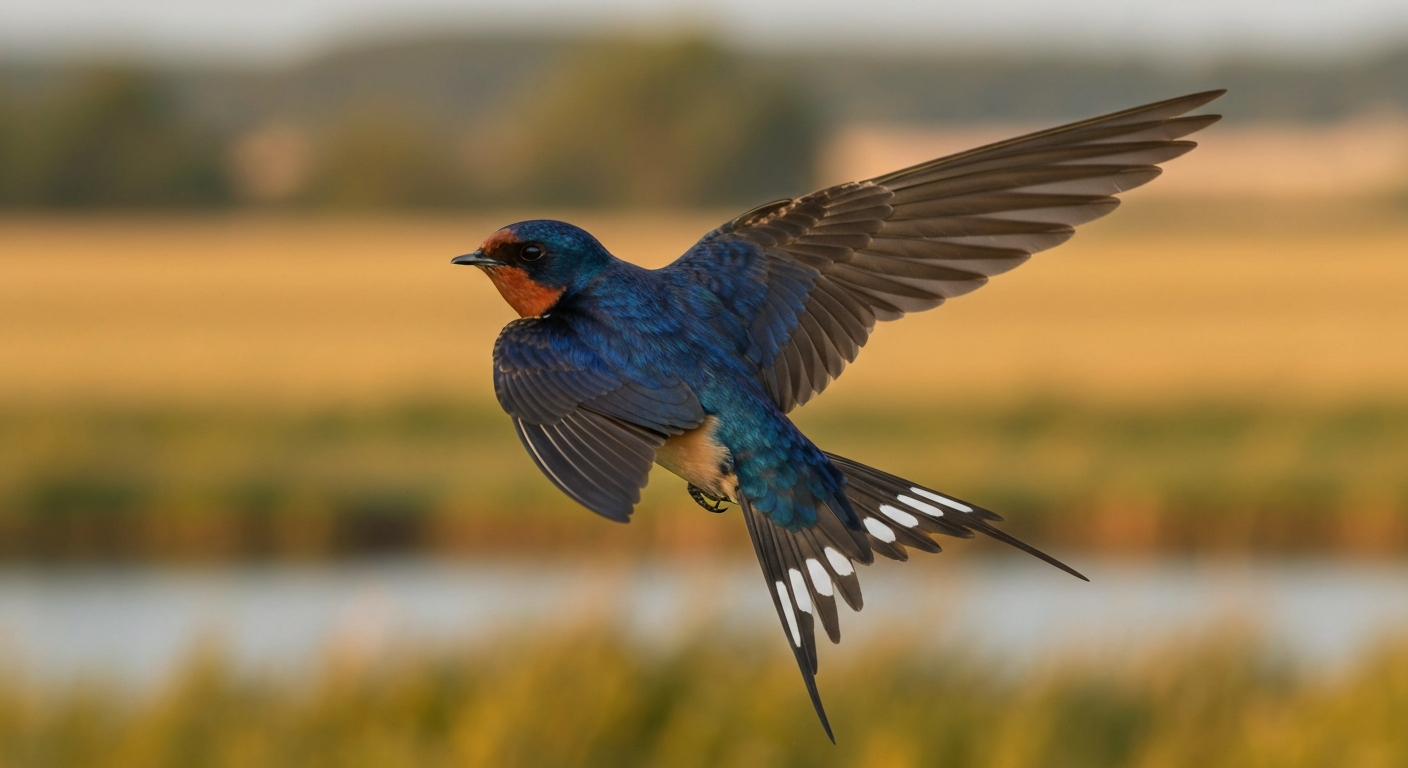
A barn swallow is a slim, fast-flying bird with glossy steel-blue upperparts, a rusty-orange forehead and throat, pale buff belly, and a tail so deeply forked it looks like a tiny pair of scissors. That combination, especially the long pointed tail streamers and the warm rusty throat, makes it one of the easier swallows to name once you know what you're looking for.
What Does a Barn Swallow Bird Look Like: Visual ID, Size & Similar Species

Marcus Whitley
25 Jul 2026
Quick ID summary
Steely blue above, rufous-orange on the forehead and throat, buff to pale orange below, with a long deeply forked tail that has white spots near the tips when spread.
Key field marks at a glance
Before diving into each body region, it helps to lock in the three marks that will nail a barn swallow ID in almost any light or distance. If you can confirm all three, you've got your bird.
- Deeply forked tail with long outer streamers (males longer than females)
- Warm rufous to chestnut forehead and throat, clearly contrasting with blue crown
- Glossy steel-blue to blue-black upperparts with no pale rump patch
- Buff to pale rufous underparts below a narrow dark blue breast band
- White spots on the inner tail feathers, visible when the tail is fanned open
- Long, narrow, pointed wings built for fast, agile flight
Head and face: that rusty forehead is your first clue
The first thing you'll notice on a barn swallow's head is the contrast between the warm rufous or chestnut forehead and the deep, iridescent blue-black of the crown and nape. The forehead patch sits right above the base of the bill and can look almost brick-red in good light. The crown glows with a metallic, steely-blue sheen when the sun catches it, almost like polished dark metal.
The bill is short, wide, and black, typical of aerial insect catchers that need a big gape to scoop insects mid-flight. The eyes are dark and relatively small. There's no obvious eye stripe or eye ring like you'd see on some warblers. The cheeks blend into the rufous throat below, giving the whole face a warm, orange-tinted look that separates it cleanly from the bluer head.
Throat and breast: the rusty bib and its blue border
The throat is a rich rufous to chestnut color, forming what looks like a warm bib below the chin. Just beneath it, most barn swallows show a dark blue breast band, a narrow strip of the same glossy blue-black as the back, that acts like a dividing line between the rufous throat and the paler belly below. How complete and dark that band appears can vary by individual and region. Birds from western Europe tend to show a fairly solid band, while some East Asian populations can have a paler, less defined one.
The sheen on both the throat and the breast band is real, not just a trick of light. In direct sunlight, both areas can shift between blue-black and a faint greenish-purple iridescence, similar to what you see on a starling's plumage. Males often show a slightly deeper, denser gloss than females, though the difference is subtle enough that you usually can't rely on it alone in a quick field sighting.
Back and upperparts: all that glittering steel-blue
From the nape all the way down the mantle, scapulars, and across the wing coverts, a barn swallow is a consistent glossy blue-black. In flat or overcast light it can look simply dark, almost black. In bright sun it shifts to a vivid steely blue with that same metallic iridescence you see on the crown. It's a clean, unstreaked back with no bars, spots, or contrasting patches.
One important thing to note: the rump matches the back. This is a key difference from some other swallows, particularly the cliff swallow and tree swallow, which show pale or whitish rumps. On a barn swallow, the rump is the same dark steely blue as everything above it. If you spot a swallow with a pale rump, that's your first reason to look elsewhere.
Wings: long, pointed, and built for speed
Barn swallow wings are long and tapered to a sharp point, giving the bird a sleek, almost swept-back silhouette in flight. The wing coverts match the rest of the upperparts in that dark blue-black, and the flight feathers themselves are similarly dark with little contrast. You won't see a wing bar or pale panel when the wings are open. What you will notice is the sheer length and narrowness of the wing, which, combined with the forked tail, creates that unmistakable fast and fluid aerial shape.
From below, the wings look uniformly dark, contrasting with the paler buff belly. This top-dark, bottom-pale pattern is visible even when a swallow is zipping past at speed and gives you a quick visual confirmation when seen from underneath.
Tail: the deeply forked signature of the species
If one feature defines the barn swallow's appearance, it's the tail. The outer tail feathers (called rectrices) grow noticeably longer than the inner ones, creating a deep fork. A study, 'The effect of tail streamer length on aerodynamic performance in the barn swallow', Deakin University, links streamer length to maneuverability and notes streamers provide clear silhouette cues used in ID and are sexually selected in many populations blank" rel="noopener noreferrer">'The effect of tail streamer length on aerodynamic performance in the barn swallow' — Deakin University / journal contribution. In adult males, those outer streamers can reach 79 to 106 mm in length. Adult females are shorter-streamered, typically 68 to 84 mm, but still clearly forked compared to most other swallows. From below or behind, the bird's tail silhouette looks like a long narrow V.
When a barn swallow spreads its tail, look for a row of white spots near the tips on the inner webs of the feathers. These form a subtle but visible transverse band that can flash white as the bird maneuvers, especially when banking or turning tightly. The rest of the tail is dark, matching the upperparts. If you see a swallow with a deeply forked tail and white spots in the fanned feathers, that's a very strong ID.
One thing worth knowing: broken or asymmetric streamers don't mean you're looking at a young bird or a female. Wear, feather damage, or a previous injury can snap one streamer shorter than the other. It's worth noting in your field sketch, but it doesn't change the ID.
Underparts and belly: warm buff with a clean contrast
Below the dark breast band, barn swallows are a pale buff to light rufous color across the belly, flanks, and undertail. For help identifying brown or buff-plumaged birds, see the guide on what does a brown bird look like. The exact shade varies from bird to bird and region to region: some North American birds look quite pale and almost creamy-white below, while birds from some European and Asian populations can show a warmer, more orange-buff wash. The underparts are clean and unstreaked, which makes the dark breast band above them look all the more defined.
The contrast between the dark blue-black upperparts and the pale underparts is most striking when the bird is seen from the side in flight. It gives barn swallows that classic two-tone look: dark on top, light below, with the rufous throat sitting right at the boundary. That layered pattern, blue above, rufous bib, pale belly, is actually one of the clearest real-world cues you'll have when trying to name this bird on the wing.
How big is a barn swallow? Size and measurements
Barn swallows are small birds, roughly the size of a large sparrow or small finch, but they look bigger in flight because of those long wings and tail. Total body length runs about 15 to 19 cm (around 6 to 7.5 inches), though a good chunk of that is tail. Wingspan is typically 29 to 32 cm (about 11.4 to 12.6 inches), and body weight sits between about 16 and 22 grams. For reference, that's noticeably smaller than an American robin and slightly larger than a tree swallow, which is a useful mental anchor when you're scanning a group of swallows over a field.
Male vs. female: subtle but real differences
Adult barn swallows look alike at a glance, which is why many people never try to separate the sexes in the field. But if you're patient and have a bird perched or in slow flight, a few clues stand out. Males tend to have longer tail streamers, which is the most reliable visual cue. They also often look slightly glossier on the back and crown, and sometimes show a deeper, darker breast band. But the overlap is real, and plenty of individual females can look as glossy as males.
In practice, if you see a barn swallow with noticeably long, elegant streamers extending well past the body, that's likely a male. If the streamers are shorter and the fork is less dramatic, it might be a female, but it could also be a male with worn or damaged tail feathers. The safest approach is to use tail length as a suggestive clue rather than a definitive one.
Juvenile barn swallows: what young birds look like
Juvenile barn swallows fresh out of the nest look like washed-out versions of adults. The forehead and throat are paler, more buff-orange than the rich rusty-chestnut of an adult. The upperparts are still dark and glossy-ish, but the feathers look newer and fresher rather than deeply saturated. Most noticeably, the tail is much shorter and less forked. The outer streamers that make adults so recognizable are barely elongated in juveniles, so a young barn swallow can look surprisingly stubby-tailed compared to its parents.
If you're watching swallows in late summer around a barn or bridge and notice some that look similar to the adults but smaller, paler-throated, and short-tailed, you're almost certainly looking at birds from that year's breeding season. They'll develop adult-length streamers after their first complete molt, which typically happens on the wintering grounds.
Seasonal changes: worn plumage vs. fresh
Barn swallows don't change into a different plumage like some ducks or warblers do, but they do look noticeably different in worn versus fresh feathers. By late summer, many adults have faded, scruffy-looking upperwing feathers and noticeably shorter or tatty streamers from months of hard flying. Then after their complete post-breeding molt, usually carried out on the wintering grounds, birds return the following spring looking clean, glossy, and sharp. Adults typically undergo a complete post‑breeding (prebasic) molt in the non‑breeding/wintering quarters, while juveniles have a partial post‑juvenile (preformative) molt before or on the wintering grounds, which can make birds look more adult‑like or worn depending on timing, see 'Barn swallows before barns: population histories and intercontinental colonization' (Molecular Ecology / PMC) for sources 'Barn swallows before barns: population histories and intercontinental colonization' — Molecular Ecology / PMC (molt timing discussion cites Jenni & Winkler, Pyle). So if you're watching barn swallows in early spring arrivals, expect them to look their best. Mid-summer birds raising chicks often look a bit ragged around the edges.
What barn swallows look like in flight
In flight, barn swallows are fluid and graceful, with a buoyant, swooping style that shifts between fast direct flight and tight banking turns. The long pointed wings held slightly swept back, combined with that forked tail, create a very distinctive silhouette. You might see them described as looking like a flying anchor or a boomerang with a long tail. When a barn swallow banks or fans its tail to turn, those white tail spots can flash briefly, and the rufous throat becomes visible from certain angles.
The flight style itself is worth noting as an ID aid. Barn swallows often fly low over fields and water, skimming just above the surface to catch insects. They tend to mix smooth glides with quick bursts of wingbeats. Watching this behavior in open farm country is often how people first encounter them.
Barn swallow vs. similar species: don't get fooled
A few other birds can trip you up if you're new to swallow ID. For comparison with stout, crow-like species, see what does a nutcracker bird look like. The table below covers the most common confusions, which are most likely to happen when you catch only a brief or distant view.
| Feature | Barn Swallow | Cliff Swallow | Tree Swallow | Purple Martin |
|---|---|---|---|---|
| Tail shape | Deeply forked with long streamers | Square or slightly notched | Slightly forked, no streamers | Slightly forked, no long streamers |
| Throat color | Rufous/chestnut | Rufous/chestnut (similar) | White | Dark (males); pale (females) |
| Rump color | Dark blue-black (same as back) | Pale buff/white (key mark) | Dark (same as back) | Dark iridescent blue-black |
| Underparts | Buff to pale rufous, unstreaked | Pale with dusky streaking | Clean white | White (females); blue-black (males) |
| Size | 15–19 cm, 29–32 cm wingspan | Similar, stockier build | Similar, slightly smaller | Noticeably larger swallow |
| Crown/forehead | Rufous forehead, blue-black crown | Pale/buff forehead | Metallic green-blue all over | All dark (males) |
The cliff swallow is the most common confusion bird in North America because it shares a rufous throat and dark back. The rump is your instant separator: cliff swallows have a very obvious pale buff rump patch, barn swallows don't. The tail shape confirms it. Cliff swallows have a square, almost blunt tail, while barn swallows have that unmistakable deep fork. Tree swallows look superficially similar in shape but have a clean white throat and underparts, with none of the rufous warmth that barn swallows carry.
People sometimes compare barn swallows to the scissor-tailed flycatcher based on the long forked tail silhouette, but the two birds are very different up close. The scissor-tailed flycatcher is much larger, pale gray-bodied with salmon-pink flanks, and has a dramatically longer tail that it holds differently in flight. If the bird you're watching has a rich blue back and a rusty bib, it's a barn swallow, not a flycatcher.
Your field ID checklist
Run through this list the next time you spot a fast-flying swallow and want to pin it down. You don't need to check every box, but the more you can confirm, the more confident your ID will be.
- Is the tail deeply forked with long outer streamers? (The single best shape cue)
- Is the forehead and throat rufous, chestnut, or warm orange?
- Is the back a consistent glossy blue-black with no pale rump?
- Is there a narrow dark breast band separating the rufous throat from a paler belly?
- When the tail fans open, do you see white spots near the tips?
- Are the wings long, narrow, and pointed with no wing bars?
- Is the belly pale buff to light rufous and unstreaked?
- Is the overall size roughly sparrow-to-small-finch, smaller than a robin?
Quick measurements to keep in mind
| Measurement | Adult Male | Adult Female | Juvenile |
|---|---|---|---|
| Total length | 17–19 cm | 15–17 cm | Similar to female, shorter tail |
| Wingspan | 29–32 cm | 29–32 cm | Similar |
| Body weight | 16–22 g | 16–22 g | Similar |
| Outer tail streamer length | 79–106 mm | 68–84 mm | Noticeably shorter, barely elongated |
Tips for getting a good look and a clean photo
Barn swallows are cooperative subjects if you know where to wait. Farm buildings, open meadows near water, bridges over rivers, and gravel roads through agricultural land are all reliable spots. In summer you'll often find them perched on telephone wires or fence lines, especially in the early morning or late afternoon, and a perched swallow gives you a much better chance to check all the marks than a bird zipping past at speed.
For photos, aim for the moment the bird banks or fans its tail: that's when you'll catch the white tail spots and the depth of the fork in a single frame. Sidelit shots in warm morning or evening light will show off the iridescent blue upperparts best. If your only view is from below, look for the dark breast band contrasting with the paler belly, and the silhouette of the forked tail against the sky. Even a backlit silhouette photo can confirm a barn swallow if the tail fork and streamer length are clear.
If you enjoy the challenge of identifying swallows and similar aerial birds by shape and plumage, the same careful attention to tail shape and color contrast works well when sorting out other confusable species. Birds like the dipper, which spends time near fast-moving water in a very different habitat, show how dramatically birds can vary in body shape even when they share some habitat overlaps with aerial feeders. If you want to visualize it quickly, see our short guide on what does a dipper bird look like for photos and ID tips.
FAQ
Quick field ID — what does a barn swallow look like in 1–2 sentences?
A barn swallow is a slim aerial bird with glossy steely‑blue upperparts, a rufous/chestnut forehead and throat, buff to rufous underparts, and a long deeply forked tail with elongated outer tail feathers (streamers) and small white spots on the inner tail webs.
What are the key head and throat features to look for?
Look for a glossy blue‑black crown and nape contrasting with a rufous/chestnut forehead and throat; the throat often meets or is separated from paler underparts by a variable dark breast band in many populations.
How do the back, wings and rump appear?
Upperparts (mantle, scapulars, rump and wing coverts) are steely/iridescent blue to blue‑black. Wings are long, pointed and narrow; the rump typically matches the back (no pale rump).
What should I note about the tail and tail streamers?
Adults have a deeply forked tail from elongated outer rectrices (streamers). Males usually have longer streamers. When spread, inner tail feather webs show small white spots forming a transverse band.
What are the typical size and measurements I can use for photos?
Overall length about 15–19 cm (including streamers), wingspan roughly 29–34 cm, and weight ~16–22 g. Tail‑streamer (outer rectrix) length typically ~68–84 mm in females and ~79–106 mm in males (population variation exists). Use these ranges for scale in photos.
How do males and females differ visually?
Sexes are similar in basic plumage. Males typically have longer tail streamers and slightly glossier, darker upperparts and breast, but overlap is high so sexing from a single photo is probabilistic unless streamer lengths are measured and population context is known.
Next Articles
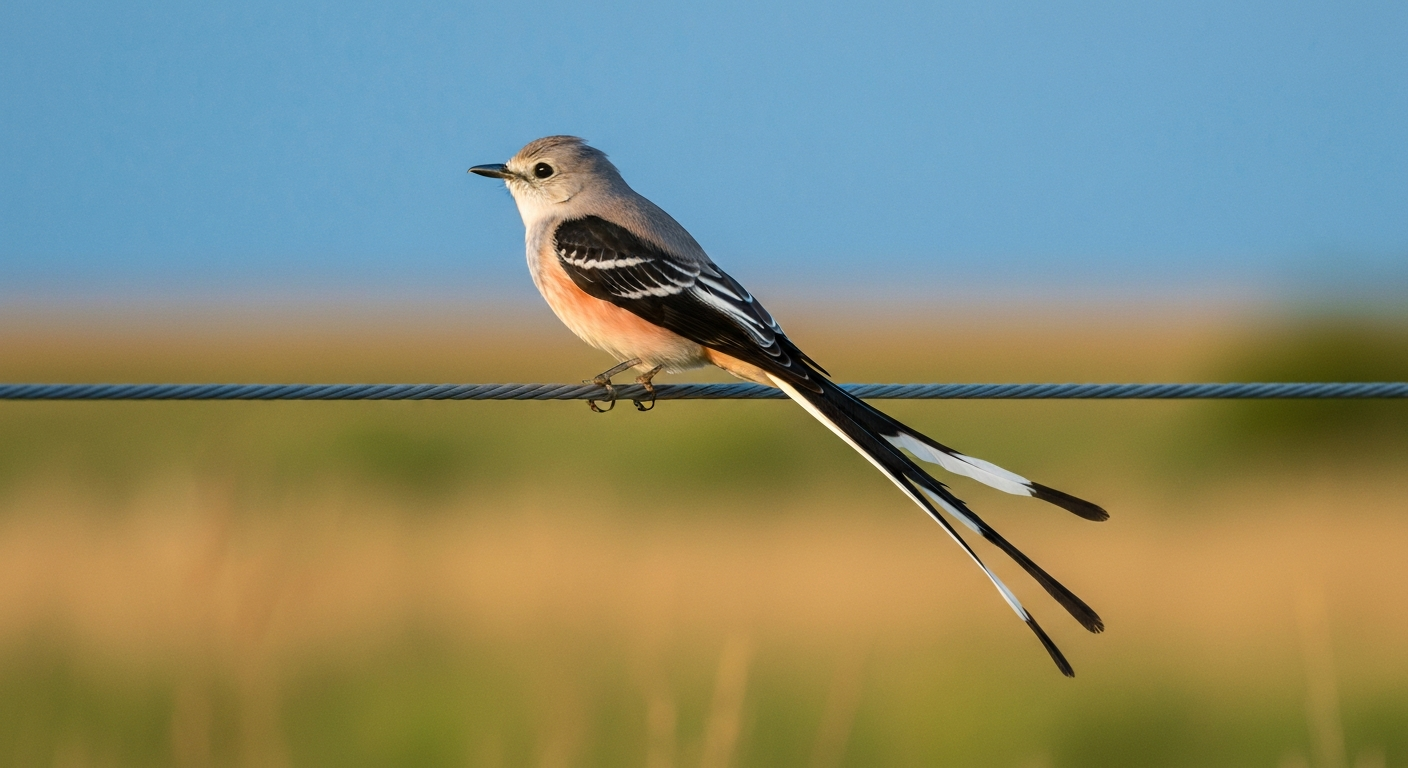
What Does a Scissor Tail Bird Look Like: ID Guide for Birdwatchers
What does a scissor tail bird look like? ID guide with size, plumage, scissor tail, flight, juveniles, look‑alikes.
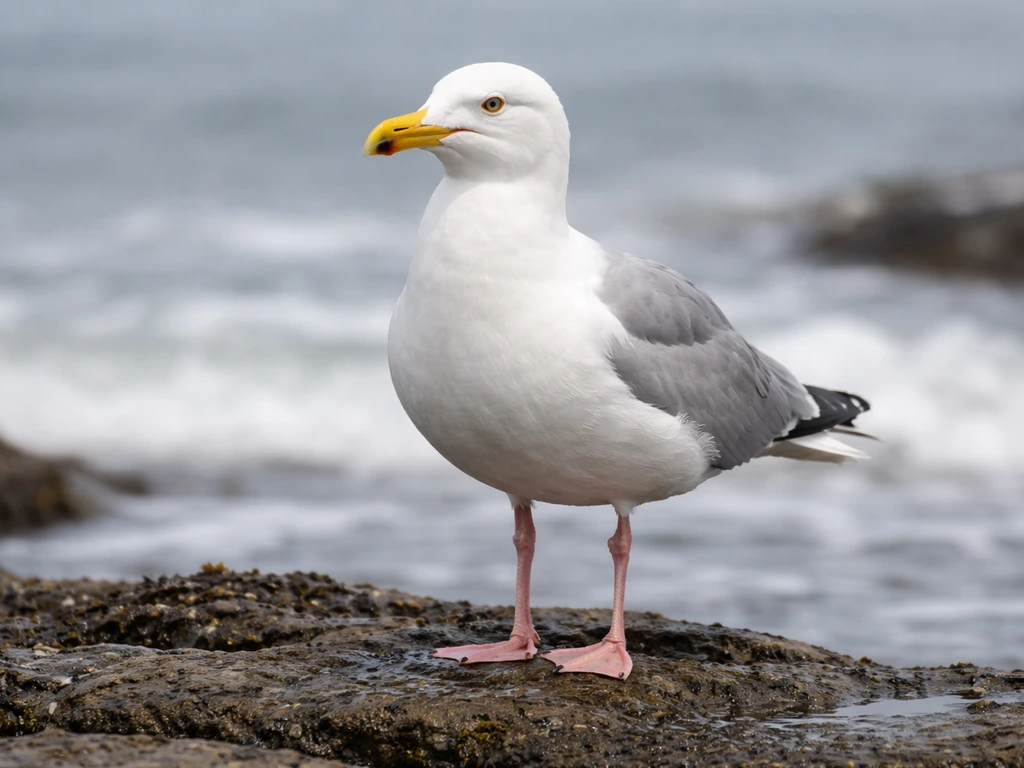
What Does a Herring Bird Look Like? Herring Gull ID Guide
Learn what a herring bird likely is: clear herring gull ID guide with key marks, plumage differences, and lookalike comp
What Does a Hawk Bird Look Like? Key Field Marks to Spot
Learn key field marks for spotting hawks, compare to eagles falcons buzzards, and confirm with photos and angles.