A nightingale is a small, plump, warm-brown bird about the size of a robin, most easily recognized by its rich reddish-chestnut tail, pale creamy eye-ring, and clean whitish underparts. That rufous tail is the single most reliable field mark you'll get, especially when the bird flicks or fans it as it skulks through undergrowth. Everything else about it looks fairly plain and unremarkable, which is exactly what makes that tail and eye-ring so useful when you finally get a good look.
What Does a Nightingale Bird Look Like? Field Guide

Marcus Whitley
24 May 2026
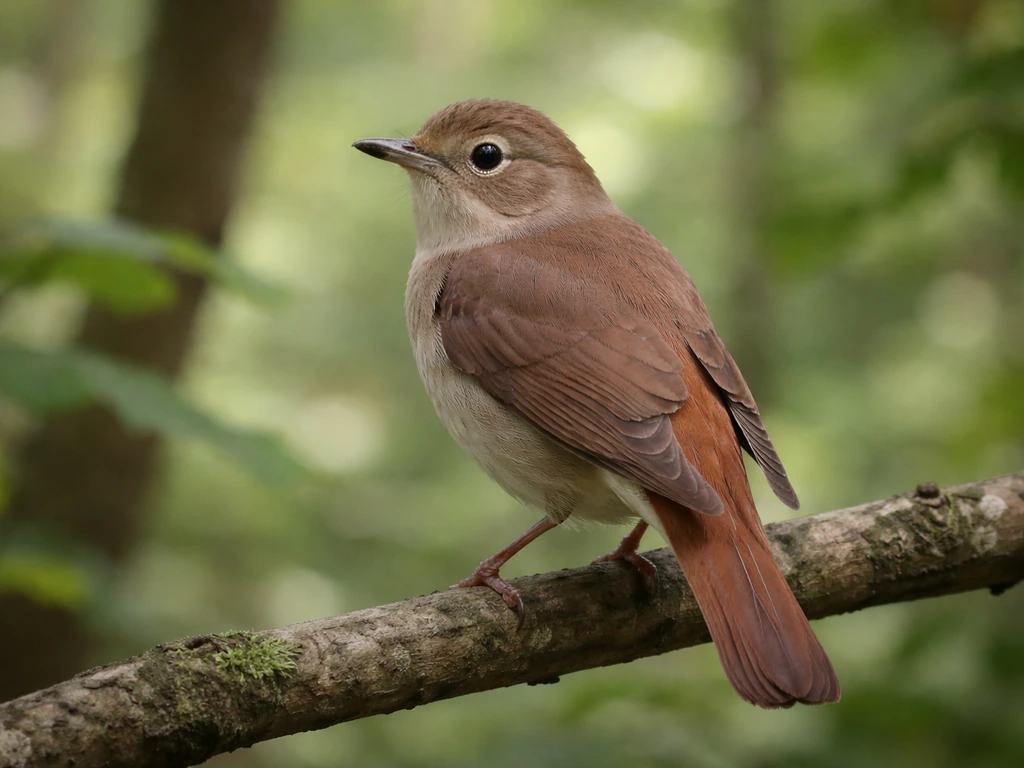
The nightingale's overall look at a glance
The common nightingale (the bird most people are searching for) is roughly 16 cm long, which puts it in robin territory. It has a plump, rounded body shape, a fairly large rounded head, and a longish tail it often holds slightly cocked. The overall impression is of a warm brown bird that looks almost deliberately understated until it opens its mouth. If you've spent time watching robins or other small thrush-like birds, the nightingale will feel immediately familiar in size and posture. If you are comparing to a stork, it will look very different, with a tall, long-legged silhouette and broad, dark-and-white wings nodded or other small thrush-like birds. It's not a flashy bird visually, but once you know what to look for, the combination of features is actually quite distinctive.
Field marks to look for: head, wings, tail, and underparts
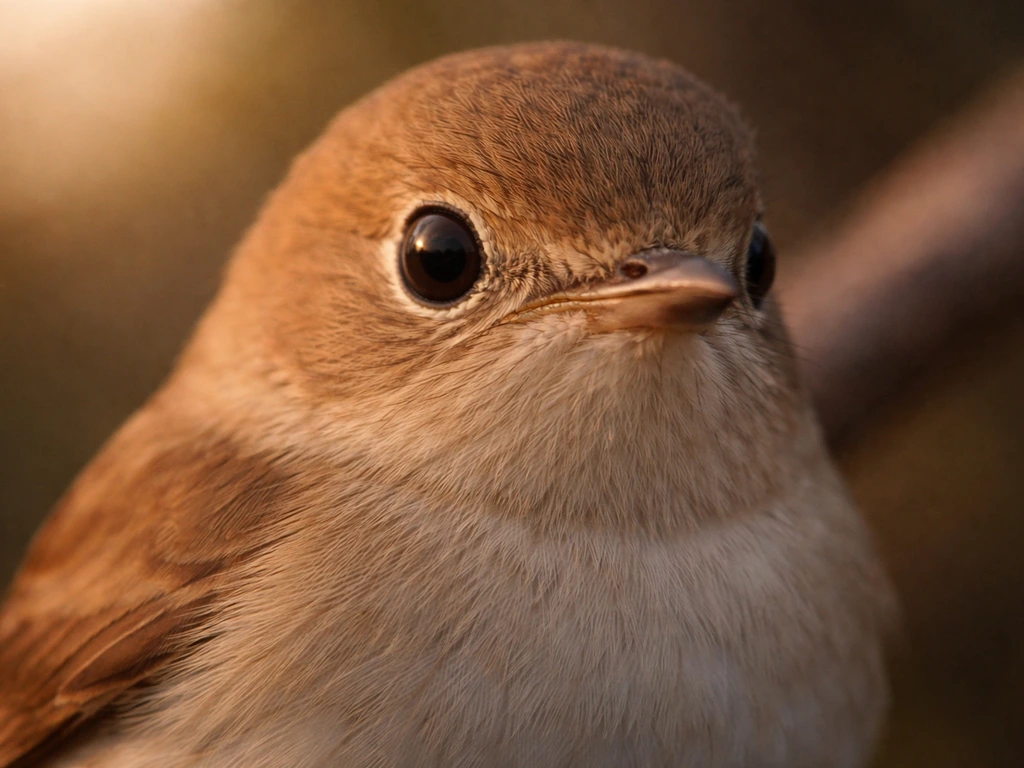
Head
The head is plain light brown with no bold stripes or strong patterns. The feature that stands out is a pale white-to-cream eye-ring circling the dark eye. It's subtle compared to something like a ring-necked bird, but in a good photo or when the bird is perched in decent light, it's consistently visible and worth checking for. The bill is medium-sized and slightly sturdy, fitting the muscicapid (flycatcher-thrush family) build.
Wings and back
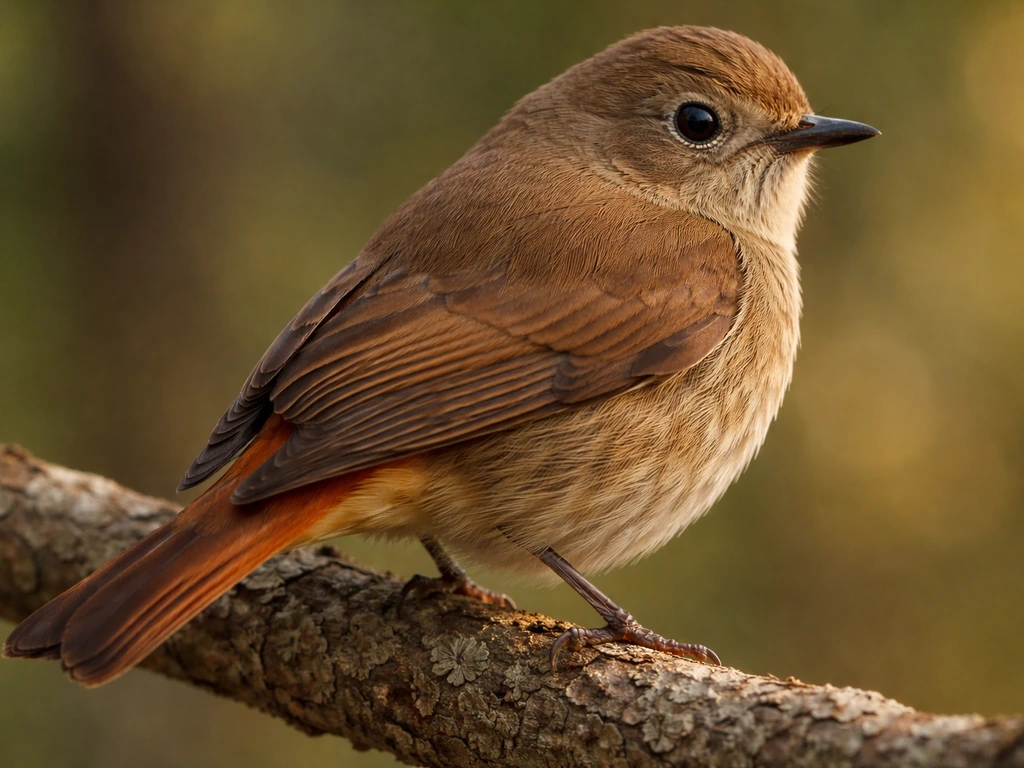
The back and wings are a warm, somewhat russet-brown, a shade that tends to look richer and more orange-tinged than a dull sparrow brown. You won't see any wing bars or obvious wing patterning on adults, the wing coverts are clean. On juveniles, look for spotted or scalloped markings on the wing coverts, which fade as the bird matures into adult plumage.
Tail
This is the feature to lock onto first. The rump and tail are a noticeably warmer, richer reddish-chestnut color, clearly contrasting with the browner back. When the bird moves, perches, or flicks its tail (which it does frequently), that rufous color catches the eye even in low light or dense vegetation. If you can see the tail, you're most of the way to a confident ID.
Underparts
The underparts are mostly greyish-white to whitish, with a pale buffish wash across the breast and flanks. You might notice a faint brownish-red tinge on the chest and flanks rather than a crisp, bold breast band. The undertail coverts have a creamy-reddish tone. The overall impression on the underside is clean and relatively unstreaked, which becomes an important distinction when separating it from similar species.
What to check in photos
Nightingales are notorious for sitting low in dense thickets, so most photos you'll find or take yourself will be partially obscured, backlit, or showing only part of the bird. Here's how to make the most of an imperfect shot. First, check the tail color relative to the back. If both look the same dull brown, you're probably not looking at a nightingale. The reddish tail should clearly stand out. Second, zoom in on the face and look for that pale eye-ring around the dark eye. It's not always obvious at a glance, but it shows up reliably when you enlarge a photo. Third, look at the underparts: a nightingale's breast should look fairly clean and unmarked, not heavily streaked or obviously mottled. If the bird is perched in summer foliage and the light is coming from above, the rufous tail and warm brown back can look slightly washed out, so don't rely solely on color intensity from a single photo angle.
- Check the tail: is it clearly more reddish-chestnut than the back?
- Look for the pale cream eye-ring around a dark eye on the plain brown head.
- Assess the underparts: greyish-white and clean, not heavily streaked.
- Check wing coverts: clean on adults, spotted or scalloped on juveniles.
- Note the overall shape: plump body, rounded head, tail often slightly raised.
How to tell it apart from similar birds
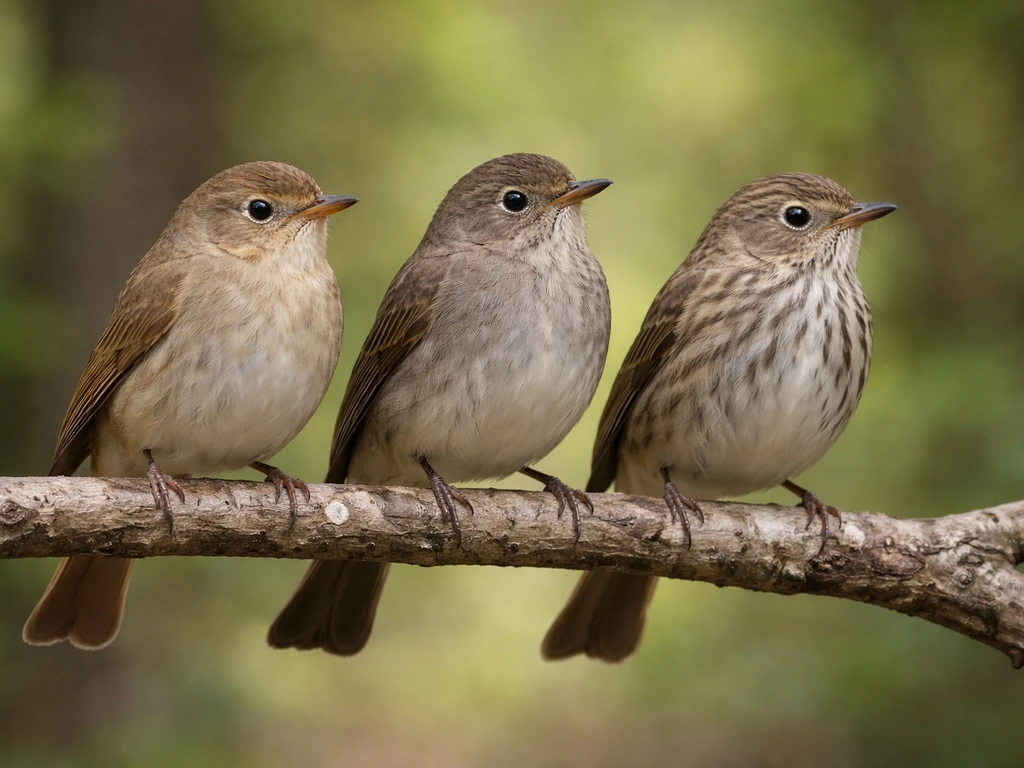
Several small brown birds can cause confusion, especially in photos or fleeting views. The two most common sources of mix-up are the thrush nightingale and various warblers or thrushes that share the same scrubby habitat.
| Feature | Common Nightingale | Thrush Nightingale | Garden Warbler / Dunnock |
|---|---|---|---|
| Tail color | Warm reddish-chestnut, clearly rufous | Duller, brownish with less obvious rufous wash | Plain brown, no rufous contrast |
| Underparts | Clean greyish-white, faint buff wash | Greyer, cloudier, faint mottling on breast | Variable, but usually more streaked or plain grey |
| Breast pattern | Unstreaked, relatively clean | Faint mottling or cloudy smudging | Often streaked or plain |
| Eye-ring | Pale cream, visible | Less obvious | Absent or different face pattern |
| Overall tone | Warm russet-brown above | Slightly greyer, less warm | Greener-brown or grey-brown |
| Size/shape | Robin-sized, plump | Very similar, slightly larger | Smaller and slimmer overall |
The thrush nightingale is the trickiest separation. Side by side, the common nightingale simply looks warmer and cleaner: the rufous tail is more vivid, the underparts are paler and less smudgy, and the back has a richer russet tone. If the bird you're looking at has a clearly mottled or cloudy-looking breast and a tail that barely contrasts with the back, lean toward thrush nightingale. Geography helps too since thrush nightingales breed further east and north, so location is a useful supporting clue. It's also worth noting that the term 'nightingale' gets applied to other birds in different parts of the world, so always check that you're looking at the common nightingale (Luscinia megarhynchos) if you're in Europe or around the Mediterranean.
Age, sex, and seasonal differences
Male and female common nightingales look essentially identical in plumage, so you won't be able to sex one from a photo alone. Males are very slightly larger with a fractionally bigger wingspan, but that's not something you can reliably judge in the field without a direct comparison. For most practical purposes, treat them as identical looking.
Juveniles are a different story and noticeably different from adults. Young nightingales show spotted or scalloped markings on the wing coverts, giving the wings a patterned look rather than the clean plain look of adult birds. This juvenile spotting is similar to what you see on young robins and is a useful age indicator if you're watching birds in late summer. By the time the birds complete their first moult, these spots disappear and the adult plain-winged pattern takes over.
Seasonally, the birds you're most likely to encounter and photograph are breeding adults between April and June, when they're singing from dense scrub in temperate Europe. By July through September, they begin migrating back toward their wintering grounds in sub-Saharan Africa, so autumn sightings tend to be briefer and in more open transitional vegetation. The rufous tail remains the consistent feature regardless of season.
Where you'll see nightingales and why habitat matters for ID
Nightingales love dense, low scrub: coppiced woodland edges, overgrown hedgerows, thickets along streams, and bushy undergrowth where they can stay low and hidden. They nest under bushes and rarely come out into the open the way a thrush or starling might. A nestling bird is much less patterned than an adult, so its body shape and any bare skin or sparse down are often the main clues for what it looks like nest under bushes. If you're wondering what a starling bird looks like for comparison, look for the starling's glossy dark plumage and bold speckling on many birds thrush or starling. This habitat preference has a direct impact on how you'll see the bird and what you're able to check. Most views are from the side or slightly below as the bird perches in a tangle of branches, which means you'll often get a good look at the back and tail but a more obstructed view of the underparts. Getting a clear face shot with the eye-ring visible often comes down to patience and waiting for the bird to shift position.
Because they stay so low and hidden, hearing the song is usually the first confirmation before you even see the bird. Once you've heard that rich, powerful song, you know you're in the right place to start scanning the undergrowth for the rufous tail flicking between branches. That combination of habitat, song, and then the visual field marks is how most experienced birders confirm a nightingale sighting. If you enjoy identifying other secretive or subtle-looking birds, you might find similar challenges with species like snipe or certain warblers that share the habit of staying just out of clear view in dense vegetation. If you're also wondering what a snipe bird looks like, its long bill and streaked, mottled camouflage are usually the best clues.
FAQ
What does a nightingale bird look like in poor lighting or backlit photos?
In low light, use contrast rather than brightness. The reddish-chestnut tail should still look warmer and more saturated than the back, and the pale eye-ring is usually easier to confirm if you zoom on the face and check for a cream ring against the darker eye, not the overall darkness of the bird.
How can I tell if I’m seeing the common nightingale versus other “nightingale” birds in the same region?
Before trusting the name, confirm your location and species context. In Europe and around the Mediterranean, “nightingale” typically refers to the common nightingale (Luscinia megarhynchos), but elsewhere the term can be used for different species with different markings, so ID should rely on the specific features (especially the rufous tail and pale eye-ring) plus local bird records.
Do nightingales have wing bars or obvious wing patterns?
On adult common nightingales, wing bars are generally absent and the wing coverts look clean and plain. The main patterned area you might notice is on juveniles, where wing coverts can show spotted or scalloped markings.
Can I identify a nightingale from the underside if I only get a partial view?
Yes, partially. Look for mostly clean, whitish or greyish-white underparts with only a faint buff wash on the breast and flanks, and avoid expecting strong streaking or heavy mottling. If the view is only the belly and no face or tail is visible, confidence drops because several small birds can look pale underneath.
What’s the best “first check” when the bird is partly obscured?
Start with the tail. Because nightingales sit low, your best odds are getting a side view where the rufous tail flicks or fans, and that tail color should contrast with the warmer brown back. If the tail doesn’t clearly look reddish-chestnut relative to the back, reconsider the ID.
How do juveniles look compared with adults, especially for a quick photo check?
Juveniles often look less plain overall because the wing coverts can have visible spots or scalloped edges. If you see a more patterned, “spotted-wing” look compared with a plain adult, that supports a juvenile age class.
Can male and female nightingales be told apart by appearance?
From photos alone, not reliably. They are essentially the same in plumage, so if you need sex, you would usually have to rely on behavior, timing, or other field context rather than subtle size differences that are hard to judge without direct comparison.
What behavior should I expect if I’m not sure the bird is a nightingale?
Expect a secretive, low-scrub posture. A nightingale commonly stays in dense thickets and only briefly exposes parts of its body, and the frequent tail flicking or fanning is a key behavior that can reveal the reddish tail even when the bird is otherwise obscured.
How can I avoid confusing a nightingale with a thrush nightingale or similar scrub birds?
Use a “warmth and cleanliness” comparison. Common nightingales tend to look warmer and cleaner overall, with a more vivid rufous tail and paler, less smudgy underparts. If the breast looks mottled or cloudy and the tail barely contrasts with the back, lean toward thrush nightingale, and use geography as a supporting clue.
If the bird is singing but I can’t find the tail or eye-ring, can I still confirm it?
Song helps, but visual confirmation is usually needed for a confident ID. If you can’t see the tail, try waiting for a repositioning that gives you either the reddish tail contrast or a face view where the pale eye-ring can be checked with a zoomed photo.
Next Articles
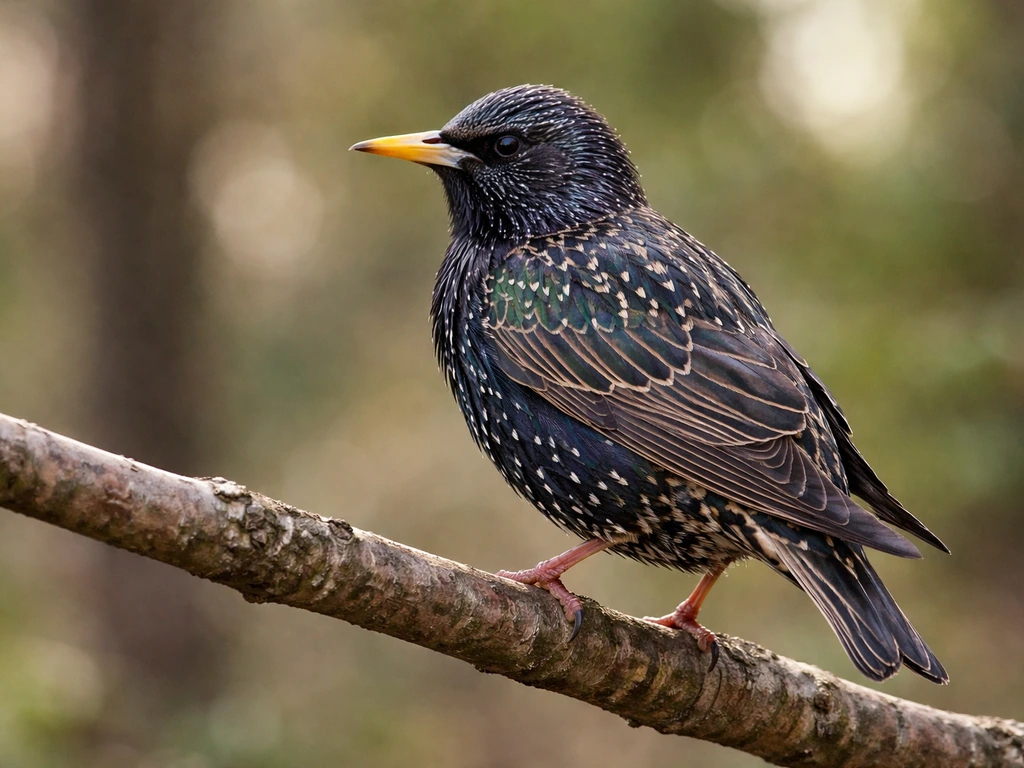
What Does a Starling Bird Look Like? Key ID Features
See starling ID features: glossy dark plumage, speckled patterns, bill shape, legs and tail marks plus lookalikes.
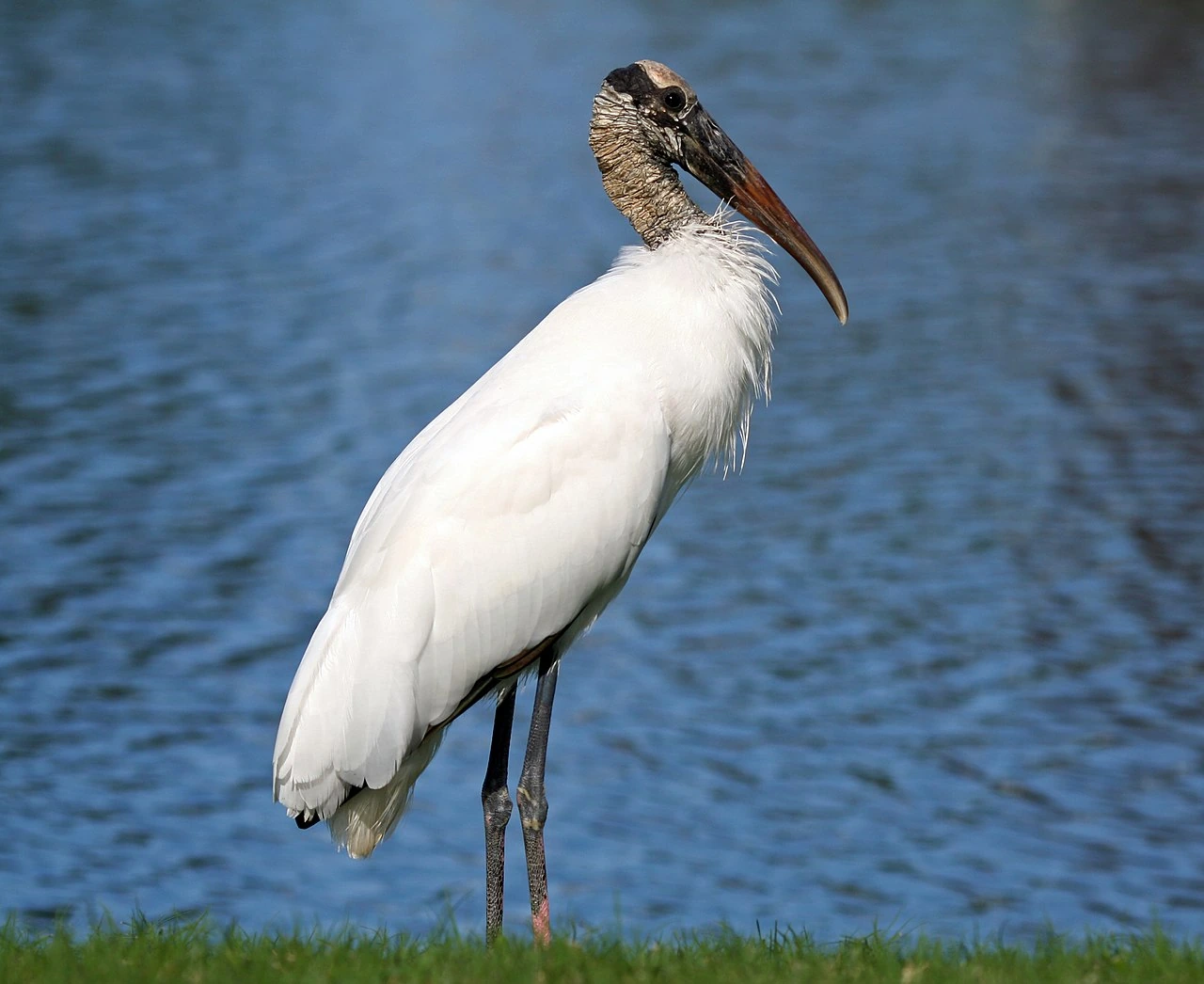
What Does a Stork Bird Look Like? Identification Guide
Identify storks by neck, bill, legs, plumage and compare lookalikes like herons, cranes and ibises with field checklist.
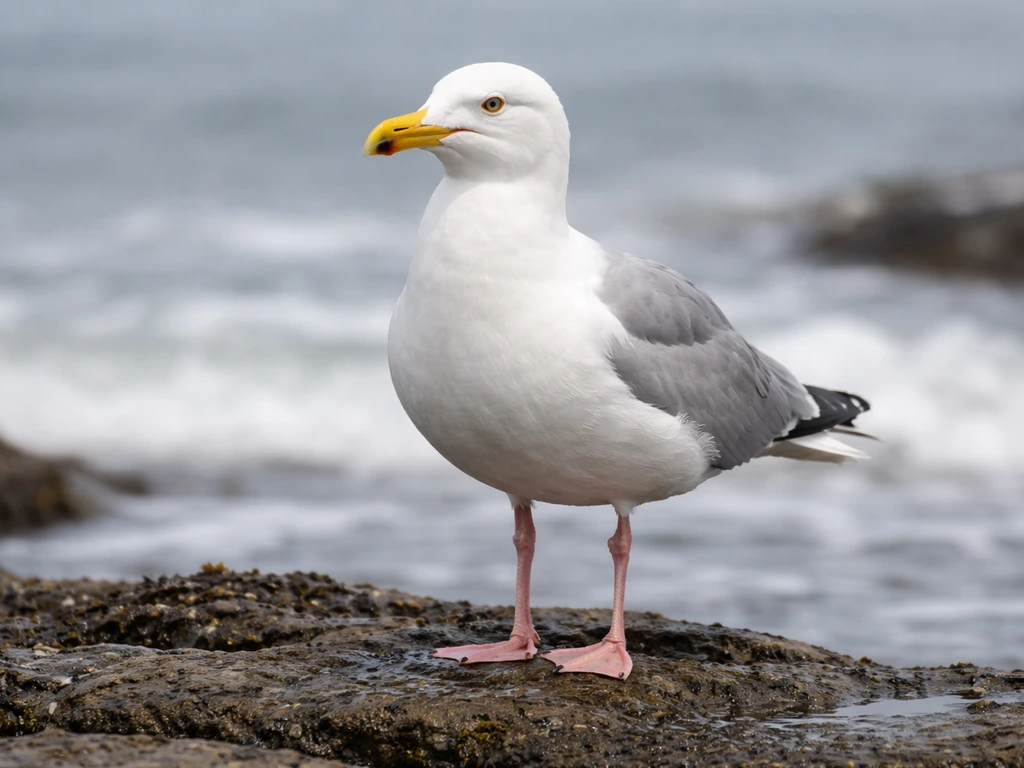
What Does a Herring Bird Look Like? Herring Gull ID Guide
Learn what a herring bird likely is: clear herring gull ID guide with key marks, plumage differences, and lookalike comp