
The flower most people mean when they ask this is the Bird of Paradise (Strelitzia reginae), a South African perennial whose blooms genuinely look like the head of a tropical bird in flight, complete with an orange "crest" and a vivid blue "beak." But there are actually a handful of plants that earn the bird comparison, and knowing which one you are looking at comes down to a few quick visual checks: the flower shape, whether it hangs down or points up, the color combination, and the leaf size. The main contenders are the true Bird of Paradise (Strelitzia), the false bird-of-paradise (Heliconia), and the Mexican bird of paradise (Erythrostemon mexicanus or Caesalpinia pulcherrima), each of which looks quite different once you know what to look for.
What Is the Flower That Looks Like a Bird: Bird of Paradise & Heliconia

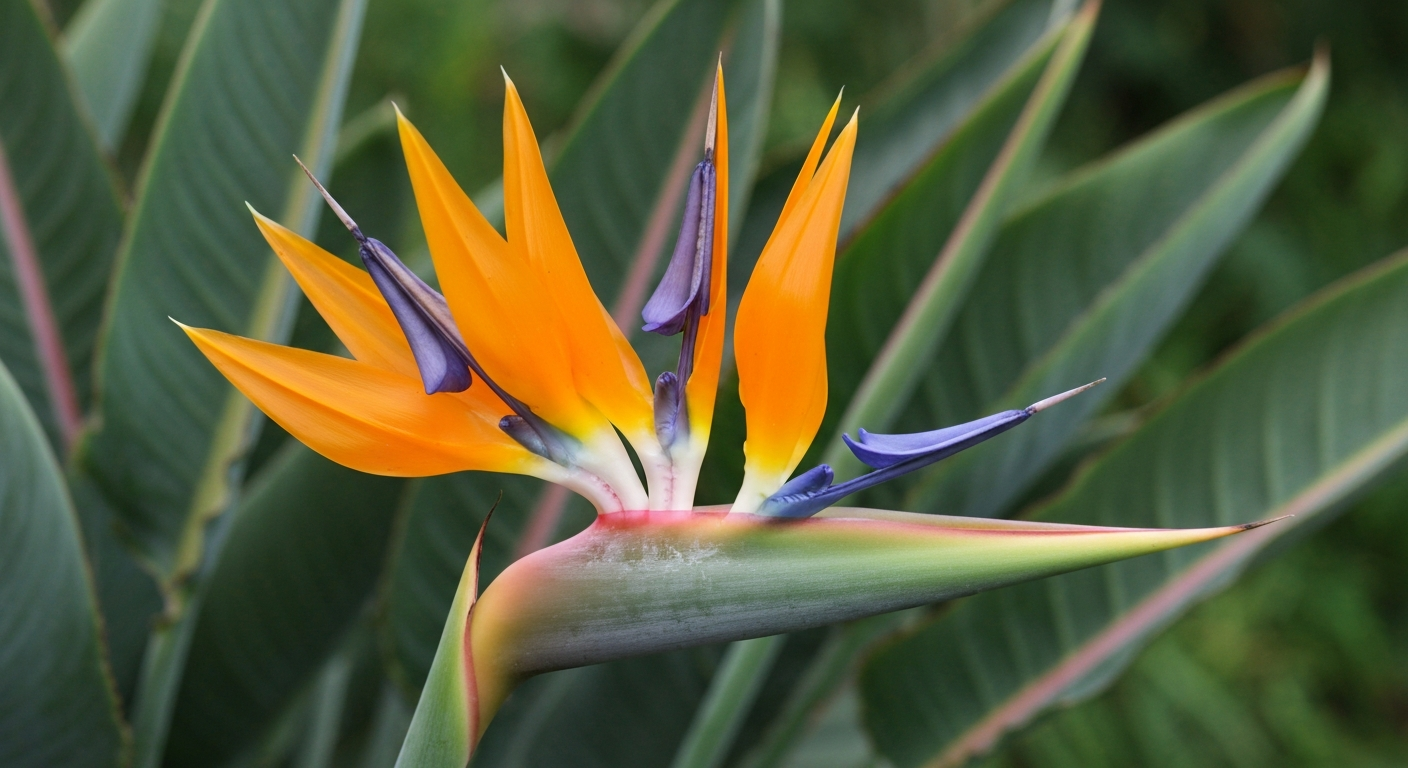
Quick visual answer: the top flowers that look like birds
If you have a photo and need a fast answer, here is the short version. A single dramatic bloom on a tall stalk with vivid orange and blue pointing upward is almost certainly Strelitzia reginae. A cluster of overlapping claw-like bracts in red and yellow, hanging downward like a mobile, is Heliconia (the false bird-of-paradise). A bushy shrub covered in small red or yellow flowers with long wispy stamens is one of the bird-of-paradise shrubs from Mexico or the Caribbean. And a small tree covered in clusters of tiny white flowers in spring is bird cherry, Prunus padus, which sounds bird-related but looks nothing like the others.
- Strelitzia reginae: upright orange and blue bloom, single "head" per stalk, large paddle-shaped leaves
- Strelitzia nicolai: same bird-head shape but flowers are white and purple, plant grows tree-sized (up to 10m)
- Heliconia rostrata: pendulous red-and-yellow claw-shaped bracts hanging in a row, tropical foliage
- Caesalpinia pulcherrima (red/peacock bird of paradise): loose clusters of ruffled red-orange flowers, ferny compound leaves
- Erythrostemon mexicanus (Mexican bird of paradise): soft yellow flower clusters, fine feathery foliage
- Prunus padus (bird cherry): strings of tiny white flowers in spring, ordinary deciduous tree appearance
True Bird of Paradise (Strelitzia reginae and Strelitzia nicolai)
This is the one most people picture. Strelitzia reginae is a clumping perennial from South Africa that produces its iconic flower on a stiff, leafless stalk typically 90 to 120 cm tall. The bloom emerges from a rigid, horizontal green spathe (think of it as the beak) that is often tinged with purple or red at the edges. Out of that spathe push three brilliant orange sepals that fan upward like a crest, and tucked between them are three petals, two of which are fused together into a pointed, deep blue-violet "dart" that shelters the stamens and style. The overall silhouette really does resemble a bird's head tilted sideways, which is exactly why sunbirds and weavers in its native South Africa land on the blue petal to reach the nectar and end up dusted in pollen.
The leaves are another useful ID clue. They are large, stiff, and paddle-shaped with a prominent midrib, a blue-green waxy colour, and they fan out in two opposite rows, a bit like a giant version of an iris plant. Each leaf can reach 30 to 45 cm long on an adult garden plant. If you see those banana-like leaves paired with the orange-and-blue flower, you have your ID confirmed.
Strelitzia nicolai is the giant version, sometimes called the white bird of paradise or wild banana. Plants of the World Online (Kew) lists Strelitzia nicolai Regel & Körn. | Plants of the World Online | Kew Science as an accepted species name (giant / white bird‑of‑paradise). It grows into a multi-stemmed tree up to 10 metres tall and produces a similar beak-shaped spathe but with white sepals and dark blue-purple petals rather than orange and blue. The leaves are enormous, often a metre or more across, and look almost identical to a banana tree's. If you are standing next to a very tall plant with white-and-purple bird flowers and huge ripped-looking leaves, that is Strelitzia nicolai.
Key features to spot in a photo
- Upright, horizontal spathe that looks like an open beak (green with purple-red tinge)
- Three bright orange sepals fanning upward (white on Strelitzia nicolai)
- Blue-violet fused petals forming a pointed dart shape
- Stiff, paddle-shaped blue-green leaves arranged in a fan
- Leafless flower stalk separate from the leaf stems
- Clumping growth habit (Strelitzia reginae) or tall single trunks (Strelitzia nicolai)
False Bird of Paradise (Heliconia)
Heliconia is the plant most likely to be confused with Strelitzia at a glance, but once you know the difference it is pretty easy to separate them. The most photographed species is Heliconia rostrata, commonly known as the hanging lobster claw. Instead of a single upright bird-head bloom, Heliconia produces a long pendulous (hanging downward) inflorescence made up of multiple overlapping bracts arranged alternately along a central stem. Each bract is shaped like a curved claw or lobster shell, typically brilliant red with a yellow-green tip. The actual flowers are tiny and hidden completely inside the bracts, so what you are admiring is basically a stack of colourful "claws" hanging like a chandelier.
The foliage also sets Heliconia apart. The leaves are large, tropical, and banana-like, but they are arranged on long upright stalks and tend to be a brighter, lighter green than Strelitzia. In tropical gardens or florist shops, you will often see Heliconia used as a cut stem because those bracts are incredibly long-lasting. Some upright-growing Heliconia species (not rostrata) point their inflorescences skyward, which can occasionally resemble Strelitzia from a distance, but the multi-bract, lobster-claw arrangement is always the giveaway.
Key features to spot in a photo
- Pendulous (downward-hanging) inflorescence on Heliconia rostrata, or upright on some other Heliconia species
- Multiple overlapping claw or boat-shaped bracts in a row (red, orange, yellow, or pink depending on species)
- True flowers are tiny and hidden inside the bracts — not the showy element
- Large, bright green banana-like leaves on tall upright stalks
- Tropical plant — won't survive frost
- No single "bird head" silhouette; the whole stem reads as a series of claws or paddles
Mexican Bird of Paradise
This one looks quite different from both Strelitzia and Heliconia, but it earns the bird-of-paradise name from its showy, exotic-looking flower clusters. There are actually two plants that go by this common name, and they are related but look noticeably different from each other.
Erythrostemon mexicanus (previously called Caesalpinia mexicana) is the plant most commonly sold as "Mexican bird of paradise" in nurseries across the American Southwest and Texas. It grows as a large evergreen shrub or small tree with very fine, feathery, bipinnately compound leaves that give it an almost wispy, fern-like appearance. The flowers are small, bright yellow, and borne in loose upright clusters, with slightly ruffled petals and long protruding stamens. The overall effect is like a cheerful yellow cloud of tiny flowers floating above ferny foliage. After flowering it produces persistent seed pods that can split open explosively.
Caesalpinia pulcherrima (also called red bird of paradise, peacock flower, or pride of Barbados) is the showier cousin. Its flowers are similar in structure but dramatically more colourful: ruffled five-petalled blooms in red, orange, or bicoloured red-and-yellow, with extremely long, thread-like stamens that extend well beyond the petals like a burst of fireworks. The leaves are the same fine, bipinnate, ferny texture. This one is unmistakable in full bloom because those long red stamens waving in the breeze are unlike almost anything else in a garden.
Key features to spot in a photo
- Fine, feathery bipinnate leaves (lots of tiny paired leaflets — very different from Strelitzia's paddle leaves)
- Erythrostemon mexicanus: soft yellow flower clusters with slightly ruffled petals and long stamens
- Caesalpinia pulcherrima: vivid red-orange flowers with dramatically long exserted red stamens
- Shrub or small tree habit, not a clumping perennial like Strelitzia
- Seed pods that become visible after flowering, sometimes explosively splitting
- Thrives in hot, dry climates — a very common sight in Southwest US, Mexico, and Caribbean gardens
Bird Cherry and Other Confusingly Named Plants
Prunus padus, the bird cherry, comes up in this conversation simply because of its name. In reality it looks nothing like any of the bird-of-paradise flowers. It is a small to medium deciduous tree native to Europe and northern Asia, with simple, oval, toothed leaves and long dangling clusters (racemes) of tiny, fragrant white flowers in spring, a bit like a more delicate version of a cherry blossom. The flowers have five small white petals and are held in elongated strings that hang from the branches. Later in the year it produces small round black-red fruits that birds love to eat, which is where the name comes from. If you are looking at a flowering tree in a European garden or woodland in April or May and wondering if it is some kind of bird flower, it is almost certainly bird cherry, and the answer is no: the name refers to the birds that eat the berries, not to any resemblance to a bird.
Another occasionally confused plant is the bird of paradise shrub that appears in Australian gardens under various names. Some Caesalpinia relatives and unrelated plants with "bird" in their common name pop up in different regions. The safest approach is always to check the flower shape: if it has that horizontal beak-spathe and upright orange crest, it is Strelitzia. If it hangs in lobster-claw bracts, it is Heliconia. If it is a feathery-leafed shrub with yellow or red firework-like flowers, it is one of the Caesalpinia group.
Side-by-Side Comparison
| Plant | Flower shape | Colour | Inflorescence direction | Leaf shape | Plant habit |
|---|---|---|---|---|---|
| Strelitzia reginae | Single bird-head: beak spathe + orange crest + blue dart | Orange and blue-violet | Upright / horizontal | Large paddle, blue-green, waxy | Clumping perennial, 1-2m |
| Strelitzia nicolai | Same bird-head form | White and dark blue-purple | Upright / horizontal | Very large, banana-like, to 1m+ | Multi-trunk tree, up to 10m |
| Heliconia rostrata | Overlapping claw-shaped bracts in a row | Red with yellow-green tips | Pendulous (hanging down) | Large, bright green, banana-like | Tropical perennial, 1.5-4m |
| Caesalpinia pulcherrima | Five ruffled petals, very long stamens | Red, orange, or red-and-yellow | Upright loose clusters | Fine, feathery bipinnate | Shrub to small tree, 2-4m |
| Erythrostemon mexicanus | Five ruffled petals, long stamens | Yellow | Upright loose clusters | Fine, feathery bipinnate | Large shrub or small tree, 3-5m |
| Prunus padus (bird cherry) | Tiny five-petalled, clustered in racemes | White | Hanging racemes | Simple oval, toothed edges | Deciduous tree, 6-15m |
When comparing these side by side in photos, the most reliable quick split is leaf shape. Strelitzia and Heliconia both have large, tropical-looking leaves, while the Caesalpinia group has finely divided, ferny leaves. The flower direction (upright bird-head vs. hanging claws vs. loose clusters) confirms the ID from there.
Simple Photo ID Checklist
If you have a photo you are trying to identify, work through these four checks in order. You will have your answer within the first two steps most of the time.
- Does the flower have a horizontal beak-like spathe with an orange (or white) crest pointing upward? If yes, you are looking at a Strelitzia.
- Does the inflorescence hang downward in a series of overlapping red-and-yellow claw-shaped bracts? If yes, it is Heliconia (false bird of paradise).
- Are the leaves fine and feathery (lots of tiny leaflets) rather than large and paddle-like? If yes, you are in Caesalpinia territory — check if the flowers are yellow (Mexican bird of paradise / Erythrostemon mexicanus) or vivid red-orange with long stamens (red bird of paradise / Caesalpinia pulcherrima).
- Is it a tree with small white flowers in hanging clusters in spring, with no large exotic leaves? If yes, this is probably bird cherry (Prunus padus), named for the birds that eat its berries, not for looking like a bird.
- Check the plant size: Strelitzia reginae stays under 2m; Strelitzia nicolai grows to 10m and has white flowers. If it is enormous with white-and-purple blooms, you have the giant species.
- If the flower is blue and purple only (no orange), look again at the whole plant. Blue-purple tones on Strelitzia mean you are seeing the dart petal close up. The full bloom will still show orange above it.
Where and When You Will Find Them
Strelitzia reginae is native to the Eastern Cape and KwaZulu-Natal provinces of South Africa, where it grows in coastal scrub and along riverbanks. In cultivation it has spread across the subtropics and is one of the most widely planted ornamental plants in the world. It flowers most abundantly from late autumn through spring in the Southern Hemisphere (roughly May to November in South Africa), but in gardens it can bloom at almost any time of year given warmth and sun. In California, the Mediterranean, Australia, and similar climates you will see it blooming in gardens from late winter through early summer.
Heliconia rostrata is a tropical plant native to South America, from Peru, Bolivia, Ecuador, and Colombia down to Argentina. It thrives in warm, humid conditions and is cultivated across tropical Asia, the Caribbean, Hawaii, and Florida. It typically blooms year-round in truly tropical climates, with peak flower production during the warmer wet season. You will rarely see it outdoors in temperate regions except in heated glasshouses.
Caesalpinia pulcherrima (red bird of paradise) is native to the Caribbean and Central America but is now naturalised across tropical and subtropical regions worldwide, including South Asia and Southeast Asia. It blooms prolifically in the hot season, typically from late spring through summer and into autumn in places like Arizona, Texas, and the Gulf States. Erythrostemon mexicanus is native to northeastern Mexico and blooms heavily in spring and summer in its Southwest US cultivation range. Bird cherry (Prunus padus) is a temperate-climate tree that blooms in April and May across Europe and northern Asia.
| Plant | Native region | Where commonly cultivated | Peak bloom season |
|---|---|---|---|
| Strelitzia reginae | South Africa (Eastern Cape) | California, Mediterranean, Australia, subtropics worldwide | Late winter to early summer (Northern Hemisphere) |
| Strelitzia nicolai | South Africa, Mozambique | Tropical and subtropical gardens, conservatories | Autumn to spring |
| Heliconia rostrata | South America (Andes and Amazon basin) | Tropics worldwide, Hawaii, Florida, SE Asia | Year-round in tropical climates |
| Caesalpinia pulcherrima | Caribbean / Central America | Southwest US, Mexico, South Asia, tropics worldwide | Late spring through autumn |
| Erythrostemon mexicanus | Northeastern Mexico | Texas, Arizona, Southwest US | Spring through summer |
| Prunus padus | Europe and northern Asia | Temperate gardens and woodlands | April to May |
Growing Them and Where to See Them in Person
Strelitzia reginae is one of the more forgiving exotic-looking plants you can grow. It tolerates drought once established, handles poor soils, and in a warm climate with full sun it will reward you with blooms for decades. It is a staple of botanic gardens in warm-climate cities: the Royal Botanic Garden Sydney, Kirstenbosch National Botanical Garden in Cape Town (where it grows wild nearby), the Huntington Botanical Gardens in California, and virtually any tropical or subtropical botanic garden will have a fine display. As a conservatory or indoor plant in cooler climates it grows well in a large pot with bright light, though it may not flower as freely.
Heliconia is more demanding of heat and humidity. In a temperate climate the only reliable way to see it well is in a tropical glasshouse. The Royal Botanic Gardens at Kew in London, the Eden Project in Cornwall, and the Smithsonian's United States Botanic Garden all maintain tropical houses with excellent Heliconia displays. If you are in Hawaii, Costa Rica, or any humid tropical destination, you will see Heliconia growing along roadsides and in hotel gardens without looking for it.
The Mexican and red bird-of-paradise shrubs (Erythrostemon mexicanus and Caesalpinia pulcherrima) are drought-tolerant, fast-growing, and among the most popular landscaping plants in the American Southwest and similar dry-summer climates. You will see them in highway medians, shopping centre gardens, and suburban yards across Phoenix, Tucson, San Antonio, and similar cities from late spring onward. They require very little water once established and flower intensely in the heat. In the UK or northern Europe you can find Caesalpinia pulcherrima in large botanic garden glasshouses.
Common Misconceptions and "What I Thought It Looked Like"
The most common misconception is that the Bird of Paradise flower and the Bird of Paradise bird are related. They are not. The flower is named after the birds because of the visual resemblance in the bloom, not because of any biological connection. The birds of paradise (family Paradisaeidae) are found in New Guinea and surrounding islands, while the Strelitzia plant is South African. They have nothing in common except the visual poetry of the name.
Another frequent confusion: many people, when they first hear "bird of paradise flower," imagine something bright blue, perhaps because of the iconic blue petals in photos. In reality the dominant colour of Strelitzia reginae is the vivid orange of the sepals. The blue is there, but it reads as a secondary detail unless you are up close. If your image shows a mostly blue exotic flower, you are either seeing the dart petal of Strelitzia very close up, or you may be looking at an agapanthus, a blue water lily, or another plant entirely.
People also sometimes expect the Bird of Paradise flower to look like the Bird of Paradise bird, expecting elaborate plumes and colours matching the actual bird. The resemblance is more impressionistic than literal. What the flower actually mimics is the general shape of a crested bird's head from the side: the spathe as the beak, the sepals as the head plumage, the blue petals as a coloured throat patch. Once you see it that way, the name makes perfect sense.
One more common mix-up: some readers land on images of Heliconia and assume that is the Bird of Paradise they have been hearing about. The false bird-of-paradise name has stuck partly because florists often sell Heliconia under the more glamorous Bird of Paradise label. If your "bird of paradise" bouquet has downward-hanging red claws rather than an upright orange bird head, you have Heliconia, not Strelitzia. Both are beautiful and both are worth knowing.
Quick Reference: One-Line IDs
| What you see | Most likely plant | Confirmation clue |
|---|---|---|
| Upright orange crest + blue dart on a tall stalk | Strelitzia reginae (Bird of Paradise) | Paddle-shaped blue-green leaves below |
| Same shape but white and dark purple, very tall plant | Strelitzia nicolai (Giant/White Bird of Paradise) | Trunk-forming, banana-tree-sized |
| Red and yellow claws hanging downward in a row | Heliconia rostrata (Lobster Claw / False Bird of Paradise) | True flowers hidden inside the bracts |
| Vivid red-orange flowers, long wispy stamens, ferny leaves | Caesalpinia pulcherrima (Red/Peacock Bird of Paradise) | Long exserted red stamens are unmistakable |
| Soft yellow flower clusters, fine feathery foliage, dry climate | Erythrostemon mexicanus (Mexican Bird of Paradise) | Common in Texas and Arizona landscapes |
| Small white flowers in hanging clusters, spring, temperate tree | Prunus padus (Bird Cherry) | Named for birds eating berries, not bird-shaped flowers |
More Bird-Appearance Pages Worth Exploring
If this article has you curious about the visual details of Bird of Paradise flowers, there is a lot more to dig into. A dedicated look at what a Bird of Paradise looks like covers the full visual profile of Strelitzia in much more detail, including the colour variations and how the bloom changes as it opens. If you are interested in what the Mexican bird of paradise looks like up close, there is a focused guide that separates Erythrostemon mexicanus from its Caesalpinia relatives with clearer photo comparisons. For detailed photos and clear ID tips on what does a Mexican bird of paradise look like, see the focused guide with ID 64a4a5c9-5fcc-475a-b0a9-48fb797dc2e8. And for readers who want to understand the difference between the real flower and a mental image of it, a guide exploring the gap between what bird of paradise looks like versus what most people expect before they see one is genuinely useful reading. For a focused look at expectation versus reality, see the guide titled bird of paradise what i thought it looked like. Finally, if the bird cherry came up in your search and you want to know more about what a bird cherry tree looks like across the seasons, from spring blossom to autumn fruit, that is covered in its own visual guide as well.
FAQ
What is the flower that looks like a bird?
Short photographic answer: the classic "bird‑looking" flower is the Bird‑of‑Paradise (Strelitzia reginae) — a rigid horizontal beak‑like spathe with orange upright sepals and blue petals that resemble a bird’s head and crest. Other common look‑alikes are Heliconia species (often called 'false bird‑of‑paradise' with pendulous claw‑shaped bracts), Erythrostemon/Caesalpinia species called 'Mexican bird‑of‑paradise' (clusters of small yellow or red flowers on a shrub), and sometimes unrelated plants with bird names like bird cherry (Prunus padus), which does not resemble the tropical bird shape.
How do I visually tell Strelitzia (true Bird‑of‑Paradise) from Heliconia (false bird‑of‑paradise)?
Key photographic cues: Strelitzia reginae — single stout flower stalk from a clump of large banana‑like leaves; a rigid horizontal beak‑like spathe; showy orange sepals and blue petal 'tongue' that sit upright like a bird’s head. Heliconia rostrata (and similar) — long pendant racemes of overlapping claw‑shaped bracts (often red with yellow tips); the bracts hang down and hide small true flowers inside. Habit difference: Strelitzia is erect and solitary flowers on tall stalks; Heliconia produces multiple hanging inflorescences from leafy stems.
What about 'Mexican bird‑of‑paradise' and other similarly named plants?
Names to watch: Erythrostemon mexicanus (formerly Caesalpinia mexicana) — a shrub/small tree with many bipinnate leaves and airy clusters of yellow flowers; Caesalpinia pulcherrima (‘red bird‑of‑paradise’/poinciana) — open shrub with showy five‑petalled red/orange flowers and long exserted stamens. These are shrubs/trees with conventional petal flowers (not beak‑and‑bract structures), so they look different in photos: cluster of petals and visible stamens, not a bird‑beak spathe or pendulous claw bracts.
Could a spring‑flowering tree like bird cherry be the bird‑looking flower I saw?
Unlikely if you mean the tropical bird shape. Prunus padus (bird cherry) has racemes of many small white fragrant flowers — they’re typical blossom clusters, not bird‑shaped. It’s called 'bird cherry' because birds eat the fruit, not because the flowers resemble birds.
Simple photographic ID checklist I can use in the field or on photos
1) Flower orientation: upright rigid 'beak' (Strelitzia) vs. pendulous claw raceme (Heliconia) vs. loose petal clusters (Caesalpinia/Erythrostemon) vs. small racemes of white flowers (Prunus). 2) Bracts vs. petals: are the showy parts bracts hiding small flowers (Heliconia) or true petals/sepals (Strelitzia, Caesalpinia)? 3) Color pattern: Strelitzia = orange + blue; Heliconia = red/yellow bracts often with green; Mexican/Red bird‑of‑paradise = yellow or red petal clusters. 4) Leaves/habit: large banana‑like leaves in clumps (Strelitzia/Heliconia) vs. bipinnate fine leaves on shrubs (Erythrostemon/Caesalpinia) vs. simple toothed leaves on trees (Prunus). 5) Inflorescence position: single stalk arising from ground clump (Strelitzia) vs. many hanging racemes from stems (Heliconia) vs. branched clusters on shrubs/trees (Caesalpinia/Erythrostemon/Prunus).
When and where do these plants usually bloom (regional/habitat notes)?
Strelitzia reginae blooms sporadically year‑round in frost‑free subtropics, with flushes in warmer months; native to South Africa but widely cultivated in subtropical gardens and conservatories. Heliconia rostrata and other heliconias bloom in tropical lowland forests and gardens year‑round where frost‑free; many species prefer humid, shaded to partly sunny sites. Erythrostemon/Caesalpinia shrubs flower mainly in warm seasons (spring–summer) depending on region; Mexico/Caribbean/central Americas for native ranges. Prunus padus flowers in spring in temperate regions. Local bloom time can vary — check regional plant guides or observation records for exact months.
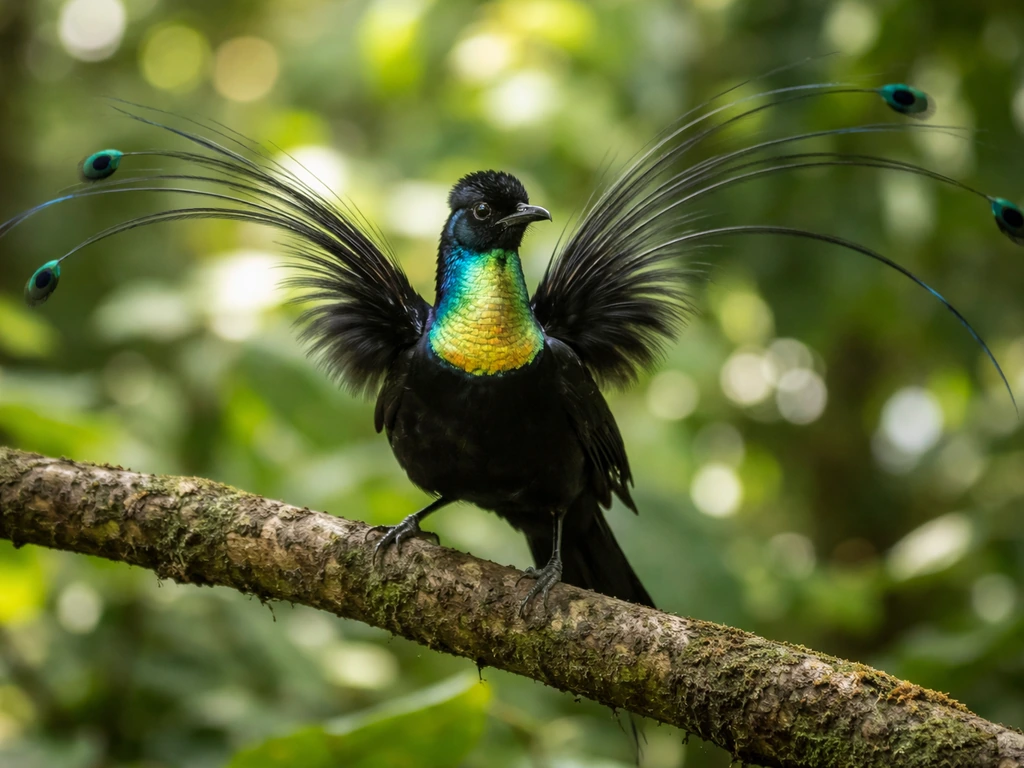
Spot bird of paradise vs your guess: key colors, long tails, display traits, and quick steps to ID species correctly.
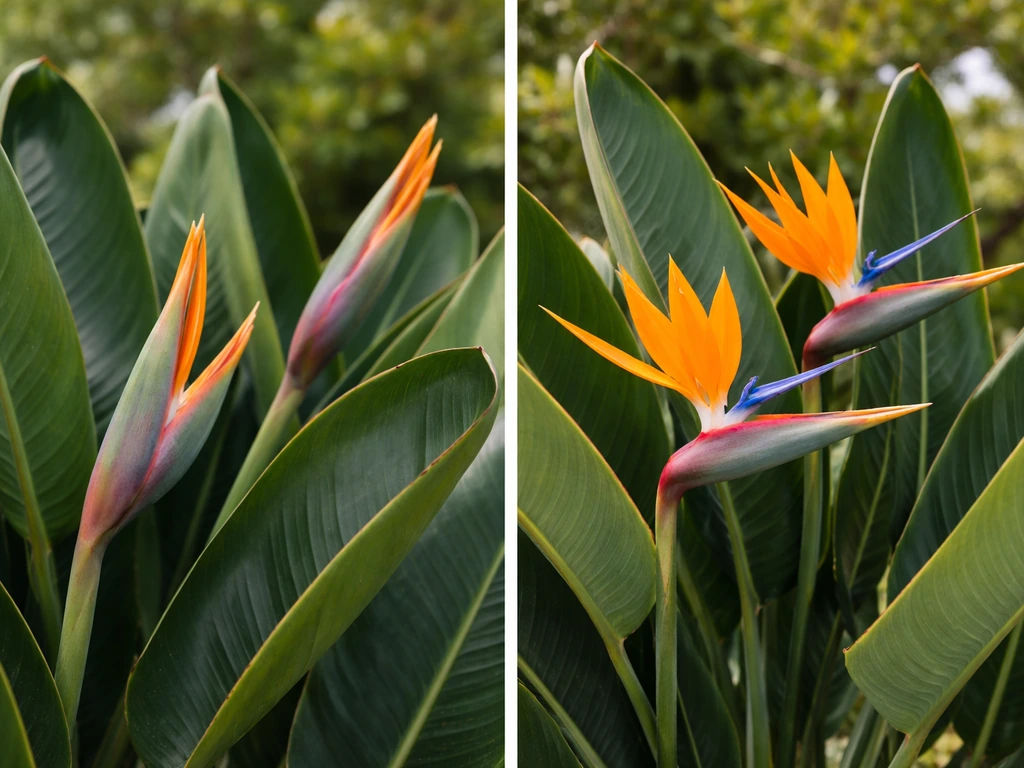
See what a bird of paradise looks like and its lookalike plant Strelitzia orange blue flower buds and foliage ID tips
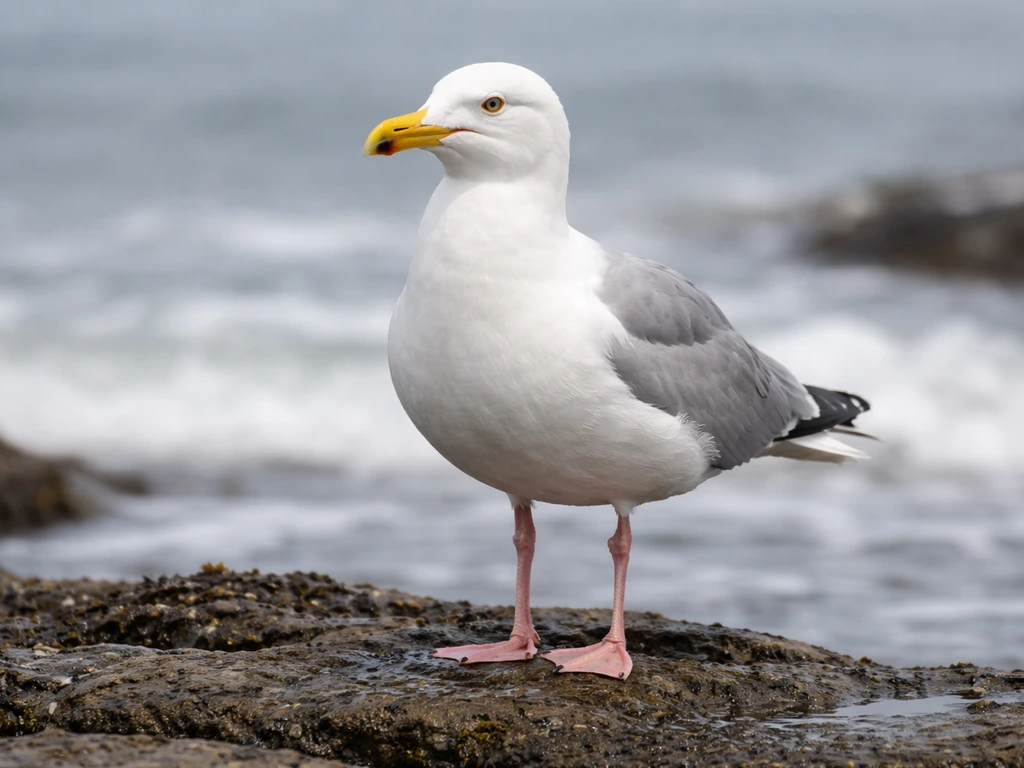
Learn what a herring bird likely is: clear herring gull ID guide with key marks, plumage differences, and lookalike comp