
Several birds get mistaken for cardinals regularly: the Pyrrhuloxia (a gray desert cardinal lookalike), the House Finch (a smaller red bird with streaky brown), the Rose-breasted Grosbeak (a red-chested bird with no crest), the Black-headed Grosbeak (dark head, orange body), and the Gray Catbird (all-gray with a black cap).
What Bird Looks Like a Cardinal? Lookalikes and ID Tips

Marcus Whitley
1 Jun 2026
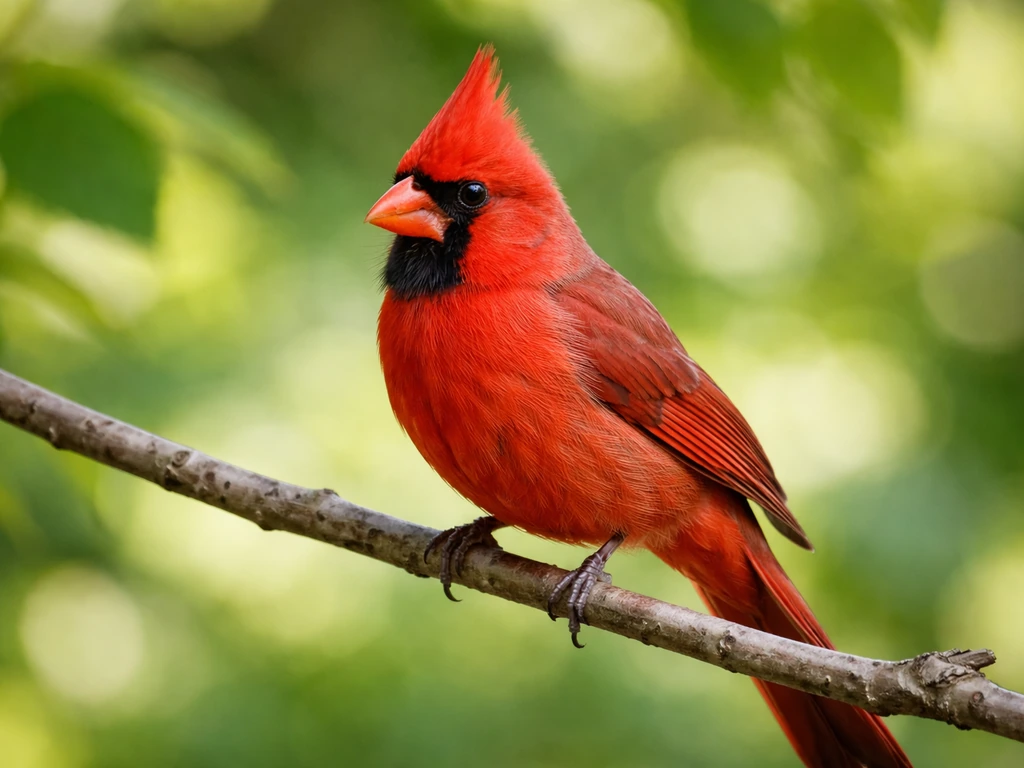
Several birds get mistaken for cardinals regularly: the Pyrrhuloxia (a gray desert cardinal lookalike), the House Finch (a smaller red bird with streaky brown), the Rose-breasted Grosbeak (a red-chested bird with no crest), the Black-headed Grosbeak (dark head, orange body), and the Gray Catbird (all-gray with a black cap) what bird looks like a duck but isn't. Female cardinals also get confused with female House Finches and female grosbeaks.
The fastest way to confirm you're looking at a cardinal is to check for three things at once: a tall pointed crest, a very thick orange-red bill, and a black mask around the face. If all three are there, it's almost certainly a Northern Cardinal.
Quick ID check: what male and female cardinals actually look like
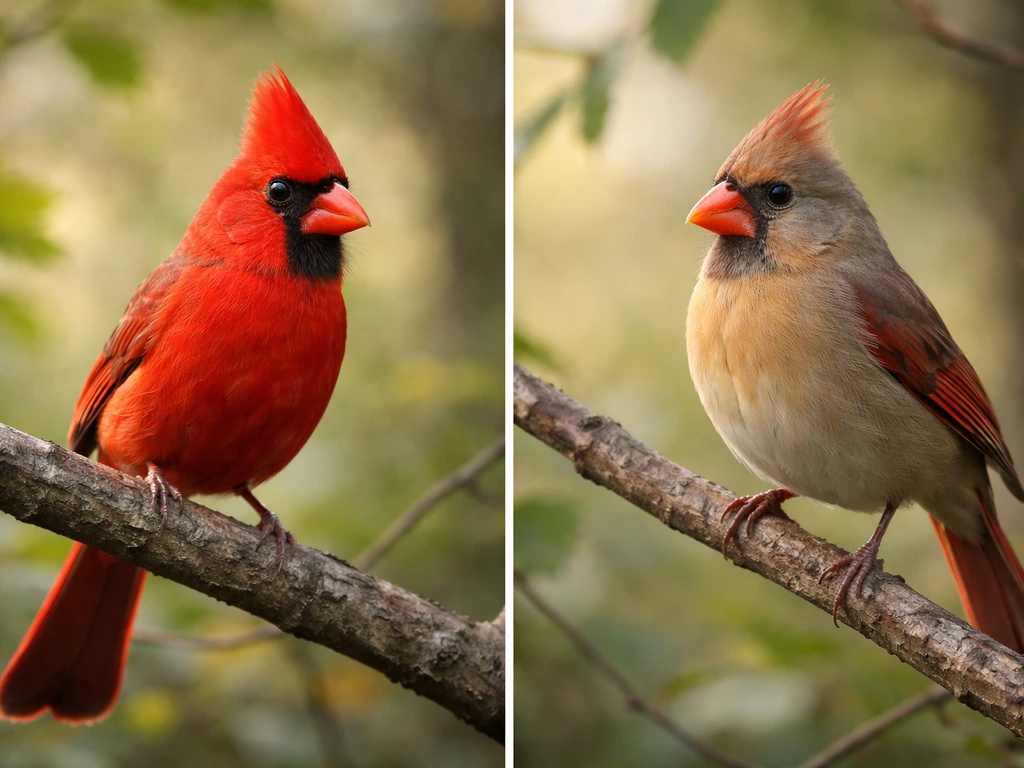
Before diving into lookalikes, it helps to have a clear mental image of the real thing. The male Northern Cardinal is about 8 to 9 inches long with an unmistakably brilliant all-red body, a prominent pointed crest sitting tall on the head, and a black mask that wraps around the bill and extends to the throat and upper chest. The bill is short, very thick, and cone-shaped, almost triangular, and it's bright orange-red. The tail is long relative to the body. That crest plus the solid red plus the black face mask is a combination no other common North American bird shares.
The female is a completely different story, and she trips people up constantly. She's warm brownish-gray overall, sometimes described as a buffy tan, with reddish tones washing across the crest, wings, and tail. Her bill is the same thick orange-red shape as the male's, and she has a faint, softer version of the black mask. The crest is still there, just less dramatic. Think of her as a muted, earthy version of the male: same structure, completely different color palette. If you want a deeper look at female cardinal appearance, there's a full breakdown in the sibling article about what a female cardinal looks like.
Gray birds that look like a cardinal
The number one gray cardinal lookalike is the Pyrrhuloxia, sometimes called the desert cardinal. It's almost exactly the same size as a Northern Cardinal (around 8 inches long) and has the same tall, curved crest and similar body silhouette. The big difference is color: the Pyrrhuloxia is gray and gray-brown overall, with red flashes on the crest tips, wings, tail, and a red belly stripe on males. The bill is also different and that's your fastest clue.
Where a cardinal has a thick, straight orange-red bill, the Pyrrhuloxia has a shorter, more curved, parrot-like yellowish bill. Because that yellowish bill is a key giveaway, it often helps you spot which bird looks like a yellow cardinal at a glance. If you're in the southwestern U. S.
(Arizona, New Mexico, Texas) and you see what looks like a gray cardinal, you've almost certainly found a Pyrrhuloxia.
The Gray Catbird can also fool people at a quick glance, especially in low light. It's a smooth, uniform dark gray bird about the same length as a cardinal, but with a black cap (not a crest) and rusty-chestnut under the tail. There's no crest, no thick bill, and no red anywhere. The catbird also has a much slimmer, longer silhouette and tends to skulk in dense shrubs. If the gray bird you're watching is crestless and slender, it's not a cardinal.
Winter American Goldfinches can look surprisingly gray and drab, especially females, with brownish-gray plumage and two pale wingbars. They're noticeably smaller than a cardinal (closer to a sparrow in size), with a tiny seed-cracking bill and no crest at all. If the bird is small, unstreaked, and has wingbars but no crest or thick bill, goldfinch is the right call.
Black or dark-headed birds mistaken for cardinals
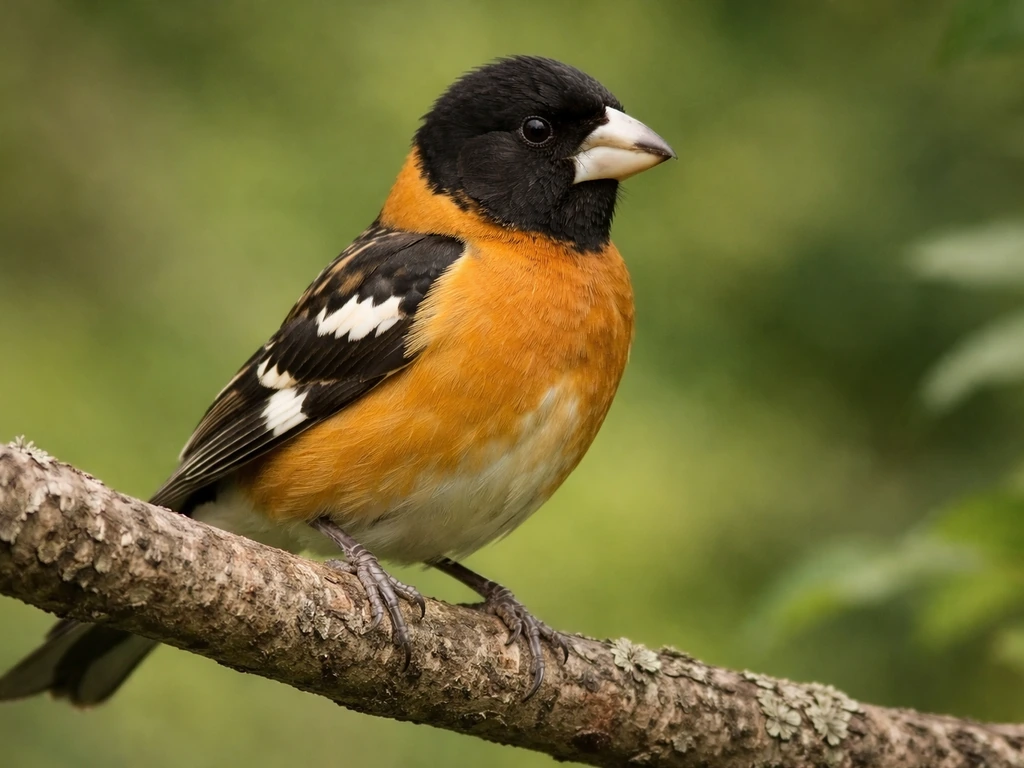
The Black-headed Grosbeak is probably the most common 'what is that dark-headed cardinal-like bird' question in western North America. The male has a completely black head, bright orange-brown body, and bold black-and-white wings. The bill is large and triangular, similar in concept to a cardinal's but more massive. The key differences: no crest, no red color, and the black covers the whole head rather than just a mask. You'll find Black-headed Grosbeaks mainly in the western U.S. and into Mexico, so if you're seeing a dark-headed cardinal-shaped bird west of the Rockies, this is your most likely match.
The Common Grackle sometimes gets flagged as a 'black cardinal' by newer birders. It's a large, lanky blackbird with an iridescent bluish-purple sheen on the head and neck, and a long keel-shaped tail. It's noticeably bigger than a cardinal, walks rather than hops, and has a long pointed bill, not a thick conical one. No crest. No red. If the bird looks sleek and glossy and seems too big and too long, it's a grackle.
Birds that look like a female cardinal
Female cardinals are probably the most misidentified bird at backyard feeders because they're brown, subtle, and easy to overlook next to the flashy male. The female House Finch is the most common mix-up. She's brown and streaky all over, including on the face, which is plain and unstriped. A female cardinal, by contrast, has that thick orange bill and a visible crest even if it's lying flat. The female House Finch is also noticeably smaller, closer to a sparrow's size, and her bill is much thinner. If the brown bird at your feeder looks streaky with a plain face and a small bill, it's a female House Finch, not a cardinal.
The female Rose-breasted Grosbeak is another strong lookalike. She's a larger brown bird with bold white eyebrow stripes, white wingbars, and heavy streaking on the chest. She has a very large, pale triangular bill, which can look vaguely cardinal-like at first. But she has no crest, the white eyebrow is very prominent (much bolder than anything on a female cardinal), and her streaking is heavier. Female Rose-breasted Grosbeaks are mostly seen in eastern North America during spring and fall migration.
The female Pyrrhuloxia also resembles a female cardinal closely, which makes sense given how similar the species are. Look at the bill: the Pyrrhuloxia has a curved, parrot-like yellowish bill, while the female cardinal's bill is straight and orange-red. Location matters too. If you're not in the desert southwest, you're almost certainly not looking at a Pyrrhuloxia.
Red birds that look like cardinals (and how to separate them)
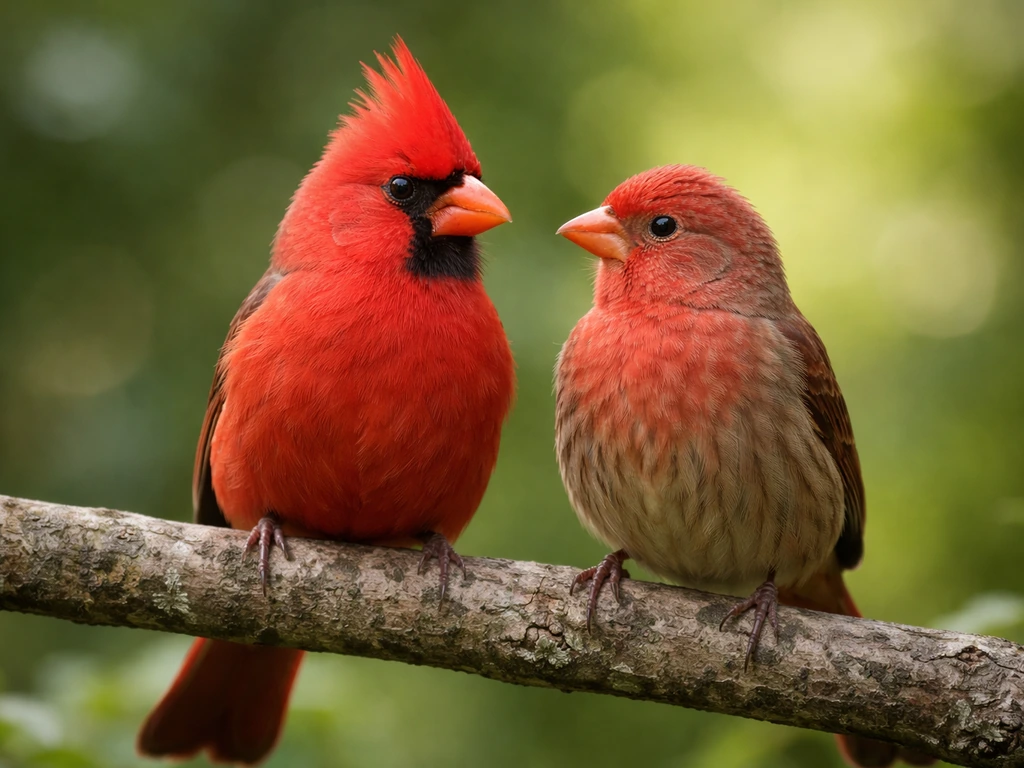
The male Northern Cardinal holds a useful distinction: it's the only common red bird in North America with a crest. That one fact rules out most red lookalikes immediately. Still, a few red birds cause genuine confusion.
The male House Finch is probably the most common false cardinal call. He has rosy red on his face, forehead, throat, and upper breast, which can look cardinal-like at a glance, especially at a feeder. But he's much smaller than a cardinal, about sparrow-sized, with a thin rounded bill, streaky brown flanks and belly, and absolutely no crest. The red on a House Finch is concentrated at the front of the face and blends into brown rather than covering the whole body.
The male Rose-breasted Grosbeak shows a vivid triangular red patch on his white chest, with a black head, black back, and white wingbars. He's close to a cardinal in size (about 7 to 9 inches) and has a very large pale bill. But there's no crest, no all-red body, and the black covers the whole head, not just a mask. The white wingbars are usually obvious and there's no mistaking the pattern once you see it clearly.
| Bird | Size | Crest? | Bill Shape | Key Color Pattern | Range |
|---|---|---|---|---|---|
| Northern Cardinal (male) | 8–9 in | Yes, tall | Very thick, orange-red | All red, black face mask | Eastern US, Southwest |
| Pyrrhuloxia (male) | ~8 in | Yes, curved | Curved, parrot-like, yellowish | Gray with red accents, red belly stripe | Desert Southwest |
| House Finch (male) | ~5–6 in | No | Small, rounded | Red face/chest, streaky brown body | Widespread across US |
| Rose-breasted Grosbeak (male) | 7–9 in | No | Very large, pale triangular | Black head, white wings, red chest patch | Eastern US, migrant |
| Black-headed Grosbeak (male) | ~7–8 in | No | Large, triangular | Black head, orange body, white wingbars | Western US |
| Gray Catbird | ~8–9 in | No (black cap) | Slender, medium | All dark gray, chestnut undertail | Widespread |
| Common Grackle | ~11–13 in | No | Long, pointed | Glossy black, iridescent blue-purple head | Eastern/Central US |
How to confirm the bird fast using field marks
The quickest approach is to run through four checks in order. You don't need all four to match perfectly, but if three or more line up, you've got a confident ID.
- Crest: Is there a tall, pointed crest on the head? Cardinals (and Pyrrhuloxias) have one. Grosbeaks, finches, catbirds, and grackles do not.
- Bill: Is the bill very thick, short, and cone-shaped? A cardinal's bill is noticeably chunkier than almost any other common backyard bird. The Pyrrhuloxia's bill is curved; a grosbeak's is large but more triangular. If the bill is thin or medium, it's not a cardinal.
- Black mask: Does the bird have a black mask that wraps around the bill and onto the throat? This is unique to the male Northern Cardinal among common red birds. Female cardinals have a faint, softer version.
- Size and tail: Cardinals are medium-large songbirds, about 8 to 9 inches, with a noticeably long tail. House Finches are much smaller. Grackles are noticeably larger with a very long tail and different posture.
- Location: If you're in the desert southwest and see a gray crested bird, think Pyrrhuloxia first. If you're east of the Rockies and see a crested red bird, it's almost certainly a Northern Cardinal. Black-headed Grosbeaks are a western bird; Rose-breasted Grosbeaks are eastern.
Habitat also helps. Cardinals love woodland edges, dense shrubs, and backyard feeders. You can also compare the bird’s look from common photos to understand what a cardinal bird house looks like in a real feeder setup. A cardinal nest is typically a bulky cup made of twigs, grasses, and other plant material, lined with softer fibers cardinal nest look like. They're not open-field birds. If your mystery bird is out in an open meadow or on a utility wire, it's less likely to be a cardinal and more likely to be a finch or grosbeak.
How to nail the ID using your photo or next field visit
If you have a photo, zoom in on the head first. Look for the crest (is it there and pointed, or flat/absent?), then the bill (thick and blunt or thin and pointed?), then the face for a black mask. Those three things together are faster and more reliable than color alone, because lighting can shift how red or brown or gray a bird looks.
If you're trying to ID in the field right now, watch for one minute before deciding. Cardinals tend to hop rather than walk, and they often sit upright with the crest raised when alert. Grosbeaks are chunkier and tend to stay still while feeding. House Finches are busy and tend to cluster in groups. Behavior and posture are quick secondary clues once you've checked the physical marks.
For the brown birds that might be female cardinals, the single fastest check is the bill. An orange-red thick bill on a brown bird almost always means female cardinal. A thin or pale bill on a brown bird points you toward finches, sparrows, or female grosbeaks.
If you want to go deeper on female cardinal identification specifically, or on the related question of birds that mimic a female cardinal's appearance, both of those topics have their own detailed guides worth checking. If you want a broader baseline before you compare lookalikes, see what does a cardinal bird look like. You can also compare your sighting to common birds that mimic a female cardinal's look to narrow it down quickly.
- Check the crest first: present and pointed means cardinal or Pyrrhuloxia; absent rules both out immediately
- Look at the bill shape and color: thick orange-red equals cardinal; curved yellowish equals Pyrrhuloxia; thin or pale equals finch, sparrow, or grosbeak
- Note your location: desert southwest narrows things to Pyrrhuloxia; eastern or central US and it's almost certainly a Northern Cardinal
- For red birds with no crest, compare the face pattern: cardinal has a black mask, House Finch has red on the forehead with no mask, Rose-breasted Grosbeak has an all-black head
- For gray birds with a crest-like silhouette, check the bill curve and look for red accents; if it's in the southwest, strongly consider Pyrrhuloxia
- For dark or black-headed birds, check size and bill; Black-headed Grosbeak is western, large-billed, no crest; Common Grackle is much larger and has a long pointed bill
FAQ
If the crest is not visible, can I still tell whether a bird is a cardinal?
Yes, focus on the bill and face first. A real cardinal has a thick, cone-shaped orange-red bill, and the male has a distinct black mask around the bill even when the crest is flattened. If you only see color but not the crest, a thick bill plus black facial pattern is usually more reliable than red alone.
What if the bird is a gray cardinal lookalike, but I do not see any red flashes at all?
Don’t rely on red flashes showing clearly. Pyrrhuloxia males often show red on the belly stripe and some wing or tail areas, but those can be faint or hidden. The most dependable clue is the bill shape, Pyrrhuloxia has a shorter, more curved, yellowish bill rather than a straight, thick orange-red cardinal bill.
Can lighting (sunrise, shade, or strong backlight) make a cardinal look like something else?
It can, especially for red birds. That is why you should evaluate structure over color. Zoom mentally on the head: is there a pointed crest, is the bill thick and blunt, and does the face show a black mask rather than a solid dark head? If the structure fits, the bird is likely a cardinal even if the red looks muted.
How can I distinguish a female cardinal from a female House Finch when both are brown?
Use the bill thickness as the tie-breaker. Female cardinals have the same thick, orange-red, triangular-looking bill as males, while female House Finches have a thinner, smaller bill. Also check for crest presence, even when subtle, since a flat crest can still be seen as a raised ridge or angle.
Are cardinals ever likely to be mistaken for grackles or other large blackbirds in flight?
Yes, particularly if you only catch a quick silhouette. Grackles are noticeably larger and more slender in build than cardinals, with a long, keel-shaped tail and a long pointed bill. In flight, that long tail shape and the bigger size compared to nearby perches are your best quick filters.
What if the bird looks like a grosbeak, but I cannot tell whether the head is crested or not?
If you see a solid black head without a crest, that pushes toward the Black-headed Grosbeak. Cardinals have a black mask centered around the bill that does not cover the entire head like a cap. Also check for red in the body, cardinals show red overall in males and warm muted tones with a crest structure in females.
Do cardinals hop and perch in a way that can help confirm ID?
Yes. Cardinals commonly hop and often hold an upright posture with the crest raised when alert. If the bird is walking steadily and moving with a long, streamlined stride, that leans away from cardinals and toward something like a grackle or another passerine with a different gait.
When should I use location to rule out lookalikes?
Use it as a probability filter, not a single proof. For example, Pyrrhuloxia sightings are most likely in the southwestern U.S., so a “gray cardinal” elsewhere is less likely to be Pyrrhuloxia. Likewise, Rose-breasted Grosbeaks are more expected in the eastern U.S. during migration, so location plus bill shape and eyebrow stripes can narrow it fast.
I saw a red bird at a feeder, is it always a cardinal if it has red?
No. Some non-cardinals can show red at feeders, especially male House Finches and male Rose-breasted Grosbeaks. Check for crest structure (cardinals have it), then the bill thickness (cardinals have a very thick orange-red bill), and finally the face pattern, a black mask rather than concentrated red on the front of the face helps confirm cardinal identity.
Next Articles
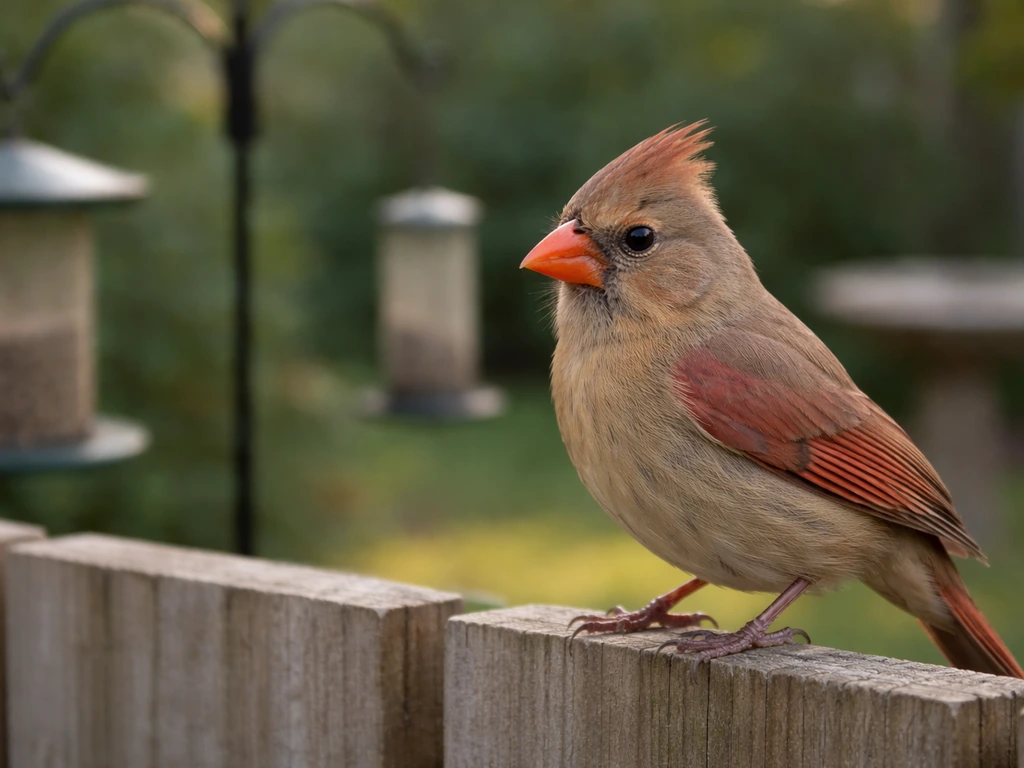
Bird That Looks Like a Female Cardinal but Is Not
Rule out female cardinal fast, then compare key lookalikes by plumage, bill, size, patterns, habitat, and flight behavio
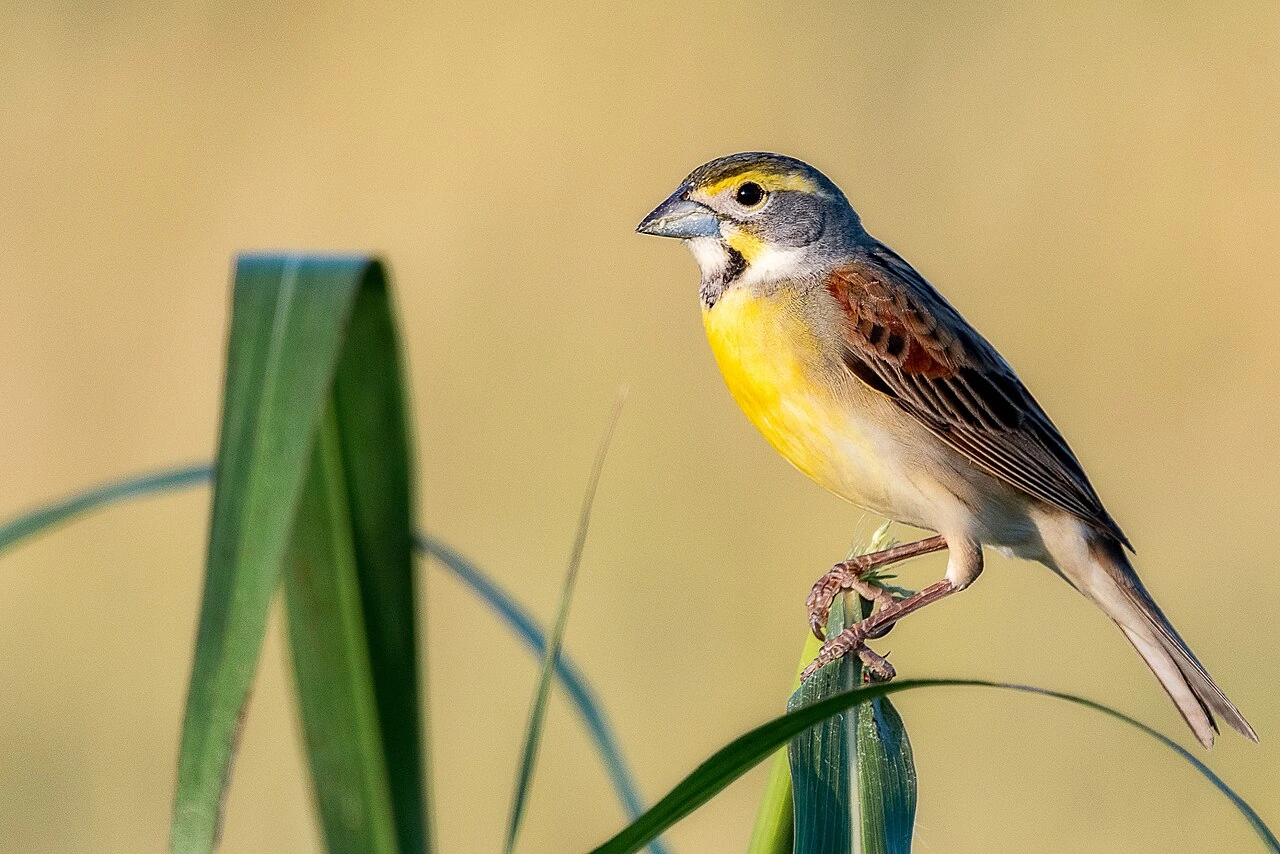
What Does a Cardinal Bird Look Like? Key Features Guide
Learn key features to spot a cardinal bird: color, crest, bill, wings, tail, and look-alikes for fast ID.
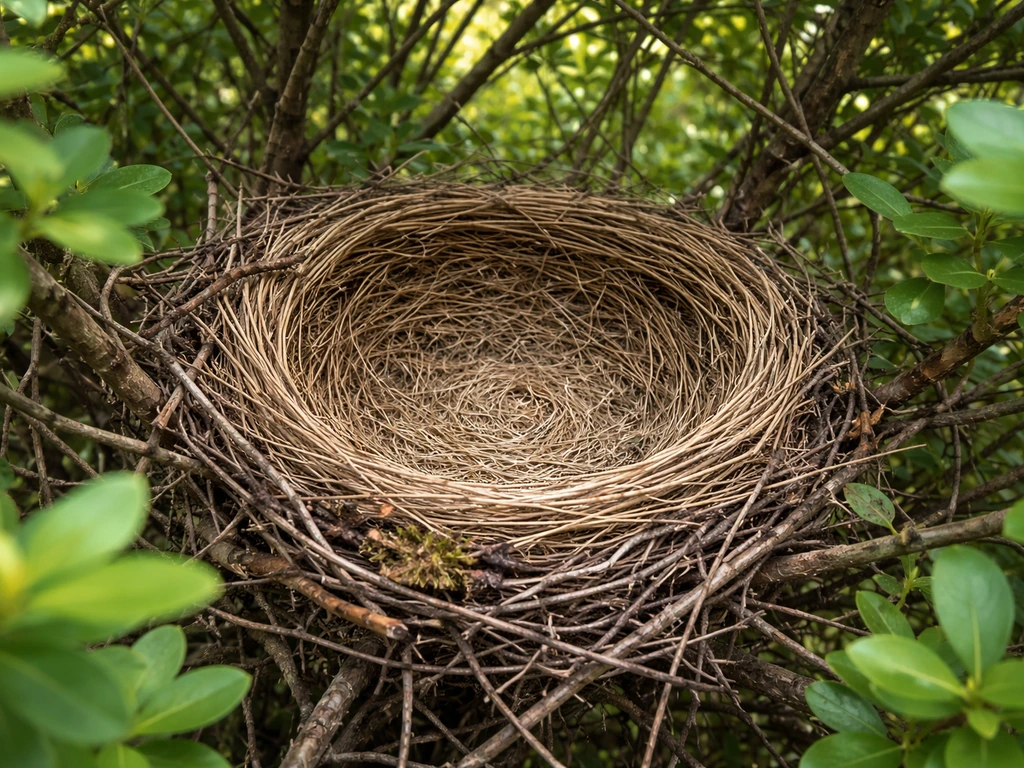
What Does a Cardinal Bird Nest Look Like? ID Guide
Identify a cardinal nest by its cup shape, size, materials, texture, and location, plus look-alike tips and safe observi