
If you spotted a bird that looks like a female cardinal but something feels off, the most likely culprits are the Tufted Titmouse, Pyrrhuloxia, or Black-headed Grosbeak, depending on where you live. The fastest way to narrow it down is to check three things right away: does it have a crest, what does the bill look like, and are there any warm reddish tones on the wings and tail? Those three clues will usually get you to the right answer in under a minute. If you want to identify it more confidently, compare your bird to examples of what a cardinal looks like in general what a cardinal bird looks like in general.
Bird That Looks Like a Female Cardinal but Is Not

Marcus Whitley
27 May 2026
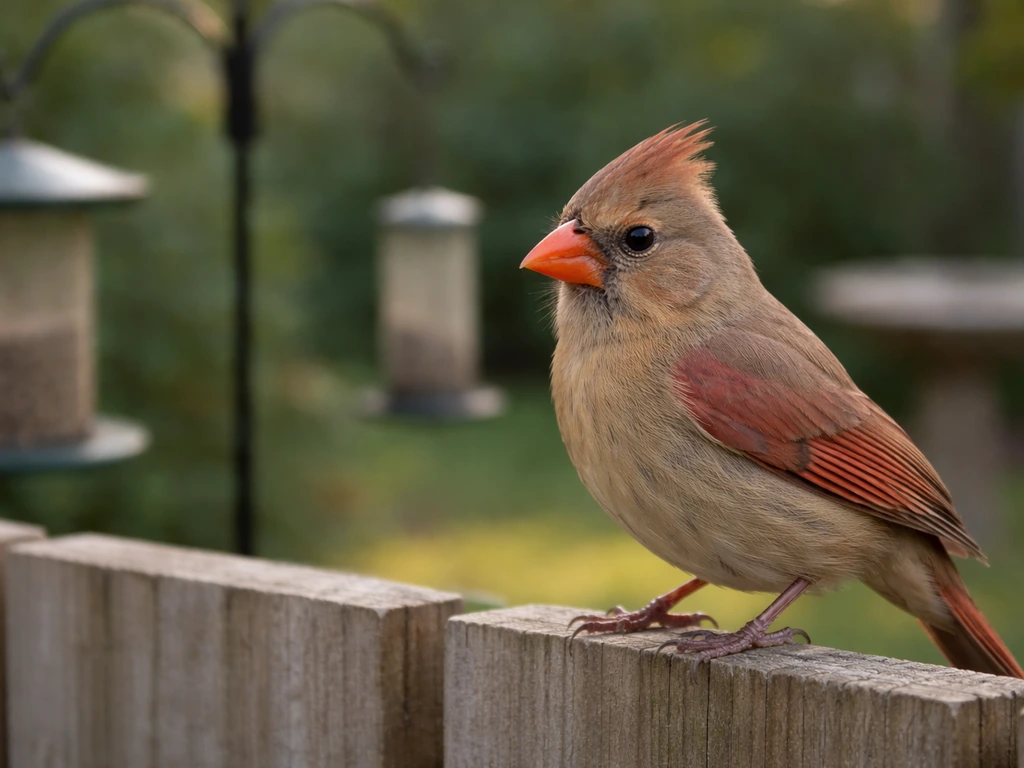
Quick ways to rule out a female cardinal
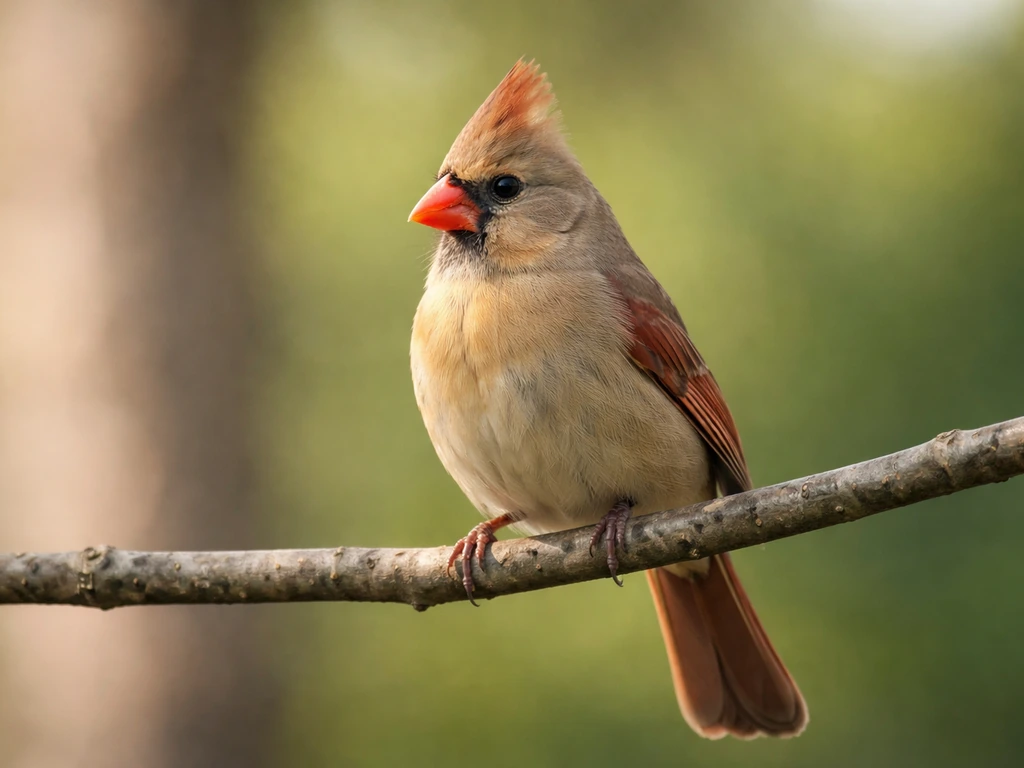
Before you start comparing look-alikes, it helps to know exactly what makes a female cardinal a female cardinal, because the features are pretty specific. She's roughly robin-sized, with a warm buff-tan body, a noticeable crest that often has a reddish flush, and reddish-orange tints on her wings, tail, and the tip of that crest. Most importantly, her bill is short, very thick, and bright orange-red. It looks almost comically large for her head, built purely for cracking seeds.
So here's your quick checklist to rule her out. If the bird in front of you doesn't match on most of these, you're probably looking at something else entirely.
- Crest: Is there one? A female cardinal always has a raised, pointed crest with at least some reddish coloring.
- Bill: Is it short, thick, and orange-red? A slim, dark, or pointed bill immediately rules out a female cardinal.
- Body color: Is it warm buff-tan with reddish-orange highlights on the wings and tail, not plain gray or heavily streaked?
- Size: Is it roughly the size of a robin? Much smaller likely means it's a titmouse or finch.
- Tail: Is it fairly long relative to the body? Cardinals have a noticeably long tail that helps with their overall silhouette.
If you're at a feeder, the bill is your single best starting point. Audubon calls it a near-foolproof first check for cardinal-like birds. That thick, orange-red, seed-cracking bill is hard to confuse once you've seen it up close.
Most likely look-alikes (common species)
There are a handful of birds that get mistaken for female cardinals regularly. Which one you're most likely looking at depends heavily on where you are in the country.
Tufted Titmouse
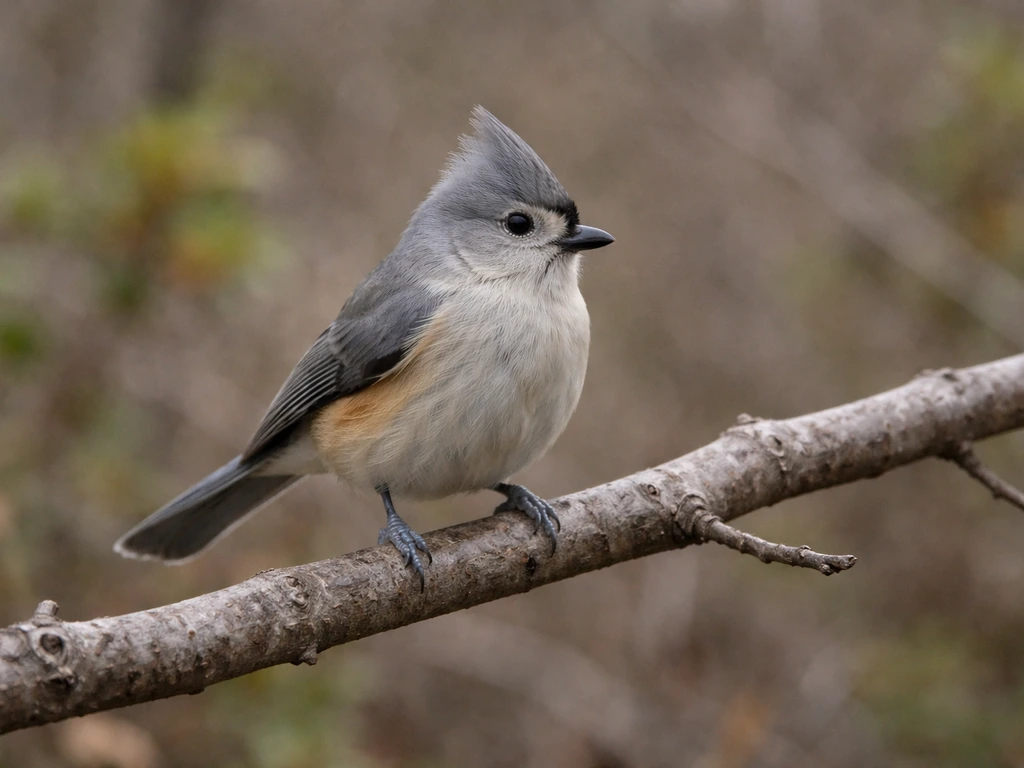
This is probably the most common case of mistaken identity in eastern backyards, mostly because titmice also have a crest and are the right general size. But once you look closely, they're quite different. The Tufted Titmouse has a gray crest (no red at all), a pale face, and a small black patch right above its bill, giving it an almost snub-nosed look. Its whole body is gray, without any of the warm reddish wash you'd see on a female cardinal's wings and tail. The bill is also much smaller and more finch-like rather than that wide, chunky cardinal bill.
Pyrrhuloxia (Desert Cardinal)
If you're in the southwestern U.S. or northern Mexico, the Pyrrhuloxia is probably the first bird you should consider. It's sometimes called the desert cardinal because it's so closely related, and the females look genuinely similar at a glance. The key differences are the bill (the Pyrrhuloxia's bill is more curved and parrot-like, not as straight and blocky as a cardinal's) and the overall color tone (slightly grayer and less warm). Location is your biggest clue here: if you're outside the desert southwest, Pyrrhuloxia is almost certainly not the answer.
Female Black-headed Grosbeak
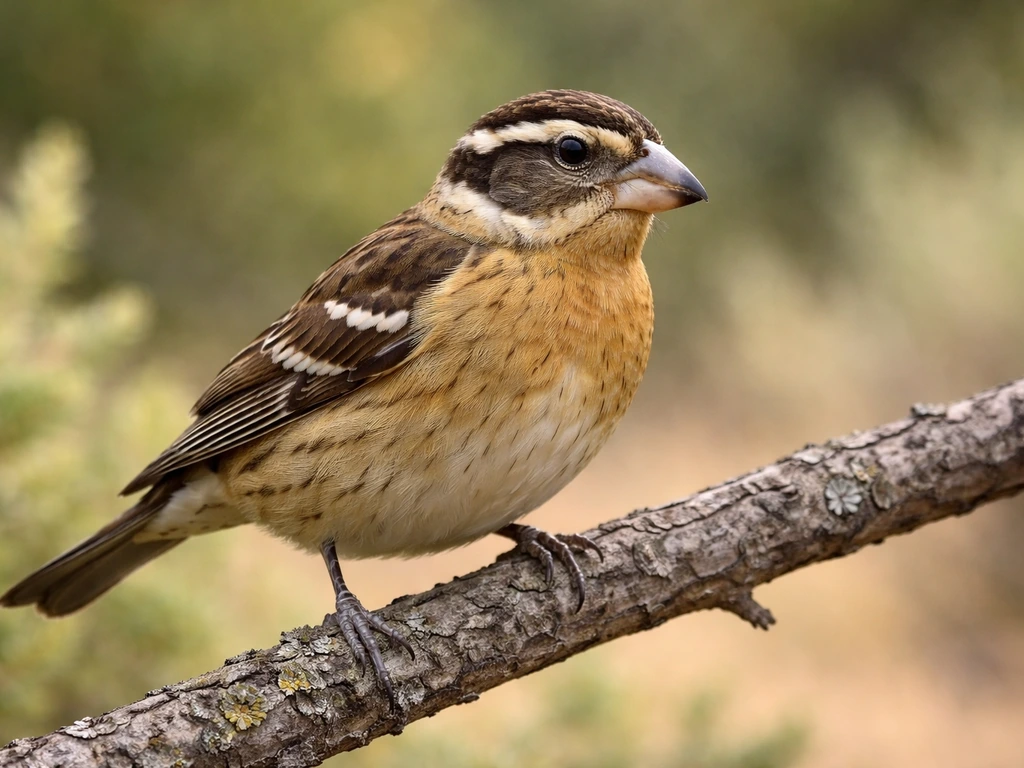
In the western U.S., a female Black-headed Grosbeak can throw people off because it's a big, stocky bird with a hefty seed-cracking bill. You might notice bold white wing bars on hers, which a female cardinal doesn't have. Female Black-headed Grosbeaks often show bold wing bars, such as the white wing bars seen in females, along with a heavy conical bill, which can help distinguish them from female cardinals clear wing bars. Her head and back are brown but with distinct dark streaking, and while her bill is large and conical, it's darker than a cardinal's bright orange-red. If the bird you're looking at has streaks on the head or neck and clear wing bars, lean toward the grosbeak.
American Goldfinch (female or winter)
This one is less of a confusion species for most people, but in certain lighting or at distance, a female or winter goldfinch can briefly look similar. The giveaway is size (goldfinches are noticeably smaller), they lack a crest entirely, and they show bold white wing bars. They also have a much finer, pointed bill rather than anything resembling a cardinal's thick seed-cracker.
Key field marks to compare (color, size, bill, pattern)
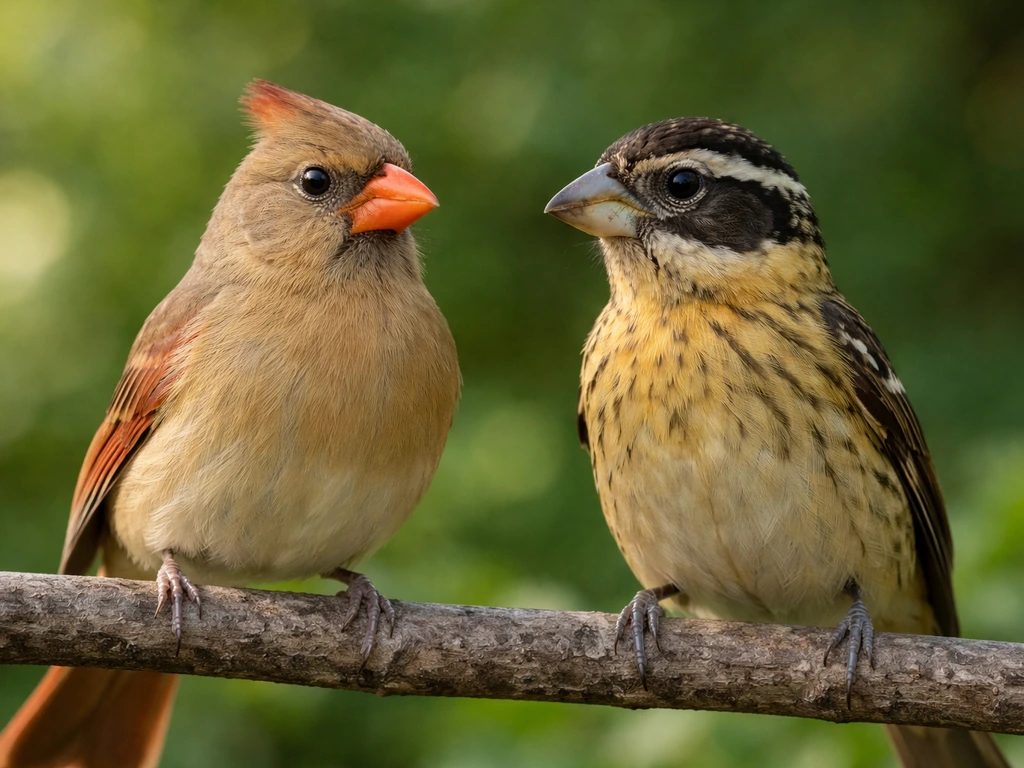
| Feature | Female Northern Cardinal | Tufted Titmouse | Female Black-headed Grosbeak | Pyrrhuloxia (female) |
|---|---|---|---|---|
| Crest | Prominent, reddish-tipped | Gray crest, no red | No crest | Prominent, reddish-tipped |
| Bill | Short, very thick, bright orange-red | Small, dark, finch-like | Large, conical, dark/gray | Curved, parrot-like, yellowish |
| Body color | Warm buff-tan | Gray overall | Brown with dark streaks | Gray with rosy/red tints |
| Wing/tail tones | Reddish-orange wash on wings and tail | Plain gray, no warm tones | Bold white wing bars | Rosy-red on wings and tail |
| Streaking | None | None | Dark streaks on head and back | None |
| Size | Robin-sized (~8-9 in) | Slightly smaller than cardinal | Similar to cardinal | Similar to cardinal |
| Range | Eastern/central/southeast U.S. | Eastern U.S. | Western U.S. | Desert southwest U.S., Mexico |
The two features that do the most work in any of these comparisons are the bill and the crest. If the bird has a crest and a thick orange-red bill, you're looking at a female cardinal or a Pyrrhuloxia (and location will separate those two). If it has a crest but a smaller or differently shaped bill, think titmouse. If there's no crest at all, you're definitively past the cardinal group.
Where and when to find it (range, season, habitat)
Northern Cardinals are year-round residents across most of the eastern and central U.S., and they've expanded into parts of the southwest and southeast over the decades. They love brushy edges, dense shrubs, overgrown gardens, and suburban backyards with ornamental plantings. If you're in a neighborhood with feeders, thick hedges, or a weedy lot nearby, you're almost certainly in cardinal territory. They nest in dense shrubs and vines, usually just 3 to 10 feet off the ground, so finding a bird regularly hanging around thick cover is a good sign you might have cardinals breeding nearby. If you’re trying to confirm the spot, you may also want to learn what a cardinal bird nest looks like so you can match the setting and structure to your photo or sighting cardinals nest in dense shrubs and vines.
The Tufted Titmouse overlaps heavily with cardinal range in the eastern U.S. and is just as happy at suburban feeders and nest boxes, which is exactly why the confusion happens so often. The Black-headed Grosbeak is a western species, mostly seen during breeding season (spring through early fall) in mixed and coniferous forests west of the Great Plains. The Pyrrhuloxia is tied closely to desert scrub and mesquite in the southwest and doesn't wander far from that range. So if you're in Ohio in January seeing something cardinal-like, Pyrrhuloxia and Black-headed Grosbeak are off the table before you even look at the bird.
How to confirm with photos and behavior
If you can get your phone or camera out, try to photograph these specific things: the bill (head-on or side profile works best), the crest if there is one, and the wings and tail if the bird turns or opens its wings. Wing bars and reddish washes are much easier to see in a still photo than in a moving bird. Try to get the bird in good light rather than backlit, and don't worry too much about perfect framing. A slightly blurry shot that clearly shows the bill shape is worth more for ID than a crisp photo that only catches the back.
Behavior also gives you a lot of clues, especially if you're watching without being able to get a great photo. All About Birds recommends a structured four-keys approach to bird identification: size and shape, color pattern, behavior, and habitat Behavior also gives you a lot of clues. Female cardinals forage low, often hopping along the ground or in dense shrubs, and you might actually hear one singing (female cardinals do sing, sometimes even from the nest). Tufted Titmice tend to be more acrobatic and restless at feeders, and they often hang upside down or cling to branches in ways cardinals don't. Grosbeaks tend to sit more heavily and deliberately, like small hawks, which fits their stocky build. Watch how the bird moves for 30 seconds before trying to photograph it. That posture and movement style often narrows things down even before you check the field marks.
If you want a confirmed record, upload your best photos to iNaturalist or log the sighting in eBird. Both platforms ask that your photos are of the actual bird you observed, not an example image pulled from elsewhere. iNaturalist's community of identifiers will often weigh in quickly on tricky IDs, especially if you've captured the bill and any distinguishing marks clearly. eBird may ask for written documentation if the sighting is unusual for your area, so jotting down a few notes about size, bill color, and any wing pattern while it's fresh is always a good idea.
Next steps if it still doesn't match
If you've gone through the bill, crest, color, and range checks and still can't place the bird, here's what to do next. First, revisit the size comparison. Hold the bird's silhouette against something familiar: was it closer to a sparrow, a robin, or a starling? That alone can eliminate a lot of options. Second, look again at whether the wings showed any pattern, bars, or solid color, because that's one of the most reliable splits between cardinal-like species and everything else.
- Search your photos for the bill: use your zoom to check whether it's orange-red and thick, curved and parrot-like, or darker and slimmer.
- Pull up a range map for the species you think it might be (eBird's range maps are free and current) to check if it's actually expected in your area and at this time of year.
- Post your photo to iNaturalist and let the community weigh in. Even a mediocre photo of a crested bird at a feeder will usually get a solid ID suggestion within a day.
- If you didn't get a photo, write down a description now while it's fresh: overall color, bill shape and color, any wing bars, crest yes or no, approximate size. That note will help enormously when you try to look it up or ask for help.
- Check a dedicated visual comparison resource for cardinal look-alikes, focusing on the species that overlap your region.
The cardinal family is a fun group to learn because once you've really internalized what a female Northern Cardinal looks like, those thick orange bills and warm reddish wing washes start jumping out at you, and it becomes easy to tell when something just doesn't quite fit. If you're curious about how the male cardinal compares visually or want to know more about what the full species looks like across sexes, there's more detail worth exploring on what a cardinal bird looks like in general. A cardinal bird house can also give you a quick visual clue, so check what one looks like to compare with your sighting what does a cardinal bird house look like. If the bird seems duck-like at first glance, use a similar step-by-step approach to figure out which species it really is. If you are trying to identify a yellow-looking bird instead, you can also compare it with what bird looks like a yellow cardinal. If you want a quick visual reference, check what a cardinal bird looks like to compare color, crest, and bill shape side by side what a cardinal bird looks like in general. And if you've narrowed your sighting down to something crested and red but you're not sure which end of the cardinal family you're dealing with, comparing it to a Pyrrhuloxia side by side is the quickest path to a confident ID.
FAQ
What if the bird is partially obscured, like behind branches or at the far edge of my yard?
Prioritize the bill and crest over the rest. Even a side-on glimpse of a thick, orange-red bill usually settles it, while wing color can be hard to see through foliage. If you can only see the head, wait for a moment when it faces you or perches in a clearer line of sight, since the titmouse bill and patch above the bill are typically easier to confirm head-on.
Can lighting make the bill or wing color look wrong, and how do I correct for that?
Yes. Warm sunlight, shade, and camera white balance can shift reds and browns. Instead of judging overall “redness,” compare the bill shape and thickness. A cardinal-like bill is short and very chunky, while the grosbeak bill is larger and darker but still conical, and the titmouse bill is smaller and more finch-like.
If I see wing bars, does that automatically rule out female cardinals?
In practice, wing bars strongly point away from female Northern Cardinals. Female cardinals may show some color flush, but they do not have bold, high-contrast wing bars like Black-headed Grosbeaks or goldfinches. If the bars are crisp and contrasty in your photos, re-check for grosbeak or goldfinch traits, and use crest presence plus bill shape to finalize.
Do females ever look different from each other so that I might misidentify them?
They can vary a bit, especially in how intense the reddish flush on the crest and the warm tint on the wings appears. However, the seed-cracking bill is the most consistent feature. If your bird lacks a thick orange-red bill, don’t rely on “crest and color” alone, because titmice and other crested species can still match those at a glance.
What’s the quickest way to separate a Tufted Titmouse from a female cardinal when both have crests?
Look for the facial and head details you might miss at a feeder. Titmice usually have a gray crest with no red, a pale face, and that small black patch just above the bill (often giving a snub-nosed look). Cardinals have a warmer overall body tone and no distinct dark patch above the bill, plus the bill is noticeably thicker and more orange-red.
Is location always reliable, or can ranges overlap unexpectedly?
Location is a strong filter, but it is not a guarantee. Unexpected sightings can happen if birds wander, especially near habitat edges. If you’re outside the typical range for a look-alike, still confirm with the top field marks (bill shape, crest color, and wing pattern). If those don’t match the “off-range” species, assume the local common species until proven otherwise.
How can I use movement and posture if I cannot get close enough for clear photos?
Watch for foraging height and style for about 30 seconds. Female cardinals often hop and feed low on the ground or within dense shrubs. Titmice tend to be more restless and may cling or move upside down at feeders. Grosbeaks usually appear heavier and more deliberate, with a small “hawk-like” stillness between movements.
What camera or phone settings help most for bill and wing markings?
Use good light and avoid backlighting, then zoom only enough to fill the frame without turning the bird into a blur. Burst mode helps because wing angle and head angle matter. If your phone supports it, use tap-to-focus on the head or bill area, and capture at least one frame where the bird faces you or shows a clear side profile.
Can I submit the sighting even if my photo is blurry?
You can, but be strategic. iNaturalist and eBird reviewers do best when the bill shape and any wing pattern are visible. If the whole bird is blurry, try to still provide a shot where the crest outline and bill thickness can be interpreted. For written notes in eBird, describe bill color (orange-red versus darker), whether there are wing bars, and approximate size compared to a robin or sparrow.
If it’s winter and the bird seems less colorful, what should I rely on instead?
Rely on structure, not saturation. Cold weather can dull reds, but the cardinal group’s short, very thick orange-red bill and the presence or absence of a crest remain key. Wing bars and streaking patterns are usually more dependable than the overall “warmth” of color in harsh winter light.
How do I handle an “almost cardinal” that has a crest but no clear reddish wash?
Treat it as a different crested species until proven otherwise. If the bill is not thick and orange-red, you’re likely dealing with a non-cardinal crested bird. Then use the crest color (gray in titmice), check for that dark patch above the bill, and look for wing bars or fine pointed-bill features that would fit grosbeaks or goldfinch-type look-alikes.