
The bird you're thinking of is most likely an American Goldfinch, a Western Tanager, or, in a genuinely rare case, an actual Northern Cardinal with a genetic color mutation that swaps its red for bright yellow. All three can stop you in your tracks with that vivid yellow color, and if the bird has a chunky build or a hint of a crest, the cardinal comparison makes total sense. The good news is you can tell them apart quickly once you know what to look at beyond just the color. If you want to visualize the nesting bird itself, start by matching the shape and crest first, then look for the nest structure typical of cardinals cardinal bird nest look.
What Bird Looks Like a Yellow Cardinal? Top Look-Alikes

Marcus Whitley
10 Jul 2026
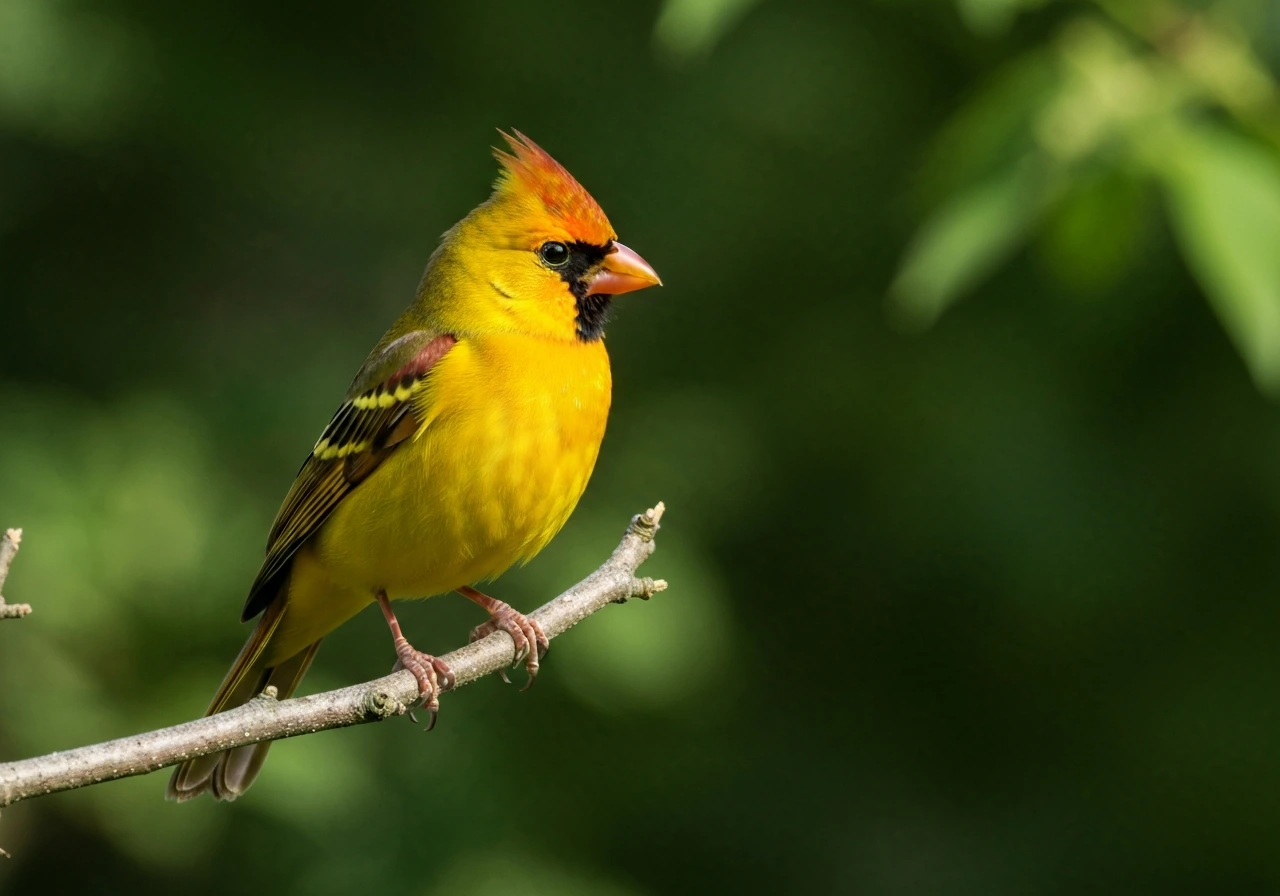
What "cardinal-like" actually means (before we get to the yellow)
When people say a bird looks like a cardinal, they're usually reacting to a specific combination of things: a stocky, medium-large body, a noticeably thick and stubby bill, a prominent crest on the head, a longish tail, and an upright posture. Northern Cardinals sit somewhere between a sparrow and a robin in size, and that chunky silhouette with the pointed head crest is pretty distinctive. If the bird you saw had most of those features but was yellow instead of red, your brain was right to flag it as cardinal-like. That shape is the starting point for narrowing down the ID.
The most likely yellow cardinal look-alikes
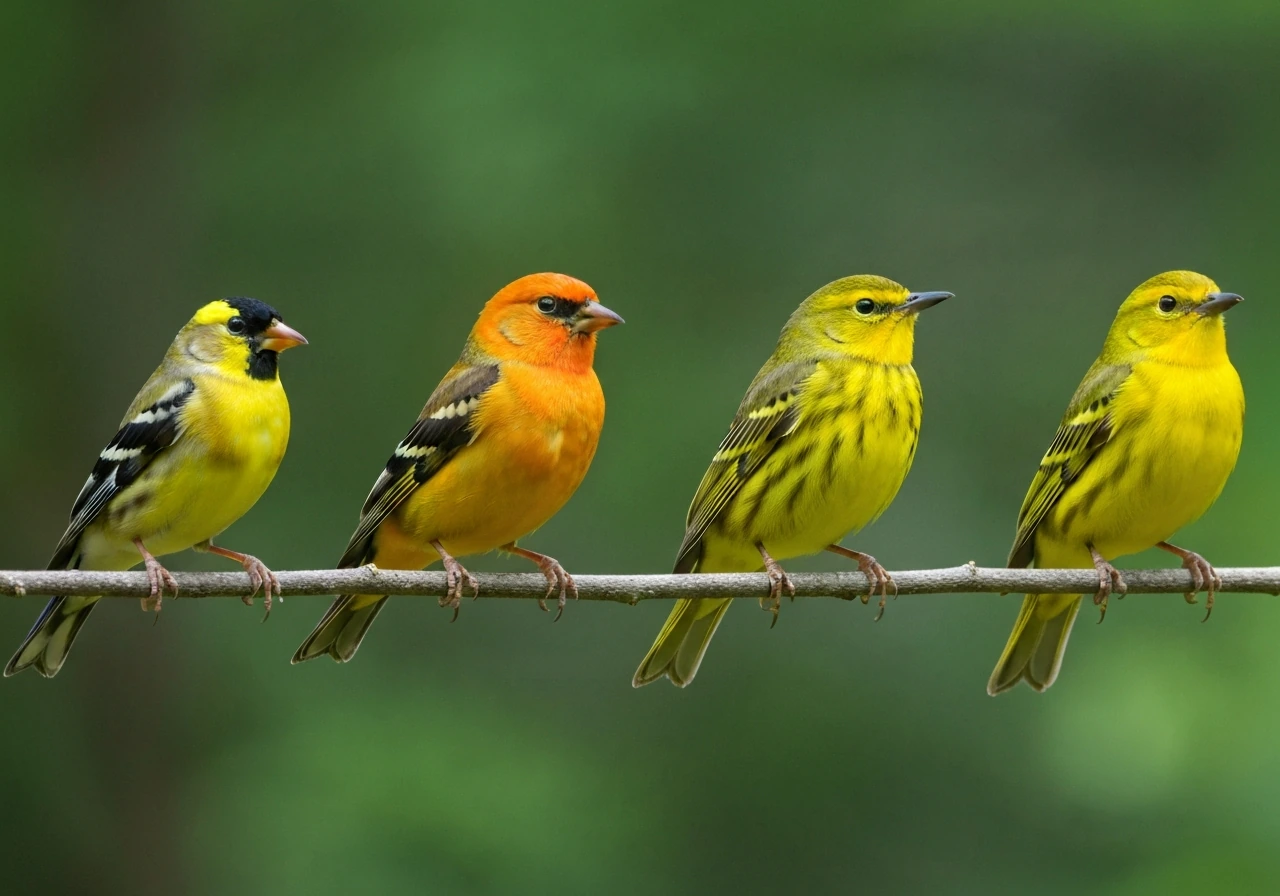
There are really three main candidates, plus one exotic species worth knowing about. Here's the quick rundown before we go deeper on each one.
American Goldfinch
This is probably the most common answer. Breeding male American Goldfinches in spring and summer are a brilliant, almost electric yellow with a black forehead patch, black wings, and a black tail. They're smaller than a cardinal, maybe the size of a large sparrow, and they have a short conical finch bill rather than the cardinal's thick, heavy beak. The tail is short and notched at the tip. You won't see a crest. In fall and winter, males go drab brownish-olive with blackish wings and two pale wingbars, so a "yellow" goldfinch sighting is mostly a warm-season thing. They love weedy fields, backyard feeders, roadsides, and gardens.
Western Tanager
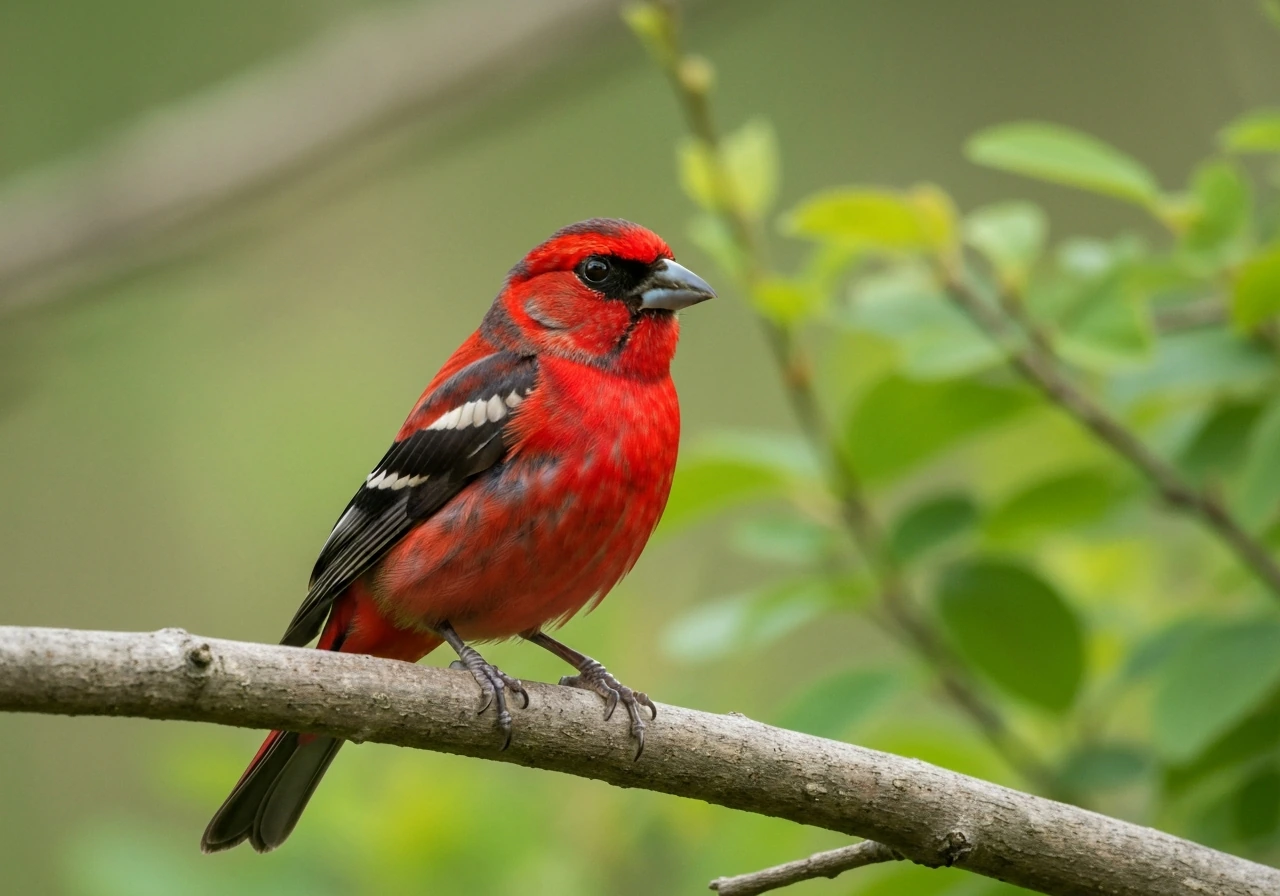
If you're in the western half of North America and the bird looked a bit bigger and more serious than a goldfinch, a Western Tanager is a strong contender. Breeding males are genuinely striking: a bright yellow body with coal-black wings, a black back, a black tail, and an orange-red head. All About Birds describes the male Western Tanager as “blank" rel="noopener noreferrer">like looking at a flame,” with an orange-red head, a brilliant yellow body, and coal-black wings, back, and tail. Think of it as yellow with bold black accents and a flame-colored head. They're stockier than a warbler and noticeably heavier-looking in flight. You'll also spot a yellow shoulder patch and a white wingbar. Western Tanagers move through in spring migration and breed in western mountain forests, so location matters a lot here.
Yellow Warbler
Yellow Warblers are smaller and softer-looking than a cardinal, but they're so uniformly yellow that they sometimes catch people off guard. Males have reddish-brown streaks on the chest, yellow patches in the tail, and a yellow-green wash on the back. The bill is thin and pointed, nothing like a cardinal's chunky beak. They're common in shrubby areas near water, especially during migration. If your bird seemed almost too small and delicate to be a cardinal, this is worth considering.
True yellow morph Northern Cardinal
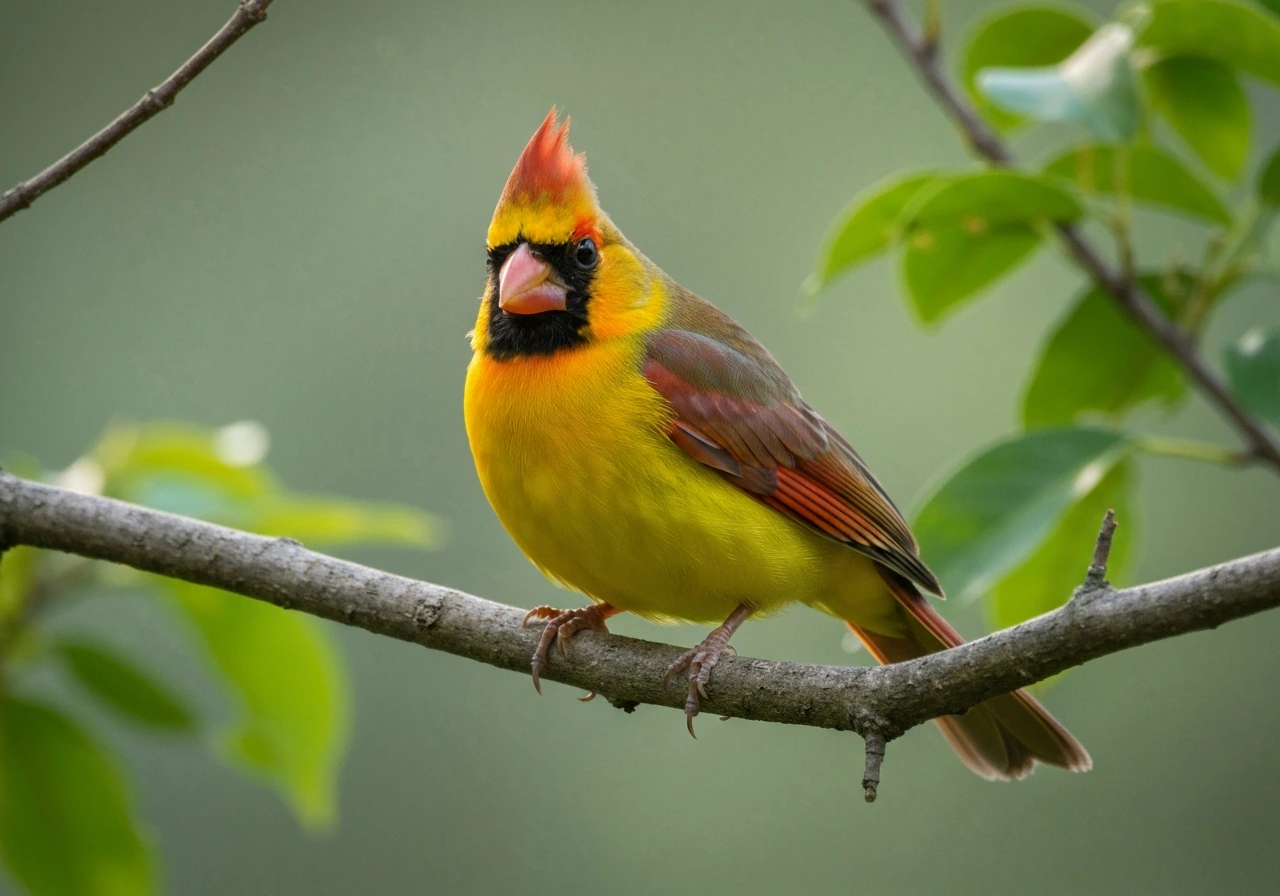
This is the genuinely rare one. Occasionally, a male Northern Cardinal carries a genetic mutation that prevents the enzyme responsible for converting yellow pigments into red from working properly. Cornell Lab’s Bird Academy notes that feather colors can come from pigments or from light-refraction/structure However, a bird’s feather color can come from pigments or from light-refraction/structure.. The result is a bird with the exact shape, crest, black face mask, and heavy bill of a normal cardinal, but with bright yellow plumage instead of red. This is called xanthochroism, and it affects fewer than one in a million cardinals. If you saw a bird with a full cardinal body plan, a proper crest, and a black mask around the bill but it was yellow, you may have actually found one of these rare birds. It happens, and there are confirmed documented sightings.
The South American Yellow Cardinal (a different species entirely)
Worth a quick mention: there is a bird actually called the Yellow Cardinal (Gubernatrix cristata), but it's native to South America and is considered rare and threatened due to the cage bird trade. Unless you're in Argentina, Uruguay, or southern Brazil, this one isn't on the table. If you do come across references to a "Yellow Cardinal" online, this is the other meaning of the term.
Quick field check: beak, crest, mask, tail, and wings
Color alone will lead you astray. A good way to spot a cardinal bird house in your yard is to look for a proper entrance hole, a sturdy mounting setup, and materials that match local weather what does a cardinal bird house look like. The features below are what actually separate these birds, and most of them you can check even from a backyard window or a phone photo.
| Feature | Yellow Morph Cardinal | American Goldfinch | Western Tanager | Yellow Warbler |
|---|---|---|---|---|
| Bill shape | Very thick, heavy, short | Short, conical finch bill | Medium, slightly hooked | Thin, pointed |
| Crest | Prominent, pointed crest | None | None | None |
| Face mask | Black mask around bill | Black forehead only | Orange-red head | None |
| Body size | Medium-large (robin-ish) | Small (large sparrow) | Medium (larger than sparrow) | Small (smaller than sparrow) |
| Wing pattern | Plain wings, yellow | Black wings, two wingbars | Black wings, white wingbar, yellow shoulder | Yellow-green, subtle wingbars |
| Tail shape | Long, rounded | Short, notched | Medium, black | Medium, yellow spots |
| Overall build | Stocky, upright posture | Compact, acrobatic | Stocky, bold contrast | Slim, soft-looking |
The single fastest check is the bill. A true cardinal has one of the thickest, most powerful-looking bills of any common backyard bird. If the bill looked delicate or pointed, you're not looking at a cardinal variant. Also look at whether there's a crest: only a true cardinal (including a yellow morph) will have that raised, pointed head crest.
Use location, season, and habitat to narrow it down
Context does a lot of the work here. Northern Cardinals are year-round, non-migratory birds found across the eastern United States, parts of the Southwest, and into Mexico. They stick to wooded edges, shrubby backyards, and brushy areas. If you're in cardinal country (east of the Rockies, mostly), a yellow bird in your backyard with a stocky build is more likely a goldfinch at the feeder than a rare yellow morph.
American Goldfinches are widespread across the continent and show up at feeders year-round, but that brilliant breeding yellow only appears in spring and summer on males. In winter, they look much more drab, so if you saw something vivid yellow and it's November, that actually helps narrow things down.
Western Tanagers are almost exclusively a western species. They migrate through in spring (roughly April through June depending on latitude) and breed in western mountain forests. If you're in the Pacific states, the Rockies, or anywhere in the West and you see a bold yellow-and-black bird in late spring, a Western Tanager should be your first guess.
Yellow Warblers are widespread migrants, present across much of North America during spring and summer. They favor shrubby spots near water: stream edges, wetland margins, and willow thickets. If the bird was in that kind of habitat and seemed small and restless, warbler is a good bet.
Common mix-ups and how to avoid them
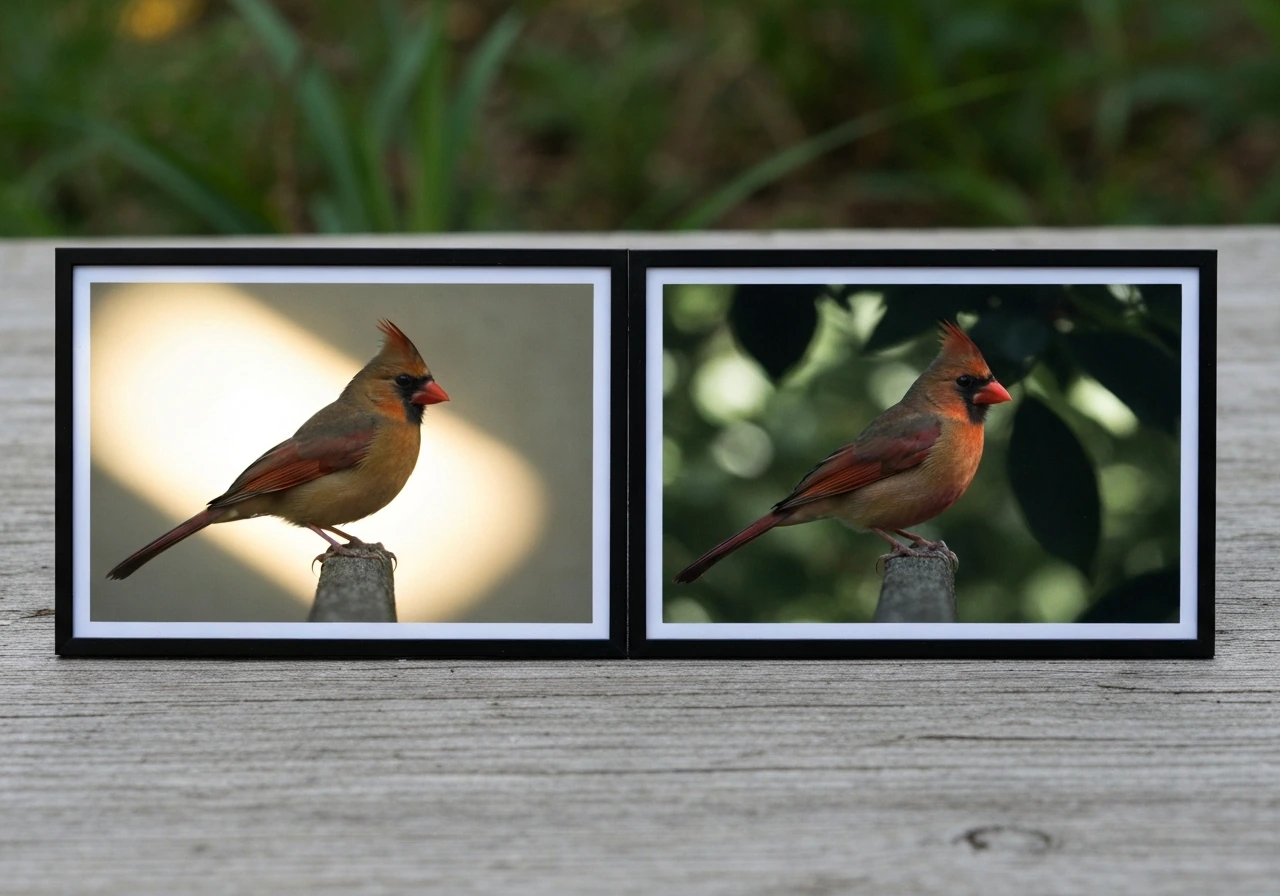
One of the most common mistakes is letting lighting fool you. On a bright sunny day, certain angles can give a female cardinal's warm buffy-tan tones a yellowish cast in photos. Female cardinals are not yellow, they're a warm olive-brown with reddish tinges on the wings, crest, and tail. If you suspect you saw a bird that looks like a female cardinal but isn't, focus on bill thickness, crest, and the overall pattern before concluding it is a true cardinal morph Female cardinals are not yellow. If the bird looked yellowish in a photo but the body shape was clearly cardinal, re-check the image in different light and look for that distinctive reddish tinge on the wings and crest. A related article on what a female cardinal looks like can help you compare.
Another mix-up: people sometimes report a "yellow cardinal" when they've actually seen an Evening Grosbeak, which has a chunky build, a thick pale bill, and a yellow-and-black pattern that can look vaguely cardinal-like at a distance. Evening Grosbeaks are stockier with a yellow eyebrow stripe and white wing patches, which are pretty distinct once you look closely.
Also worth knowing: a yellow morph cardinal will still look ragged or worn compared to a healthy red cardinal. Some documented yellow morph birds have shown frayed crest and wing feathers, possibly linked to the same metabolic issue causing the color change. So if your "yellow cardinal" looked a bit rough around the edges, that actually fits the profile.
- Lighting trick: Don't ID from a single photo in bright sunlight. Check for reddish tinges on wings/crest if you think it might be a female cardinal.
- Size matters: Goldfinches are noticeably smaller than cardinals. If the bird felt similarly sized to a robin, it's not a goldfinch.
- Bill check: Any bird with a thin or slightly hooked bill is not a cardinal variant. The cardinal's bill is unmistakably heavy and seed-cracker-shaped.
- Crest check: If there's no crest at all, it's not a cardinal.
- Mask check: A yellow morph cardinal will still have the black mask around the bill that all male cardinals carry.
How to confirm the ID: photos, angles, and comparison
If you still have the bird in view or you've got a photo, here's a simple decision path. First, look at the bill: thick and heavy means cardinal family, thin means warbler or other small songbird. Second, check for a crest: a raised pointy crest is a cardinal giveaway. Third, look at the face for a black mask. Fourth, check the wings for strong black-and-white patterns, which point toward goldfinch or tanager rather than cardinal.
- Take or examine multiple photos if possible. A side profile gives you bill thickness and crest shape. A front-on shot reveals the face mask. A shot from above or behind shows wing pattern.
- Check the photo in neutral light (indoors or on a shade-lit screen) rather than in direct sunlight, which can shift perceived colors.
- Compare your photo against a reference image of each candidate species, specifically looking at bill shape and crest rather than just color.
- Use your location to filter: eastern US and year-round means goldfinch or rare cardinal morph are most likely. Western US in spring migration points toward tanager. Near wetlands or streams in spring/summer suggests warbler.
- If the bird had a perfect cardinal shape, crest, black mask, and heavy bill but was yellow, document it thoroughly with photos from multiple angles. True yellow morph cardinals are rare enough to be worth reporting to a local birding group or eBird.
The more features you can check beyond color, the faster you'll land on the right answer. Most of the time, a striking yellow bird with a chunky build in a North American backyard turns out to be a goldfinch or tanager rather than a one-in-a-million cardinal mutation. But if all the cardinal features are there and the bird is just yellow instead of red, trust what you're seeing: you may have found something genuinely rare.
FAQ
If I saw a yellow bird with a crest, should I automatically assume it is a yellow morph Northern Cardinal?
Not automatically. Crests can also appear in other birds depending on the angle or posture, so confirm the bill first. A real cardinal should have a thick, heavy bill, plus an upright, stocky silhouette. If the bill looks small or pointed, the crest is likely misleading, and a goldfinch, tanager, or warbler is more probable.
What if the bird was very yellow but had no black face mask, is it still possible it was a cardinal-like species?
Yes, but it changes the odds. Northern Cardinals, including the rare yellow morph, typically show a cardinal body plan with a distinct dark facial area around the bill. If the face area is not masked and the bird also lacks strong crest shape, it points away from cardinal-like IDs and toward uniformly yellow species like Yellow Warbler (often with subtler streaking) or American Goldfinch (usually seasonally bright).
How can I tell a breeding male American Goldfinch from a yellow morph cardinal when both look bright?
Use the bill and size relationship. Goldfinches are smaller with a short, conical finch bill and a short, notched tail tip. Cardinals have a chunky, powerful-looking bill, a longer tail, and a larger, sturdier overall build. If your photo makes the bill look “delicate,” it is very likely goldfinch rather than any cardinal morph.
Does feather wear or molting explain a yellow cardinal-like look?
It can explain “off” coloration, but the pattern matters. Molting or stress may make a red bird appear washed or ragged, yet a true yellow morph would present as bright yellow with the cardinal body plan (crest, thick bill, and typical facial area) rather than just faded red. If the bird looks uniformly yellow rather than bleached, the yellow-morph scenario is more plausible.
Could a female cardinal look yellow in my photo because of the camera or lighting?
Yes. Warm sunlight, auto white balance, and overexposure can shift olive-brown tones toward yellow. To double-check, compare wing and crest coloration to the bill thickness, and review the image in different settings if possible. If the bill is not thick and the overall silhouette is not cardinal-like, treat “yellow” as an artifact.
What time of year should I consider the bird could be an American Goldfinch versus a possible rare yellow morph?
American Goldfinch males show the vivid yellow mainly in spring and summer. If you saw the bird in winter or late fall, a bright yellow impression is less consistent with goldfinch breeding plumage, so you should lean on structure (bill, crest, face pattern) before concluding anything rare. Yellow-morph cardinals are possible any time, but still extremely unlikely.
I live in the West, what should be my first guess for a yellow-and-black bird?
In much of the western United States, a Western Tanager is the leading candidate, especially in late spring migration through summer. Look for the heavier, more “serious” flight and the yellow body with bold black wings and often an orange-red head. If you do not see that tanager-style black-and-yellow contrast, then consider goldfinch or warbler based on bill shape and size.
If the bird was in a small, shrubby area near water, does that make a Yellow Warbler more likely than the others?
Often, yes. Yellow Warblers commonly use shrubby, wet habitat edges, and they tend to look smaller and more delicate than cardinal-like birds. Confirm with a thin, pointed bill, and look for subtle reddish-brown streaking on the chest and a general yellow-green cast on the back rather than a thick, stubby cardinal bill.
How do I avoid confusing an Evening Grosbeak with a yellow cardinal look-alike?
Focus on the pattern details. Evening Grosbeaks usually have a yellow eyebrow stripe and distinct wing patches, and they often show a face pattern that is not the same as a cardinal’s classic dark mask around the bill area. Also check bill color and overall proportions, grosbeaks have a robust pale bill but lack the cardinal’s raised head crest shape.
What is the best “decision order” if I only have a quick glimpse or a blurry phone photo?
Start with bill thickness, then crest presence and shape, then the face area around the bill, and only after that rely on overall color. If the bill is thin and pointed, you are almost certainly not dealing with a cardinal morph. If the bill is thick and the crest plus cardinal-like silhouette are present, then the yellow-morph possibility can be considered, but it remains exceptionally rare.
Could I be seeing the bird called the “Yellow Cardinal” from South America instead of a North American look-alike?
In most of North America, that is very unlikely. The South American species is rare and threatened and typically associated with its native region rather than common backyard sightings. If your observation is in the United States or Canada, your realistic options are the North American look-alikes covered here, with goldfinch, tanager, or warbler being the common explanations.
Next Articles
What Bird Looks Like a Cardinal? Lookalikes and ID Tips
Cardinal lookalikes explained with field marks for gray, black, small, and female-like birds plus quick photo checks.
Bird That Looks Like a Female Cardinal but Is Not
Rule out female cardinal fast, then compare key lookalikes by plumage, bill, size, patterns, habitat, and flight behavio
What Does a Cardinal Bird Look Like? Key Features Guide
Learn key features to spot a cardinal bird: color, crest, bill, wings, tail, and look-alikes for fast ID.