The bird you're thinking of is most likely an ocellated turkey, a ring-necked pheasant, or a green peafowl depending on where you spotted it. All three get mixed up with peacocks regularly, and for good reason: long decorative feathers, bold eye-like spots, and iridescent colors are shared across all of them. Once you know exactly what to look for, you can narrow it down in about 30 seconds. This same kind of look-alike confusion also happens with the question of what bird looks like a bald eagle.
What Bird Looks Like a Peacock? Quick Identification Guide

Marcus Whitley
28 Jun 2026
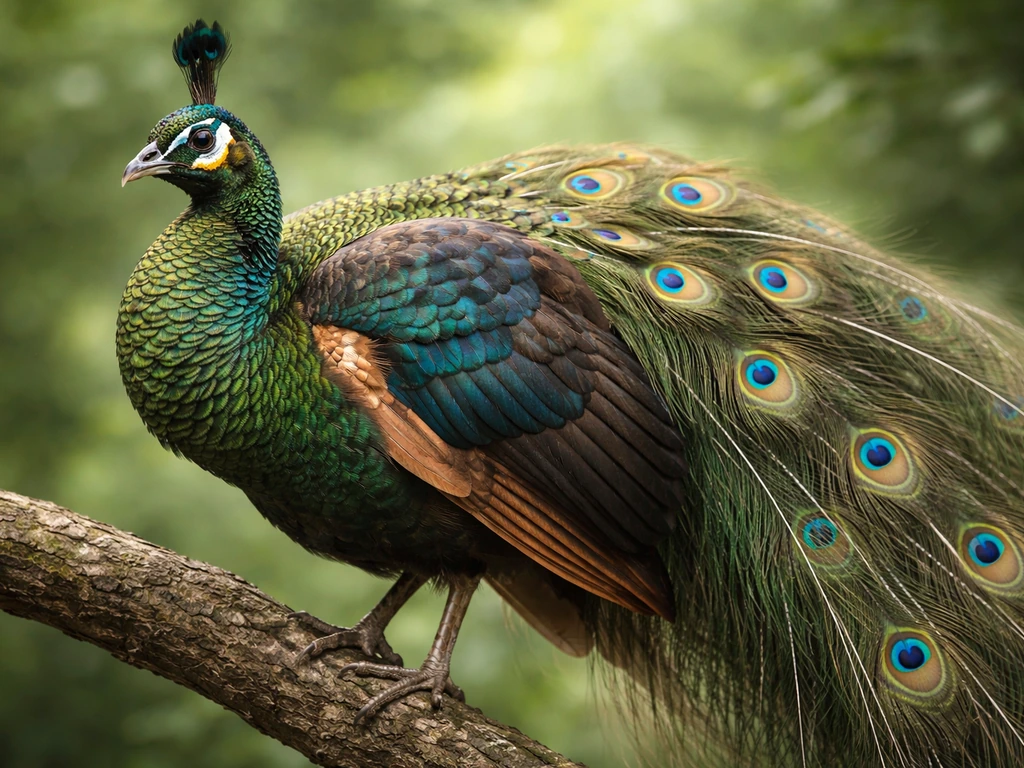
The most likely matches for a peacock-looking bird
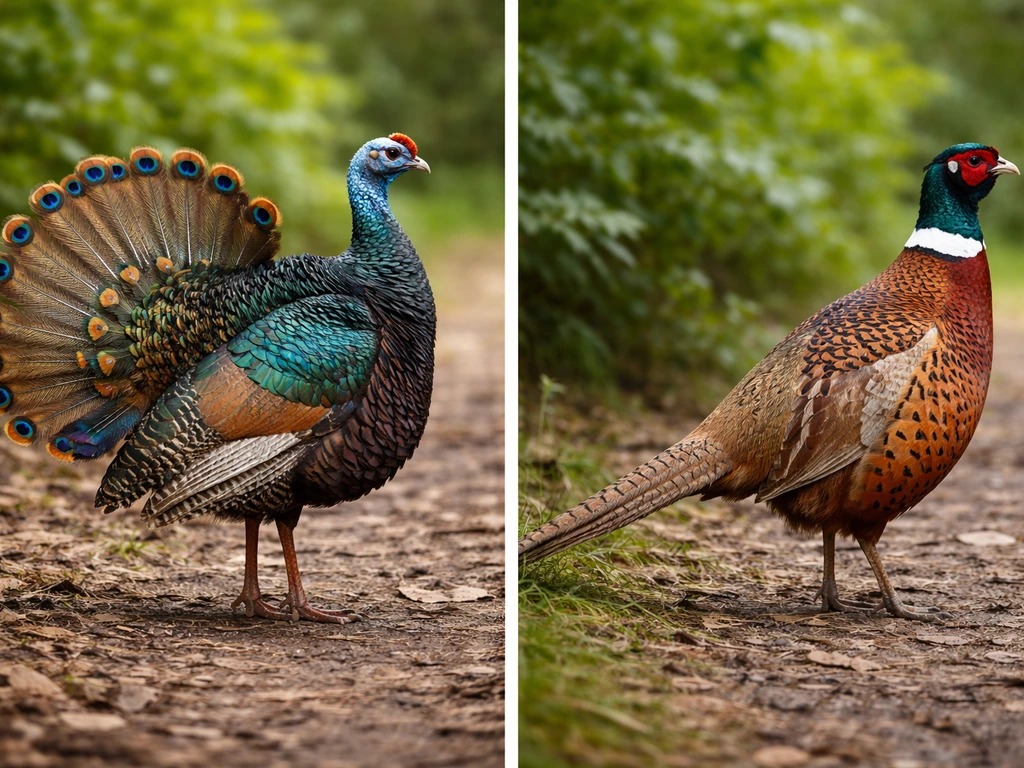
Most people who ask this question have seen one of a handful of specific species. Here are the top candidates, ranked by how often they cause confusion.
Ocellated turkey
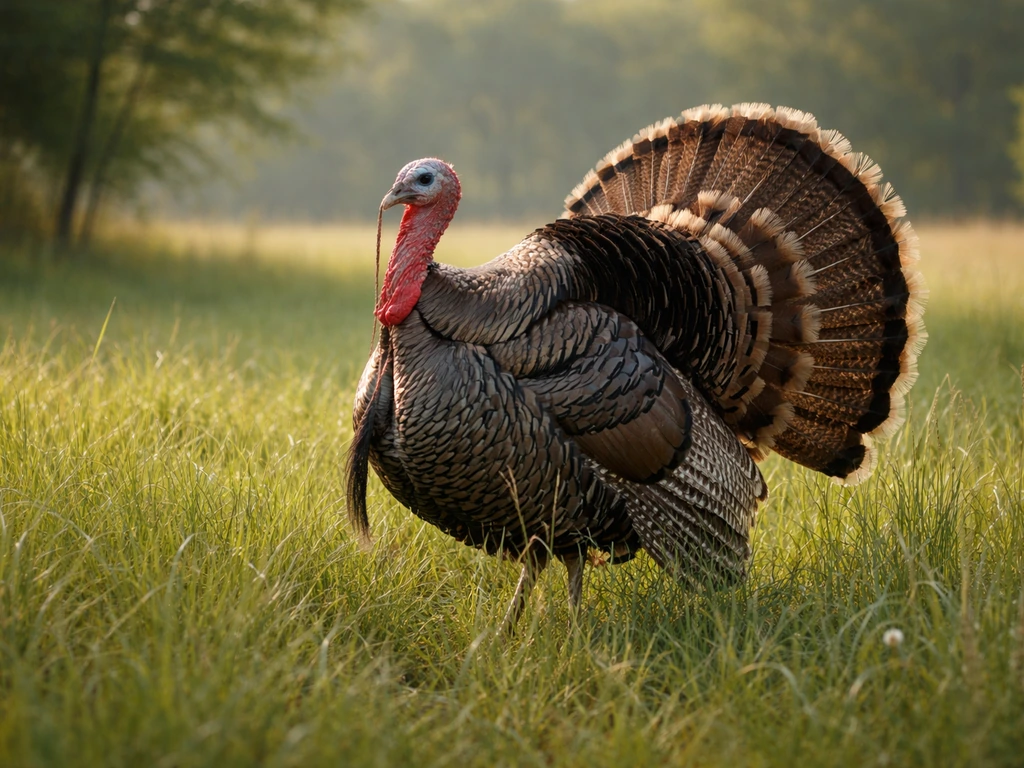
This is the bird that probably fools more people than any other. The ocellated turkey lives in the Yucatan Peninsula of Mexico and parts of Central America, and it earns its name directly from those peacock-style eye markings. Its blank" rel="noopener noreferrer">tail feathers are bluish-grey with a bright blue-bronze spot near the tip and a gold outer edge, making each feather look like a miniature peacock eye. When a male fans his tail in display, the effect is genuinely stunning and unmistakably peacock-reminiscent. It's a smaller, more compact bird than a true peacock, with a bare blue head dotted with orange and red warty nodules.
Ring-necked pheasant
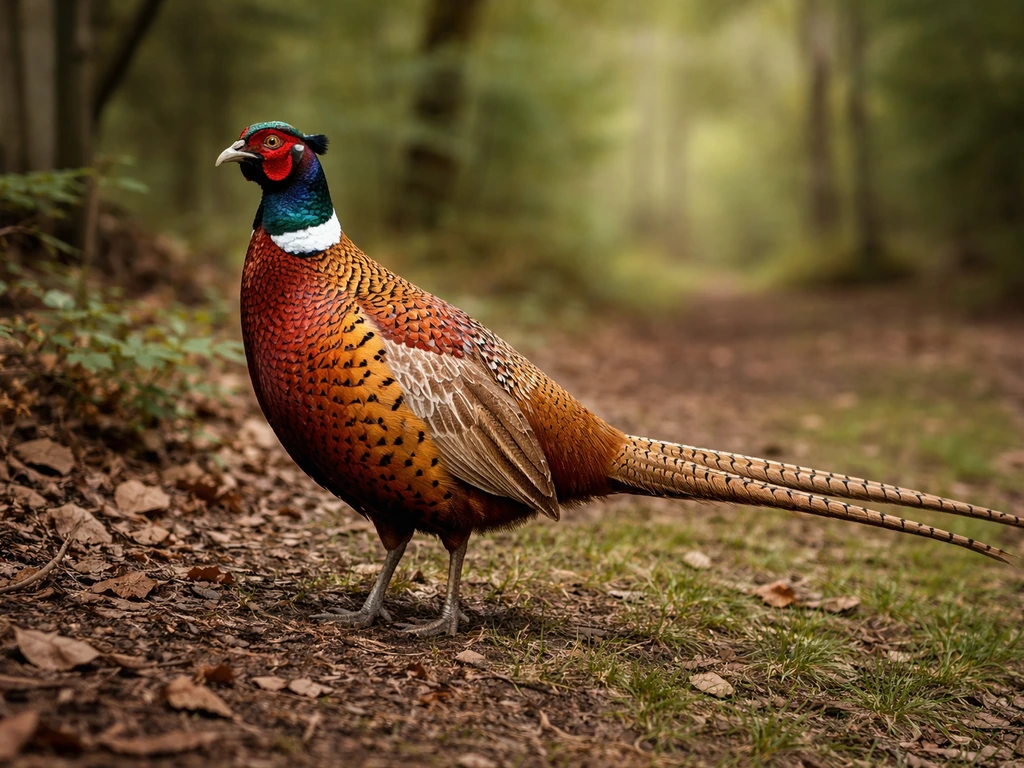
Male ring-necked pheasants are the peacock lookalike that most North American and European birders encounter. They're big, bold, and dramatic, with copper and gold body plumage, a long pointed tail, and a bright red face patch. Male ring-necked pheasants are large, chicken-like birds with a blank" rel="noopener noreferrer">long, pointed tail and bold, gamebird-like color patterning that often causes confusion with peacocks. If you are wondering what bird looks like an eagle, compare overall size, posture, and the presence or absence of a hooked raptor silhouette large, ornate gamebird. They don't have eye spots on their tail, but the overall impression of a large, ornate gamebird with a sweeping tail reads as peacock-like to a lot of people. They're common across farmland, grassland edges, and forest margins throughout the US, UK, and Europe.
Green peafowl
If you're in Southeast Asia (Thailand, Myanmar, Java, or similar), you might be looking at a green peafowl rather than the more familiar Indian peacock. Green peafowl males look almost identical at a glance, but the neck and face are markedly different. The neck is bright green and scaly-looking rather than the rich blue of an Indian peacock, and the crest feathers are stiffer and more upright, almost like a fan rather than a loose spray. They're also noticeably taller and leaner in body shape.
Great argus pheasant
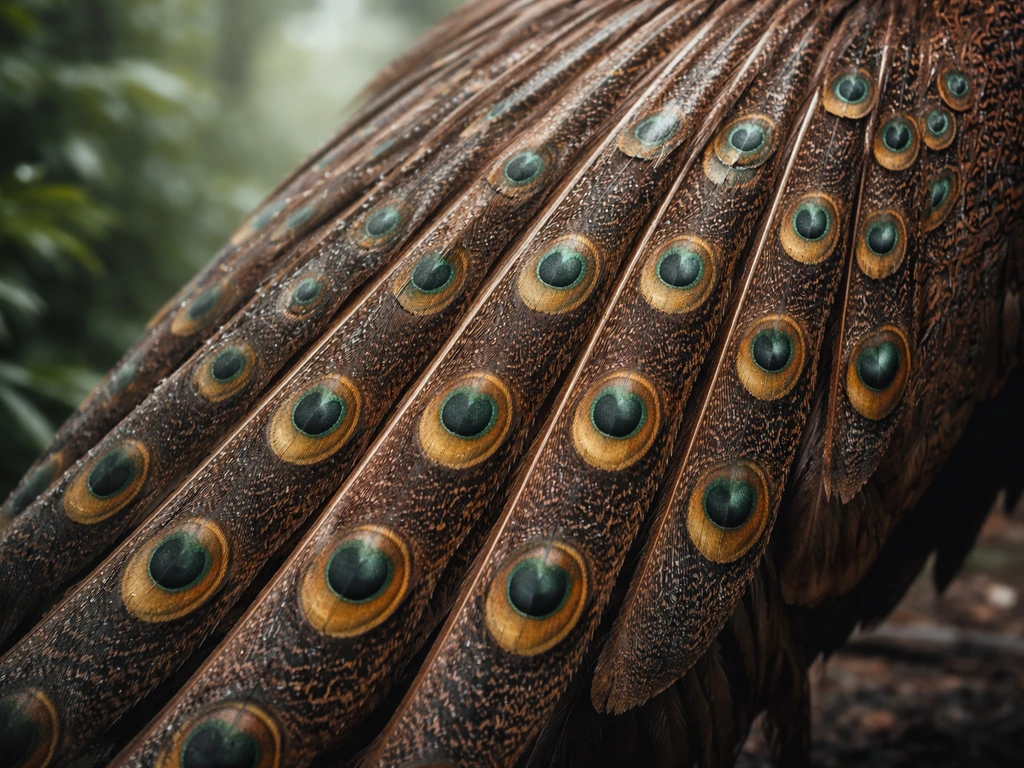
Found in the rainforests of Southeast Asia, the great argus pheasant has enormously elongated secondary wing feathers decorated with rows of circular eye-like spots. During display, a male spreads these feathers into a huge circular fan that looks almost exactly like a peacock train at first glance. The spots are tan and brown rather than iridescent blue-green, but the overall silhouette of a large bird with a huge circular feather display is genuinely confusing.
Indian peafowl (the real thing, in an unusual context)
Sometimes people see a real peacock and don't realize it because they encounter a female (peahen), a juvenile, or a white color morph. White peacocks are still Indian peafowl, but they can look very different from the classic bird people expect real peacock. Peahens are muted brown-green with no train, so they can look surprisingly unlike what people expect. White peacocks, which are color morphs of Indian peafowl, have all the same structure but pure white feathers, which can throw people off completely.
Fast field checklist: size, shape, and posture
Before you get into color details, run through these quick physical checks. They'll cut your candidate list in half immediately.
| Feature | True peacock (Indian peafowl) | Ocellated turkey | Ring-necked pheasant | Great argus pheasant |
|---|---|---|---|---|
| Body length (male) | About 3.5 ft body + up to 6 ft train | About 2.5–3 ft | About 2.5–3 ft | About 2.5–3 ft body + long wing feathers |
| Overall size feel | Very large, almost turkey-sized body | Medium turkey | Large chicken | Large pheasant |
| Head/neck | Blue (Indian) or green (green peafowl), fan crest | Bare blue skin, orange nodules | Red face patch, white neck ring | Brown, no crest |
| Posture | Upright, tall, long-necked | Upright but stockier | Low, horizontal, sneaky | Upright in display |
| Tail at rest | Very long drooping train behind body | Fan tail, held flat or fanned | Long pointed tail swept back | Long tail feathers drooping |
Color and pattern telltales: eye spots, iridescence, and tail shape
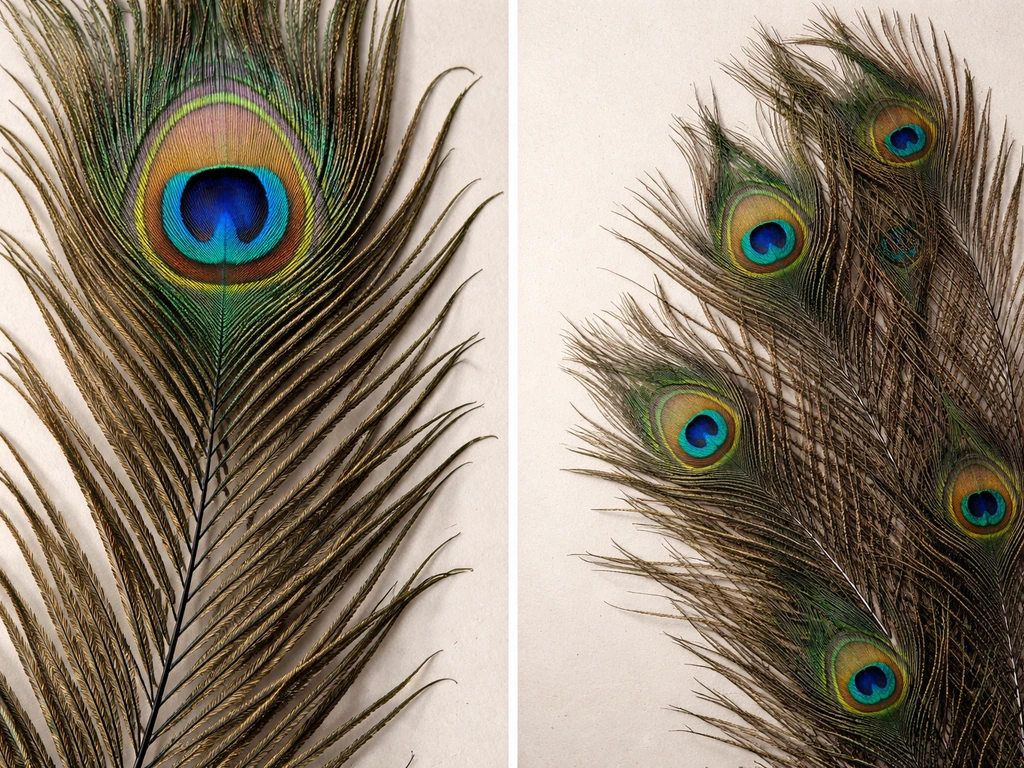
The single most reliable visual clue is whether the eye spots are on the tail itself or somewhere else on the bird. Here's how to read those markings fast.
How peacock eye spots actually look
A true peacock's train is covered in ocelli, which are circular markings that genuinely resemble an eye. Each one has a dark center, a ring of iridescent blue, then an outer ring of bronze-green. The whole train shimmers when light hits it because the feathers are structurally colored, meaning the color shifts depending on your angle. This iridescence is metallic and intense, not just a sheen.
Ocellated turkey spots
The ocellated turkey's spots are similar in concept but each one sits near the tip of a tail feather rather than being scattered across a large continuous train. They're blue-bronze with a gold rim, and they're impressive up close, but the feathers are individual and clearly separate rather than blending into one sweeping display. The body itself also has a blue-green iridescent sheen.
Great argus pheasant spots
The great argus has rows of round spots on its secondary wing feathers, not its tail. They're tan, brown, and cream colored, not iridescent blue-green. If you see eye-like spots but the overall color is earthy brown rather than metallic, you're almost certainly looking at an argus or a related pheasant species.
Ring-necked pheasant color pattern
No eye spots at all. What fools people here is the overall boldness of the plumage: rich copper, gold, deep green on the head, and a very long tail. But the tail is barred and pointed, not fan-shaped, and there are no circular markings. The red face wattle is a quick giveaway.
Tail feather and display differences vs. real peacocks
This is where the ID gets really interesting, because the peacock's most famous feature is technically not its tail at all. That enormous fan is made of the bird's upper tail coverts, the feathers that normally just cover the base of the tail. The actual tail feathers are short and hidden underneath. When a male raises his display, those covert feathers fan out to about seven feet wide, creating a nearly circular wall of feathers behind him.
Ocellated turkeys display by fanning their actual tail feathers upright, like a regular turkey but more colorful. The display is fan-shaped but much smaller and held vertically rather than spread in that characteristic tilted-forward angle a peacock uses. You'll also notice the ocellated turkey's body faces toward you during display, while a peacock often turns sideways to show the full width of the train.
The great argus pheasant fans out its secondary wing feathers, not tail coverts, which means the display fans outward from the wings rather than behind the body. It also calls loudly during display, a booming two-note sound that carries far through the forest. Ring-necked pheasants don't fan at all during their display, they just stand tall, flap their wings, and crow.
Where to look: habitat and geographic range clues
Geography is honestly one of the fastest ways to narrow this down. If you know roughly where the bird was seen, most candidates drop off the list immediately.
- North America (outside parks or zoos): ring-necked pheasant is by far the most common candidate, found across farmland, grasslands, and field edges from the Midwest to the Pacific Northwest and throughout New England
- Yucatan Peninsula, Belize, Guatemala, or southern Mexico: ocellated turkey is the one, found in lowland forests and forest edges
- Southeast Asia (Thailand, Myanmar, Malaysia, Indonesia): green peafowl or great argus pheasant are both plausible, great argus in dense rainforest, green peafowl in more open forest and woodland edges
- UK and Europe: ring-necked pheasant again, introduced widely and now extremely common in farmland across Britain and continental Europe
- India, Sri Lanka, or Pakistan: Indian peafowl is native here, but also watch for jungle fowl and peacock pheasants in forested areas
- Parks, zoos, or large gardens almost anywhere: Indian peafowl are commonly kept as ornamental birds and often roam freely, so don't rule out a real peacock just because you're somewhere unexpected
It's worth noting that Indian peafowl have established feral populations in parts of Florida, California, and Hawaii, so if you're in those areas and see something that looks unmistakably peacock-like, it very well could be the real thing.
Step-by-step ID method using photos
If you've got a photo and you're trying to confirm what you saw, work through these steps in order. Each one eliminates candidates quickly.
- Check the overall size against any reference object in the photo. A true peacock body is roughly the size of a large domestic turkey. An ocellated turkey is noticeably smaller. A ring-necked pheasant is closer in size to a large chicken.
- Look at the neck and head color first. Blue neck means Indian peafowl. Green scaly neck means green peafowl. Bare blue skin with orange nodules means ocellated turkey. Red face wattle and white collar means ring-necked pheasant.
- Check for a crest. Peacocks of both Indian and green species have a distinct head crest. Ocellated turkeys and pheasants do not.
- Now look at the tail or display feathers. Are the feathers part of a huge fan behind the body (peacock train)? Or a fanned tail held upright (ocellated turkey)? Or a long pointed tail swept back (pheasant)?
- Look for eye spots. Are they on the main display fan? Where are they located on each feather: near the tip, scattered throughout, or on wing feathers? What color is the spot: blue-green iridescent, blue-bronze with gold, or brown and cream?
- Check the iridescence. Zoom into the photo and tilt your screen slightly. True peacock feathers and ocellated turkey feathers shift color with the light angle. Pheasant feathers are bold but don't have the same liquid metallic shift.
- If you're still unsure, note the habitat in the background. Dense jungle versus open farmland versus tropical forest will often seal the ID based on range alone.
When you should double-check
A few situations can trip up even confident identifications, and it's worth knowing them upfront so you don't lock in the wrong answer.
Lighting is the biggest issue. Iridescent feathers look completely different in shade versus direct sunlight. A ring-necked pheasant photographed in bright low-angle light can look almost metallic, and an ocellated turkey in deep forest shade can look surprisingly dull. If your photo is backlit or taken in heavy shade, the color-based clues become unreliable. In those cases, fall back on shape and structure: head features, tail form, and body size are lighting-independent.
Partial views are another common trap. If you only saw or photographed the bird from behind or at a steep angle, the tail display can look very different from the classic front-on view. A peacock photographed from directly behind during display looks like a ring of feathers with almost no body visible. A woodpecker look-alike is often a larger, more display-focused bird, so comparing beak size and overall posture helps tell them apart ring of feathers. An ocellated turkey from behind in mid-display can look surprisingly peacock-like. Try to get a side or front view before committing to an ID.
Juvenile and female birds are the third source of confusion. Young Indian peacocks don't have a train at all, and peahens are dull brown-green. If you're looking at a large brownish bird with a plain tail and think it might be peacock-related, check for the characteristic head crest and the slightly iridescent green-bronze neck sheen that both sexes of Indian peafowl carry.
One more thing: white peacocks catch people completely off guard. They're a genuine color morph of Indian peafowl, not albinos, and they have all the same structure including the full train and ocelli, but all the feathers are white. In bright light the eye spots are nearly invisible, which makes people doubt themselves. If you see a huge white bird with an enormous fan-shaped display, trust the shape even if the color seems wrong.
If you're still uncertain after working through all of these steps, apps like Merlin Bird ID (from the Cornell Lab) are genuinely excellent for photo-based ID and handle confusing angles and lighting better than most guides. Upload your best photo, enter your location, and the species list it returns will already be filtered to what's actually possible where you are.
Bird ID by appearance is a skill that connects across species. The same eye-spot and tail-feather thinking that helps here applies just as well when you're trying to distinguish birds with similarly dramatic silhouettes, like sorting out large raptors or heavy-bodied gamebirds in the field. Once you start reading feather structure and display behavior as identification tools, it gets easier fast.
FAQ
How can I tell if it is a true peacock versus an ocellated turkey when I only see the tail from a distance?
Zoom in mentally on whether the “eyes” are part of one continuous, metallic-looking train wall or whether they look like separate eye-spots set near the tips of individual tail feathers. True peacock ocelli are tightly arranged across the fan of coverts and often shimmer strongly, while ocellated turkey eye-spots usually look like distinct feather markings and the body shows a smaller, more compact overall silhouette.
What should I check if the bird looks peacock-like but there are no obvious eye spots at all?
Look for structural cues that do not depend on the ocelli being visible. For Indian peafowl, the male’s head crest and the slightly iridescent green-bronze neck sheen are strong indicators even when markings are hard to see. Also check tail shape, a true peacock’s coverts form a fan-like wall, while many game birds have a barred, pointed, non-fan tail.
Can backlighting or shade completely invalidate color-based identification?
Yes. Backlight, heavy shade, or low-angle sun can make iridescent feathers look dull or even shift their apparent hue. In those cases, rely on lighting-independent checks like where the eye-like spots sit (tail coverts versus wing feathers), the overall body posture, and the display geometry (fan behind and tilted versus wing spread versus upright tail fan).
What if I only have a photo taken from behind, is there still a reliable way to ID?
Use the “geometry” first. A peacock photographed directly behind during display can look like a ring of feathers, so instead confirm the bird’s likely origin by focusing on the presence of a body-facing crest, the spacing and metallic rings of ocelli across the fan, and whether there are any wing-feather spot rows visible from the angle. If the photo shows any circular spots on the wings rather than the tail display area, shift your focus to great argus pheasant.
How do I distinguish a female or juvenile peafowl from other colorful gamebirds?
If you do not see a train, do not assume it is not peafowl. Peahens and juveniles typically lack the dramatic train, so the best confirmations are a visible crest on the head and a green-bronze iridescent look on the neck, plus the general peafowl body shape. Then compare tail form, peahens will not produce a full ocelli-covered fan.
I saw something white and peacock-like, are white peacocks just albino birds?
No. White peacocks are a color morph of Indian peafowl, not albinism. They should still show the same fan structure and the same underlying ocelli pattern, but the “eyes” can appear faint or nearly invisible in bright light, so trust the distinctive fan shape over the feather color alone.
How can I use geography when I am traveling or if the bird might be an escaped captive?
First, consider where established feral peafowl populations exist, such as Indian peafowl in parts of Florida, California, and Hawaii. Then also remember that captive waterfowl and gamebirds can escape. If the location is outside the typical ranges described for the lookalikes, treat the ID as provisional and lean harder on structure and display behavior rather than species presence.
What display behavior detail is most useful if the bird is calling and moving and the photo is blurry?
Focus on what the display is made from. Peacocks raise coverts to create a circular wall behind them, ocellated turkeys raise their actual tail feathers more upright like a smaller fan, great argus pheasants spread elongated secondary wing feathers outward, and ring-necked pheasants typically stand and flap without fanning. If you can identify which body part spreads into the “fan,” that often resolves the ID.
Is Merlin Bird ID likely to help, or can it still mislead with this specific group of lookalikes?
It usually helps because it filters by location and similar species, and it can manage angle and lighting differences better than many guides. Still, double-check the top results against one structural rule from the article, especially where the eye spots appear (train versus tail-feather tips versus wing-feather rows). If your photo shows wing-based spots, expect the app’s top pick to change accordingly.