The birds most commonly mistaken for a turkey are the Ring-necked Pheasant, Ruffed Grouse, Helmeted Guineafowl, and the Turkey Vulture. If you’re comparing to a bald eagle look-alike, the key is the head and overall silhouette rather than turkey-like bare skin what bird looks like a bald eagle. Peacocks get thrown into this conversation too, especially when people catch only a quick glimpse of a large, dark bird on the ground. Each of these has at least one feature that triggers a "wait, is that a turkey?" moment, but once you know what to look for, you can sort them out in seconds.
What Bird Looks Like a Turkey Top Lookalikes and How to Tell

Marcus Whitley
19 Jun 2026
Your quick list of turkey look-alikes
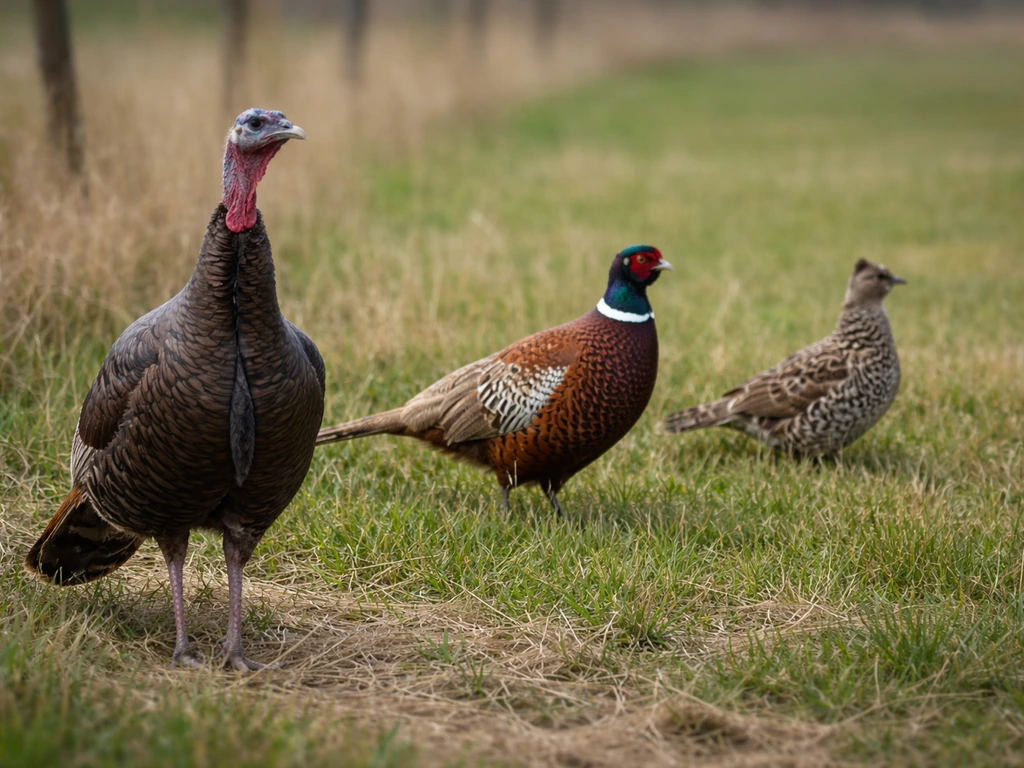
- Ring-necked Pheasant: large, long-tailed ground bird with rich colors; the most common mix-up in farm country
- Ruffed Grouse: smaller but fans its tail in a way that echoes a turkey's display
- Helmeted Guineafowl: stocky, spotted, bare-headed; introduced to many parts of North America
- Turkey Vulture: soaring bird that gets called a turkey when seen on the ground or perching with wings spread
- Indian Peafowl (Peacock): size, ground-foraging habit, and fan display confuse people who aren't expecting one
What a wild turkey actually looks like (your baseline)
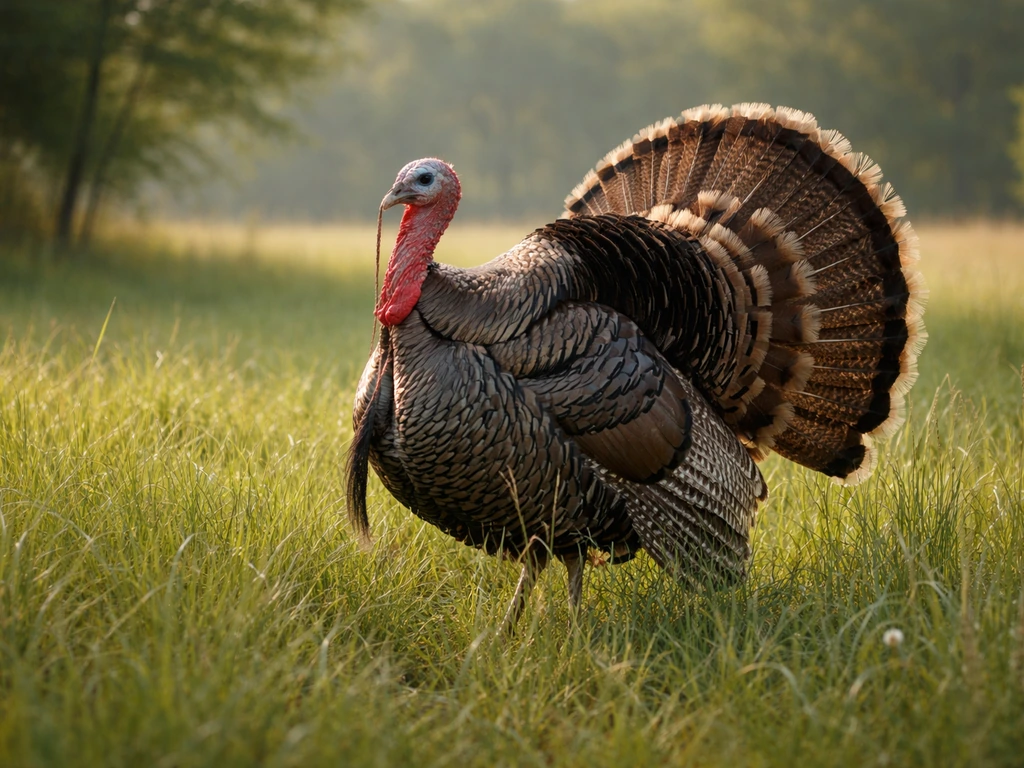
Before you can spot an impostor, you need a solid picture of the real thing. A wild turkey is a very large, dark bird. Males (called gobblers or toms) stand about 4 feet tall and weigh 15 to 25 pounds, so they feel enormous when you see one in person. The body is dark brown to black with a striking metallic sheen, almost like oil on water in good light. The most distinctive feature is the head and neck: completely bare skin, usually bluish-gray with red wattles hanging from the throat. During spring breeding displays, that bare skin shifts rapidly from bluish-gray to brilliant red and white, and a fleshy flap called a snood droops over the bill. Males also grow a bristly beard that hangs from the chest. Females are smaller, more subdued in color, and have the same bare head skin but without the red flash. Both sexes have long, strong legs, a thick neck, and a broad fan-shaped tail that the males spread wide when strutting.
The traits that matter most for ID
Head and neck
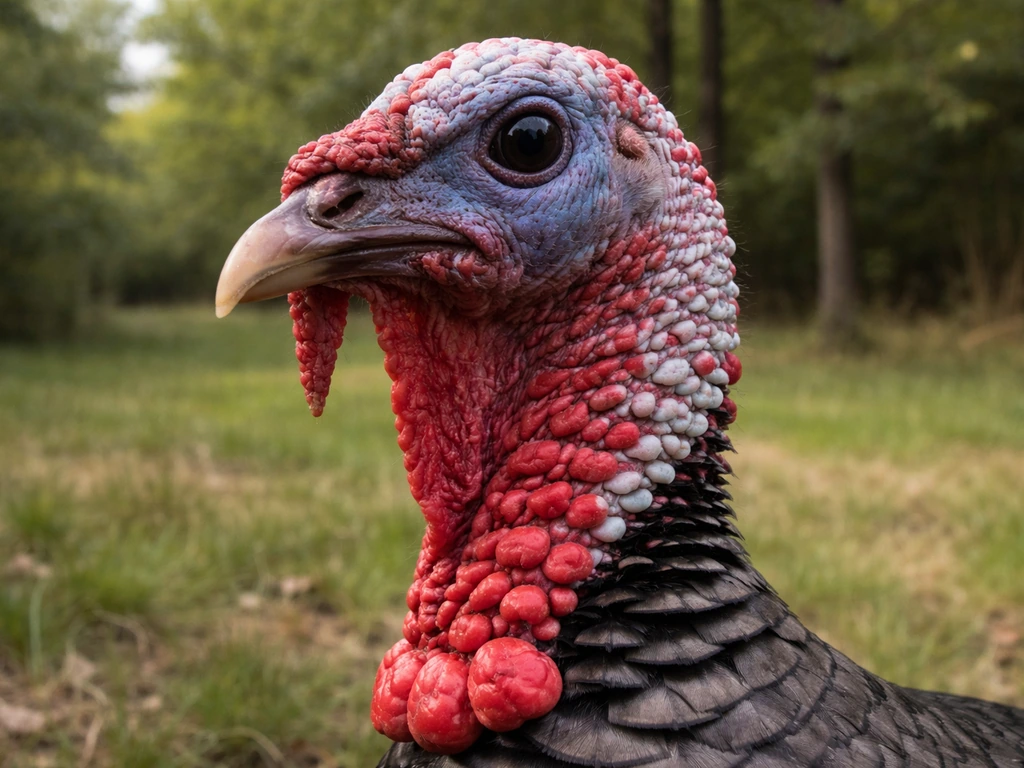
This is your fastest shortcut. A wild turkey's head and upper neck are almost entirely featherless, with wrinkled, colorful bare skin. No other common North American bird you're likely to encounter in the field shares this exact look. Audubon’s wild turkey account notes that once you can see the full silhouette and the context of a display, the species is blank" rel="noopener noreferrer">hard to mistake. If what you’re really trying to figure out is whether a bird looks like a woodpecker, you’ll want to compare its bill, stance, and tail shape against common woodpecker species what bird looks like a woodpecker. If the bird you're watching has a fully feathered head, it is almost certainly not a wild turkey.
Body shape and size
Turkeys are built like a football on legs: deep-chested, round-bodied, and heavy. When a male is strutting, he looks almost spherical, with wings drooped and tail fanned. That combination of sheer bulk and the distinctive strutting posture is hard to replicate. Pheasants are slender by comparison. Grouse are noticeably smaller. Peacocks match the size but have a completely different silhouette.
Tail shape
A wild turkey's tail, when fanned, is broad and even all the way around, like an open hand. Pheasants have long, pointed tails they hold straight back. Ruffed Grouse have a fan-shaped tail too, but it has a wide dark band near the tip that turkeys don't have. Peacocks have their famous "train" of upper tail coverts, which is elongated and dramatically patterned, nothing like a turkey's.
Color pattern and sheen
Turkeys are dark overall with a coppery to bronze metallic sheen on the body feathers. The rump and tail have a coppery tone that catches light well. Pheasants have a completely different palette: males are rich chestnut, gold, and green with a white neck ring. Grouse are brown and gray with intricate barring. Guineafowl are dark with white spots scattered across the body.
Legs
Turkeys have long, strong, unfeathered legs. Males grow spurs. If you see a big bird striding through a field on clearly visible, sturdy legs, that's consistent with turkey. Grouse and some pheasants have feathered legs closer to the feet, which is a helpful distinguishing detail if you can get a clear look.
Side-by-side: how the look-alikes stack up
| Bird | Size vs Turkey | Head | Tail | Key giveaway |
|---|---|---|---|---|
| Wild Turkey | Baseline (very large) | Bare, red/blue skin, wattles | Broad fan (male) | Bare colorful head, strutting posture |
| Ring-necked Pheasant | Smaller, more slender | Fully feathered, iridescent green/blue head, white neck ring (male) | Long, pointed, held straight back | White neck ring, pointed tail |
| Ruffed Grouse | Much smaller | Fully feathered with small crest | Fan-shaped with dark terminal band | Small size, dark tail band, forested habitat |
| Helmeted Guineafowl | Smaller, stocky | Bare with a bony helmet casque | Short, drooping | White-spotted dark body, distinctive helmet |
| Turkey Vulture | Similar wingspan, lighter body | Small, bare red head | Long, held in V-shape when soaring | Soars with wings in V, naked red head only |
| Indian Peafowl (Peacock) | Similar or larger | Fully feathered with crest | Dramatic elongated train with eye spots (male) | Eye-spotted train, blue neck feathers |
The most common mix-ups, and how to avoid them
Turkey vs Ring-necked Pheasant
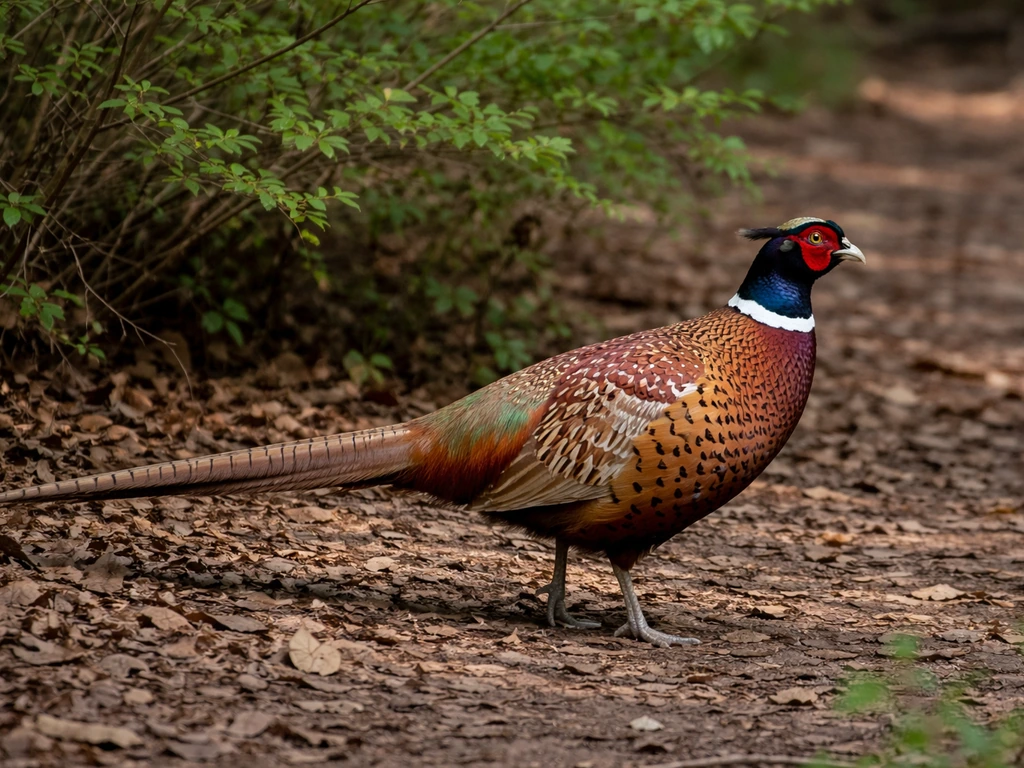
This is the number one confusion, especially in farm fields and brushy edges. Both are large, colorful ground birds, and from a distance in poor light you can catch a similar silhouette. The fix is simple: look at the tail. A pheasant's tail is long, slender, and tapers to a point, streaming behind it like a banner. A turkey's tail either fans out wide (when displaying) or folds into a broad, rounded wedge shape at rest. If you are wondering what bird looks like an eagle, start by comparing overall body proportions and tail shape like you would with a turkey and pheasant. Also check the head: a male pheasant has a fully feathered, iridescent dark green head with a bright white neck ring. That white ring is visible at surprising distances.
Turkey vs Ruffed Grouse
Grouse are much smaller than turkeys, more like a plump chicken than a turkey. But male Ruffed Grouse do a drumming display where they fan their tail and puff up, which can momentarily resemble a turkey strut if you're not ready for it. The American Bird Conservancy describes ruffed grouse display mechanics: the male stands tall, braces backward on its tail, and fans air by rotating its wings back and forth. Size is your clearest clue here. A Ruffed Grouse is around 15 to 19 inches long; a turkey is 3.5 to nearly 4 feet. If the bird doesn't look remarkably large, it's probably not a turkey.
Turkey vs Turkey Vulture
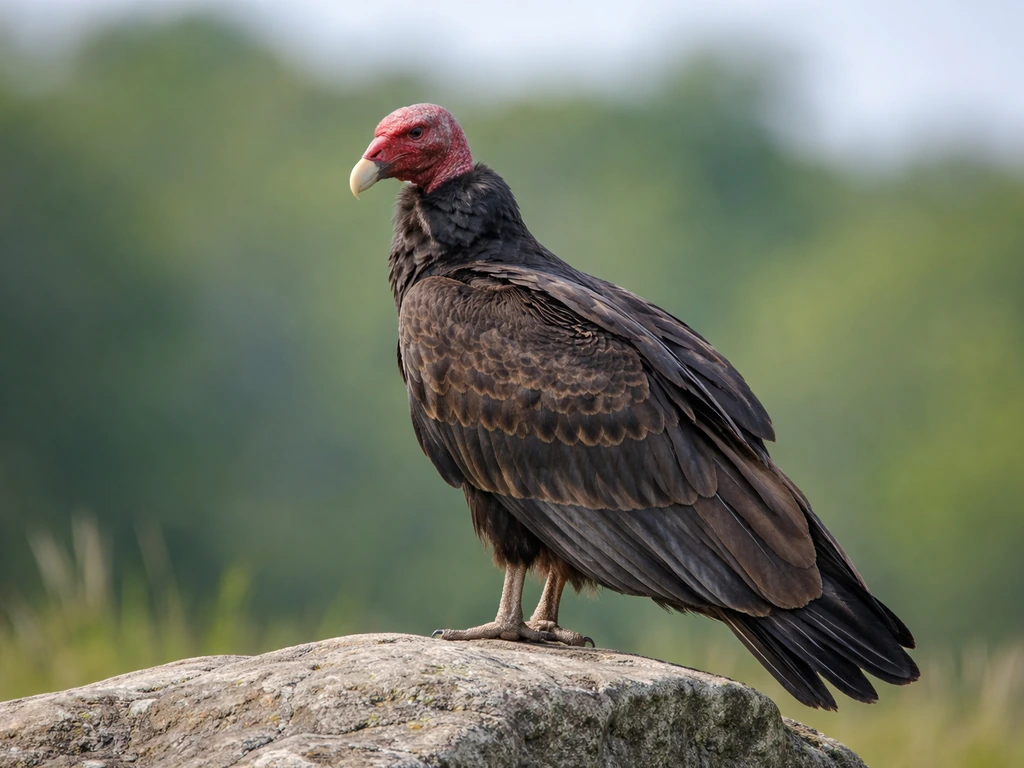
This one trips people up because of the shared name. Turkey vultures do have a small bare red head, which is the naming connection, but they're built nothing like a turkey in any other way. In flight, a turkey vulture holds its wings in a distinctive V-shape (called a dihedral) and rocks from side to side. On the ground, they're hunched and awkward. Turkeys walk upright and confidently on their long legs. If it's soaring, it's not a turkey.
Turkey vs Peacock
Peacocks are not native to North America but they show up in suburban areas, farms, and parks where they've been kept and sometimes escape. The confusion happens when someone sees a very large bird with an impressive display and doesn't immediately recognize it as a peacock. The giveaway is the train: a peacock's display feathers are elongated and covered in iridescent eye-spot patterns. A turkey's fan is plain brown with a dark terminal band. Also, a peacock's neck and chest are a brilliant cobalt blue, while a turkey's neck is bare and fleshy. Like peacocks, turkeys are visually dramatic birds, and it's worth checking out our guide on what bird looks like a peacock for more on separating these two.
Turkey vs Helmeted Guineafowl
Early European settlers in North America apparently confused guineafowl with wild turkeys, and the mix-up still happens today in areas where guineafowl have been introduced or escaped from farms. The guineafowl is smaller, rounder, and covered in white polka dots on a dark gray body. The bare head carries a bony, helmet-like casque on top that is completely unlike anything on a turkey. Once you see those spots, you won't mix them up again.
Wild Turkey vs domestic/farm turkey
Sometimes the question isn't about a different species at all. Domestic turkeys can escape or be released, and they look similar to wild turkeys but often have broader, heavier bodies, whiter plumage (especially in commercial breeds), and sometimes deformed or overgrown features from selective breeding. A r/birdpics thread also highlights this common real-world confusion between wild turkeys and domesticated or escaped turkeys that look close enough at a glance Domestic turkeys can escape or be released. Wild turkeys tend to be leaner, faster, and more alert. If the bird looks heavy and sluggish and is near a farm or suburb, an escaped domestic bird is worth considering.
Use location, habitat, and season to narrow it down
Where and when you spot a large ground bird tells you a lot before you even look at the feathers. Wild turkeys live across most of the United States, parts of Canada, and have been introduced to Hawaii and parts of the West. They favor open woodlands, forest edges, and agricultural fields, especially around oak trees, which produce the acorns they rely on in fall and winter. You're most likely to see turkeys in early morning and late afternoon as they move between roosting areas in trees and feeding grounds on the ground.
Ring-necked Pheasants are more common in the Midwest, Great Plains, and Pacific Northwest, especially in farm fields, grasslands, and brushy hedgerows. They're not native and their populations depend heavily on releases for hunting. Ruffed Grouse are a forest bird, preferring dense young forests and aspen stands in the Northeast, Great Lakes region, and Appalachians. If you're deep in the woods and a large-ish bird flushes dramatically in front of you, Ruffed Grouse is far more likely than turkey. Guineafowl sightings in North America almost always point to farms or rural suburbs. Turkey Vultures are widespread but easy to rule out the moment you see them soar. Season matters too: spring is when male turkeys are most visible and most dramatically plumed, strutting and displaying to attract females. If you see a bird doing an impressive fan display in spring woods or fields, turkey moves to the top of the list.
Still not sure? Here's what to photograph or record
If the bird disappears before you get a confident ID, don't worry. A few specific photos or notes will get you to an answer quickly when you check later.
- Head close-up: is the head bare or feathered? What color is the bare skin, if any? Are there wattles or a casque?
- Tail shape: fan-shaped and broad, long and pointed, or short and drooping? Any distinctive bands or patterns near the tip?
- Overall size: try to get the bird next to something you can reference later, like a fence post or a car, or compare it mentally to a chicken, a crow, or a goose
- Neck color and texture: is it feathered with iridescent color, or bare and wrinkled skin? Is there a white ring?
- Body color and pattern: solid dark with sheen, spotted, barred, or multicolored?
- Leg color and whether the legs look long and sturdy or shorter and partly feathered
- Behavior: is it strutting and fanning, foraging quietly, soaring overhead, or drumming in a display?
- Location notes: write down the habitat type (open field, forest edge, backyard, near water) and your state or region
With those details in hand, apps like Merlin Bird ID from Cornell Lab can often clinch the identification in seconds using your location and a quick description. If you captured a photo, iNaturalist will run it through image recognition and usually return strong suggestions. For the most satisfying confirmation, post the photo to a birding group or forum with your location included. The community response is usually fast and reliable.
FAQ
If I see a large bird on the ground, how can I rule out a turkey quickly when the lighting is bad?
Yes. If the bird has any substantial feathering on the head and upper neck, especially a fully feathered crown, it is almost never a wild turkey. Turkeys have a prominently bare upper head and neck with wrinkled, colorful skin, so a “turkey-like body” isn’t enough if the head looks normal for a passerine.
What tail detail most reliably separates turkeys from pheasants when both look similar at a glance?
Watch how the tail behaves as the bird turns or pauses. A turkey’s resting tail forms a broad, rounded wedge and, during display, it fans wide. Pheasants are usually long-tailed and taper to a point, with the tail streaming straight back like a banner.
Could a turkey vulture ever be mistaken for a wild turkey if the head is bare?
If you see a bird with a bare, red head but it is soaring on updrafts, treat it as a vulture look-alike first, not a turkey. Turkey vultures typically hold their wings in a distinctive V shape and rock while in flight, and they also tend to look hunched when on the ground.
How can I tell if it might be an escaped domestic turkey instead of a wild one?
Use both size and behavior. Domestic or escaped turkeys can be broader and heavier, sometimes with odd or overgrown features, and they may act less alert. If the bird looks sluggish and you’re near a house, barn, or farm with no clear wild turkey habitat, consider escapees especially.
Can Ruffed Grouse drumming be mistaken for a turkey strut, and what should I check to avoid confusion?
Yes, especially in spring. Male wild turkeys strut and puff up, and a Ruffed Grouse can “drum” with a tail fan and sudden body inflation that briefly resembles a turkey display. In that moment, the clearest check is size, the turkey’s near-spherical strut posture, and the tail banding differences in grouse.
If I see a dark spotted bird with a bare-looking head, how do I know whether it’s guineafowl versus a turkey?
Look for the head structure, not just the overall dots or color. Guineafowl have a helmet-like bony casque on top of the head and a dark body with scattered white spots, and they are smaller and rounder than turkeys. That casque is the fastest “no, not a turkey” cue.
What should I do if the bird flies off before I can see the tail or legs clearly?
In flight, don’t rely on body color alone. Turkey-like silhouette questions are easiest to answer by checking the head/neck condition when visible, then comparing wing and posture. Turkey vultures and many other large birds will show flight behaviors that turkeys do not use the same way.
How can I get more accurate results from Merlin Bird ID or iNaturalist for this specific turkey-lookalike problem?
Merlin Bird ID and iNaturalist do better when you provide context. Add details like estimated size, tail shape (fan, wedge, or pointed), and head condition (bare and colorful versus fully feathered). Location and season are especially useful, since turkeys are most actively displayed in spring.
What photo or note should I capture so I can confidently identify the bird later if I only get a few seconds to look?
A single quick glimpse can still be enough if you record one “anchor” feature. Choose either head condition (bare versus feathered), tail form (fan, wedge, banner, or train), or flight posture (V-shaped dihedral and rocking for vultures). Write a short note like “bare bluish head, broad fanned tail” and you can usually confirm later.
Next Articles
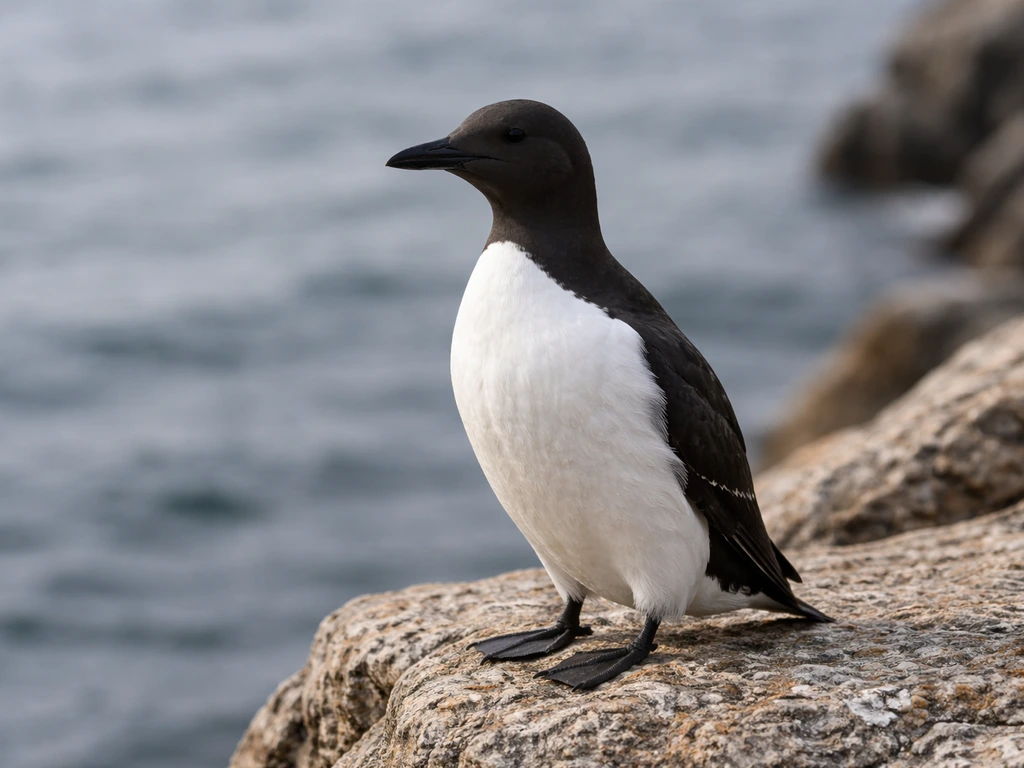
What Bird Looks Like a Penguin? Top Lookalikes
Learn which black-and-white birds mimic penguins and how to confirm by size, posture, beak, feet, and location.
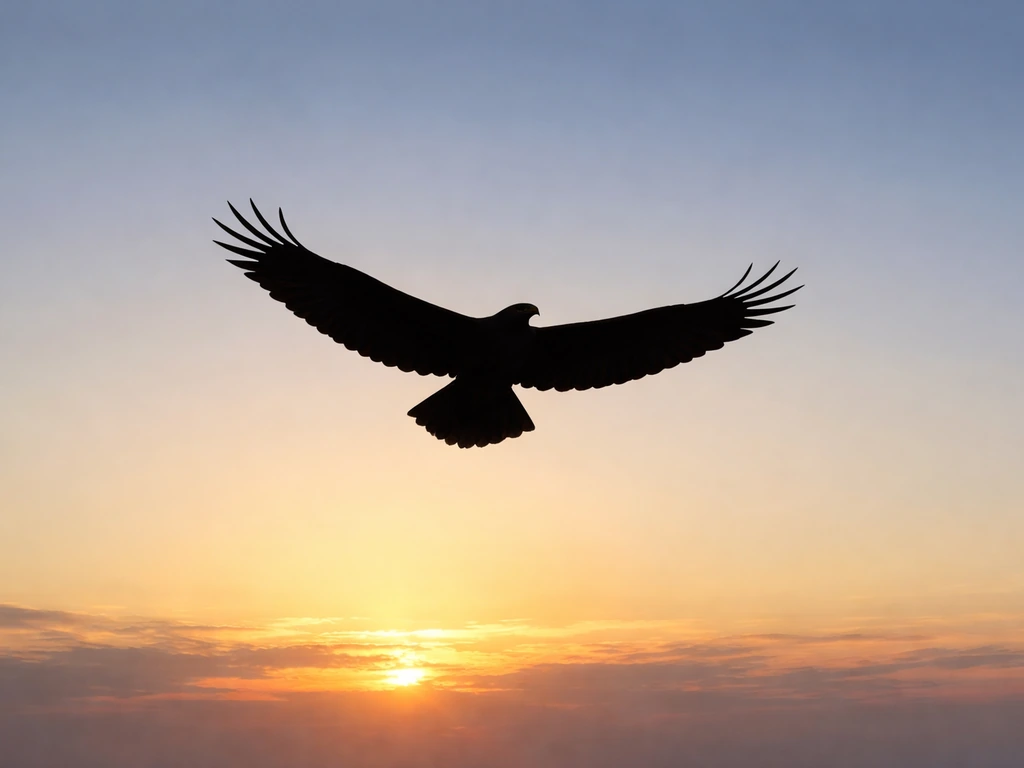
What Bird Looks Like an Eagle? Quick Look-Alike ID Guide
Learn which raptors mimic eagles and use a quick checklist for wing, tail, head, bill, and flight to ID fast.
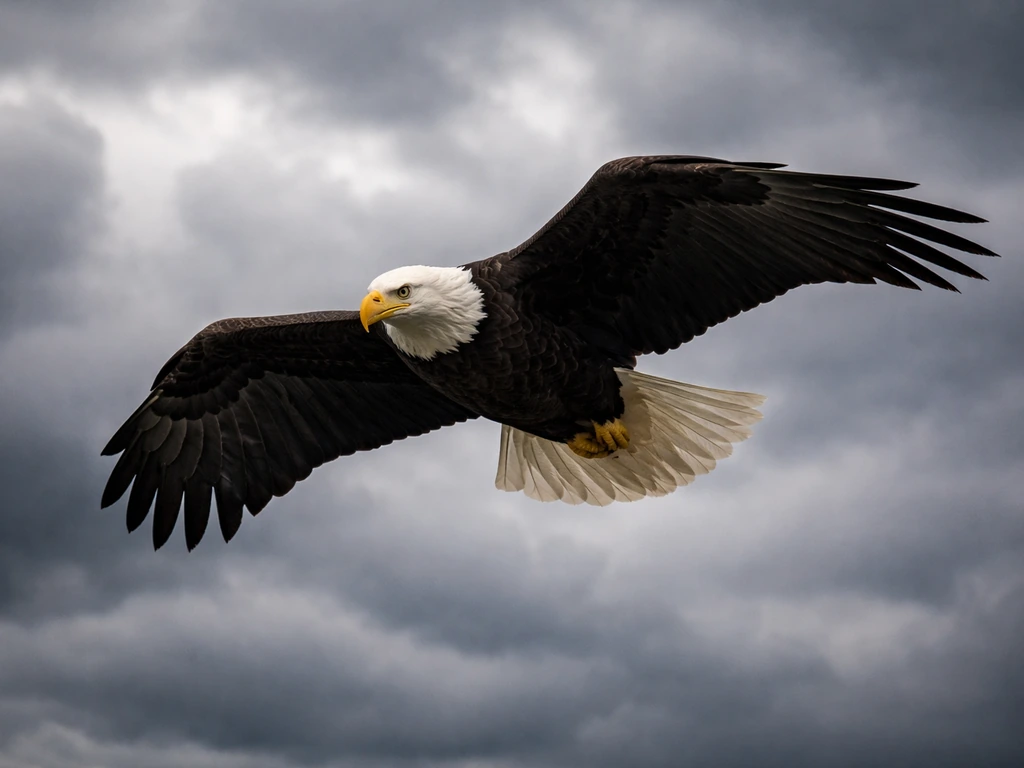
What Bird Looks Like a Bald Eagle? Key Look-Alikes
Learn key bald eagle traits and compare top look-alikes with clear field marks to identify the right raptor fast.