
A grosbeak is a stocky, finch-like bird with one instantly recognizable feature: a massive, triangular bill that looks almost comically oversized for its face. That huge beak is the whole point. In fact, the name comes from the French grosbec, meaning "large beak," and it's the single most reliable thing to look for. Beyond the beak, grosbeaks are compact, broad-chested birds, usually a bit larger than a sparrow and close to the size of a Northern Cardinal or American Robin, depending on the species. They tend to show bold color patterns, often with strong contrasts between black, white, and bright patches of red, orange, yellow, or pink.
What Does a Grosbeak Bird Look Like? Field Guide

Marcus Whitley
15 Jun 2026
What "grosbeak" actually means (and why there isn't just one look)
"Grosbeak" isn't the name of a single species. It's a common name applied to several unrelated birds that share one trait: an unusually large, thick bill. In North America you'll run into the Rose-breasted Grosbeak, the Black-headed Grosbeak, the Evening Grosbeak, the Pine Grosbeak, and the Blue Grosbeak, among others. Some are true finches, some sit closer to the tanager family, but the name groups them together by beak shape, not by strict family tree. So when you're trying to nail down what you saw, you're really doing two steps: first confirming it's a grosbeak type at all, then narrowing down which species based on color, location, and season.
Body shape and size: what to notice first
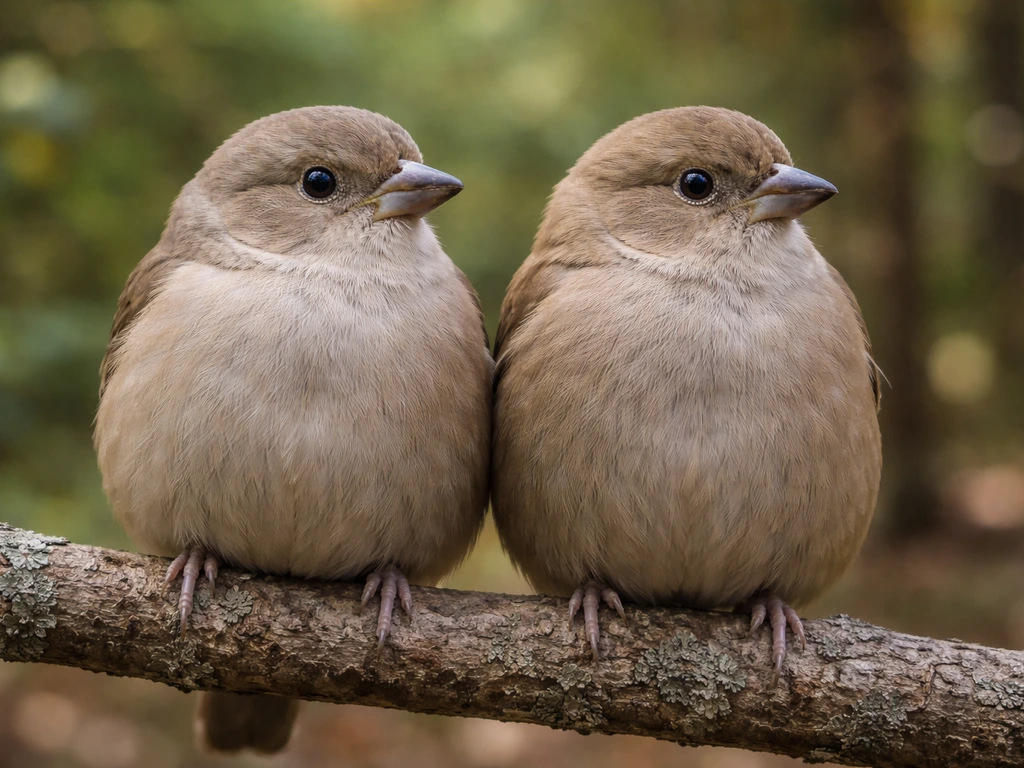
Grosbeaks carry themselves in a way that stands out even before you spot the beak. They're notably chunky, with a broad chest, short thick neck, and a large-looking head. The overall silhouette is more barrel-shaped than the slim, tapered look of warblers or thrushes. If you've seen a Northern Cardinal, you already have a decent mental reference: Evening Grosbeaks are roughly Cardinal-sized but even more compact and heavier-bodied.
If you want a quick side-by-side idea, compare that compact, heavier Evening Grosbeak look to a Northern Cardinal. Pine Grosbeaks are noticeably bigger, running 8. 3 to 9. 8 inches long with a wingspan up to 15 inches, closer to a robin in length but stockier and heavier.
Rose-breasted and Black-headed Grosbeaks land in the medium-sized songbird range, also stocky, with a compact, round-shouldered posture.
One useful shape cue for Black-headed Grosbeaks specifically: look for the combination of a large head, short tail, and thick neck that gives the bird a distinctly blocky, front-heavy impression. Pine Grosbeaks have a fairly long, notched tail that's more noticeable in flight. These silhouette details can help you rule birds in or out from a distance, before you even get to color.
The beak and face: the biggest giveaway by far
The beak is genuinely the first thing you'll notice, and it should be. Every grosbeak species has a bill that looks thick and triangular, almost conical, with a curved upper edge (called the culmen) that gives it a slightly hooked profile. It's built for cracking hard seeds and it looks the part. Compare this to a sparrow or a junco, whose bills are relatively fine and pointed, and the difference is immediately obvious.
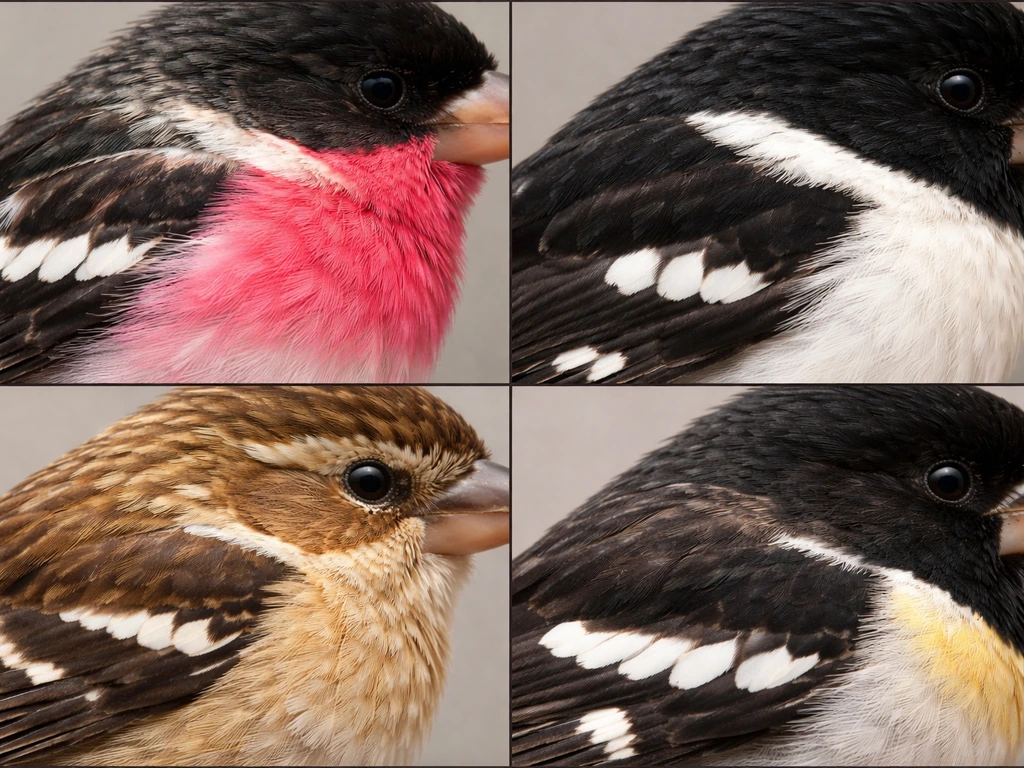
Face markings are just as useful for nailing down species. Rose-breasted Grosbeaks have a strong whitish stripe running above the eye, which is a clean, high-contrast mark you can spot even in mixed light. Female and juvenile Rose-breasted Grosbeaks wear streaked brown plumage and lean heavily on that white eye stripe as their clearest field mark. Black-headed Grosbeaks have an entirely black head on breeding males, which creates a bold, clean-edged hood with no eye stripe to search for.
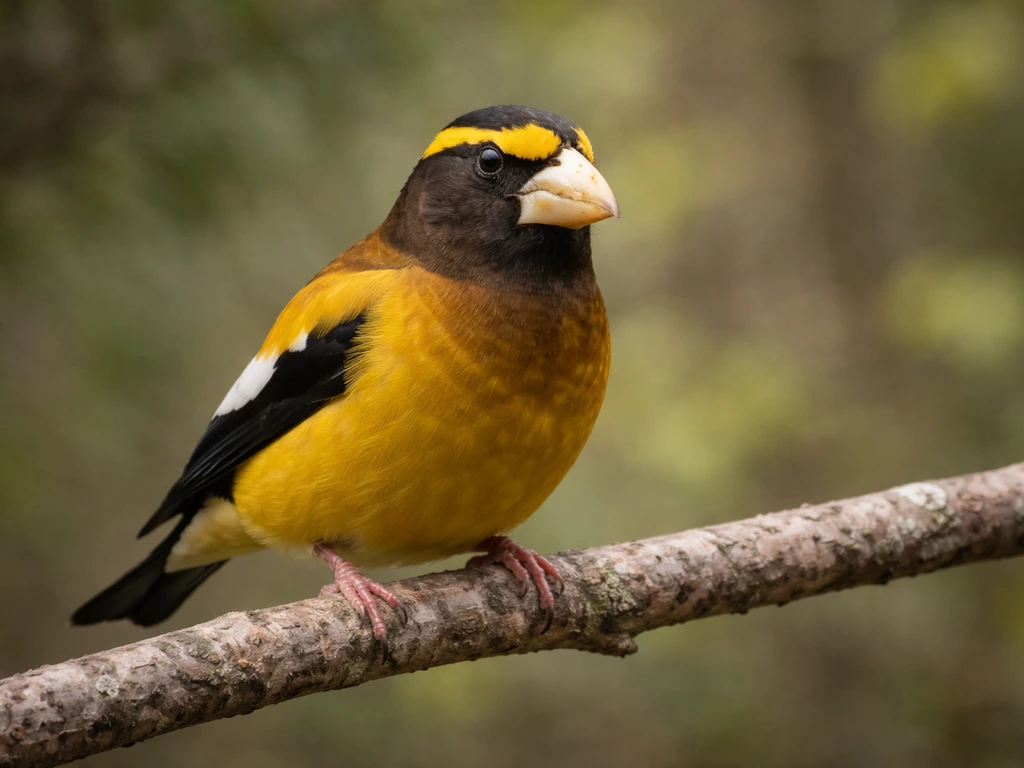
Pine Grosbeaks have a rounder, less angular face with softer plumage transitions and a short, deep-based bill with a curved tip. Evening Grosbeaks have a thick, pale yellowish-green bill that's very prominent against their dark head, plus a bold pale supercilium (eyebrow stripe) on males.
Plumage colors and patterns by species
This is where grosbeaks diverge quite a bit from one another, so it helps to know the major players. Here's a quick breakdown of what to look for on each common North American species.
Rose-breasted Grosbeak
Males are striking: black head, black back, and white underparts with blank" rel="noopener noreferrer">a vivid red-pink chevron (shaped like an inverted triangle) spreading from the throat down the center of the breast. The wings are black with white patches, visible both at rest and in flight. Females and juveniles are streaked brown overall, almost warbler-like in their understated look, but the bold white eye stripe and that large bill keep them identifiable. Both sexes show white patches in the wings and tail, which flash noticeably when the bird moves.
Black-headed Grosbeak
Breeding males have a completely black head, warm cinnamon-orange body (neck, rump, and underparts), a yellow belly, and black wings with bold white wing bars and a white patch at the base of the primaries. It's a richly colored bird. Females are chiefly brown, less vivid, and their head patterning is less crisp. In winter, even males lose some of the sharp blackness on the head and gain a bit of streaking.
Evening Grosbeak
Males are yellow and black with a dramatic yellow eyebrow stripe and flashy white wing patches that stand out even at a distance. The white wing patches are so large and bright they're visible the moment the bird moves or takes off. Females are more muted, grayish-brown with softer yellow tones, but they carry the same bulky shape and oversized pale bill. The white wing patches remain visible on females too, though less brilliant.
Pine Grosbeak
This is the largest of the common North American grosbeaks. Males are rosy-red to pinkish-red on the head, chest, and rump, with dark gray wings marked by two clean white wingbars. The contrast between the warm red tones and the dark gray wings is what to look for. Females and first-year birds swap the red for yellowish to bronze tones on the head and rump, while keeping the same dark gray wings and white wingbars. Pine Grosbeaks have a notably round head and plump body, and their longer notched tail is visible in flight.
Telling grosbeaks apart from similar large-beaked birds
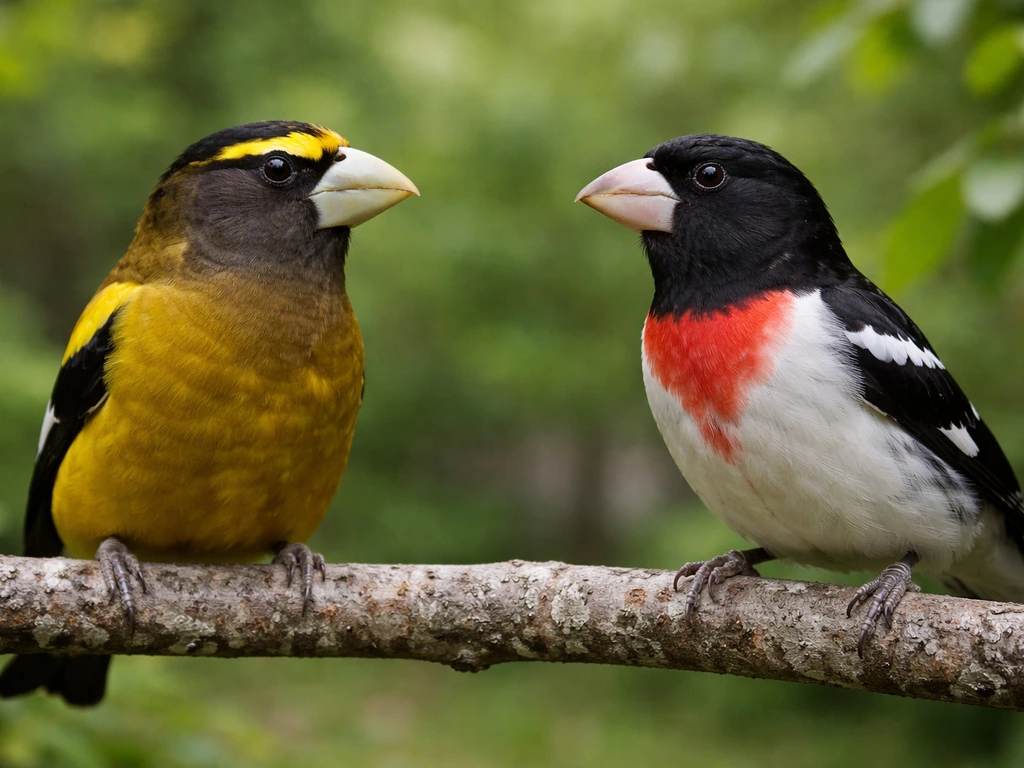
The birds most likely to cause confusion are Northern Cardinals, Purple Finches, House Finches, and (if you're in the right geography) Hawfinches. Here's how to separate them.
| Bird | Bill shape | Key visual difference from grosbeaks |
|---|---|---|
| Northern Cardinal | Thick, conical, orange-red | Crested head, slimmer body, no white wing patches; bill similar but bird is sleeker overall |
| Purple/House Finch | Smaller conical bill | Much smaller bill, streaky brown body, no bold wing patches or breast chevrons |
| Hawfinch (Europe) | Massive, blunt, gray-blue bill | Extremely large bill even by grosbeak standards, bull-necked shape, rusty-brown body with white wing bar |
| Evening Grosbeak | Thick, pale yellow-green | Flashy white wing patches, yellow-black male pattern; no crest unlike Cardinal |
| Pine Grosbeak | Short, curved, deep-based | Much larger than any finch, two white wingbars, rosy-red (male) or yellow-bronze (female) on head and rump |
The safest comparison is always bill size relative to head size. On a true grosbeak, the bill takes up a noticeably large proportion of the face. If you need a quick mental picture of the species, look for a stocky body paired with that very large, thick bill bill takes up a noticeably large proportion of the face. On a finch like a House Finch or Purple Finch, the bill is proportionally much smaller even if the bird is streaky or colorful. Cardinals come closest in bill shape, but they're sleeker birds and always carry a pointed crest, which no grosbeak has.
If you're already familiar with what a blue jay bird looks like or what a blue bird looks like, grosbeaks will feel noticeably chunkier and more front-heavy by comparison, with that signature thick bill as the defining feature rather than a crest or bright blue plumage.
Field ID checklist and what to do next
When you're standing in front of a bird and trying to confirm it's a grosbeak, work through these in order. Size and shape first, then beak, then color and pattern. Location and season help you narrow the species once you're confident it's a grosbeak at all.
- Check bill size first: is it massive and triangular, taking up a large portion of the face? If yes, you're in grosbeak territory.
- Note body shape: stocky, broad-chested, large-headed, with a short thick neck? That's the grosbeak silhouette.
- Look for wing markings: white wingbars (Pine Grosbeak), large white wing patches (Evening, Rose-breasted), or white at the base of the primaries (Black-headed).
- Check breast and head color: red chevron on breast (Rose-breasted male), solid black hood (Black-headed male), rosy-pink head/rump (Pine Grosbeak male), or yellow-black pattern (Evening Grosbeak male).
- Look for a white eye stripe: prominent in female/juvenile Rose-breasted Grosbeaks and Evening Grosbeak males.
- Note your location: Rose-breasted is an eastern bird, Black-headed is western. Evening and Pine Grosbeaks have more northern/boreal ranges and move south in winter, especially to feeders.
- Check the season: breeding-season males are at peak color and easiest to ID. Winter birds, especially females and juveniles, are more subdued, so rely more on bill size and wingbar patterns.
- Take a photo if you can, even a blurry one: capture the bill profile, any wing patches, and the face pattern. These three areas alone will confirm most grosbeak IDs.
For location-based narrowing, range maps on eBird are genuinely useful and updated with real sightings, so checking what species have been reported recently in your area is a fast shortcut. If you're in the eastern U.S. during spring migration, Rose-breasted Grosbeak is your most likely candidate. If you're in the Pacific states or the Rockies in summer, look toward Black-headed. If it's winter and you're at a sunflower seed feeder in the northern tier of states or Canada, Pine Grosbeak and Evening Grosbeak are both real possibilities. Grosbeak ID gets a lot easier once you factor in where you are and what time of year it is, so let location and season do some of the work for you.
FAQ
What is the fastest way to confirm I’m looking at a grosbeak from a distance?
Use a two-part check: first, the bird should look chunky and front-heavy (blocky, thicker neck and broad chest). Second, the bill should take up a large proportion of the face, thick and triangular with a slightly hooked upper profile, not a fine sparrow-like beak.
Do female grosbeaks look as distinctive as the males?
Often less colorful, but still identifiable if you focus on structure and a couple of marks. Females and juveniles typically keep the same oversized, thick bill. For example, Rose-breasted females and juveniles still show a clear whitish eye stripe, even when the rest of the plumage is streaky brown.
Why might a grosbeak look smaller than expected in photos?
Perspective and distance can shrink apparent size. In pictures, rely more on relative proportions than absolute dimensions: a true grosbeak usually has a bill that looks disproportionately large compared to the head, and a more compact, barrel-like body than slimmer songbirds.
How can I tell a grosbeak from a cardinal if the bird has a similar size?
Cardinals tend to be sleeker and always show a pointed crest. Grosbeaks do not have a crest. If you’re unsure, compare bill thickness and face proportion, grosbeak bills look thick and triangular and dominate the face more than a cardinal’s pointed bill.
Can a Pine Grosbeak be confused with another grosbeak species?
Yes, especially if you only have one brief view. Pine Grosbeaks often show a rounder head and plumper body, plus a longer notched tail that stands out in flight. If you can observe tail shape during movement, it’s a strong cue for Pine versus closer-in-size species.
What field marks matter most for Black-headed Grosbeaks?
Look for a blocky, front-heavy silhouette, a large head, a short tail, and a thick neck. Then confirm with the breeding-male detail, a clean black hood-like head without a whitish eye stripe.
What’s the main seasonal clue for Evening vs. Pine Grosbeaks at feeders?
Both can show up during winter, but Evening Grosbeaks are known for a very prominent pale yellowish-green bill. Pine Grosbeaks more often read as darker overall with a deeper, curved-tipped bill and that longer notched tail you can sometimes spot when they move or fly.
If the bird is at a sunflower seed feeder, does that guarantee it’s a grosbeak?
No. Seed feeders attract many finches and other seed-eaters. Use the bill test first, the thick triangular bill that looks oversized for the head. If the bill looks fine or pointed, it’s less likely to be a true grosbeak.
How should I approach ID when I only see the bird briefly during takeoff?
Prioritize what flashes during movement: grosbeaks often show distinct wing and tail patches that become obvious in flight. Still, the bill and overall chunkiness are the best “anchor” traits to confirm it’s a grosbeak, then use the wing patch size and face markings to narrow the species.
Does the name “grosbeak” mean a single family or species?
No. It’s a common name that groups several different birds with unusually large thick bills. That’s why you should treat ID as two steps, confirm you’re in the grosbeak-like bill category first, then sort by color, face markings, location, and season.
Next Articles
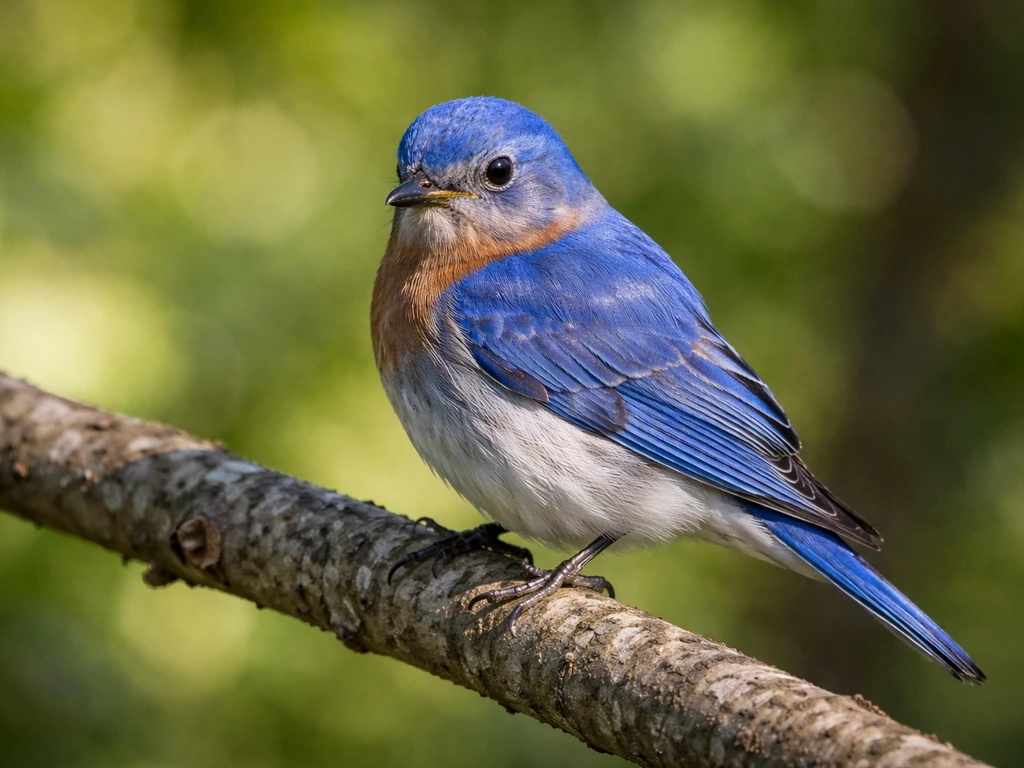
What Does a Blue Bird Look Like? Identify Common Blue Birds
See common blue bird appearances, key field marks, look-alikes, and tips to identify the species by size, beak, wings, a

What Does a Grouse Bird Look Like? Key Visual Traits
Learn grouse appearance traits: size, mottled patterns, head and tail shape, and male vs female differences to ID in the
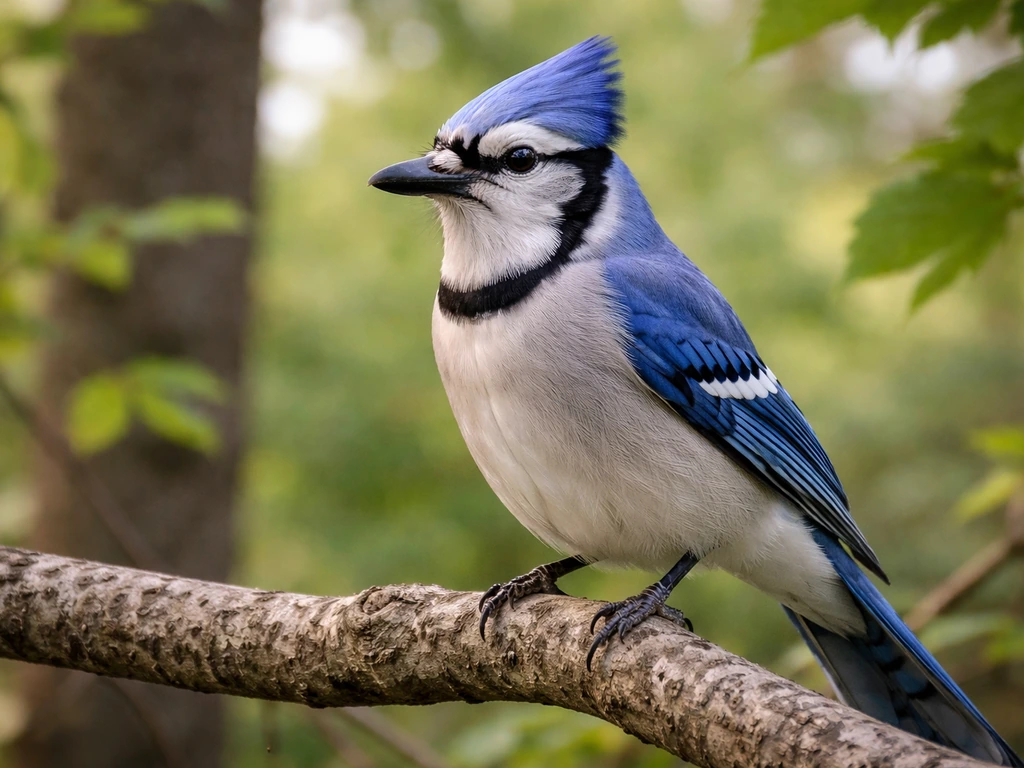
What Does a Blue Jay Bird Look Like? Male vs Female
Learn what a blue jay looks like and how to spot females: crest, face, wing bars, and tail markings.