A jay bird is a medium-to-large songbird in the crow family, and the one most people in North America picture is the Blue Jay: a striking bird roughly 9 to 12 inches long, bright blue on top, white and gray underneath, with a pointy crest on its head, a bold black necklace across its throat, and crisp white wing bars you can spot from a decent distance. If you're in Europe, you might be thinking of the Eurasian Jay instead, which is pinkish-brown with a vivid blue-and-black wing patch. Either way, jays are loud, confident birds that don't hide well, which makes them easier to identify once you know what to look for.
What Does a Jay Bird Look Like? ID Guide With Marks

Marcus Whitley
23 Jun 2026
Quick visual overview of a jay bird
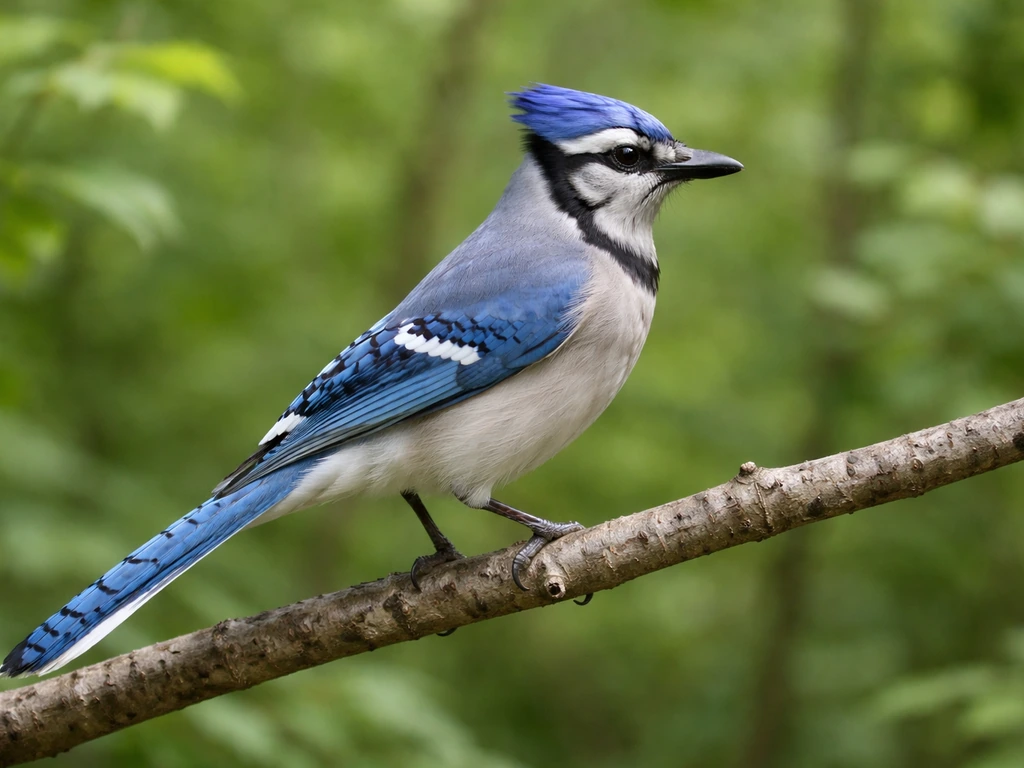
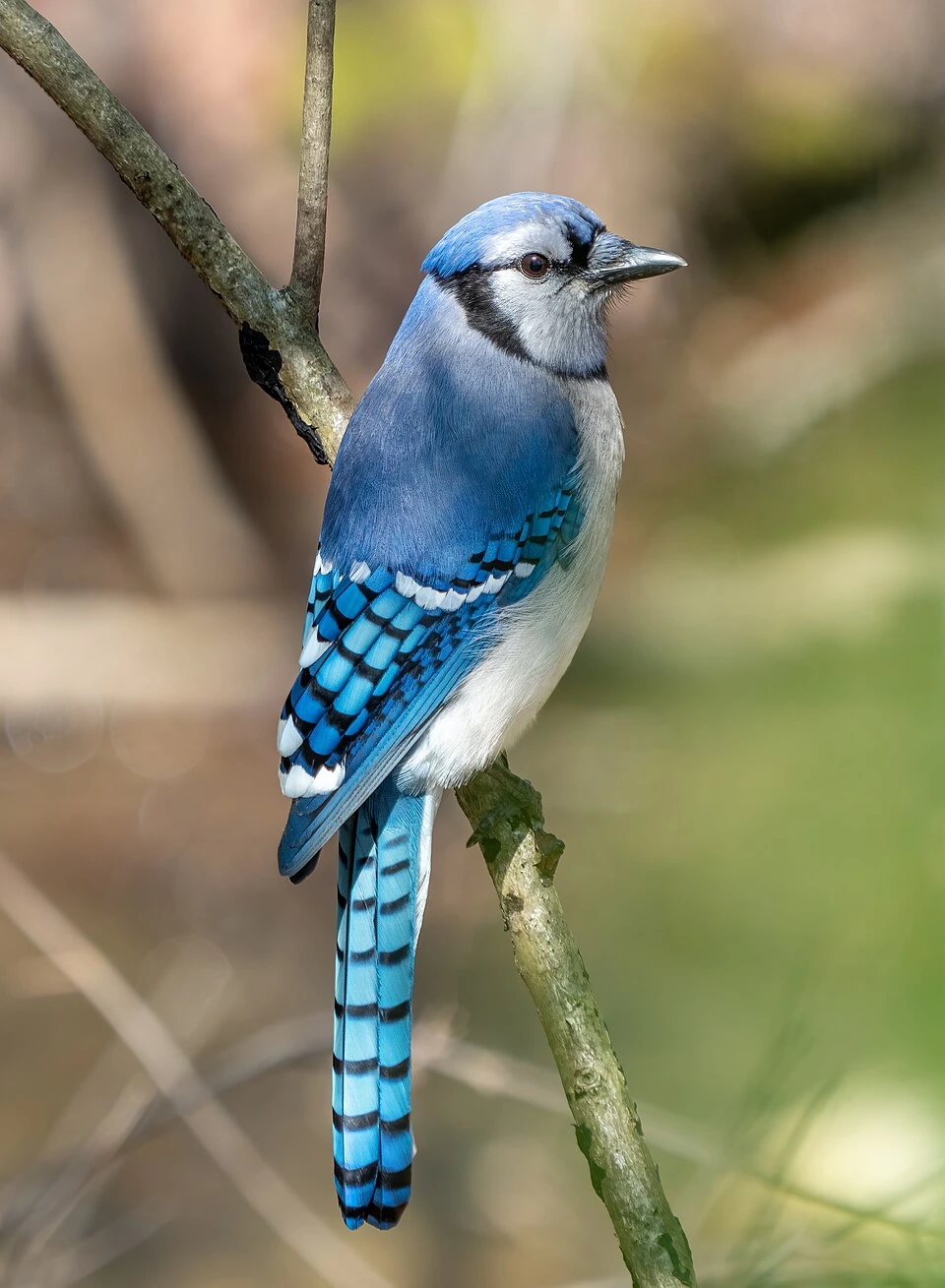
Think of a jay as a robin-sized bird but bulkier, with a longer tail and a more upright, almost cocky posture. The Blue Jay is probably the most recognized jay in the world, and for good reason: that combination of vivid blue, white, and black plumage is genuinely hard to mistake once you've seen it.
You'll notice the crest first, that little tuft of feathers on top of the head that goes up when the bird is alert or excited and flattens down when it's relaxed. Then your eye gets pulled to the black necklace band that curves from the back of the neck around the throat, almost like a collar.
The wings and tail are bright blue with thin black bars running across them, and the tail has white corners that flash when the bird flies. The face is mostly white or pale gray, and the belly is a soft grayish-white. It's a clean, graphic-looking bird.
Key identification features: size, shape, color, and crest
Size is a good starting point. A Blue Jay runs 9 to 12 inches from bill tip to tail tip, with a wingspan of 13 to 17 inches and a weight around 2. 5 to 3. 5 ounces.
That puts it noticeably bigger than a House Sparrow or a Black-capped Chickadee, and roughly comparable to a Northern Mockingbird or a large thrush. The shape is distinctive too: broad rounded tail, fairly thick bill, and that prominent crest that gives the silhouette a peaked, almost triangular look at the top of the head.
blank" rel="noopener noreferrer">Cornell Lab of Ornithology describes Blue Jays as “blue above and white below,” with a prominent crest, a bold black necklace, barred wings and tail with black, and a bold white wingbar; it also notes that they are a large crested songbird with a broad, rounded tail broad rounded tail.
Color-wise, the Blue Jay's back, wings, and tail are a vivid medium blue, not the deep navy of a bluebird or the soft powder blue of a Cerulean Warbler. The face is white with a thin black outline framing it. [That black necklace (sometimes called a gorget)](https://www. fws.
gov/sites/default/files/documents/birding-basicsbird-guide508. pdf) is one of the most reliable field marks: it's a thick band of black that wraps around the lower throat and upper chest like a crescent. Underneath, the bird is pale gray-white all the way to the belly and undertail. The wings show two bold white wing bars and those black bars on the blue flight feathers.
When the bird flies away from you, look for the white tail corners, they stand out clearly.
Male and female Blue Jays look identical in terms of plumage, which is unusual for colorful birds. Juveniles look very similar to adults but may appear slightly duller blue in their first few months. The crest, necklace, and wing bars are all present even in young birds, so age is rarely a source of confusion.
| Feature | What to look for |
|---|---|
| Size | 9–12 inches long, wingspan 13–17 inches |
| Crest | Prominent pointed crest on top of head |
| Back and wings | Bright blue with black bars |
| Tail | Blue with black bars and white corners |
| Face | White with black outline and necklace band |
| Belly | Pale gray-white |
| Wing bars | Two bold white bars on each wing |
| Bill | Stout, straight, dark gray-black |
Common jay look-alikes and how to tell them apart
A few birds can trip people up when they're trying to confirm a jay, so here's a quick rundown of the usual suspects.
Blue Jay vs. Steller's Jay
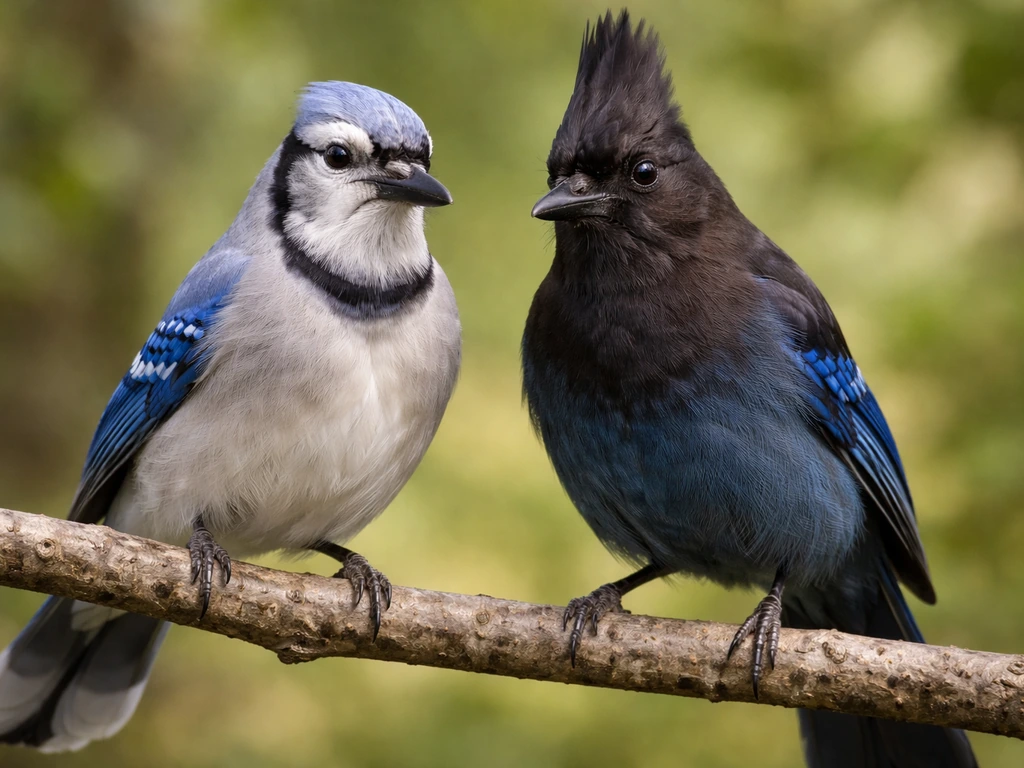
Steller's Jay is the Blue Jay's western counterpart and is also crested, but it's much darker overall. The front half of the bird (head, chest, back) is sooty black or very dark charcoal, while the back half (wings, tail, rump) is deep blue. There's no white face, no bold necklace, and no white wing bars. If you're in the Rocky Mountains or along the Pacific Coast and you see a crested dark blue-and-black jay, it's almost certainly a Steller's Jay. East of the Great Plains, it's going to be a Blue Jay.
Blue Jay vs. Blue Grosbeak or Bluebird
People sometimes confuse Blue Jays with other blue birds, but size usually solves it fast. A Blue Jay is significantly larger than an Eastern Bluebird, which is robin-sized and lacks a crest entirely. The Bluebird also has a rusty orange chest, nothing like the pale gray-white belly of a Blue Jay. A Blue Grosbeak is smaller, darker blue all over, has a thick triangular bill (great for cracking seeds), and no crest at all.
If it's small, all-blue, and crested, that's something else entirely. The articles on what a blue bird looks like and what a grosbeak bird looks like go into much more detail on both of those. If you want to identify a grouse instead, check what a grouse bird looks like and compare the pattern, size, and coloring to your photo.
Blue Jay vs. other corvids (crows and jays)
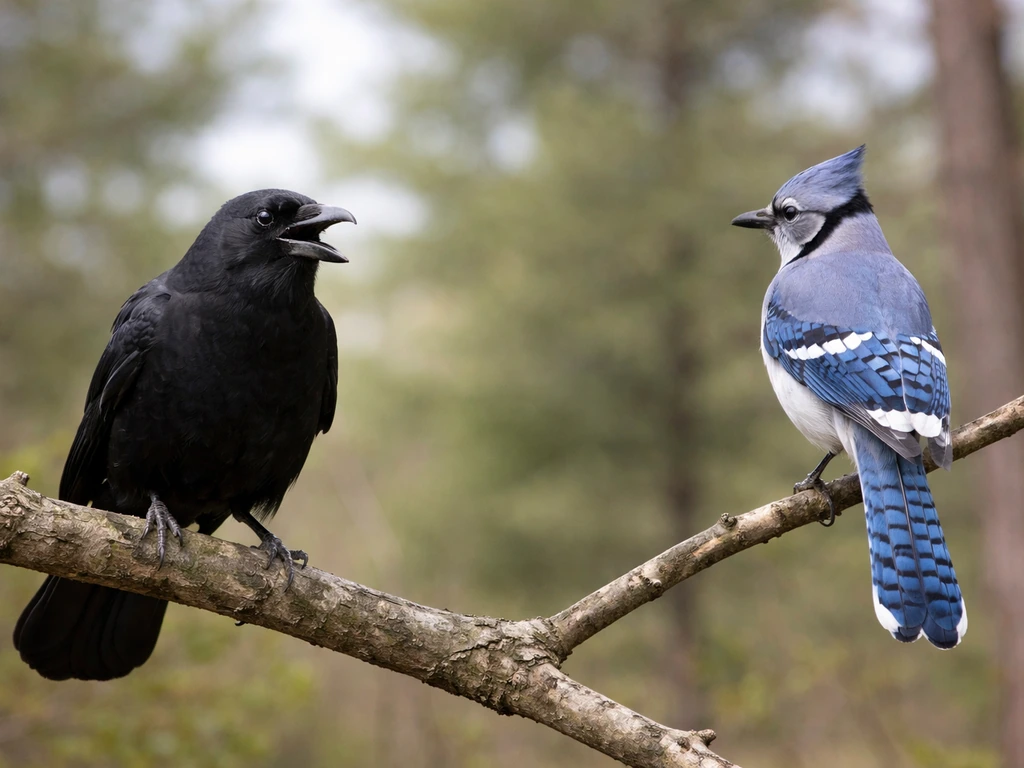
American Crows and Common Ravens are in the same family as jays but are all black, much larger, and have no crest. You won't confuse them with a Blue Jay visually. The Scrub-Jays (California Scrub-Jay, Florida Scrub-Jay) are blue and gray like a Blue Jay but have no crest and no black necklace. They look more flat-headed and smooth. The Canada Jay (formerly called Gray Jay) is gray, white, and black with no blue at all. If you're in Europe and wondering about the Eurasian Jay, look for pinkish-brown body, white rump, and that electric blue-and-black wing patch, it's quite different from any North American jay.
| Bird | Crest | Color | Key difference from Blue Jay |
|---|---|---|---|
| Blue Jay | Yes | Blue, white, black | The reference bird |
| Steller's Jay | Yes | Black front, dark blue back | No white face or necklace |
| California Scrub-Jay | No | Blue and gray | No crest, no necklace |
| Eastern Bluebird | No | Blue above, orange chest | Much smaller, rusty breast |
| Blue Grosbeak | No | Deep blue all over | Thick bill, small size, no crest |
| American Crow | No | All black | All black, much larger |
| Eurasian Jay | Partial tuft | Pinkish-brown, blue wing patch | Completely different coloring |
Where jays are found and what to look for in their habitats
Blue Jays are year-round residents across most of the eastern and central United States, southern Canada, and parts of the northern Great Plains. They love woodland edges, oak forests, parks, suburban backyards, and anywhere with mature trees, especially oaks, since acorns are a major food source. You're very likely to see them at feeders, particularly if you offer sunflower seeds or peanuts. They tend to announce themselves loudly before you see them, that sharp "jay-jay" call is hard to miss.
If you're farther west (Rocky Mountains through the Pacific Coast), look for Steller's Jay in conifer forests, campgrounds, and mountain parks. Scrub-Jays prefer open scrubby woodland, chaparral, and low oak scrub. In Florida, the Florida Scrub-Jay is its own species found specifically in dry scrub habitat. In Canada and the northern U.S., the Canada Jay turns up in boreal spruce-fir forests, often at campsites where it'll boldly take food from your hand.
The habitat cue is genuinely useful for narrowing things down. If you're in a suburban backyard in Ohio or Virginia and you see a crested blue bird at the feeder, it's a Blue Jay, almost without question. If you're hiking a pine forest in Colorado and you see a dark crested jay, it's almost certainly a Steller's Jay. Geography cuts out a lot of guesswork. If you want to compare other species, start by figuring out what a grosbeak bird looks like, including its shape, color, and bill size what does a grosbeak bird look like.
How to use photos to confirm a jay: field marks checklist
If you've got a photo or you're looking at a bird right now, run through this checklist to confirm you're looking at a Blue Jay. You don't need to check every single box, but hitting four or five of these makes identification very confident.
- Is there a pointed crest on the top of the head? Blue Jays always have one. Scrub-Jays don't.
- Is the bird's back and wings bright to medium blue (not dark navy, not teal)? Check.
- Do you see a bold black band curving across the lower throat, like a necklace or collar? That's the clearest single field mark.
- Is the face and belly pale white or light gray? Blue Jays are not blue on their underparts.
- Can you spot white wing bars? Look for two white horizontal stripes on the folded wing.
- Are there black bars running across the blue wings and tail? That barred pattern is consistent and visible at moderate distance.
- When the bird flies or fans its tail, do you see white corners on the tail tips? Blue Jays have them, crows don't.
- Is the bird roughly the size of a robin or a bit larger, clearly bigger than a sparrow or chickadee?
- Are you in eastern or central North America? If yes, the crested blue jay you're seeing is almost certainly a Blue Jay.
If you're checking off most of those, you've got a Blue Jay. If the bird is crested but missing the white face and necklace, think Steller's Jay. If there's no crest at all, you might be looking at a Scrub-Jay, a bluebird, or something else entirely. And if you want to go deeper on the Blue Jay specifically, or compare it side by side with other blue-colored birds, there's much more detail in the dedicated articles on blank" rel="noopener noreferrer">what a blue jay bird looks like and what a blue bird looks like.
FAQ
What should I look at first if I’m trying to answer “what does a jay bird look like” from a distance?
Start with the silhouette, a medium-to-large crested shape with a peaked head. Then confirm one high-visibility field mark, the white wing bars or the white tail corners when it flies. If both are missing and the bird looks uniformly dark, consider Steller’s Jay or a non-jay lookalike.
Do male and female jays look different, and how can I tell in the field?
For Blue Jays, the sexes look essentially the same in plumage, crest, and necklace. If you are seeing color differences, it is more likely lighting, age, or species (for example, a Scrub-Jay lacking the necklace) rather than sex.
How do juveniles change what a Blue Jay looks like?
Young Blue Jays usually keep the crest, necklace, and wing bars, but the blue tones can look slightly duller in their first months. If you are confident the necklace is present but the color looks muted, prioritize the pattern (black collar and wing bars) over intensity of blue.
What’s the fastest way to distinguish a Blue Jay from a Steller’s Jay when both are crested?
Use the face and throat pattern. A Blue Jay has a pale face framed with black and a bold black “necklace,” while Steller’s Jay is darker overall with a lack of white face and a necklace. If the bird looks more black-gray on the head and chest, with deep blue back and wings, it points to Steller’s Jay.
Can a Scrub-Jay fool me into thinking it’s a Blue Jay?
Yes, mainly because Scrub-Jays are also blue-gray and can look similar in shape. The deciding checks are crest presence and throat marking, Scrub-Jays lack the black necklace and often look flatter-headed with a smoother, less “graphic” face pattern than Blue Jays.
How do I tell a jay from a crow or raven if I only get a brief glimpse?
Look for crest and color pattern. Jays have a crest (even if subtle) and blue-and-white-and-black patterning, crows and ravens are uniformly black and noticeably larger with no crest. Also, ravens and crows usually look more heavy-billed and bulky.
What if I’m unsure whether the bird is a jay or a different “blue bird”?
Go by combination, crested head plus either the black necklace or the two bold white wing bars. An Eastern Bluebird has no crest and is robin-sized, while a Blue Grosbeak is smaller, darker overall, and has no crest. If the bird is small and thick-billed with no crest, it is less likely to be a jay.
Does the habitat really help, or is it just guesswork?
It helps a lot as a second check. Suburban feeders with oaks and woodland edges in the eastern and central U.S. strongly support Blue Jay. Conifer forests and mountain parks in the West support Steller’s Jay, while scrubby, low-wood habitats fit Scrub-Jays.
What should I do if my photo is blurry and I can’t see the necklace clearly?
Use wing and tail cues that remain visible in motion. Two bold white wing bars and white tail corners are common to Blue Jays, and the crest silhouette is often still detectable. If neither wing bars nor tail corners show up and the bird looks dark with no face contrast, switch your focus to Steller’s Jay or another species.
When do jays call, and can sound help identification?
Blue Jays are typically loud and conspicuous, and they often give a sharp “jay-jay” style call that can lead you to the bird before you see it. However, calls vary, so treat sound as a prompt, then confirm with at least one visual field mark like the crest, necklace, or wing bars.
Next Article
What Does a Grosbeak Bird Look Like? Field Guide
Learn what grosbeak birds look like: beak, plumage, size, and field marks to distinguish them from similar finches and c