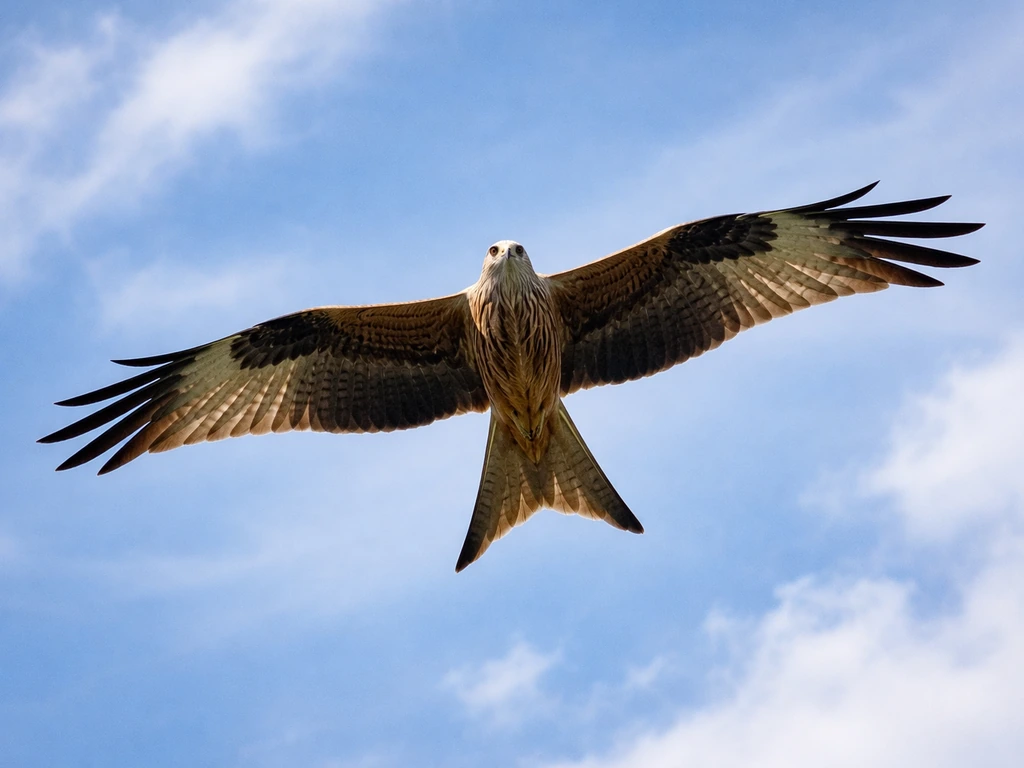
A kite bird is a medium-sized bird of prey with long, pointed wings, a noticeably long tail (often forked), and a buoyant, almost effortless soaring style that sets it apart from heavier hawks at a glance. Most kites look slender and graceful in the air, more like a large swallow than a broad-winged buteo, and that narrow silhouette is usually your first clue you're looking at one. If you were wondering what the elephant bird looks like, you can use similar photo-checking tips to compare body size, head shape, and feather patterns what does an elephant bird look like.
What Does a Kite Bird Look Like? ID Guide and Field Marks

Marcus Whitley
28 May 2026
Wait, you do mean the bird, right?
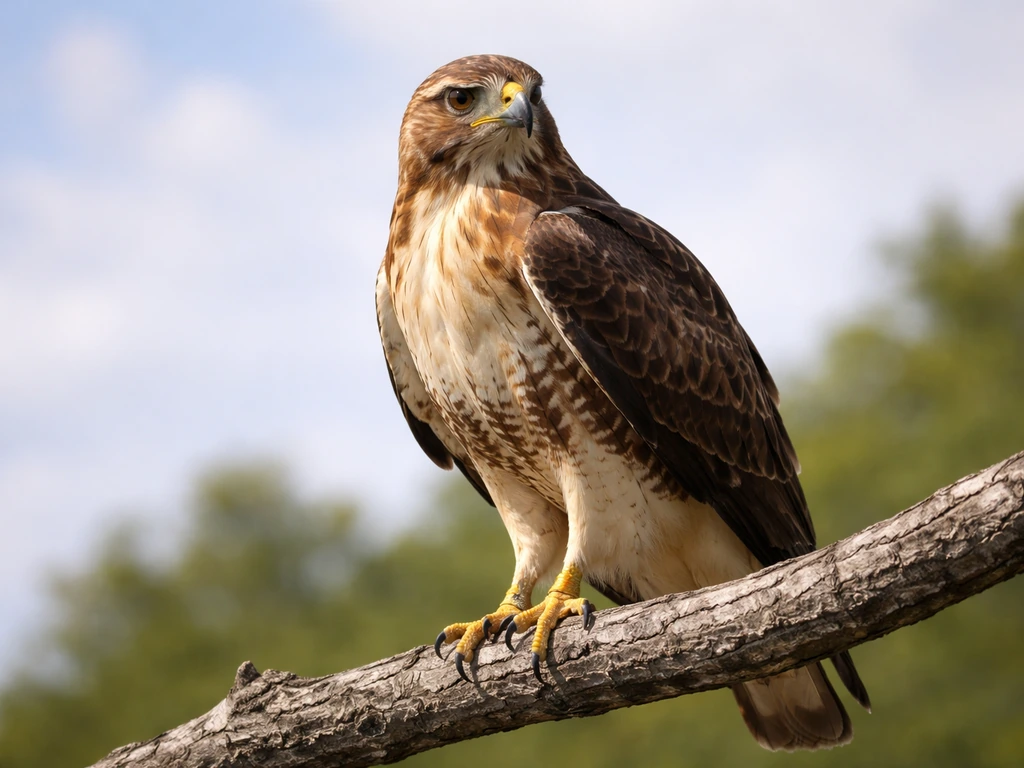
Just to make sure we're on the same page: the kite in this guide is a raptor, a bird of prey in the family Accipitridae, not a toy or object. The name 'kite' is applied to a whole group of raptors spread across three subfamilies, so there isn't one single kite species but rather a family of related birds sharing the same basic look and flight style. This aligns with how the common name “kite” is used for certain Accipitridae raptors across related subfamilies and genera, defining a taxonomic scope rather than an object or toy blank" rel="noopener noreferrer">so there isn't one single kite species but rather a family of related birds sharing the same basic look and flight style. The most well-known species include the red kite and black kite (both in the genus Milvus and common across Europe, Africa, and Asia) and the swallow-tailed kite and Mississippi kite (common across the Americas). When people search for what a kite bird looks like, they're almost always trying to identify one of these raptors, and everything below applies to that group.
The silhouette that gives kites away
If you spot a soaring raptor and your first thought is 'that looks unusually elegant,' you might be watching a kite. Comparing the kite's wing shape, tail fork, and overall silhouette will help you figure out what a koel bird look like kite looks. The silhouette is the single most useful ID tool with this group. Kites are built for sustained, effortless flight, and their body shape reflects that.
Look for these shape cues when a bird is in the air:
- Long, narrow, and distinctly pointed wings — not the broad, rounded wings of a red-tailed hawk or the flat, wide wings of a vulture
- A long tail, often with a visible fork or notch at the tip — the swallow-tailed kite has the most dramatic deep fork, while the Mississippi kite shows a shallower fork
- A slender body — think closer to a falcon's build than a broad-shouldered buteo
- Slow, smooth wingbeats with long glides — the flight feels buoyant and almost lazy compared with other raptors of a similar size
- Overall size in the medium range — not as small as a kestrel, not as large as an eagle; the swallow-tailed kite reaches about 60 cm including its tail, which is a useful reference point
The swallow-tailed kite is a good benchmark for the group as a whole. It's been described as similar in size to an osprey but much slimmer and more pointed-winged, which tells you a lot about the general kite body plan. If the bird in your sights looks too skinny to be a hawk but too big to be a swallow, a kite is a strong candidate.
Coloring and markings: what to look at and where
Kite coloration varies by species, but there are patterns worth knowing for the most commonly encountered birds.
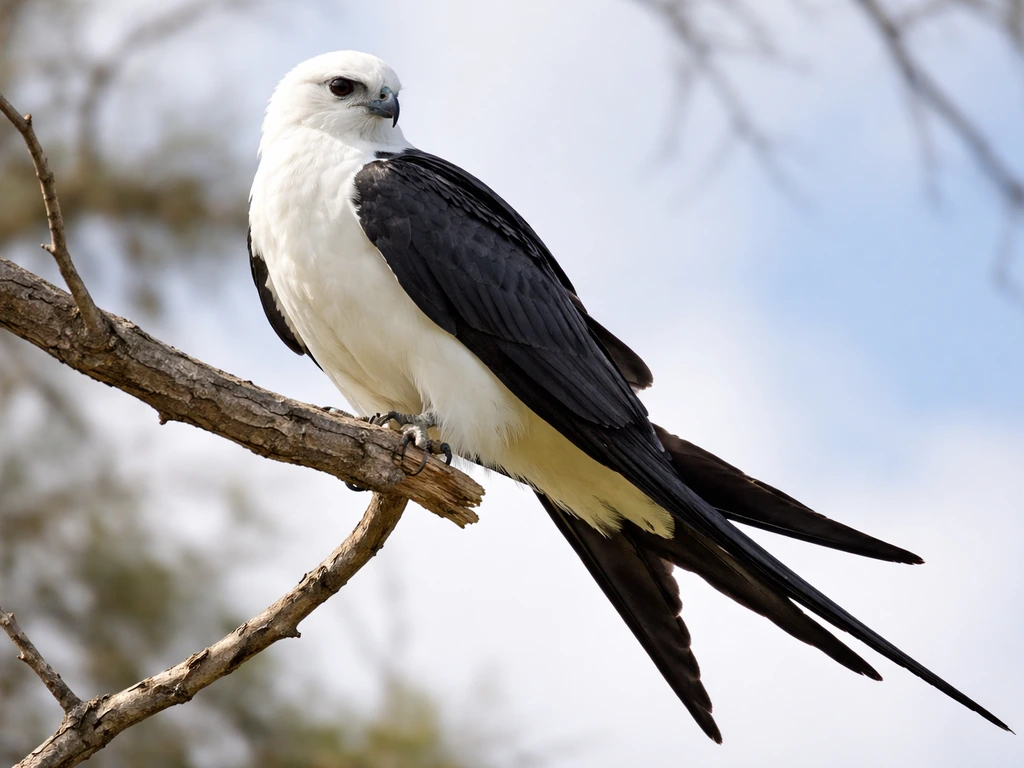
Swallow-tailed kite
This is the most visually striking kite you're likely to encounter in North or Central America. The contrast is dramatic and unmistakable: a bright white head, neck, body, and underwing coverts paired with jet-black flight feathers and a long, deeply forked black tail. In flight, the black-and-white pattern is so clean and bold that most people say it doesn't even need a second look to confirm. From below, the white belly and white underwing lining stand out sharply against the dark outer wings. There's no other raptor in North America that looks quite like it.
Mississippi kite
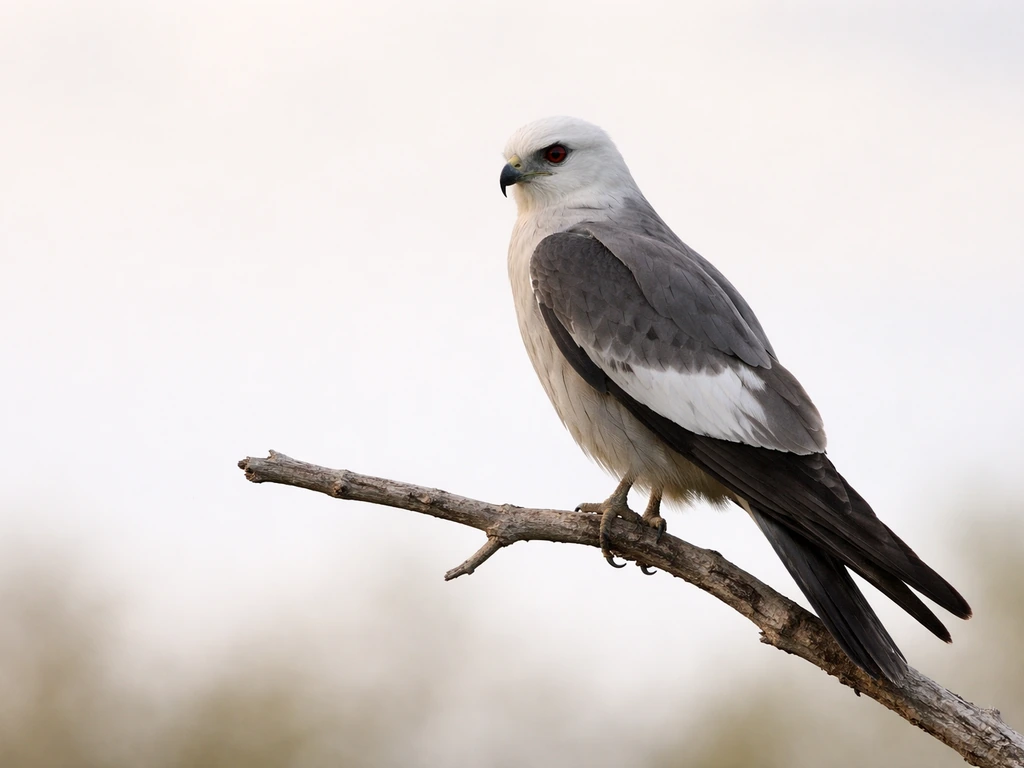
Much more subtly colored than its swallow-tailed cousin. Adults are mostly gray overall, with a paler, almost whitish head and noticeably whitish secondaries on the upper wing, that pale wing panel is a key field mark when you see the bird from above or at an angle. Look also for a faint reddish tinge on the wingtips (the primaries) at close range, and a subtle facial moustache mark. The underside is uniformly gray, including the underwing coverts. The tail is dark and can show a shallow fork.
Red kite and black kite
If you're in Europe, Africa, or Asia, these two Milvus kites are the ones you're most likely to encounter. The red kite is a rich reddish-brown bird with a pale gray head, a noticeably forked rufous-orange tail, and strong pale patches on the underside of the wingtips. It's one of the more colorful raptors in European skies. The black kite is less flashy, mostly dark brown across the body with a slightly paler face and a shallowly forked tail that can look almost straight-edged at times. Both have the same characteristic long, angular wing profile shared across the kite group.
Perched vs soaring: two very different looks
A kite perched in a tree looks quite different from a kite soaring overhead, and knowing what to expect in each posture saves a lot of confusion.
When soaring, everything works in your favor. The long wings, forked tail, and buoyant flight style are all on full display. The bird often banks and tilts while hunting, which twists and opens the tail and lets you see the fork clearly. The wing shape and tail shape are the two things to lock onto first, before color, because silhouette works at much greater distances.
When perched, kites look a lot more compact and upright, and the forked tail that's so obvious in flight can be hard to see if the tail is folded tightly. You lose most of the silhouette cues that make them easy in the air. Instead, focus on the wing tips: on most kites, when perched, the long pointed primary feathers extend well past the tail tip, giving a distinctive long-winged, almost falcon-like silhouette at rest. Head and body coloration become much more useful at this point. A perched red kite's rusty-red body, pale gray head, and dark wing feathers are all easy to read if you get a clear look. A perched Mississippi kite appears uniformly gray with a slightly paler face.
Lookalikes and how to tell them apart
Kites share the sky with several other raptors that can cause genuine confusion, especially at a distance. Here's how to separate the most common mix-ups.
| Bird | Wing shape | Tail shape | Key difference from kites |
|---|---|---|---|
| Osprey | Long, but with a distinctive bend/crook at the wrist | Medium, square | Broader at the wrist, heavier build, often hovers before diving; not as slender as a kite |
| Peregrine Falcon | Narrow and pointed, similar to kites | Medium, square | Stockier chest, faster/more powerful wingbeats, very different hunting style; no forked tail |
| Sharp-shinned Hawk | Short and rounded, not pointed | Square or slightly notched | Much smaller, flap-flap-glide pattern, rounded wings are the instant giveaway |
| Turkey Vulture | Very broad, held in a V-shape (dihedral) | Long, square | Much larger, rocks side to side, two-toned underwing with silvery flight feathers; never pointed-winged |
| Broad-winged Hawk | Broad and rounded | Banded, square | Much broader wings, stocky body, lacks the slender kite profile entirely |
The sharp-shinned hawk deserves a specific mention because it's listed as a known confusion species for the Mississippi kite. The key difference is wing shape: the sharp-shinned has short, rounded wings and a very different flap-and-glide flight pattern, while the Mississippi kite has long, narrow, pointed wings and a smooth, buoyant soaring style. Once you've trained your eye on wing-tip shape, the two become easy to separate even at a distance.
How age, sex, and region change what you see
This is where kite ID gets genuinely tricky, and it's worth understanding before you write off an unusual-looking bird.
Juvenile vs adult plumage
Young kites almost always look messier and more streaked than clean, crisp adults. A juvenile Mississippi kite, for example, has mottled underwing coverts instead of the smooth gray of an adult, and the streaking on the breast makes it look like a completely different bird if you're expecting adult plumage. Subadults (birds in their second year) often show a mix: some adult-style feathers coming in alongside retained juvenile feathers on the tail or wings, creating a patchy appearance that doesn't quite match any one description. If the bird looks 'almost right' but scruffier, assume it might be a young bird and focus on shape rather than color.
Male vs female
In most kite species, males and females look very similar in plumage, so sex is not usually a useful field mark for ID purposes. Females are sometimes slightly larger, but this is hard to judge in the field without a direct side-by-side comparison.
Regional variation and which species to expect
Where you are in the world narrows things down significantly. In the southeastern United States, swallow-tailed kites and Mississippi kites are the likely candidates. In the UK and continental Europe, the red kite (now making a strong comeback after conservation efforts) and black kite are the ones to look for. In Africa, Australia, and South and Southeast Asia, there's a wider range of kite species with distinct regional looks. Your location is one of the most useful pieces of information you have when trying to pin down a species, so always factor it in before deciding which field marks to prioritize.
Your quick photo and field checklist
If you're trying to confirm an ID from a photo or a sighting, work through these points in order. The earlier items in the list work at greater distances and in poorer light; the later ones need a clearer view.
- Wing shape: are the wingtips long and pointed? This is your first and most reliable cue.
- Tail shape: is there a visible fork or notch? How deep is it — a dramatic scissors-fork (swallow-tailed) or a gentle notch (Mississippi, black kite)?
- Overall body size and build: slender or stocky? Kites lean slim.
- Flight style: smooth and buoyant with slow wingbeats, or stiff and powered? Kites glide a lot.
- Underside color: white with black contrast (swallow-tailed), uniform gray (Mississippi), or reddish-brown with pale patches (red kite)?
- Upper wing: any pale wing panel or pale secondaries visible from above?
- Head color: gray, white, or brown? This helps separate species once you've confirmed it's a kite.
- Location and date: what species are known to occur in your region at this time of year?
When photographing a kite, try to capture one shot from directly below (to show tail fork and underwing pattern), one from the side or above (to show the upper wing and tail color), and one perched if possible (to see head and body coloration). Those three angles together will answer almost every ID question.
Narrowing down to the exact species
Once you're confident you're looking at a kite and not a lookalike, the next step is figuring out which kite. Start with your location: plug your sighting into a tool like eBird, enter your region, and look at which kite species have been recently recorded nearby. eBird species profiles include species-level media and observation context that many birders use to compare regional plumage details in photos. Then compare your photo or description against the species profile for those candidates, focusing on the tail fork depth, body color, and any head or wing markings. The swallow-tailed kite is so distinctive it rarely needs more than a glance. The Mississippi kite, red kite, and black kite take a bit more care, especially with younger birds, but working through the checklist above will get you there.
Kites are genuinely rewarding birds to learn because once you lock onto that long-winged, forked-tail, buoyant soaring profile, you'll spot them from surprisingly far away. They share some of that elegant, soaring-raptor quality you'd notice in a crane or a kingfisher in terms of immediately standing out from other birds around them, just expressed in a very different body plan built for open-sky hunting. If you're wondering what a king bird looks like, use the same approach: focus on the silhouette, flight style, and key markings to confirm the exact species kingfisher. If you also want to compare it to a kingfisher, you can check what does a kingfisher bird look like to spot the differences at a glance. A crane looks different from a kite bird, so comparing size, proportions, and beak and leg features can help you tell them apart.
FAQ
If I only see a silhouette and not the color, what features should I prioritize for what a kite bird looks like?
Start with wing tip shape (long, pointed primaries), then the tail silhouette (clearly long and often forked), and finally the flight feel (buoyant, sustained glides with minimal wing heaviness). If the wings look narrow and the tail reads as long even at a distance, a kite becomes a top candidate.
Can a kite look “too hawk-like” for me to be sure, especially in bad lighting or glare?
Yes. In low contrast conditions, color and pattern fade, so rely more on proportions: kites typically look more streamlined than most hawks, with longer, narrower wings and a noticeably long tail. A hawk often looks heavier in the wings and may not show the same clean, effortless soaring pattern.
How can I tell a kite from a swallow if I’m seeing it hunting over open water or fields?
Swallows are usually smaller, have shorter tails relative to body length, and show rapid flutters or acrobatic maneuvers rather than raptor-style soaring. A kite may look “swallow-like” in slenderness, but the tail is longer and the wing tips are more pointed, and the bird will spend time gliding high and steady.
What’s the fastest way to confirm a kite vs. a crane or other large bird of the sky?
Compare wing and tail structure. Cranes typically have broader, less pointed wings and a different overall posture and gait, and they lack the raptor-like forked tail silhouette. Kites also show a distinct raptor silhouette with narrow wings and a long tail that stands out during banking.
Do kites ever show a forked tail that looks shallow or even hard to see?
Yes. When the tail is folded tightly at rest, the fork can be subtle or obscured. Banking while soaring usually reveals the fork more clearly, so if you only have one glimpse from below or directly in front, treat the tail fork as uncertain and lean on wing tip shape and overall slender silhouette.
Are juvenile kites always visibly streaked, and does that change the expected look?
Often, yes. Young birds commonly look more mottled or streaky than adults, especially on the underparts, and that can make them appear “wrong” if you are expecting adult plumage. If the size, slender wing shape, and long-tail silhouette fit a kite but the pattern looks scruffier, assume immaturity and focus on shape first.
Is it possible to identify the exact kite species without clear tail depth or a good view of the head?
It can be difficult, but you can narrow it down using location plus the strongest remaining marks. For example, swallow-tailed kite is typically very distinctive when seen well enough to confirm the overall patterning, while Mississippi, red, and black kites depend more on underwing tone, head shade, and tail fork impression when tail depth is not obvious.
How should I use “location” when I see a kite far from where I expect one?
Use location as a filtering step, not a final rule. Range changes with season and vagrancy, so prioritize the field marks that work at distance (wing tip shape, long tail, soaring style), then check which species are recently recorded in your exact area and season if you are trying to name the species.
What if I’m trying to ID a kite from a single photo taken at one angle?
One angle often misses the most diagnostic cues. If you only have a far away shot, choose the strongest visible ID aspect, such as wing tips and tail length, before guessing by color. If possible in future attempts, capture a from-below view for tail fork and underwing pattern, and a side or above view for upper wing tone and tail shape.