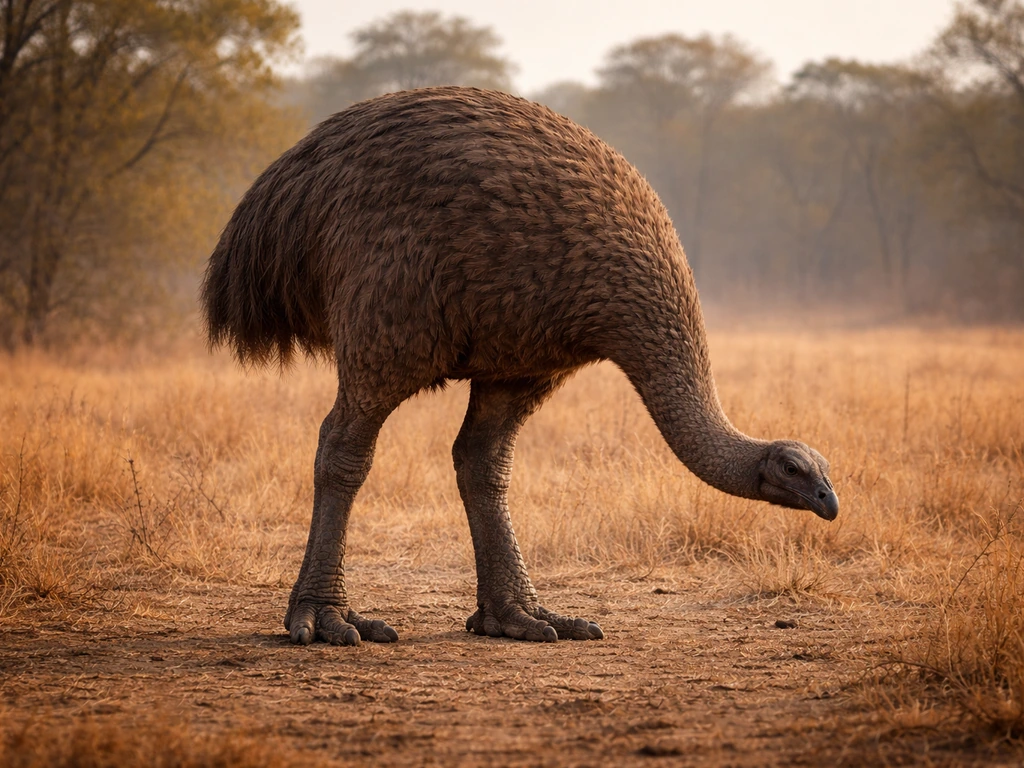
The elephant bird was a massive, flightless ratite from Madagascar that looked something like an enormous ostrich crossed with an emu, only bigger and more heavily built than either. Picture a bird standing up to around 3 metres tall and weighing as much as 450 kg, with a round, barrel-shaped body, a tiny head perched on a reasonably long neck, thick powerful legs, and a straight conical beak. Because elephant birds went extinct (likely by around the 17th century), there is no living individual to observe. Everything we know about their appearance comes from skeletal remains, fossil eggs, and scientific reconstructions, so some details, especially feather color and patterning, involve educated inference rather than hard evidence.
What Does an Elephant Bird Look Like? Fossil Traits

Marcus Whitley
16 Jun 2026
Quick identification snapshot
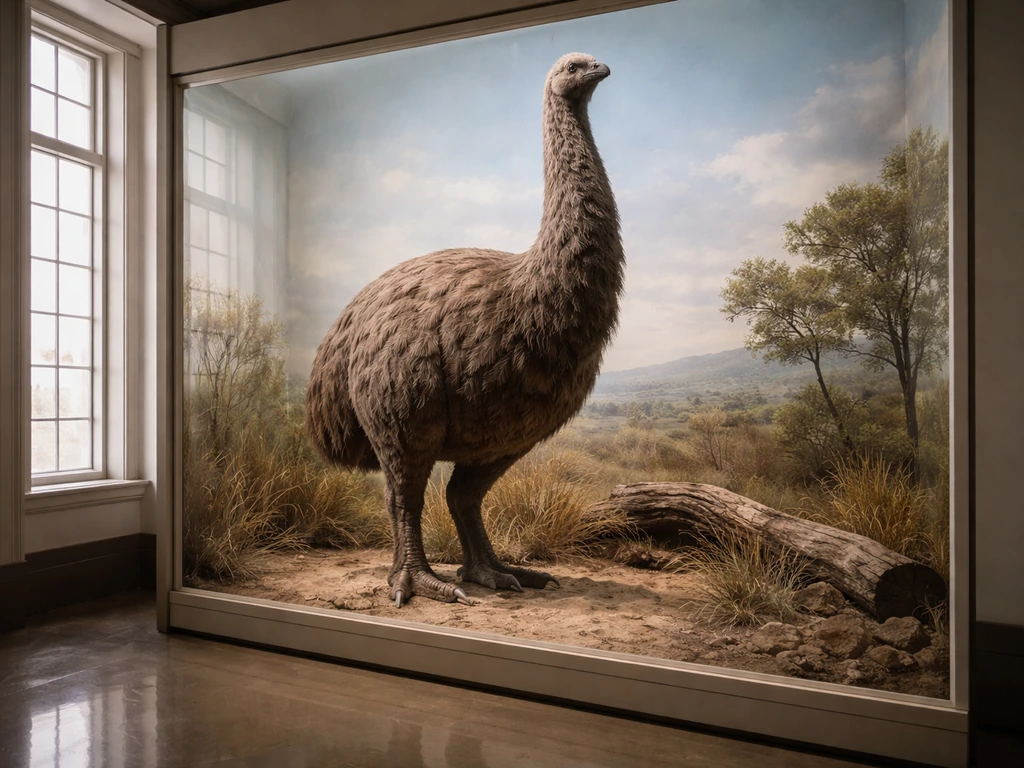
If you are looking at a reconstruction or museum display and wondering whether it is an elephant bird, here are the key things to lock onto immediately: You can use the same approach to visual identification when comparing different birds, including answering what does a kite bird look like.
- Enormous overall size, taller than any living bird
- Very small head relative to the massive body
- Straight, thick, conical beak with no hook at the tip
- Stubby, broad toes with uncurved (non-hooked) claws
- Extremely robust, thick leg bones, noticeably stockier than an ostrich's
- No wings worth mentioning, just small vestigial stubs
- Plumage shown in reconstructions is typically brown or grey-brown and shaggy, ratite-style
Overall body shape and size cues
The first thing that strikes you in any reconstruction is sheer mass. The largest species, Aepyornis maximus, is estimated to have reached close to 3 metres in height and up to around 450 kg. That is roughly the weight of a small horse packed into a bird's frame. The body itself is barrel-shaped and deep, sitting on those thick pillar-like legs. Unlike the ostrich, which looks lean and almost athletic, the elephant bird looks dense and squat, a bit like someone scaled up a kiwi to the size of a small truck. The neck is moderately long but looks proportionally slender given the bulk of the torso below it.
It is worth knowing that not all elephant birds were equal in size. The smaller genus Mullerornis was much more modest, standing around 1.5 metres and weighing roughly 80 kg. So if you see a reconstruction labeled as an elephant bird and it looks more like a large emu than a prehistoric giant, it may well be depicting Mullerornis rather than Aepyornis. The overall silhouette remains similar across the family, but the size difference is dramatic enough that you would not confuse them side by side.
Head, beak, and facial features
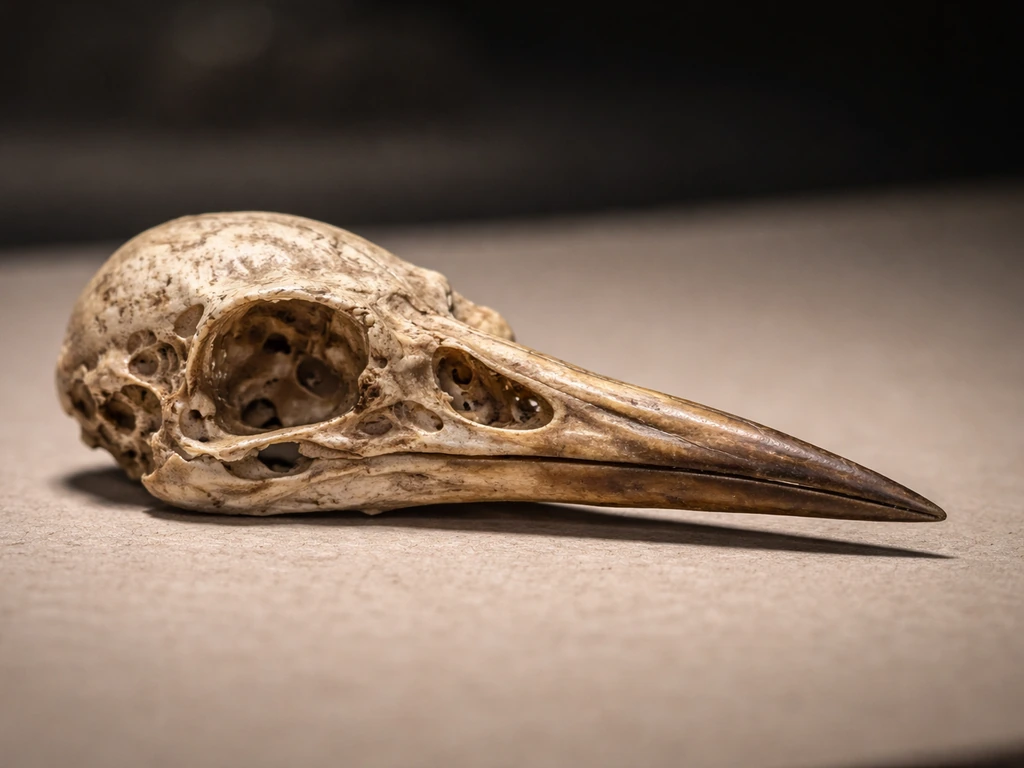
The head is one of the most distinctive parts to look for in any elephant bird image. It is strikingly small for the body size, which gives the bird an almost top-heavy impression in reverse, like the head was borrowed from a much smaller animal. The beak is straight, thick, and conical, coming to a blunt point without any hook or curve at the tip. This is an important detail because it immediately separates elephant birds from birds of prey or any hooked-beak species.
You might notice that different species had slightly different beak proportions. In Aepyornis hildebrandti, the conical beak was proportionally larger relative to the skull than in A. maximus. Fossil elephant bird skulls also show small punctuated marks on the top surface, which researchers interpret as possible attachment points for soft tissue or feathering, so some reconstructions add a small crest-like tuft or textured feather coverage around the face. That detail is plausible but not directly proven from feather impressions, so treat any very ornate facial feature in a reconstruction with a little skepticism.
Coloration and pattern details
This is where you need to hold your expectations a little loosely. Feather color simply does not fossilize well, and no direct feather impressions with preserved pigment structures have been confirmed for elephant birds. What reconstructions do is draw on what we know about ratite birds generally, and they typically show elephant birds with brown, dark grey-brown, or tawny shaggy plumage, similar to what you see on an emu or a kiwi. If you are trying to visualize the comparison, search for what does a kiwi bird look like to see the typical size and plumage impression ratites share. The feathers would have been loose and hair-like rather than tightly structured, which is characteristic of all ratites.
If you see a reconstruction with a very specific patterning or bright coloration, that is artistic license rather than fossil evidence. The honest scientific answer is that we do not know the exact color. Reconstructions using muted earth tones are the most defensible, since ratites as a group tend toward browns and greys, but no reconstruction can claim certainty on this point.
Eggshell studies, including molecular analyses of fossil eggshell structure, have told us a great deal about elephant bird lineage and ecology, but eggshell data does not translate directly into feather color information. The Natural History Museum’s Birds gallery discusses fossil eggs, including “giant elephant bird” eggs, which is a reputable basis for what we can know from eggs rather than guessing feather color from them [fossil elephant-bird eggs including “giant elephant bird” eggs](https://www.
nhm. ac. uk/visit/galleries-and-museum-map/birds. html).
Legs, feet, and distinctive posture cues
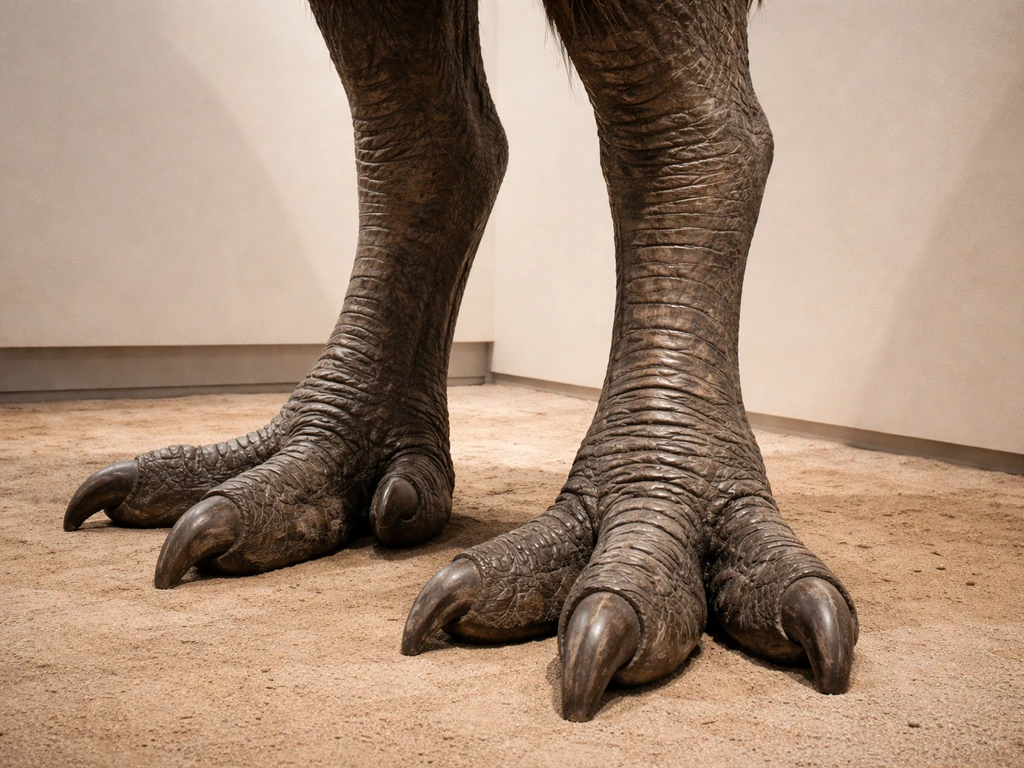
The legs are probably the most anatomically striking feature after overall size. Elephant bird leg bones are massively thick, even more so than those of an ostrich when you account for body mass. They had to support that extraordinary weight, so the bones evolved to be extremely robust and dense. In skeletal displays or diagrams, this gives the limbs a column-like appearance. The lower leg and foot are particularly notable.
Look at the toes in any reconstruction. The terminal toe bones (the ones bearing the claws) are broad and uncurved rather than sharp and hooked. This gives the foot a wide, flat, almost paddle-like quality at the tips. Mullerornis had slightly more elongate and sharper toe tips than the larger Aepyornis, but in both cases the overall impression is of a broad, weight-bearing foot built for stability on the ground rather than gripping or climbing. The posture in reconstructions is typically upright and somewhat stiff-looking, reflecting that forward-leaning, weight-forward stance common to large ratites.
How elephant birds compare to similar large birds
People often get elephant birds mixed up with other large extinct birds or big living ratites. Here is a quick comparison to help you tell them apart when you encounter images or museum reconstructions. If you are also curious about other birds, you can compare this look with what a koel bird looks like to spot differences in shape and features what does a koel bird look like.
| Bird | Height | Beak shape | Legs | Toes | Status |
|---|---|---|---|---|---|
| Elephant bird (Aepyornis) | Up to ~3 m | Straight, thick, conical, no hook | Extremely thick and robust | Broad, uncurved claws | Extinct |
| Ostrich | Up to ~2.8 m | Flat, broad, duck-like | Long and slender | Only 2 toes, large claws | Living |
| Emu | Up to ~1.9 m | Soft, rounded tip | Moderately robust | 3 forward toes, small claws | Living |
| Moa (New Zealand) | Up to ~3.6 m (tallest species) | Curved downward, more slender | Moderately robust | 3-4 toes | Extinct |
| Kiwi | ~0.45 m | Long, slender, curved tip | Short and sturdy | 4 toes, curved claws | Living |
| Mullerornis (small elephant bird) | ~1.5 m | Straight conical, slightly sharper | Robust but smaller | Slightly more elongate toes | Extinct |
The most common confusion is between elephant birds and ostriches, since both are enormous flightless birds. A helpful follow-up question is what a king bird looks like, since it is a very different kind of species.
The key visual differences are the beak (ostrich beaks are flatter and more duck-shaped, not conical), the legs (elephant bird legs are far thicker and shorter-looking relative to body size), and the toes (ostriches have just two toes with large nails, while elephant birds had three or four broader-tipped toes). Moas from New Zealand are another common mix-up for extinct bird enthusiasts.
Moas were actually taller in the tallest species but more slender overall, and their beaks curve downward, which gives them a noticeably different profile. If you are also curious about other large birds, the kiwi makes an interesting comparison as a much smaller ratite relative, and cranes are sometimes confused with large wading birds in general, though they sit in an entirely different category.
Where to find accurate visual references
Because you cannot observe a living elephant bird, the quality of the visual reference you use really matters. If you are asking what a kingfisher bird looks like, start by checking its size, vivid coloration, and the distinctive long beak shape typical of kingfishers what does a kingfisher bird look like. Here is where to look for the most reliable imagery and reconstructions.
- Natural History Museum, London (NHM): The NHM holds skeletal remains and 12 intact elephant bird eggs from Madagascar. Their online collections and Birds gallery feature these specimens, making them one of the best starting points for seeing what is actually preserved versus what is reconstructed. Search the NHM collections page directly.
- Digimorph (University of Texas at Austin): This academic imaging repository includes high-quality scans and imagery of Aepyornis specimens linked to published scientific descriptions. It is one of the most rigorously sourced places to view elephant bird anatomy online.
- Major natural history museum collections: Museums in Paris (MNHN), Harvard's Museum of Comparative Zoology, and the Smithsonian hold elephant bird skeletal material. Many have online digitized collections or at minimum published catalog imagery.
- Peer-reviewed scientific papers: Papers on Aepyornithidae taxonomy and bone histology include skeletal diagrams and photographs of actual fossil material. These are worth seeking out via academic databases if you want the most anatomically precise reference images.
- Reputable science communication sites: Sites like Britannica and museum education pages give reliable summary descriptions that align with the scientific literature, though they are descriptive rather than photographic.
- Avoid: Fan wikis, entertainment sites, and pages that list species names like Vorombe without cross-referencing recent peer-reviewed taxonomy. These often recycle outdated classifications and may include speculative or inaccurate visual reconstructions.
When you are looking at any reconstruction, a useful habit is to ask what part is directly supported by fossil evidence (skeleton, egg structure) and what part is inference (feather color, skin texture, facial details). Reconstructions from museum sources typically do a better job of signaling this distinction than generic online images. The skeleton tells you the shape with confidence. The feathers tell you a plausible story, but one that should be held with a little intellectual humility.
FAQ
How can I tell an elephant bird reconstruction from a bird of prey or a raptor-looking species?
A good quick check is the beak shape. Elephant birds had a straight, thick, conical beak with no hooked curve at the tip, so if the image shows a curved or strongly hooked beak, it is unlikely to be accurate for an elephant bird.
Do elephant birds have the same two-toe feet as ostriches?
Look at how many toes are shown. Elephant birds are reconstructed with broad, uncurved toe tips (often described as three or four weight-bearing toes), while ostriches show two toes with large nails, so toe count and toe shape are strong clues.
Why do some elephant bird images have bright or patterned feathers, and can I trust them?
If the display or artwork suggests very bright colors or bold stripes, treat that as artistic license. There is no confirmed pigment-based feather evidence from fossils, so the most defensible reconstructions keep to muted browns, greys, and tawny tones.
Could a smaller, emu-like “elephant bird” actually be a different species?
There is a size split within elephant birds. Aepyornis maximus was the giant, but Mullerornis is much smaller (around 1.5 m tall and about 80 kg), so two “elephant bird” images can be different by a factor of several in weight.
What body proportions should I compare to decide if an image is really an elephant bird?
Focus on proportions. Elephant birds look dense and barrel-bodied with thick pillar-like legs, and the head often appears unusually small for the overall body, creating a top-heavy impression in reconstructions.
Are facial crests or tufted feather features in reconstructions scientifically confirmed?
Treat any ornate facial crest or highly specific face feathering as tentative unless the source clearly explains the fossil basis. Skeletal skull marks can suggest soft tissue attachments, but feather patterning there is not directly proven.
How can I tell which parts of an elephant bird reconstruction are evidence-based versus guesses?
Check what evidence the reconstruction claims to use. Skeleton-based features (overall body shape, neck length, beak form, leg robustness) are the most reliable, while feather color, exact texture, and facial ornamentation are mostly inferred.
Can fossil eggshell studies tell us the elephant bird’s feather colors?
Eggs provide lineage and some ecological clues, but they do not let scientists reconstruct feather pigment directly. So even if an egg study supports a species ID, it does not justify certain feather colors.
What does the elephant bird foot look like, and why do some drawings get the toes wrong?
Elephant bird feet are typically shown as wide and flat-tipped rather than sharp and hooked. If the artwork emphasizes clawlike grasping toes, it likely reflects a different animal’s lifestyle than the ground-stability build elephant birds had.
What are the quickest differences between elephant birds and moas?
Moas can look similar at a glance, but their beaks curve downward and their bodies are more slender. If the profile includes a down-curving beak, it is usually pointing toward a moa rather than an elephant bird.
Next Articles
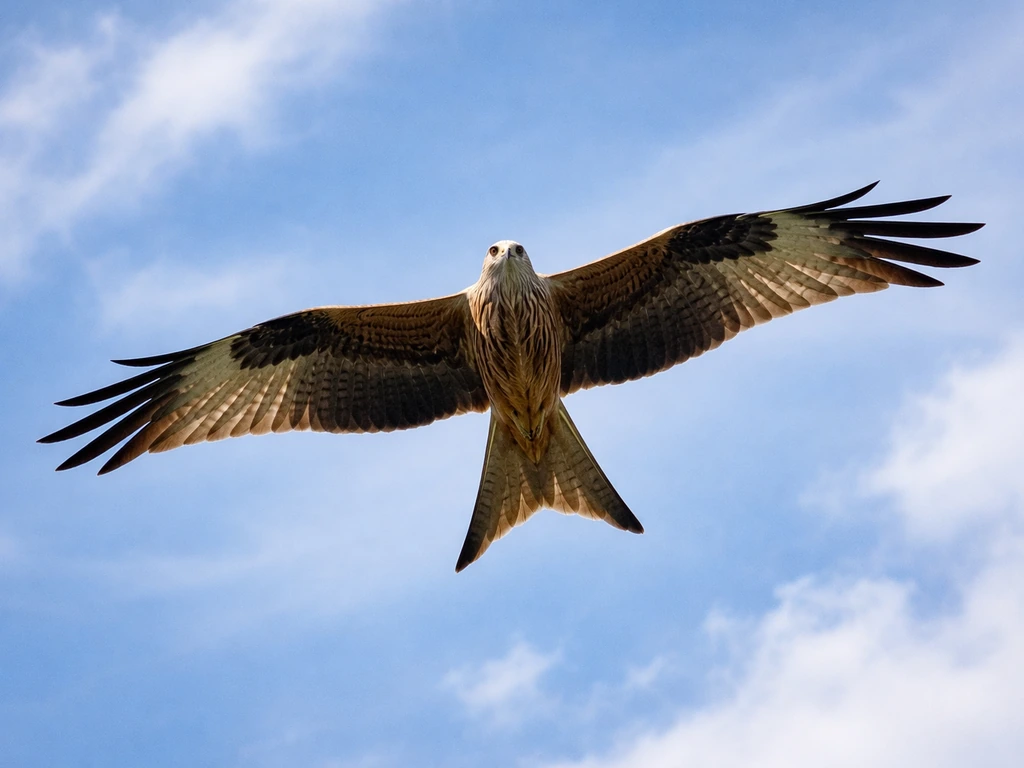
What Does a Kite Bird Look Like? ID Guide and Field Marks
Visual ID guide to what kite birds look like, with key field marks and how to spot kites vs lookalike raptors.
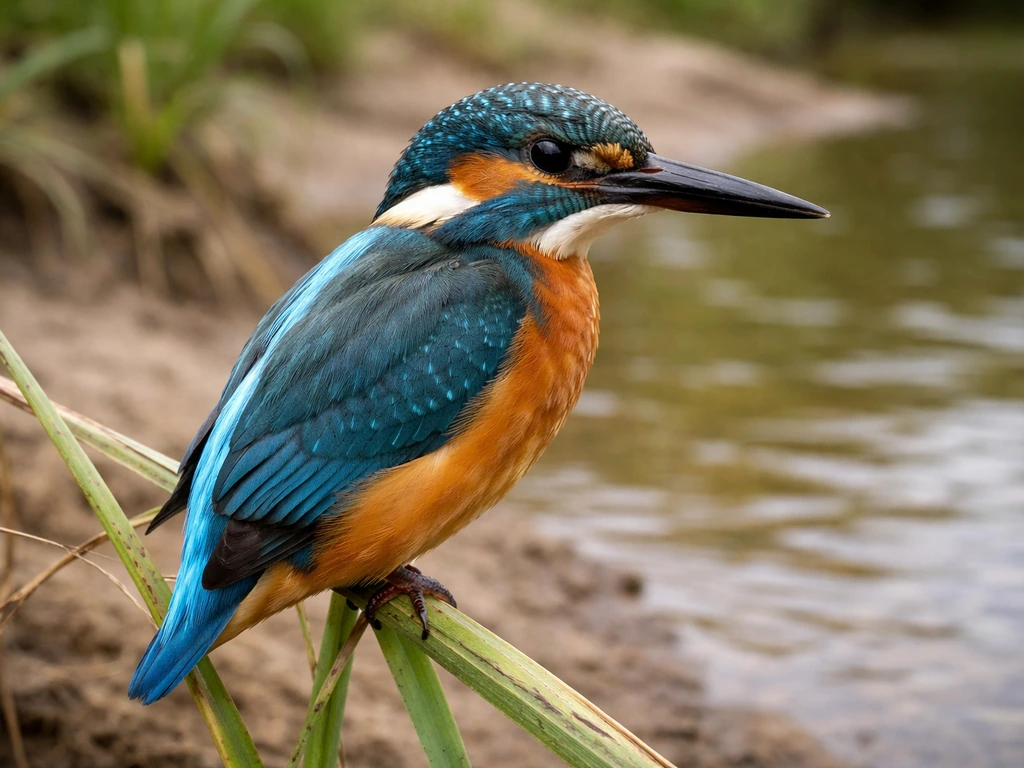
What Does a Kingfisher Bird Look Like? Key Field Marks
See key field marks for kingfisher identification: size, long bill, head and face patterns, wings, and posture.
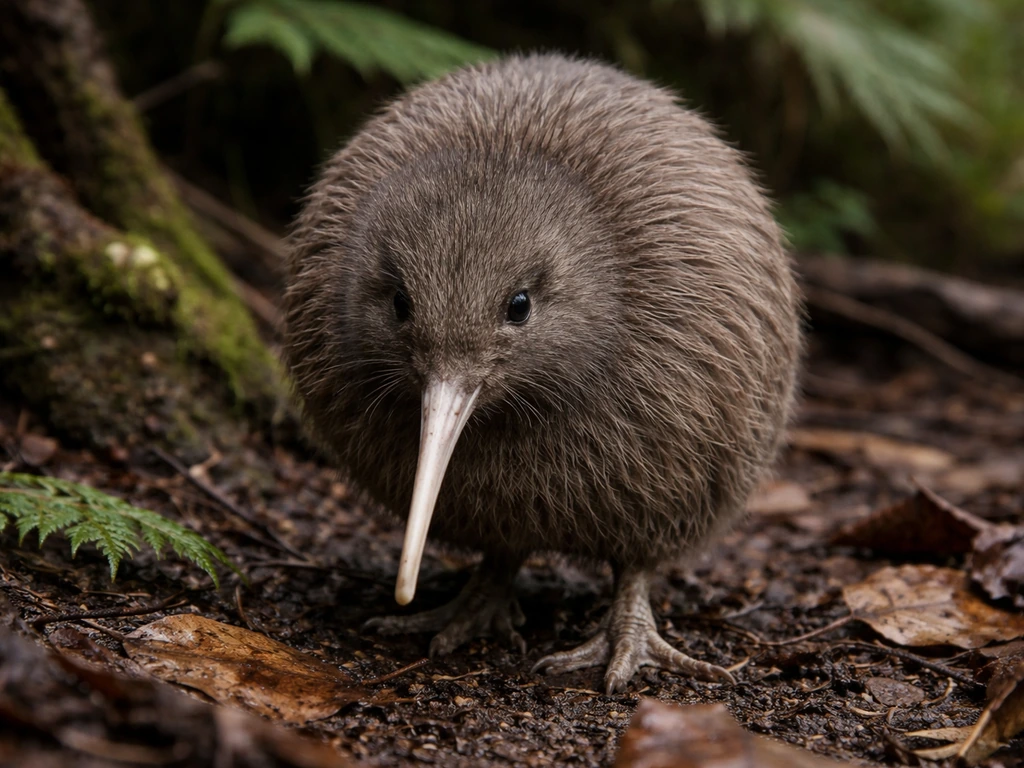
What Does a Kiwi Bird Look Like? Key Visual Traits to Spot
Identify a kiwi by its small round body, long slender bill, hairlike brown-gray feathers, long legs, and near wings