The bird you're probably looking at is either a chickadee or a white-breasted nuthatch. These three species (tufted titmouse, chickadee, and nuthatch) hang out together at feeders and in woodlands so often that they're almost a package deal. When a titmouse tucks its crest flat against its head, it can look surprisingly plain, and that's when people start second-guessing themselves. The good news is that a handful of quick visual checks will get you to the right answer in just a couple of minutes. If you're still unsure what a tern bird looks like, use the same quick visual-check approach from this guide to compare body shape, colors, and key markings answer.
What Bird Looks Like a Tufted Titmouse Without the Tuft

Marcus Whitley
20 Jun 2026
What makes a tufted titmouse a tufted titmouse
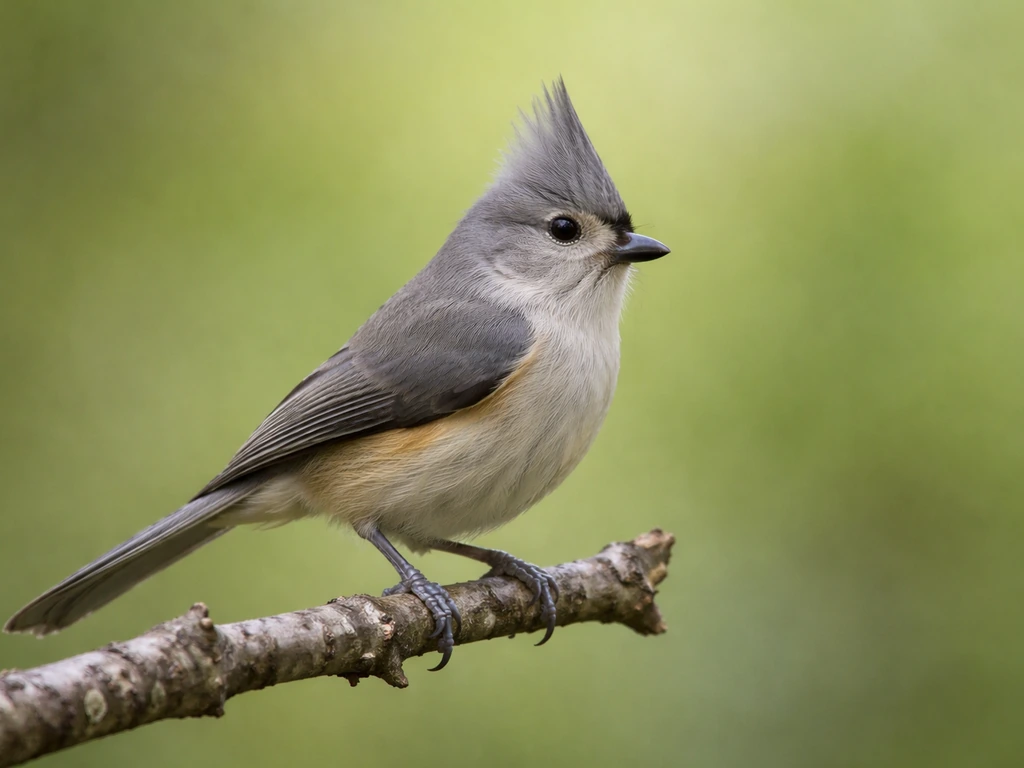
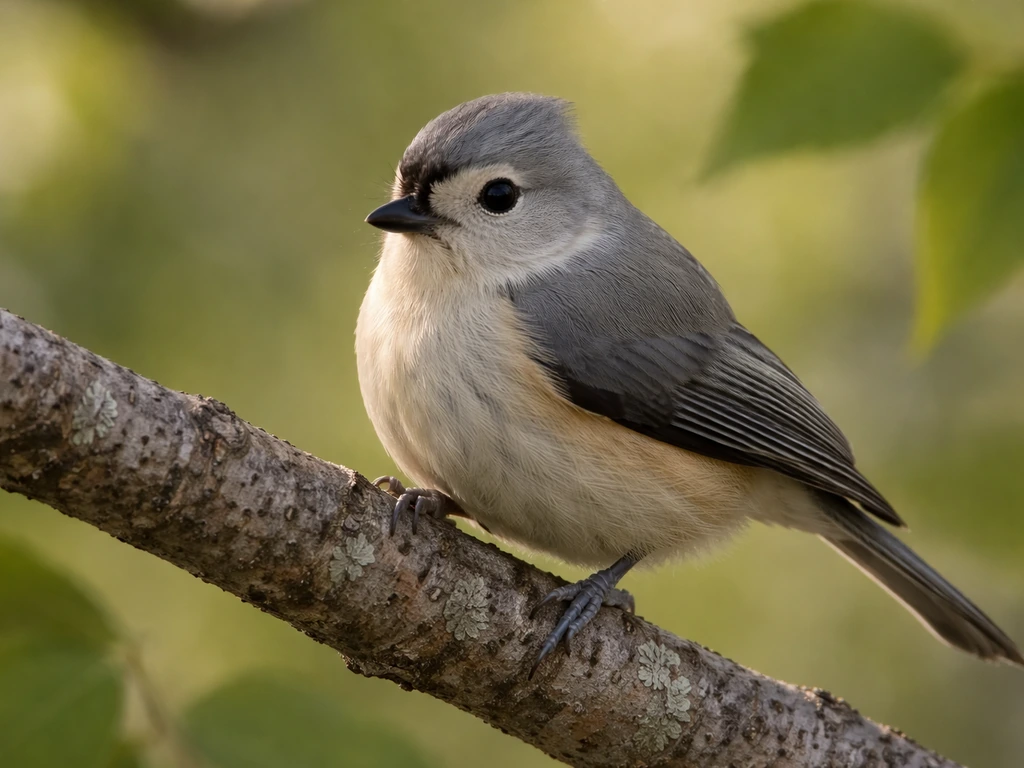
Before you can spot what's missing, it helps to lock in exactly what you're comparing against. A tufted titmouse is a small songbird, around six inches long, with gray upperparts covering the head, back, wings, and tail. The underparts are white to pale gray with a noticeable rusty or orange wash along the flanks (the sides just below the wings). The face is pale and clean-looking, but there's a sharp black patch right at the forehead, just above the bill. The eyes are large, round, and dark, which gives the bird a wide-awake, curious expression. The bill is stout and cone-shaped, more like a seed-cracker than a probe.
The crest, or tuft, is the signature feature: a pointed, brushy spike of feathers at the top of the head. The key thing to know is that the crest can be raised or lowered depending on the bird's mood. When it's relaxed or feeding with its head down, the crest can flatten into what looks like a gentle bump or almost nothing at all. The head is noticeably large for the body size, and that big-headed, stout-billed silhouette is your best anchor point when the crest isn't cooperating.
The two most likely look-alikes: chickadees and nuthatches
Chickadees
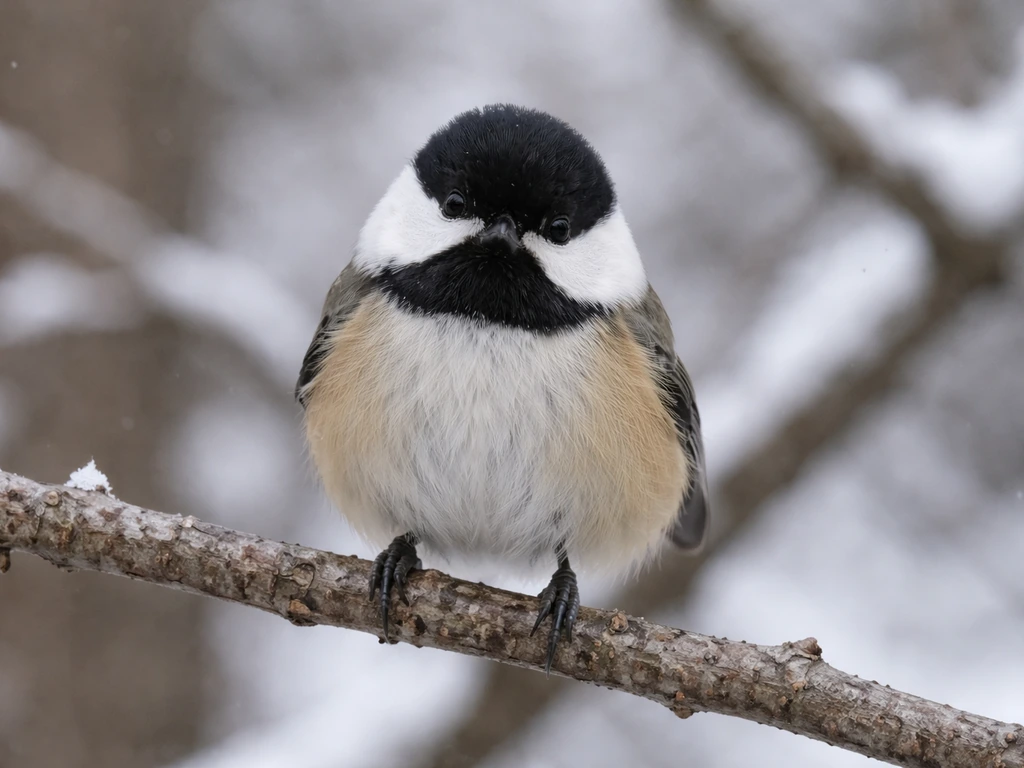
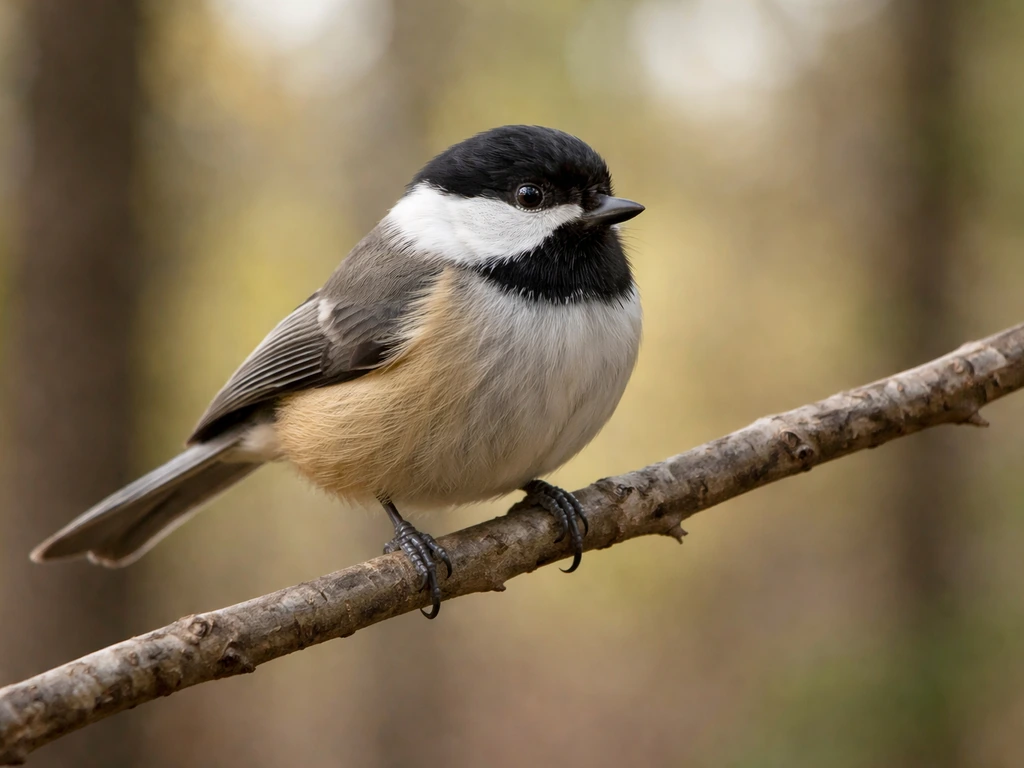
Black-capped chickadees (and Carolina chickadees in the Southeast, which look nearly identical) are probably the number-one source of titmouse confusion. They're small, gray-backed, and show up at the same feeders at the same time. [The body shape is distinctly round and plump, almost like a tiny ball with a long tail attached. ](https://www.
allaboutbirds. org/guide/Black-capped_Chickadee/id) The head has a bold black cap covering the entire crown and a matching black bib under the chin. The cheeks are bright white and very clean, which creates a strong contrast with the black cap. The back and wings are gray, and the underparts are pale with a buffy wash on the sides.
Chickadees have no crest at all, so if you're wondering whether the tuft is just flat, a chickadee never has one to begin with.
White-breasted nuthatches
White-breasted nuthatches are the other common companion in mixed winter flocks. At first glance they share a similar gray-and-white color scheme, but the similarities end quickly once you look closely. The nuthatch has blue-gray upperparts, a completely white face and breast, and a striking dark cap (solid black on males, dark gray on females) that covers the top of the head and sweeps down the back of the neck.
There's no crest and no forehead patch. The bill is long, straight, and sharply pointed, almost like a thin spike, which is very different from the titmouse's stubby seed-cracker. Nuthatches also have chestnut-colored undertail coverts (the feathers right under the base of the tail) that you might catch a glimpse of when they move.
Separating the species: the visual tells that actually matter
| Feature | Tufted Titmouse | Chickadee | White-breasted Nuthatch |
|---|---|---|---|
| Body shape | Medium-small, large-headed | Small, round, plump body with long tail | Compact, short-tailed, stocky |
| Bill shape | Stout, cone-shaped | Short, thin, delicate | Long, straight, sharply pointed |
| Head marking | Black forehead patch, gray crown (with crest) | Full black cap + black bib, white cheeks | Solid black/dark gray cap, no bib |
| Face | Pale with black forehead, large dark eye | White cheeks with high contrast cap/bib | Completely white face, dark eye isolated on white |
| Flanks/sides | Rusty/orange wash | Buffy wash | White below, chestnut undertail coverts |
| Crest | Yes (but can flatten) | None | None |
| Wing bars | Present but subtle | White edges on wing feathers | Blue-gray wings, no prominent bars |
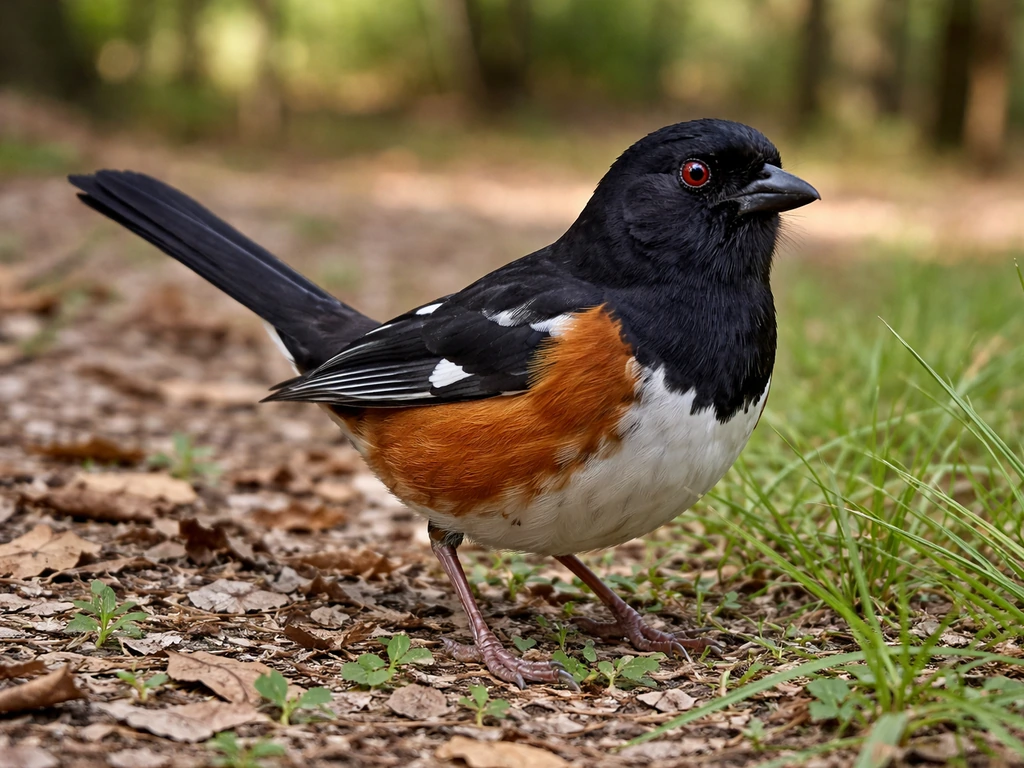
The single fastest tell between a titmouse and a chickadee is the forehead. A titmouse always has that small black patch right at the base of the forehead, above the bill, even when the crest is completely flat. A chickadee's black covers the whole top of the head and extends down into a bib, with bold white cheeks. If you see bright white cheeks framed by black above and below, you're looking at a chickadee. For nuthatches, just watch how it moves: if it's blank" rel="noopener noreferrer">walking headfirst down a tree trunk, it's a nuthatch. Nothing else in this group does that. For comparison, a towhee bird has a very different look than these small gray species tufted titmouse.
Why a titmouse sometimes looks like it has no tuft
This is actually pretty common, and once you know it happens you'll stop being thrown off by it. The tufted titmouse raises and lowers its crest constantly. If you also wonder what a bird looks like without feathers, the key clues are the underlying head shape, bill type, and body silhouette what does a bird look like without feathers. When the bird is relaxed, feeding at a feeder with its head tilted down, or just chilling on a branch, that crest can flatten against the head until it's barely a gentle bump. From a certain angle, especially head-on or from above, you might not even register it as a crest at all.
Lighting makes it worse. In flat or backlit conditions, the gray crest blends into the gray head and becomes nearly invisible. Juveniles also tend to have softer, less dramatic crests than adults, so a young titmouse in late summer or fall can look deceptively plain-headed. Worn feathers at the end of breeding season can also reduce the crest's sharp, pointy appearance. The good news: even when the crest disappears, the black forehead patch, the stout bill, and the large head shape are still there.
Where you're likely to find each species
Tufted titmice live year-round across eastern North America, from the Great Plains east to the Atlantic coast, and have expanded northward over recent decades. They love deciduous and mixed woodlands and are enthusiastic feeder visitors. You'll typically spot them grabbing a sunflower seed, flying to a nearby branch, and hammering it open while holding it with their feet. They forage actively in the mid-levels of trees, hopping along branches and wildflower stalks rather than clinging to trunks.
Chickadees share much of this range, and the two species are classic mixed-flock companions. Black-capped chickadees dominate the northern half of the country, while Carolina chickadees take over in the Southeast. At feeders, chickadees are quick and nervous: they dart in, grab a seed, and disappear. They're also enthusiastic acrobats, frequently hanging upside down from branch tips to reach food that other birds can't. White-breasted nuthatches cover most of the continental US and southern Canada and are almost always found where there are large trees. Their trunk-walking and downward creeping is completely unique behavior that no chickadee or titmouse will replicate.
Quick field checklist: confirm your ID in 2 to 5 minutes
- Check the forehead: Does it have a small, defined black patch right above the bill (titmouse), a full black cap plus black bib (chickadee), or a solid dark crown with no bib and a completely white face (nuthatch)?
- Look at the bill: Is it short and stout (titmouse), tiny and thin (chickadee), or long and sharply pointed like a small spike (nuthatch)?
- Watch how it moves: Is it hopping along branches and hammering seeds (titmouse), darting and occasionally hanging upside down from twigs (chickadee), or walking headfirst down tree bark (nuthatch)?
- Check the sides/flanks: Any rusty or orange color along the sides below the wings? That's a titmouse marker. Buffy pale sides lean chickadee. Chestnut under the tail base points to nuthatch.
- Look at the overall head size: A titmouse has a noticeably large head for its body. Chickadees look round all over. Nuthatches look neckless and compact.
- Listen: Titmice have a loud, clear 'peter-peter-peter' whistle. Chickadees give their classic chick-a-dee-dee call. Nuthatches have a nasal 'yank-yank' sound. Even if you can't see the bird well, the call often clinches it.
When to grab a photo and what to capture
If you've run through the checklist and you're still not sure, a photo is your best friend. If you are trying to identify a different bird, such as a TUI, you can also look up what does a TUI bird look like and compare the key field marks. Even a phone photo taken through a window can be enough to confirm an ID when you compare it to reference images afterward. This site is a great place to start, and apps like Merlin (from Cornell Lab) let you upload a photo for an instant suggestion.
When you're trying to get a useful shot, aim for these angles and details:
- Head and face (straight on or slight angle): This is the most important. You need to see whether there's a forehead patch, a full cap, or a dark crown, and how the white on the face is arranged.
- Side profile of the head and bill: This shows the bill shape (stout vs. thin vs. spike-like) and gives you a clear look at whether there's any crest bump, even a subtle one.
- Wing surface: Look for wing bars, white feather edging, or plain gray. Wing pattern differences can separate species when the head shot is inconclusive.
- Body side/flank: A shot showing the side of the bird below the wing can reveal the rusty titmouse flank color or the chestnut undertail of a nuthatch.
- Behavior shot if possible: A bird walking down a tree trunk almost guarantees nuthatch. A bird hammering a seed on a branch strongly suggests titmouse.
Don't stress if your photos are blurry or partial. Even a fuzzy shot that clearly shows blank" rel="noopener noreferrer">'black cap plus white cheeks plus black bib' is enough to confirm chickadee. The goal is to capture at least two or three of the key features listed above so you're not relying on memory alone. If you're curious about what the full titmouse look typically appears like, exploring a detailed titmouse appearance guide can help you build a mental baseline for comparison.
If you want a quick refresher on what a titmouse bird looks like, focus on its crest, black forehead patch, and overall small, rounded body shape titmouse look typically appears like. And if your mystery bird ends up being something more unusual, nuthatches, towhees, and other woodland species are worth keeping on your radar depending on your region.
FAQ
If the crest is completely flat, how can I confirm it still is a tufted titmouse and not a chickadee or nuthatch?
Use the forehead for the anchor check. A titmouse has a small black patch at the base of the forehead above the bill even when the crest is flattened. Chickadees lack any “small forehead patch” pattern, and nuthatches have no forehead patch plus a different bill and face layout.
Can juvenile tufted titmice look so plain that they get mistaken for a chickadee?
Yes. Young titmice often have a less sharp-looking crest and can look crestless at a quick glance, especially in late summer or fall. If the bird lacks the chickadee’s bold black cap with strong white cheeks, and you still see the black forehead patch and stout seed-cracker bill, it points back to titmouse.
How do I tell the difference between a crest that is flattened and a bird that has no crest at all?
Watch for a pointed, brushy crest shape that sometimes reappears when the bird lifts its head (even briefly). Chickadees truly have no crest structure, so you will never see a tuft lift from the crown, and the black head pattern will look like a full cap and bib instead.
What should I look for first if I only get one quick glance at the bird?
Prioritize the face. Check for the small black forehead patch above the bill (titmouse) versus a full black cap down to a bib with bright white cheeks (chickadee). If the bird has a white face and breast plus a long pointed bill, then it is likely a white-breasted nuthatch.
Does sex or regional variation change what I see on chickadees enough to confuse things?
The “nearly identical” Carolina and black-capped chickadees can both be confused with a flattened-crest titmouse, but the chickadee pattern is consistent: solid black head (cap) plus a black bib, with clean bright white cheeks. The forehead-plus-bib contrast is the key rather than subtle crest impressions.
What behavior clue is most reliable for separating nuthatches from titmice and chickadees?
Nuthatches move headfirst down tree trunks and creep downward along bark. If the bird consistently spirals or creeps down the trunk headfirst, that strongly favors nuthatch even when the colors seem similar.
If I’m viewing from a window or the bird is moving fast, how can I reduce misidentification?
Capture or mentally record at least two independent field marks: forehead pattern (small patch versus full cap), bill shape (stout cone versus thin pointed), and body silhouette (round plump ball for chickadee versus larger-headed stout-billed for titmouse). Window glare can hide the crest, so rely on the face and bill first.
What lighting conditions make the tuft hardest to see, and what’s the workaround?
Flat light, backlighting, and shadows make gray-on-gray crests blend into the head. The workaround is to wait for side lighting or for the bird to look up, then re-check the forehead patch and bill shape, not the crest alone.
Could other birds at feeders be mistaken for a tufted titmouse without the tuft?
Yes, especially other small gray woodland birds in the same general season and habitat. If the bird does not match the titmouse forehead patch plus stout cone bill, widen the search beyond just chickadee versus nuthatch and compare tail, under-flank color, and foraging posture.
What photo details should I try to get if I want a confident ID later?
Aim for a view that shows the bill and forehead at the same time, even if the crest is not visible. A clear head-on or slight top angle helps you confirm the small black forehead patch (titmouse) versus the full cap and cheek pattern (chickadee), while a side view helps with the stout versus thin bill shape.
Next Article
What Does a Towhee Bird Look Like? Key ID Features
At-a-glance towhee ID guide: size, bold face pattern, wing bars, belly and tail colors to confirm the species.