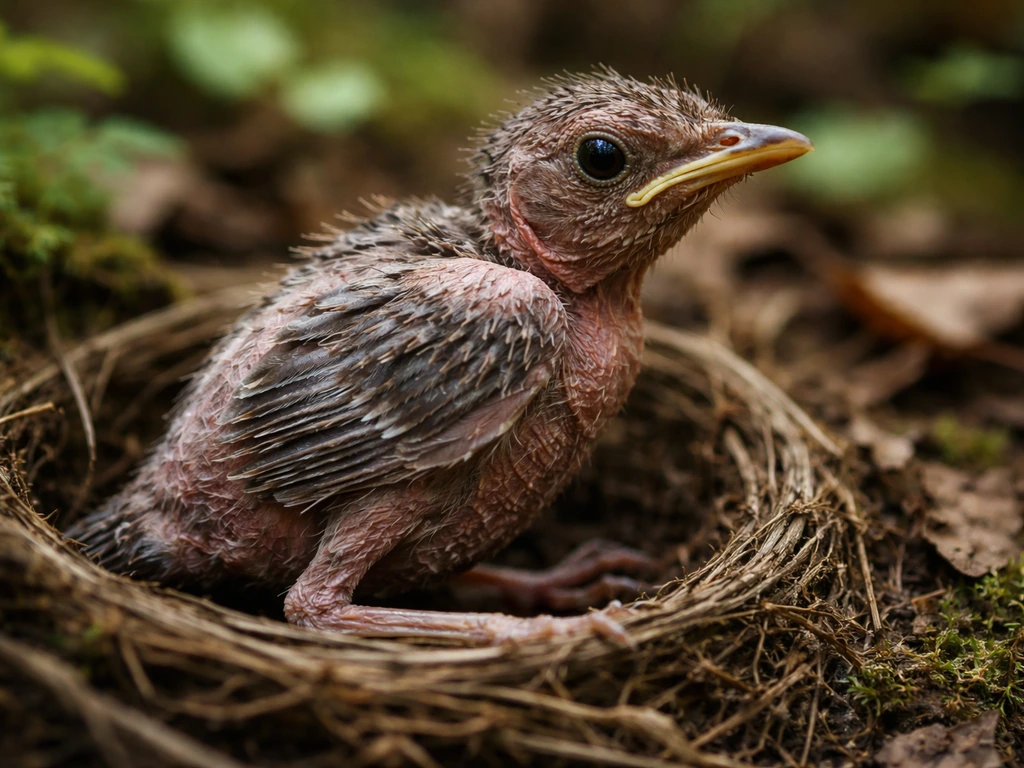
A bird without feathers looks surprisingly alien compared to the same species fully plumaged. The skin is usually pale pink, grayish, or dark depending on the species, and you can see the feather tracts (the rows where feathers grow) as small bumps or pin-like stubs along the body. The bird's proportions look completely different too: the head seems oversized, the body looks skinny and almost reptilian, and the wings are reduced to small, bony-looking paddles. Whether you're looking at a fallen nestling, a molting adult, or a bird with an abnormal feather condition, the underlying body structure is actually your best tool for figuring out what species you're dealing with.
What Does a Bird Look Like Without Feathers

Marcus Whitley
26 Jun 2026
Why some birds look featherless (it's not always a problem)
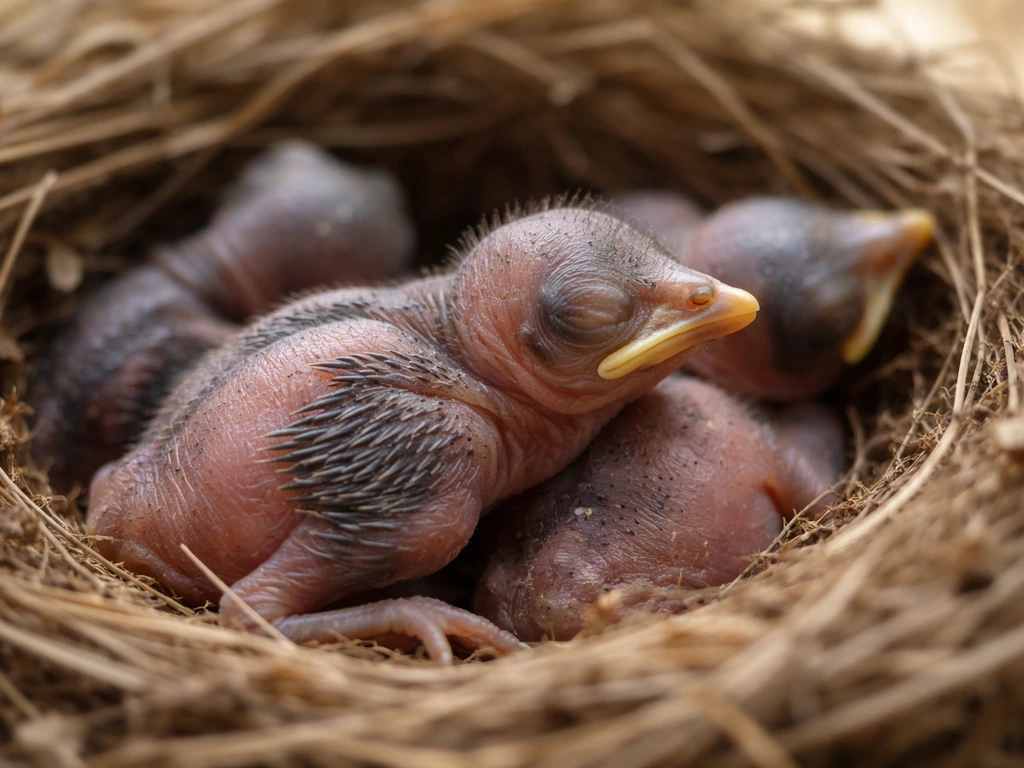
There are two completely different reasons a bird might look like it's missing feathers. The first is totally normal: very young nestlings are born featherless (called hatchlings), and as they develop over days to weeks they grow down and then proper feathers in a predictable sequence. Fledglings, the stage just before full independence, often have patchy plumage with gaps that can look odd at first glance. Adult birds molt, too, and during a molt they can look noticeably different from week to week as feathers are shed and replaced. National Geographic’s birding guide notes that birds do not molt all their feathers at once under normal conditions, and that some birds can become temporarily flightless during a heavy molt. Missing a set of primary flight feathers, for example, creates a visible gap along the wing's trailing edge. Some birds even become temporarily flightless during a heavy molt.
The second reason is abnormal: injury, parasites, disease, malnutrition, or environmental stress can all strip feathers from a bird. Conditions like depluming mites cause feathers to break and fall out, creating bare patches that can spread from the back to the wings, neck, and head. Avian pox causes wart-like lesions on naturally featherless areas like the face, legs, and feet, which can look like feather loss at first. Leucism, a pigment condition, can make feathers look white or washed-out rather than absent, so it's worth knowing the difference before assuming a bird is sick.
The most common situations where you'll see a nearly featherless bird
- A nestling has fallen from its nest: completely bare or with tiny pin feathers just emerging, eyes closed or barely open, unable to stand or hop.
- A fledgling is on the ground: has most body feathers but shorter tail and wing feathers, can hop, perches awkwardly, eyes open and alert.
- An adult is mid-molt: feathers are missing in a symmetrical pattern, especially along the inner primaries first, then working outward; the bird still behaves normally.
- A bird has mite or lice damage: bare patches on the back or neck that may have spread, the bird looks itchy and over-preens.
- A bird has avian pox or another disease: wart-like growths on bare skin areas (face, legs), bird may look weak or have trouble feeding.
- A bird's feathers are soiled or matted: oily, wet, or stained feathers clump together and expose skin, making the bird look bald when it isn't.
How feather loss actually changes what a bird looks like
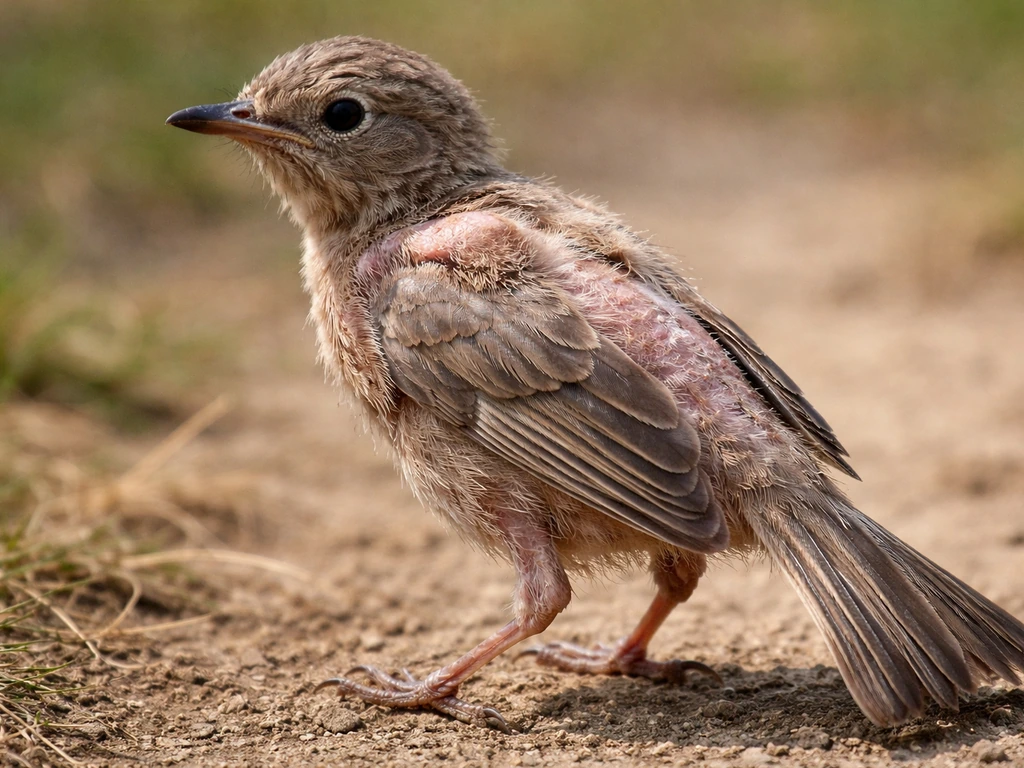
Feathers do a lot more than just add color. They shape the body outline entirely, add insulating bulk, and provide the aerodynamic surface of wings and tail. When those are gone, even partially, the bird's silhouette changes in ways that can make it hard to recognize. The head looks disproportionately large. The neck looks longer and thinner. The body looks almost deflated. If flight feathers are missing, the wings end abruptly instead of tapering into a smooth curve, and the tail looks stubby or ragged.
The skin color varies by species. Many songbirds have pale pinkish or yellowish skin beneath their feathers. Darker-skinned species like some waterfowl can have gray or near-black bare skin. You might also see the feather tracts, which are the specific lines or rows along the body where feathers are anchored by their calamus (the quill base). These look like rows of small bumps or emerging pin-like shafts, especially on a nestling. On a partially molting bird, you'll see stubs where new feathers are growing in, often with a waxy protective sheath around them. Feather growth starts when each new feather develops from a small outgrowth of skin called the papilla, and a protective sheath helps maintain the feather's cylindrical shape until it unfurls papilla and protective sheath.
Identifying the species when feathers are missing or incomplete
This is the practical part. Even a nearly featherless bird gives you plenty of clues if you know where to look. If you want to know what a towhee bird looks like specifically, focus on its overall shape, key markings, and size rather than assuming feather loss is the main clue bird gives you plenty of clues. Feathers are what most birding guides emphasize, but body structure, bare parts, and behavior are just as reliable, and they don't molt.
Bill shape is your best starting point
Bill shape alone can often narrow identification down to a family or group. A tufted titmouse with the tuft missing is still identifiable by its gray head and overall titmouse shape, so the “no-tuft” look can be a clue to the species tufted titmouse without the tuft. A thick, cone-shaped bill means you're likely looking at a finch or sparrow. A long, thin, slightly curved bill points toward a wren or warbler. A hooked tip suggests a raptor or shrike. A broad, flat bill is typical of flycatchers or some waterfowl. Even on a completely bare nestling, the bill shape is already forming in a way that reflects the adult. Audubon's guidance backs this up: bill structure is one of the most reliable ID features when plumage is obscured or missing.
Leg and foot structure
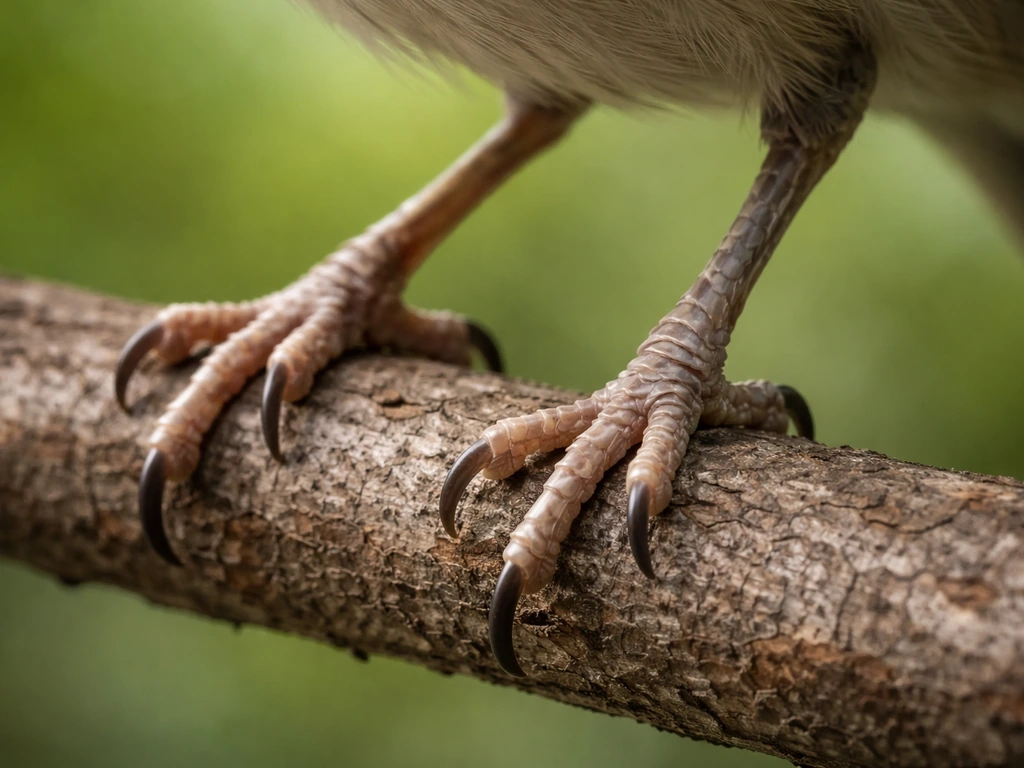
Legs and feet are almost always featherless, so they're especially useful here. Look at leg thickness (a raptor has thick, scaled tarsi; a warbler has thin, delicate legs), foot structure (raptors have powerful talons, waterfowl have webbing), and leg color. Yellow legs versus pink legs versus dark gray legs narrow things down quickly. The way a bird holds its body when perching or standing also reflects its family: upright like a thrush, horizontal like a warbler, or hunched like a heron.
Eye placement and facial bare skin
The eye color, eye ring (if any bare skin remains), and overall face shape are visible even when most feathers are gone. A bird's eye placement tells you a lot about whether it's a predator (eyes forward-facing, like owls) or prey species (eyes to the sides, like most songbirds). The eye color itself is often species-specific: bright yellow eyes in some hawks, red in certain woodpeckers, and pale cream in grackles, for instance.
Remaining wing and tail structure
Even partial or stubby wings reveal something. Flight feathers are strong and among the last to be replaced in a molt, so remnants often remain even when body feathers are largely gone. The shape of any remaining primaries or tail feathers gives a silhouette clue: rounded tail versus forked tail, long narrow wings versus short broad ones. Any patches of retained plumage often show a bird's color or pattern, which combined with the structural clues above can seal the ID.
Size, body shape, and behavior
Cornell Lab's bird ID framework uses four keys: size and shape, color pattern, behavior, and habitat. When color is compromised by feather loss, lean harder on the other three. Is the bird sparrow-sized, robin-sized, or crow-sized? Is it bobbing its tail, scratching along the ground, or clinging to bark? Is it in a dense hedgerow, in open grassland, or near water? Habitat and behavior are species-specific even when feathers are not.
Normal molt and juvenile plumage vs. injury or disease
This is the question most people actually need answered when they're standing in front of the bird. Here's how to tell them apart.
| What you see | Most likely explanation | Bird's behavior |
|---|---|---|
| Symmetrical gaps in wing feathers, bird flies fine | Normal adult molt (inner primaries shed first) | Active, alert, feeding normally |
| Patchy body feathers, shorter tail, hops on ground | Fledgling (normal life stage) | Alert, can perch, may call to parents |
| Completely bare, eyes closed, unable to stand | Nestling/hatchling out of nest | Passive, may gape for food |
| Bare patches on back/neck spreading, bird over-preens | Mite or lice infestation | Irritated, scratching frequently |
| Wart-like growths on face, legs, or feet | Avian pox (disease) | May be lethargic, trouble feeding |
| Asymmetrical bare patches, possibly with wounds | Injury (predator strike, collision) | Reluctant to move, may be in shock |
| Feathers matted, sticky, or coated in substance | Environmental contamination (oil, sap) | Distressed, cannot fly or preen properly |
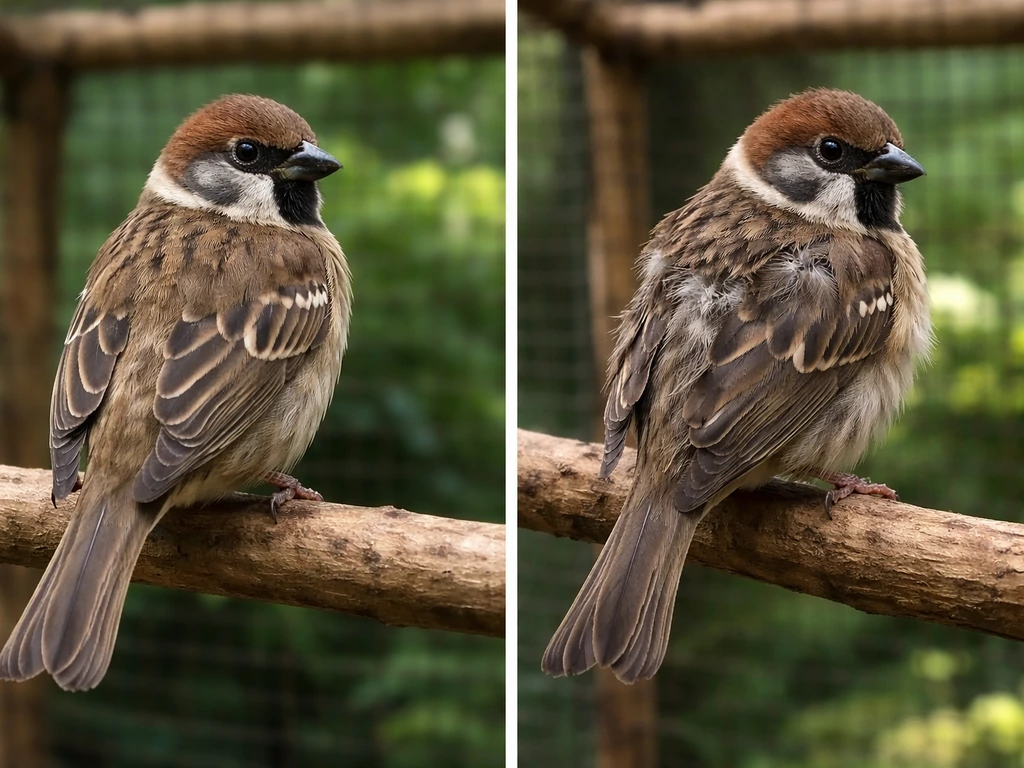
The key distinction between normal molt and a problem is symmetry and behavior. Molt is almost always symmetrical because the bird sheds matching feathers on both sides to stay balanced in flight. An injury or disease affecting one wing, one side of the face, or one leg is not symmetrical, and the bird will usually look unwell: hunched, reluctant to move, or visibly distressed. A healthy molting bird, by contrast, acts completely normal, it's just a bit scruffier than usual.
Young birds in juvenile plumage are a common source of confusion. Many garden species replace their downy body feathers fairly quickly after fledging but hold onto their juvenile wing and tail feathers until their first full molt the following year. So you might see a bird that looks adult-sized but still has shorter, more pointed, or worn-looking tail feathers compared with a true adult. This is completely normal and not a sign of injury.
Whether to handle the bird, and when to call for help
Birds stress very easily, and handling increases that risk. As a general rule, the less you handle the bird, the better. Here's how to think through the situation depending on what you've found.
If it's a featherless or nearly featherless nestling
If the nestling appears unharmed and you can locate the nest, gently place it back. The parent birds will not reject it because you touched it. Then watch from a distance for about an hour. Parent birds typically visit the nest several times an hour to feed chicks. If parents don't return within a few hours, or if the nestling is visibly injured, place it in a small cardboard box lined with a soft cloth and keep it in a warm, dark, quiet location. Don't try to feed it water or food. Contact a licensed wildlife rehabilitator as soon as possible.
If it's a fledgling on the ground
Fledglings on the ground are almost always fine. This is a normal life stage where young birds spend several days on the ground or low in shrubs while they build flight strength and their parents continue to feed them. If you’re trying to figure out “what does a tui bird look like,” focus on its typical body markings and outline rather than only on missing feathers. Unless the bird is visibly injured, leave it where it is and keep pets and children away from the area.
Signs that mean you should call wildlife rehab right away
- The bird is lying on its side or cannot hold its head up.
- It is breathing with visible effort or making labored sounds.
- It has an open wound, bleeding, or a drooping wing that hangs at an abnormal angle.
- Its feathers are coated with oil, sap, or another sticky substance.
- It cannot fly or flutter its wings after being left undisturbed for two hours.
- A cat or dog had contact with it, even if no wounds are visible (bacteria in cat saliva are dangerous to birds).
- It has wart-like growths on the face or legs suggesting avian pox.
- It is a nestling and you cannot locate the nest or safely reach it.
To find a licensed rehabilitator near you in the United States, contact your state wildlife agency or search the National Wildlife Rehabilitators Association directory. In the UK, the RSPCA and local wildlife rescues are the appropriate contacts.
Next steps to confirm your identification
If you want to nail down the species despite the unusual appearance, a systematic approach works well even from a phone photo taken in poor conditions.
- Photograph from multiple angles if you can do so without stressing the bird: side profile, front on for face and bill, and any remaining wing or tail feathers. Even a blurry photo captures bill shape and body proportions.
- Note the exact location and habitat: backyard, woodland edge, open field, near water. Many species have very specific habitat preferences that rule out half the field guide immediately.
- Record the date and time. Seasonal context matters: a featherless-looking bird in late summer is far more likely to be a fledgling or molting adult than in midwinter.
- Write down behaviors you observed: was it hopping, scratching, clinging to a vertical surface, swimming, calling? Behavior is often as diagnostic as feather color.
- Compare your photos against an online identification tool like the Merlin Bird ID app (Cornell Lab), which allows size, location, date, and color inputs even for unusual-looking individuals.
- If you have a found feather rather than a whole bird, the U.S. Fish and Wildlife Service Feather Atlas has a searchable image database specifically for identifying North American bird flight feathers.
- Post to a community like iNaturalist or your local birding Facebook group with your photos, location, and behavioral notes. Experienced local birders can often identify a species from structural clues alone.
If you're using this as a stepping stone to learn more about specific species appearances, it helps to get familiar with what various birds look like in full plumage too. Understanding how a titmouse, towhee, or tern looks when healthy gives you a baseline to compare against the unusual individual you've found. If you're trying to match the bird you see to normal features, start with what does a titmouse bird look like in full plumage. The more reference points you have for normal appearance across species, the faster you'll recognize when something looks off and what that structure underneath the feathers is telling you.
FAQ
Is a featherless bird always sick or injured?
Not necessarily. Newly hatched nestlings are naturally featherless, and birds in molt can look extremely sparse for weeks. The fastest way to tell is to check the overall posture and whether the missing feathers are symmetrical, then compare with the bird’s age and season (early summer often means nestlings, while many species molt later).
How can I tell the difference between missing feathers and feathers that are broken or rubbed off?
Broken feathers usually leave short, jagged stubs or broken shafts, and bare patches may expand as the bird scratches. Look for signs like waxy pin-sheaths (new feather growth) or remaining feather fragments along the same tract lines, rather than a clean “blank” area everywhere.
If one wing looks bare, does that automatically mean an injury?
Often, yes, but confirm with behavior and the bird’s condition. Injury tends to be one-sided and accompanied by distress, hunched posture, or reluctance to move. Molt can still be patchy, but it’s typically balanced between left and right, and the bird usually behaves normally aside from a slightly scruffier look.
Can leucism or other color conditions make a bird look like it has no feathers?
They can change the appearance of plumage so it looks washed out, not truly missing. In leucism, the feather structure is still present, so you may still see feather texture and patterned edges, just with pale coloration. Check the outline for feather-bearing bulk rather than completely bare tracts.
What should I do if I find a featherless baby bird and I cannot locate the nest?
First keep it warm and quiet and avoid feeding or giving water. Since you cannot verify whether it belongs in a nest, treat it as vulnerable and contact a licensed rehabilitator quickly. Use a small breathable container (with soft lining), place it in a dark spot, and minimize handling until help arrives.
How long should I wait after returning a nestling before deciding it needs help?
If parents are able to access the nest and the chick seems uninjured, monitoring from a distance for a couple of hours is appropriate. If you see no parent visits within a few hours, or the nestling looks injured, cold, or increasingly distressed, then move it to a warm, dark, quiet container and contact a rehabilitator.
Do molt and juvenile plumage cause changes specifically on wings and tail?
Yes. Juveniles commonly keep shorter, more pointed, or worn-looking tail and sometimes juvenile-looking wing feathers until their first major molt. Molt can also reduce primaries and tail feathers, but it usually progresses in a fairly patterned, time-based way rather than appearing randomly overnight.
How can I use bare parts for identification without getting too distracted by the missing plumage?
Use stable features that are less affected by feather loss, such as bill shape, leg and foot structure (including webbing or talon size), body posture, and eye placement. Then use size and habitat as a tie-breaker, since behavior and habitat often remain consistent even when the silhouette is altered.
What photo details matter most if I’m trying to identify a featherless bird from a phone image?
Include at least one shot showing the bird’s full body silhouette, one close-up of the bill, and one view of the legs and feet. If possible, capture the bird in profile from a consistent distance, since angle strongly affects how “bare” the wings and tail look.
Is it safe for me to try to put feathers back or apply anything to a featherless bird?
No. Do not attempt to glue, wrap, or apply creams or oils. Handling and any DIY treatment can worsen stress and can interfere with healing or molt. The safest approach is minimal handling, warmth, and contacting a rehabilitator when you suspect injury, parasites, or disease.
Next Articles
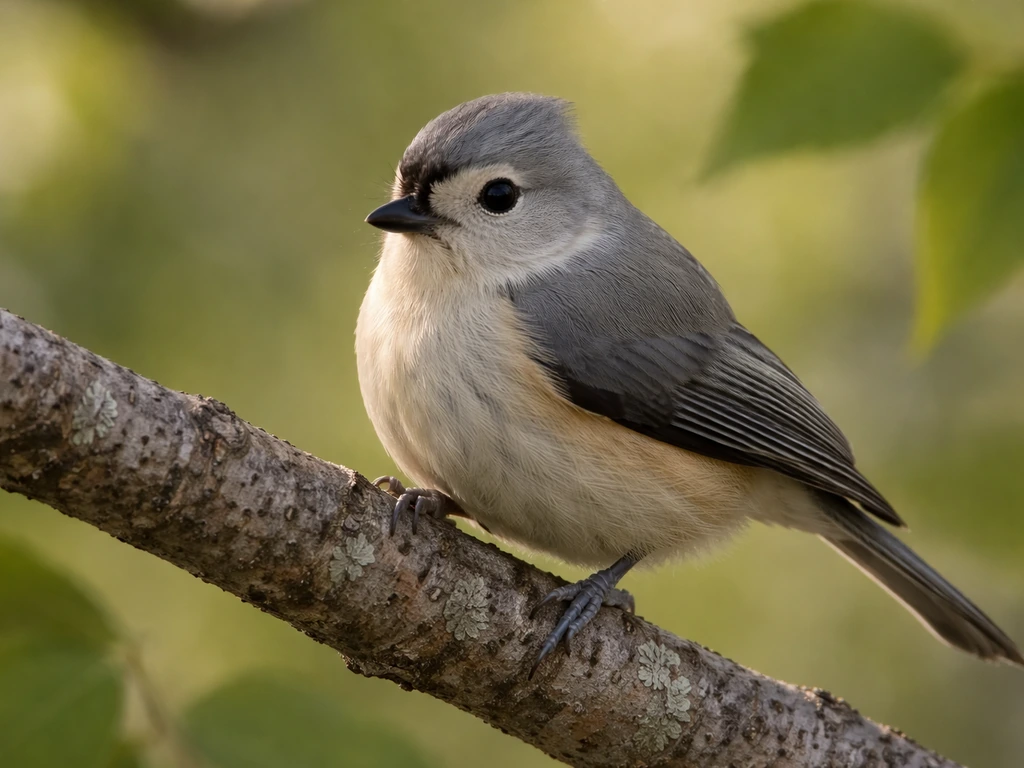
What Bird Looks Like a Tufted Titmouse Without the Tuft
Find the most likely lookalike to a tuftless tufted titmouse, with quick checks on bill, face, wing bars, and size.
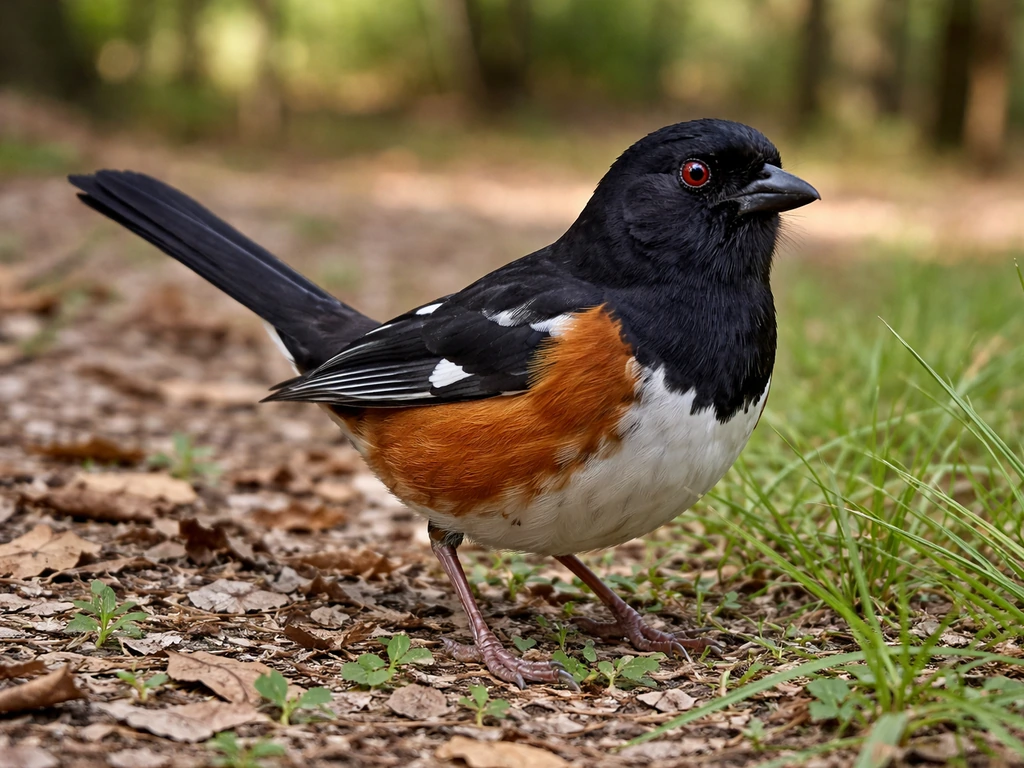
What Does a Towhee Bird Look Like? Key ID Features
At-a-glance towhee ID guide: size, bold face pattern, wing bars, belly and tail colors to confirm the species.
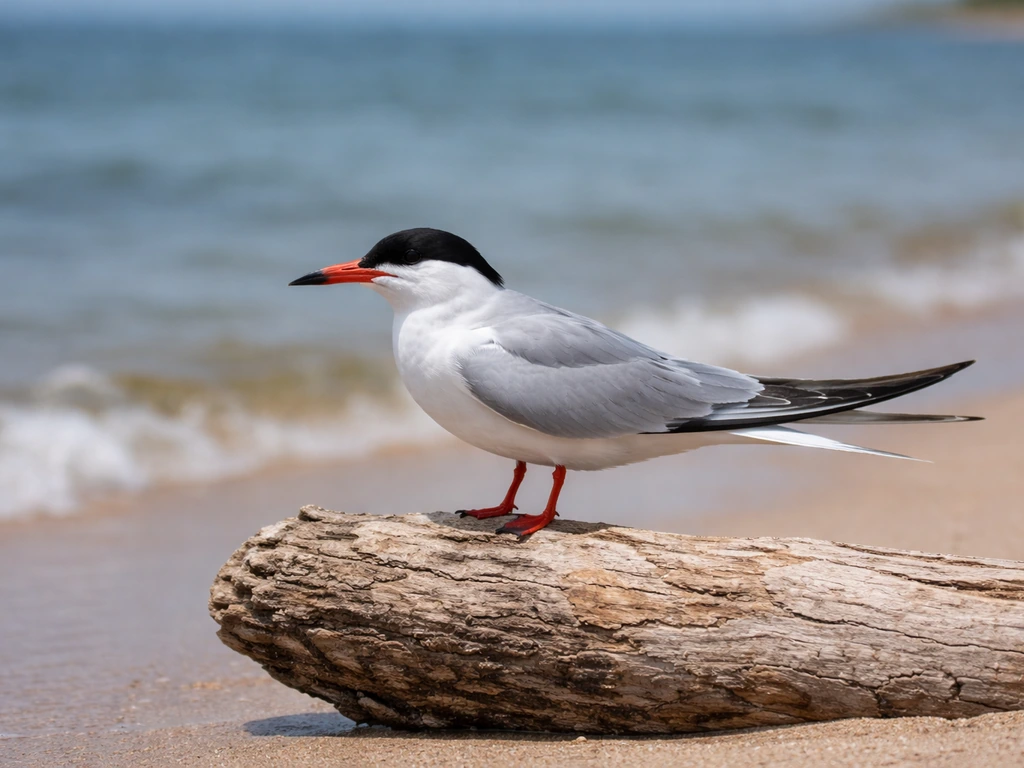
What Does a Tern Bird Look Like A Field Guide
See tern field marks: shape, bill and head patterns, seasonal and juvenile plumage, plus look-alikes to confirm.